

Content planning software has become the backbone of scalable marketing, aligning ideation, production, and analytics in one strategic hub. Used correctly, content planning software eliminates guesswork, synchronizes teams, and delivers measurable growth momentum. Businesses now treat content planning software as an operating system for storytelling because it consolidates every brief, asset, and performance metric. The following deep dive unpacks every dimension of content planning software so your organization can outpace competitors with precision, speed, and confidence.
Launch agentic chat marketing in minutes with ChatbotX














Why Content Planning Software Matters in 2026

Strategic Impact of Content Planning Software
Content planning software closes execution gaps by connecting strategic calendars with channel-level publishing. Marketing teams see how buyer journeys unfold because the platform maps every campaign touchpoint. As a result, content planning software turns quarterly goals into daily tasks that stay on schedule. The best-in-class content planning software also slashes context switching, which studies show can reduce productivity by up to 40 percent. Centralized briefs, version histories, and automated reminders form a workflow that keeps creative momentum steady even when priorities shift.
Market Signals and Budget Justification
Executives approve larger budgets for content planning software when they observe hard numbers. Analysts at Grand View Research report that the content management market is set to top USD 77 billion by 2033, reflecting aggressive enterprise adoption. These investments are anchored in multi-channel expectations that demand faster content delivery. A mapped business case for content planning software usually tracks three pillars: labor hours saved, campaign velocity, and revenue attribution. Organizations that benchmark pre-adoption metrics can point to cycle time reductions of 25 percent or more after the rollout, which persuades finance teams to continue funding.
Focus Keyword-Driven Objectives
Every roll-out should anchor on definitive targets for content planning software, such as a 15 percent lift in engagement or a 20 percent increase in approved assets per quarter. Aligning objectives to the focus keyword keeps stakeholders centered on the platform’s mission. By framing adoption around content planning software goals, teams stay accountable to the intended benefits rather than treating the platform like an optional add-on.
Core Capabilities of Modern Content Planning Software
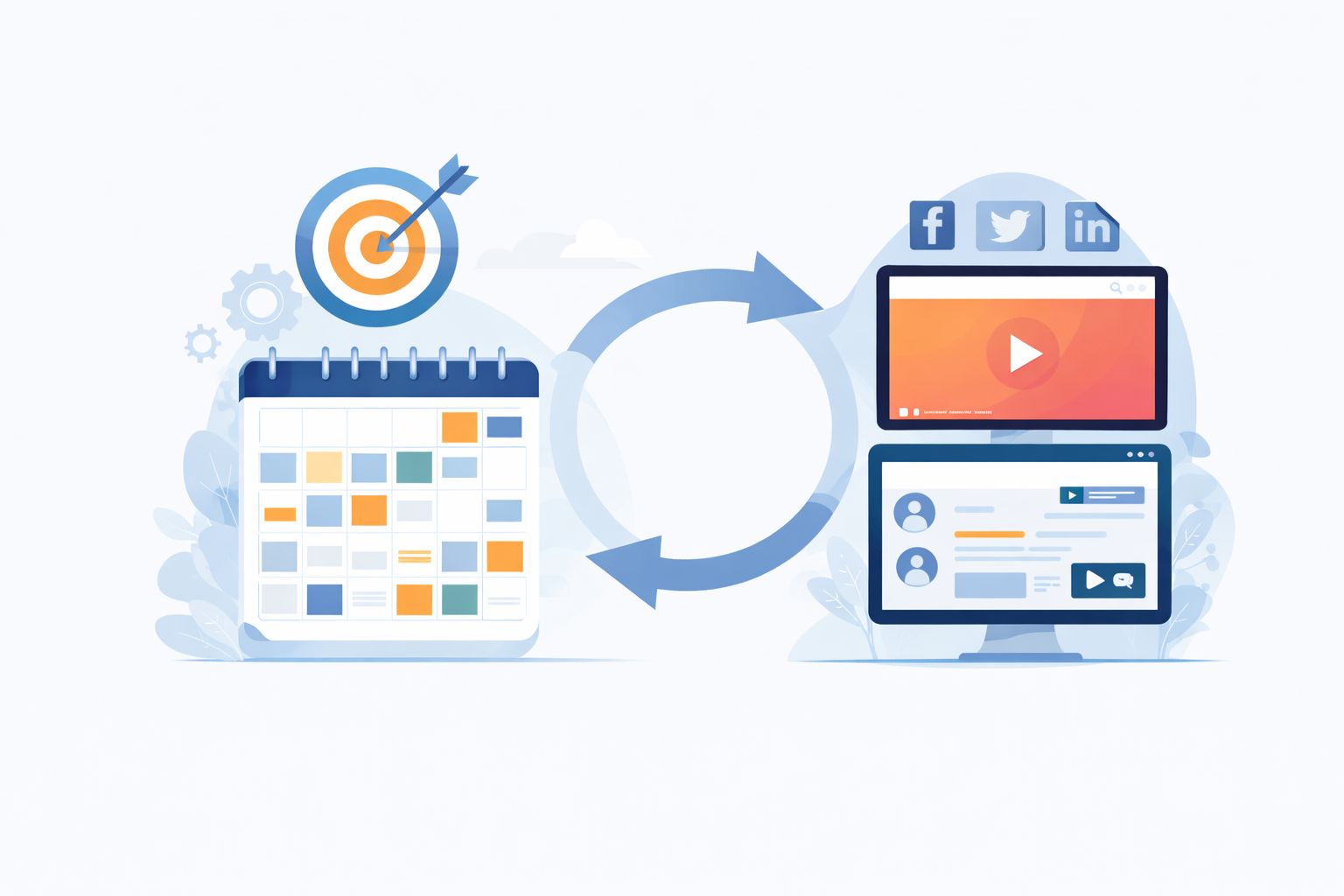
Ideation Engines and Audience Intelligence
AI-assisted brainstorming inside content planning software surfaces themes pulled from trend data, comments, and keyword clusters. These features prevent blank-page syndrome by generating prompts matched to persona pain points. Pairing generative prompts with search volume data from Google Trends helps teams validate which angles deserve immediate production.
In addition, persona boards stored in content planning software keep research centralized. Every new idea can be tagged with persona fit, funnel stage, and campaign owner, creating traceability that keeps strategy aligned with daily sprints. For teams looking for a ready-made framework to operationalize this process, the Social Media Content Planning Template: The Ultimate 2026 Guide for Marketers offers a practical starting point that maps directly onto the ideation-to-publication workflow.
Workflow Automation and Task Governance
Automation inside content planning software includes dependency alerts, SLA timers, and smart approvals that re-route to backup reviewers if deadlines slip. Workflows can mirror agile ceremonies by scheduling grooming sessions, sprint reviews, and retro recaps directly in the platform. This governance ensures that no storyboard or social asset moves forward without the correct sign-off. Task templates reduce administrative work by standardizing checklist steps for blogs, podcasts, or product updates. Once a template exists, content planning software can spin it up in seconds, ensuring compliance for legal, accessibility, or brand updates.
Analytics That Tie to Revenue
Robust dashboards within content planning software track impressions, clicks, conversions, and assisted pipeline contributions. Through UTMs and CRM syncs, marketers can see how a single article influenced multi-touch deals. This line of sight converts content planning software from a publishing calendar into a revenue intelligence engine.
When leadership can trace a 5 percent sales-qualified opportunity increase back to the platform’s orchestrated campaigns, they treat content planning software as a profit center, not a cost line. For a deeper look at measuring and maximizing this impact, explore Social Media ROI: 15 Proven Strategies to Drive Profitable Growth in 2026.
Comparison Matrix for Content Planning Software
| Platform | Best For | Pricing Model | Notable Capabilities |
|---|---|---|---|
| ChatbotX | Omnichannel AI marketing & content distribution | Contact-based subscription, free trial | Unified omnichannel inbox, AI Agents, smart broadcasts, drip campaigns, flow automation |
| Postiz | Cross-channel social orchestration | Free tier plus scalable add-ons | AI ideation, unified inbox, approval flows |
| Airtable | Hybrid content and operations teams | Seat-based subscription | Flexible databases, automation scripts |
| Notion | Knowledge-first marketing orgs | Free to enterprise | Wiki plus kanban plus AI assistant |
| Welcome | Large enterprises | Custom annual | Enterprise compliance, advanced permissions |
| Trello with Power-Ups | Small teams | Freemium | Visual boards, automation rules |
This table highlights how content planning software options align with distinct maturity levels, allowing teams to shortlist based on governance, integrations, and cost tolerance. ChatbotX stands out for teams that need to close the loop between content planning and real-time customer engagement across messaging channels.
Pros & Cons of All-in-One Suites
- Pros: Consolidated login, native analytics, easier training.
- Cons: Potential feature bloat, higher switching costs, limited customization for niche workflows.
- Pros: Modular add-ons let teams tailor automation depth.
- Cons: Additional integrations may require ongoing admin oversight.
Evaluating Content Planning Software Platforms

Criteria Tailored to Focus Keyword Success
Any request for proposal must weigh how content planning software supports brand voice, real-time collaboration, and compliance. Create a weighted scorecard that assigns higher value to automation accuracy if your team ships high-volume social updates. Meanwhile, agencies servicing regulated industries should prioritize audit trails and permission granularity. Because content planning software touches sensitive files, security due diligence is non-negotiable. Evaluate SOC 2 reports, encryption standards, and user provisioning flows before signing off.
Calculating Total Cost of Ownership
Licensing fees are only one slice of content planning software expenses. Factor in onboarding hours, integration builds, and long-term admin staffing. A three-year forecast illustrating how the platform scales with headcount provides clarity for CFOs.
Pro Tip: Bundle change management programs into your budget. Training champions to troubleshoot workflows can reduce support tickets by 30 percent.
Vendor Shortlist Playbook
- Document Non-Negotiables: List the must-have content planning software capabilities tied to OKRs.
- Run Hands-On Pilots: Assign real campaigns to trial accounts so teams experience the UI under pressure.
- Gather Feedback: Capture qualitative input from writers, designers, and analysts to prevent surprises later.
- Score Objectively: Use the weighted scorecard to avoid decisions based solely on price.
- Negotiate Service-Level Agreements: Lock in response times for mission-critical incidents.
Content Planning Software ROI Personas
- Growth Directors: Need global calendar visibility to align product launches with paid media.
- Content Strategists: Rely on briefs, internal linking plans, and persona tags inside content planning software.
- Design Leads: Want integrated asset libraries so campaign visuals update faster.
- Data Analysts: Demand API access for funnel attribution modeling.
Aligning personas to usage stories ensures the shortlisted content planning software resonates across departments.
Implementing Content Planning Software Across Teams

Change Management and Training
Successful adoption hinges on onboarding paths tailored to each role. Kick off with a live overview, then divide deeper workshops for strategists, copywriters, and clients. Content planning software becomes sticky when users see immediate wins, such as automated reminders replacing manual pings.
Warning: Skipping enablement often results in shadow tools resurfacing. Reinforce that content planning software is the definitive source of truth by decommissioning outdated spreadsheets.
Cross-Functional Workflow Design
Map every deliverable from ideation to publication. For example, a podcast episode might move from research, scripting, guest approval, design, and distribution. Document each step within content planning software, assigning owners and deadlines. Shared calendars prevent last-minute collisions between product announcements and thought-leadership pieces. When external agencies or freelancers are involved, create dedicated workspaces with controlled permissions. Content planning software can grant asset access without exposing confidential campaigns.
Automation Recipes That Save Hours
- Trigger-based Tasks: When a brief is approved, content planning software automatically assigns drafting and graphics tasks.
- Bulk Scheduling: Upload a CSV of social posts and let the platform auto-queue by timezone.
- Performance Alerts: Set thresholds so teams receive notifications when engagement drops below target.
For teams distributing content across messaging channels, ChatbotX takes automation a step further with built-in Smart Broadcasts and Drip Campaign flows – enabling marketers to push content to segmented audiences on WhatsApp, Messenger, and Zalo directly from a single platform. This makes it a natural extension layer on top of any content planning software stack. For a broader strategic view of how automation fits into your 2026 roadmap, the guide on Social Media Automation: The Complete Strategy for Sustainable Growth in 2026 is highly recommended reading.
Note: Automation results improve after a quarter of fine-tuning, so keep iterating rules.
Measuring Adoption Health
Use platform analytics to track login frequency, task completion, and workflow bottlenecks. If drafts sit idle for longer than 48 hours, revisit workload balancing. Surveys embedded within content planning software can capture sentiment, revealing whether users trust the system. Link adoption KPIs to leadership scorecards to guarantee ongoing sponsorship. If executives check the dashboard weekly, everyone treats content planning software as mission critical.
Advanced Trends in Content Planning Software and AI
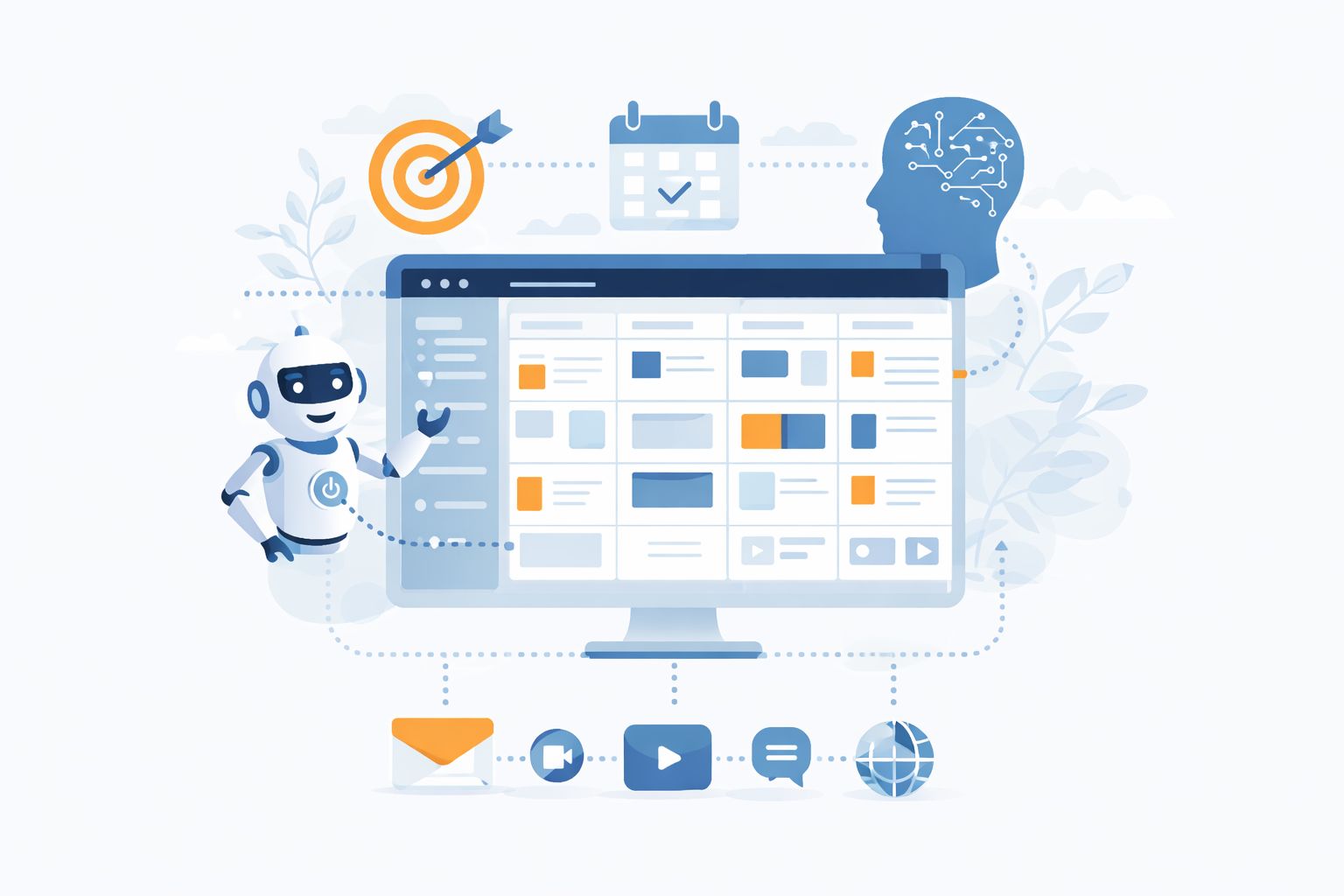
AI-Driven Personalization
AI modules inside content planning software now recommend audience-specific variations. The platform might prompt micro-copy tweaks for B2B versus B2C segments or suggest emojis for younger demographics. Such contextual cues improve relevance without requiring manual rewrites.
Chat-based interfaces also let strategists request performance summaries or competitive gaps, serving up insights instantly. This mirrors conversational analytics emerging across martech platforms, validating the shift to always-on AI copilots. Platforms like ChatbotX operationalize this trend with built-in AI Agents that detect user intent and respond contextually across all channels 24/7 – bridging the gap between content planning strategy and real-time customer engagement. To understand how AI personalization translates into tangible business outcomes, see 13 Ways AI Improves Customer Experience in 2026.
Predictive Capacity Planning
Modern content planning software uses historical velocity to forecast future workload. If the system detects that designers typically handle six hero graphics per week, it can warn when upcoming campaigns demand ten. This visibility prevents burnout and ensures resources are allocated before crises unfold. Some platforms even simulate campaign outcomes by blending historical engagement data with forecast algorithms, offering probabilistic success ranges.
Integrations With Sales and Support
Connecting content planning software to CRM systems unlocks feedback loops. Sales teams can request tailored collateral directly within the platform while support teams surface trending issues that deserve educational content. Integrating with collaboration hubs like Slack or Microsoft Teams drives higher response rates because notifications meet users where they already work.
This is where an omnichannel platform like ChatbotX becomes a powerful complement to your content planning software. By centralizing conversations from WhatsApp, Messenger, Zalo, and WebChat into a single unified inbox, ChatbotX feeds real customer signals – objections, FAQs, purchase intent – directly back into the content planning cycle. Marketing teams gain a closed feedback loop: plan content, distribute it, capture reactions, and refine the next brief. For teams building out their AI-powered engagement layer, AI Chatbot Strategy 2026: Trends Platform Comparison & Mistakes to Avoid provides a comprehensive strategic framework.
UGC capture pipelines are also expanding. Integrations with tools like OpenClaw enable marketers to orchestrate user-generated video requests that flow into content planning software for review and scheduling.
Future-Proofing Your Stack
Maintain an integration roadmap that prioritizes APIs, webhooks, and data governance. Content planning software should adapt to emerging channels like Threads or Warpcast without custom engineering each time. Annual audits keep your taxonomy clean so AI recommendations stay accurate. Organizations that continue to refine tagging standards, audience definitions, and performance models will extract compounding gains from their content planning software investment.
Frequently Asked Questions
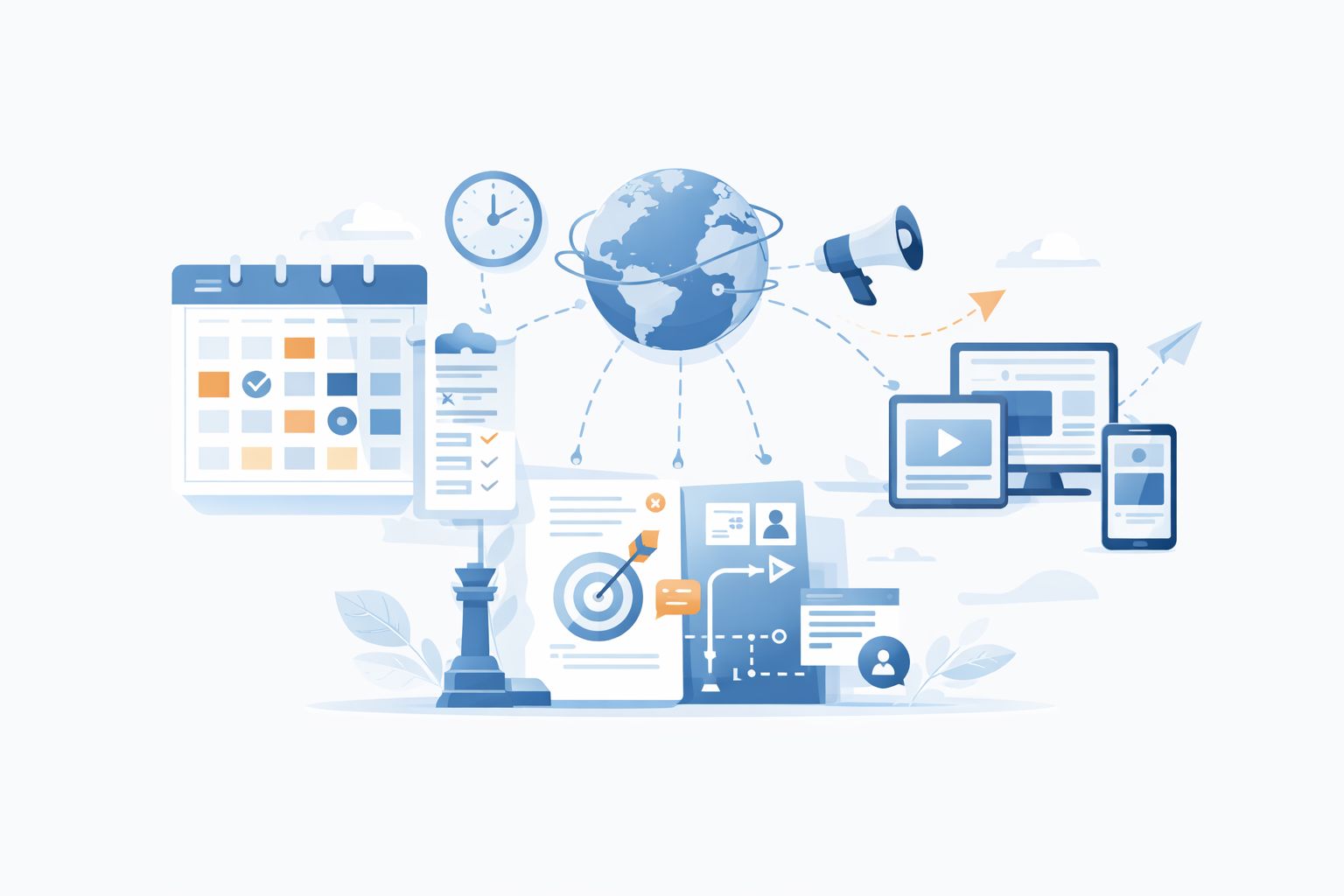
What is the main purpose of content planning software?
Content planning software coordinates every stage of content operations, from strategy to analytics. It centralizes briefs, automates approvals, and tracks outcomes so teams deliver consistent messaging faster. In short, content planning software transforms fragmented tasks into a cohesive production engine.
How does content planning software improve collaboration?
Content planning software replaces email chains with shared calendars, inline comments, and task assignments. Teams gain full visibility into deadlines and dependencies, reducing miscommunication. Approval workflows within content planning software ensure stakeholders provide feedback in one structured location.
Which metrics prove content planning software ROI?
Key indicators include cycle time reduction, publish frequency, engagement lift, and revenue attribution linked to content planning software dashboards. Measuring pre- and post-adoption performance across these metrics reveals productivity gains and financial impact.
Can small teams benefit from enterprise-grade content planning software?
Yes, because most vendors offer modular tiers. Small teams can start with core scheduling features and gradually enable advanced analytics, ensuring the content planning software scales with their growth. Prioritize intuitive interfaces so onboarding remains lightweight.
How often should workflows be reviewed inside content planning software?
Quarterly reviews keep workflows aligned with campaign volume, channel mix, and team structure. As business priorities evolve, update templates, automation rules, and taxonomy within the content planning software to prevent outdated processes from slowing execution.
Ready to Turn Your Content Strategy Into a Conversion Engine?

Content planning software gives your team the structure, velocity, and visibility to execute at scale. But the brands that truly pull ahead in 2026 are those that close the final mile – getting the right content in front of the right audience, on the right channel, at the right moment.
That is exactly where ChatbotX comes in.
While your content planning software handles ideation, briefs, and approvals, ChatbotX handles the distribution and engagement layer – deploying your content as intelligent, automated conversations across WhatsApp, Messenger, Zalo, and WebChat simultaneously. One flow built once, running everywhere, 24/7.
Here is what your team gains from day one:
- Omnichannel Smart Broadcasts – push planned content to segmented audiences at scale without manual effort
- AI Agents – qualify leads and answer FAQs automatically, so your sales team only handles high-intent conversations
- Drip Campaigns – nurture prospects through the funnel with triggered sequences tied directly to your content calendar
- Unified Inbox – give your team a single dashboard to manage every customer conversation across all channels
Whether you are a growth-stage brand or an established enterprise, ChatbotX scales with your ambition. Plans start at $29/month with a 7-day free trial – no credit card required.
Stop leaving engagement on the table. Let your content work harder by pairing it with an AI-powered omnichannel chatbot that converts readers into customers.