Most brands fail on social media not because they lack budget – but because they lack a clear social media strategy. Without a repeatable framework, even well-funded teams waste resources on content that neither builds audience nor generates revenue.
This guide breaks down 8 proven social media strategy examples used by global brands, complete with real case studies, measurable KPIs, and step-by-step execution playbooks. Whether you run an e-commerce store, a B2B SaaS company, or a personal brand, at least two of these strategies will apply directly to your situation.
Launch agentic chat marketing in minutes with ChatbotX














What Is a Social Media Strategy?
A social media strategy is a documented plan that defines how a brand uses social platforms to achieve specific business goals – including audience growth, lead generation, customer retention, and direct revenue. It combines content creation, channel distribution, community management, and performance measurement into a repeatable, scalable system.
The strongest social media strategies are built around three pillars:
- Content – what you publish and how it serves your audience
- Distribution – which platforms you use and when you publish
- Optimization – how you measure results and improve over time
The 8 examples in this guide each represent a distinct strategic archetype. Most high-performing brands combine two or three of these into a unified approach.
Social Media Strategy Examples at a Glance
Quick Reference: Use this table to identify which strategies match your business type, available resources, and timeline expectations before reading the full details below.
| Strategy | Best For | Complexity | Resources | Expected Outcome | Time to Results |
|---|---|---|---|---|---|
| User-Generated Content (UGC) | E-commerce, lifestyle, F&B, travel | Medium | Low–Medium | Higher brand trust & engagement | 1–3 months |
| Influencer Marketing | Beauty, fashion, DTC, mobile apps | High | Medium–High | New audience reach & conversions | 2–6 weeks/campaign |
| Community Building | SaaS, subscriptions, education | High | High | Long-term loyalty & retention | 3–12 months |
| Episodic Content Series | B2B, media, education platforms | High | Medium–High | Sustained engagement growth | 1–3 months |
| Real-Time Marketing (Newsjacking) | Consumer brands, media | Very High | Medium | Viral reach & earned media | 24–72 hours |
| Social Commerce | E-commerce, fashion, beauty | Medium | Medium–High | Direct, attributable revenue | 1–4 weeks |
| Employee Advocacy | B2B, SaaS, professional services | Medium | Low–Medium | Brand credibility & talent reach | 3–6 months |
| Data-Driven Optimization | All business types | High | High | Continuous ROI improvement | Ongoing |
Strategy 1: User-Generated Content (UGC)

What Is UGC in Social Media Marketing?
User-generated content (UGC) is any content – photos, videos, reviews, testimonials, or stories – created by real customers rather than the brand’s internal marketing team. When shared on social media, UGC functions as authentic peer-to-peer endorsement at near-zero production cost.
Why UGC Works
According to Nielsen’s Trust in Advertising report, 92% of consumers trust peer content over brand-produced advertising. UGC converts at higher rates because it reduces purchase skepticism – prospective buyers see real people using the product in real contexts, not staged studio shoots.
Key Metrics to Track
- Branded hashtag volume (week-over-week)
- UGC submission rate per campaign
- Engagement rate on reposted UGC vs. original brand content
- Conversion rate from UGC-sourced traffic (UTM-tracked)
Real-World Example: Apple’s #ShotOniPhone
Apple transformed every iPhone owner into a potential brand ambassador by featuring user photos on official channels, social feeds, and global billboard campaigns. The campaign has generated 29 million+ posts on Instagram without a traditional content production budget – making it one of the highest-ROI UGC campaigns in marketing history.
How to Execute a UGC Strategy
Create a short, emotionally resonant branded hashtag that customers will want to use organically
- Offer meaningful incentives: feature placement on official channels, exclusive discount codes, or early product access
- Always credit the original creator when reposting – this builds goodwill and encourages future submissions
- Repurpose high-performing UGC across email campaigns, paid social ads, and landing pages to compound its ROI
Best for: E-commerce, lifestyle brands, travel, food & beverage, and any consumer product where visual context drives purchase decisions.
Strategy 2: Influencer Marketing

What Is Influencer Marketing?
Influencer marketing is a partnership-based strategy in which a brand collaborates with content creators whose audience closely matches the brand’s target customer. Modern influencer marketing prioritizes value alignment and audience quality over raw follower count.
Why Influencer Marketing Works
Micro-influencers (10,000–100,000 followers) consistently deliver 3–5× higher engagement rates than mega-influencers, according to Sprout Social’s Influencer Marketing Report. Smaller, tighter communities are more trusting and more responsive to creator recommendations than mass-reach celebrity audiences.
Key Metrics to Track
- Cost per acquisition (CPA) per influencer
- UTM-tracked conversions by influencer
- Engagement rate relative to follower count
- Earned media value (EMV) of influencer posts
Real-World Example: Fenty Beauty
Rather than concentrating spend on a handful of celebrity ambassadors, Fenty Beauty built a network of thousands of micro-influencers representing every skin tone, age, and background. This democratized approach – paired with an inclusive product line – contributed to $100 million in revenue within the brand’s first 40 days, setting a record for a beauty brand launch.
How to Execute an Influencer Marketing Strategy
- Select creators based on audience demographic overlap, not follower count alone – use third-party tools to verify authentic audience composition
- Provide a detailed creative brief but avoid scripting – natural storytelling consistently outperforms brand-written copy
- Assign unique UTM links and discount codes to each influencer so you can measure true attribution
- Prioritize 6–12 month partnerships over one-off posts; sustained integration delivers deeper brand recall and compounding audience trust
Best for: Beauty, fashion, DTC brands, mobile apps, and B2C SaaS products.
Strategy 3: Community Building

What Is Community Building as a Social Media Strategy?
Community building involves creating a dedicated, moderated space – a Facebook Group, Discord server, Slack channel, or branded forum – where customers connect with each other around a shared interest, not just the product. The goal is to shift audience members from passive followers into active, invested participants.
Why Community Building Works
Community members purchase more frequently, churn at lower rates, and refer new customers at zero acquisition cost. Unlike followers, community members develop an identity tied to the brand – they become advocates before they’re even asked to be.
Key Metrics to Track
- Monthly active community members
- Member retention rate (30-, 60-, 90-day)
- Net Promoter Score (NPS) among community members vs. general customers
- Revenue attributed to community referrals
Real-World Example: LEGO Ideas
LEGO created a platform where fans submit original designs, vote on submissions, and co-develop new product lines. Designs that reach 10,000 votes enter an official LEGO review process. The result: 1.8 million+ active community members and multiple best-selling product lines developed at a fraction of standard R&D costs – driven entirely by the community itself.
How to Execute a Community Building Strategy
- Define the shared interest that will bond your community – this should extend beyond the product itself (e.g., “entrepreneurship” not “our software”)
- Build contribution mechanics from day one: weekly challenges, member polls, live Q&As, and featured member spotlights
- Recognize top contributors with tangible perks: badges, early product access, co-creation opportunities, or direct access to your team
- As the community scales, automate high-volume repetitive queries (FAQs, order status, account issues) using an omnichannel chatbot like ChatbotX – which handles these touchpoints across WhatsApp, Messenger, and webchat simultaneously – so your human moderators can focus on high-value, relationship-building interactions
Best for: SaaS, subscription services, education platforms, and brands in hobby, lifestyle, or creator niches.
Strategy 4: Episodic Content Series
What Is an Episodic Content Series?
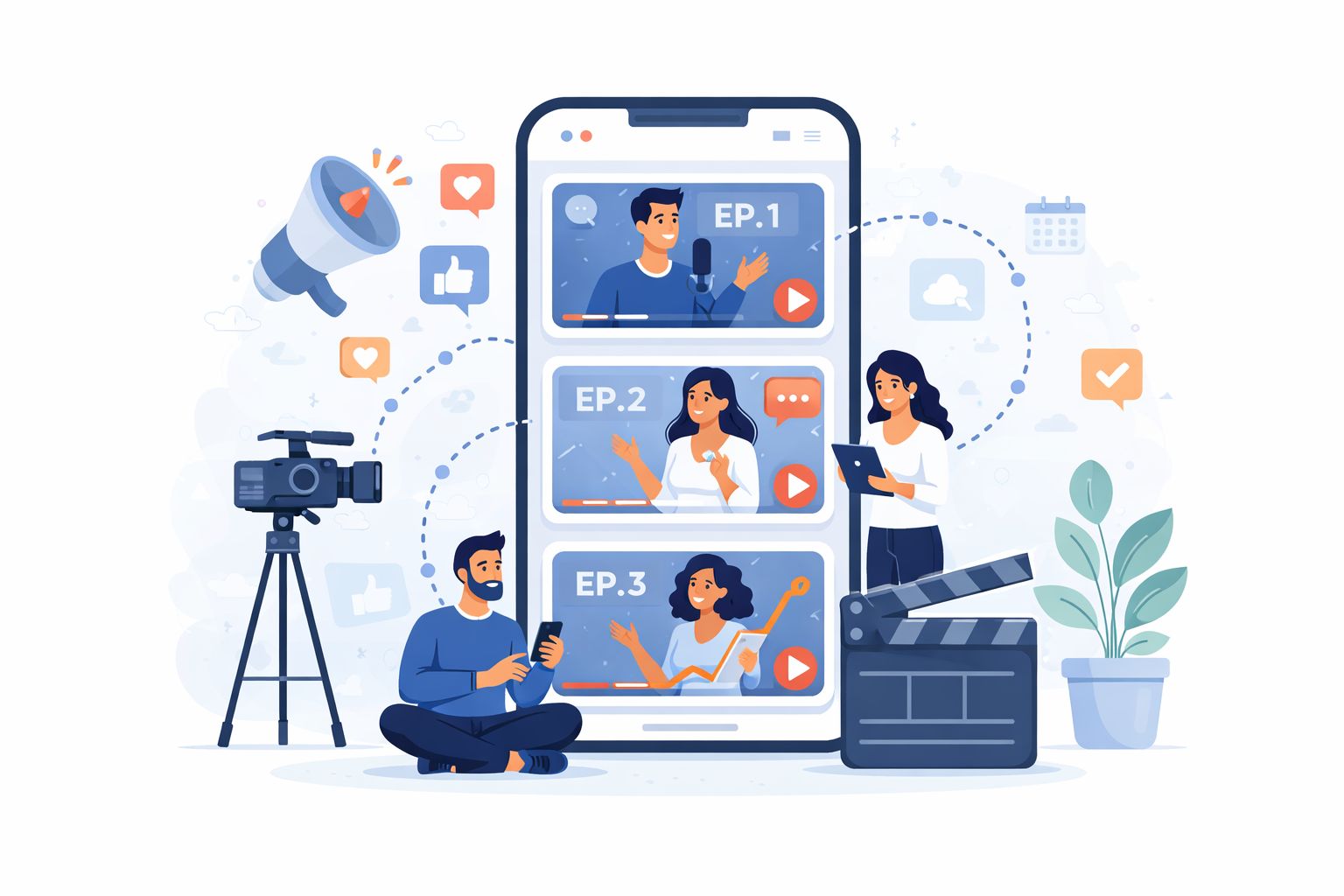
An episodic content series structures brand content as a multi-part narrative with a defined arc – individual episodes that build on each other, create anticipation, and give audiences a reason to return repeatedly rather than engaging once and moving on.
Why Episodic Content Works
The human brain is neurologically wired for narrative continuity. The same psychological mechanism that makes people binge television series – the need for resolution – applies to branded episodic content. Each unresolved episode functions as an open loop that drives return engagement.
Key Metrics to Track
- Episode-to-episode audience retention rate
- Save and bookmark rate per episode
- Subscriber or follower growth correlated with each series release
- Average watch or read time per episode
Real-World Example: Discovery’s Shark Week
Discovery Channel transformed a themed programming week into a recurring global cultural moment through multi-platform episodic content: behind-the-scenes footage, countdown content, prediction challenges, and exclusive reveals dripped across multiple weeks. Shark Week consistently attracts 35 million+ views per season, with trending globally every year – a direct result of episodic content engineering, not just the subject matter.
How to Execute an Episodic Content Strategy
- Map the complete narrative arc – beginning, middle, and end – before publishing episode one; improvised series lose coherence quickly
- Establish a consistent visual identity (color palette, templates, thumbnail style) so audiences recognize new episodes immediately as they scroll
- End every episode with an unresolved question or a teaser for the next installment – the open loop is what drives return visits
- Build a detailed content calendar before launch and protect the publishing schedule; missed episodes break audience habit
Best for: B2B brands, media companies, startups educating a new market, and education platforms building authority in a niche.
Strategy 5: Real-Time Marketing (Newsjacking)
What Is Real-Time Marketing?
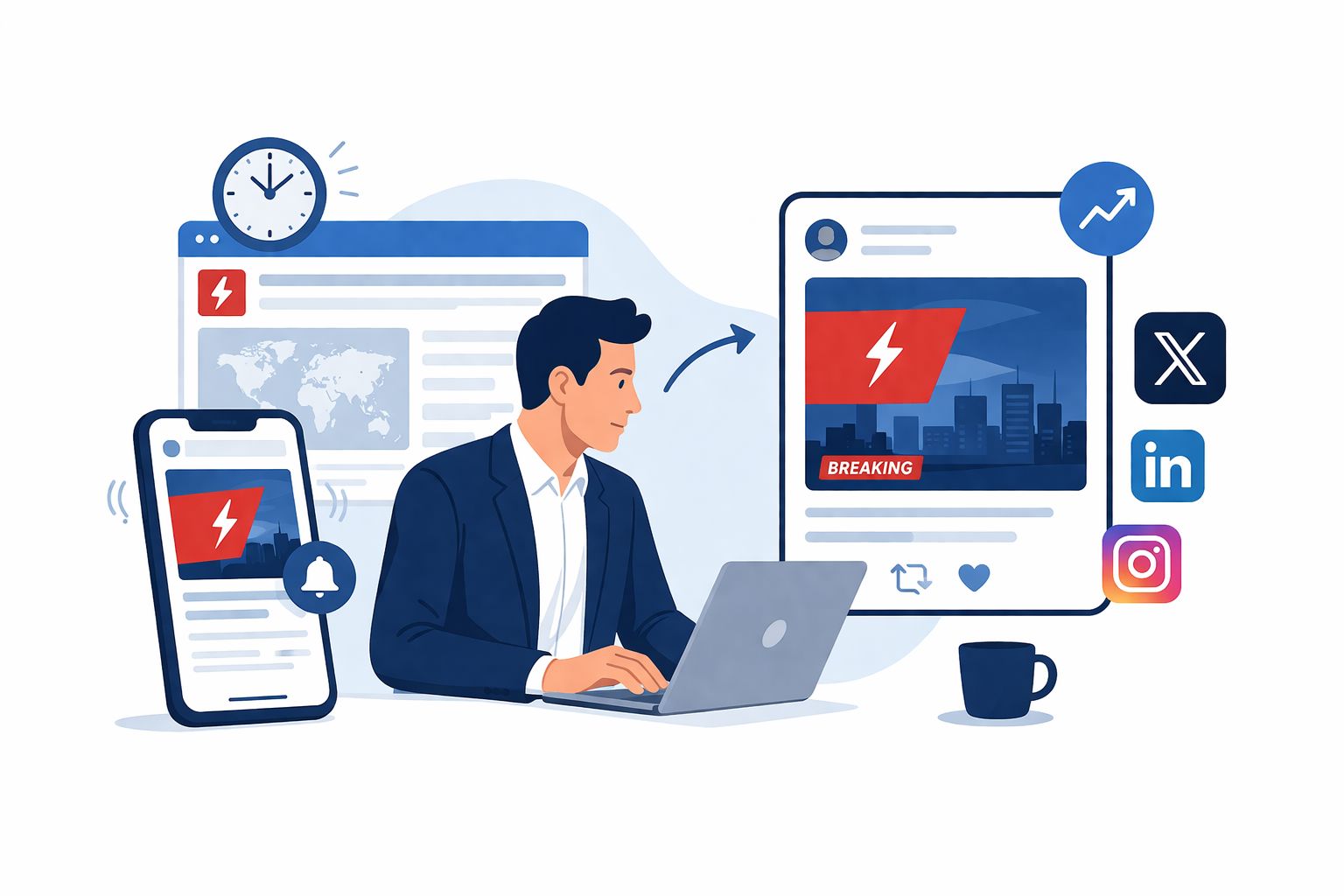
Real-time marketing, also known as newsjacking, is the practice of inserting your brand into a trending news story or cultural moment in a timely, relevant, and brand-appropriate way – inheriting the existing attention and emotional energy of the news cycle.
Why Real-Time Marketing Works
A trending story already has a pre-assembled audience and emotional momentum. When a brand positions itself inside that moment credibly and quickly, it earns earned media coverage and organic reach equivalent to campaigns with multimillion-dollar paid distribution budgets – at near-zero cost.
Key Metrics to Track
- Earned media value (EMV) generated from the activation
- Share of voice during the event window
- Press mentions and media pickup
- Organic reach spike relative to baseline
Real-World Example: Aviation Gin’s Peloton Response
When a 2019 Peloton holiday advertisement drew widespread public criticism, Aviation Gin responded within 72 hours – casting the same actress in a counter-narrative video showing her celebrating her freedom with friends, a glass of Aviation Gin in hand. The video generated 4 million+ views within 48 hours and earned coverage from The New York Times, Ad Age, and dozens of major publications at zero media spend. The brand estimated the earned media value far exceeded its entire marketing budget for the period.
How to Execute a Real-Time Marketing Strategy
- Set up Google Alerts, X/Twitter trending monitors, and social listening tools filtered by your brand category and industry keywords
- Establish a rapid-response approval process with decision authority consolidated to two or three people who can approve content within 30–60 minutes of an opportunity emerging
- Pre-build templated content formats (video templates, image formats, copy frameworks) so that only the specific content needs filling in when an opportunity arises – speed is the single most important variable
- Know the hard boundaries: never insert your brand into tragedy, grief, natural disasters, or politically divisive events; the reputational downside far outweighs any potential upside
Best for: Consumer brands with distinct voice and personality, media companies, and brands with fast internal decision-making processes.
Strategy 6: Social Commerce
What Is Social Commerce?
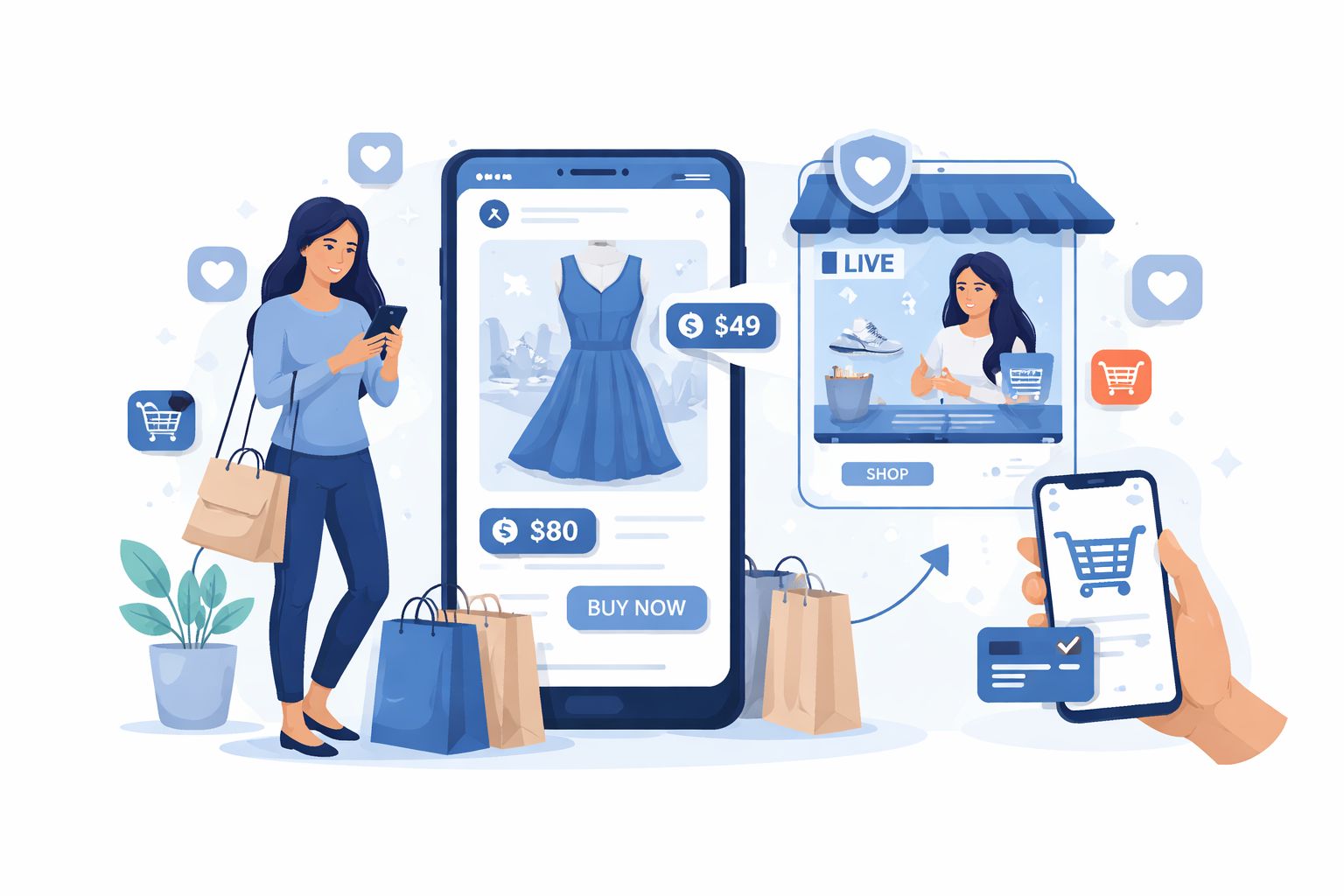
Social commerce is the practice of embedding shoppable product tags, in-app checkout, and live shopping experiences directly into social media content – eliminating the need for users to leave the platform to complete a purchase.
Why Social Commerce Works
Every additional step between product discovery and purchase reduces conversion probability. In-app shopping eliminates redirect friction, external site load times, account creation requirements, and checkout abandonment – capturing purchase intent at its peak emotional moment, before it dissipates.
Key Metrics to Track
- Revenue directly attributed to social channels
- Add-to-cart rate from shoppable social content
- Live shopping session conversion rate
- Return on ad spend (ROAS) from shoppable posts and stories
Real-World Example: Zara on TikTok Shop
Zara integrated shoppable product tags into outfit-of-the-day (OOTD) content and creator collaborations across TikTok and Instagram. Viewers could tap a tagged garment, review product details, select a size, and complete the purchase without leaving the app – converting passive content browsing into immediate transactions. The brand reported significant reduction in purchase cycle length and measurably lower cart abandonment rates for social-originated traffic.
How to Execute a Social Commerce Strategy
- Optimize your entire product catalog for mobile-first display: clear hero images on white or lifestyle backgrounds, concise product descriptions under 80 characters, and price points displayed prominently
- Tag products in every eligible piece of content across all formats – feed posts, stories, reels, and short-form video – with no exceptions
- Invest in live shopping sessions; brands in Southeast Asia and China consistently report conversion rates 10× higher during live shopping events compared to standard shoppable posts
- Automate post-purchase follow-up touchpoints – order confirmations, shipping updates, and re-engagement sequences – directly on WhatsApp or Messenger using a tool like ChatbotX, where open rates are significantly higher than email
Best for: E-commerce, direct-to-consumer (DTC) brands, fashion, beauty, and food and beverage.
Strategy 7: Employee Advocacy
What Is Employee Advocacy?
Employee advocacy is a strategy in which a company empowers and equips its employees to authentically share content about industry topics, company culture, and product insights on their personal professional networks – amplifying brand reach through trusted individual voices rather than corporate channels.
Why Employee Advocacy Works
Employee-generated content consistently outperforms brand page content in both reach and engagement. LinkedIn’s B2B Marketing Benchmark reports that employee content generates 8× higher engagement than posts from brand pages. The credibility gap between “company announcement” and “real employee perspective” is enormous – audiences know the difference and respond accordingly.
Key Metrics to Track
- Employee participation rate (% of team actively posting)
- Organic reach generated by employee posts
- LinkedIn profile views and connection growth for active advocates
- Pipeline revenue influenced by employee-generated content
Real-World Example: HubSpot on LinkedIn
HubSpot invested in developing employees as genuine industry thought leaders – offering content workshops, approved resource libraries, messaging frameworks, and personal branding coaching. The result: HubSpot employees’ individual posts regularly outperform HubSpot’s official company page in engagement, reach, and inbound lead generation, while simultaneously attracting high-quality talent who discovered the company through employee content.
How to Execute an Employee Advocacy Strategy
- Build the internal culture first – employees only advocate authentically when they are genuinely proud of where they work and feel psychologically safe to share opinions publicly
- Provide a shared content library with approved data points, key messaging, and easy-to-customize templates that reduce the friction of posting
- Coach employees on personal branding; avoid issuing a list of restrictions without accompanying guidance – this creates anxiety, not advocacy
- Publicly celebrate employees who produce strong content to create positive internal momentum and demonstrate leadership’s genuine support for the initiative
Best for: B2B companies, SaaS firms, consulting practices, professional services, and any organization with recognized subject-matter experts.
Strategy 8: Data-Driven Optimization
What Is Data-Driven Social Media Optimization?
Data-driven optimization treats every piece of social media content as a testable hypothesis and every performance report as a strategic input – using analytics, A/B testing, and structured weekly reviews as the operating system behind all social media decisions.
Why Data-Driven Optimization Works
Without a measurement framework, even exceptional creative is a guess. Brands that build a data feedback loop improve content quality, targeting precision, and ROI continuously – compounding gains over time while competitors relying on intuition stagnate or plateau.
Key Metrics to Track
- Revenue directly attributed to social media (not vanity metrics like follower count)
- Content decay rate (how quickly engagement drops after publishing)
- A/B test win rate (% of tests that produce statistically significant improvement)
- Customer acquisition cost (CAC) from social channels vs. other channels
Real-World Example: Spotify Wrapped
Spotify analyzed listening behavior across 600 million+ users and transformed proprietary behavioral data into deeply personal, shareable annual recap stories. The result: over 1 billion Wrapped stories were shared by users in the first three days of the 2024 campaign – all organic, all user-generated, at effectively zero media cost. Spotify Wrapped is the most successful annual social media campaign in the history of streaming, built entirely on data intelligence.
How to Execute a Data-Driven Optimization Strategy
- Define KPIs that connect directly to business outcomes – revenue, pipeline, retention – not reach or impressions alone
- Run A/B tests one variable at a time: test thumbnail vs. thumbnail, or opening line vs. opening line – never multiple variables simultaneously, or results become uninterpretable
- Conduct a structured weekly performance review and commit to extracting exactly one actionable insight per session; this builds analytical discipline over time
- Monitor content decay curves – high-performing evergreen content should be refreshed and republished on a planned cadence rather than left to fade in the feed
Best for: Any business with measurable revenue goals; especially critical for e-commerce, SaaS, and performance marketing teams.
How to Choose the Right Strategy for Your Business
Not every strategy is appropriate for every business type, team size, or growth stage. Use the framework below to identify your starting point and your logical second layer.
| Business Type | Start With | Then Layer In |
|---|---|---|
| E-commerce & DTC | Social Commerce + UGC | Influencer Marketing |
| B2B & SaaS | Employee Advocacy + Episodic Content | Community Building |
| Consumer Brands (FMCG) | UGC + Influencer Marketing | Real-Time Marketing |
| Personal Brand & Creators | Community Building + Episodic Content | Data-Driven Optimization |
| Professional Services | Employee Advocacy + Episodic Content | Community Building |
General Principles for Strategy Selection
Start with one strategy. Validate it with at least 90 days of consistent, high-quality execution before adding a second layer. Splitting attention across multiple strategies before achieving results with one is the most common reason social media programs fail.
Match strategy to your team’s capabilities. Real-time marketing (newsjacking) requires a team that can produce and approve content within 30–60 minutes. If your approval process takes 48 hours, this strategy will consistently miss its windows. Choose strategies that fit your actual organizational speed, not your aspirational speed.
The highest-performing strategy combinations based on cross-industry data are:
- UGC + Community Building (consumer and lifestyle brands)
- Influencer Marketing + Social Commerce (fashion, beauty, DTC)
- Data-Driven Optimization paired with any content-heavy approach (universal)
Frequently Asked Questions
What is the most effective social media strategy for small businesses in 2026?
User-generated content (UGC) and community building offer the highest return relative to investment for small businesses. Both strategies leverage existing customers as a primary asset rather than requiring large ad budgets, and both build compounding trust over time without linear spend scaling. For small businesses with limited resources, starting with a branded hashtag campaign and a simple community group requires minimal upfront investment and produces measurable results within 60–90 days.
How long does it take to see results from a social media strategy?
Results timelines vary significantly by strategy type. Real-time marketing can generate measurable results within 24–72 hours. Social commerce typically produces measurable conversion data within 1–4 weeks. Influencer marketing campaigns show results within 2–6 weeks per campaign. UGC and episodic content strategies produce meaningful growth signals within 1–3 months. Community building and employee advocacy are long-term investments with compounding returns – expect 3–12 months before the network effects become clearly visible.
How do I measure social media ROI accurately?
Move beyond vanity metrics (likes, follower count, impressions) and track indicators directly linked to business outcomes: cost per acquisition (CPA), social-attributed revenue (using UTM parameters and platform native attribution), and customer lifetime value (LTV) segmented by social acquisition source. For B2B organizations, track pipeline influenced by social content and employee advocacy in addition to direct conversion metrics.
Can I run multiple social media strategies at the same time?
Yes – but sequentially, not simultaneously from day one. Start with one strategy, validate it with 90 days of consistent execution and measurable positive results, then layer in a complementary second strategy. Running multiple strategies at once without established execution discipline typically results in mediocre performance across all of them rather than strong performance in any. The most effective multi-strategy combinations are: UGC + Community Building, Influencer Marketing + Social Commerce, and Data-Driven Optimization paired with any content-heavy approach.
What is the difference between organic and paid social media strategy?
Organic social media strategy focuses on building audience, trust, and engagement through non-paid content – UGC, community building, employee advocacy, and episodic series are primarily organic strategies. Paid social strategy uses advertising budget to accelerate reach, target specific audiences, and drive direct response. The most effective social media programs integrate both: organic content builds credibility and reduces paid CPMs over time, while paid amplification accelerates results from proven organic content. All eight strategies in this guide can be amplified with paid distribution once organic performance is validated.
How does AI fit into a social media marketing strategy in 2026?
AI tools are increasingly applied across four areas of social media strategy: content creation (AI-assisted copy, image, and video generation), community management (automated responses to common queries across WhatsApp, Messenger, and webchat – platforms like ChatbotX centralize all these channels into a single AI-powered inbox), performance analysis (pattern recognition in large datasets, predictive performance scoring), and social commerce (personalized product recommendations and post-purchase automation). The highest-ROI applications in 2026 are in community management and post-purchase automation, where AI handles high-volume repetitive touchpoints and frees human team members for relationship-building and strategic work.
Ready to Put Your Strategy into Action?
A great social media strategy is only as powerful as the tools that execute it. The strategies in this guide – from community building to social commerce to real-time marketing – all share one common bottleneck: responding to customers fast enough, across enough channels, without burning out your team.
That’s exactly what ChatbotX is built for.
ChatbotX is an open-source, agentic omnichannel chatbot platform trusted by 5,000+ brands. It connects WhatsApp, Messenger, Zalo, and webchat into a single unified inbox – with AI-powered flows that handle FAQs, qualify leads, send post-purchase follow-ups, and route complex queries to your human agents automatically.
What you can do with ChatbotX:
- 🤖 Automate community management – handle repetitive queries across all channels 24/7 so your team focuses on relationships, not repetition
- 🛒 Supercharge social commerce – send post-purchase confirmations and re-engagement sequences directly on WhatsApp, where open rates exceed 90%
- 📣 Run targeted broadcasts – reach 10,000+ contacts in one click with personalized, segmented campaigns
- 📊 Capture and qualify leads – deploy AI agents that detect intent and route high-value prospects to your sales team instantly
“Build once, deploy everywhere.” ChatbotX lets you set up your AI chatbot once and run it simultaneously across every channel your customers use – without writing a single extra line of code.