Quick Summary: WhatsApp has evolved far beyond a messaging app – it is now the highest-converting conversational sales channel available to B2C businesses. With open rates above 90% and over 3 billion active users globally, brands that treat WhatsApp as a structured revenue channel consistently outperform those using it as an informal inbox. This guide walks through the complete system: attracting high-intent leads, qualifying them automatically with AI, routing conversations to the right agent and closing deals without ever leaving the chat.
Launch agentic chat marketing in minutes with ChatbotX













Why WhatsApp Dominates B2C Sales in 2026
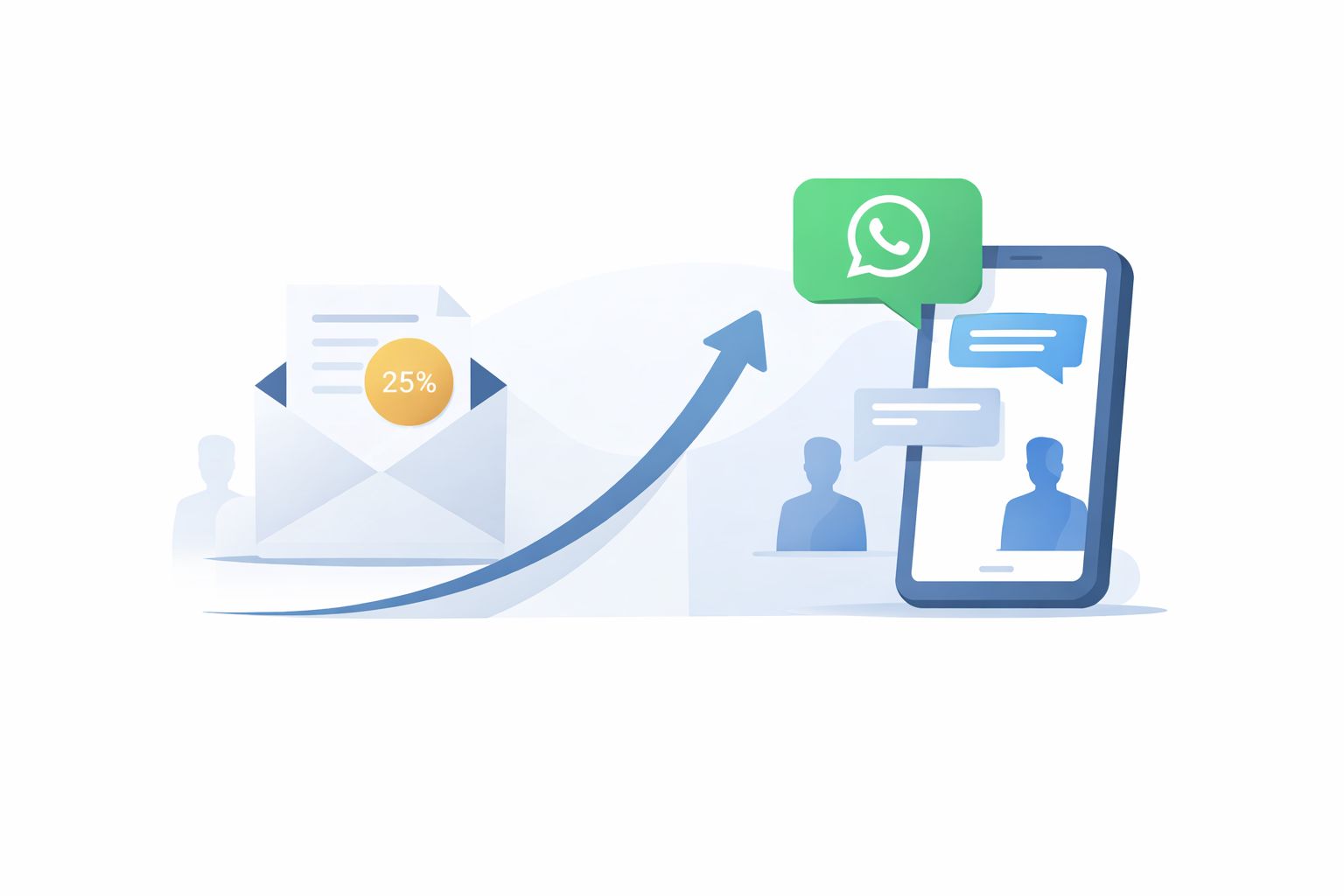
The average email marketing campaign achieves an open rate between 20% and 30%. WhatsApp messages are read by more than 90% of recipients – usually within three minutes of delivery. That gap alone explains why businesses across Southeast Asia, Latin America, the Middle East and Europe are shifting significant portions of their sales conversations to WhatsApp.
But open rate is only the beginning. Three structural properties make WhatsApp unusually effective as a sales channel.
Buyers Enter the Conversation Already Interested
Unlike cold email or paid display advertising, WhatsApp conversations almost always begin with the customer. Someone sees a product post, scans a QR code on packaging, clicks a chat link on a website or taps a WhatsApp ad – and then they initiate contact. By the time a message arrives, the customer has already made a decision to engage. That is the opposite of most lead generation channels, where the first challenge is capturing attention from someone who did not ask to hear from you.
Questions Get Answered in Real Time
Traditional B2C sales funnels introduce friction at every stage. A prospect submits a form and waits for a response. They call a support line and wait on hold. They send an email and receive a reply two days later, by which time they have already purchased elsewhere.
WhatsApp removes that friction entirely. Questions and answers happen in the same conversation, at the pace of normal human messaging. A customer can ask whether a product comes in a specific size, receive a photo and a confirmation, and complete a purchase – all within a 15-minute conversation.
One Sales Rep Can Handle Multiple Conversations Simultaneously
A phone call locks one salesperson into one conversation. WhatsApp allows the same rep to manage 10 to 20 active conversations simultaneously without losing context, because each thread is persistent and the customer is typically comfortable with natural response delays.
The caveat: These advantages only compound when the team has proper infrastructure – automated routing, AI-assisted qualification and manager-level visibility. Without that foundation, high message volume creates chaos rather than revenue.
WhatsApp Business App vs WhatsApp Business API: Which One Do You Need?
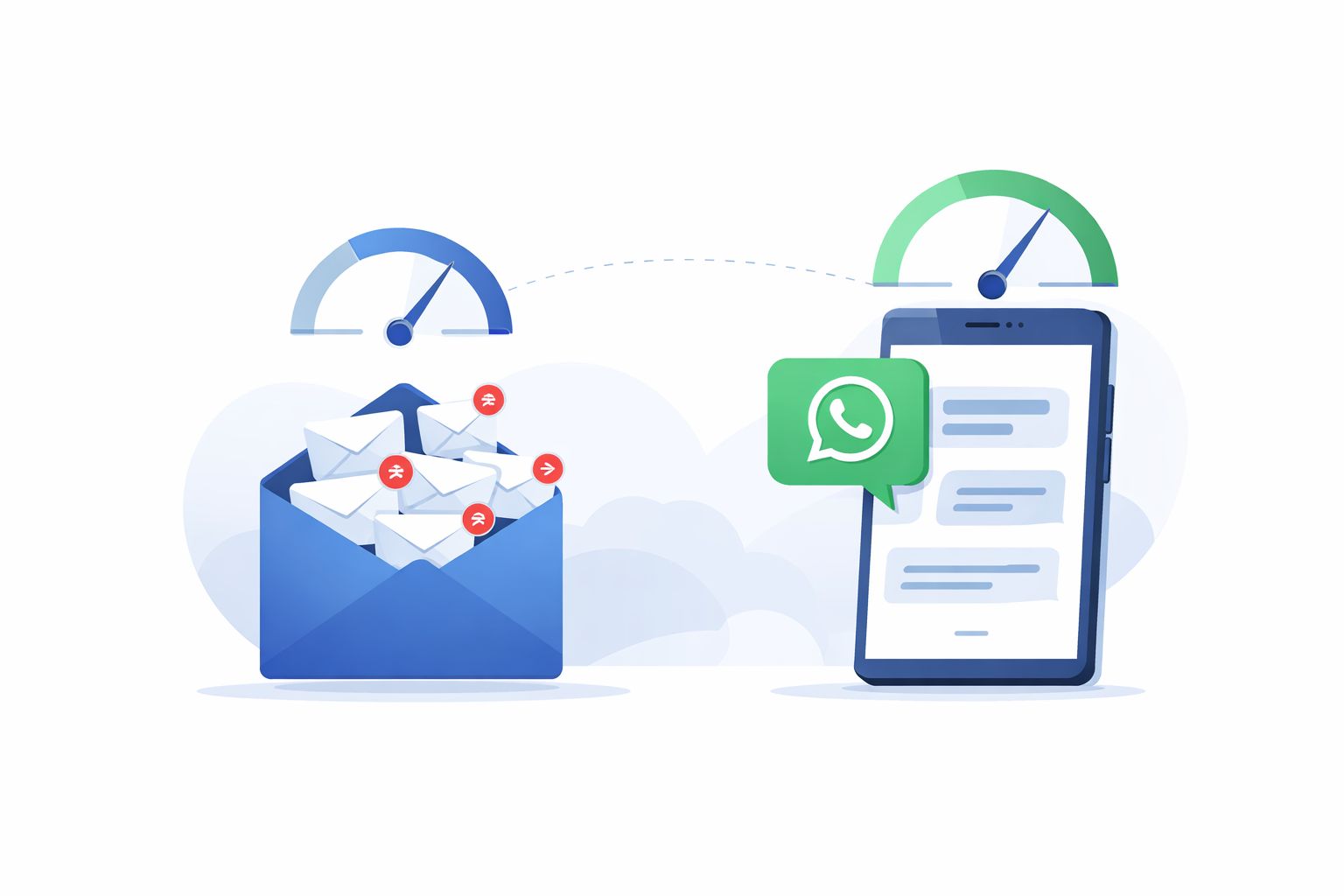
This is the most consequential decision a business makes when setting up WhatsApp sales. Choosing the wrong product does not just limit performance – it creates operational problems that get harder to unwind as volume grows.
WhatsApp Business App
The Business App is designed for solo operators and very small teams managing a low volume of daily conversations.
Use the Business App if:
- One or two people handle all incoming messages
- You receive fewer than 30–40 conversations per day
- Your sales process is simple and does not require tracking or reporting
- You do not need to integrate WhatsApp data with a CRM
What it handles well: business profile setup, basic quick replies, product catalogs and simple conversation labeling.
Where it breaks down: there is no shared inbox, no automated routing, no CRM integration and no way to track performance across a team. When a second or third salesperson joins, conversations get siloed on individual devices and leads fall through the gaps.
WhatsApp Business API
The API is built for teams that need WhatsApp to function as a serious, measurable sales channel – not an informal inbox. For full technical details, refer to the official WhatsApp Business API documentation from Meta.
Use the WhatsApp Business API if:
- Multiple agents need to reply to and share conversations
- Leads come in consistently from advertising, social media or your website
- You need routing logic based on region, language, product type or agent availability
- You want AI to handle initial qualification before a human agent joins
- You need a record of every conversation that persists regardless of staff changes
What it handles well: everything the Business App cannot – shared inbox, automated workflows, AI agent integration, CRM sync and reliable attribution from first message to closed deal.
Important: The API cannot be used directly as an app. It is designed to run through a third-party platform (called a Business Solution Provider), which provides the operational layer – inbox, routing, analytics and automation – on top of the API’s core messaging infrastructure.
Platforms like ChatbotX – WhatsApp Business API platform for sales teams connect directly to the WhatsApp Business API and add the tools sales teams actually need day to day: a shared workspace where agents collaborate, configurable routing rules, AI-powered chatbots that stay active throughout each conversation, and dashboards that give managers full visibility into SLA compliance and team performance.
3 WhatsApp Rules Every Sales Team Must Understand
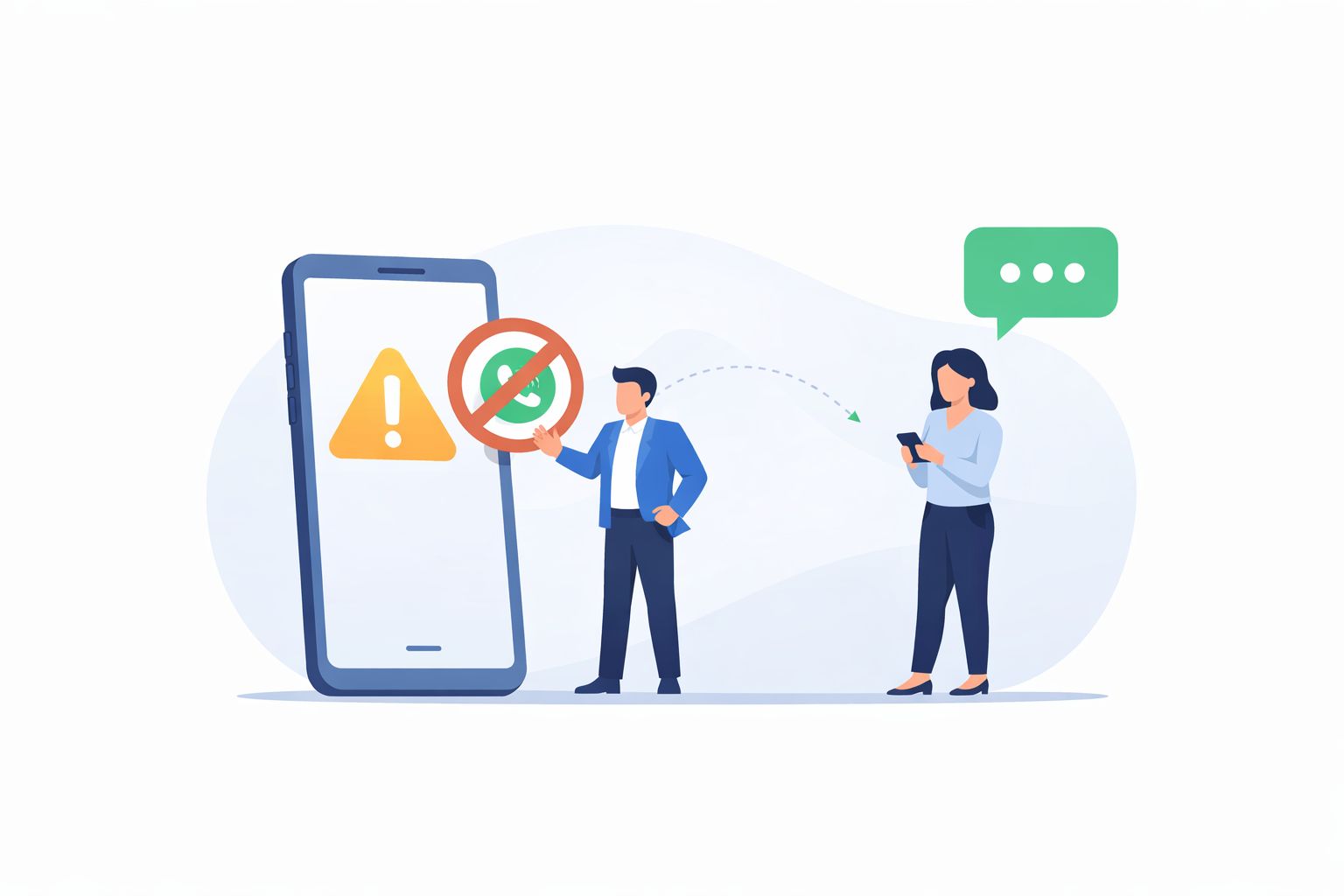
Many businesses damage their WhatsApp accounts – or lose them entirely – by misunderstanding how the platform’s policies affect outbound sales. These three rules shape nearly every WhatsApp sales workflow.
Rule 1: Customers Must Initiate or Opt In Before You Message Them
WhatsApp prohibits businesses from sending unsolicited messages to users who have not made contact or explicitly agreed to receive messages. In practice, opt-in happens when a customer clicks a WhatsApp ad, taps a chat button on your website, scans a QR code or follows a direct link.
This rule benefits sales teams more than it limits them. Because customers start the conversation, every message you receive represents demonstrated purchase intent – not a random visitor who landed on your site. WhatsApp leads are structurally warmer than almost any other inbound channel.
High-performing opt-in entry points:
- Click-to-WhatsApp Ads on Facebook and Instagram
- WhatsApp buttons embedded on product pages and landing pages
- QR codes on physical packaging, in-store displays or printed materials
- WhatsApp links included in SMS and email campaigns
Each entry point can be tracked individually so you know which source produces the highest-converting conversations. WhatsApp lead source attribution tools connect ad spend to actual revenue outcomes rather than just conversation volume.
Rule 2: The 24-Hour Messaging Window Is Your Primary Sales Window
After a customer sends a message, your team can respond freely for the next 24 hours. During this period, the conversation behaves like a normal chat – salespeople can answer questions, share product details, negotiate and guide the customer toward a decision.
Most WhatsApp sales activity happens inside this window because the conversation is live and the customer’s attention is active. High-performing teams treat the 24-hour window with urgency: every hour of delay reduces conversion probability.
What to accomplish inside the window:
- Qualify the lead with targeted questions
- Deliver product information, photos or video
- Handle objections in real time
- Send a payment link or booking confirmation
WhatsApp SLA monitoring and real-time alerts notify agents when a conversation is approaching the 24-hour boundary – preventing the most common reason deals stall.
Rule 3: Message Templates Reopen Conversations After the Window Closes
Once the 24-hour window expires, the only way to contact a customer again is through pre-approved WhatsApp Message Templates. These are structured messages reviewed and approved by Meta before use – see Meta’s official WhatsApp Message Template guidelines for approved categories and formatting requirements.
Templates are how serious WhatsApp sales teams maintain momentum with prospects who did not convert during the first conversation. A well-timed template – sent three days after initial contact with a relevant offer or a low-pressure check-in – brings a significant percentage of cold leads back into active conversation.
Common template use cases for sales:
- Post-consultation follow-up (“Still thinking about [product]? Happy to answer any questions.”)
- Appointment or booking reminders
- Price drop or limited availability alerts for interested prospects
- Order confirmation and shipping updates that re-open conversation
Managing templates inside the same platform you use for live conversations eliminates the friction of switching tools and allows follow-up sequences to trigger automatically based on lead status. A built-in WhatsApp Message Template manager lets teams create, submit, and deploy approved templates directly within their sales workflow.
How to Sell on WhatsApp: 6-Step System
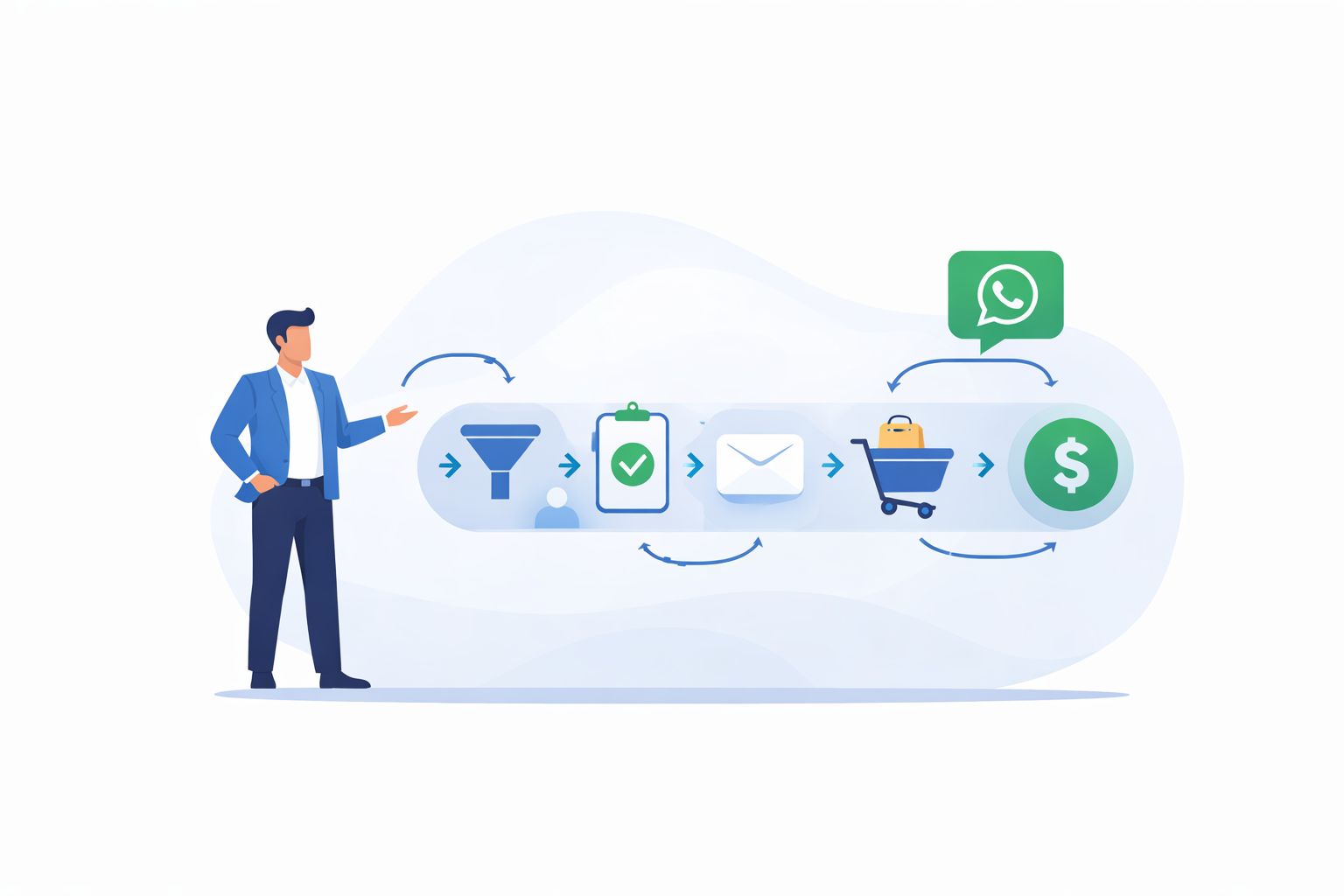
The businesses generating consistent revenue from WhatsApp are not doing anything mysterious. They have built a repeatable system that captures leads, qualifies them quickly, routes conversations to the right person and follows up consistently until a decision is made.
Here is that system, step by step.
Step 1 – Drive High-Intent Leads Into WhatsApp
WhatsApp sales begins before the first message arrives. The entry point determines lead quality more than almost anything else. A customer who clicked a targeted ad after reading a product description enters the conversation with far more purchase intent than someone who scanned a generic QR code at a trade show.
Entry point quality ranking:
| Entry Point | Intent Level | Setup Complexity |
|---|---|---|
| Click-to-WhatsApp Ad (product-specific) | Very High | Medium |
| WhatsApp button on product page | Very High | Low |
| Referral link from existing customer | Very High | Low |
| QR code on product packaging | High | Low |
| WhatsApp link in email campaign | Medium–High | Low |
| Generic QR code on branded materials | Medium | Low |
The tracking principle: Do not just count conversations – track which entry point each conversation came from. Over time this data shows you which campaigns are worth scaling and which are generating volume without conversion. Integrating Click-to-WhatsApp Ads with WhatsApp lead tracking attributes each incoming conversation to its source campaign automatically.
Step 2 – Qualify Leads in the First Few Messages
Not every incoming message represents a buyer who is ready to purchase. Early qualification helps sales teams focus time and attention on the leads most likely to convert, rather than treating every conversation with equal urgency.
The four qualification questions that matter most:
- What specific product, service or outcome are they looking for?
- What is their approximate budget or expected price range?
- What is their decision timeline – immediate, within a week or exploratory?
- Are they comparing options, or is this a direct purchase inquiry?
Automating qualification with AI:
Manually asking these questions in every new conversation is time-consuming and inconsistent. An AI chatbot can greet new leads immediately, collect qualification data through natural conversation, and pass the thread to a human agent with a complete profile already attached.
An AI-powered WhatsApp chatbot for lead qualification handles first-touch qualification around the clock – including outside business hours – so no lead goes cold while waiting for a human to become available. Unlike basic auto-reply bots, a well-configured AI stays active throughout the conversation, surfacing relevant product information mid-chat, flagging high-intent signals like pricing questions, and prompting agents to take the next step when momentum is building.
📖 Related reading: How AI Chatbots Improve WhatsApp Lead Qualification – a deep dive into how automated qualification reduces response time and increases conversion rates for B2C sales teams.
Step 3 – Route Conversations to the Right Agent
As message volume grows, conversations need to be distributed intelligently across the team. Without a routing system, the same lead might receive two replies from different agents – or none at all, depending on who happened to check the inbox last.
Effective routing for B2C WhatsApp sales accounts for several variables simultaneously:
Routing by geography and language. A customer messaging in Spanish from Mexico City should reach a Spanish-speaking agent familiar with that market – not whoever is currently online. Teams operating across multiple countries or regions need routing rules that respect linguistic and geographic context.
Routing by product line or deal size. A prospect asking about a premium service tier should not enter the same queue as someone asking a basic product question. Routing by inquiry type or lead score ensures specialist agents handle the conversations where their expertise creates the most value.
Routing by shift and time zone. Conversations arriving outside a market’s business hours need a fallback path – either to agents in a different time zone or to an AI agent that keeps the conversation alive until a human is available.
Routing by current agent load. Even within a single team, assigning new conversations evenly prevents individual agents from becoming overloaded while others are idle.
Automated WhatsApp conversation routing supports multi-condition routing workflows that update dynamically as agent availability changes – ensuring conversations reach the right person without manual intervention.
Step 4 – Manage All Conversations in a Shared Inbox
When conversations live on individual phones, the business has no visibility, no continuity and no way to measure performance. If a salesperson leaves, every conversation thread – and every relationship with those customers – leaves with them.
A shared inbox solves the operational foundation of WhatsApp sales:
- Multiple agents can view, reply to and transfer conversations
- Full conversation history is preserved regardless of which agent handled previous messages
- Internal notes allow agents to hand off context without re-asking the customer to repeat themselves
- CRM integration (Salesforce, HubSpot CRM, Zoho and others) syncs conversation data with the broader sales pipeline
The metrics that matter at the manager level:
| Metric | What It Reveals |
|---|---|
| First response time | How quickly leads are being engaged – under 5 minutes is the benchmark |
| Conversations per agent | Workload distribution and capacity planning |
| SLA breach rate | % of conversations not responded to within target window |
| Lead-to-conversion rate by agent | Who is actually closing, and who needs coaching |
| Stalled conversations (>24h inactive) | Leads at risk of going permanently cold |
Without these metrics, WhatsApp sales management runs on gut feel. With them, managers can identify problems before they become lost revenue.
📖 Related reading: WhatsApp Shared Inbox: How to Set Up a Team Sales Workspace – a step-by-step guide to centralizing WhatsApp conversations for multi-agent sales teams.
Step 5 – Follow Up Systematically with Message Templates
Research consistently shows that the majority of B2C purchases require more than one conversation before a decision is made. Yet most sales teams follow up once – or not at all – and write off the lead.
A structured follow-up cadence using WhatsApp Message Templates recovers a significant share of those conversations.
A proven follow-up sequence:
| Day | Action |
|---|---|
| Day 0 | Respond immediately inside the 24-hour window – qualify and advise |
| Day 1 | Template: “Do you have any questions about [product/service]?” |
| Day 3 | Template: Share a relevant case study, review or product comparison |
| Day 7 | Template: Soft urgency (“Our [offer/availability] updates this week”) |
| Day 14 | Template: Final check-in with a clear call to action or opt-out option |
The key is that every message after day zero must use an approved Message Template. Attempting to send free-form messages outside the 24-hour window risks account restrictions that are far more damaging than any single lost deal.
WhatsApp follow-up sequence automation allows teams to build, manage and trigger follow-up sequences automatically based on lead lifecycle stage – removing the dependency on individual agents remembering to follow up.
📖 Related reading: WhatsApp Follow-Up Templates That Actually Convert – real examples of message templates organized by sales stage and industry.
Step 6 – Close the Deal Inside the Conversation
One of WhatsApp’s most significant sales advantages is that the entire purchase journey – from first question to completed transaction – can happen within a single conversation thread. Reducing the number of times a customer has to switch platforms or restart context is one of the fastest ways to improve conversion rates.
A complete in-chat closing sequence:
- Send a written proposal summary with product images or a PDF attachment
- Confirm delivery address, appointment time or service details via chat
- Share a payment link (Stripe, PayPal, local payment gateways) directly in the conversation
- Receive payment confirmation and send order acknowledgment
- Trigger automated post-purchase follow-up for upsell or review request
When this sequence runs smoothly inside a single WhatsApp thread, customers experience a frictionless buying process. When it requires jumping to a website, then an email, then back to chat, conversion drops at every transition.
Real-World Examples: Businesses That Scaled Revenue with WhatsApp
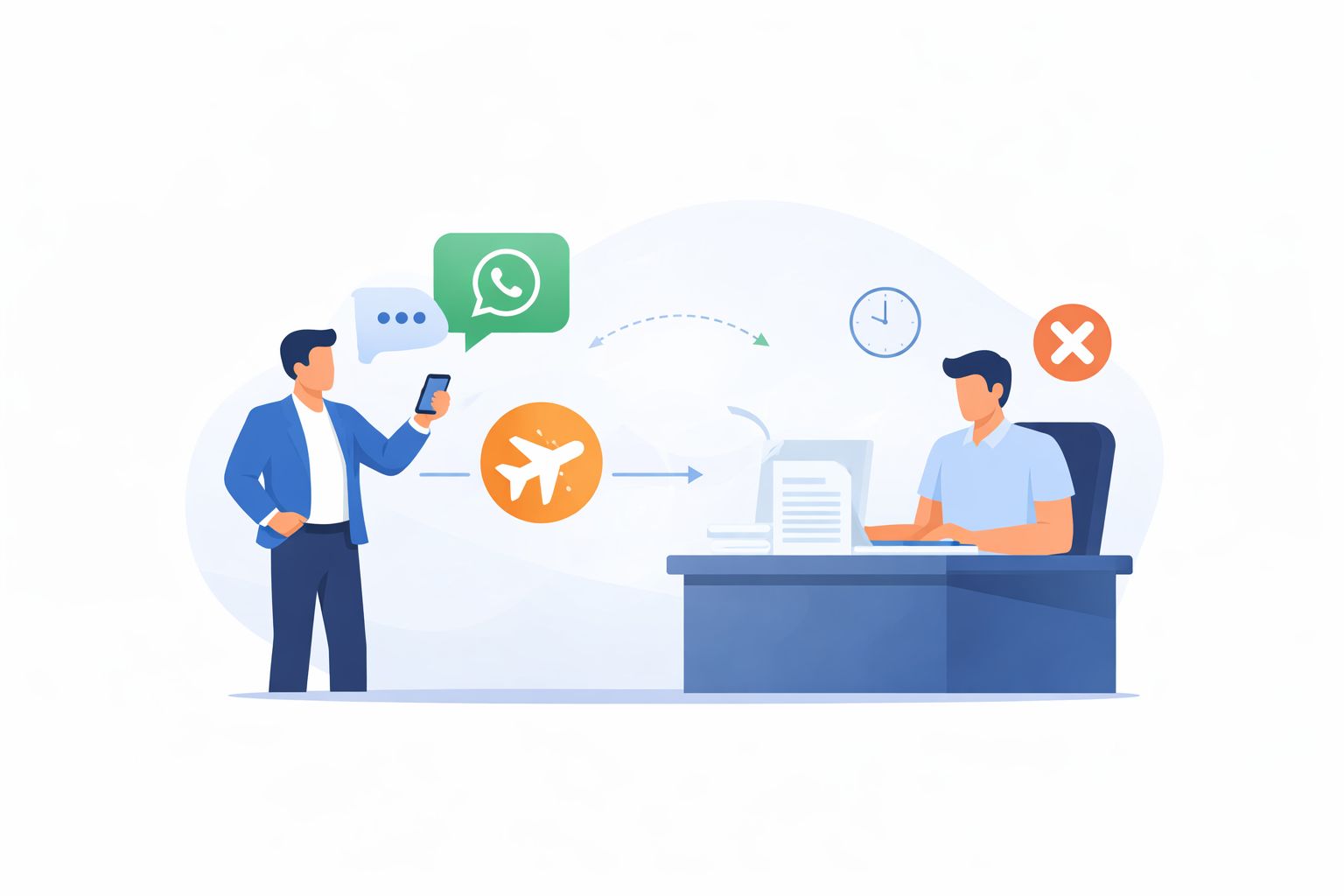
Travel Agency: 60% Shorter Sales Cycle
The problem: Prospective travelers had to fill out inquiry forms and wait 24 to 48 hours for a quote by email. By the time agents responded, many had already booked with a competitor.
The solution: The agency moved its entire consultation process to WhatsApp, routing all incoming inquiries from Click-to-WhatsApp Ads directly into a shared inbox with automated lead qualification.
Results:
- Sales cycle reduced by 60%
- Follow-up rate reached 99.97% (automated)
- Ad-driven leads increased 3x in 90 days
Luxury Car Dealership: 42.5x ROI from WhatsApp
The problem: High-intent buyers researching vehicles on social media had no direct path to connect with a sales agent without calling or visiting in person.
The solution: Agents began sharing vehicle photos, videos and specifications directly in WhatsApp conversations. Targeted broadcast messages re-engaged interested prospects when relevant new inventory arrived.
Results:
- 80,000+ WhatsApp broadcasts sent per month
- 6,000–8,000 new leads generated monthly
- 42.5x ROI from WhatsApp broadcast campaigns
- 10% increase in overall conversion rate
Multi-Branch Beauty Clinic: 18x More Appointments Booked via Chat
The problem: Customers discovered treatments through TikTok and Instagram but abandoned the booking process because it required switching to a separate website or calling a phone number.
The solution: All conversations from WhatsApp, Instagram, Facebook and TikTok were consolidated into one shared inbox with AI-assisted lead prioritization and automatic team assignment.
Results:
- Response time reduced by 75%
- Spam leads filtered out by 60%
- Appointments booked through chat increased 18x
Tools and Platforms That Power WhatsApp Sales
What to Look For in a WhatsApp Sales Platform
When your team is handling more than 50 conversations per day across two or more agents, you need a platform – not just an app. Here are the capabilities that separate functional platforms from basic ones:
| Feature | Why It Matters |
|---|---|
| Shared Team Inbox | Prevents leads from being missed or double-handled |
| AI Chatbot & Qualification | 24/7 lead engagement without increasing headcount |
| Multi-Condition Routing | Gets conversations to the right agent, every time |
| SLA Monitoring | Alerts before leads go cold |
| CRM Integration | Connects WhatsApp activity to revenue reporting |
| Template Manager | Enables systematic follow-up at scale |
| Analytics Dashboard | Proves ROI and identifies conversion bottlenecks |
ChatbotX: Built for WhatsApp Sales Teams
ChatbotX – WhatsApp Business API platform for sales teams is designed specifically for B2C sales teams that need more than a basic messaging tool. It combines shared inbox management, AI-powered lead qualification, multi-condition conversation routing and full CRM connectivity in a single workspace.
What makes ChatbotX particularly effective for sales (rather than just support) is that its AI agent does not simply handle the first message and hand off. It stays active throughout the conversation – recognizing pricing questions as high-intent signals, suggesting next steps to human agents in real time, and automatically re-engaging stalled conversations before the 24-hour window closes.
For teams running WhatsApp across multiple agents, markets or product lines, ChatbotX provides the routing depth and manager-level visibility that turns WhatsApp from a busy inbox into a measurable revenue channel.
When WhatsApp Alone Is Not Enough
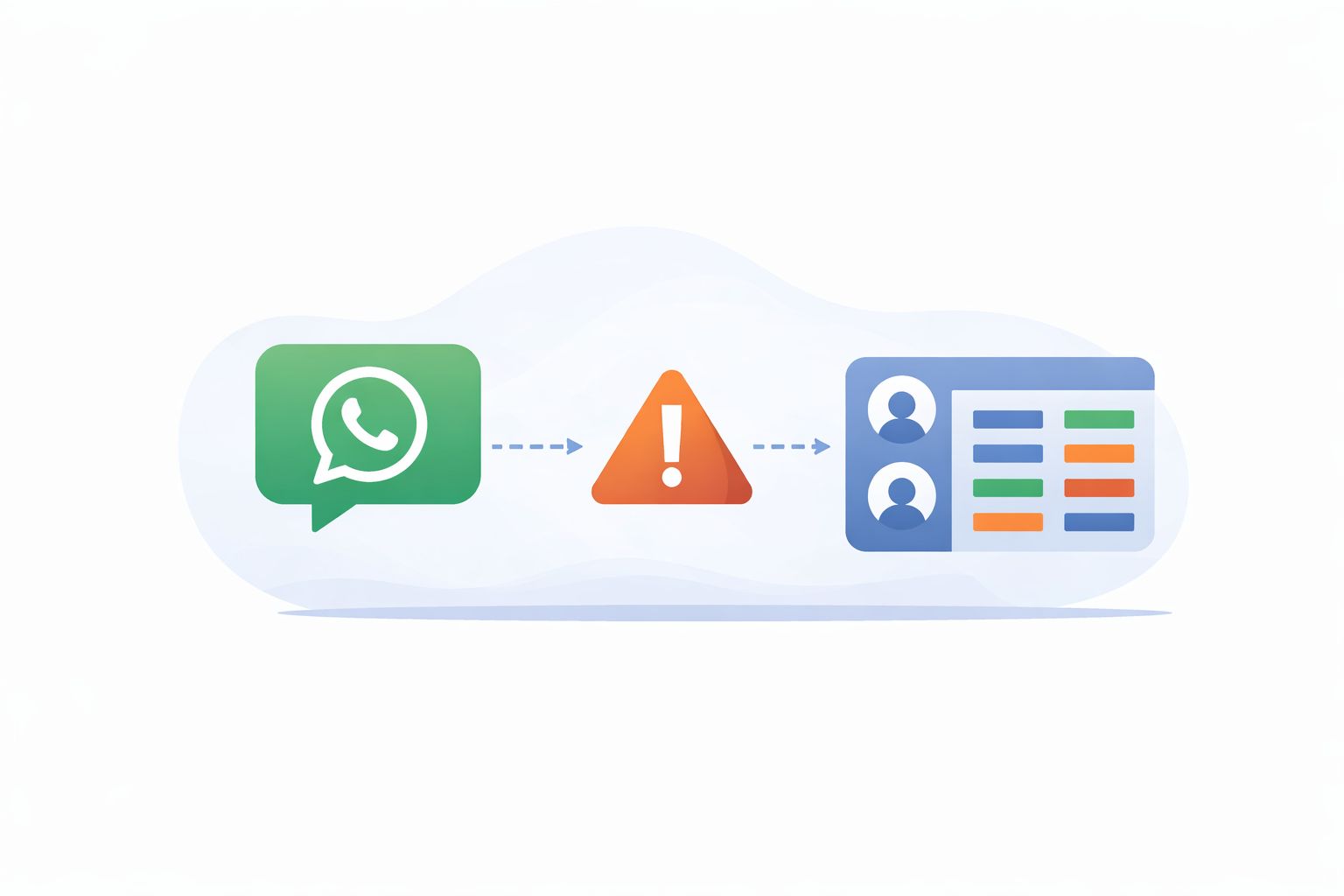
WhatsApp is the right channel. The problem most businesses encounter is not with WhatsApp itself – it is with the infrastructure (or lack of it) they build around it.
Here are the specific points at which WhatsApp without a platform starts costing you revenue:
Conversations start piling up. Without automatic assignment and a shared conversation record, leads get replied to twice or ignored entirely depending on who checked the inbox most recently.
You run ads or campaigns across multiple channels. When leads arrive from Click-to-WhatsApp Ads across different campaigns and markets, there is no way to answer “which leads convert best?” without attribution data. Teams without this information optimize ad spend on gut feel rather than actual conversion performance.
Your team grows beyond two agents. Once there are three or more people replying to WhatsApp conversations, manager visibility becomes critical. Without it, you cannot identify which agents are meeting response time targets, which conversations have breached SLA or which leads have stalled without follow-up.
You need to report WhatsApp revenue to leadership. WhatsApp conversations produce real sales – but without syncing those interactions to a CRM, the revenue impact is invisible to anyone who was not inside the conversation. Connecting WhatsApp to a platform that supports automated WhatsApp conversation routing allows deals, lifecycle stages and conversion outcomes to be tracked as part of the broader sales pipeline.
The signal that you have hit the ceiling: Your team handles more than 50 WhatsApp conversations per day across more than one agent, and you cannot answer “which leads are stalling and why?” without manually scrolling through every thread. That is the gap a proper platform closes.
Frequently Asked Questions
Is WhatsApp effective for B2B sales?
WhatsApp performs significantly better in B2C contexts where purchase decisions are personal and relatively fast. In B2B – particularly for deals involving multiple stakeholders and longer evaluation cycles – WhatsApp typically plays a supporting role (scheduling calls, sharing documents, informal updates) rather than functioning as the primary sales channel.
What is the difference between WhatsApp Business App and WhatsApp Business API?
The Business App is a standalone mobile application suited for solo operators or very small teams with low daily message volume. The WhatsApp Business API is a developer-facing interface that requires a third-party platform to operate but unlocks multi-agent collaboration, automation, routing and CRM integration. Most businesses with more than two salespeople or significant lead volume need the API.
How does the 24-hour messaging window work in practice?
Once a customer sends you a message, you can reply freely for 24 hours from the time of that last message. After the window closes, you can only contact the customer using pre-approved WhatsApp Message Templates. The practical implication: your team’s response speed inside the window directly affects conversion rates, and your follow-up strategy after the window determines how many stalled prospects you re-engage.
Can I use WhatsApp to send bulk promotional messages?
Broadcast messaging is allowed on the WhatsApp Business Platform when done correctly – using approved templates, sending only to opted-in contacts and respecting message category guidelines. The most common failure mode is sending the same message to every contact regardless of interest level, which increases costs, spam complaints and the risk of account restrictions. Effective broadcasts are segmented by product interest, purchase history or lifecycle stage.
How do I measure ROI from WhatsApp sales?
ROI measurement requires connecting WhatsApp conversation data to pipeline outcomes. The key metrics are lead source attribution (which entry points produce the highest-converting leads), conversion rate by agent and by campaign, average deal value from WhatsApp-sourced leads and time-to-close compared to other channels. Without a platform that syncs this data to your CRM, WhatsApp revenue remains invisible to anyone who was not inside each conversation.
What causes WhatsApp Business accounts to get banned?
The most common causes are sending messages to users who have not opted in, high spam complaint rates from recipients, using the API in violation of Meta’s business messaging policies and sending prohibited content categories. Maintaining an account in good standing requires collecting explicit opt-ins, honoring opt-out requests promptly, using templates for all post-window outreach and keeping complaint rates well below 0.5%.
Ready to Turn WhatsApp Into a Revenue Channel?
The difference between WhatsApp teams that grow and those that plateau is not the number of messages they send. It is the infrastructure behind every conversation – who receives the lead, who responds, when follow-up happens and whether the result is measurable.
ChatbotX gives B2C sales teams the shared inbox, AI qualification, routing logic and analytics they need to run WhatsApp as a structured sales channel from first message to closed deal.