

Pricing social media management is one of the hardest conversations in agency business – because the scope is never the same twice. Strategy, content production, community care, paid amplification, and analytics all live under one umbrella, and clients rarely understand where one ends and the next begins.
This guide cuts through the confusion. You will get concrete pricing models, benchmark ranges, package structures, and ROI frameworks you can present on any discovery call with confidence. Every section builds on the last, so by the end you will have a complete system – not just a number.
Launch agentic chat marketing in minutes with ChatbotX














Why Pricing Social Media Management Correctly Matters in 2026

The Strategic Case for Transparent Pricing
Marketing leaders are allocating more budget to social than ever before because it now influences awareness, demand, and retention simultaneously. That convergence raises the stakes for how agencies and consultants present their fees.
When pricing is transparent and tied to deliverables, finance teams approve experiments faster and procurement cycles shrink. Clients also shift the conversation from “why is this so expensive?” to “what else can we add?” – which is where growth actually happens.
Algorithms in 2026 reward consistency above almost everything else. Sporadic posting or under-resourced campaigns are penalized in reach and engagement. The only way to lock in a sustainable publishing cadence is to price the workload accurately from day one.
Benchmark Data You Can Cite
According to Pew Research Center, 83 percent of U.S. adults now use at least one social network – a saturation level that has pushed professional community management from a nice-to-have into an operational necessity. Statista confirms several platforms now exceed one billion monthly active users, creating parallel pressure on agencies to staff specialized channel expertise.
Based on current market data, expect these ranges in 2026:
- Freelancers: $35–$150 per hour for audits, sprints, and advisory
- Lightweight retainers (1–2 channels): $500–$5,000 per month
- Multi-channel retainers (3–6 channels): $5,000–$19,000 per month
- Enterprise contracts with ad governance: $12,000–$30,000+ per month
These numbers anchor your pitch deck and signal to clients that your quote is market-tested rather than arbitrary.
The Six Core Deliverable Categories
Scope clarity is the strongest negotiation tool you have. Before you quote anything, translate deliverables into specific weekly or monthly outputs across these six categories:
- Strategic Direction – content pillars, campaign sequencing, channel prioritization
- Content Production – copywriting, design templates, video scripts, post-production checklists
- Publishing Operations – calendar governance, approval routing, UTM hygiene
- Community Care – comment moderation, social customer service, escalation playbooks
- Paid Amplification – budget pacing, creative testing, optimization reports
- Insights and Reporting – dashboards, executive summaries, actionable next steps
Anchoring pricing to these artifacts keeps both parties aligned on what success physically looks like and provides the baseline for upsells later. For agencies that want a ready-to-use system for translating these categories into a repeatable client workflow, the Social Media Content Planning Template: The Ultimate 2026 Guide for Marketers provides a framework that maps directly to each deliverable tier above.
The Four Pricing Models for Social Media Management

Different buyers need different billing logic. Map service intensity to the model before you build a quote. The table below compares the most common structures.
| Model | Typical Cost Range (USD) | Ideal Client Scenario | Core Deliverables | Billing Triggers |
|---|---|---|---|---|
| Monthly Retainer | $1,500–$18,000/month | Brands needing ongoing publishing across 3–6 platforms | Always-on strategy, content, community, reporting | Calendar month or quarter |
| Hourly Support | $75–$180/hour | Teams needing audits, consulting, or overflow production | Ad hoc tasks, workshops, platform setups | Timesheets approved weekly |
| Project Fee | $2,500–$45,000/project | Launches, campaigns, migrations | Defined scope with milestones | Milestone completion |
| Hybrid / Performance | Base $2,000–$8,000 + bonus or media % | Growth marketers chasing attributable sales or leads | Paid media management, UGC, conversion tracking | KPI results or revenue share cycles |
Monthly Retainer: The Agency Default
Retainers remain the dominant model because always-on channels need predictable staffing. Most agencies structure 12-month agreements with detailed SOW attachments that define platforms, cadence, and revision limits.
Tier your retainers by platform count, ad spend oversight, and creative volume so clients can scale without renegotiating from scratch. Always document an overage rate to protect margins when scope drifts.
Pros: Recurring revenue stability, cleaner resource forecasting, stronger client relationships over time.
Cons: Scope creep risk, slower adaptation to sudden priority shifts, potential complacency if quarterly reviews are skipped.
Pro Tip: Pair every retainer with a quarterly business review that recalibrates deliverables before renewal season. This one habit prevents the awkward “we need to renegotiate” conversation.
Hourly Pricing: Testing and Advisory Work
Hourly engagements help clients test agency fit before committing to a larger contract. They also serve specialists who focus on strategic advisory rather than execution.
Hourly pricing works best for: one-time audits or competitive teardowns, sprint-based coaching for in-house teams, standing up a new profile or workflow before handoff, and crisis response that falls outside retainer scope.
Use automated time tracking tools like Harvest or Toggl to preserve trust and share recap notes after each block so clients see tangible outcomes – not just a clock ticking.
Note: Always document a minimum billing increment (typically 30 minutes) to prevent dispersed micro-tasks from destroying utilization rates.
Project and Campaign Fees: Finite Scope, Clear Value
Project fees convert a finite deliverable set into one flat cost. They excel for launches, rebrands, content audits, or migrations to a new platform stack. Clients appreciate the clarity of knowing the full investment upfront.
Bundle ideation, production, community playbooks, and post-mortems into one workback schedule with defined milestones. Add kill fees so mid-project pauses still cover your invested time.
Hybrid and Performance Models: Shared Upside
Hybrid models combine a modest base retainer with performance bonuses tied to conversions, pipeline, or revenue share. They are especially effective for budget-constrained startups that need experienced talent but cannot justify a full retainer.
Set clear attribution rules across pixels, CRM, and promo codes before signing – and define caps on bonuses so there are no surprises at month-end. Keep a parallel base scope that remains in effect even if the performance trigger underperforms early. For clients in high-growth phases where performance attribution matters most, the Social Media Growth Strategy: The Complete 2026 Guide provides a framework you can adapt directly into hybrid contract terms.
What Drives the Cost of Social Media Management
Scope Depth and Asset Complexity
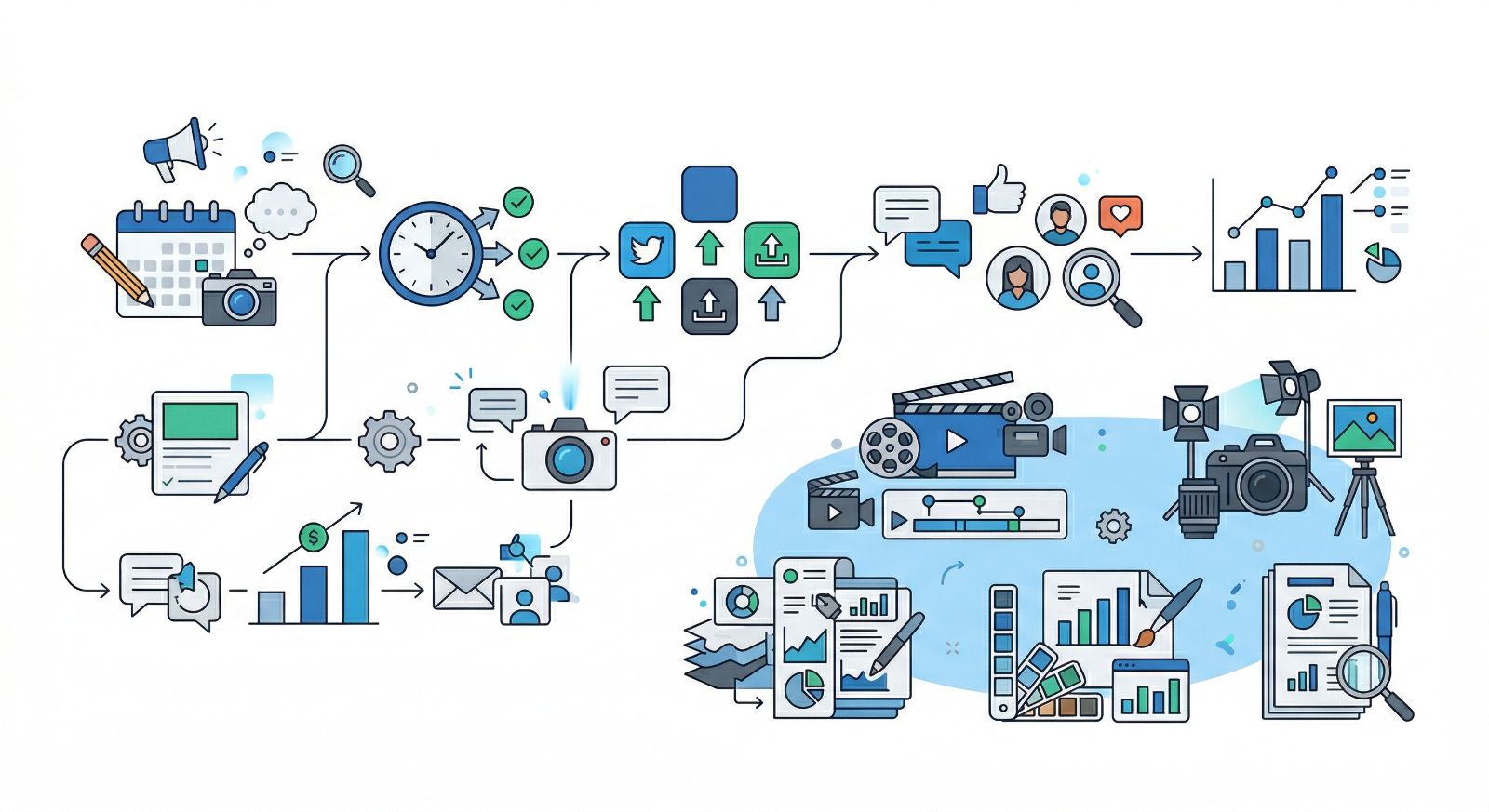
Scope depth is the total number of discrete actions executed each month. Adding video editing, influencer sourcing, or podcast repurposing can multiply time requirements by two to three times compared to a text-and-image-only approach.
Build quotes from a deliverable menu where each item carries an estimated hour range. That transparency shifts client conversations from price to value.
Platform Volume and Posting Cadence
Each platform introduces unique specs, tone guidelines, and moderation policies. Managing Instagram Reels is a fundamentally different workflow from handling LinkedIn thought leadership or Zalo OA broadcasts.
When scope covers more than three networks, use matrix pricing that stacks per-channel fees and increases rates as cadence climbs beyond three posts per week. Centralizing calendars inside a unified tool dramatically reduces duplicate effort across platforms. For a deeper look at how top brands structure multi-channel publishing, the 10 Social Media Strategy Frameworks to Dominate in 2026 guide covers the most proven frameworks in detail.
Team Composition and Experience Level
Senior strategists, analysts, and creative directors command higher rates because their decisions directly influence full-funnel revenue. Junior coordinators handle scheduling and moderation at a lower billable cost. Explaining how each role contributes to outcomes helps clients appreciate blended rates rather than reacting to the top-line number.
If a client demands specialized skills – motion design, paid media certification, or multilingual content – bake those premiums into the quote explicitly.
Industry Nuances and Compliance Requirements
Regulated industries such as healthcare, finance, and education require extra review layers before any content goes live. Add pricing buffers for training, documentation, and archiving workflows.
Note: Retain content approval logs and chat records for at least two years when serving industries governed by HIPAA, FINRA, or GDPR. Pricing should reflect that compliance overhead.
Technology, Tools, and Paid Amplification
Even lean teams rely on schedulers, DAM platforms, social listening suites, and analytics connectors. Each software subscription adds to overhead that should be reflected in your pricing.
Itemize tool costs inside proposals to justify platform fees or pass-through charges. For paid amplification, clarify upfront whether you charge a percentage of ad spend, a flat management fee, or a hybrid – so finance teams can model true ROI without surprises.
Service Packages: How to Structure and Present Tiers

Translating variables into named packages accelerates sales cycles and reduces negotiation friction. The following tier structure illustrates how to ladder value.
| Package Tier | Monthly Price (USD) | Target Client | Platforms | Signature Value Adds |
|---|---|---|---|---|
| Foundation | $900–$2,500 | Solo founders, local service businesses | 1–2 channels | Basic strategy, 8–10 posts/month, monthly analytics snapshot |
| Growth Accelerator | $2,600–$7,500 | Funded startups, regional brands | 3–4 channels + ads | Content sprints, paid media up to $5k spend, biweekly reporting |
| Enterprise Command | $7,600–$22,000 | National enterprises, regulated sectors | 5+ channels + advocacy | Crisis management, cross-functional war room, conversion dashboards |
Foundation Package: Essentials Without Compromise
Foundation tiers strip delivery to essentials without sacrificing professionalism. They work best for founders transitioning away from DIY posting.
Keep this tier profitable by limiting revision rounds, using template-driven creative, and batching content monthly. Offer optional add-ons for ad boosts or extra posts so clients have an upgrade path rather than a hard ceiling. For agencies helping foundation clients build their first structured presence, the Social Media Growth Strategy: The Complete 2026 Guide outlines the exact growth levers that turn early-stage accounts into channels worth investing in at higher tiers.
Growth Accelerator Package: Where Most Clients Live
Growth tiers unlock experimental content formats, paid amplification, and deeper analytics – usually requiring at least one dedicated strategist. Structure this tier around three to four channels, influencer coordination, and conversion tracking tied to specific cadences.
Layer in quarterly competitor teardowns to justify mid-range pricing, and provide living dashboards so CMOs can self-serve metrics between reporting cycles.
Community management at this tier increasingly requires real-time response across messaging channels. Many agencies are now integrating tools like ChatbotX to handle first-response automation on WhatsApp, Messenger, and Zalo – deflecting repetitive inquiries automatically while the human team focuses on high-value conversations. This approach keeps the Growth Accelerator tier profitable without inflating headcount.
Enterprise Command Package: Full-Funnel Ownership
Enterprise offerings combine thought leadership, community escalation management, and integrated demand generation. They often include multilingual support and 24-hour monitoring.
At this level, bake in governance workshops, executive ghostwriting, and paid social experimentation across large budgets. Assign a dedicated account director to orchestrate cross-functional teams and include crisis playbooks with defined escalation trees in the SOW.
The Quotation Workflow That Shortens Sales Cycles
A documented quoting process protects margins and builds client confidence. Follow these steps regardless of prospect size:
- Audit existing channels, creative quality, and analytics maturity
- Identify gaps between business goals and current performance
- Translate gaps into deliverables, estimated hours, and required talent levels
- Select a pricing model, then stress-test gross margin and capacity
- Present the proposal with scenarios, assumptions, and clear next steps
Pro Tip: Attach a lightweight discovery worksheet to every proposal so prospects quantify their internal resources before you scope anything. This eliminates the “we thought you’d handle that” conversation later.
Proving ROI and Protecting Your Margins

KPI Architecture and Revenue Attribution
Tie every retainer or project to a top-level business outcome – pipeline influenced, revenue attributed, or churn reduced. Map secondary KPIs such as reach, saves, and assisted conversions beneath those primary metrics.
Include analytics instrumentation in your fee rather than treating it as an afterthought. Clients who can see causation – not just correlation – are far more likely to renew and expand. For a comprehensive framework on measuring and scaling social media impact, the guide on How to Measure and Scale Social Media ROI: 15 Proven Frameworks for 2026 is essential reading before your next QBR.
Use UTM conventions, CRM synchronization, and social commerce integrations to maintain data integrity that keeps finance teams engaged quarter after quarter.
Automation as a Margin Protection Strategy
Automation is the most underutilized lever for keeping delivery profitable as content volumes grow. Scheduling, approval routing, and asset library tagging can save dozens of hours monthly without reducing output quality.
An increasingly common approach is pairing a traditional social scheduling platform with a conversational automation layer. ChatbotX handles the real-time engagement side – qualifying leads, answering FAQs, and routing high-intent conversations to human agents – while your content calendar tool manages publishing. Together they eliminate the staffing gap that typically opens between content going live and audience responses arriving. For a broader strategic view of how automation fits into 2026 agency workflows, see Social Media Automation: The Complete Strategy for Sustainable Growth in 2026.
Document which automations directly impact deliverables so clients see exactly where efficiency gains come from.
Scenario Modeling and Profit Safeguards
Build margin models that map retainer fees, estimated hours, and tool costs to net margin across best-case, base-case, and worst-case scenarios. If pricing dips below 55 percent gross margin in the worst case, adjust scope before signing.
Share sanitized versions of these models with leadership so every stakeholder understands the financial assumptions underlying the contract. That transparency eliminates finger-pointing when experiments cost more than projected.
Contractual Guardrails That Protect Both Sides
Every social media management contract needs scope definitions, deliverable cadences, payment schedules, termination clauses, and IP ownership language.
Warning: Never begin work without signed agreements, deposits, and access credentials documented in writing. Oral agreements rarely hold up when high-visibility campaigns go sideways.
Standard clauses should include: rush fee rates for out-of-scope requests, service credit policies, minimum notice periods for termination, and renewal procedures. These protect operations even when client-side stakeholders change mid-engagement.
Scaling With Technology, Partnerships, and Education
Building an AI-First Technology Stack
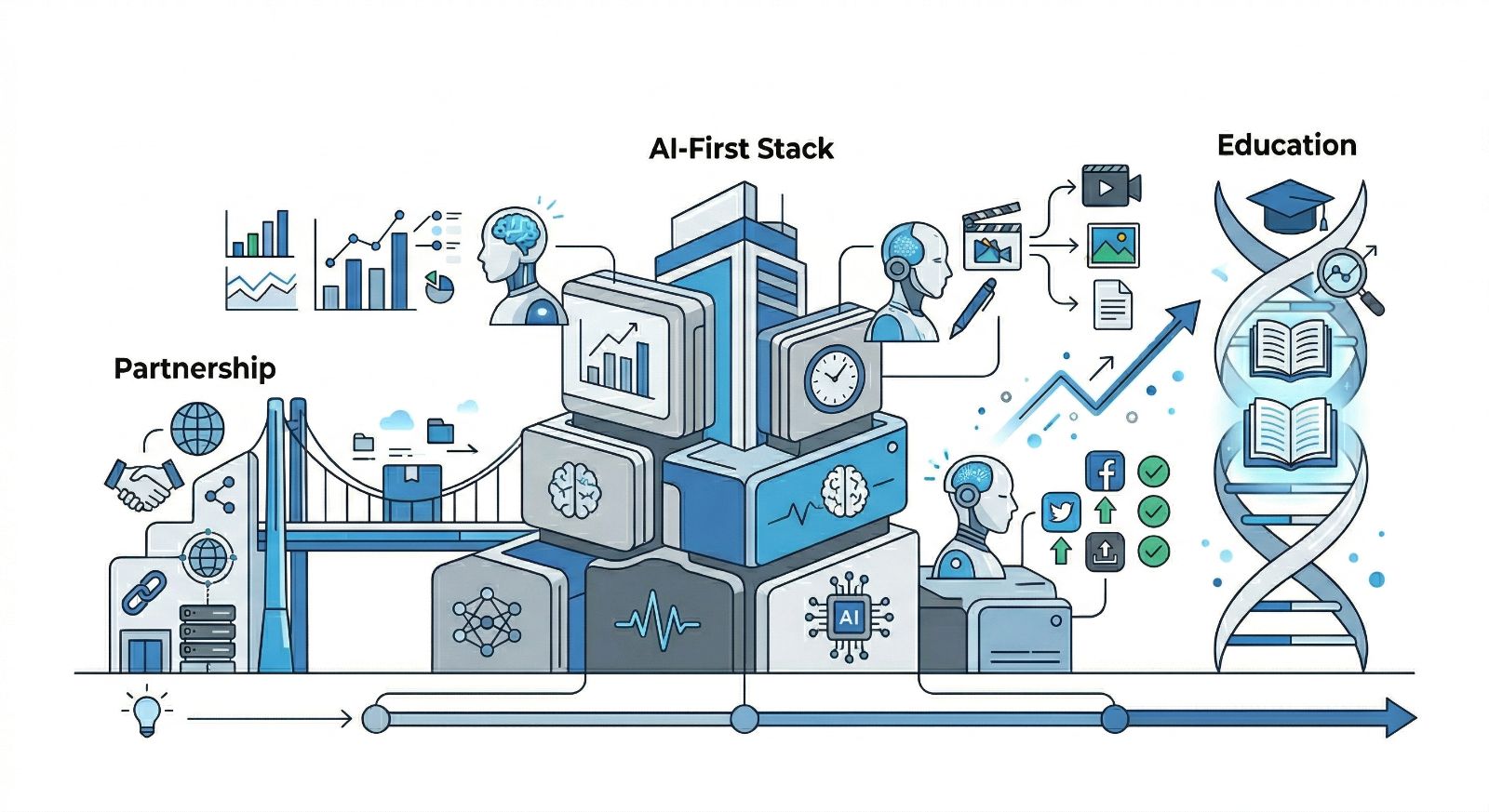
AI copilots have moved from experiment to infrastructure across high-performing agencies. Scheduling platforms consolidate multi-channel calendars, AI writing assistants accelerate ideation, and conversational automation handles the audience engagement layer that content calendars cannot reach.
ChatbotX fits naturally into this stack as the omnichannel engagement layer – deploying AI Agents across WhatsApp, Messenger, Zalo, and WebChat that detect user intent, qualify leads, and respond 24/7 without adding headcount. For agencies building AI-powered service packages, the AI Chatbot Strategy 2026: Trends, Platform Comparison and Mistakes to Avoid article outlines exactly how to position these capabilities with clients.
Train your team on prompt engineering, quality control, and ethical disclosure so clients understand how AI augments – rather than replaces – human creativity.
White Label Alliances and Specialist Partners
White label partners let you expand service depth without permanent hires. Animation, paid media management, and localization are the most commonly outsourced capabilities.
Bundle partner costs into client pricing while maintaining a margin buffer of at least 20 percent. Always co-create SOPs so the client experience stays seamless regardless of who executes the work behind the scenes.
Upselling Training and Thought Leadership
Education offerings differentiate premium agencies and create recurring revenue streams that do not require additional execution capacity. Private workshops, certification programs, and executive briefings all carry strong perceived value.
Position training as a natural add-on inside proposals – especially for clients who want to build internal social media competency over time. Package playbooks, templates, and recorded webinars as digital assets that continue generating value long after the live session ends.
One area that consistently generates strong workshop demand in 2026 is CRM and social data integration. The practical guide on CRM Social Media Integration: The Complete 2026 Strategy Guide is a useful resource to reference or adapt for client education sessions.
Frequently Asked Questions

How often should agencies revisit pricing assumptions?
Revisit assumptions every quarter so packages reflect platform algorithm shifts, inflation, and client strategy pivots. A quick margin audit before renewal season ensures retainers remain profitable without an awkward mid-contract negotiation.
Which KPIs prove social media management ROI fastest?
Tie top-level KPIs to revenue-influenced metrics – tracked leads, attributed sales, or reduced churn. Complement those with engagement velocity, brand sentiment scores, and customer support deflection rates driven by automation. For deeper methodology, the Social Media ROI: 15 Proven Strategies to Drive Profitable Growth in 2026 guide covers the full attribution stack.
How can small businesses afford professional social media management?
Small businesses can start with limited-channel Foundation packages, pre-built creative templates, and monthly content batching to reduce production hours. Quarterly strategy intensives add senior guidance without the cost of a full-time retainer. As automation tools reduce per-post costs, even lean budgets can access professional execution.
What must every social media management contract include?
Every contract needs scope definitions, deliverable cadences, payment schedules, termination clauses, and IP ownership language. Add confidentiality terms, rush fee rates, response SLA timelines, and renewal procedures so expectations are explicit for every stakeholder from day one.
Stop Pricing on Instinct — Start Winning on Value
Pricing social media management correctly is not about finding the number clients will accept. It is about building a structure that reflects real workload, protects margins, and grows as client results grow.
The agencies winning the most competitive pitches in 2026 are doing two things simultaneously: presenting clear, modular packages that make budget decisions easy, and backing those packages with technology that delivers more value per dollar than the client could achieve with headcount alone.
ChatbotX is one of the fastest ways to add that technology layer. Its built-in AI Agents handle omnichannel community engagement across WhatsApp, Messenger, Zalo, and WebChat – automating first-response, lead qualification, and drip follow-ups without adding a single headcount to your delivery team. That efficiency either protects your margin or becomes a genuine differentiator in your Growth Accelerator and Enterprise packages.
Start a free 7-day trial on ChatbotX →No credit card required. Full platform access from day one.