Stop letting manual posting and fragmented DM inboxes stall your brand’s momentum. Social media automation in 2026 is about precision, predictive analytics, and omnichannel consistency. Whether you’re a lean startup or a scaling enterprise, this comprehensive guide provides the blueprint to automate your workflows, integrate AI-powered engagement, and achieve measurable growth without losing your unique brand voice.
Launch agentic chat marketing in minutes with ChatbotX











What Is Social Media Automation — And Why It’s Not “Soulless Robot Content”
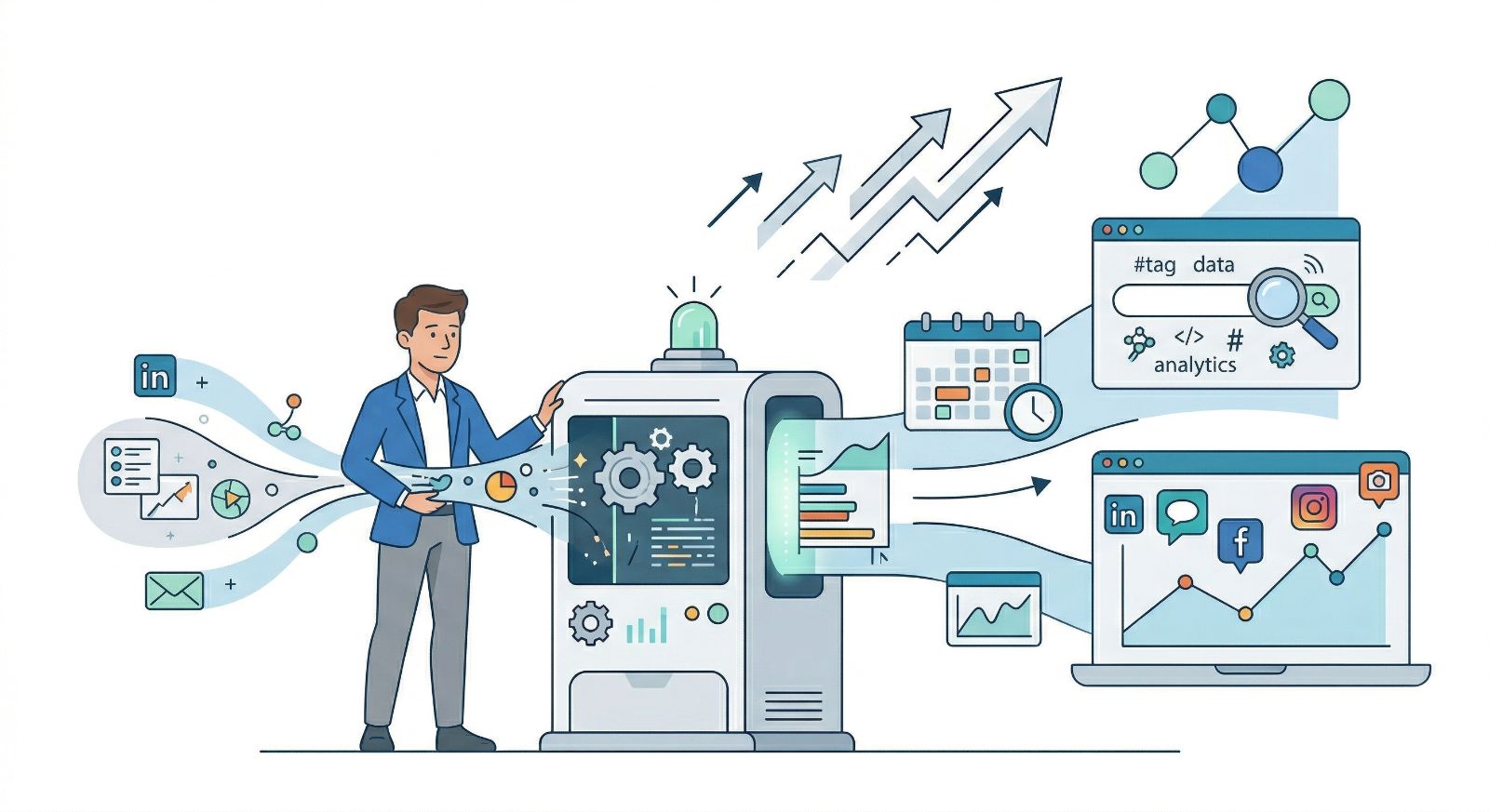
Most people hear social media automation and immediately picture stiff, emotionless posts – the kind of content users scroll past without a second glance. That assumption is years out of date.
Think of it this way: when you set up automatic bill payments, you don’t lose control of your finances – you’re freeing yourself from repetitive tasks so you can focus your energy on decisions that actually matter. Social media automation works on exactly that principle.
In practical terms, it’s the use of software to execute recurring tasks across social platforms – from scheduling posts and monitoring keywords, to auto-responding to messages and aggregating performance metrics. Instead of manually logging in to post at 9am on Tuesday, your tools handle it while you’re in a meeting or asleep.
The Real Value Goes Far Beyond “Saving Time”
Time savings is the first benefit everyone thinks of – and it’s real. But if that’s all you see, you’re missing most of what automation actually delivers.
When manual tasks are handled automatically, you gain:
- Brand consistency – Your accounts stay active and regular, even in your busiest weeks
- Faster response – Messages and comments get handled near-instantly, not whenever you happen to log on
- Cleaner data – Performance reports are compiled automatically, without the errors that come from manual entry
- Smarter decisions – When you’re not worried about “what do I post today,” you can focus on long-term strategy
The global marketing automation market reached $47 billion in 2025 and is projected to hit $81 billion by 2030. Among small and mid-sized businesses, adoption is growing at 15.2% per year – proof that this is no longer a future trend but a present reality. (Source: Markets And Markets)
4 Task Categories Worth Automating
Before choosing tools or building workflows, you need a clear picture of what should and shouldn’t be automated. Not every social activity is a good candidate for software.
| Task Category | Examples | Automation Fit |
|---|---|---|
| Scheduling & Publishing | Auto-posting at peak engagement times | ⭐⭐⭐⭐⭐ Excellent |
| Brand Monitoring | Alerts when your brand name is mentioned | ⭐⭐⭐⭐⭐ Excellent |
| Reporting & Analytics | Weekly engagement summaries auto-generated | ⭐⭐⭐⭐⭐ Excellent |
| Initial Response | Auto-replies to common DM inquiries | ⭐⭐⭐⭐ Good (needs oversight) |
| Deep Community Engagement | Handling disputes, crisis response | ❌ Do not automate |
1. Multi-Platform Content Scheduling
This is the foundation of any automation strategy. Instead of manually posting each piece of content to each platform, you can:
- Plan your content for an entire week or month in a single working session
- Batch-create assets – write all captions and design all visuals in one go
- Schedule intelligently based on when your specific audience is most active
- Customize per platform – the same message, adjusted in tone and format for Instagram, LinkedIn, or Facebook
One commonly overlooked point: each platform has its own language. A short emoji-filled caption fits Instagram but feels out of place on LinkedIn. The best tools let you create platform-specific variations within a single publishing workflow.
2. Social Listening – Monitoring Your Market Around the Clock
Not every conversation about your brand happens on your own pages. Customers may be mentioning you in competitor comment sections, in private groups, or on Twitter/X without ever tagging you.
Automated social listening solves this by continuously scanning the internet for:
- Your brand name and common misspellings
- Product names and competitor mentions
- Industry-relevant hashtags
- Keywords your potential customers use when searching for solutions
The result: you always know what the market is saying – the moment they say it, not after the damage is done. If you’re exploring how to pair social listening with centralized inbox management, see how ChatbotX’s Omnichannel Inbox lets you monitor and respond to every channel from a single interface.
3. Automating Initial Engagement
This is where most brands get it wrong. Automating interactions is not spam – it’s intelligent responses delivered at the right moment.
Use cases that work well:
- Sending a welcome message when someone follows your account
- Auto-replying to DMs containing specific keywords (e.g. “pricing,” “contact,” “location”)
- Engaging with posts using your industry hashtags to grow brand visibility
The golden rule: automate the first touch, not the entire conversation.
This is especially true for businesses managing multiple messaging channels simultaneously – WhatsApp, Instagram, Facebook Messenger. Manual management at scale is virtually impossible. Platforms like ChatbotX are built for exactly this challenge: consolidating all messaging channels into a single inbox, automatically routing conversations to the right team member, and logging every interaction into the customer’s profile.
4. Performance Data Collection and Analysis
Instead of manually logging into each platform every week, exporting CSVs, and copying numbers into spreadsheets – let the system do it. Automated reporting lets you:
- Track engagement rates by content type
- Compare performance across platforms side-by-side
- Receive alerts when a post goes viral or when unfollow rates spike abnormally
AI + Automation: The Combination That Changes Everything
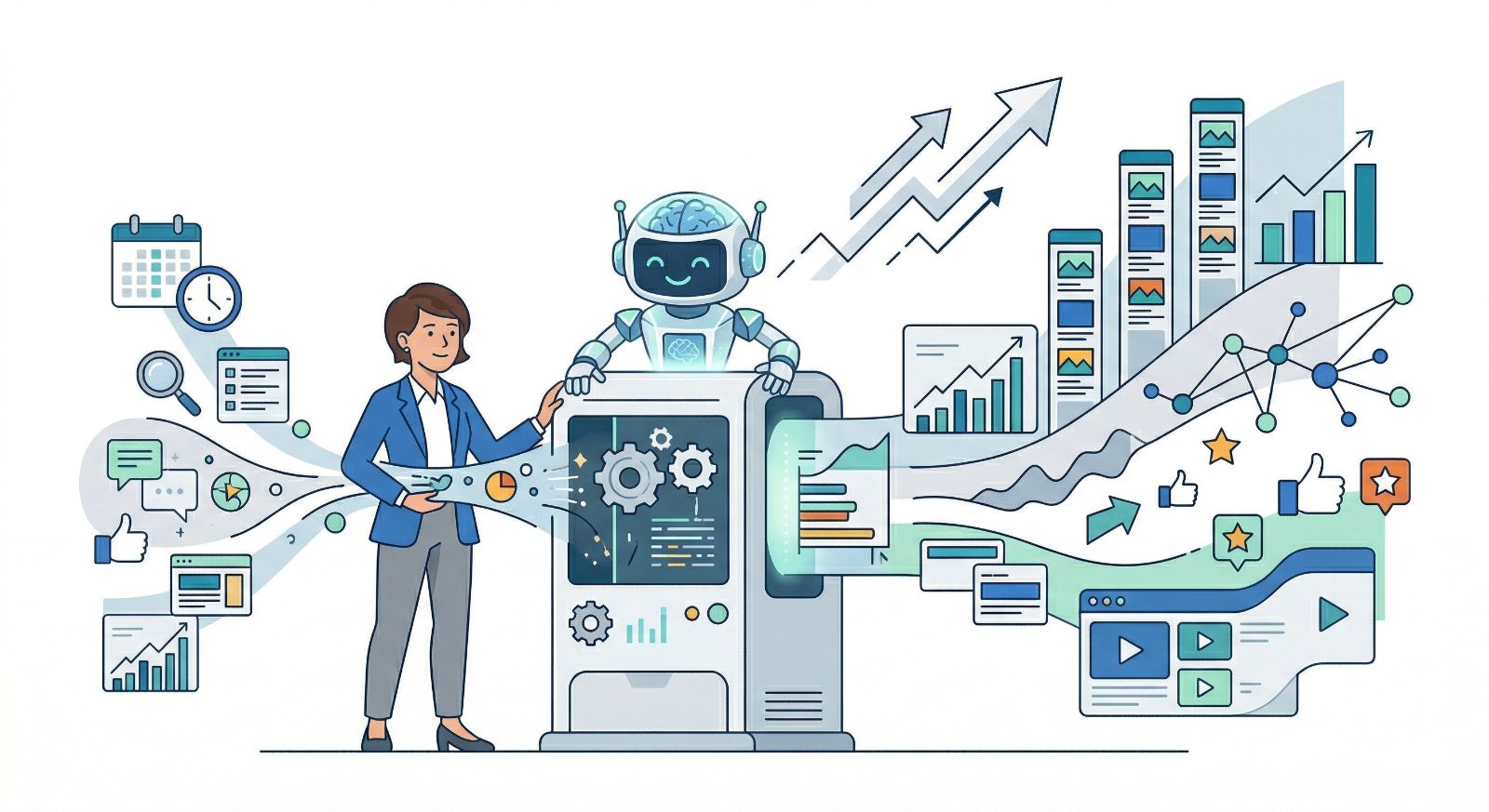
If traditional automation helps you work faster, AI helps you work smarter. Together, they’re creating a genuine turning point in social media marketing.
AI as a Creative Assistant That Never Burns Out
A blank content calendar is every marketer’s nightmare. AI eliminates that problem by:
Surfacing data-driven topic ideas – instead of guessing, AI analyzes what’s trending in your industry right now and suggests content angles that your audience is actively interested in.
Generating instant drafts – input a few basic notes and AI produces 3-5 different versions for you to choose from and refine. What used to take 30 minutes now takes 5.
Analyzing sentiment – AI reads thousands of comments and classifies them as positive, neutral, or negative, giving you a read on audience sentiment without reading every individual response. This is also the foundation that ChatbotX’s AI Agent runs on – automatically processing and categorizing incoming messages across multiple channels simultaneously.
The adoption numbers are striking: in under three years, AI use among professional marketers has grown more than 180%. Today, 89.7% of marketers use AI at least several times a week, and 80% use it to support content creation. According to McKinsey’s research on personalization, businesses that effectively apply AI in marketing generate revenue 40% above industry average.
Important note: AI is a starting point, not a finishing line. Data shows 78.4% of marketers edit AI-generated content before publishing – which is exactly the right habit. Your brand voice is something no AI can fully replicate.
Predictive Analytics – From “What Happened” to “Why”
Traditional analytics tell you results. AI-powered analytics tell you causes – and predict what’s coming next.
For example: AI might detect that posts beginning with an open-ended question receive 40% more comments than standard posts in your specific account context – an insight you’d never surface through manual analysis.
Building Your Automation Workflow From Scratch: A 6-Step Guide
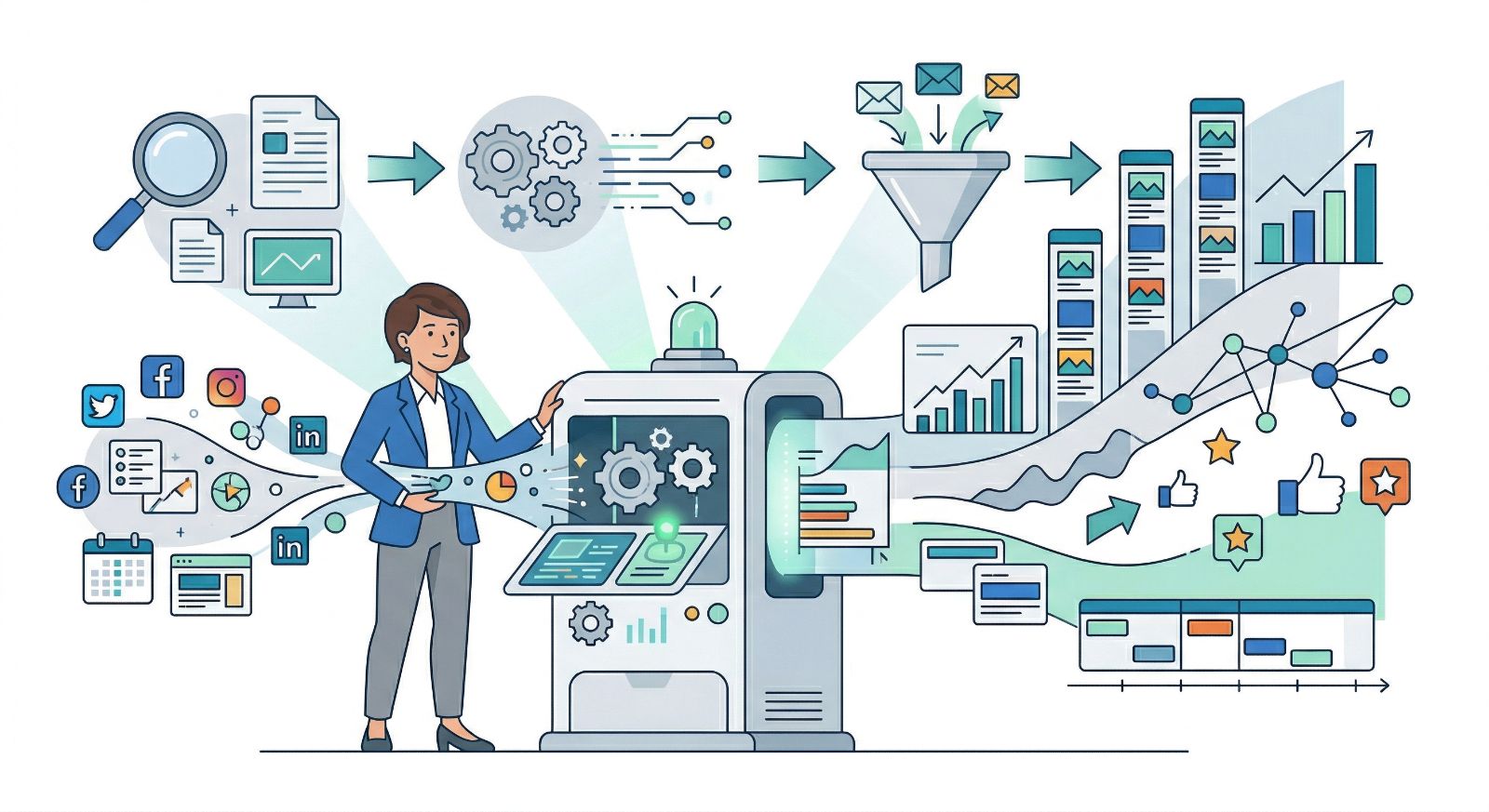
Understanding the theory is one thing. Getting it running is another. Here’s a practical roadmap to take you from zero to a working system.
Step 1: Audit Your Current Data and Resources
Before connecting any tools, answer these questions:
- Which platforms are you currently active on? Which ones actually drive conversions?
- Where does your customer data live, and in what format?
- Which tasks consume the most time in your average work week?
- How many people are on your team? Who will manage the automation system?
Step 2: Define Specific, Measurable Goals
Vague goals like “improve efficiency” accomplish nothing. Set targets in this format:
- Reduce manual posting time from 10 hours/week to 3 hours/week within 30 days
- Cut DM response time from an average of 4 hours to under 15 minutes
- Achieve 90% of posts tracked with complete metrics in a centralized dashboard
To reduce DM response times to a minimum, see how ChatbotX’s Conversation Flows let you build intelligent response scripts without writing any code.
Step 3: Choose Technology That Matches Your Scale
No single solution fits every business. Evaluate based on your actual needs:
| Solution Type | Best For | Strengths | Limitations |
|---|---|---|---|
| All-in-one tools | Businesses wanting simplicity | Easy to manage, predictable cost | May lack deep specialized features |
| Omnichannel conversation platforms ChatbotX | Teams managing WhatsApp, Instagram, Messenger in one place | Built-in chatbot automation + CRM sync | Focused on conversational channels |
| CRM + Social integration platforms | Sales and marketing teams working together | Comprehensive customer data | More complex and expensive |
| Automation middleware (Zapier, Make, n8n) | Technical teams, custom workflows | Maximum flexibility | Requires technical know-how |
| Self-hosted solutions | Data-security-first organizations | Full control over data | Requires technical infrastructure |
Step 4: Map Your Triggers and Actions
This is the most important technical step. For each automation scenario, define clearly:
| Trigger Event | Automated Action | Team Responsible |
|---|---|---|
| Someone sends a DM containing “pricing” or “quote” | Auto-send pricing page link + create a sales task | Sales team |
| A post reaches 100+ shares | Notify marketing manager + schedule a repost | Marketing |
| Brand mentioned alongside negative keywords | Create an urgent ticket for customer success | CS team |
| New non-bot follower detected | Send welcome message after 30-minute delay | Fully automated |
| Customer tags your brand in UGC | Tag as “Brand Advocate,” send thank-you message | Marketing |
Step 5: Roll Out in Phases – No Big Bang
The most common mistake is trying to automate everything at once. Follow a staged rollout:
Weeks 1-2: Set up post scheduling for 1-2 primary platforms only. Verify accuracy.
Weeks 3-4: Activate social listening. Monitor mentions and refine your keyword list.
Month 2: Add auto-reply rules for your most common inbound questions.
Month 3+: Activate advanced analytics and optimize workflows that have been running smoothly.
Step 6: Measure and Optimize Continuously
Every two weeks, set aside 30 minutes to:
- Review the KPIs you set and compare against actual results
- Audit your post queue and automation rules
- Update auto-reply content if products or messaging has changed
- Turn off any workflows that are no longer performing
Measuring the ROI of Your Automation Strategy
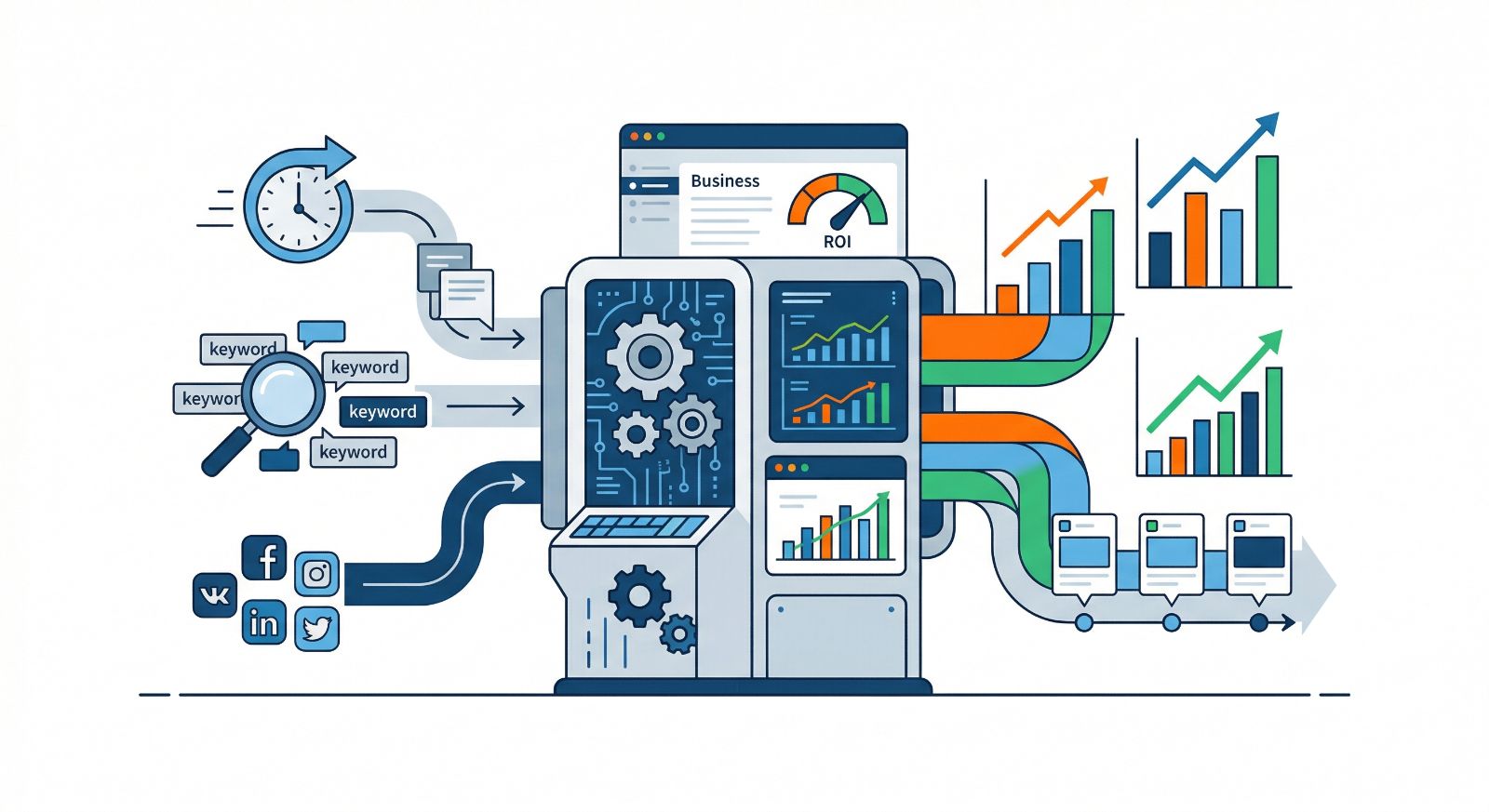
Every business leader asks the same question: is the time and money invested here actually worth it?
The answer depends entirely on whether you’re measuring the right things.
Drop Vanity Metrics – Chase Meaningful Business KPIs
Gaining 500 followers this month sounds impressive – but if 490 of them never click your links, what is that number actually worth?
Instead, focus on:
Meaningful Engagement Rate: Not total likes, but the ratio of people who actually interact with what they see. A post reaching 500 people with 50 responses outperforms one reaching 5,000 with no engagement.
Click-Through Rate (CTR): Of everyone who saw your post, what percentage found it compelling enough to click? This is the most direct measure of content quality.
Response Time: How long on average from receiving a DM or comment to sending a reply? Research from Harvard Business Review shows businesses that respond within 5 minutes convert significantly more leads than those that reply hours later.
Cost Per Engagement: Total social media spend (staff + tools) divided by total quality interactions. As automation matures, this number should consistently decrease.
Social Conversion Rate: What percentage of social media traffic actually completes a desired action – sign-up, purchase, form submission?
A Centralized Analytics Dashboard – From Data to Decisions
With more than 5.2 billion people using social media globally and advertising budgets projected to reach $317,33 billion in 2026 (per the Statista Digital Advertising Report), making decisions based on gut feeling instead of data is an unnecessary risk. 72.3% of users visit social media to research brands before purchasing – meaning every social touchpoint directly impacts revenue.
A strong analytics dashboard doesn’t just display numbers – it tells the story behind them. It shows you which posts are converting, which channels are wasting budget, and which times of day your audience is most reachable.
Common Mistakes to Avoid
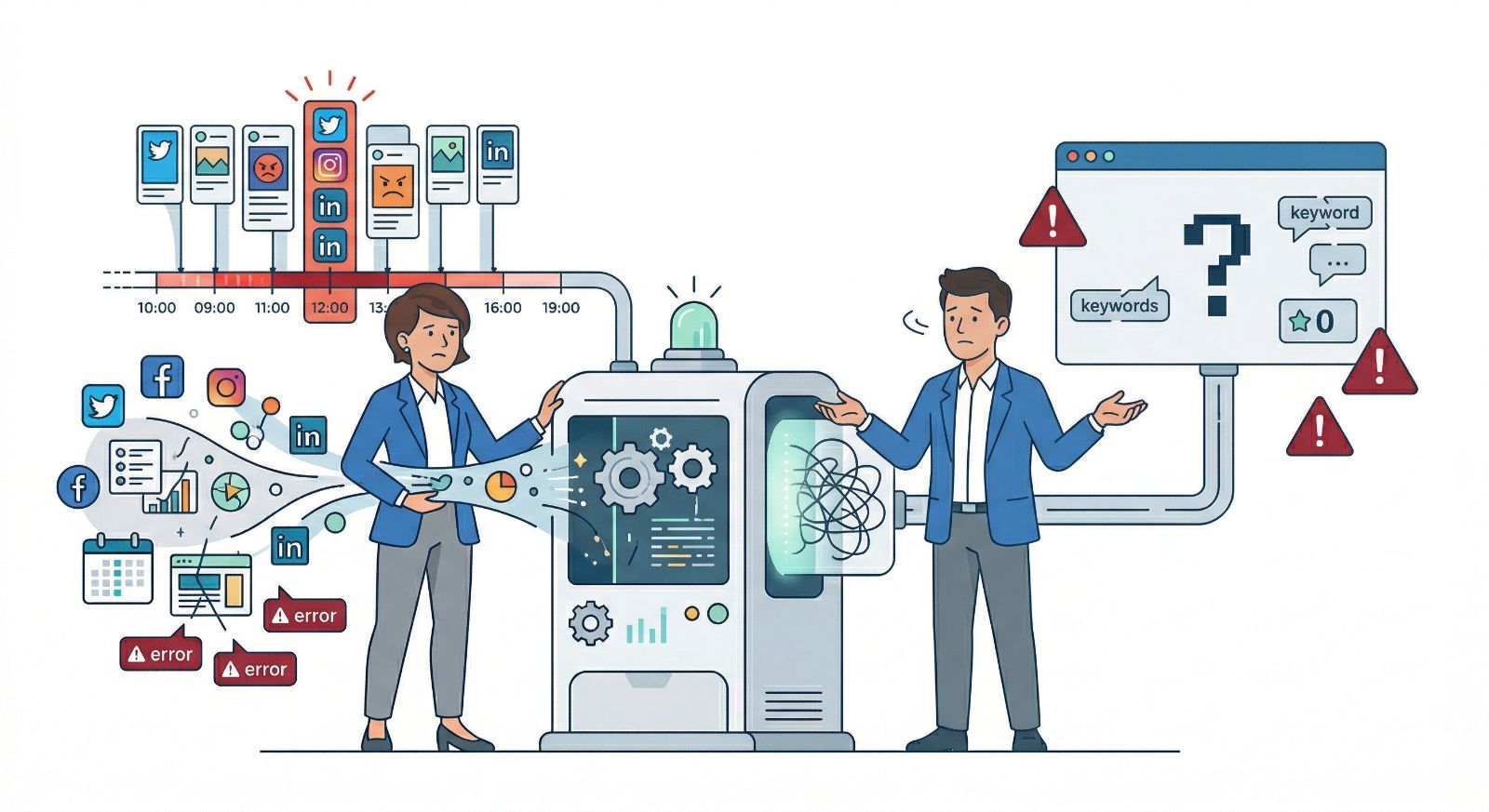
1. Over-Automating From Day One
Trying to automate everything on day one is a reliable path to failure. Start with 1-2 core workflows, get them stable, then expand. Building too much complexity too early creates multiple potential failure points.
2. Neglecting Data Governance
Not every new follower needs a CRM record. Not every mention needs a support ticket. Define clear criteria for each trigger – otherwise your system gets flooded with noise.
3. “Set It and Forget It”
Automation needs regular supervision. An auto-reply rule that was accurate in January may be completely wrong by June when your product has changed. A recurring review schedule is non-negotiable.
4. Running Automation During a Crisis
If your brand is facing public scrutiny or a serious incident, pause all scheduled posts immediately. Cheerful automated content appearing mid-crisis can turn a manageable situation into a full-scale PR disaster.
5. Confusing Automation With Spam
Sending hundreds of unsolicited DMs is spam – whether done by hand or by bot. Platforms are increasingly sophisticated at detecting unusual behavior, and the consequences can include permanent account suspension.
Frequently Asked Questions
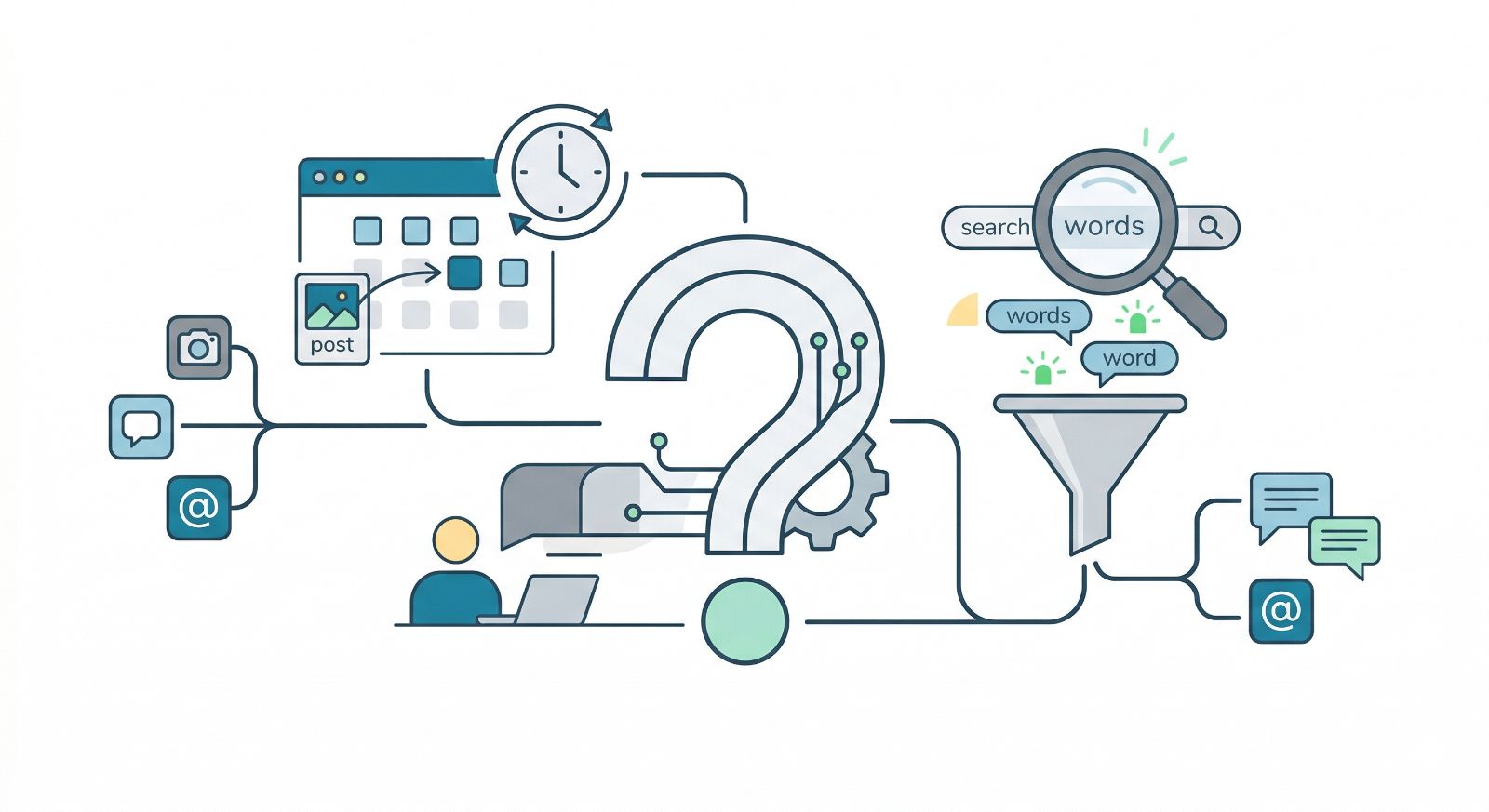
What is social media automation?
Social media automation is the use of software to handle recurring tasks – scheduling posts, monitoring keywords, responding to messages, and aggregating performance metrics – instead of doing them manually. The goal isn’t to replace people but to free them up for strategy and higher-value interactions.
Will automation make my brand feel inauthentic?
Not if you automate the right things. Automate the mechanics (posting times, data collection) and keep human judgment for content and personal responses. Simple rule: automate the first touch, not the whole conversation.
Should a small business invest in automation?
Absolutely – small businesses often benefit most. An owner juggling multiple roles can reclaim 5-10 hours per week by automating scheduling and handling common inbound messages, effectively competing on presence and consistency with much larger brands.
How long does it take to set up a basic system?
A basic workflow – post scheduling and social listening setup – can be running in 1-3 days. A comprehensive multi-channel system typically takes 4-12 weeks to fully optimize.
How do I automate DMs without violating platform policies?
Key principle: automate to serve, not to push unsolicited sales. Only trigger auto-replies when users message you first, make sure every response provides genuine value, and always offer a clear path to reach a real person.
Which tool should I start with?
Prioritize tools that cover all your active platforms, have open APIs for CRM integration, and maintain clear data privacy policies. For businesses running WhatsApp, Instagram, and Messenger, ChatbotX is worth a close look – it comes with a built-in AI Agent, omnichannel inbox, and CRM sync in a single platform.
Conclusion: Automation Doesn’t Replace You — It Multiplies You
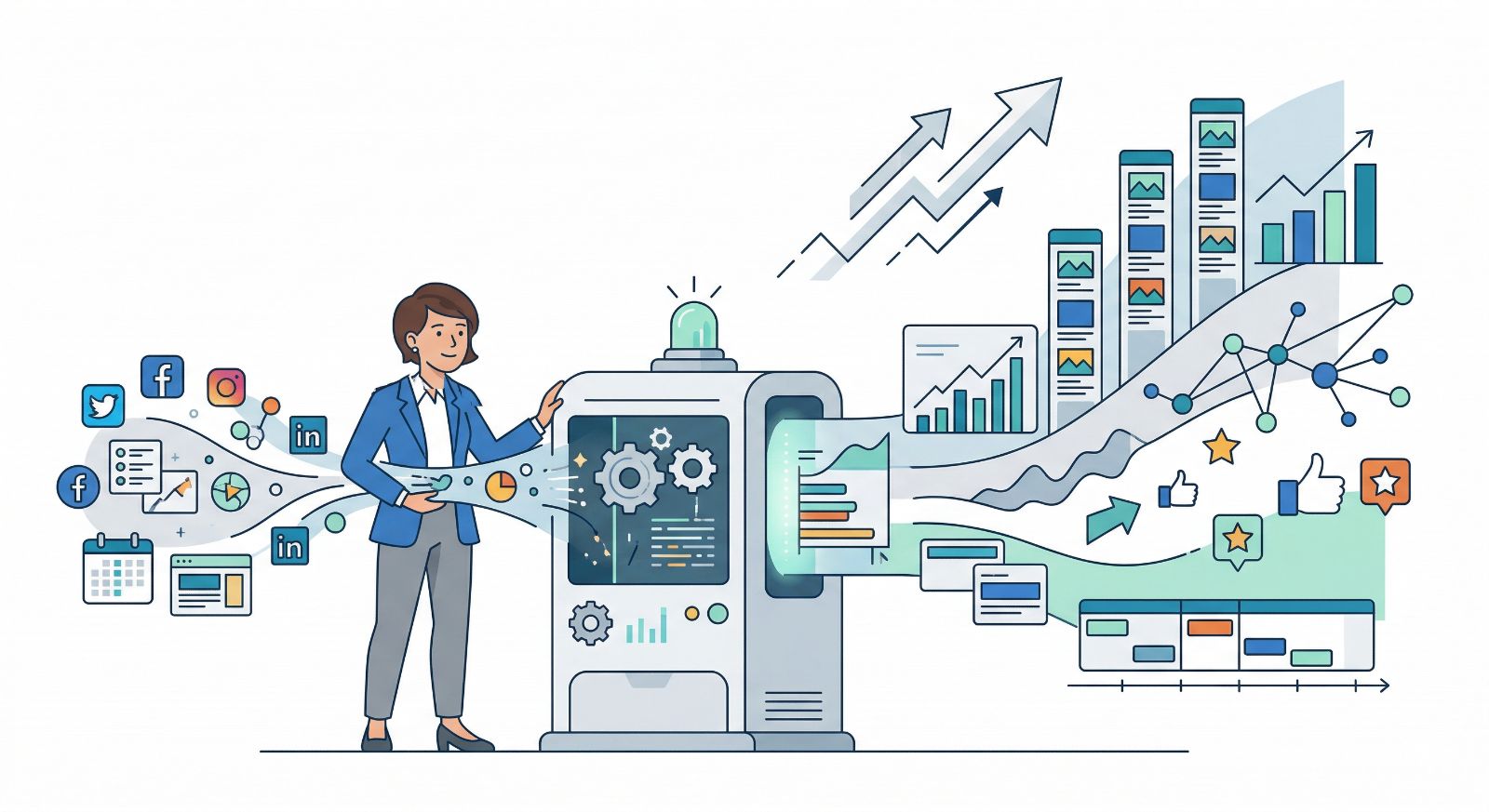
The core idea: social media automation isn’t a way to do nothing. It’s a way to make every hour you invest in marketing produce 3-5x the impact of doing it manually.
The leading brands of 2026 won’t necessarily be the ones with the biggest budgets or largest teams. They’ll be the ones that built smart operating systems – where AI and automation handle the repetitive work, and humans focus on creativity, strategy, and genuine connection.
Start with one workflow. Test it. Optimize it. Then expand. That is the only reliable path to turning automation from a feature into a sustainable competitive advantage.
If your business operates messaging channels like WhatsApp, Instagram, or Facebook Messenger, ChatbotX is a strong place to start – a platform built to automate your entire customer conversation workflow across channels, from AI-powered chatbots to lead qualification and CRM data sync.