
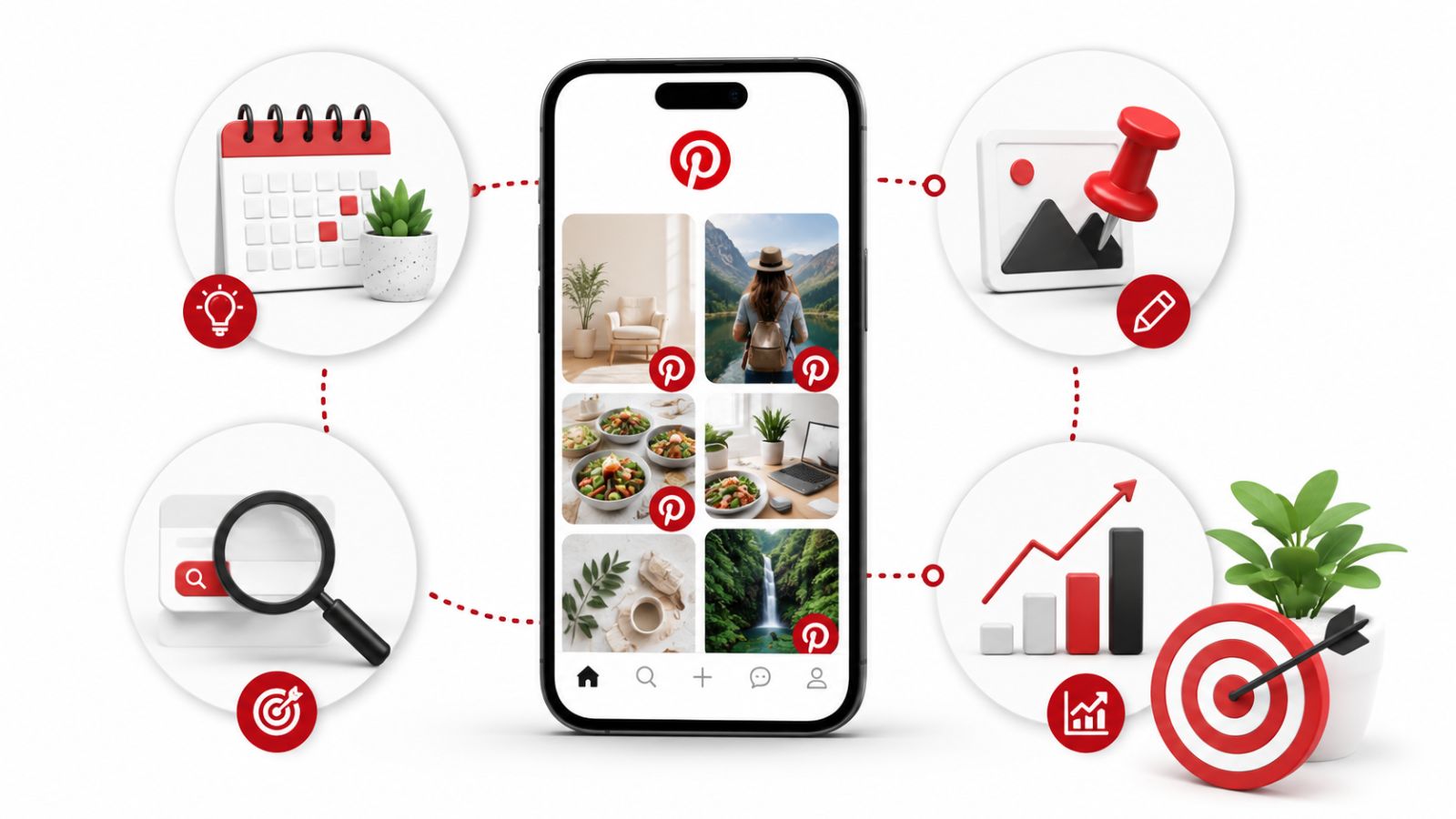
Pinterest has never been louder – and it has never been harder to cut through. While the platform keeps growing as a discovery engine, the content flooding every niche has made the old spray-and-pray approach obsolete. AI-generated graphics, keyword-stuffed boards, and low-effort repins have crowded every corner of the feed, and the algorithm is no longer distributing content simply because it was posted. It distributes content that precisely matches what searchers are actively looking for.
The creators who are actually growing their reach in 2026 are not posting more. They are posting smarter. They have rebuilt their Pinterest presence around deliberate keyword targeting, tightly scoped boards, and a disciplined multi-week scheduling rhythm – a system that gives the algorithm exactly the signals it needs to match their content with high-intent searchers.
This guide walks through that complete system step by step, explains why it works at an algorithmic level, and shows how tools like ChatbotX can automate the execution so creators and businesses can scale the process without adding hours to their week.
Launch agentic chat marketing in minutes with ChatbotX











Why the Old Pinterest Playbook Broke Down in 2026
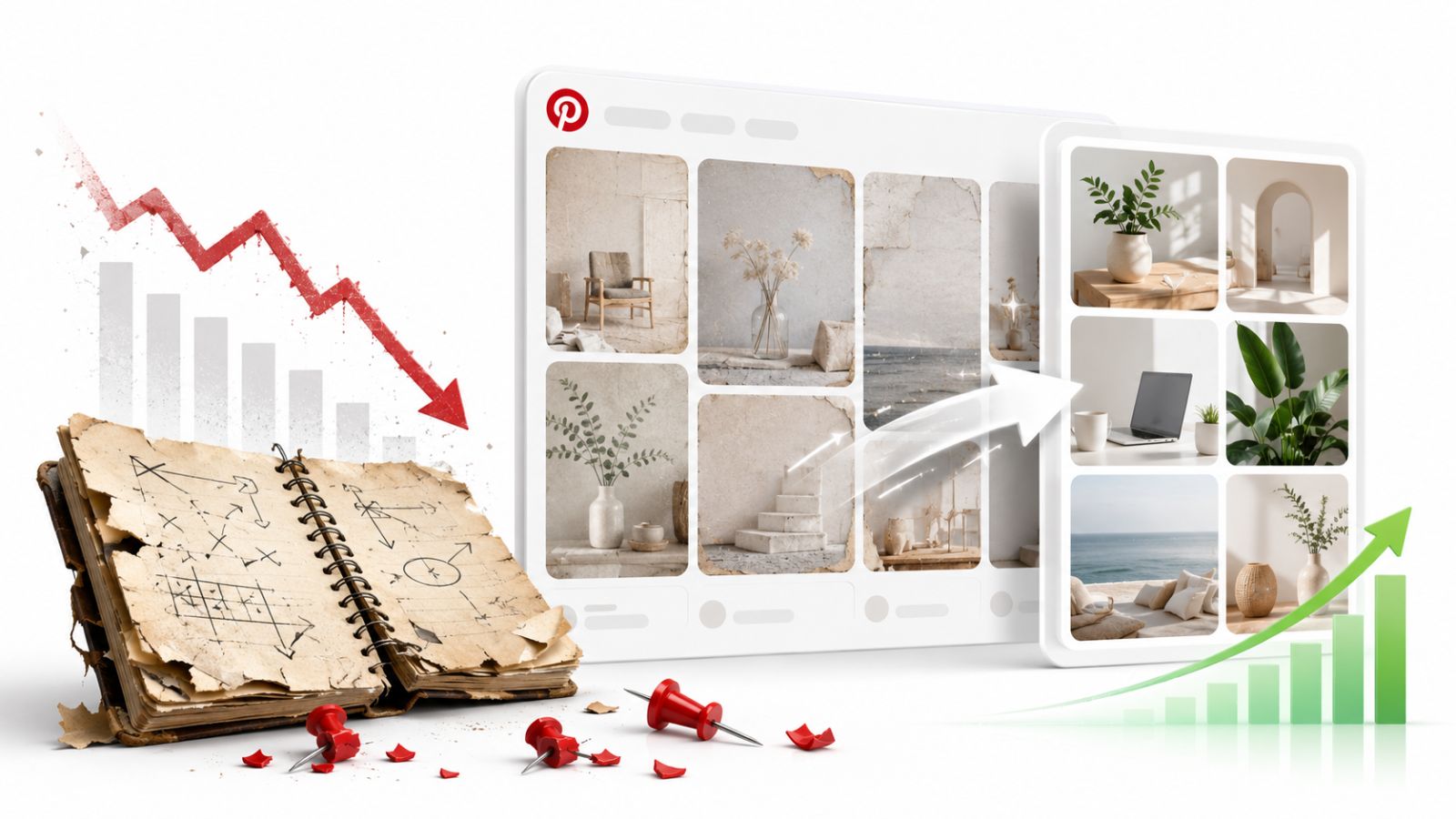
For most of its history, Pinterest rewarded volume. Pinning frequently – even with low-effort images – was enough to keep impressions climbing. The distribution model was relatively forgiving: throw enough at the wall and some of it would stick.
That era is over for three interconnected reasons.
AI-generated content saturation. Generative image tools have flooded Pinterest with visually polished pins that carry zero original intent behind them. The platform’s signal-to-noise ratio has collapsed, and the algorithm has responded by weighing topical relevance far more heavily than surface-level image quality.
Spam throttling. Pinterest has become significantly more aggressive about suppressing accounts that publish multiple pins to the same URL in a short time window. What used to be a growth hack – bulk-pinning six variants of the same image on the same day – now triggers distribution penalties that can suppress an account’s entire output for weeks.
Search-intent matching. Pinterest’s internal data consistently shows that the pins which drive outbound clicks in 2026 are the ones whose text overlays, board names, and descriptions all align with an active search phrase. Visual appeal matters, but topical precision matters more.
The creators reversing declining impressions are the ones treating every blog post or product as a mini keyword project rather than an asset to pin and forget. The mechanics are surprisingly repeatable once you understand the underlying logic.
Step 1 — Build a Keyword Foundation with Pinterest Trends
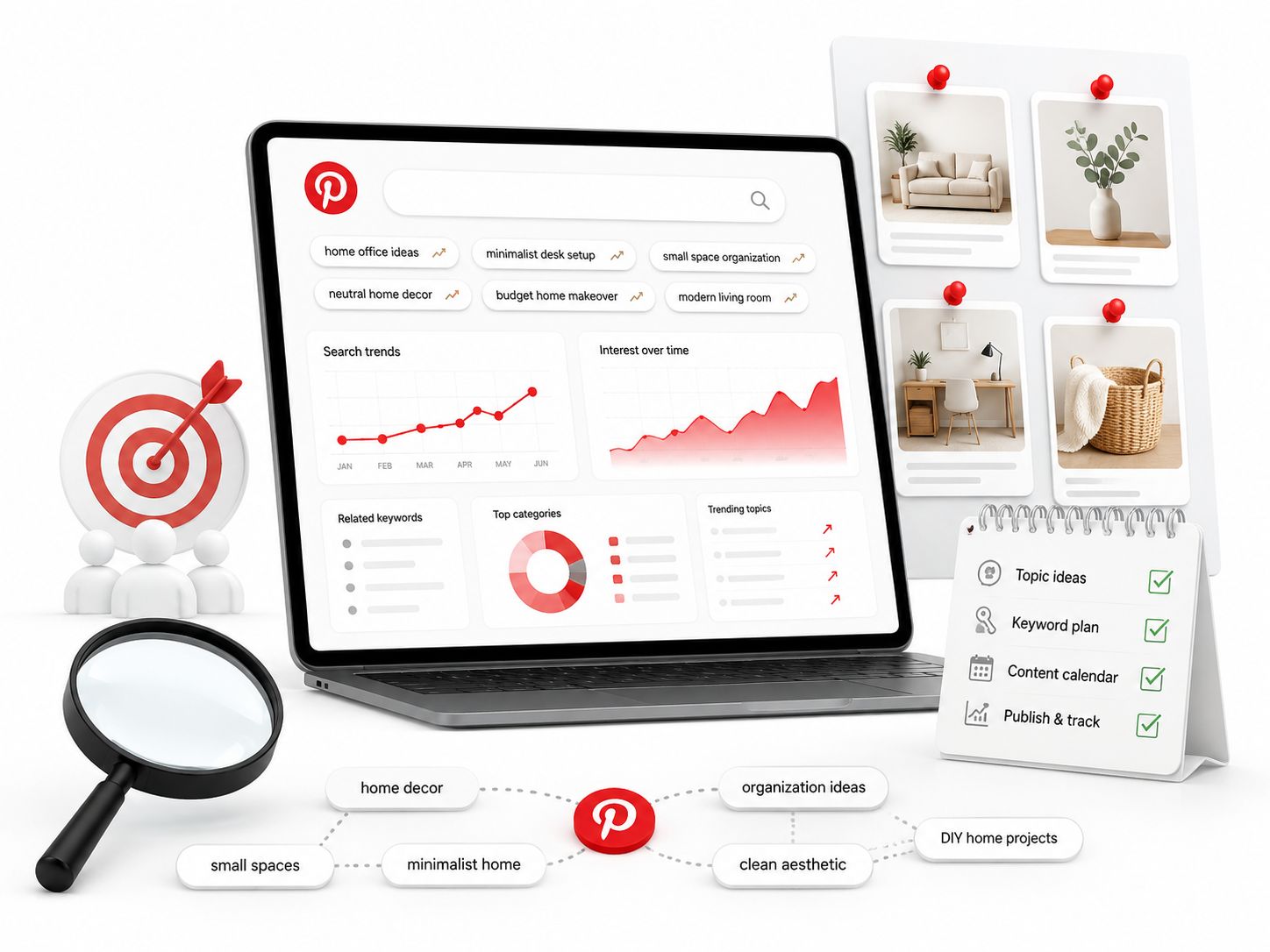
Every strong Pinterest strategy in 2026 begins with Pinterest Trends, the platform’s native search intelligence tool. Most creators either ignore it entirely or glance at it once and move on – which is exactly the opening that disciplined creators are exploiting.
Open Pinterest Trends on desktop (the graph resolution is difficult to read on mobile) and enter the primary topic your content covers. If your post is about home office setups, start with home office and observe two things before moving forward.
Traffic consistency is worth more than traffic peaks. A keyword that holds steady volume across all twelve months of the year almost always outperforms one with a dramatic seasonal spike. Seasonal spikes are valuable only when your content is explicitly tied to that season – otherwise the spike fades before your pins gain traction and you lose the distribution window entirely.
Pinterest suggests your next two keyword sets automatically. Scroll beneath the main graph and the tool surfaces related phrases that Pinterest is actively recommending to users searching your seed term. This is not guesswork – it is the platform explicitly telling you which adjacent searches your content can be matched against. Your job is to pick the two most consistent, most relevant phrases from that list.
By the end of this step, you should have three distinct keyword phrases: the primary phrase your content is already centered on, and two related phrases broad enough to anchor their own dedicated board. These three phrases become the organizing spine of everything that follows.
For a deep dive on how image dimensions and visual specs interact with Pinterest’s distribution, see the ChatbotX guide on social media image sizes in 2026.
Step 2 — Create Six Pins Per Post, Not One
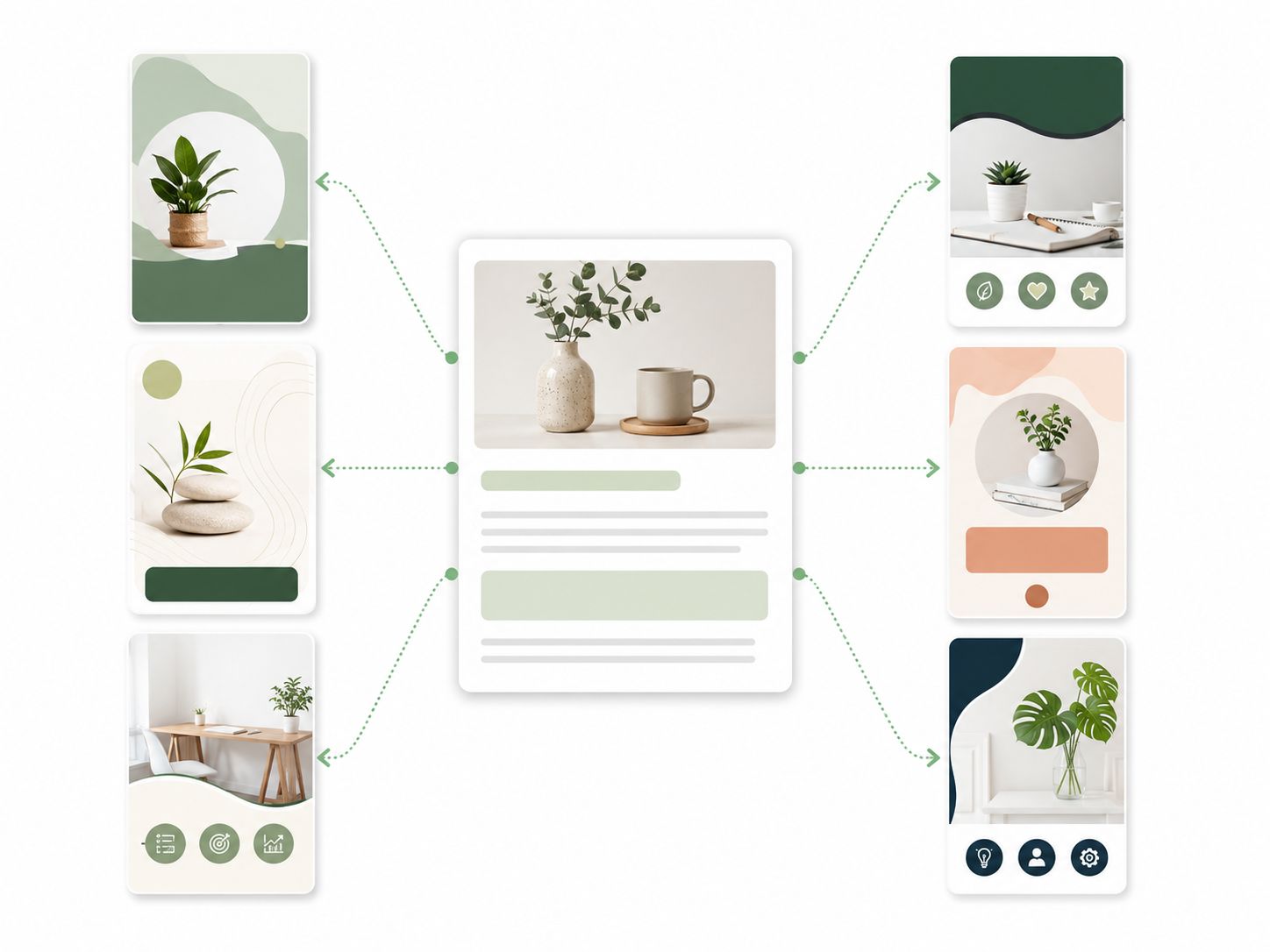
The most common reason Pinterest strategies plateau is not poor design – it is under-representation. Publishing a single pin per blog post or product page gives Pinterest exactly one search-intent signal to work with. The algorithm can only classify your content against one phrase, surface it to one audience segment, and measure it against one set of competing pins.
The 2026 approach is to create two pin variants per keyword phrase, for a total of six pins per piece of content, all pointing to the same destination URL.
Here is how the split works using a home office example:
- Pins 1 and 2 – text overlay targets home office ideas. One pin might use the hook 12 Home Office Ideas That Actually Boost Focus. The second uses a different image and framing, perhaps Home Office Ideas for Small Rooms (That Feel Spacious).
- Pins 3 and 4 – text overlay targets home office organization. Variants could be Home Office Organization Hacks for Busy Professionals and How to Organize a Small Home Office in a Weekend.
- Pins 5 and 6 – text overlay targets productive workspace setup. Examples: Productive Workspace Setup Under $200 and The Productive Workspace Setup Every Remote Worker Needs.
The design language can – and should – vary between variants. Different background images, different font treatments, different color palettes. What stays constant is the destination URL. You are not manufacturing duplicate content. You are creating six distinct search-intent entry points, each of which Pinterest can independently classify, test, and distribute.
According to Pinterest’s own creator research, pins with specific, searchable text overlays consistently outperform image-only designs on outbound click rates – making the text overlay strategy a non-negotiable element of the 2026 approach.
Step 3 — Structure Boards as Keyword Signals
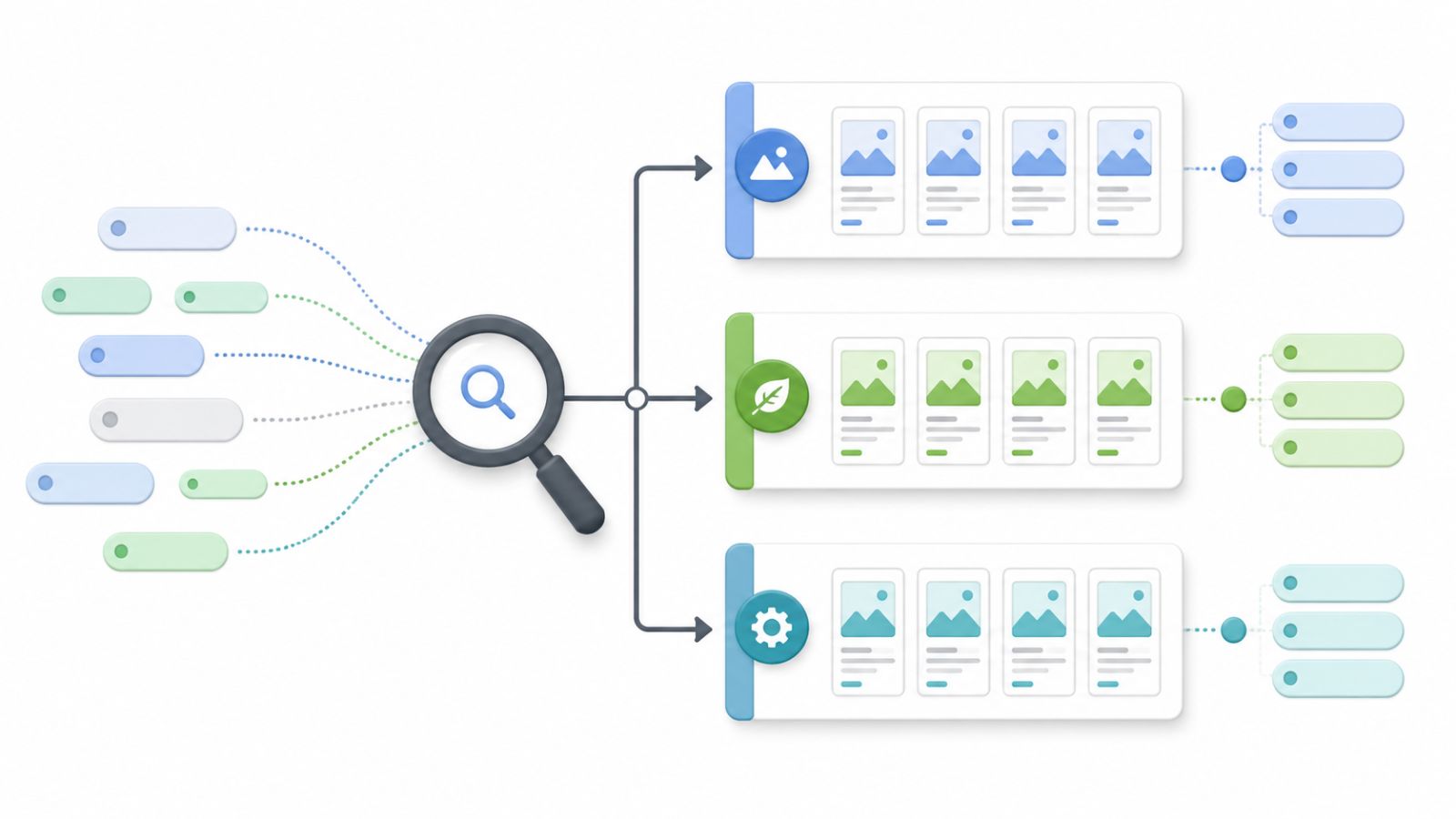
A common misconception about Pinterest boards is that they exist for the creator’s organizational convenience. They do not – at least not from an algorithmic standpoint. Boards are one of Pinterest’s primary signals for classifying the content within them. When a pin sits inside a board whose title and description closely match the pin’s own keyword targets, Pinterest receives a reinforcing signal about what that content is and who it is for.
In 2026, board naming should follow a single rule: match the exact keyword phrase from your Trends research, word for word.
If your three phrases are home office ideas, home office organization, and productive workspace setup, your three boards should be titled precisely:
- Home Office Ideas
- Home Office Organization
- Productive Workspace Setup
No stylized capitalization schemes. No creative reframing. No adding filler words like “the best” or “my favorite.” Exact phrase matching gives the algorithm the clearest possible signal and costs you nothing in exchange.
Board descriptions deserve the same precision. Write two to three sentences that naturally incorporate the keyword phrase and describe what type of content the board contains. ChatbotX’s AI Agents can generate keyword-rich board descriptions at scale – paste your keyword set, specify the board’s focus, and the agent outputs search-optimized copy ready to paste directly into Pinterest.
For creators managing content across multiple social channels alongside Pinterest, the ChatbotX blog’s guide on social media management for small businesses in 2026 covers the broader scheduling architecture that makes cross-platform consistency sustainable.
Step 4 — Schedule Your Six Pins One Week Apart
This is the step that separates accounts with growing impressions from accounts that plateau. It is also the step most creators get backwards.
Publishing all six pin variants on the day a post goes live seems logical – get everything live, let the algorithm sort it out. In practice, it is the fastest way to suppress your own reach. Pinterest’s spam filters are calibrated to flag multiple pins pointing to the same URL within a compressed time window, and the throttling effect can persist for weeks. More damagingly, the pins compete against each other for the same impressions rather than accumulating independent traction across different keyword sets.
The fix is a one-week gap between every pin, rotating across your three boards in sequence:
| Week | Pin | Board |
|---|---|---|
| Week 1 | Pin 1 | Home Office Ideas |
| Week 2 | Pin 2 | Home Office Organization |
| Week 3 | Pin 3 | Productive Workspace Setup |
| Week 4 | Pin 4 | Home Office Ideas |
| Week 5 | Pin 5 | Home Office Organization |
| Week 6 | Pin 6 | Productive Workspace Setup |
Each pin gets a full week of algorithmic testing before the next variant enters the ecosystem. Pinterest evaluates save rates, click-through rates, and close-up rates individually for each pin before deciding how broadly to distribute it. Spacing the pins a week apart means each one benefits from that full evaluation window without cannibalizing its siblings’ data.
Six pins, six weeks of distribution, from a single hour of upfront work. That is the compounding math that makes this strategy worth running for every piece of content you publish.
For reference on how Pinterest’s developer API handles scheduling parameters programmatically, Pinterest’s official API documentation is the authoritative technical source for teams building custom automation workflows.
The Long Game: Why Consistency Compounds on Pinterest
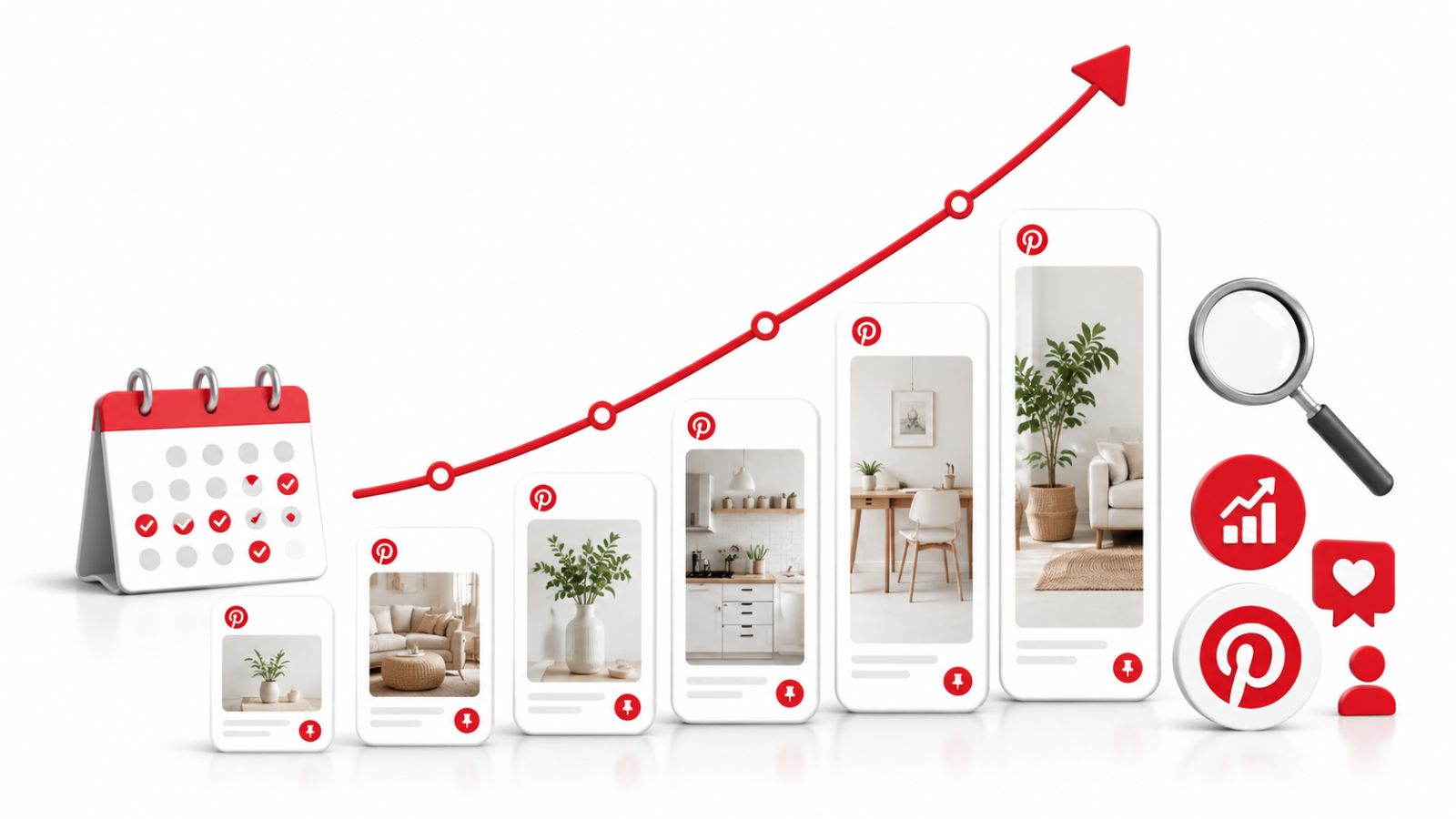
Pinterest operates on a fundamentally different time horizon than most social platforms. On TikTok or Instagram Reels, a piece of content lives or dies within 48 hours. On Pinterest, a well-structured pin can continue accumulating saves and driving clicks for eighteen months or longer – but only if it was built on accurate keyword targeting in the first place.
This is why the four-step system described above is not a launch tactic. It is a compounding engine. Each week that you run the loop for a new post adds six more entry points into Pinterest’s search ecosystem. After three months of consistent execution, a creator running one post per week has 72 pins – each targeting a distinct, high-intent keyword phrase – distributed across properly structured keyword boards. The distribution surface area compounds in a way that volume-based pinning never achieves.
The caveat is consistency. Missing weeks breaks the rhythm and gives the algorithm less data to work with. The creators who see the largest gains are not the ones who sprint for a month and stop – they are the ones who treat the weekly loop as a non-negotiable publishing process, as reliable as hitting publish on the blog post itself.
How ChatbotX Automates the Pinterest Content Loop
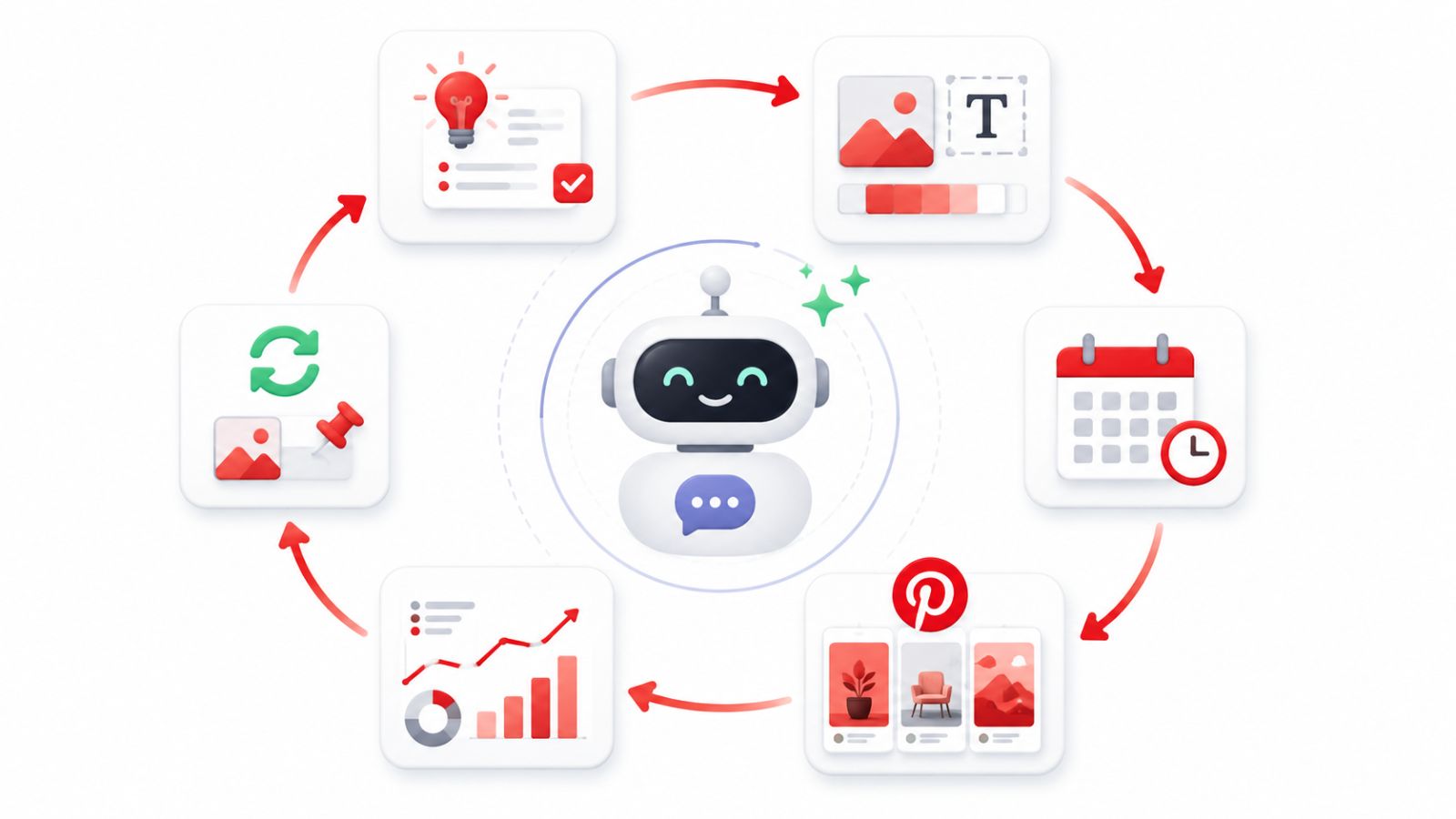
The four-step system above is deliberately mechanical. Keyword research, six-pin creation, board setup, and a six-week scheduling rotation are all execution tasks – and execution tasks are exactly what ChatbotX’s Flow Builder and AI automation layer are designed to absorb.
Here is what the automated workflow looks like in practice:
Keyword brief to pin descriptions. After identifying your three keyword phrases in Pinterest Trends, ChatbotX’s AI Agents can generate the six pin text overlays, the three board descriptions, and the six individual pin captions – all tailored to the keyword sets – in a single prompt. What used to take twenty minutes of writing per post becomes a one-minute generation task.
Multi-board scheduling. ChatbotX’s Remarketing and Growth Tools support staggered, multi-destination publishing. Map each pin to its target board, set the seven-day intervals, and the scheduler handles the distribution calendar automatically – no manual entry, no calendar reminders, no risk of accidentally publishing two pins to the same URL on the same day.
Agency scaling. For social media agencies managing Pinterest strategies across multiple client accounts simultaneously, the manual logistics of six pins per post per client per week become unsustainable very quickly. ChatbotX’s open-source infrastructure on GitHub allows agencies to build custom integrations – connecting client content pipelines directly to the scheduling layer and managing the entire rotation from a single dashboard.
The open-source codebase also means teams can inspect and customize the scheduling logic, integrate with proprietary content management systems, and contribute improvements back to the project. See the ChatbotX GitHub releases page for the latest version updates and changelog.
Your Minimum Viable Pinterest System — Starting Tomorrow
If the full system feels like too much to implement at once, start with this stripped-down version. It takes approximately 60 minutes per post and captures the majority of the benefit.
Step 1. Open Pinterest Trends and identify three keyword phrases for your next post – one primary phrase you are already targeting, two that Pinterest itself recommends below the main graph.
Step 2. Create six pin images: two per keyword phrase, same destination URL across all six, text overlay on each pin matching its corresponding keyword.
Step 3. Verify you have three boards with titles that match your three keyword phrases exactly. Add two-to-three sentence keyword-optimized descriptions to each board.
Step 4. Schedule one pin per week for six consecutive weeks, rotating across the three boards in sequence. Do not deviate from the one-week gap.
Step 5. Move on to next week’s post and run the identical loop. Do not touch the previous post’s pin schedule – let the algorithm work.
That is the complete system. No trending-audio chasing, no follower-count obsession, no viral-moment dependency. Just a clean, repeatable keyword-and-scheduling loop that compounds over time.
Final Thoughts: Build a Pinterest Presence That Lasts
Pinterest in 2026 is not a sprint platform. The creators and brands building durable traffic from it are the ones who commit to a system – keyword-first thinking, multi-variant pinning, precision board architecture, and patient scheduling – and run that system week after week without skipping.
The strategic thinking needs to come from you. The execution, however, does not. Every step from board description generation to six-week scheduling rotation is automatable with the right tools, and that automation is what allows serious creators and growth-focused businesses to run a proper Pinterest strategy without it consuming their entire content calendar.
Ready to Scale Your Pinterest Strategy with AI?
If you are ready to stop manually managing pin calendars and start running a system that compounds on autopilot, ChatbotX is built for exactly this.
Join thousands of creators, marketers, and agencies who are using ChatbotX to automate their social content workflows – from AI-generated pin descriptions to staggered multi-board scheduling to full cross-channel publishing automation.
👉 Get started with ChatbotX for free – no credit card required.
Want to explore the open-source version or contribute to the project? Visit the ChatbotX GitHub repository and join a growing community of developers building the future of AI-powered social media automation.
The best time to build a Pinterest system that compounds was six months ago. The second best time is this week.