
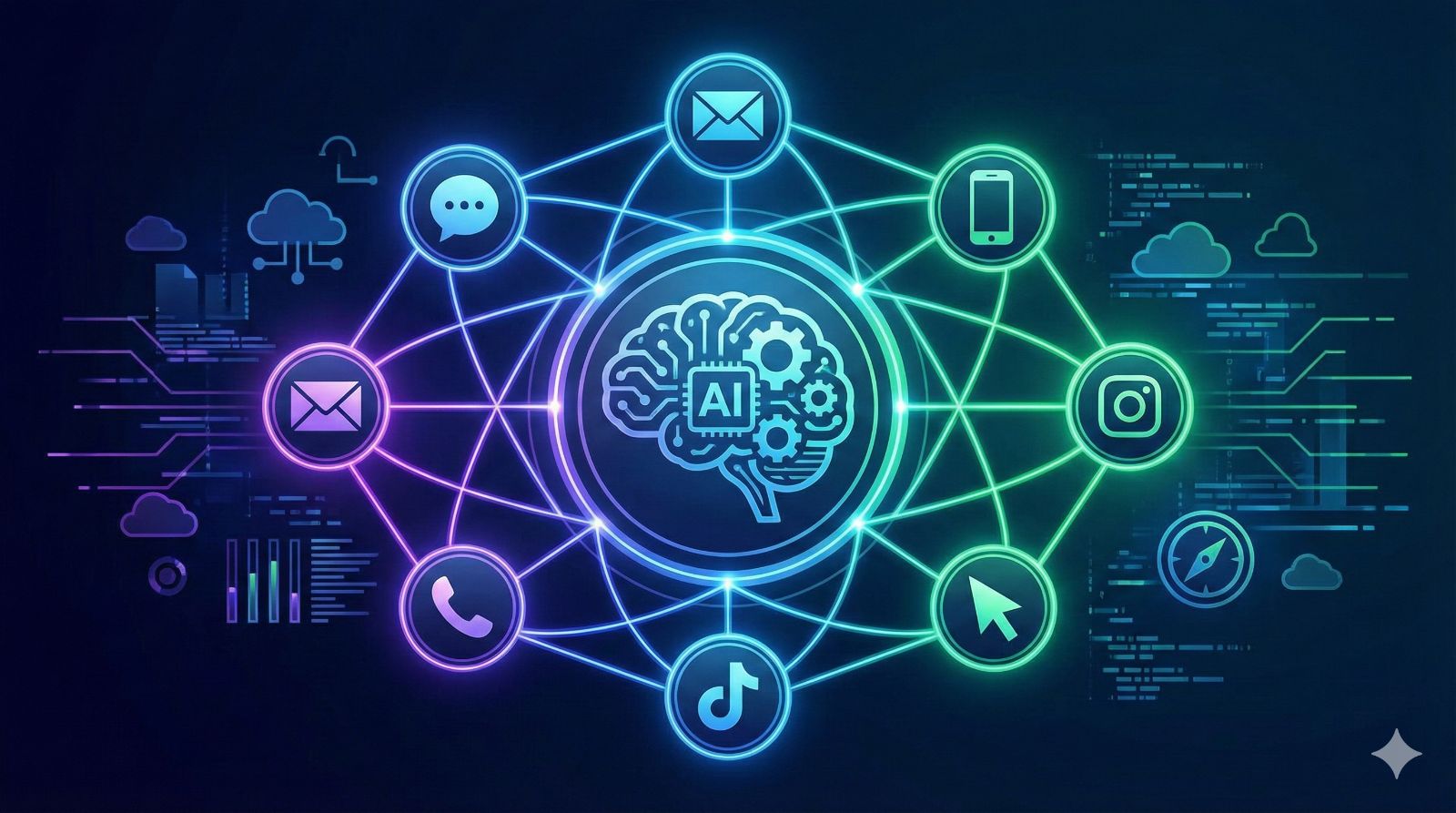
Omnichannel chatbots are no longer an optional feature – they have become the infrastructure of the modern customer experience. Customers switch between WhatsApp, direct messages on Instagram, Messenger, Telegram, and web chat within the same buying journey. A successful omnichannel chatbot strategy is not simply “being everywhere.” It must unify data, ensure safety, and deliver conversions across platforms with one intelligent brain and multiple distinct interfaces for each platform. This guide provides a detailed, ready-to-scale playbook to build a scalable, converting, and compliance-ready cross-platform chatbot strategy in 2026.
Launch agentic chat marketing in minutes with ChatbotX













1. Understand Omnichannel Chatbots — What They Are and Why They Succeed
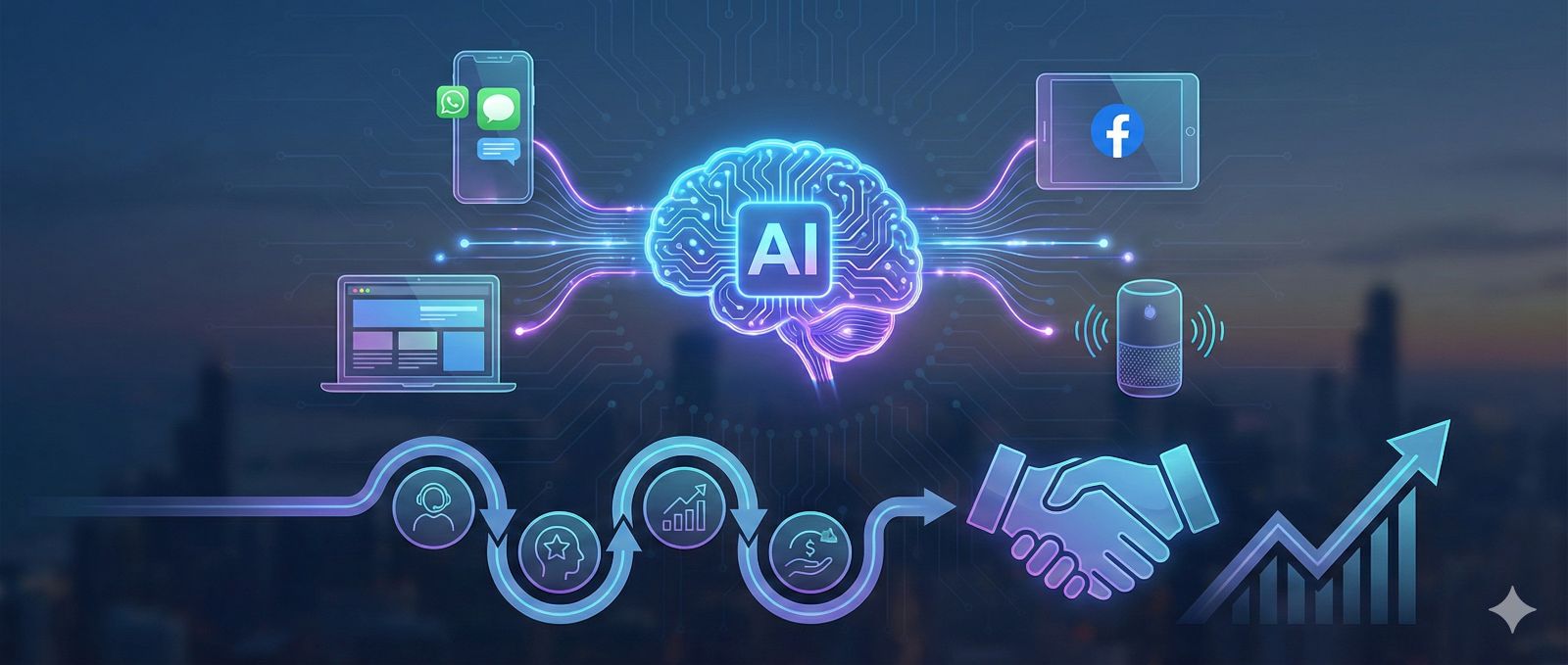
Core Definition: One Brain, Many Faces
An omnichannel chatbot is a central conversational intelligence layer that operates across multiple messaging platforms while preserving customer context and delivering consistent outcomes. Customers experience one unified brand, even if the conversation starts on WhatsApp in the morning, continues in Instagram DMs after lunch, and moves to Telegram in the evening.
Why Omnichannel Outperforms Single-Channel Bots
Platform-specific bots are constrained by channel silos and data fragmentation. In contrast, omnichannel chatbots unify:
- User identity across platforms
- Conversation history across sessions
- Analytics across every touchpoint
- Conversion tracking on any channel
This leads to measurable business results: higher engagement rates, improved response times, reduced support costs, and deeper customer insights. According to Aberdeen Group research, companies with strong omnichannel customer engagement retain on average 89% of their customers, compared to 33% for companies with weak omnichannel strategies.
What Changed Between 2025 and 2026
Omnichannel chatbot strategy has accelerated for three reasons:
- Messaging apps have surpassed email and live chat as primary customer contact channels in many markets.(Meta Business, 2025)
- Platform commerce features – product catalogs, in-chat payments, rich media – have matured significantly on WhatsApp, Instagram, and Telegram.
- LLM-powered automation now enables genuine personalization at scale, moving beyond rigid decision trees.
Key Benefits at a Glance
- Unified cross-platform experience – customers never need to repeat themselves
- Cost efficiency through centralized logic and reduced redundant tooling
- Higher conversion rates from contextual continuity across sessions
- Better operational scalability with AI-assisted automation
Pro tip: Treat your omnichannel chatbot as a product, not a campaign. Assign an owner, define success metrics, and run it through a proper product lifecycle – roadmap, iteration, and retirement of outdated flows.
Pros & Cons: Omnichannel Chatbot Strategy
Pros
- Higher customer satisfaction through maintained context
- Reduced operating costs by reusing centralized logic
- Unified data enables smarter marketing and product decisions
- Resilience against individual platform policy changes
Cons
- Higher initial implementation complexity compared to single-channel bots
- Requires disciplined data governance and identity management
- Compliance obligations multiply across platforms and regions
Warning: Avoid “platform sprawl.” Deploying on many channels without quality control will erode trust faster than a single well-managed channel would build it.
2. Platform Selection Strategy — Where to Deploy Your Omnichannel Chatbot

Start With Audience Reality, Not Hype
The most common omnichannel mistake is deploying on too many platforms too quickly. Your goal is strategic coverage – reaching 90% of your audience with 3–5 well-executed platforms rather than 10 poorly managed ones.
Platform Comparison Table (2026)
| Platform | Monthly Active Users | Best For | Key Strengths | Automation Depth |
|---|---|---|---|---|
| WhatsApp Business | 3B+ MAU (Meta, 2025) | Global support, commerce | High open rates, payments, reliability | Advanced |
| Facebook Messenger | 1.3B+ MAU (Meta, 2025) | Social commerce | Ad-to-chat flows, Meta ecosystem | Advanced |
| Instagram Direct | 2B+ MAU (Meta, 2025) | Visual brands, youth | Discovery, visual storytelling | Moderate |
| Telegram | 900M+ MAU (Telegram, 2025) | Communities, tech audiences | Powerful bot API, inline mode | Advanced |
| 1.3B+ MAU (Tencent, 2025) | China market | Super app, payments, mini programs | Very Advanced | |
| Slack | 38M+ DAU (Salesforce, 2025) | B2B operations | Workflow automation, enterprise integrations | Advanced |
| Discord | 200M+ MAU (Discord, 2025) | Communities, gaming | Real-time engagement, community tools | Advanced |
| Line | 196M+ MAU (Line Corp, 2025) | Japan, Southeast Asia | Stickers, strong local adoption | Advanced |
How to Choose the Right Platform Mix
- Map customer channels – use surveys, CRM data, and support ticket sources to understand where your audience already communicates
- Identify top conversion journeys – e.g., discovery on Instagram → checkout on WhatsApp
- Choose 2–3 primary platforms based on audience volume, then add secondaries after stabilization
- Validate API capabilities for your specific automation and commerce needs
- Confirm compliance requirements – GDPR, HIPAA, LGPD, or local data laws depending on your regions
Recommended Platform Combinations by Industry
- Retail e-commerce: WhatsApp + Instagram Direct + Messenger
- SaaS / B2B: Slack + Web chat + Messenger
- Education: WhatsApp + Telegram + Web chat
- Healthcare: WhatsApp + Web chat + SMS (with compliance gateway)
3. Omnichannel Chatbot Architecture — How to Build a Single Scalable Brain

3-Layer Architecture Model
Layer 1 – Intelligence Layer (Core Brain)
- NLP/NLU engine (rule-based, ML, or LLM-powered)
- Intent classification and entity extraction
- Business logic and decision trees
- CRM and database integrations
- Analytics and reporting pipelines
Layer 2 – Adaptation Layer (Translator)
- Platform-specific formatting rules
- Message type conversion (cards, lists, buttons, carousels)
- Rate limiting and API constraint handling
- Security and compliance enforcement
Layer 3 – Channel Interface Layer (Connectors)
- WhatsApp Business API
- Meta Messenger API
- Instagram Graph API
- Telegram Bot API
- Additional connectors as needed
Why Centralized Architecture Wins
| Criteria | Centralized Omnichannel Bot | Fragmented Bot |
|---|---|---|
| Consistency | High | Low |
| Scaling cost | Lower | Higher |
| Analytics quality | Comprehensive | Siloed |
| Feature updates | Deploy once | Repeated per platform |
| Customer experience | Seamless | Disjointed |
Checklist of Essential Capabilities
- Unified customer identity graph
- Contextual consistency across sessions and platforms
- Centralized analytics dashboard
- Human handoff with full conversation transcripts
- Multilingual NLP for global reach
- Failover switching and error recovery
Common Architecture Mistakes to Avoid
- Building platform-specific bots with no shared logic layer
- Using separate CRM systems for each channel
- No unified identity resolution across platforms
- Skipping the Adaptation Layer – leads to broken formatting and poor UX
4. AI & LLM Integration — The 2026 Omnichannel Differentiator
Why LLMs Change the Omnichannel Equation
Traditional omnichannel chatbots relied on intent classification trees and keyword matching. LLM-powered bots can handle open-ended queries, generate contextually relevant responses, and adapt tone per platform – all from the same intelligence layer. According to Gartner’s 2025 AI in Customer Service report, organizations deploying AI-powered chat automation reduce support costs by up to 30% within the first year.
LLM Integration Architecture Options
| Approach | Best For | Trade-offs |
|---|---|---|
| Full LLM generation | Open-ended support queries | Higher latency, hallucination risk |
| RAG (Retrieval-Augmented Generation) | Knowledge base Q&A, product info | Requires quality knowledge base |
| Hybrid: LLM + rules | Commerce flows, compliance-sensitive tasks | More complex, more predictable |
| LLM as classifier only | Routing and intent detection | Low risk, limited capability gain |
Recommended approach for most businesses: Hybrid model – use LLM for natural language understanding and open conversation, use rule-based logic to govern transactional steps such as checkout, payments, and data capture.
Hallucination and Safety Controls
Deploying an LLM without guardrails in a customer-facing chatbot is a compliance and reputational risk. Implement:
- Output filtering – block responses containing sensitive data, competitor mentions, or policy violations
- Confidence thresholds – route to human agents when LLM confidence falls below a set threshold
- Response logging – all LLM-generated responses should be logged for audit and model improvement
- Prompt injection protection – sanitize user inputs before passing to the LLM
Pro tip: Treat LLM responses like user-generated content – assume they can be wrong or manipulated. Build moderation layers before going live.
5. Platform-Specific Playbook — Optimize Your Omnichannel Chatbot Per Channel

WhatsApp Business: Trusted Service and Commerce Channel
Best use cases: Customer support, order updates, payments, global outreach.
Key tactics:
- Use interactive lists for FAQs, order tracking, and menu navigation
- Design for short, purposeful conversations – mobile users expect speed
- Use template messages for outbound re-engagement within WhatsApp’s 24-hour policy window
Facebook Messenger: Social Commerce Entry Point
Best use cases: Ad-driven conversions, product discovery, retargeting.
Key tactics:
- Use click-to-Messenger ads for frictionless chatbot entry
- Build a persistent menu for high-intent actions (track order, browse catalog, speak to agent)
- Use carousel templates to showcase products with direct add-to-cart links
Instagram Direct: Visual, Fast, and Brand-Forward
Best use cases: Fashion, beauty, food, lifestyle, creator-driven brands.
Key tactics:
- Use visual-first responses – images and short video outperform text on this platform
- Keep replies short and conversational – Instagram DMs are not email
- Automate Story reply flows with brand-consistent tone and clear next steps
Telegram: Power Users and Communities
Best use cases: Crypto/fintech, developer tools, community management.
Key tactics:
- Implement inline mode for quick command-based queries
- Use inline keyboards to create app-like navigation experiences
- Build community moderation automations to reduce manual admin workload
Key principle: Your logic stays centralized. Your presentation adapts. Never let platform customization bleed into the Intelligence Layer.
6. Integrations That Multiply Omnichannel Chatbot Value
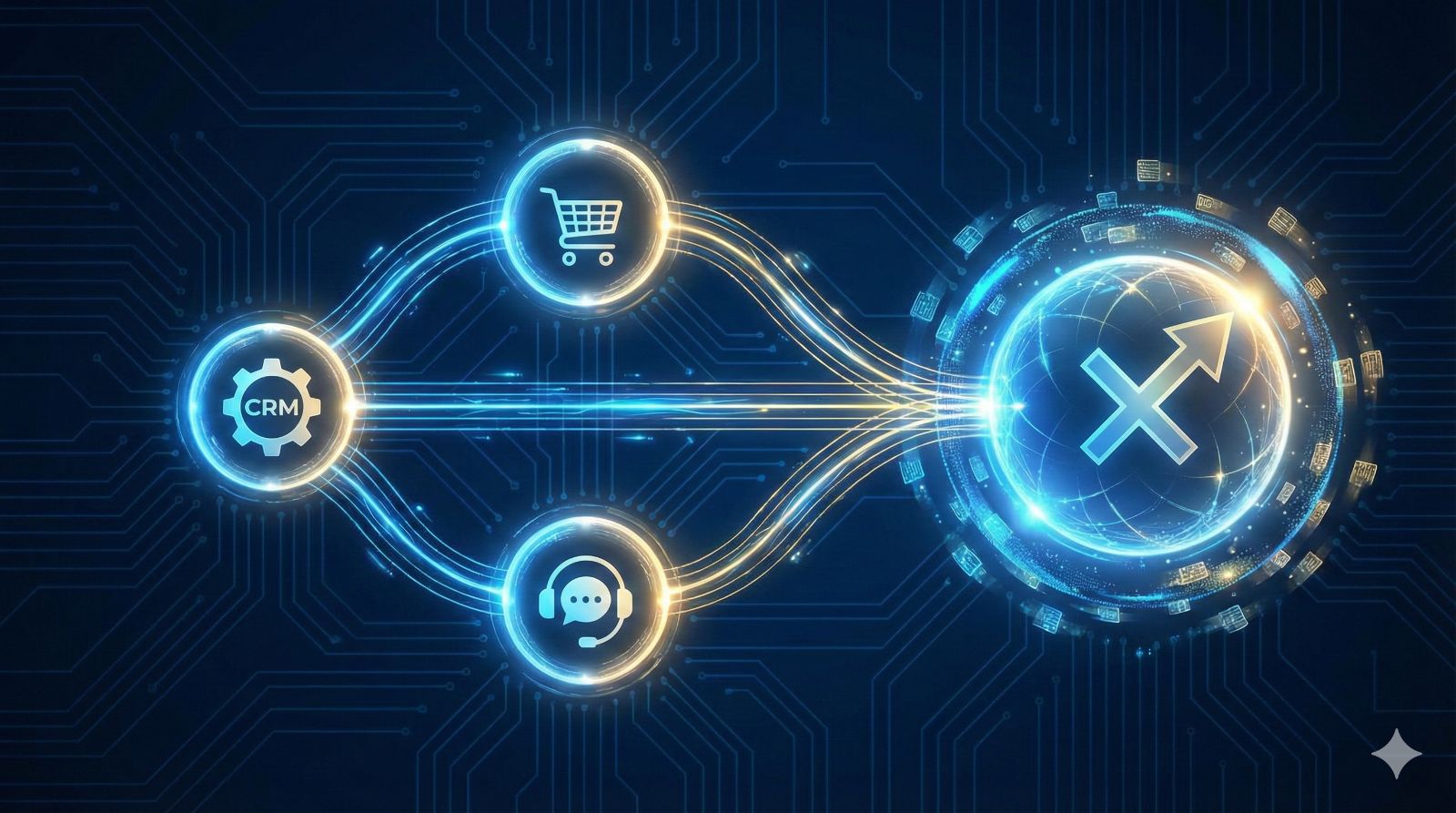
Why Integrations Are Real Growth Leverage
Standalone bots answer questions. Integrated omnichannel chatbots drive revenue and reduce operational costs. The integration layer is what turns conversations into measurable business outcomes.
Key Integrations in Priority Order
1. CRM (Salesforce, HubSpot, Pipedrive)
- Automatically create and update leads from chatbot conversations
- Log full conversation history against contact records
- Trigger lifecycle campaigns based on chatbot interaction signals
2. E-commerce (Shopify, WooCommerce, Magento)
- Pull real-time inventory and pricing data into chat responses
- Send proactive shipping and delivery updates
- Trigger upsell recommendations based on purchase history
3. Support Systems (ChatbotX)
- Escalate tickets with full conversation context attached
- Track bot vs. human resolution rates per channel
- Reduce average handle time through pre-filled ticket data
4. Payment Gateways (Stripe, WhatsApp Pay, Telegram Payments)
- Complete transactions without leaving the messaging interface
- Reduce checkout drop-off by eliminating redirects to external pages
Integration Impact by KPI
| Integration Type | Primary KPI Targeted | Performance Impact | Strategic Data Source |
|---|---|---|---|
| Deep CRM Integration | Lead-to-Opportunity Conversion | +25% – 45% | HubSpot State of Marketing |
| Real-time E-Commerce | Cart Abandonment Recovery | +20% – 35% | Shopify Plus Commerce Trends |
| Customer Service Stack | Mean Time to Resolution (MTTR) | -45% – 70% | Zendesk CX Trends Report |
| Unified Payment Gateways | In-Conversation Conversion | +15% – 30% | Stripe News & Insights |
| Omnichannel Messaging | Customer Lifetime Value (CLV) | +18% – 28% | Meta Business Messaging |
Warning: Ensure data field mapping is consistent across all connected systems. Inconsistent mapping corrupts customer records and creates downstream compliance risks.
7. Governance, Compliance, and Analytics — Scale Your Omnichannel Chatbot Safely
Compliance Is Not Optional
When operating across multiple platforms and regions, you must comply with both platform policies and applicable data laws. Key frameworks: GDPR (EU), CCPA (California), HIPAA (US healthcare), LGPD (Brazil), PDPA (Thailand/Singapore). Your omnichannel chatbot must enforce data consent, retention, and auditability at all times.
Governance Checklist
- Explicit opt-in mechanism for all proactive messaging flows
- Regional data retention policies documented and enforced in storage layer
- Full conversation audit logs retained for minimum required periods per regulation
- Human escalation paths documented, tested, and reviewed quarterly
- LLM response monitoring active with defined escalation thresholds
Analytics: Minimum Dashboard Requirements
Your omnichannel chatbot system must track at minimum:
- Conversation volume by platform and time period
- Containment rate (bot-only resolution, no human required)
- CSAT / NPS by channel
- Conversion rate per platform per funnel step
- Human handoff rate and handoff reason categorization
- Cost per resolution (bot vs. human)
KPI Benchmark Reference
| KPI | Excellent | Average | Needs Improvement |
|---|---|---|---|
| First Response Time | < 10 seconds | 30–60 seconds | > 2 minutes |
| Containment Rate | 60–80% | 40–60% | < 40% |
| CSAT Score | 4.5–5.0 | 4.0–4.4 | < 4.0 |
| Conversion Rate | > 8% | 3–7% | < 3% |
Benchmarks based on aggregated industry estimates (Gartner, Forrester, Intercom 2024–2025).
Pro tip: Track cross-platform continuation rate – this is the clearest signal that your omnichannel experience is genuinely seamless. If customers repeat themselves when switching channels, your identity layer has a gap.
8. Implementation Roadmap — From Zero to a Fully Orchestrated Omnichannel Chatbot
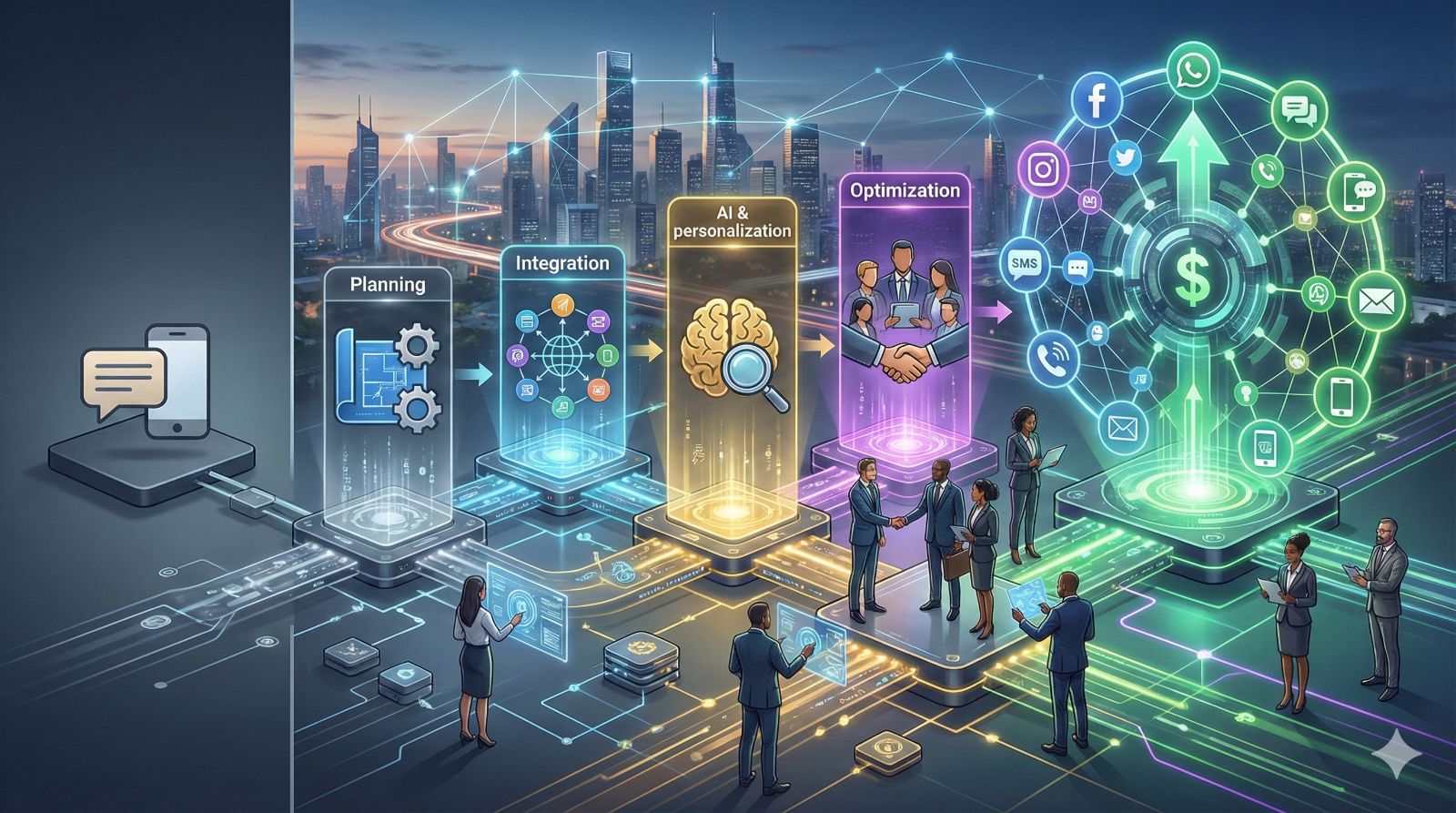
Phase 1 – Strategy and Discovery (Days 1–15)
- Define business goals: support cost reduction, conversion improvement, lead generation
- Map user groups and their platform preferences via surveys and CRM data
- Audit current support and sales workflows for automation opportunities
Phase 2 – Architecture and Platform Setup (Days 16–30)
- Build centralized Intelligence Layer: intent library, entity extraction, LLM integration approach
- Select 2–3 launch platforms based on audience concentration
- Implement unified identity resolution layer (phone/email as anchor)
Phase 3 – Integration and Testing (Days 31–45)
- Connect CRM, e-commerce, and support systems
- Build QA testing protocols for each platform’s formatting and API behaviors
- Run internal pilots and A/B tests on core conversion flows
Phase 4 – Launch and Optimization (Days 46–60)
- Release MVP on primary platform only
- Monitor KPI dashboard weekly – containment rate, CSAT, conversion
- Document escalation paths and edge cases encountered in production
Phase 5 – Expand to Secondary Platforms (Days 61–75)
- Roll out to 2 additional platforms using existing Intelligence Layer
- Adapt Presentation Layer per platform; do not duplicate logic
- Validate compliance requirements for all newly active channels
Phase 6 – Analytics Review and Iteration (Days 76–85)
- Full KPI dashboard review across all active platforms
- Identify containment rate gaps and drop-off points in conversion flows
- Adjust flows based on real user behavior data, not assumptions
Phase 7 – Scaling and Personalization (Days 86–90+)
- Activate LLM-based personalization for recommendations and support
- Launch behavior-triggered campaigns (cart abandonment, re-engagement)
- Expand to new languages and geographic markets where demand is validated
Common Issues & Fixes
| Issue | Likely Cause | Fix |
|---|---|---|
| Containment rate below 40% | Intent library too narrow; LLM fallback missing | Expand intent coverage; add LLM fallback for unrecognized queries |
| Platform API rate-limit errors | No rate-limit handling in Adaptation Layer | Add exponential backoff and queue management |
| Cross-platform identity mismatch | No unified identity resolver | Implement phone/email anchor with cross-platform ID mapping |
| CSAT dropping after LLM deployment | Hallucinations or off-brand tone | Add output filters, confidence thresholds, tone guardrails |
| Platform changes breaking flows | Hard-coded API responses | Decouple API version from logic layer; subscribe to changelogs |
Mini Case Study: Southeast Asian E-Commerce Brand
A mid-sized fashion retailer in Southeast Asia deployed a 3-channel omnichannel chatbot integrated with Shopify and HubSpot. Prior to deployment, 68% of support queries were handled by human agents with an average response time of 4.2 hours.
Results after 90 days:
- Bot containment rate: 61% (from 0%)
- Average first response time: 18 seconds (from 4.2 hours)
- Support team capacity redirected to complex cases: 40% of previous volume
- Cart recovery rate on WhatsApp re-engagement flows: +17% vs. email baseline
Key lesson: The highest ROI came not from the chatbot itself, but from the Shopify + HubSpot integration – enabling real-time cart abandonment triggers and personalized product recommendations within the conversation.
📖 Related: Best WhatsApp Business Solution Providers in 2026 · CRM and Social Media Integration Guide
Frequently Asked Questions About Omnichannel Chatbot Strategy
What’s the difference between an omnichannel chatbot and a multichannel chatbot?
Multichannel bots exist on multiple platforms but operate independently – they do not share data, context, or user identity between channels. An omnichannel chatbot is unified: it shares identity, conversation history, and analytics across all platforms, creating one seamless experience regardless of where the customer engages.
How many platforms should a business launch on first?
Most businesses should start with two to three platforms that capture the majority of their audience. Only expand after core flows are stable, containment rates are acceptable, and analytics confirm strong performance.
Are omnichannel chatbots effective for B2B companies?
Yes. B2B chatbots perform well on Slack, Microsoft Teams, LinkedIn Messaging, and web chat, especially when integrated with CRM and ticketing systems. The key difference from B2C is a longer, more complex conversation flow that reflects the B2B buying cycle.
How do you handle user identity across different platforms?
Use a unified identity layer that maps platform-specific user IDs to a single customer profile. The most reliable anchors are phone number (for WhatsApp) and email address (for web and Messenger). A verified authentication step can link anonymous platform IDs to known CRM records.
Are omnichannel chatbots compliant with GDPR and CCPA?
Yes, but only if explicitly designed for compliance. You must implement consent mechanisms, data retention controls, audit logging, and adherence to each platform’s individual data policies. Compliance is not a feature – it is an architectural requirement from day one.
How do I know if my LLM integration is performing safely in production?
Monitor hallucination rate via manual conversation sampling (1–2% weekly), track escalation rate spikes as an early warning signal, and log all LLM-generated outputs for audit. Set a confidence threshold below which the bot automatically routes to a human agent.
What is the typical ROI timeline for an omnichannel chatbot deployment?
Most businesses see measurable ROI within 60–90 days of deployment, primarily driven by support cost reduction through automation. Revenue impact from cart recovery and upsell sequences typically becomes visible in months 2–3, once audience segments are properly defined and A/B testing has refined message templates.
Build Your Omnichannel Chatbot on a Proven Architecture
The principles in this guide reflect how ChatbotX is designed: a centralized intelligence layer, platform-specific adapters, native integrations with CRM and commerce tools, and built-in compliance controls.
If you are evaluating platforms for your 2026 omnichannel chatbot build, explore how ChatbotX maps to the architecture outlined here:
- Unify WhatsApp, Messenger, Instagram, and more in a single platform
- Automate sales and payment workflows within the conversation
- Monitor LLM-generated responses with built-in safety controls
Setup support available · No minimum contract · 24/7 technical assistance


