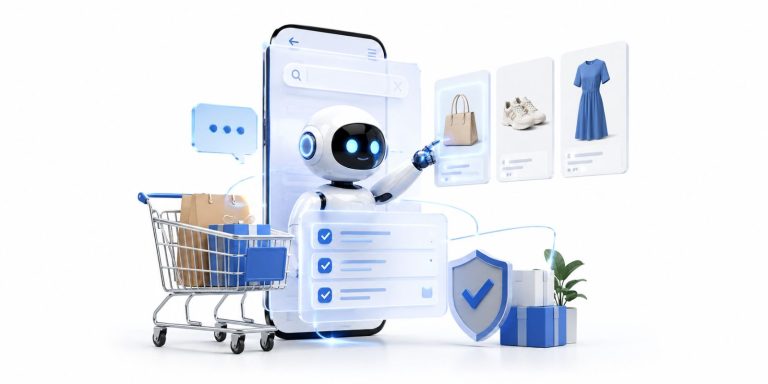

AI Employees are no longer science fiction. In 2026, forward-thinking companies are deploying intelligent digital workers to handle sales, customer service, marketing, and HR – around the clock, at scale, without burnout. This guide unpacks everything you need to know – and how to get started.
Launch agentic chat marketing in minutes with ChatbotX











What Exactly Is an AI Employee?
The term AI Employee – also called a Digital Worker or Intelligent Digital Agent – refers to a software-based workforce powered by a combination of Large Language Models (LLMs), Machine Learning (ML), and Natural Language Processing (NLP). Unlike the automation scripts and rule-based bots of the past decade, AI Employees carry something fundamentally different: cognitive capability.
A traditional automation tool executes a predefined instruction sequence – nothing more, nothing less. An AI Employee, by contrast, can:
- Interpret ambiguous requests and determine the most appropriate response
- Navigate multiple systems (CRM, helpdesk, databases, email) autonomously
- Learn and adapt from historical interactions without requiring manual reprogramming
- Hold context across long, multi-turn conversations with customers
Think of it this way: classic automation is a vending machine – it gives you exactly what the button says. An AI Employee is more like a knowledgeable new hire on day 30 – one who already understands your brand, your customers, and your processes, and can handle edge cases without escalating every time.
Short on time? Watch this 10-minute visual breakdown of how AI Agents and Digital Workers actually process information differently than traditional bots.
According to McKinsey’s 2025 State of AI Report, organizations that have adopted AI-powered digital workers report up to 40% reduction in time spent on repetitive tasks and a measurable improvement in employee satisfaction, as human staff are freed to engage in higher-value work.
AI Employees vs. Traditional Automation: The Real Difference

This distinction matters enormously for business leaders evaluating technology investments. Here is a direct comparison across four critical dimensions:
1. Logic Processing vs. Cognitive Reasoning
Traditional Automation (RPA, rule-based bots): Operates on hardcoded “If-Then” logic. Changing a business rule means rewriting the workflow – typically a task for a developer or IT team.
AI Employees: Use LLM-based reasoning to handle vague, incomplete, or contradictory inputs. If a customer writes “I think I ordered the blue one but now I want the red – can you help?”, the AI Employee understands intent, queries the order system, and initiates a change request – all without a single rule being explicitly programmed for that phrasing.
2. Data Scope: Structured vs. Unstructured
Traditional Automation: Excels at processing neatly formatted data – spreadsheets, databases, form submissions. Introduce a scanned contract, a voice memo, or a social media comment, and it fails.
AI Employees: Comfortably handle unstructured data: PDFs, images, audio transcripts, customer reviews. This versatility enables them to serve in roles previously exclusive to human knowledge workers.
3. Passive Response vs. Proactive Decision-Making
Traditional bots wait for a trigger and respond within a narrow script. Any deviation leads to a dead end or an escalation.
AI Employees can proactively identify problems before they escalate. For example, a digital worker monitoring a customer account can detect a delivery delay, notify the customer, offer a discount code, and update the CRM record – all before the customer ever contacts support.
4. Scalability Under Pressure
During Black Friday or a viral product launch, traditional automation either breaks under load or requires expensive emergency scaling. AI Employees scale instantly and elastically – there is no such thing as an “overflow” for a digital worker.
Core Advantages of Building a Digital Workforce

⏱ 24/7 Availability Across Every Time Zone
AI Employees do not sleep, take holidays, or call in sick. They serve customers in Tokyo at 3:00 AM and respond to inquiries in São Paulo during local business hours – simultaneously, without any degradation in quality.
📈 Elastic Scalability On Demand
Seasonal peaks no longer require the costly cycle of emergency hiring, rapid onboarding, and post-peak layoffs. A digital workforce expands and contracts in real time to match workload, keeping operational costs predictable.
🎯 Consistent, On-Brand Execution
Human agents vary in tone, accuracy, and thoroughness – especially under pressure. AI Employees follow your brand guidelines, knowledge base, and escalation protocols with perfect consistency, every single interaction.
🔍 Real-Time Data and Accurate Forecasting
By continuously processing live operational data, AI Employees generate actionable insights – from identifying at-risk customers to flagging emerging product issues – far faster than any manual reporting cycle.
💡 Liberation of Human Potential
This is perhaps the most underappreciated benefit. When AI handles the high-volume, repetitive layer of business operations, your human team can focus entirely on relationship-building, innovation, and strategic judgment – work that directly drives competitive differentiation.
According to Gartner’s research on intelligent automation, by 2026, over 70% of enterprise customer interactions will involve AI assistance in some form – up from just 15% in 2018.
What AI Can Replace — and What It Cannot
A nuanced understanding of AI’s boundaries is essential for any leadership team planning a workforce transformation.
Where AI Employees Excel
| Task Type | Examples |
|---|---|
| High-volume repetitive processing | Data entry, invoice matching, appointment scheduling |
| Information retrieval at scale | Searching 50,000 documents for a specific clause in seconds |
| Multilingual communication | Real-time translation across 100+ languages |
| Pattern recognition in large datasets | Identifying churn signals, fraud indicators, or sales trends |
| Omnichannel response management | Handling thousands of simultaneous inquiries across email, chat, and social |
Where Humans Remain Irreplaceable
Empathy and Emotional Intelligence: When a customer is distressed – whether due to a product failure, a service mistake, or a personal situation – genuine human warmth and understanding create the kind of trust that turns a negative experience into long-term loyalty. AI can detect sentiment and follow empathy scripts, but authentic human connection remains uniquely powerful.
Ethical and Moral Judgment: Decisions involving legal liability, brand reputation, sensitive personal data, or moral trade-offs require human accountability. AI can surface options and flag risks, but the final judgment in high-stakes scenarios should involve human oversight.
Breakthrough Innovation: AI is extraordinarily effective at optimizing within known solution spaces – but the leap from “what exists” to “what has never been imagined” remains a fundamentally human creative act.
The optimal strategy in 2026 is not AI vs. humans – it is AI amplifying humans, with each side doing what it does best.
Industry Applications: Where AI Employees Deliver ROI

Sales: From Lead Scoring to Pipeline Acceleration
AI Employees in sales functions operate as tireless prospecting and qualification engines. They engage inbound leads within seconds (dramatically outperforming the industry-standard response time), enrich contact records using public data sources, score leads against your ideal customer profile, and route high-priority prospects directly to senior sales reps – complete with a briefing summary.
Beyond top-of-funnel, AI Employees analyze historical deal data to surface accurate revenue forecasts and identify the specific factors that predict deal closure in your market – insights that most sales teams take months to extract manually, if ever.
Key impact metrics: 3x faster lead response time, 25–40% improvement in pipeline conversion rates, significant reduction in CRM hygiene burden.
Customer Service: Resolving Faster, Escalating Smarter
When a support ticket arrives, a digital worker immediately reads the content, cross-references the customer’s history in the CRM, categorizes the issue by type and urgency, and – for common resolutions – executes the fix directly. Password resets, shipping updates, subscription changes, refund initiations: all handled without a human agent touching the queue.
For genuinely complex or sensitive cases, the AI Employee prepares a full case summary, suggests the most appropriate resolution path, and routes the ticket to the right specialist with all context included – reducing the time human agents spend gathering background information by up to 60%.
Key impact metrics: 80%+ first-contact resolution rate for Tier-1 issues, average handle time reduced by half, CSAT scores consistently above 4.5/5.
Marketing: Personalization at a Scale Humans Cannot Reach
Modern marketing demands hyper-personalization – but creating tailored content for each audience segment, across every channel, in real time, is beyond any human team’s capacity. AI Employees close this gap by generating email campaigns, social posts, and ad variations dynamically – each aligned to the individual customer’s behavior, purchase history, and engagement patterns.
They also compress the campaign analytics cycle from weeks to hours, automatically pulling performance data across platforms, identifying what worked, and producing actionable recommendations for the next campaign.
Key impact metrics: 3–5x increase in content production velocity, 20–35% uplift in email open rates through personalization, campaign reporting cycle reduced from 2 weeks to 2 hours.
Human Resources: Smarter Hiring, Smoother Operations
AI Employees are transforming HR from a reactive function to a proactive strategic partner. In recruitment, they screen thousands of applications in minutes – ranking candidates, identifying hidden talent, and providing written reasoning for each recommendation. In operations, they handle the full lifecycle of routine HR administration: onboarding workflows, payroll queries, benefits enrollment, leave management, and policy questions.
The result is an HR team that spends significantly more time on culture, development, and strategic talent planning – and far less time on administrative processing.
Introducing ChatbotX: Your AI Workforce Platform

Deploying an AI workforce is no longer the exclusive territory of enterprise organizations with eight-figure technology budgets. ChatbotX is built specifically to make AI Employee deployment accessible, fast, and measurable for businesses of all sizes.
ChatbotX combines a powerful conversational AI engine with a no-code workflow builder, enabling teams to design, deploy, and manage digital workers without requiring a data science team. Here is what makes ChatbotX the platform of choice for modern digital workforce deployment:
Intelligent Chatbot Automation
The ChatbotX AI Chatbot Builder goes far beyond template-based bots. It leverages LLM reasoning to understand customer intent in natural language, maintain context across multi-turn conversations, and execute real business logic – from order lookups to appointment bookings to CRM updates – within a single conversation thread.
Businesses deploying ChatbotX AI Chatbot automation report resolving 70–85% of Tier-1 support queries without human intervention, freeing their support teams to focus on relationship-critical interactions.
Agentic AI Workflows
The ChatbotX Agentic AI Workflow Engine enables your digital workers to operate autonomously across systems – not just responding to messages, but initiating actions, monitoring conditions, and adapting to outcomes in real time.
Configure a workflow once, and your AI Employee will continuously monitor your pipeline, trigger personalized outreach based on behavioral signals, update your CRM, notify your team, and adjust strategy based on response data – all without a single manual step.
Omnichannel Deployment in Minutes
Through the ChatbotX Omnichannel Integration Hub, your AI Employees operate seamlessly across every customer touchpoint: web chat, WhatsApp, Facebook Messenger, Instagram DMs, Telegram, email, and SMS – from a single unified management interface.
No more managing separate bots for separate channels. One AI Employee, every channel, consistent brand experience.
Open-Source Foundation You Can Trust
ChatbotX is built on a transparent, open-source core – fully auditable and extensible by your engineering team. Explore the ChatbotX source code on GitHub to understand exactly how your AI Employees operate, and contribute to the platform’s ongoing development.
For teams building custom integrations or enterprise-grade modifications, the ChatbotX GitHub repository provides comprehensive documentation, API references, and a community of developers actively extending the platform.
How to Deploy AI Employees in Your Business
A practical deployment roadmap for 2026:
Phase 1: Identify High-Impact, High-Volume Processes (Week 1–2)
Begin with a workflow audit. Map every recurring task in your operations and rank them by two factors: frequency (how often does this happen?) and complexity (how much judgment does it require?). The sweet spot for AI Employee deployment is high-frequency, moderate-complexity tasks – the processes consuming the most human hours with the least strategic value.
Phase 2: Define Success Metrics Before You Deploy (Week 2–3)
Establish clear KPIs before launch – not after. Resolution rate, average handle time, lead conversion rate, cost per interaction. Without a baseline, you cannot demonstrate ROI or identify areas for improvement.
Phase 3: Start Narrow, Then Expand (Month 1–3)
Deploy your first AI Employee in a single, well-defined workflow. Let it run, gather data, refine based on real interactions, then expand scope. Trying to automate everything simultaneously is the most common cause of digital workforce projects failing.
Phase 4: Maintain Human-in-the-Loop for Edge Cases
Design every AI workflow with a graceful escalation path. Your AI Employee should recognize the boundaries of its competence and hand off to a human agent with full context intact. This protects customer experience while you build confidence in your digital workforce.
Phase 5: Continuously Train and Optimize
AI Employees improve with data. Schedule regular reviews of conversation logs, escalation triggers, and resolution quality. Use these insights to update your knowledge base, refine your workflows, and expand your AI workforce’s capabilities over time.
For a deeper dive into agentic AI implementation strategy, the Harvard Business Review’s AI transformation resources offer excellent frameworks for change management alongside technology deployment.
Frequently Asked Questions

What is the difference between an AI Employee and a standard chatbot?
A standard chatbot operates within rigid, predefined rules – it can answer questions it has been explicitly programmed to handle, and fails gracefully (or ungracefully) outside that scope. An AI Employee uses large language model reasoning to understand context, handle novel situations, process unstructured information, and autonomously execute multi-step workflows. The gap is roughly equivalent to the difference between a calculator and a financial analyst.
Will AI Employees make human jobs obsolete?
The evidence from early adopters consistently points in a different direction: AI Employees eliminate the least fulfilling parts of human jobs – the repetitive, high-volume, low-judgment work – and redirect human energy toward the highest-value activities. The organizations thriving in the AI era are those treating digital workers as a force multiplier for their human talent, not a replacement strategy.
How long does it take to deploy an AI Employee with ChatbotX?
For standard use cases (customer support automation, lead qualification, FAQ handling), most businesses go from registration to live deployment in under 72 hours using ChatbotX’s no-code workflow builder and pre-built integration library. Complex, custom enterprise deployments with deep system integrations typically take 2–4 weeks.
How do I ensure my AI Employee stays on-brand?
ChatbotX allows you to feed your brand guidelines, tone-of-voice documentation, and product knowledge base directly into your AI Employee’s configuration. The system learns your brand’s specific language patterns and applies them consistently across every interaction – with monitoring dashboards to flag any deviations.
Is ChatbotX suitable for small businesses?
Yes. ChatbotX is designed to scale from solo entrepreneurs automating customer support to enterprise teams deploying complex, multi-department digital workforce programs. Pricing tiers and a free trial make it accessible regardless of company size.
Start Building Your Digital Workforce Today

The competitive divide between companies that have deployed AI Employees and those still relying entirely on manual processes is widening every quarter. In 2026, the question is no longer whether to build a digital workforce – it is how quickly you can deploy one effectively.
ChatbotX gives you everything you need to start:
- ✅ No-code AI workflow builder – no engineering team required
- ✅ LLM-powered conversational intelligence that understands real customer intent
- ✅ Omnichannel deployment across web, WhatsApp, Messenger, Instagram, and more
- ✅ Open-source transparency and full API access for custom enterprise builds
- ✅ Measurable ROI from day one
🚀 Ready to Deploy Your First AI Employee?
Join thousands of businesses already using ChatbotX to build intelligent digital workforces that operate 24/7, scale on demand, and deliver measurable results.
👉 Start Your Free Trial at ChatbotX.io – No credit card required. Your first AI Employee can be live within 24 hours.
Have questions about enterprise deployment? Explore the ChatbotX GitHub repository or reach out to our solutions team for a personalized demonstration tailored to your industry and workflow.