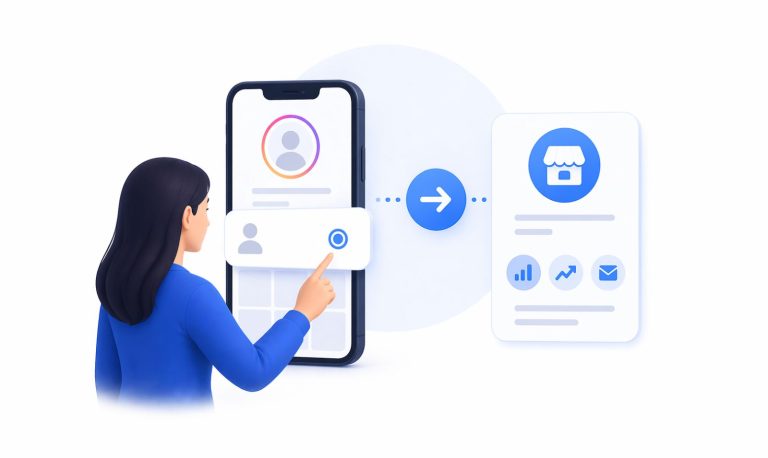

Before you read: If you have ever ended a week realizing you posted twice on Instagram, forgot Facebook entirely, and never touched LinkedIn – this guide was written specifically for you. In the next 12 minutes, you will have a clear, actionable system to fix that cycle for good. No marketing degree required.
Launch agentic chat marketing in minutes with ChatbotX











Introduction: Why Small Business Owners Struggle to Stay Consistent on Social Media

Picture this: it is Wednesday afternoon, your shop is humming, three customers are waiting, a supplier just sent an urgent email – and somewhere in the back of your head, a small voice whispers, “I forgot to post today.”
That moment of guilt is universal among small business owners. Social media feels like a second job that never closes. You care about your brand presence. You know visibility matters. Yet the reality of running a small operation leaves almost no room for deliberate, strategic content creation every single day.
The core tension is this: social media algorithms reward regularity, but small business life is inherently irregular. A hiring emergency, a shipment delay, or a surprise busy weekend can silently derail weeks of good posting momentum.
This is precisely where a social media scheduler for small business becomes not just helpful – but genuinely transformative. Not because it magically writes content for you, but because it separates the creation of content from the delivery of it. You plan when you have headspace. The tool posts when your audience is watching.
This guide breaks down everything you need to know: why scheduling matters in 2026, which features truly serve small businesses, how to choose the right tool, and how to build a workflow that sticks.
What Is a Social Media Scheduler and How Does It Actually Work?
A social media scheduler is software that lets you compose posts in advance, set a specific publication date and time, and automatically publish them to one or multiple platforms – without you needing to be present at that moment.
Think of it like a programmable publishing assistant. Instead of opening Instagram at 7:00 AM to post before your workday starts, you spend 90 minutes on a Sunday evening planning the entire week. You write captions, attach images, pick dates, and queue everything up. Monday through Friday, your content goes live on schedule while you focus on running your business.
Modern schedulers go significantly further than basic queuing. The best platforms in 2026 offer:
- Visual content calendars – a bird’s-eye view of everything planned across platforms
- Multi-channel publishing – one dashboard for Instagram, Facebook, LinkedIn, TikTok, Pinterest, X (Twitter), YouTube, Google Business Profile, and more
- Per-platform customization – adapting one piece of content for each channel’s tone and format requirements
- AI-assisted drafting – generating caption ideas, rewrites, or hashtag suggestions
- Performance analytics – tracking which content types generate the most engagement, reach, or conversions
- Team collaboration – assigning drafting, reviewing, and approval tasks across teammates or freelancers
- Optimal timing recommendations – surfacing the posting windows when your specific audience is most active
This combination of capabilities turns social media from a daily chore into a weekly planning ritual.
Why Consistency Is the Most Valuable Social Media Asset for Small Businesses

Before diving into features and tools, it is worth understanding why consistency matters so much – beyond the obvious “stay top of mind” advice.
The Algorithm Dimension
Every major platform in 2026 uses engagement signals and recency to determine how widely content is distributed. A business that posts every day trains the algorithm to expect and surface its content. A business that disappears for two weeks then posts five times in one day does not earn the same organic reach, even if the content quality is identical.
Regularity is not just good for your audience – it is required by the infrastructure of each platform. If you want a deeper breakdown of how each platform’s ranking system actually works, this guide on how social media algorithms work in 2026 covers the mechanics across Facebook, Instagram, TikTok, X, and LinkedIn in detail.
The Trust Dimension
Potential customers check social profiles before making purchasing decisions. A profile where the last post was three months ago sends an unintended message: maybe this business is slow, struggling, or no longer paying attention. Regular, professional content projects the opposite: an active, confident, customer-focused brand. According to HubSpot’s social media marketing research, over 77% of consumers are more likely to buy from brands they follow on social media – making your posting consistency a direct revenue variable, not just a vanity metric.
The Compounding Dimension
Social media presence builds over time the same way a savings account does. Each post adds a small layer of brand recognition, trust, and discovery. Gaps in your posting history interrupt that compounding. The businesses that grow fastest on social media are rarely the ones with the most creative single posts – they are the ones who show up dependably, month after month.
A scheduling tool makes that dependability achievable even when your bandwidth fluctuates.
The Real Cost of Manual, Reactive Posting
Let us be specific about what unstructured social media management actually costs a small business owner.
Time Cost
Consider the micro-tasks involved in a single manual post:
- Opening the platform app
- Deciding what to post
- Finding or creating the visual asset
- Writing the caption from scratch
- Choosing or researching hashtags
- Selecting the right posting time
- Publishing – then checking it published correctly
- Repeating the process on every other platform separately
Multiply that by five posts per week across three platforms. The time adds up to several hours that could be redirected toward customer relationships, product development, or operations.
Mental Cost
Decision fatigue is real. Every time you open Instagram and face a blank caption field, you are making micro-decisions under pressure. Over weeks and months, this erodes creative quality and breeds avoidance. Many owners eventually stop posting altogether – not from lack of ideas, but from exhaustion.
Strategic Cost
When you post reactively, you lose the ability to plan themes, coordinate campaigns, or align content with business objectives. A product launch, a seasonal promotion, a community event – all of these benefit from content that builds anticipation over time. Reactive posting cannot support that kind of strategic storytelling.
Essential Features to Look for in a Social Media Scheduler in 2026

The scheduler market has matured considerably. Most platforms now cover the basics. Where they differ is in depth, flexibility, and how well they fit a small business workflow versus an enterprise or agency model.
Here is a prioritized breakdown:
1. Multi-Platform Support with Native Customization
Publishing to Instagram is not the same as publishing to LinkedIn. The caption length, tone, hashtag strategy, and image dimensions differ meaningfully across channels. Any scheduler worth using in 2026 should let you write a core message and then tailor it per platform without duplicating your entire workflow.
Look for: per-channel caption editing, platform-specific character limits displayed in real time, and automatic image resizing suggestions.
2. Visual Content Calendar
A calendar view is not just a nice interface feature – it is a planning tool. Seeing your content month-by-month reveals gaps, imbalances, and over-promotion before you publish. It also makes handoffs easier when multiple people contribute to content.
Look for: month and week views, drag-and-drop rescheduling, color-coding by platform or content type, and the ability to preview posts directly from the calendar.
3. AI-Powered Writing Assistance
AI writing tools have become genuinely useful in 2026, provided they are used correctly. The best scheduler integrations use AI to accelerate the drafting phase – not to replace brand voice.
Practical AI applications for small business:
- Rewriting a single caption in three different tones
- Generating five hashtag options based on the post topic
- Suggesting a CTA (call-to-action) variation
- Adapting a long LinkedIn post into a shorter Instagram caption
The key discipline: use AI for speed, then edit for authenticity. Generic AI copy that sounds like every other business in your category does more harm than good. Platforms that combine scheduling with purpose-built AI Agents – capable of handling content generation, audience replies, and automated follow-ups – offer a more integrated advantage for small teams.
4. Smart Scheduling and Timing Intelligence
The difference between posting at 9:00 AM and 6:45 PM on a given platform can mean 30–40% variance in organic reach, depending on your audience. Advanced schedulers analyze your historical engagement data to suggest optimal posting windows – specific to your account, not generic industry averages. Sprout Social’s annual social media benchmarks report consistently shows that timing is one of the highest-leverage, lowest-effort adjustments a small business can make to improve organic performance.
This removes one of the most common guessing games in small business social media management.
5. Analytics That Drive Decisions
Engagement metrics only matter if they connect to business outcomes. Vanity metrics – raw follower counts, impressions – are less valuable than behavioral signals: saves, link clicks, direct message starts, profile visits, or conversions from a campaign.
Look for: comparison views between posts and time periods, content type performance breakdowns, platform-by-platform reach analysis, and exportable reports if you work with a marketing advisor. Platforms with dedicated analytics dashboards that surface conversation-level data – not just post-level impressions – give small businesses a significant edge in understanding which content actually generates leads and responses.
6. Collaboration and Approval Workflows
Even a two-person team benefits enormously from structured content workflows. When one person drafts, another reviews, and a third approves before publication, the quality of published content rises – and the risk of embarrassing mistakes drops.
For businesses working with freelancers, social media managers, or agencies, role-based permissions are non-negotiable. Everyone should see exactly what they need and nothing they do not.
7. Data Ownership and Privacy Controls
This feature receives far less attention than it deserves. Most comparison articles focus on publishing features while ignoring a fundamental question: where does your data live, and who controls it?
For small businesses handling customer data, internal campaign notes, account credentials, or regulated content, understanding a scheduler’s data storage, access policies, and deletion rights is essential compliance hygiene. If you are exploring open-source or self-hosted alternatives as part of a broader marketing automation strategy, this complete guide to open-source marketing automation in 2026 provides a useful framework for evaluating your options with full data control in mind.
Some businesses – particularly those in healthcare, legal, finance, or e-commerce – may benefit from platforms that offer self-hosting options, allowing content workflows to run on their own infrastructure. This is not just a technical preference; it is a business risk management decision.
Comparing the Leading Social Media Scheduling Tools in 2026
| Tool | Best For | Key Strengths | Notable Limitations |
|---|---|---|---|
| ChatbotX | Small businesses and teams wanting full control | Open-source, self-hosting option, AI tools, 30+ platforms, collaboration | Requires more setup if self-hosting |
| Buffer | Solopreneurs and micro-businesses | Clean interface, simple queue system | Limited analytics on lower tiers |
| Hootsuite | Mid-size teams with reporting needs | Mature platform, robust analytics | Pricing grows steeply with users |
| Later | Visual-first brands (Instagram, Pinterest) | Excellent visual calendar, link-in-bio tools | Weaker on B2B channels like LinkedIn |
| Sprout Social | Businesses with customer service needs | Social listening, CRM integration | Premium pricing, overkill for most SMBs |
| Publer | Budget-conscious small teams | Affordable, decent multi-platform support | Less polished AI features |
| SocialBee | Content recycling and evergreen systems | Strong evergreen queue management | Less intuitive onboarding |
How to use this table: Do not choose based on the longest feature list. Identify your top three needs – platform support, budget, team size – and filter from there.
How to Build a Social Media Content Workflow as a Small Business

A scheduler is only as good as the workflow behind it. Here is a practical, field-tested approach for small businesses with limited time and resources.
Step 1: Define Your Content Pillars (One-Time Setup, ~60 Minutes)
Content pillars are the recurring themes your brand speaks about. Most small businesses need three to five:
- Educational content – tips, how-tos, FAQs related to your product or service
- Social proof – customer reviews, testimonials, before-and-after results
- Behind-the-scenes – team, process, sourcing, culture
- Promotional content – offers, launches, announcements, events
- Personality/values content – what your brand believes, how it sees the world
Having pillars eliminates the blank-page problem. Every piece of content fits into a category, which makes batching dramatically faster.
Step 2: Choose a Batching Cadence That Fits Your Life
There is no universally correct schedule. The best cadence is the one you will actually maintain.
Options:
- Weekly batching (Sunday or Monday): Plan and schedule the entire coming week in one 60–90 minute session
- Bi-weekly batching: Two weeks at a time for businesses with more predictable calendars
- Monthly planning + weekly tweaks: Outline the month’s themes, fill details week by week
Start with weekly. Adjust once you know how long your batching sessions actually take.
Step 3: Create Content Before You Schedule It
Do not open your scheduler and write from scratch in the tool. That is the slow, frustrating path. Instead:
- Gather all your assets first (photos, graphics, videos, links)
- Write all captions in a notes document or content spreadsheet
- Import everything into the scheduler for final edits and publishing
This separation of creative work from logistical work makes both faster.
Step 4: Use Templates for Recurring Content Types
If you post a “tip of the week” every Tuesday, you do not need to reinvent that format every time. Create a template – a visual layout, a caption structure, a recurring hashtag – and reuse it consistently.
Familiarity builds audience habits. When followers know what to expect from you on specific days, they start looking for it.
Step 5: Review Performance Every Two Weeks
Do not obsess over daily metrics. Review them on a bi-weekly or monthly basis and ask three questions:
- Which posts performed significantly above average – and why?
- Which platforms are generating the most meaningful engagement for this business?
- Is there a content type or topic I should double down on next cycle?
Let data refine your pillars over time, not replace your judgment.
Industry-Specific Scheduling Strategies for Small Businesses

For Retail and Local Businesses
Your audience responds to locality, timeliness, and offers. Plan content around:
- Weekly or seasonal promotions announced 3–5 days in advance
- “Today only” urgency posts (scheduled the night before)
- Community-connection content (local events, neighborhood stories)
- Product arrival and restocking announcements
Best posting cadence: Daily on Instagram and Facebook, 2–3x per week on Google Business Profile. For a comprehensive breakdown of what Instagram content actually drives reach and saves in 2026, this complete Instagram content strategy playbook is an essential companion read.
For Service-Based Businesses (Coaches, Consultants, Freelancers)
Trust and authority are the primary conversion drivers. Your content should:
- Answer the top five questions clients ask before hiring you
- Share case studies or transformation stories (with permission)
- Demystify your process or methodology
- Establish expertise through consistent perspective
Best posting cadence: 4–5x per week on LinkedIn and Instagram, less frequently but more depth. For Facebook specifically – still one of the highest-ROI channels for service businesses – this guide on building a Facebook content strategy in 2026 covers how to structure authority content that converts.
For E-Commerce Brands
Your content calendar should mirror your product calendar. Build a scheduling cadence that covers:
- Pre-launch teaser content (5–7 days before a launch)
- Launch day multi-post campaign
- Post-launch social proof and UGC sharing
- Regular educational or lifestyle content between launches
Best posting cadence: Daily on Instagram and TikTok, 2x per week on Pinterest, 1x per week on YouTube.
For Food and Hospitality
Visual content is your strongest asset. Prioritize:
- High-quality food photography batched and scheduled weekly
- Seasonal menu updates tied to real-world timing
- Event announcements 7–10 days in advance
- Behind-the-scenes kitchen or preparation content
Best posting cadence: Daily on Instagram and TikTok, 3–4x per week on Facebook.
Common Social Media Scheduling Mistakes (and How to Avoid Them)
Mistake 1: Treating Every Platform the Same
Copy-pasting the same caption to Instagram, LinkedIn, and TikTok simultaneously is the fastest way to look like a bot. Each platform has a different culture, vocabulary, and audience expectation. Use per-platform editing features to tailor at least the first line and the call to action.
Mistake 2: Scheduling Content and Forgetting to Engage
Automation handles publishing. It cannot handle relationships. If scheduled posts go live and nobody responds to comments or DMs for three days, the algorithmic and trust benefits evaporate quickly. Build engagement time into your daily routine, even just 10–15 minutes.
For businesses managing high DM volumes on Instagram, automated DM workflows and AI chatbot integrations can bridge the gap between scheduled publishing and real-time customer conversation – without requiring you to be manually present at every moment.
Mistake 3: Over-Scheduling Without Flexibility
A fully packed content calendar leaves no room for timely content – a viral trend, a customer shoutout, a breaking news moment relevant to your industry. Leave 20–30% of your posting slots open for reactive or spontaneous content.
Mistake 4: Ignoring Your Analytics for Months
Scheduling without reviewing performance is like navigating without a map. Even a brief monthly review of which content resonated – and which fell flat – dramatically improves the quality of your next planning cycle.
Mistake 5: Starting Too Big
The biggest scheduling mistake is trying to go from zero to daily posting across five platforms in week one. That level of ambition almost always collapses by week three. Start with two platforms and three posts per week. Master that before expanding.
The ROI of Using a Social Media Scheduler: What You Can Realistically Expect

Return on investment from scheduling tools comes in three forms:
Time ROI
Most small business owners who adopt a dedicated scheduler report saving three to seven hours per week compared to manual, platform-by-platform posting. Over a year, that is 150–350 hours redirected toward higher-value work.
Consistency ROI
Businesses that maintain a consistent posting schedule for three or more months typically see measurable improvements in:
- Organic reach (more content pushed by algorithms)
- Follower growth rate
- Engagement rate per post (audiences build habits around reliable accounts)
According to Neil Patel’s social media frequency research, brands that post consistently across at least two channels for 90 days see compounding reach gains that are difficult to replicate with sporadic high-effort bursts. Tools that combine scheduling with growth tools like comment triggers and audience re-engagement campaigns accelerate this compounding effect significantly.
Quality ROI
When you are not posting under pressure, content quality rises. Captions get proofread. Images get properly sized. Campaigns get coordinated. Over time, that compound improvement in quality translates to stronger brand perception and better conversion rates. Search Engine Journal’s analysis of content consistency and SEO signals also confirms that regular, topically coherent social content contributes to branded search volume – a compounding benefit that extends beyond the social platforms themselves.
Frequently Asked Questions About Social Media Schedulers for Small Business

Do I need a paid scheduler or will a free plan work?
For businesses managing one or two platforms at modest volume, free plans from Buffer, Later, or Postiz can provide enough functionality to see real benefit. The limitations typically appear in three areas: the number of scheduled posts per month, the depth of analytics, and the absence of team collaboration features. As your business grows or your team expands, a paid plan usually pays for itself quickly in time saved.
How far in advance should I schedule posts?
One to two weeks is the sweet spot for most small businesses. It provides enough runway to feel structured without locking you into content that may feel stale or misaligned with what is actually happening in your business. For larger campaigns – a product launch, a seasonal push – planning three to four weeks ahead is reasonable for those specific assets.
Will my audience notice that my posts are scheduled?
Not inherently. Scheduled posts look identical to manually published ones. The only risk is if your scheduled content becomes disconnected from real-time context – for example, posting a cheerful promotional message on a day when your region is experiencing a crisis. Staying aware of your calendar and leaving flexibility for manual interventions prevents this.
Can I schedule Stories and Reels, not just feed posts?
Most major schedulers in 2026 support Stories and short-form video scheduling for Instagram and TikTok, though some require a mobile push notification to complete publication rather than fully automated posting (due to platform API restrictions). Check each tool’s platform-specific capabilities before committing.
What is self-hosting and do I need it?
Self-hosting means running the scheduling software on your own server infrastructure rather than on the vendor’s cloud. It gives you complete control over your data, your customization, and your security posture. It is not necessary for most small businesses, but it becomes relevant if you handle sensitive client data, operate in a regulated industry, or have specific compliance requirements. Platforms like Postiz offer this as an option.
How many platforms should I be active on?
Quality beats quantity every time. Two platforms where you post consistently and engage genuinely will outperform five platforms where you post sporadically. Choose channels based on where your target customer actually spends time, not based on where everyone else seems to be.
Choosing the Right Social Media Scheduler: A Decision Framework
Use these five questions to narrow your selection to the tool that fits your actual situation:
1. Which platforms do I actively publish on right now?
Choose a scheduler with native, reliable support for your specific mix – not the longest platform list.
2. What is my team structure?
Solo operator → simple interface and queue management matter most.
Team of 2–5 → approval workflows and role permissions become critical.
3. What is my content volume?
Under 20 posts/month → most free plans will suffice.
20–80 posts/month → a mid-tier paid plan is usually appropriate.
80+ posts/month across multiple accounts → look at professional or agency tiers.
4. How important is data control?
If you work with client accounts, handle regulated data, or simply prefer your business infrastructure on your own terms – evaluate self-hosting options seriously.
5. What is my 12-month growth plan?
Choose a tool that fits where you are heading, not just where you are today. Migrating content workflows and retraining team members mid-growth is expensive and disruptive.
Conclusion: Stop Posting From Panic — Build a System That Works

Social media success for small business is not about going viral. It is not about having the most followers, the most creative content, or the biggest ad budget. It is about showing up reliably, saying something meaningful, and building trust with your audience over time.
A social media scheduler does not do the thinking for you. What it does is remove the daily friction that prevents you from executing what you already know you should do. It turns good intentions into a repeatable system.
The best time to start scheduling is before the next Monday you wish you had already done it.
Pick two platforms. Choose a simple scheduler. Plan one week of content. Publish it. See what happens.
That first scheduled week is the foundation of a content habit that will serve your business for years.
One Tool Worth Adding to Your Stack: ChatbotX
Once your content is publishing consistently, the next challenge becomes what happens after the post goes live. Comments pile up. DMs arrive. Potential customers ask questions on Instagram, WhatsApp, or Messenger – and the speed of your reply often determines whether they convert.
This is where ChatbotX fits naturally into a small business’s social media workflow. It is an open-source, agentic chat marketing platform that handles the conversation layer your scheduler cannot: automated DM responses, lead qualification through AI Agents, audience re-engagement via remarketing broadcasts, and a shared team inbox that keeps every customer conversation in one place across WhatsApp, Messenger, Instagram, Telegram, and more.
Think of it as the logical complement to your scheduler: while your scheduling tool manages what you publish, ChatbotX manages what happens when your audience responds. Together, they cover the full lifecycle of social media marketing – from content delivery to customer conversion – without requiring a large team to operate either one.
If you are building out your social media system in 2026, it is worth exploring both sides of that equation.