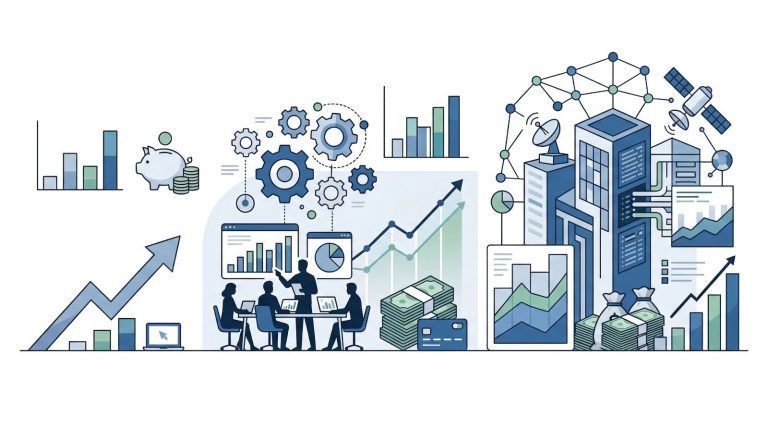

Transitioning to AI doesn’t have to be complex or resource-heavy. A fully managed AI agent service provides the end-to-end expertise needed to design, integrate, and optimize high-performing agents tailored to your business goals. Skip the overhead of building an in-house team and accelerate your ROI in 2026 with a scalable, production-ready AI strategy that delivers measurable results from day one.
Launch agentic chat marketing in minutes with ChatbotX











What Is a Fully Managed AI Agent Service?

A fully managed AI agent service is an end-to-end offering where a specialized team designs, builds, deploys, and maintains a conversational AI agent on behalf of your organization.
Unlike self-serve platforms where you receive software access and documentation, a managed service includes human expertise at every stage. You get a production-ready AI agent without staffing an in-house AI engineering team or spending months navigating prompt engineering, infrastructure setup, and integration complexity.
In 2026, this model is gaining serious traction – not because AI platforms have become harder to use, but because the gap between launching an agent and running one that actually delivers business value has never been wider.
According to research from McKinsey’s State of AI 2025 report, only 32% of companies that deploy AI projects report measurable ROI within the first year. The primary blockers aren’t technical – they’re structural: unclear ownership, lack of domain expertise, and insufficient post-launch iteration.
A managed service is designed to eliminate each of these blockers directly.
“Watch our quick overview on how managed AI services bridge the gap between deployment and real business value.”
Why Most AI Agent Projects Fail Before Going Live
Before exploring what a managed plan provides, it’s worth understanding the underlying problem it solves.
Here are the most common reasons AI agent initiatives stall or underperform:
1. Misaligned Use Case Selection
Teams often launch with a use case that sounds impressive in a boardroom but has minimal impact on day-to-day operations. A good managed service begins with a rigorous scoping phase to identify the highest-leverage opportunity – not just the most obvious one.
2. Weak Conversation Architecture
Conversation design is a discipline in itself. Without experience building dialogue flows for real users under real conditions, most first-time implementations produce agents that confuse customers or escalate too aggressively – destroying the trust needed for adoption.
3. Shallow System Integrations
An AI agent that cannot read and write to your CRM, helpdesk, or internal databases is just an expensive FAQ page. Proper integrations require API knowledge, data modeling experience, and careful authentication handling – all of which take significant engineering time.
4. No Post-Launch Optimization Loop
The most overlooked phase of any AI agent project is what happens after go-live. Real user sessions generate signals that no pre-launch testing can replicate. Without a structured review and improvement process, performance plateaus – or worse, degrades.
A managed plan addresses all four of these failure modes through structured delivery and continuous improvement cycles.
What a Managed AI Agent Plan Covers

A well-scoped managed AI agent service is not a simple “build and hand off” engagement. It’s a persistent operational relationship that covers the full lifecycle of your agent.
Initial Discovery and Strategy Workshop
Before any code is written, the engagement starts with a requirements workshop. This involves:
- Mapping current workflows the agent will touch
- Identifying success metrics (deflection rate, CSAT, lead conversion, etc.)
- Defining escalation logic, tone, and brand alignment
- Selecting or confirming the appropriate AI model(s) and infrastructure
This phase typically takes one to two weeks and prevents months of costly rework downstream.
Custom Architecture and Conversation Design
Every business has different workflows, terminology, and edge cases. Cookie-cutter conversation flows that work for a generic e-commerce brand will fail in a SaaS environment with complex support tiers, or in a healthcare context with compliance requirements.
Conversation architects design flows that:
- Handle multi-intent queries gracefully
- Maintain context across multiple turns
- Fall back intelligently when intent is unclear
- Scale across channels (web widget, WhatsApp, email, Slack, and more)
Full-Stack Development and System Integration
Production-ready AI agents require real engineering. A managed service typically handles:
- Custom webhook integrations with third-party APIs
- CRM read/write access (Salesforce, HubSpot, Pipedrive, etc.)
- Helpdesk ticketing integrations (Zendesk, Freshdesk, Intercom, etc.)
- Authentication flows for personalized agent experiences
- Data enrichment pipelines for context-aware conversations
Secure Production Deployment
Deploying to production safely means more than clicking “publish.” It requires environment configuration, load testing, rate limit management, secrets handling, and monitoring setup. A managed team handles this with battle-tested infrastructure practices.
For organizations that need full control over data residency and infrastructure, self-hosted deployment options – like ChatbotX’s Docker Compose setup on GitHub – allow teams to run enterprise-grade AI agent infrastructure entirely on their own servers, without vendor lock-in.
Team Enablement and Documentation
Before handoff, your internal stakeholders should understand how to interpret agent performance data, trigger escalations, and submit feedback. Proper documentation and live training sessions ensure continuity.
Ongoing Maintenance, Monitoring, and Optimization
Post-launch support is what separates a managed plan from a project agency. Ongoing services typically include:
- Weekly or monthly performance reports
- Regular strategy reviews with a dedicated success manager
- Proactive optimization based on conversation analytics
- Priority technical support for bugs or unexpected failures
- Feature additions as business needs evolve
The Three-Phase Deployment Timeline
A structured managed AI agent engagement follows a predictable three-phase arc:
Phase 1: Build (Weeks 1–4)
This phase converts requirements into a production-ready agent. Deliverables include:
- Completed conversation architecture and dialogue flows
- All required integrations, tested end-to-end
- Staging deployment with QA sign-off
- Internal documentation and team training
The goal of Phase 1 is a deployable agent – not a perfect one. Perfection comes through real usage.
Phase 2: Launch and Iterate (Weeks 5–8)
After production deployment, the agent enters a rapid iteration cycle. Real user sessions surface gaps, misunderstandings, and edge cases that no internal test can predict. During this phase:
- Conversation logs are reviewed regularly
- High-priority issues are patched quickly
- Low-confidence intents are retrained or re-routed
- Performance metrics are compared against baseline KPIs
This phase is critical because it validates the agent under real-world load and behavior.
Phase 3: Optimize and Expand (Month 3 Onward)
Once the agent is stable, the focus shifts to compounding its value. This means:
- Identifying new intents or topics to cover
- Expanding to additional channels
- A/B testing conversation paths to improve conversion or deflection
- Quarterly strategy reviews to align the agent with evolving business goals
The majority of long-term ROI comes from this phase. An agent that handles the same use case at the same quality level 12 months after launch is underperforming. Continuous iteration is what turns an AI agent from a cost center into a revenue driver.
For teams comfortable with infrastructure, open-source deployment via ChatbotX Docker Compose on GitHub provides a powerful foundation for Phase 3 expansion – giving engineering teams full flexibility to scale horizontally or integrate new model providers.
Best Use Cases for Managed AI Agents in 2026

Not every AI agent use case is equally suited to a managed delivery model. The highest-ROI applications in 2026 tend to share common characteristics: high conversation volume, well-defined success criteria, and direct revenue or cost impact.
Customer Support Automation
This remains the most proven AI agent use case. A managed customer support agent can:
- Resolve tier-1 queries (FAQs, order status, account issues) without human involvement
- Escalate complex cases with full conversation context to live agents
- Operate 24/7 across time zones without staffing overhead
- Integrate with Zendesk, Freshdesk, or custom helpdesk stacks
Companies that implement well-architected customer support agents typically report 30–60% reduction in inbound ticket volume within the first 90 days. According to Gartner’s AI in Customer Service forecast, by 2026, AI agents will handle over 40% of all digital service interactions without human intervention.
Lead Generation and Qualification
Conversational lead capture outperforms static forms in almost every benchmark. An AI-powered lead generation agent:
- Qualifies visitors in real time based on custom scoring criteria
- Routes high-intent prospects directly to sales reps
- Captures structured data (company size, budget, timeline) in natural conversation
- Pushes qualified leads to CRM with complete context
For B2B businesses, a well-optimized lead agent can reduce cost-per-qualified-lead by 40–70% compared to form-based funnels.
Product and E-Commerce Recommendation
For retailers, marketplaces, and SaaS companies with large catalogs, AI recommendation agents provide a high-value interactive experience that static search and filter interfaces cannot match. These agents:
- Guide users through discovery with dynamic questions
- Personalize suggestions based on stated preferences and behavioral context
- Handle objections and comparisons in natural conversation
- Connect to product catalog APIs for real-time availability and pricing
Research from Harvard Business Review on AI-Driven Personalization shows that personalized conversational experiences increase purchase intent by up to 70% compared to non-personalized product pages.
How to Evaluate a Managed AI Agent Provider
Not all managed AI agent services are equal. When evaluating providers, ask these questions:
| Evaluation Criteria | What to Look For |
|---|---|
| Track record | Real case studies with quantified outcomes, not just testimonials |
| Integration depth | Experience with your specific tech stack (CRM, helpdesk, etc.) |
| Conversation design expertise | Portfolio of dialogue architecture – not just chatbot templates |
| Post-launch commitment | SLAs for ongoing optimization and support response time |
| Pricing transparency | Clear scope of what’s included vs. billed separately |
| Escalation handling | How do they design for when the bot shouldnot answer? |
| Infrastructure flexibility | Can they deploy to your cloud environment or on-premises? |
A provider that excels only at building but offers thin post-launch support will produce diminishing returns after the first three months. Prioritize partners with a structured long-term optimization model.
Is a Managed Plan Right for Your Business?
A fully managed AI agent service is a strong fit when:
✅ Your team lacks internal AI engineering capacity or specialized expertise
✅ You need a production-ready deployment in 30–60 days
✅ Your use case is customer-facing (support, sales, product guidance)
✅ You want ongoing performance improvements, not just a one-time build
✅ You’re replacing or improving an existing chatbot with poor deflection rates
✅ Your organization needs documented workflows and team training included
A managed plan is not ideal if:
❌ You have a dedicated AI engineering team with availability and experience
❌ Your use case is a purely internal, backend workflow (HR automation, data pipelines, etc.)
❌ You need a proof-of-concept or experimental prototype before committing to production
❌ Budget constraints make a structured retainer unviable for your current stage
For teams that prefer to build internally, ChatbotX’s self-hosted platform and developer documentation offer a robust foundation without requiring a managed engagement.
FAQ: Managed AI Agent Services

How long does it take to launch a managed AI agent?
Most well-scoped engagements reach production deployment within 4–8 weeks from kickoff. Complexity of integrations and number of supported intents are the primary variables affecting timeline.
What ongoing support is typically included?
Standard ongoing support includes: performance reporting (weekly or monthly), optimization sprints based on conversation analytics, priority bug resolution, and regular strategy calls with a dedicated success manager.
How is a managed AI agent priced?
Pricing varies widely by provider and scope. Most managed plans in 2026 range from $1,200–$3,500/month depending on usage volume, number of integrations, and level of ongoing support. Some providers offer annual discounts of 15–20%.
Can a managed agent integrate with our existing systems?
Yes – integration with CRM, helpdesk, scheduling, and e-commerce platforms is a core deliverable of any well-structured managed engagement, not an add-on.
What happens if we want to take over management internally?
A reputable provider will deliver complete documentation, code ownership, and knowledge transfer sessions so your team can assume full control at any point. Avoid providers who create technical lock-in.
Do managed AI agents support multiple languages?
Modern AI agents built on large language models support multilingual conversations natively. Your provider should be able to configure language detection and route conversations accordingly without separate bot instances per language.
What metrics should I track to measure ROI?
The most meaningful KPIs for AI agents in 2026 include:
- Containment rate – percentage of sessions fully resolved without human escalation
- CSAT / conversation satisfaction score – user-rated experience
- Ticket deflection volume – absolute number of support tickets avoided
- Lead conversion rate – for sales-focused agents
- Cost per resolved interaction – compared to human-agent baseline
Conclusion: The Smartest Way to Scale With AI in 2026

In 2026, the question is no longer whether to deploy AI agents – it’s how to do it in a way that reliably produces ROI instead of a stalled proof-of-concept.
A fully managed AI agent service removes the three biggest obstacles to success: the expertise gap, the execution burden, and the optimization vacuum that follows most launches. For businesses that need results on a defined timeline without staffing a dedicated AI team, it represents the fastest path from zero to measurable impact.
The key insight from thousands of live deployments is simple: launching is easy; maintaining momentum is hard. The organizations extracting the most value from conversational AI are those treating agents as living products – not one-time projects.
Whether you’re automating customer support, accelerating lead qualification, or personalizing your product experience, the managed model offers the structure, expertise, and accountability needed to move from experimentation to real business transformation.
Explore ChatbotX – Enterprise AI Agent Platform
If you’re evaluating AI agent platforms that balance power with flexibility, ChatbotX is worth a close look.
ChatbotX is an enterprise-grade conversational AI platform designed for teams that want full control – from no-code bot builders to custom API integrations and self-hosted infrastructure. Whether you’re exploring managed deployment or building entirely in-house, ChatbotX offers the tools and architecture to scale confidently.
- 📖 Browse the ChatbotX Blog for the latest guides on AI agent strategy, deployment, and optimization in 2026.
- 🤖 Discover ChatbotX’s conversational AI features – from multi-channel deployment to live analytics dashboards.
- 🏗️ Building internally? Explore the ChatbotX AI agent capabilities and see how teams deploy production-ready agents faster.