
You’re not losing customers because your product is bad. You’re losing them because your funnel has holes.
Most online stores treat traffic like a lottery – pour enough in, hope some converts. But the stores consistently hitting 3–5% conversion rates aren’t luckier. They’ve mapped every step of the buyer’s journey and systematically removed every reason to leave. This guide breaks down exactly how they do it – stage by stage, metric by metric – so you can stop guessing and start converting.
Launch agentic chat marketing in minutes with ChatbotX











What Is an E-commerce Sales Funnel — And Why It Changes Everything

You’ve launched your store, invested in ads, and traffic is coming in – but your sales numbers don’t reflect it. Sound familiar? This is one of the most common pain points among online merchants, and the root cause is almost always the same: the absence of a structured sales funnel.
An e-commerce sales funnel is a strategic framework that maps every step a potential customer takes – from the moment they first encounter your brand to the point where they make a purchase and, ideally, become a repeat buyer. Think of it as the buyer’s psychological journey, visualized as a funnel:
- Wide at the top – many people become aware of your store.
- Narrower in the middle – fewer explore your products seriously.
- Narrow at the bottom – only a portion follow through and buy.
Example: Out of 5,000 people who see your Instagram ad, 300 visit your product page, 60 add something to their cart, and 18 complete checkout. That’s a 0.36% overall funnel conversion rate – and every percentage point improvement at any stage directly multiplies your revenue.
Unlike traditional retail, e-commerce gives you the unique ability to measure, test, and optimize every step in this journey. That’s why building an intentional funnel isn’t optional – it’s the engine behind sustainable e-commerce growth.
The Business Case: Why Every Online Store Needs a Funnel Strategy

Many store owners operate reactively: they spend more on ads when sales dip, run flash sales to clear inventory, and respond to customer inquiries as they come. This approach is exhausting and unpredictable.
A well-structured sales funnel flips this model by giving you systematic control over revenue. Here’s what changes:
1. You Spend Your Ad Budget Smarter
When you know exactly which funnel stage is underperforming, you stop wasting money on the wrong problem. If your bounce rate is 80%, buying more traffic won’t help – fixing your landing page will.
2. You Build Compounding Brand Trust
Customers rarely buy on first exposure. According to Think with Google, consumers go through multiple “micro-moments” of research before making a purchase decision. A funnel ensures consistent, value-adding touchpoints that gradually build the confidence needed to convert. Trust scales better than discounting.
3. You Make Decisions Based on Data, Not Gut Feel
Each funnel stage has measurable KPIs. Instead of guessing why revenue dropped this month, you can pinpoint: “Our cart abandonment rate jumped 12% – let’s investigate the checkout page.”
4. You Unlock Repeat Revenue
A complete funnel includes post-purchase stages. Businesses that invest in retention strategies generate significantly more revenue per customer over time, without increasing acquisition costs. For a deeper look at how messaging channels drive retention, see the ChatbotX guide to WhatsApp B2C sales strategy.
Stage 1 — Awareness: Getting Found by the Right People

What’s Happening at This Stage
At the top of the funnel, your audience doesn’t know you exist – or they have a problem they haven’t fully defined yet. Your goal here is reach and relevance: getting in front of the right people with a message that resonates.
Who Your Audience Is
These are cold prospects. They haven’t searched for your product specifically – they’re living their lives and may encounter your brand through:
- A social media ad while scrolling
- A search result for an informational query (“how to set up a home office ergonomically”)
- A recommendation from a friend or influencer
Tactics That Work
Content-Led Advertising: Create ads built around education, entertainment, or emotional resonance rather than direct product promotion. A fitness equipment store might run a video on “3 Morning Habits That Protect Your Lower Back” – capturing attention with value before introducing the product.
Search Engine Optimization (SEO): Long-tail keyword articles (e.g., “best standing desk for small apartments”) attract high-intent readers who are already thinking about problems your product solves.
Influencer Partnerships: Collaborating with micro-influencers in your niche can generate awareness that feels organic rather than promotional – critical when ad fatigue is high.
Paid Social (Meta, TikTok, YouTube): Use interest and behavior targeting to narrow your audience. The goal at this stage isn’t clicks – it’s qualified impressions.
Instagram Automation: Automating your Instagram DMs and comment replies means no potential lead slips through between ad exposure and first conversation. Learn how to implement this in the Instagram Automation 2026 guide on ChatbotX Blog.
Key Principle
Don’t ask for the sale at this stage. Awareness is about planting seeds. Your content should make people think: “This brand understands people like me.”
Stage 2 — Interest: Making Visitors Want to Stay

What’s Happening at This Stage
Visitors have clicked through to your site. They’re curious but easily distracted. You have approximately 8 seconds to communicate enough value to keep them from hitting the back button.
The Psychology of First Impressions
At this stage, visitors are subconsciously asking:
- “Does this site look trustworthy?”
- “Is this for someone like me?”
- “Can I find what I’m looking for quickly?”
A cluttered homepage, slow load times, or confusing navigation will end the journey here – regardless of how good your products actually are.
Tactics That Work
Optimized Above-the-Fold Design: Your hero section should immediately communicate your core value proposition, your target customer, and a clear next step (e.g., “Shop Office Ergonomics →”).
Smart Product Discovery: Organize your catalog intuitively. If someone arrived searching for “office chairs,” they should see a clear path to that category within one click.
Social Proof Signals: Display customer review counts, ratings, press mentions, or a concise “10,000+ happy customers” badge near your header. These signals reduce uncertainty instantly.
Brand Storytelling: An “Our Story” section or a compelling About page can differentiate a small store from a faceless marketplace. People buy from brands they feel connected to.
Exit-Intent Offers: If a visitor is about to leave without exploring further, a subtle pop-up offering 10% off or a free resource can give them a reason to stay.
Metric to Watch
Bounce Rate. If more than 70% of new visitors leave after viewing just one page, your Interest stage has a problem worth investigating.
Stage 3 — Evaluation: Turning Browsers into Believers

What’s Happening at This Stage
This is the most psychologically complex and often overlooked stage. The visitor knows your product and is genuinely interested – but they’re hesitating. They’re weighing risks, comparing alternatives, and looking for reasons to trust you with their money.
The Internal Dialogue of a Buyer at This Stage
- “What if it doesn’t fit / work / look like the photos?”
- “Is this brand legit, or will I have trouble returning it?”
- “Someone else probably sells something similar for less…”
- “What do real customers say about their experience?”
Your job is to answer all of these concerns proactively – before the customer has to ask.
Tactics That Work
Rich Product Pages: Go beyond basic descriptions. Include multiple lifestyle photos, size guides, 360° views or video demos, and specifications in a scannable format. Show the product in use, not just on a white background.
Verified Reviews and UGC: According to Nielsen’s consumer trust research, recommendations from real consumers are among the most credible forms of advertising globally. User-generated content (real customer photos and videos) integrated directly on product pages consistently outperforms professional photography in driving conversions.
Live Chat with Proactive Triggers: Set your chat widget to appear automatically for users who have spent more than 90 seconds on a product page. A simple “Have questions about this product? We’re here.” can make the difference between a browser and a buyer. Tools like ChatbotX AI Agents can handle these conversations 24/7 without requiring a live team member on standby.
Comparison Tools: If you sell multiple product variants, offer a clear side-by-side comparison. Reducing decision complexity increases conversion rates.
Transparent Policies: Display your return policy, shipping timeline, and warranty terms prominently – not buried in the footer. Uncertainty about post-purchase risk is a conversion killer.
Retargeting Ads: Visitors who leave during the Evaluation stage should see follow-up ads that address common objections: “Free returns within 30 days” or “See what 2,000+ customers are saying.” Explore how ChatbotX Remarketing enables cross-channel follow-up that brings hesitant buyers back at the right moment. For a channel-specific deep dive, the Facebook Messenger Chatbot complete guide covers how automated conversations effectively close the evaluation gap.
Stage 4 — Purchase: Closing the Deal Without Friction

What’s Happening at This Stage
The customer has decided to buy. They’ve added items to their cart. This stage should be a formality – but for most e-commerce stores, it’s where the majority of potential sales evaporate.
Research from the Baymard Institute, which has conducted over 44,000 hours of UX research on e-commerce, puts the average documented cart abandonment rate at nearly 70% across industries. Cart abandonment is almost always caused by friction: unexpected fees, limited payment options, forced account creation, or a complicated multi-step form.
The Goal: Zero Resistance
Every design decision at this stage should ask: “Does this make it easier or harder to complete the purchase?”
Tactics That Work
Guest Checkout: Never force account creation before purchase. Offer to save the account after the transaction is complete.
Transparent Pricing Early: Display shipping costs and taxes before the final step. Surprise fees on the order summary page are the single biggest driver of checkout abandonment.
Diverse Payment Methods: Offer credit/debit cards, PayPal, local payment methods, and buy-now-pay-later options. Reducing payment friction can lift conversion by 10–15%.
Progress Indicators: A simple “Step 2 of 3” indicator gives customers a sense of how close they are to finishing. This reduces anxiety and drop-off.
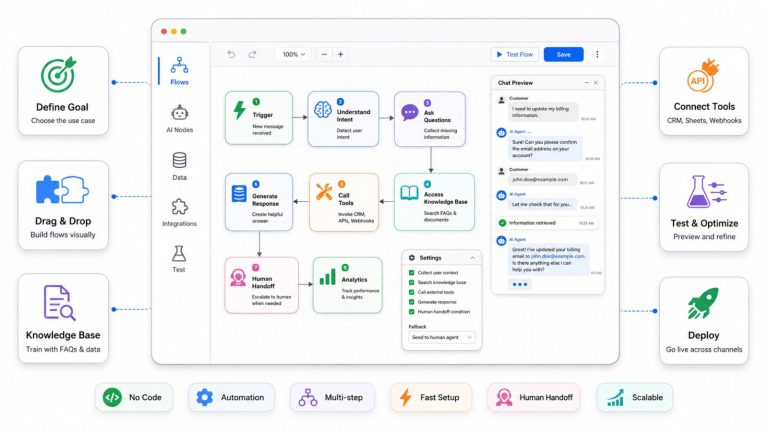
Cart Abandonment Recovery via Messaging: For customers who leave mid-checkout, automated follow-up messages (via WhatsApp or email) within 30–60 minutes can recover a significant share of abandoned carts. Using ChatbotX Flow Builder, you can design multi-step recovery sequences that trigger automatically when a cart goes cold – complete with direct checkout links so the customer never has to start over.
Trust Signals at Checkout: Display SSL badge, payment security icons, and a brief reminder of your return policy directly on the checkout page. Anxiety spikes at the moment of payment – reassurance here is critical.
Stage 5 — Loyalty: Building Customers Who Come Back

What’s Happening at This Stage
Most e-commerce brands treat a completed purchase as the finish line. High-performing stores treat it as the starting line of a relationship.
A customer who has already bought from you is significantly more likely to purchase again than a cold prospect. According to HubSpot’s customer retention data, increasing customer retention by even 5% can grow profits by 25–95% over time. Retention isn’t just a nice-to-have – it’s the most capital-efficient growth lever available to any online store.
The Psychology of a Post-Purchase Customer
After buying, customers experience a mix of excitement and what’s called post-purchase dissonance – a nagging doubt about whether they made the right choice. Your first post-purchase communication should immediately validate their decision.
Tactics That Work
Order Confirmation and Shipping Updates: Send immediate, detailed confirmation emails and proactive shipping notifications. The experience between checkout and delivery is your first opportunity to exceed expectations.
Personalized Follow-Up Messaging: 1–2 weeks after delivery, check in. Ask how they’re enjoying the product. Invite them to leave a review. This shows care and generates social proof simultaneously.
Segmented Loyalty Campaigns: Use purchase data to send relevant offers. A customer who bought a coffee machine should receive content about premium beans and accessories – not a generic promotional blast. The ChatbotX CRM Contacts feature makes it straightforward to segment customers by purchase behavior and trigger personalized follow-up sequences automatically.
Birthday and Anniversary Triggers: Automated discounts tied to customer milestones feel personal and drive repeat purchases without any manual effort.
VIP and Tiered Loyalty Programs: Rewarding your best customers with exclusive perks (early access, priority support, higher discount tiers) creates a sense of belonging that’s difficult for competitors to replicate.
Re-Engagement Sequences: For customers who haven’t purchased in 60–90 days, a targeted “We miss you” campaign with a time-limited incentive can reactivate a significant portion of dormant buyers.
KPIs to Track at Every Funnel Stage
Optimization without measurement is guesswork. Here’s the complete KPI framework for each stage:
Stage 1 – Awareness Metrics
| Metric | What It Tells You |
|---|---|
| Impressions | Total reach of your brand message |
| Click-Through Rate (CTR) | Whether your creative is compelling enough to earn a click |
| Cost Per Click (CPC) | Efficiency of your paid traffic spend |
| Organic Traffic Growth | Momentum of your SEO and content efforts |
Stage 2 – Interest Metrics
| Metric | What It Tells You |
|---|---|
| Bounce Rate | Whether your landing page creates enough engagement to retain visitors |
| Pages per Session | Depth of exploration – higher is better |
| Time on Site | Level of genuine interest in your content and products |
| Cost Per Visit | True cost of getting a qualified visitor to your site |
Stage 3 – Evaluation Metrics
| Metric | What It Tells You |
|---|---|
| Add-to-Cart Rate | Percentage of visitors moved to active purchase intent |
| Product Page Scroll Depth | Whether users are consuming your full product descriptions |
| Chat / Inquiry Rate | Volume of evaluation-stage questions being asked |
| Wishlist Saves | Proxy indicator of high purchase intent without immediate conversion |
Stage 4 – Purchase Metrics
| Metric | What It Tells You |
|---|---|
| Checkout Conversion Rate | Percentage of cart initiations that result in a completed order |
| Cart Abandonment Rate | Volume of near-purchases lost at the final step |
| Average Order Value (AOV) | Effectiveness of upselling and bundling strategies |
| Payment Method Distribution | Which payment options are most used (and which may be missing) |
Stage 5 – Loyalty Metrics
| Metric | What It Tells You |
|---|---|
| Repeat Purchase Rate | Percentage of customers who buy more than once |
| Customer Lifetime Value (LTV) | Total revenue generated per customer over their relationship with you |
| Net Promoter Score (NPS) | Likelihood of customers recommending your brand |
| LTV:CAC Ratio | Health of your overall business model – should be 3:1 or higher |
How to Automate Your Funnel for Scalable Growth

Managing each funnel stage manually becomes impossible as your store grows. The most successful e-commerce brands use automation to deliver the right message, to the right person, at exactly the right moment. See how open-source marketing automation is making these capabilities accessible to businesses of every size – not just enterprise players with large tech budgets.
Awareness Automation
- Lookalike Audiences: Feed purchase data into Meta or Google to automatically find new prospects who resemble your best customers.
- SEO Content Scheduling: Use editorial calendars and scheduling tools to publish consistently without daily manual effort.
Interest Automation
- Behavioral Email Triggers: When a new visitor browses 3+ pages but doesn’t sign up, trigger an automated welcome sequence with a first-purchase incentive.
- Smart Popups: Set popups to appear based on behavior (time on page, scroll depth, exit intent) rather than bluntly on page load.
Evaluation Automation
- Chatbot Pre-Qualification: Deploy AI-powered chatbots that answer FAQs about sizing, shipping, and returns 24/7 – reducing the evaluation friction that drives abandonment.
- Dynamic Retargeting: Automatically serve ads featuring the exact product a visitor viewed, with tailored messaging that addresses common objections.
Purchase Automation
- Cart Recovery Sequences: Trigger a multi-step recovery flow (in-app notification → WhatsApp message → email) when a cart is abandoned for more than 30 minutes.
- One-Click Checkout Links: Include direct links back to a pre-filled cart in all recovery messages to minimize re-entry friction.
Loyalty Automation
- Post-Purchase Email Flows: Automatically send order confirmation → shipping update → delivery confirmation → review request → personalized follow-up at optimized intervals.
- Behavioral Segmentation: Tag customers based on purchase history, product categories, and engagement level – then trigger relevant campaigns automatically when conditions are met.
- Win-Back Campaigns: Automatically identify lapsed customers at the 60-day mark and enroll them in a re-engagement sequence.
Frequently Asked Questions

My store gets solid traffic but almost no sales. What’s wrong?
High traffic with low conversion almost always points to a breakdown in the middle of your funnel – specifically at the Interest or Evaluation stage. Your awareness campaigns are working, but something on your site is failing to build enough trust or interest to move visitors forward. Audit your bounce rate, time-on-site, and add-to-cart rate to find where the drop-off is steepest, then prioritize fixing that stage.
How many stages should my funnel have?
A five-stage funnel (Awareness → Interest → Evaluation → Purchase → Loyalty) is the most practical and widely applicable model for e-commerce. Some businesses simplify to three stages (Top / Middle / Bottom of funnel), while others add sub-stages for more granular tracking. Start with five and add complexity only when your data justifies it.
What’s a good funnel conversion rate for e-commerce?
Industry averages for overall e-commerce conversion rates (visitors to purchases) range from 1% to 3%. However, conversion rate benchmarks vary significantly by product category, price point, and traffic source. More useful than industry averages is tracking your own funnel’s improvement over time – a 0.5% improvement month-over-month compounds significantly over a year.
Is email or WhatsApp more effective for funnel automation?
Both serve different purposes. Email works well for longer-form content, order updates, and retention campaigns. WhatsApp and SMS messaging tends to outperform email for time-sensitive interactions like cart abandonment recovery (where open rates can reach 80%+ vs 20–25% for email). For maximum impact, use both channels in a coordinated sequence.
When does the funnel actually end?
It doesn’t. The Loyalty stage loops back into Awareness when satisfied customers refer friends, share reviews, or post about their purchases – creating a self-reinforcing cycle that reduces your dependence on paid acquisition over time. This is why investing in post-purchase experience is one of the highest-ROI strategies in e-commerce.
How long does it take to see results from funnel optimization?
Quick wins – like improving your checkout flow or adding cart abandonment recovery – can show measurable results within 2–4 weeks. Content-driven strategies like SEO and loyalty programs take 3–6 months to compound meaningfully. Build both: short-term optimizations fund the long-term investments.
Final Thoughts

An e-commerce sales funnel isn’t a single tactic – it’s a complete operating philosophy for how your store acquires, converts, and retains customers. The businesses winning in competitive markets aren’t necessarily spending more on ads; they’re extracting more value from every visitor who arrives at their store.
Start by auditing where your current customers are dropping off. Pick one stage. Implement one improvement. Measure the result. Then move to the next stage.
Systematic funnel optimization – even done incrementally – compounds into a significant competitive advantage over time.
Ready to Put Your Funnel on Autopilot?
If you’re looking for a practical starting point, ChatbotX is an open-source, AI-powered chat marketing platform built to automate exactly the kind of multi-stage funnel described in this guide. From capturing leads on Instagram and Messenger, to recovering abandoned carts via WhatsApp, to segmenting customers for personalized re-engagement – ChatbotX connects your channels and your customer data into a single automated workflow.
It’s not a replacement for a solid funnel strategy. It’s the engine that runs it – consistently, at scale, without requiring your team to be online 24/7.
→ Explore ChatbotX features or browse the ChatbotX blog for more guides on automating your marketing across WhatsApp, Instagram, Messenger, Zalo, and beyond.