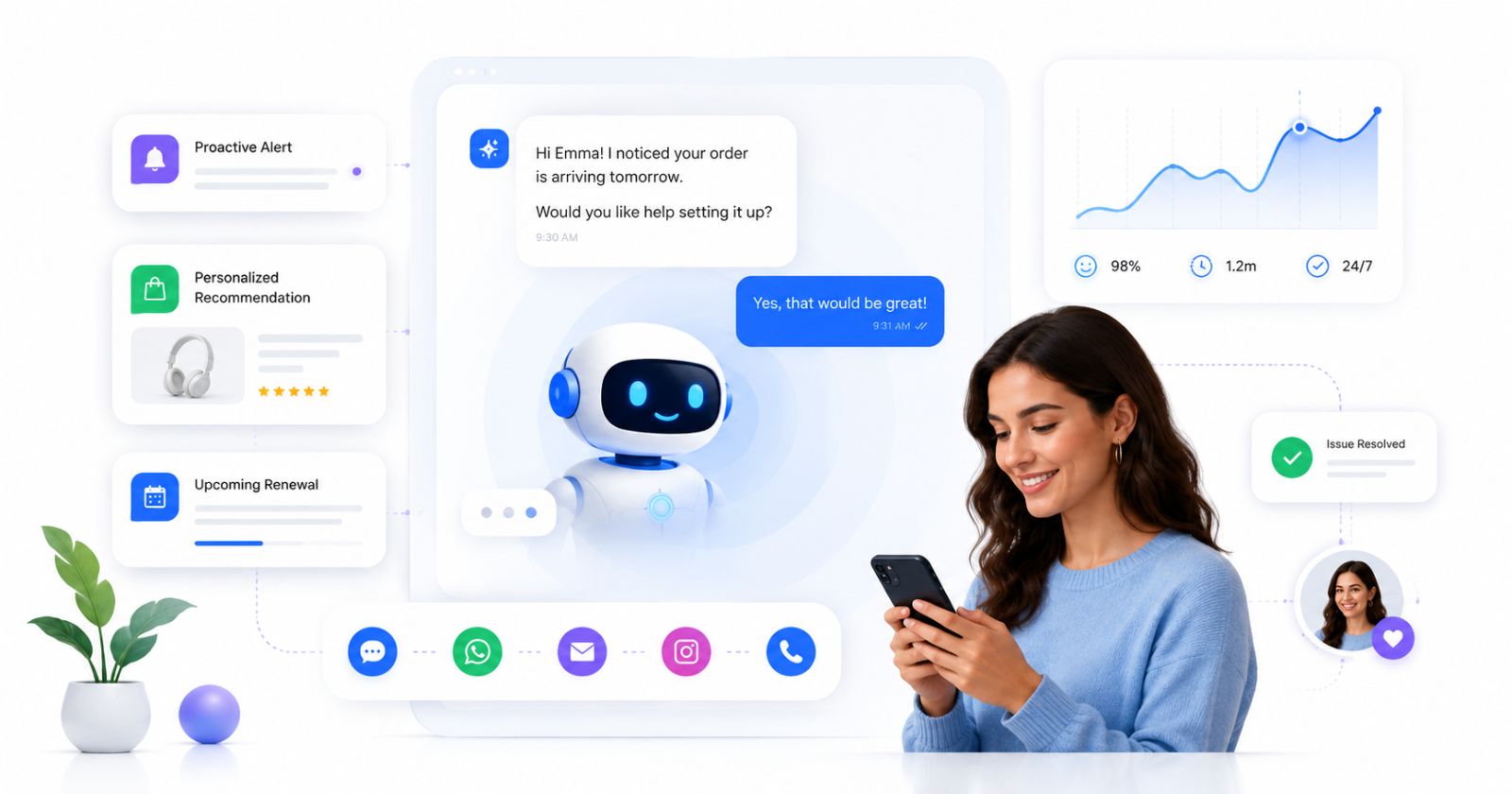
In 2026, the best customer service is the one that happens before the customer needs to ask. Proactive AI-powered CX systems are rewriting the rulebook turning reactive support queues into intelligent, anticipatory engagement engines.
Launch agentic chat marketing in minutes with ChatbotX














What Is Proactive AI Customer Experience (Proactive CX)?
Proactive AI Customer Experience, often referred to as Proactive CX, is the strategy and technology stack that enables businesses to anticipate customer needs, detect friction points, and act before a problem escalates – all powered by artificial intelligence.
Unlike traditional reactive customer service – where a customer contacts support after an issue has already disrupted their experience – Proactive CX uses behavioral signals, predictive analytics, and real-time data to reach out first. This might look like:
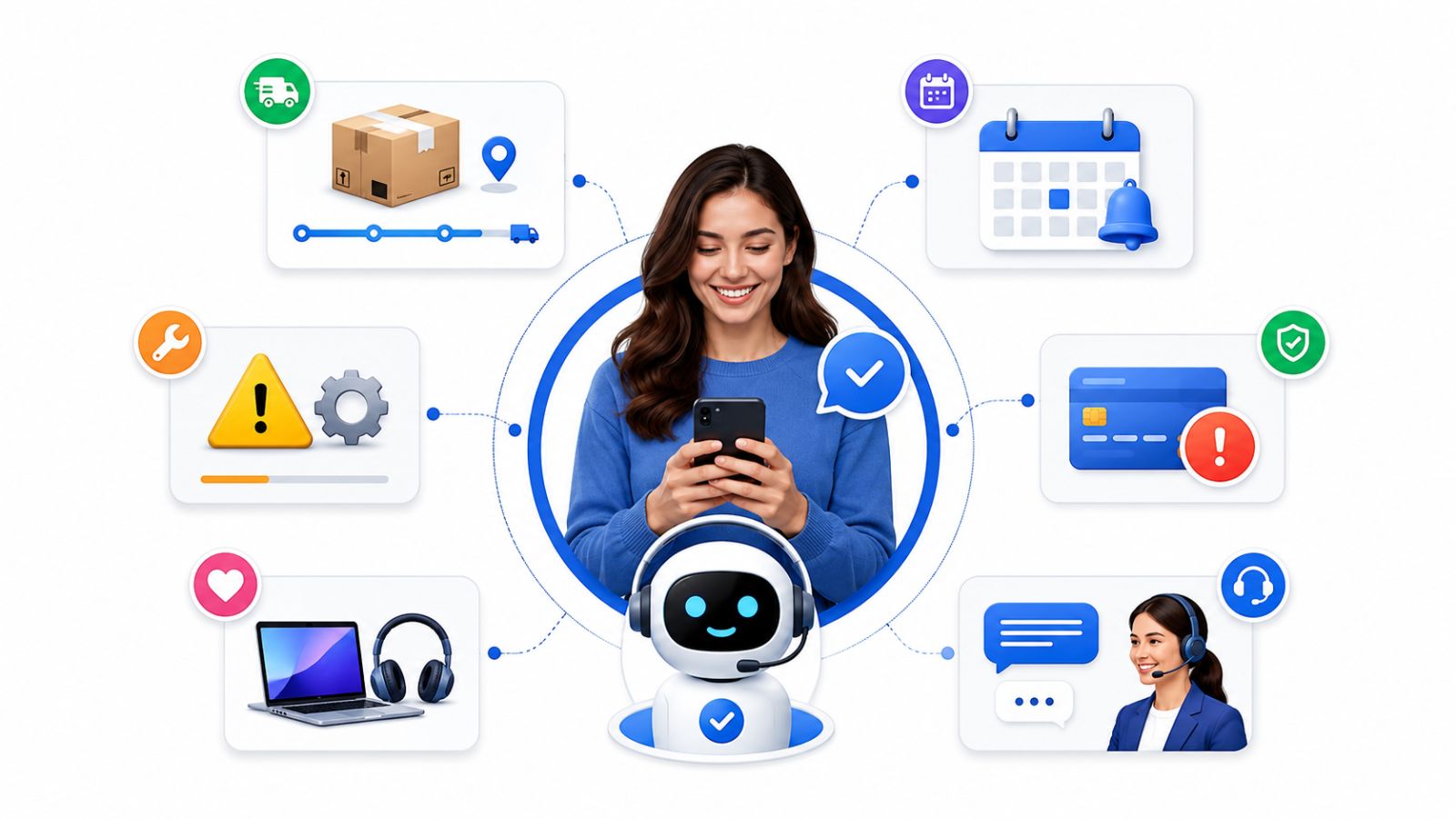
- Sending a personalized alert when a shipment is delayed before the customer notices
- Automatically offering a discount when a user lingers on a cancellation page
- Proactively notifying a B2B client of a usage threshold before overage charges kick in
- Triggering a live-chat invitation when a visitor’s scroll pattern signals confusion
The result? Higher customer satisfaction, reduced churn, and significantly lower support costs all without waiting for the phone to ring.
Why Proactive CX Is No Longer Optional in 2026
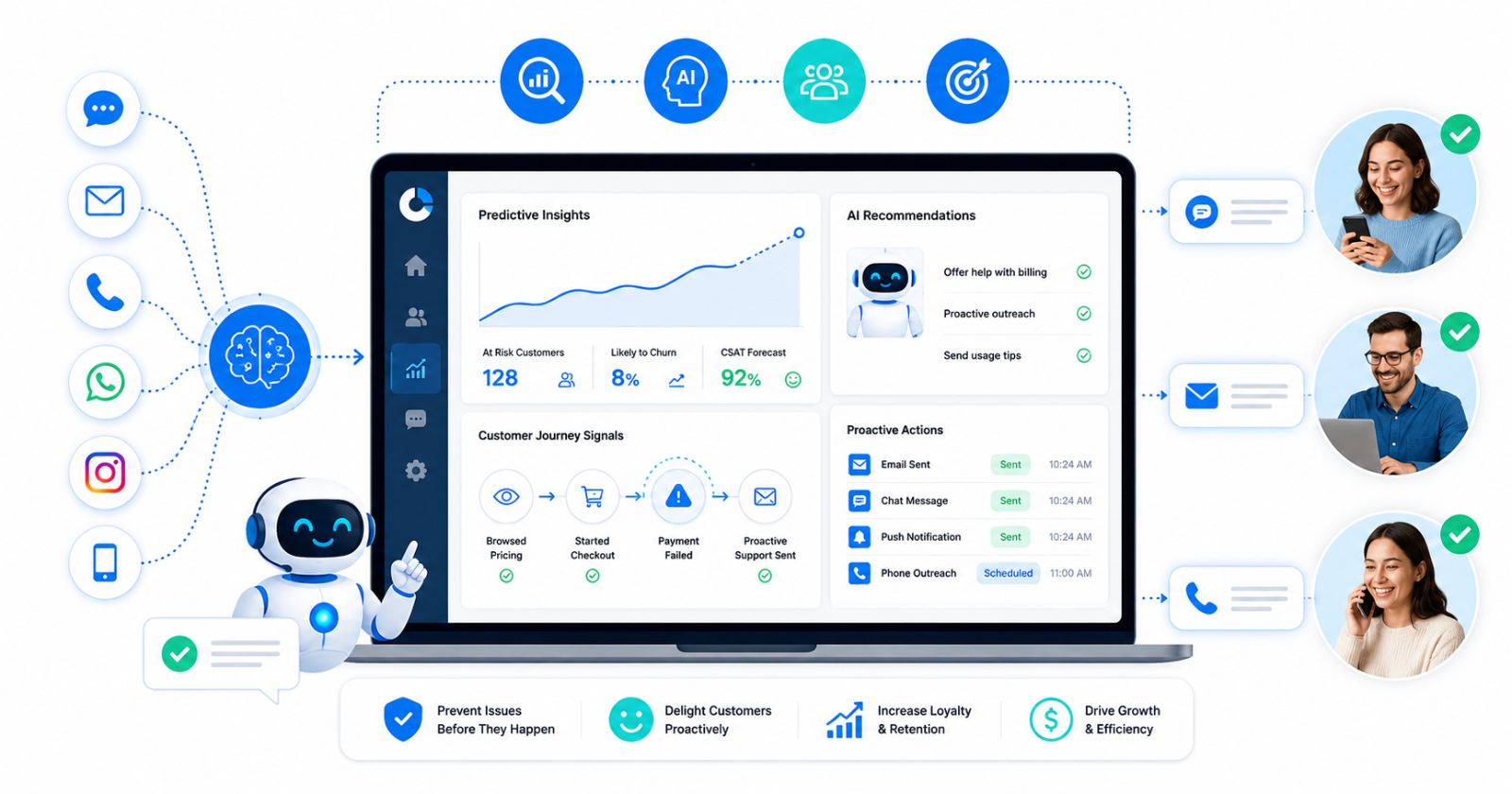
The shift toward proactive AI customer service isn’t just a trend – it’s a market imperative. According to Salesforce’s State of the Connected Customer report, 88% of customers say the experience a company provides is as important as its product or service. Meanwhile, McKinsey & Company found that companies delivering personalized, proactive interactions see revenue increases of 10–15% and a significant reduction in service costs.
The convergence of three major forces has made Proactive CX not just feasible, but expected:
1. Exponential Growth in Real-Time Data
Customers generate massive behavioral data trails – every scroll, click, session duration, and purchase pattern is a signal. AI systems capable of processing these signals at scale can now predict intent with remarkable accuracy.
2. The Maturity of Large Language Models (LLMs)
Modern AI assistants powered by LLMs no longer just answer questions – they understand context, detect sentiment, and initiate meaningful conversations at the right moment. The quality gap between AI and human interaction has narrowed dramatically.
3. Rising Customer Expectations
Customers who experience proactive service don’t just appreciate it – they expect it next time. In a market where competitors are a single click away, the proactive experience has become a primary differentiator.
Core Components of a Proactive AI CX System
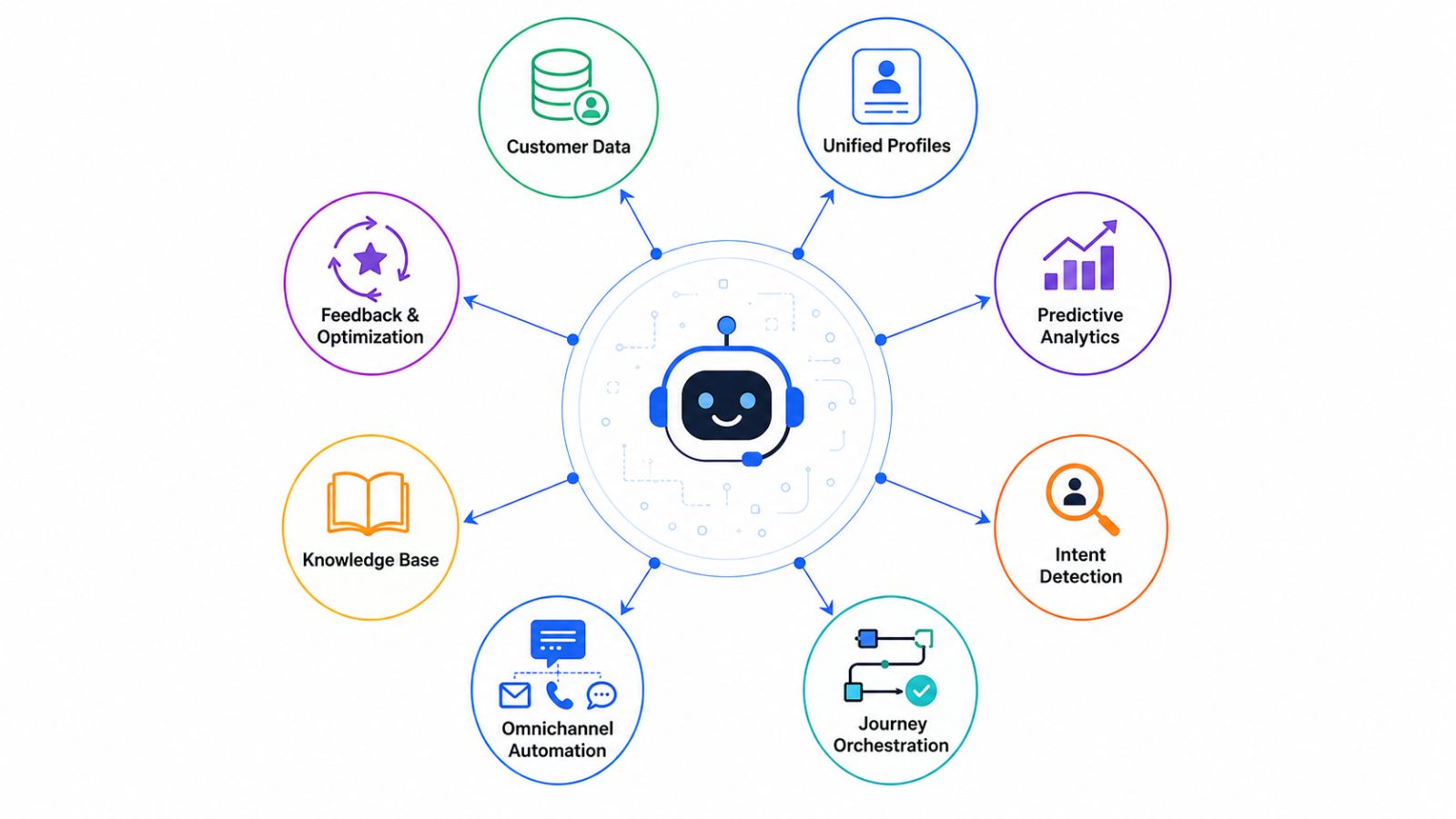
Building an effective Proactive CX infrastructure requires several integrated components working in harmony:
Predictive Analytics Engine
The foundation of any proactive system is data intelligence. Machine learning models analyze historical behavior, purchase cycles, and engagement patterns to predict what a customer will need – and when. This powers everything from churn prediction to upsell timing.
Real-Time Behavioral Triggers
Rather than scheduled batch outreach, modern Proactive CX platforms respond to live behavioral events. A trigger could be: cart abandonment after 90 seconds, three failed login attempts, or a product page visited four times without conversion.
Omnichannel Delivery Layer
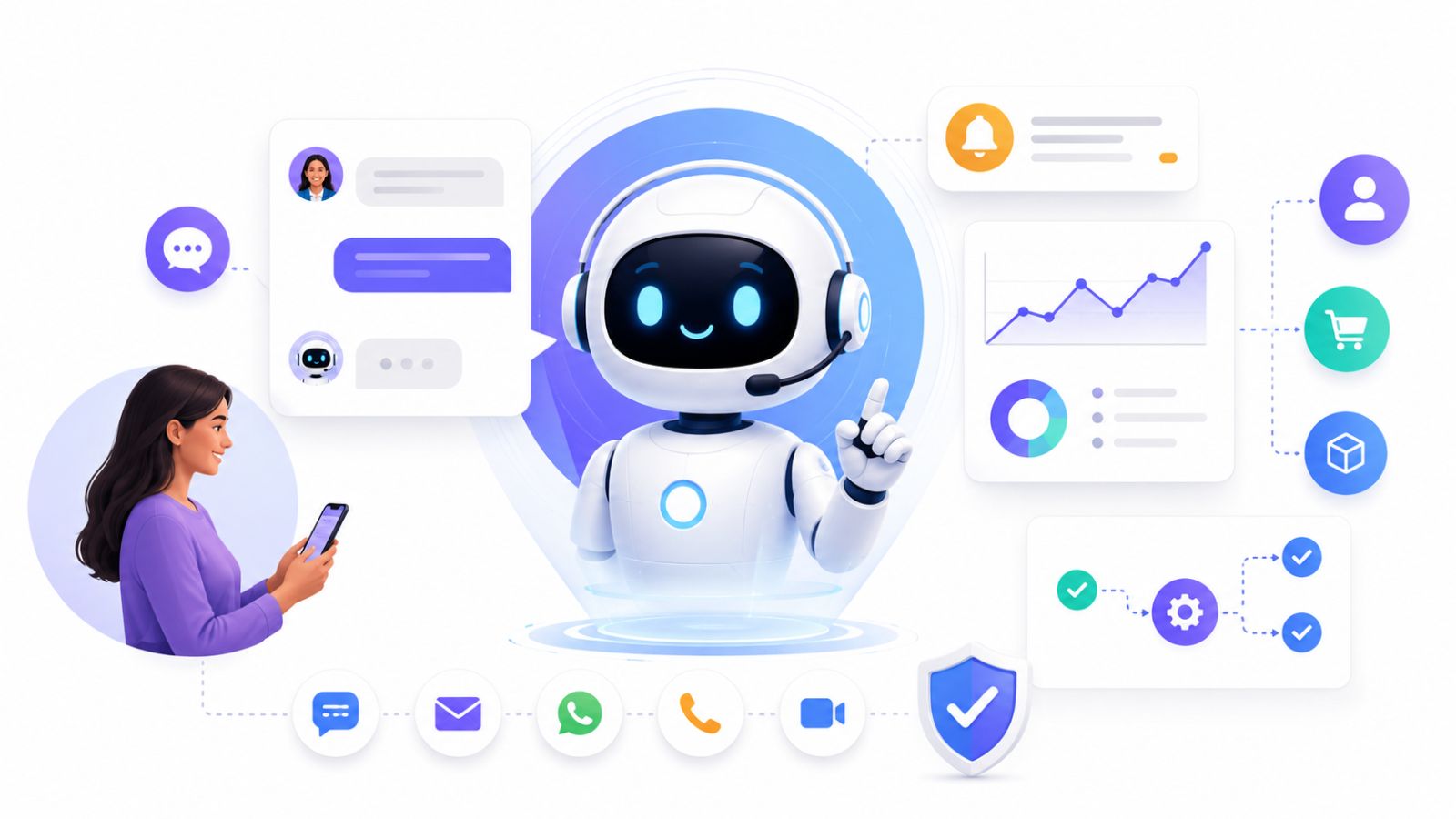
Proactive messages need to reach customers where they are – whether that’s a live chat widget, SMS, email, WhatsApp, or in-app notification. The delivery layer must maintain context and continuity across all touchpoints.
Conversational AI & Natural Language Processing
When the system reaches out proactively, the initial interaction must feel natural – not robotic. This is where conversational AI plays a critical role, enabling the system to engage in a two-way dialogue that moves the customer toward resolution or value.
Human Escalation Protocols
Proactive AI doesn’t replace human agents – it augments them. A well-designed system knows when to hand off to a human, complete with full context, ensuring seamless transitions that don’t frustrate the customer.
Proactive CX in Action: Real-World Use Cases
E-Commerce: Reducing Abandonment and Returns
An online retailer using a Proactive CX system identifies when a customer has added a high-value item to their cart but hasn’t checked out after 3 minutes. The AI triggers a chat invite offering assistance or a limited-time shipping discount. Conversion rates improve by 20–35% on these interactions.
SaaS: Churn Prevention Before It Happens
A B2B SaaS company monitors product usage metrics in real time. When a key user’s activity drops below a threshold – historically a churn precursor – the system automatically triggers a personalized outreach: a check-in message from the account manager’s name, a resource bundle, or an invitation to a training session.
Banking & Fintech: Fraud Alerts and Financial Guidance
Banks deploy Proactive CX to detect unusual transaction patterns and alert customers instantly via the channel they prefer. Beyond fraud, they proactively offer financial planning content to customers approaching savings goals or milestone life events.
Healthcare: Appointment and Medication Reminders
Healthcare providers use proactive AI to reduce no-show rates with intelligent, personalized reminders – factoring in patient history, communication preferences, and even traffic data to send the reminder at the optimal time.
How to Implement Proactive CX: A Strategic Framework
Implementing a Proactive AI CX system successfully requires more than deploying a chatbot. Here is a practical framework for 2026:
Step 1 – Map the Customer Journey
Identify every touchpoint and potential friction point. Where do customers typically drop off? Where do complaints cluster? These are your proactive intervention candidates.
Step 2 – Define Trigger Logic
For each identified moment, define the behavioral signals that should activate a proactive response. Use historical support data and conversion analytics to calibrate thresholds.
Step 3 – Choose Your AI Platform
Select a platform that supports real-time data ingestion, predictive modeling, omnichannel messaging, and conversational AI. The platform should offer both no-code trigger configuration and developer-friendly APIs for custom logic.
Step 4 – Design Proactive Messages
Craft outreach messages that feel helpful, not intrusive. The tone should be empathetic and personal – and the message should always offer clear value rather than pushing a sale.
Step 5 – Test, Measure, Iterate
Proactive CX is not a set-and-forget system. Use A/B testing on trigger timing, message copy, and channel selection. Track KPIs including: proactive engagement rate, deflection rate, CSAT scores, and churn reduction metrics.
The Role of AI Chatbots in Proactive CX
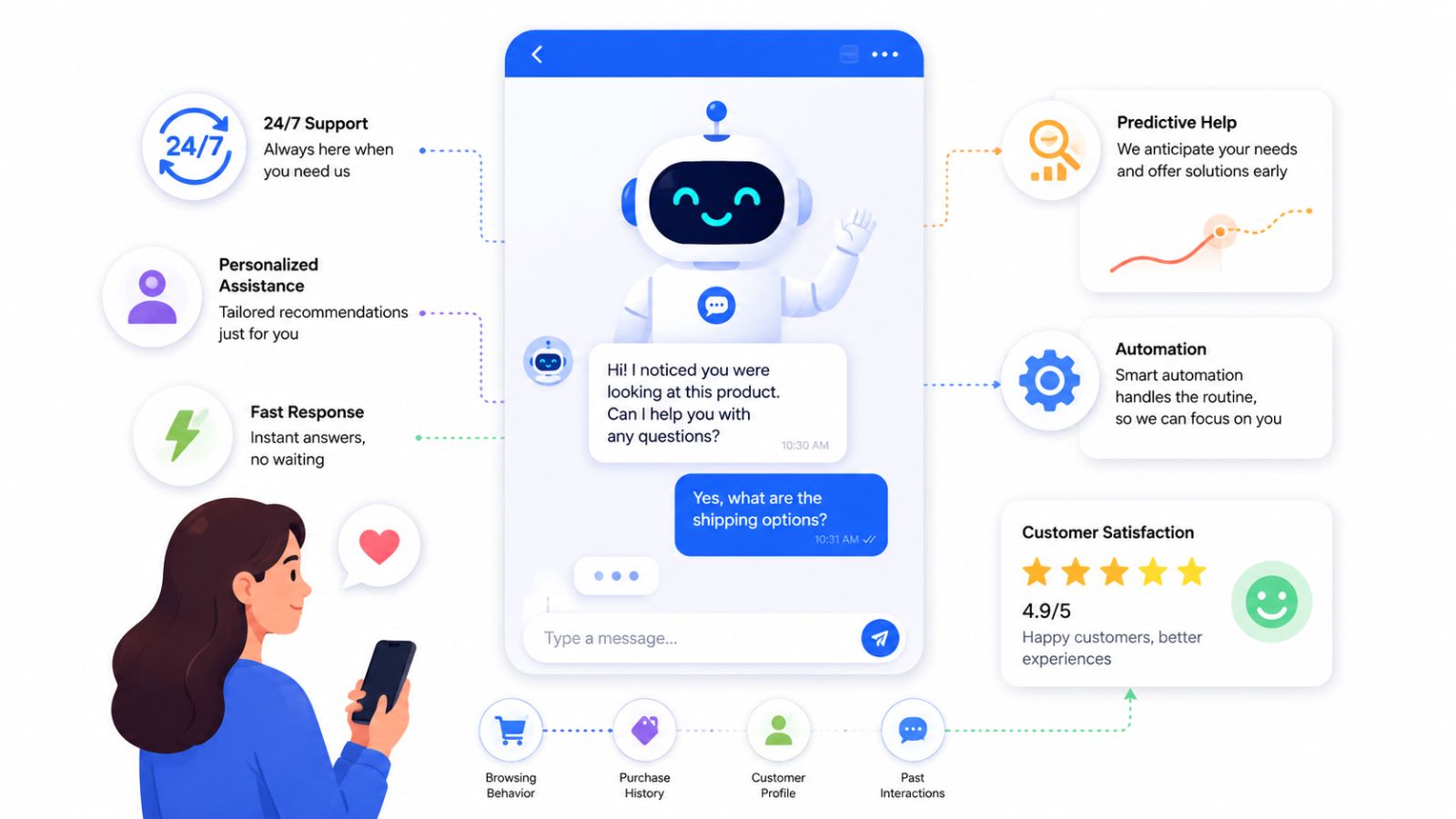
AI-powered chatbots are the operational backbone of most Proactive CX systems. They serve as the primary interface for proactive outreach – initiating conversations, qualifying intent, resolving issues, and routing to humans when needed.
The most effective chatbot platforms in 2026 combine:
- Multi-turn conversational memory – maintaining context throughout a session and across sessions
- Sentiment analysis – detecting frustration or urgency and adjusting tone accordingly
- Dynamic content personalization – tailoring recommendations and responses based on CRM data
- No-code trigger builder – enabling business teams to configure proactive rules without engineering support
One platform gaining strong traction in this space is ChatbotX – a next-generation AI customer engagement platform designed specifically for Proactive CX workflows. With enterprise-grade omnichannel automation features, a powerful analytics and insights dashboard, and a seamless integration layer that connects to your CRM, helpdesk, and data stack, ChatbotX gives businesses the tools to move from reactive to proactive at scale.
For teams that prefer full customization and self-hosting, the ChatbotX open-source repository on GitHub offers a transparent, extensible foundation – allowing developers to inspect the codebase, contribute, and adapt the platform to specific enterprise requirements.
Measuring the ROI of Proactive AI Customer Experience
A Proactive CX investment should be measurable. Key performance indicators to track include:
| Metric | What It Measures |
|---|---|
| Proactive Engagement Rate | % of proactive outreaches that generate a customer response |
| Deflection Rate | % of potential inbound tickets prevented by proactive intervention |
| First Contact Resolution (FCR) | % of proactive interactions resolved without escalation |
| Customer Effort Score (CES) | How easy the proactive interaction felt to the customer |
| Churn Rate Reduction | Decrease in customer attrition attributable to proactive interventions |
| Cost Per Resolution | Total support cost divided by tickets resolved |
According to Gartner’s research on proactive customer engagement, organizations that proactively contact customers regarding service issues see a customer effort score improvement of up to 8x compared to waiting for inbound complaints.
Common Mistakes to Avoid in Proactive CX Deployment
Over-triggering: Sending too many proactive messages creates the feeling of surveillance, not service. Frequency capping and relevance scoring are essential.
Generic outreach: A proactive message that isn’t personalized will feel like spam. Always use available customer data to tailor the message.
Ignoring opt-out preferences: Respect communication preferences and provide simple opt-out options. Compliance with GDPR, CCPA, and regional data regulations is non-negotiable.
Skipping the human handoff design: AI should know its limits. Failing to escalate complex, emotionally charged situations to human agents undermines the entire CX experience.
Not closing the feedback loop: Every proactive interaction is a learning signal. Feed outcomes back into your predictive models to continuously improve trigger accuracy.
Proactive CX and the Future of AI-Driven Service
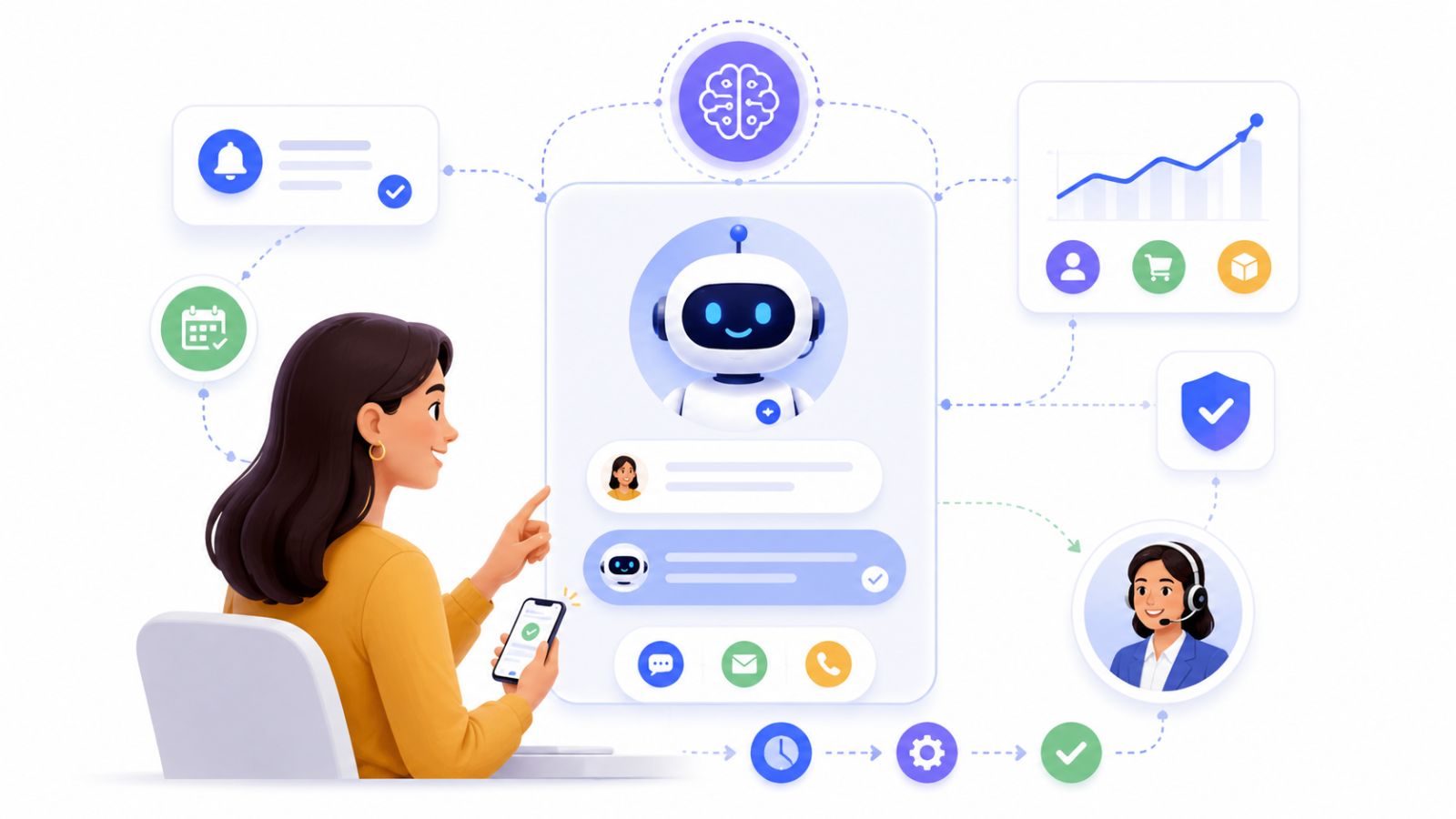
Looking beyond 2026, Proactive CX is moving toward autonomous service orchestration – where AI not only anticipates needs but also resolves them fully without any human involvement. Think: an AI that detects a billing discrepancy, investigates it, issues a corrective credit, sends a personalized apology, and logs the interaction – all before the customer opens their email.
This future is closer than most businesses realize. Platforms like ChatbotX are already incorporating agentic AI workflows, allowing multi-step autonomous task completion triggered by proactive intelligence signals.
For teams exploring the technical architecture behind this, the ChatbotX GitHub repository provides detailed documentation on how to extend the platform’s agent capabilities, build custom connectors, and deploy self-hosted Proactive CX pipelines.
You can also explore how other companies are applying these principles by reading the ChatbotX blog on AI customer service automation trends and the practical guide on measuring chatbot ROI and CX performance – both offering actionable frameworks that complement this article.
Frequently Asked Questions (FAQ)
Q: What is the difference between reactive and proactive customer service?
Reactive customer service responds to issues after a customer contacts support. Proactive customer service anticipates issues and resolves or communicates them before the customer experiences a problem.
Q: Does proactive CX require a large data infrastructure?
Not necessarily. Modern AI platforms can begin with basic behavioral triggers – like cart abandonment or inactivity signals – and scale as data maturity grows. Starting small and iterating is a valid and recommended approach.
Q: How does Proactive CX affect customer privacy?
Proactive CX systems must be built with privacy-by-design principles. Customer data used for triggering should be anonymized or pseudonymized where possible, and all outreach must comply with applicable data protection regulations.
Q: Can small businesses implement Proactive CX?
Yes. Cloud-based AI platforms have dramatically reduced the cost and complexity of deploying Proactive CX. Many solutions offer tiered pricing with pre-built trigger templates that make implementation accessible without a dedicated data science team.
Q: What industries benefit most from Proactive CX?
E-commerce, SaaS, banking, healthcare, telecommunications, and travel are currently leading adopters – but virtually any industry with recurring customer interactions can benefit from proactive engagement strategies.
Ready to Make Your CX Proactive? Let’s Talk.
The shift from reactive to proactive customer experience is not a distant future – it is happening right now, and the businesses investing in it today are building a sustainable competitive advantage that compounds over time.
ChatbotX is built for exactly this moment.
Whether you’re a startup looking to automate your first proactive touchpoint, or an enterprise ready to deploy omnichannel AI at scale, ChatbotX provides the intelligence, flexibility, and support to make Proactive CX real for your business.
👉 Explore ChatbotX’s Proactive CX Features – and see how leading teams are turning customer data into proactive conversations that convert, retain, and delight.
📩 Start your free trial today at chatbotx.io – no credit card required, full platform access, and a dedicated onboarding specialist to help you launch your first proactive workflow in under 48 hours.
Your customers shouldn’t have to ask for help. With ChatbotX, they won’t have to.