If you already know what an AI chatbot is – and you should, because 91% of companies with 50+ employees are already using them – the real questions have shifted.
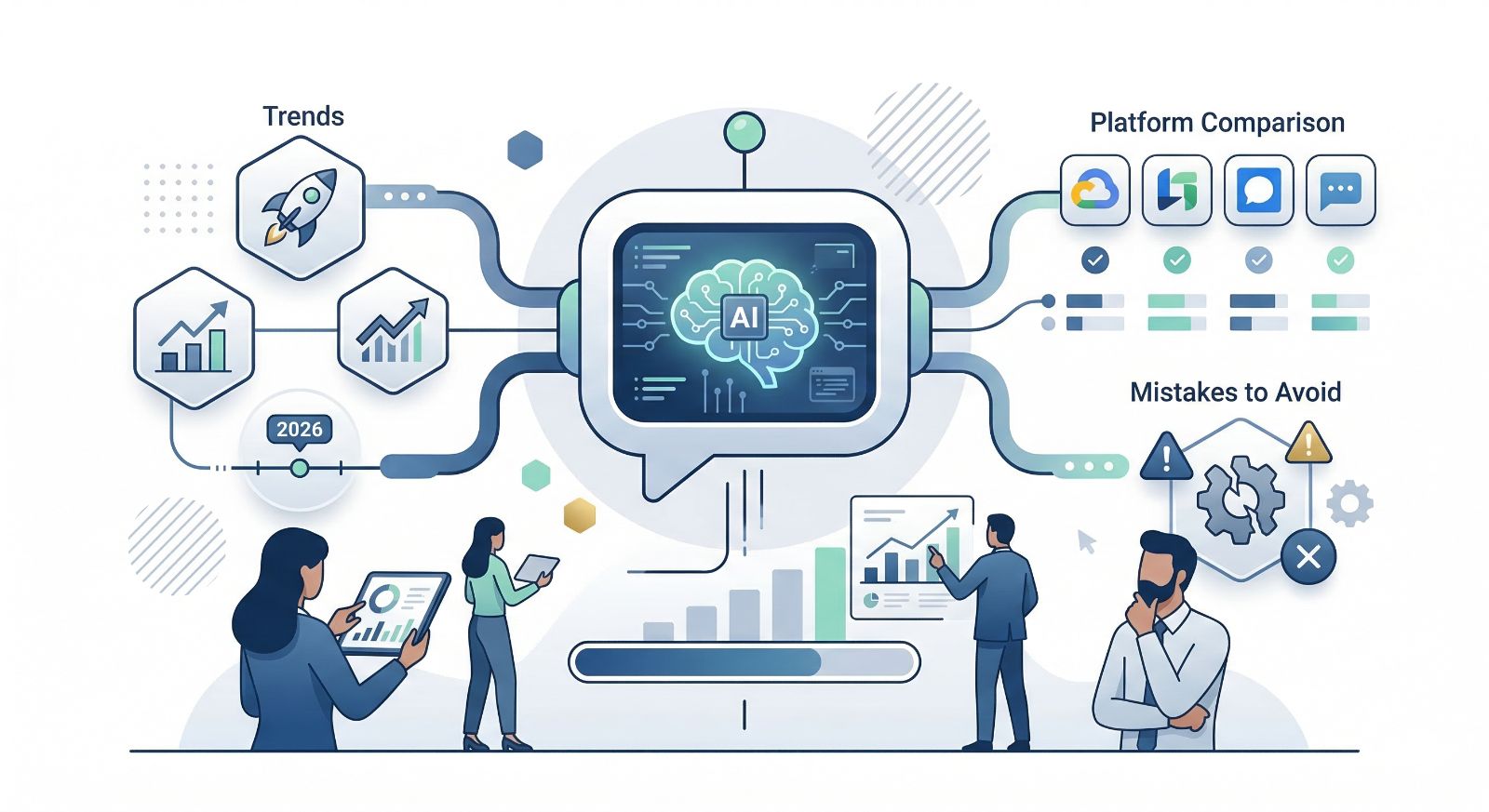
Not “should we deploy a chatbot?” but “why are competitors pulling ahead so fast, which platform actually fits our stack, what separates bots that convert from bots that frustrate, and where is all of this heading?”
This article answers those four questions directly, with data and without fluff.
Launch agentic chat marketing in minutes with ChatbotX













Quick Answer: What is AI Chatbot Strategy?
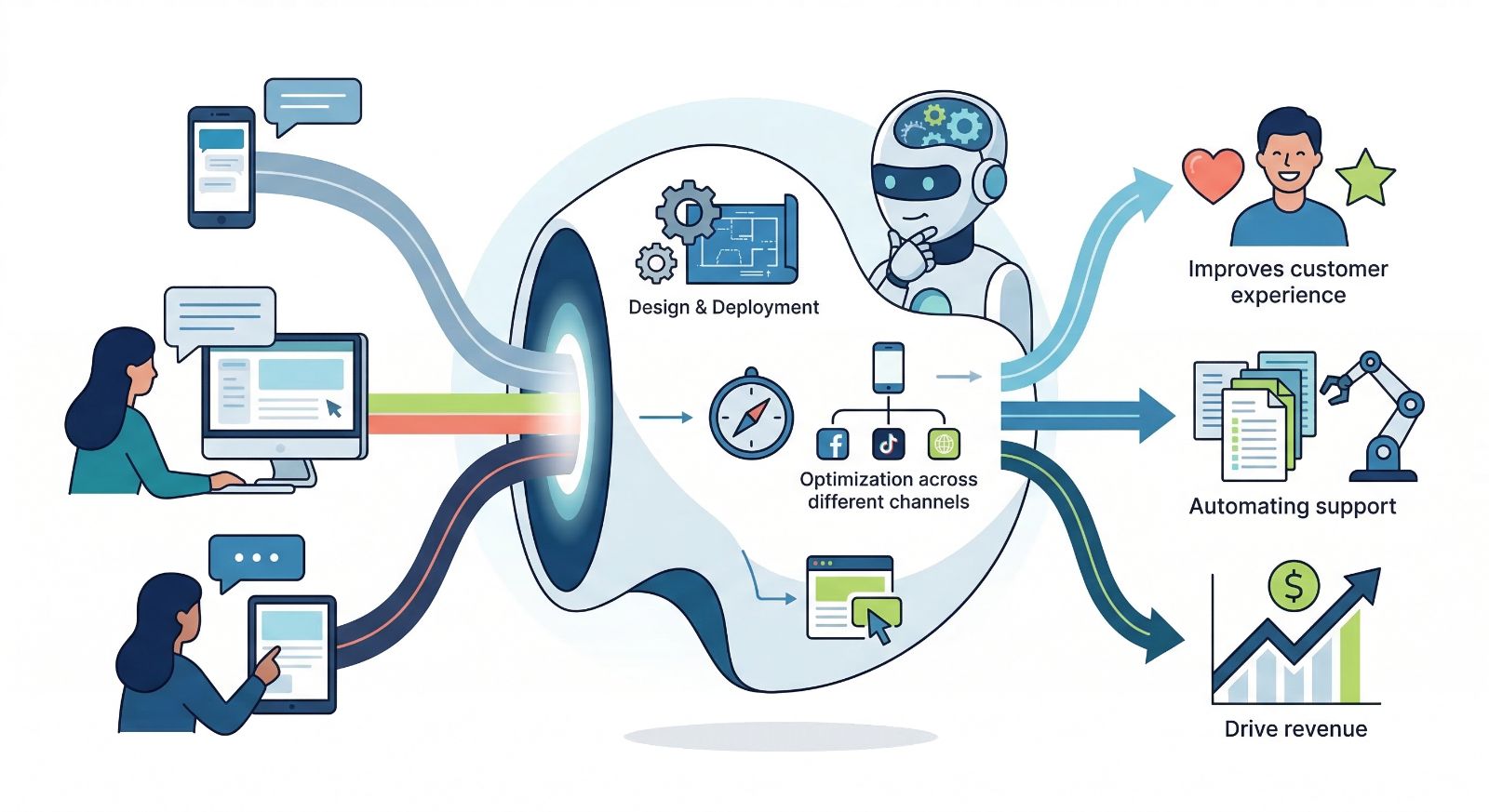
AI chatbot strategy is a structured approach to designing, deploying, and optimizing AI-driven conversational systems across channels to improve customer experience, automate support, and drive revenue. It includes:
- Platform selection
- Use-case prioritization
- CRM integration
- Performance measurement
1. Why AI Chatbot Adoption Is Accelerating So Fast in 2026
Most businesses know that chatbot adoption is growing. Fewer understand why the growth curve is this steep – and why the gap between early movers and late adopters is widening so quickly.
The customer expectation gap has become unbridgeable without automation
According to Salesforce’s State of the Connected Customer report, 80% of customers now rate the experience a company provides as equally important as its products. At the same time, WhatsApp surpassed 3 billion monthly active users in 2025, per Meta’s data. The volume of inbound messaging has outpaced what human teams can handle – and customers no longer accept waiting.
The technology quality gap has closed
Two years ago, AI chatbot conversations still felt robotic in edge cases. That era is over. Large language models powering today’s conversational AI platforms produce responses that are contextually coherent, tonally appropriate, and factually accurate at a level that was commercially unavailable before 2024. The objection “our customers will know it’s a bot” is no longer a valid reason to delay.
The cost of entry has dropped to near zero
No-code builders and usage-based pricing mean a functional chatbot on WhatsApp or website live chat can be live in under a day with no engineering resources. According to McKinsey, organizations that have deployed AI in customer operations report 20–40% reductions in service costs – results that were previously only accessible to enterprises with six-figure implementation budgets.
The competitive compounding effect
Every month a business delays chatbot adoption, a competitor is capturing leads at 3 AM, recovering abandoned carts automatically, and building a richer customer data profile. That advantage compounds – and it becomes increasingly hard to close.
📌 Case Study Snapshot
ReThink HK × ChatbotX via WhatsApp
By deploying a WhatsApp chatbot for event marketing, ReThink HK achieved a 52% click-through rate and an 86% message read rate – far outperforming their previous email campaigns. See how they did it.
2. AI Chatbot vs. Rule-Based Chatbot: The Decision That Defines Your Results
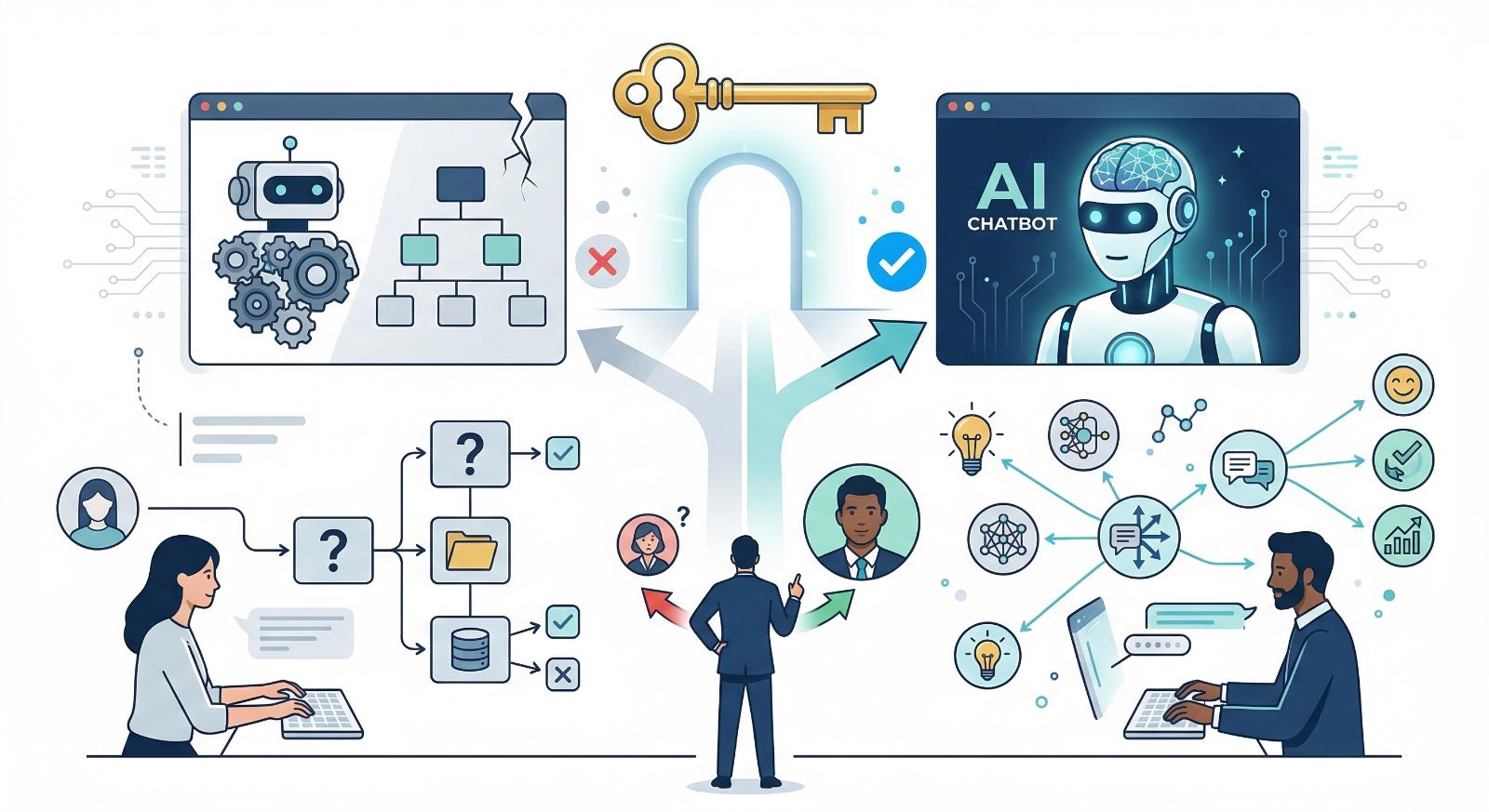
The single most consequential technology decision in a chatbot project isn’t which platform to use – it’s which type of bot to deploy. Many businesses unknowingly choose a rule-based chatbot, then blame “chatbots in general” when results underperform.
Here is an honest, side-by-side comparison:
| Feature | AI Chatbot (2026) | Rule-Based Chatbot |
|---|---|---|
| Understands free-form language | ✅ Handles any phrasing, typos, slang | ❌ Exact keyword match only |
| Handles unexpected inputs | ✅ Graceful fallback + learns over time | ❌ Breaks or loops |
| Personalization | ✅ CRM-driven, dynamic per customer | ❌ Static, same response for all |
| Multi-turn conversation context | ✅ Remembers full thread | ❌ Each message treated in isolation |
| Self-improvement | ✅ Improves with real conversation data | ❌ Manual updates required forever |
| Setup complexity | Medium – no-code platforms available | Low – simple logic trees |
| Best for | Complex support, sales, lead qualification | Simple FAQ menus, button flows |
| Cost at scale | Near-zero marginal cost per conversation | Low, but hard ceiling on capability |
The practical implication: If your customers ever send a message that isn’t on your predefined list – and they will – a rule-based bot fails publicly. An AI chatbot recovers gracefully and learns from the gap.
For most businesses handling real customer conversations in 2026, rule-based chatbots are not a cost-saving option – they are a trust-damaging liability.
⚡ Mid-Content CTA
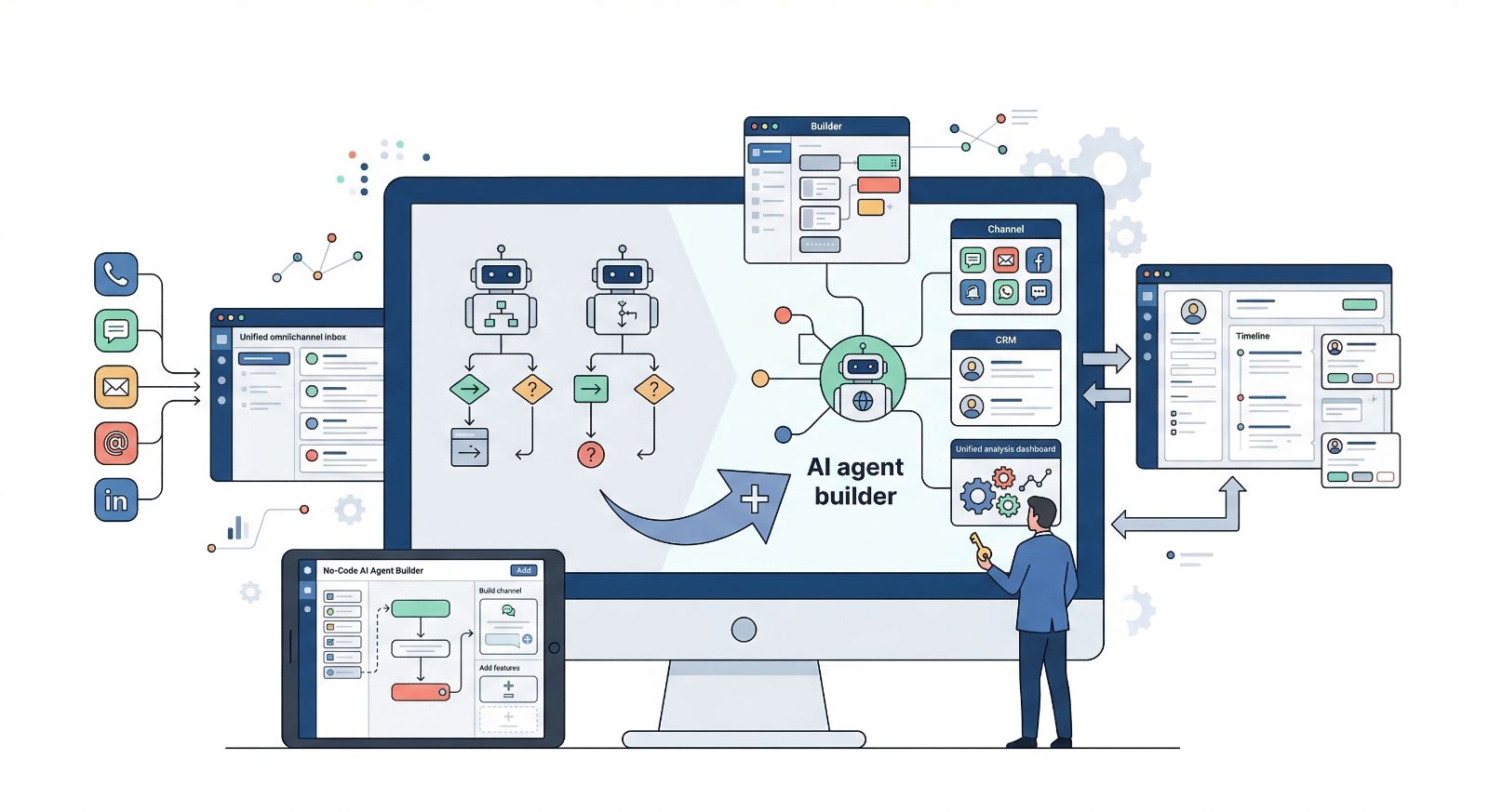
Ready to move beyond rule-based bots?
ChatbotX gives you a no-code AI agent builder, omnichannel inbox, and CRM integrations – all in one platform.
3. How to Choose the Right AI Chatbot Platform (6 Non-Negotiables)
The market for chatbot platforms is crowded. These six criteria separate platforms that scale with your business from those that create technical debt.
1. True omnichannel reach from a single inbox
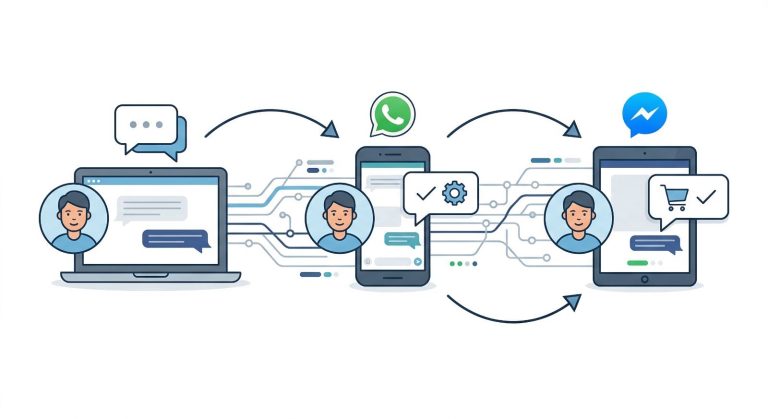
A platform that supports WhatsApp but requires a separate tool for Messenger creates siloed data, fragmented reporting, and doubled management overhead. Your platform must handle every channel – WhatsApp, Facebook Messenger, Instagram, Telegram, Zalo, TikTok, Email, and website chat – from a unified team inbox with one set of reporting and one conversation history per customer.
2. Visual no-code flow builder
Your marketing and support teams should be able to design, test, and iterate conversation flows without touching engineering. Platforms that require developer involvement for every flow change are not sustainable past the initial deployment phase.
3. Autonomous AI agent mode
Scripted flows break on edge cases. Your platform needs a genuine AI agent layer that handles open-ended, unpredicted conversations intelligently – not just a pattern-matching engine dressed up as AI.
4. CRM and stack integration depth
A chatbot disconnected from your CRM can only answer questions. A chatbot connected to your CRM can recognize the customer, know their order history, flag high-value accounts for priority routing, and personalize every message. Integration depth – Shopify, HubSpot, Salesforce, Google Sheets – is what separates a chatbot that answers from one that sells.
5. Seamless human handoff with full context
Every chatbot needs an escape valve. The escalation to a human agent must pass the entire conversation thread – so the agent never opens with “can you tell me your order number?” That friction destroys the experience the chatbot just built.
6. Pricing model that scales linearly with value
Beware platforms that charge per message at scale – costs explode as volume grows. Look for per-seat or flat-tier models with clear volume thresholds. View ChatbotX pricing plans as a reference point.
For a deeper walkthrough of evaluating platforms against each other, this guide covers the full framework.
4. Six Costly Mistakes That Kill Chatbot ROI
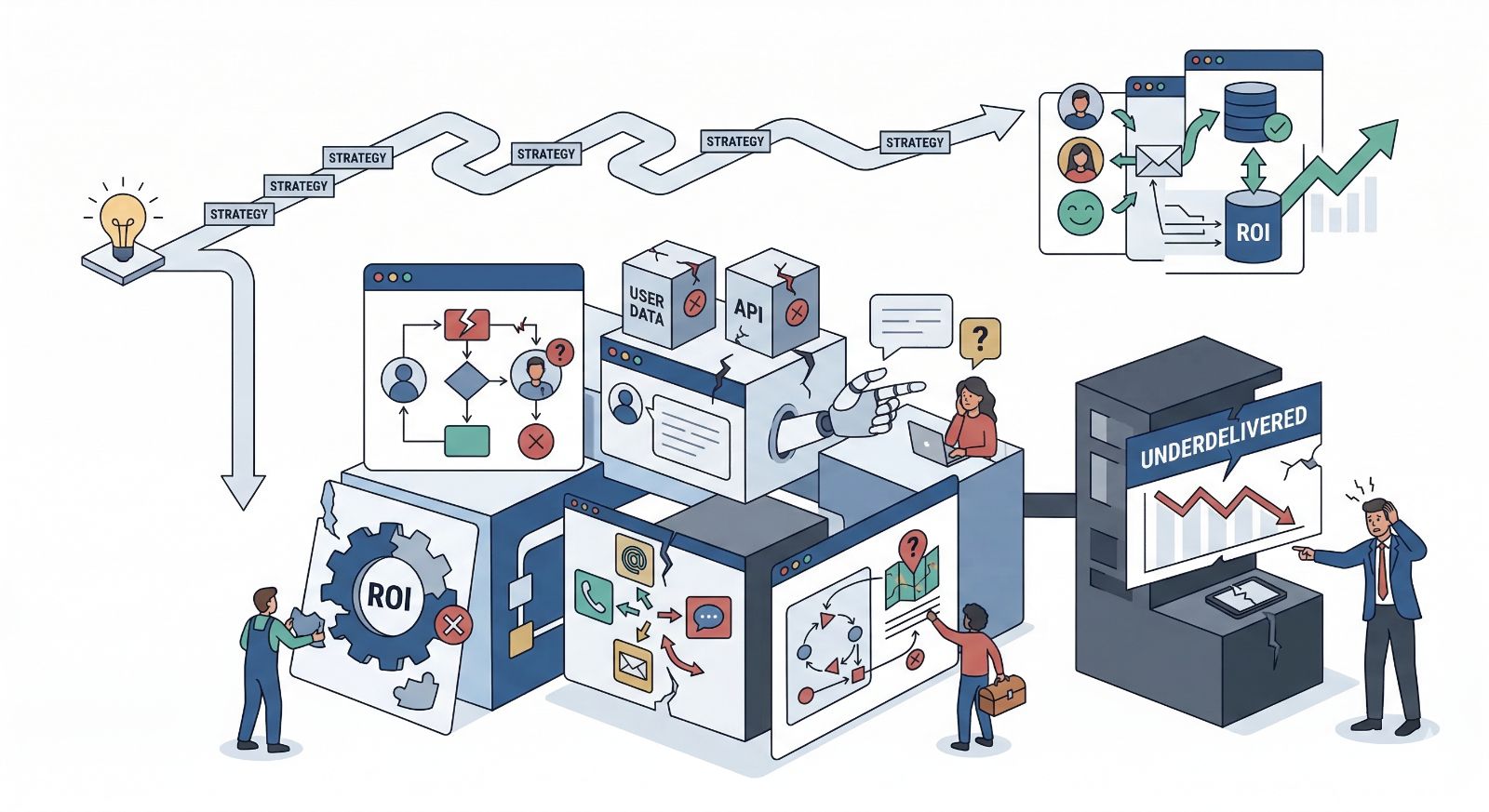
Most chatbot failures are not technology failures – they are strategy failures. These six mistakes account for the majority of deployments that underdeliver.
Mistake 1: Trying to automate everything at launch
The instinct to cover every use case on day one almost always results in a fragmented, low-quality experience across all of them. The highest-performing chatbot deployments start with a single, high-volume, well-defined use case – prove the ROI, then expand. One great flow is worth ten mediocre ones.
Mistake 2: No human handoff strategy
A chatbot with no clear escalation path doesn’t just frustrate customers – it actively damages trust. Define the exact triggers for human takeover: specific intents (complaints, billing disputes, VIP accounts), sentiment signals, and conversation depth thresholds. Make the handoff invisible to the customer.
Mistake 3: Treating deployment as a one-time project
Customer language evolves. Products change. Edge cases emerge. A chatbot that isn’t regularly reviewed and retrained drifts from reality – and customers notice. Build a monthly review cadence into your operations from day one, not as an afterthought.
Mistake 4: Skipping mobile QA entirely
Over 70% of chatbot interactions happen on mobile, per Statista. Flows that look clean on desktop often break on small screens – truncated buttons, scroll traps, keyboard overlap. Test every single conversation on a real mobile device before launch, every time.
Mistake 5: Generic responses that ignore CRM data
The fastest way to signal “this is just a bot” is to greet a returning customer – one who has made six purchases – with “Hi! How can I help you today?” Connecting your chatbot to customer contact data and using it to personalize the opening message, product recommendations, and offer logic is not optional. It’s what separates bots that convert from bots that churn.
Mistake 6: No success metrics defined before launch
Without a baseline – first-response time, resolution rate, escalation rate, CSAT – you cannot prove what the chatbot improved, cannot justify budget to expand it, and cannot diagnose what to fix. Set your measurement framework on day one. For guidance on what great looks like, this article covers the full CX impact picture.
5. The Next Wave: AI Chatbot Trends Shaping 2026 and Beyond
The chatbot category is evolving faster than any other customer-facing technology. Here is where the frontier is moving.
Multimodal conversations
Text-only chatbots are becoming the baseline, not the standard. The next wave handles images, voice, and short video natively. A customer photographs a broken product – the bot identifies it, cross-references the purchase history, initiates a return, and ships a replacement. No form. No ticket. No human required.
Proactive, behavior-triggered outreach
The paradigm shift from reactive to proactive is already underway. Rather than waiting for customers to initiate contact, AI agents send the right message at the right moment – a re-engagement nudge when a subscriber goes quiet, a cart recovery sequence 45 minutes after abandonment, a renewal reminder 30 days before expiry. Broadcast messaging is the foundation of this today; autonomous trigger logic is where it’s heading.
Agentic AI: from answering to doing
Gartner predicts that agentic AI will autonomously resolve 80% of common customer service issues without human intervention by 2029. The shift is from chatbots that tell customers what to do, to AI agents that do it for them – complete multi-system workflows, end-to-end, without a human in the loop for routine cases.
Deep social media integration
Chatbots are moving from a separate channel to a native layer inside social platforms. Comments trigger DMs. Story interactions trigger sequences. The line between social media strategy and conversational AI strategy is disappearing – this overview of the 2026 social automation landscape maps where the two strategies converge.
Predictive personalization at the individual level
Today’s personalization is segment-level – “customers who bought X also bought Y.” Tomorrow’s is individual-level – the chatbot predicts what this specific customer needs next, based on their purchase history, browsing behavior, support history, and real-time context, before they ask.
Embedded regulatory compliance
As the EU AI Act, PDPA, and similar frameworks tighten globally, chatbot platforms will be required to surface consent management, data residency controls, conversation audit logs, and bias monitoring as standard features – not integrations. Businesses evaluating platforms in 2026 should treat compliance infrastructure as a tier-one selection criterion.
6. Frequently Asked Questions
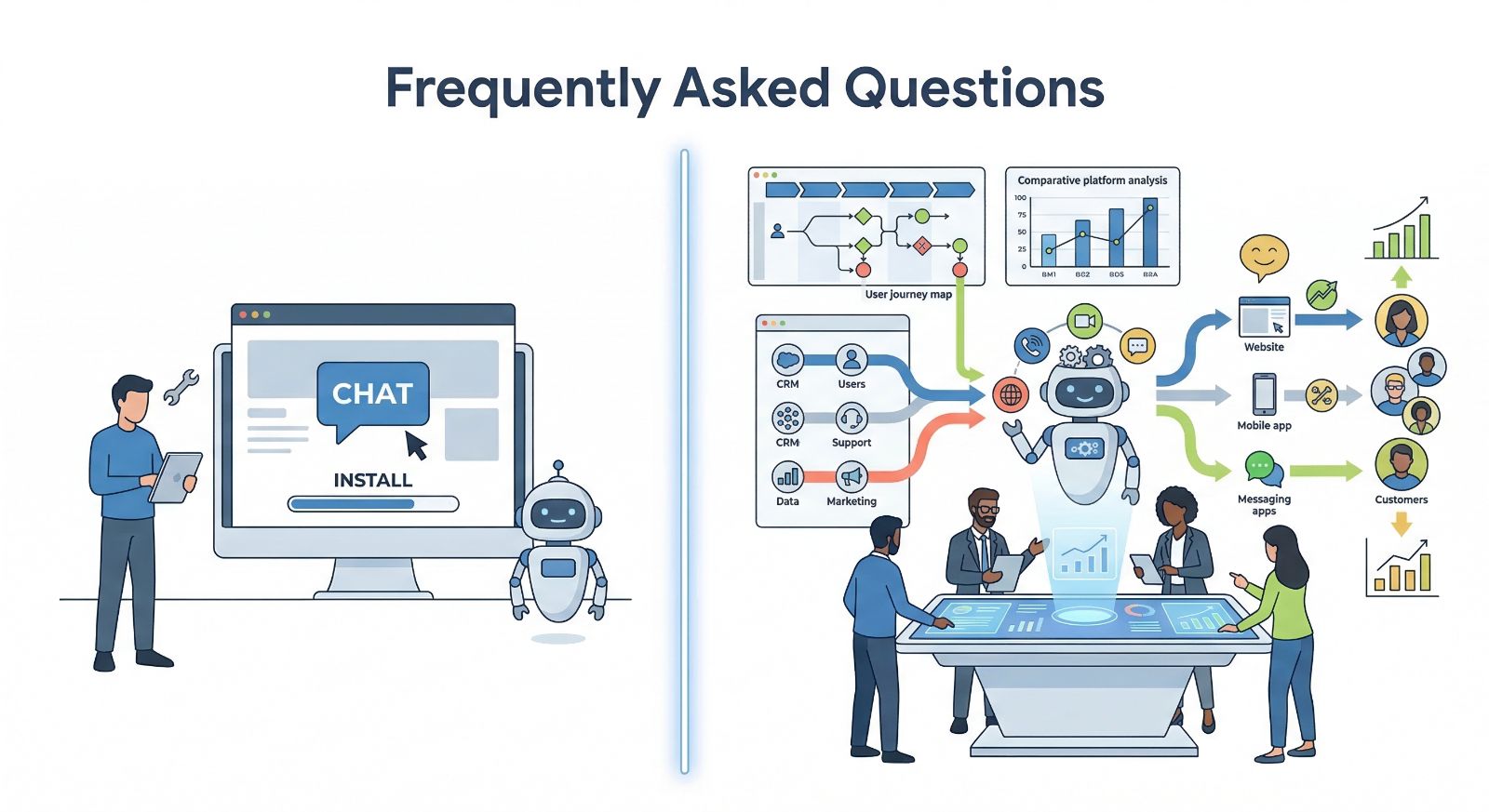
What is the difference between AI chatbot strategy and just deploying a chatbot?
Deploying a chatbot is a technology decision. Strategy is the layer above it – defining which use cases to automate and in which order, how chatbot data feeds back into CRM and marketing, how escalation to human agents is managed, and how performance is measured over time. Most chatbot underperformance stems from skipping strategy and going straight to deployment.
How is the AI chatbot market changing in 2026?
The market is consolidating around platforms that offer genuine omnichannel reach, autonomous AI agent capabilities, and deep CRM integration – replacing the earlier generation of single-channel, rule-based tools. Pricing is also shifting toward usage-based and per-seat models as per-message pricing becomes unworkable at scale.
What should I look for when comparing AI chatbot platforms?
The six non-negotiables: true omnichannel support from a unified inbox, a no-code flow builder your non-technical team can own, an autonomous AI agent layer, deep CRM and stack integrations, seamless human handoff with full context, and a pricing model that scales predictably. See ChatbotX as a reference point for what a modern omnichannel platform looks like.
How do I know if my chatbot is actually working?
Track these metrics weekly: resolution rate (target >70%), escalation rate (target <25%), first-response time, CSAT score, and – most importantly – revenue impact (recovered carts, qualified leads, upsell acceptance rate). Without these baselines, you cannot optimize and cannot justify investment.
What is the biggest chatbot trend to watch in 2026?
Agentic AI – the shift from chatbots that answer questions to AI agents that execute complete workflows autonomously. This is the development that will most dramatically separate early adopters from late movers over the next 24 months.
Conclusion
The chatbot strategy question in 2026 is not about whether to deploy – that decision is already made for most competitive industries. It’s about deploying correctly: choosing the right type of system, picking a platform that scales with your stack, avoiding the six mistakes that consistently destroy ROI, and staying ahead of the technology curve that is moving faster than most roadmaps account for.
Start with one focused use case. Instrument it fully. Then scale what the data proves.
The businesses investing in chatbot strategy today – not just chatbot deployment – are building a customer experience capability that will be very hard to replicate in two years.
Ready to build a chatbot strategy that actually performs? Get started free with ChatbotX →
New to AI chatbots? Start here first: What Is an AI Chatbot? Benefits & How to Deploy One