
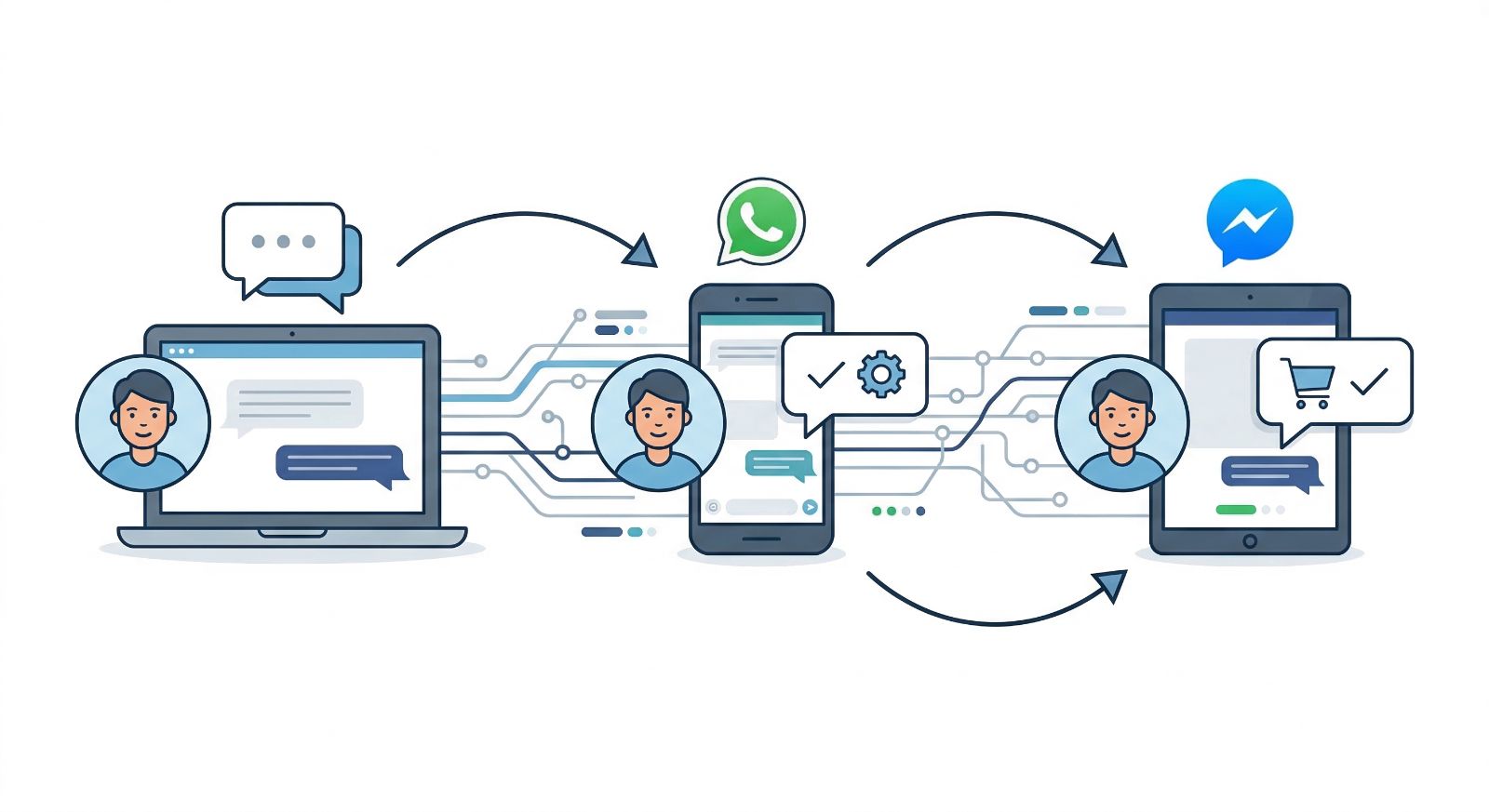
A customer starts a conversation on your website, continues on WhatsApp, and finalizes on Facebook Messenger – all without repeating themselves once. This seamless experience is no longer a future fantasy; it is the new standard for customer communication, powered by cross-platform chatbots. This definitive guide breaks down the technology, strategy, and implementation playbook you need to unify your customer conversations and strengthen your market position in 2026 and beyond.
Launch agentic chat marketing in minutes with ChatbotX













What Is a Cross-Platform Chatbot? Beyond the Buzzword
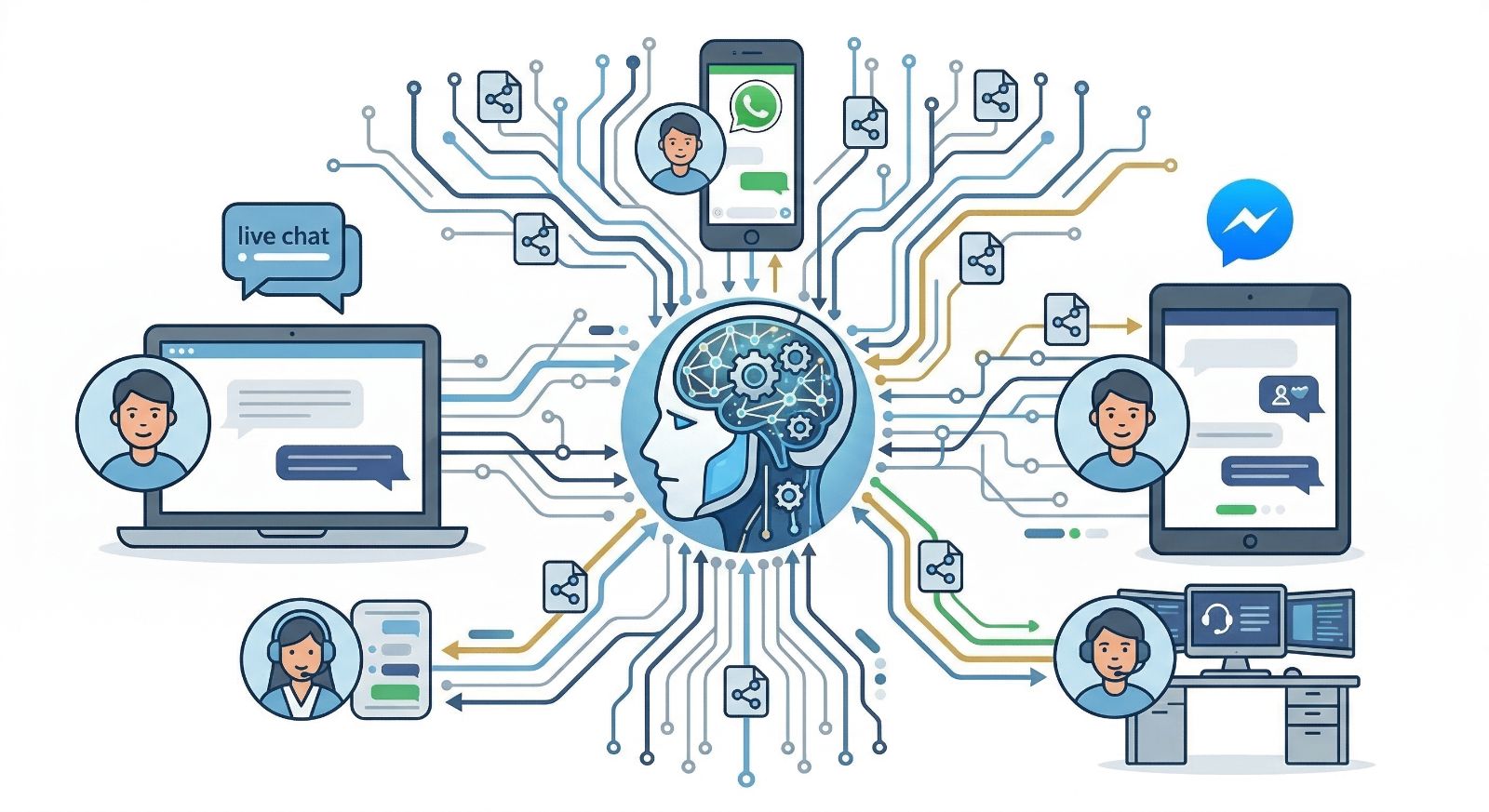
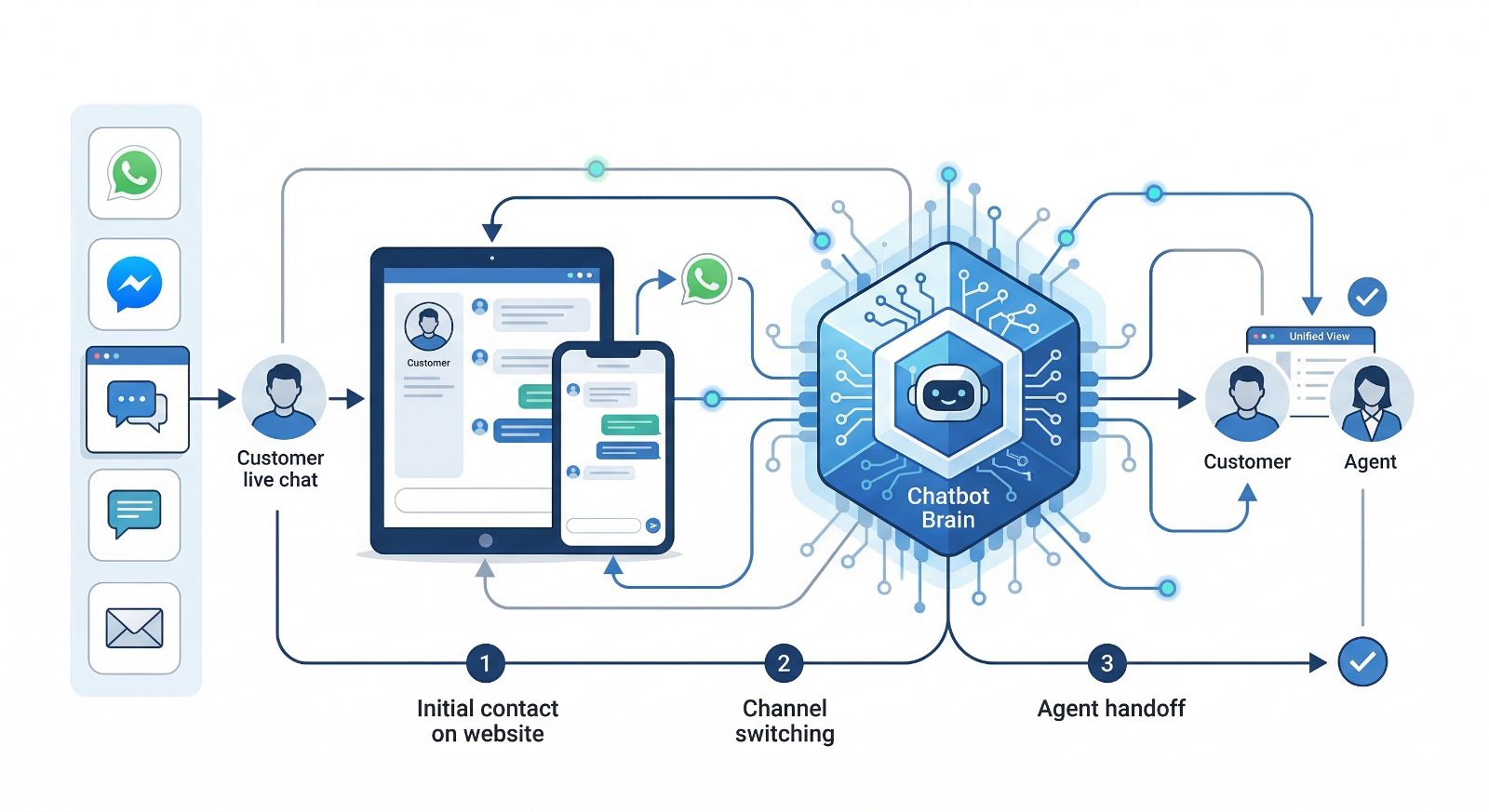
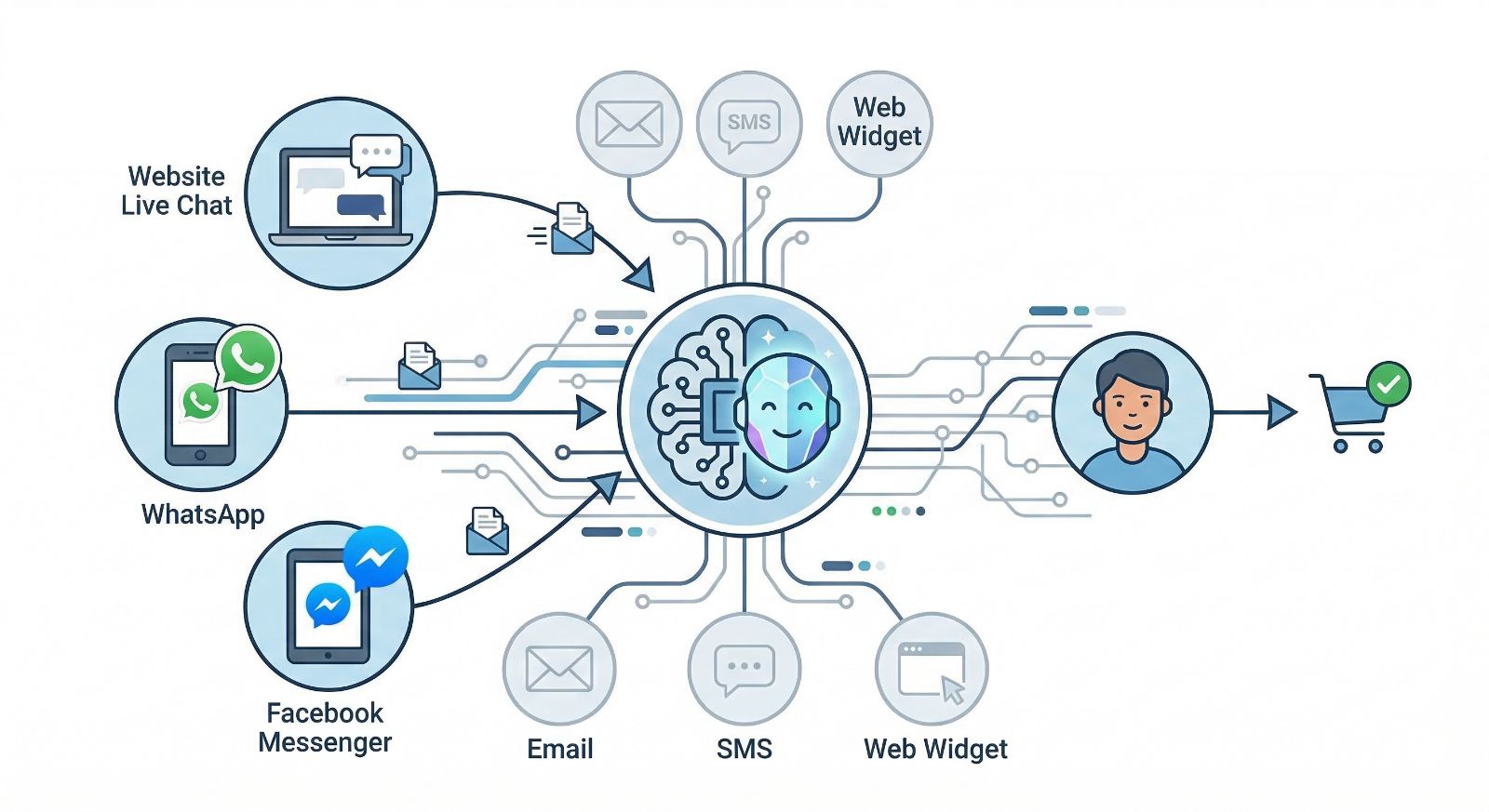
Imagine a customer who initiates a query on your website’s live chat, follows up with a question on WhatsApp during their commute, and confirms their order via Facebook Messenger later that evening. A traditional, siloed approach treats these as three separate, disconnected interactions – forcing the customer to repeat themselves and frustrating your support team. A cross-platform chatbot, by contrast, recognizes this as a single, continuous conversation with one customer. This is the fundamental paradigm shift that defines modern customer communication.
Core Definition: The Single ‘Brain’ Concept
A cross-platform chatbot is a conversational AI system engineered to operate from a single, centralized intelligence – or ‘brain’ – across multiple communication channels. Unlike managing separate bots for your website, social media, and messaging apps, a cross-platform solution unifies them. This central brain maintains memory, context, and user history regardless of which channel the customer uses. It is not simply about being present on multiple platforms; it is about creating a single, cohesive conversational thread that follows the customer wherever they go.
According to Salesforce’s State of the Connected Customer report, 88% of customers say the experience a company provides is as important as its products or services – and consistent, context-aware communication is at the heart of that experience.
Differentiating Multi-Channel, Cross-Platform, and Omni-Channel
While often used interchangeably, these terms have critical distinctions that affect both strategy and technology choice:
- Multi-Channel: The most basic approach. A business is present on multiple channels (email, Facebook, website chat), but each operates in complete isolation. A conversation started on Facebook carries no context if the user switches to the website. Think of it as separate departments that never share information.
- Cross-Platform: The bridge approach. Conversation and context move seamlessly between channels. The chatbot is the unifying layer, maintaining the ‘golden thread’ of the interaction. This is the core focus of modern conversational AI platforms.
- Omni-Channel: The holistic business strategy. It encompasses not just the chatbot conversation, but the entire customer experience – integrating data from CRM systems, e-commerce platforms, and marketing automation tools. A cross-platform chatbot is the critical technological enabler of a true omni-channel strategy.
For a deeper look at how omnichannel strategy works in practice, see our Omnichannel Chatbot Strategy 2026 guide.
The Ecosystem of Supported Channels
A robust cross-platform chatbot solution must integrate with the digital platforms where your customers spend their time. The essential channels include:
- Website: Live chat widgets and embedded bots
- Social Media: Facebook Messenger, Instagram Direct Messages, X (formerly Twitter) DMs
- Messaging Apps: WhatsApp Business API, Telegram, Viber, Zalo (dominant in Vietnam with 75M+ users)
- Traditional Channels: SMS and email integration for automated responses and ticketing
- In-App Communication: For SaaS products and mobile applications
- Voice Assistants: Established integrations with Amazon Alexa and Google’s Gemini
The Real Cost of Siloed Conversations: Why Your Business Is Losing Revenue
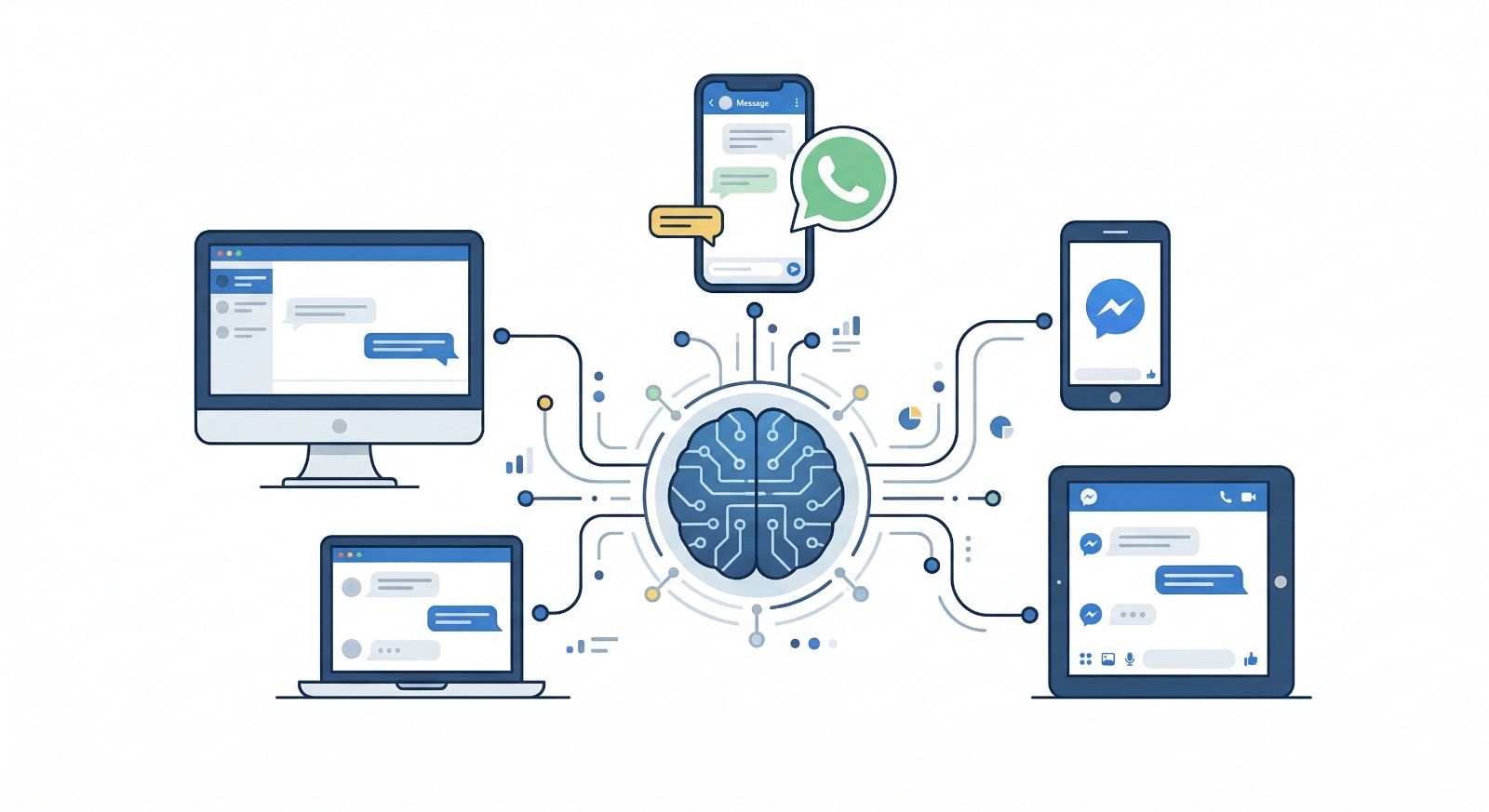
Maintaining separate, unintegrated chatbots for each communication channel creates deep-seated inefficiencies and a poor customer experience that quietly drains resources. This fragmented approach is not merely a minor inconvenience – it is a measurable liability in the competitive landscape of 2026.
The Context Collapse: Frustrating Customers into Churn
The most damaging effect of siloed chat is what practitioners call the ‘context collapse.’ When a customer must re-explain their issue every time they switch channels, the message they receive is clear: their time is not valued. This repetitive, frustrating experience is a proven driver of customer churn. Research from ChatbotX CX Trends Report consistently shows that customers who receive positive service experiences are significantly more likely to make repeat purchases – and the context collapse is the direct opposite of that outcome.
Operational Inefficiency: The Hidden Costs of Managing Multiple Bots
The financial and human resource costs of a siloed strategy are substantial and often underestimated:
- Setup & Configuration: Each bot must be built, designed, and configured independently.
- Knowledge Management: When a product price or policy changes, every bot’s knowledge base must be updated separately – increasing the risk of inconsistent information across channels.
- Maintenance & Updates: Every platform API change requires separate maintenance cycles across all bots.
- Team Training: Support agents must be trained on multiple disconnected dashboards, increasing cognitive load and reducing overall efficiency.
Brand Inconsistency and Eroding Trust
When your Facebook bot provides a different answer about your return policy than your website bot, trust erodes. These inconsistencies arise directly from managing separate knowledge bases. A brand’s voice, tone, and factual accuracy must be consistent across every touchpoint – a standard that siloed systems make nearly impossible to maintain at scale.
The Scalability Trap: Slowing Growth and Innovation
As your business grows and customers migrate to new platforms, a siloed model requires you to build, train, and integrate a new bot from scratch for each addition. This scalability trap makes your business slow to adapt to changing consumer behavior. A unified, cross-platform architecture, by contrast, allows you to connect a new channel with minimal effort, deploying your existing AI and knowledge base immediately.
Siloed vs. Unified Cross-Platform Chatbot Strategy: Side-by-Side Comparison
| Feature | Siloed Approach | Unified Cross-Platform Approach |
|---|---|---|
| Customer Experience | 🔴 Fragmented. Customers repeat themselves every time they switch channels. | 🟢 Seamless and contextual. Conversations flow across channels without interruption. |
| Operational Efficiency | 🔴 High overhead. Duplicate work for setup, training, and maintenance. | 🟢 Highly efficient. Manage all channels from one dashboard. |
| Brand Consistency | 🔴 High risk of inconsistent answers and brand voice across platforms. | 🟢 Guaranteed consistency driven by a single, centralized knowledge base. |
| Data & Analytics | 🔴 Fragmented data. No unified view of the customer journey. | 🟢 Centralized analytics provide a holistic view of all interactions. |
| Scalability | 🔴 Extremely difficult and costly to add new channels. | 🟢 New platforms can be integrated and deployed rapidly. |
Deconstructing the Technology: How Cross-Platform Chatbots Achieve Seamless Integration
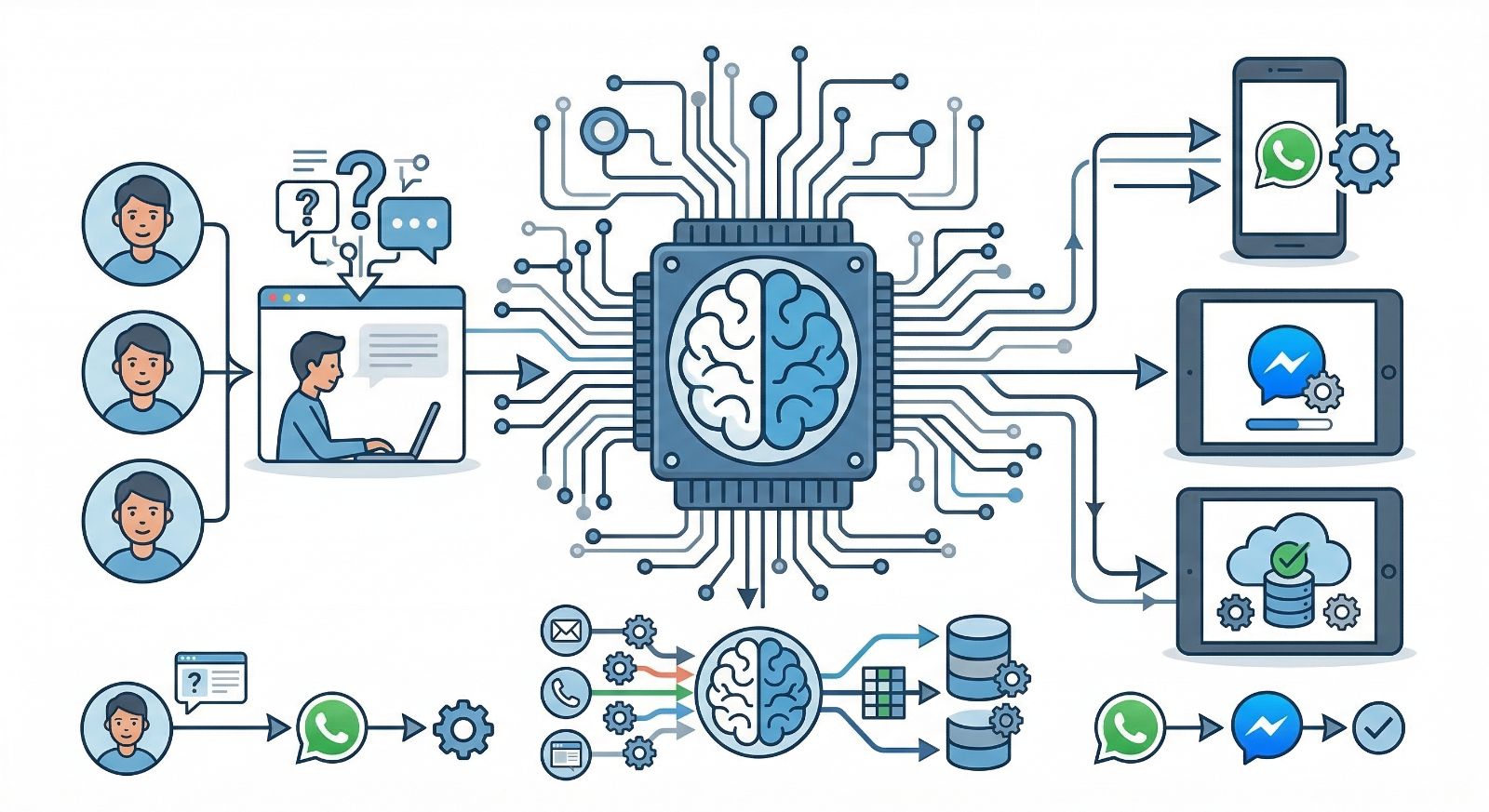
The seamlessness of a cross-platform conversation is not magic – it is a sophisticated architecture of interconnected technologies designed to centralize information and maintain context. Understanding these components is essential for selecting the right platform and implementing it effectively.
The Role of APIs: Connecting the Digital Channels
At the heart of any cross-platform chatbot solution are Application Programming Interfaces (APIs). Think of your central chatbot platform as the hub of a wheel, and each communication channel – WhatsApp, Facebook, your website – as a spoke. APIs are the standardized connection points that allow the hub to send and receive information from each spoke in a language it understands. A robust platform will have pre-built, well-maintained API integrations for all major channels, ensuring reliable, real-time communication. For WhatsApp specifically, this means operating through the official WhatsApp Business API, which provides enterprise-grade reliability and compliance.
The Unified Inbox: Your Command Center
All data flowing through the APIs converges into a unified inbox – a single-screen dashboard where human agents can monitor, manage, and intervene in conversations from every channel simultaneously. A customer’s Instagram DM appears alongside a website chat from another user. This centralized view eliminates constant tab-switching, dramatically improving agent focus and response speed.
💡 Pro Tip: Look for a unified inbox that includes collaboration features – the ability to leave internal notes for colleagues, tag conversations by topic, and assign them to specific agents or teams, all within the same interface. These features significantly reduce resolution time for complex cases.
ChatbotX’s unified inbox and features are built specifically for this multi-channel management use case, supporting WhatsApp, Instagram, Messenger, and web chat from a single dashboard.
Shared Context & Memory: The ‘Golden Thread’ of Conversation
This is the most critical component for customer experience. The platform must maintain a persistent user profile linked to a unique identifier – such as a phone number or email address. Every interaction, regardless of channel, is logged against this profile. When a user starts a chat on WhatsApp, the system immediately retrieves their full conversation history from their previous website interaction. Instead of a generic “How can I help you?”, the bot greets them with: “Welcome back! I can see you were asking about your order status yesterday – are you still looking for an update?” This shared memory is what transforms the experience from transactional to genuinely helpful.
Intelligent Routing and AI-to-Human Handoff
The best platforms add a layer of intelligence beyond message consolidation. Smart routing automatically directs conversations to the right team based on predefined rules – queries containing “refund” go to billing; technical questions route to the support queue. Equally important is a well-designed AI-to-human handoff. The system must recognize when the bot is out of its depth. Reliable triggers for handoff include:
- Detection of negative sentiment – frustration, anger, or distress
- Repeated failure to understand a user’s query (typically after 2–3 failed attempts)
- Specific keywords such as “talk to a person” or “agent”
- Complex queries that inherently require human judgment or empathy
The transition must be seamless – the human agent receives the full conversation transcript and user history instantly, with no need for the customer to re-explain anything.
Centralized Analytics & Business Intelligence
By funneling all conversational data into one system, you unlock powerful business intelligence. According to Gartner’s research on customer service AI, organizations with centralized conversation analytics reduce resolution time by up to 30% compared to siloed approaches. A centralized analytics dashboard allows you to track KPIs across all channels simultaneously and answer questions such as:
- What are our most common customer questions overall?
- Which channel has the highest volume of support requests?
- What is our average first-response time across all platforms?
- How does customer satisfaction (CSAT) vary between WhatsApp and website chat?
Your Step-by-Step Implementation Playbook for a Flawless Rollout
Transitioning from a siloed setup to a unified cross-platform chatbot strategy requires a structured approach. Following a clear implementation plan ensures a smooth rollout, high adoption, and a faster return on investment. Avoid the temptation to simply “turn it on” – strategic planning determines success or failure.
Step 1: Audit and Consolidate Your Communication Channels
Before building anything, map your current landscape completely:
- Identify all touchpoints: List every channel your customers use to contact you – both official and informal.
- Analyze volume and type: Determine the inquiry volume on each channel and categorize the types of questions asked.
- Prioritize for integration: Decide which channels to integrate first based on volume and strategic importance. Starting with 2–3 high-traffic channels before expanding is almost always the right approach.
Step 2: Develop a Centralized Knowledge Base (Your Single Source of Truth)
This is the foundation of your entire chatbot strategy. Your bot is only as smart as the information it has access to:
- Gather all information: Collect existing FAQs, support documentation, policy documents, and product information from every department.
- Standardize answers: Write clear, concise, brand-aligned answers for every potential question. There must be one – and only one – official answer for each query.
- Structure for AI: Organize information into clear intent-and-entity pairs that the AI can interpret. Most modern platforms provide dedicated tools to assist with this process.
Step 3: Map Customer Journeys and Define Automation Flows
Think through the typical paths your customers take – before a purchase, during checkout, and after delivery:
- Identify repetitive tasks: Pinpoint the top 20 most frequent and repetitive questions your team answers manually. These are your prime automation candidates.
- Build conversation flows: Use a visual flow builder to design the conversational path for each automated task. For example, a “track order” flow asks for the order number, validates it, and retrieves the status via an API call to your logistics system.
Step 4: Configure Smart Escalation Paths and Handoff Triggers
Define exactly when and how the bot should escalate a conversation to a human agent:
- Set clear triggers: Use keywords, sentiment analysis, or repeated failed attempts as signals for automatic handoff.
- Define routing rules: Ensure the handoff routes to the correct team (sales, support, billing) based on the conversation’s context.
- Manage expectations: The bot should clearly communicate that it is transferring the user to a human agent and provide an estimated wait time wherever possible.
Step 5: Train Your Team on the New Unified Platform
Your technology is only as effective as the people using it:
- Interface training: Familiarize agents with the unified inbox, collaboration tools, and analytics dashboard.
- Workflow training: Teach the new process for handling escalated chats and how to leverage full conversation history during handoff.
- Establish best practices: Create guidelines on tone, response time, and how to properly tag and close conversations for clean reporting.
Step 6: Launch, Monitor, and Continuously Optimize
A cross-platform chatbot is not a “deploy and forget” product – it requires ongoing attention to remain effective:
- Phased rollout: Consider a beta launch on one channel or to a small user segment to identify issues before full deployment.
- Analyze performance: Use the centralized analytics dashboard to monitor key metrics weekly. Look for unanswered questions, drop-off points within flows, and low satisfaction scores.
- Iterate and refine: Use data insights to continuously update your knowledge base and refine automation flows. A well-maintained bot after 6 months of operation is typically 40–60% more effective than on launch day.
Mini Case Study: E-Commerce Brand Unifies 4 Channels in 45 Days
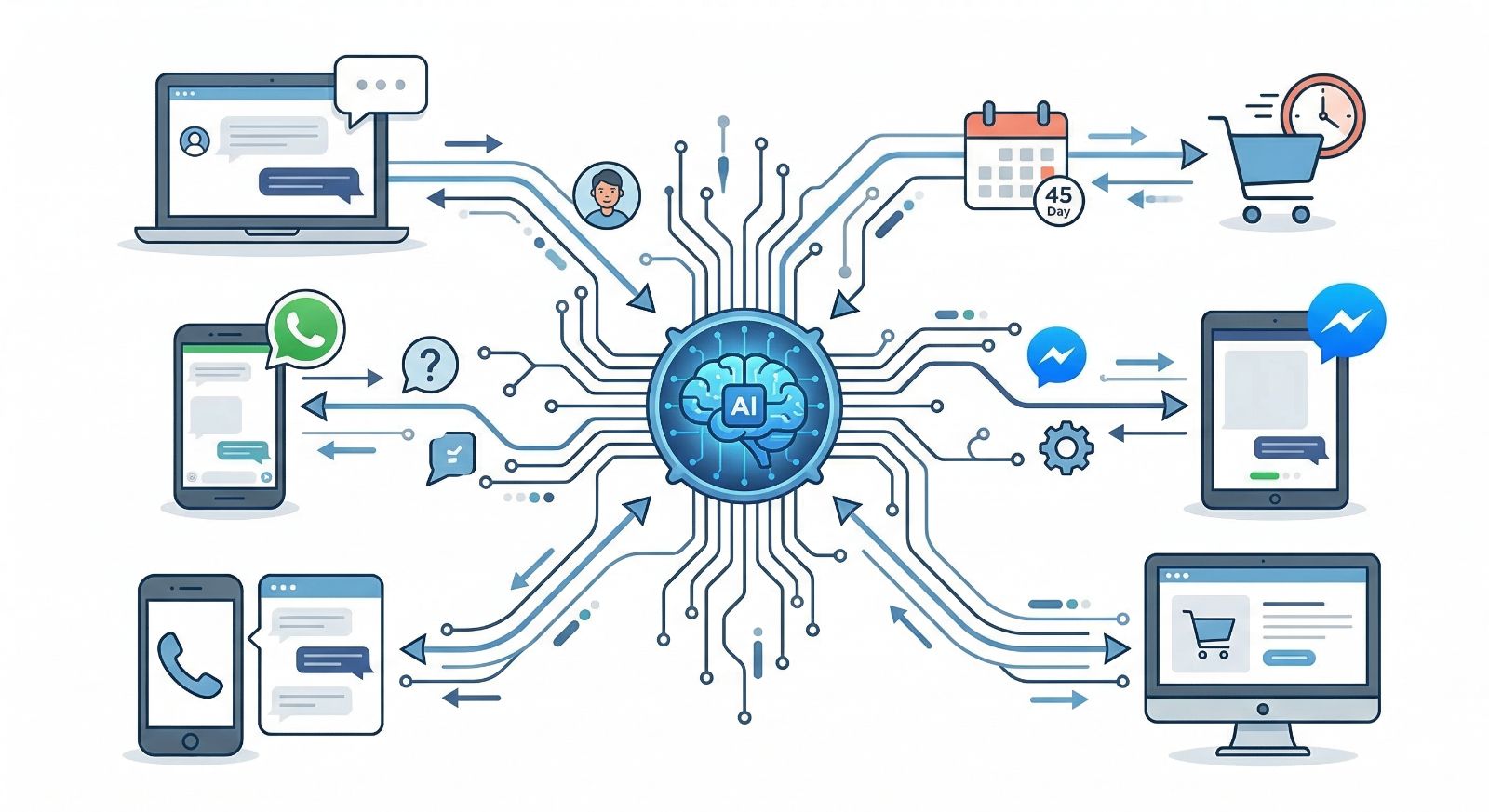
A mid-sized fashion e-commerce brand was managing four separate bots with no shared context. Customers who contacted them on Instagram frequently had to re-explain their issue when following up on WhatsApp. Agent workload was high, and first-response times averaged 3.8 hours.
Cross-platform chatbot implementation over 45 days:
- Migrated all four channels into a single centralized intelligence layer
- Unified customer identity using phone number as the cross-channel anchor
- Built one shared knowledge base replacing four isolated FAQ sets
- Configured smart routing: orders → logistics team, returns → billing team
- Activated WhatsApp chatbot for order tracking and Instagram chatbot for product discovery
Results after 90 days:
- First-response time: reduced from 3.8 hours to 22 seconds
- Bot containment rate: 67% of all queries resolved without human handoff
- Support team capacity: freed 58% of agent time for complex, high-value cases
- Customer re-explanation rate: dropped from 44% to under 3%
- CSAT score: increased from 3.7 to 4.6 / 5.0
Key lesson: The biggest friction point was not technical – it was knowledge base consolidation. Once teams from logistics, billing, and marketing agreed on a single canonical answer for each question, bot accuracy improved dramatically within two weeks.
Note: Figures represent results from a single deployment. Results vary by industry, audience size, and implementation quality.
📖 Related: WhatsApp Chatbot features · Best WhatsApp BSP Comparison 2026
The Tangible Business Impact: Growth, Conversions, and Customer Loyalty
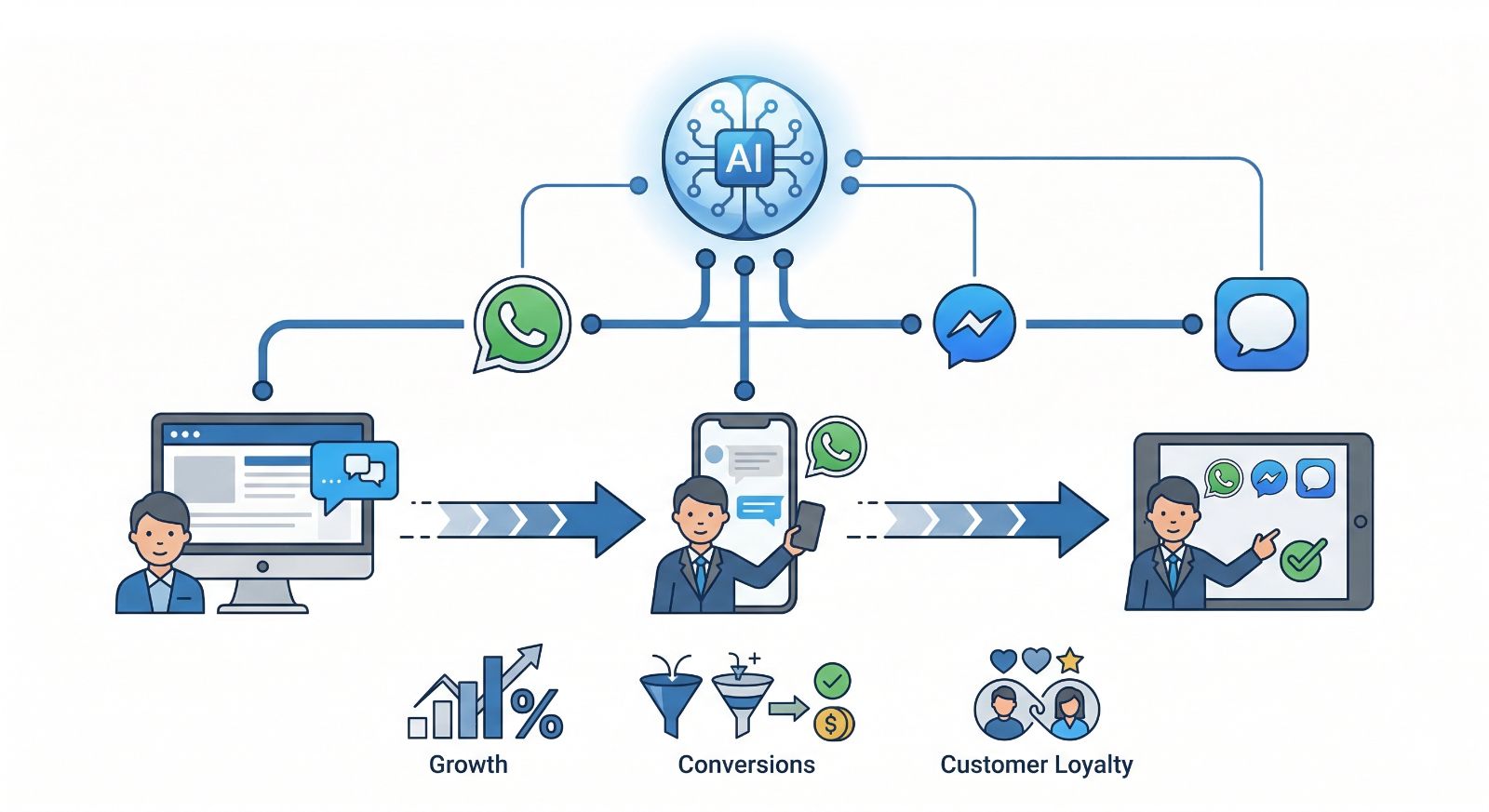
Implementing a cross-platform chatbot strategy is not merely a customer service upgrade – it is a measurable growth engine that delivers returns across marketing, sales, and operations.
Improving User Experience Metrics That Influence Search Visibility
Search engines increasingly weigh user experience signals when determining rankings. A well-implemented cross-platform chatbot can positively influence these signals – though it does so indirectly, not as a direct ranking factor:
- Engagement rate (the metric that replaced bounce rate in Google Analytics 4): When users find immediate answers via a chatbot rather than returning to search results, engagement rate improves – a signal search engines observe favorably.
- Session depth and dwell time: By providing instant, relevant answers that keep users exploring your site, chatbots contribute to longer, more engaged sessions.
📌 Note on SEO: Chatbots do not influence search rankings the way backlinks or structured data do. Their benefit is indirect: by improving user experience – reducing frustration, answering questions faster, and keeping visitors engaged – they contribute to the behavioral signals that search engines observe over time.
Driving Conversions with Proactive, Context-Aware Engagement
Modern cross-platform chatbots can do more than answer questions – they actively drive revenue. By integrating with your e-commerce or CRM system, a chatbot can:
- Prevent cart abandonment: Trigger a proactive message if a user lingers on the checkout page, offering assistance or a contextual incentive to complete the purchase.
- Deliver personalized recommendations: Based on browsing history, the bot suggests relevant products – functioning as a 24/7 personal shopper.
- Qualify leads efficiently: The bot asks qualifying questions on behalf of your sales team, scheduling demos only with high-intent prospects and saving valuable sales time.
HubSpot’s marketing research reports that companies using chatbots for lead qualification see a 15–30% improvement in conversion rates compared to form-based approaches.
Reducing Customer Service Overhead and Reallocating Resources
By automating responses to the 60–80% of inquiries that are repetitive and routine – “Where is my order?”, “What are your business hours?”, “How do I request a refund?” – you free your human agents to focus on work that genuinely requires them:
- Scale support without scaling headcount: Handle growing inquiry volumes without proportionally increasing staff costs.
- Redeploy agents to high-value interactions: Skilled human agents can focus on complex problem-solving, VIP customer relationships, and proactive outreach – activities with significantly higher impact on retention.
Building Brand Trust and Increasing Customer Lifetime Value (CLV)
Consistency and reliability build trust. A cross-platform chatbot ensures that every customer receives the same accurate, high-quality service on every channel, every time. This consistency directly contributes to:
- Increased retention: Issues resolved quickly and seamlessly increase the likelihood of repeat business.
- Higher Customer Lifetime Value (CLV): Loyal customers spend more over their lifetime. Forrester’s customer experience research confirms that superior service experience is one of the most reliable drivers of CLV growth.
Frequently Asked Questions
How much does a cross-platform chatbot solution typically cost?
#### 1. Monthly Subscription Fees (SaaS)
| Segment | Average Cost (USD/month) | Key Features |
|---|---|---|
| Free Plan | $0 | Limited users (< 1,000) and basic automation features. |
| Small Business | $10 – $25 | Automated messaging, 2–3 social channels, keyword-based scripts. |
| Mid-sized Business | $40 –$200 | AI integration (GPT, Claude), multi-platform (Messenger, Zalo, WhatsApp, Web), CRM/ERP integration. |
| Enterprise | $400 –$2,000+ | Unlimited users, deep-learning AI, dedicated support, high-level security. |
#### 2. Custom Development (One-time Build)
- Rule-based Chatbot: Approximately $1,000 – $2,000 (one-time setup fee).
- Advanced AI Chatbot (NLP/LLM): Starting from $3,000 – $15,000+.
- Enterprise-grade AI Systems: Can exceed $50,000 if it requires self-hosting LLMs and deep integration into internal legacy systems.
#### 3. “Hidden” Costs to Consider
- API Usage Fees: If using models like GPT-4 or Gemini, you may pay based on tokens or per conversation (roughly $0.5–$6 per 1,000 interactions).
- Platform Fees (WhatsApp/Zalo): These platforms often charge their own monthly maintenance or per-message fees. See Meta’s WhatsApp Business pricing for current rates.
- Maintenance & Scripting: Costs for staff or agencies to design conversation flows and keep the AI updated (typically $100–$300/month).
Can a cross-platform chatbot handle multiple languages?
Yes. Most advanced platforms are built for global deployment and include:
- Automatic language detection: The bot identifies the user’s language from their opening message.
- Separate knowledge bases per language: Responses are not simply translated – each language has its own knowledge base, ensuring cultural nuance and accuracy.
For the Vietnamese market specifically, look for platforms with native Vietnamese NLP models trained on real Vietnamese data – not English models that have been translated. Misunderstanding rates on poorly localized platforms can reach 30–40%, which quickly erodes customer trust.
How long does it take to implement a cross-platform chatbot?
| Scenario | Scope | Typical Timeline |
|---|---|---|
| Basic Setup | 2–3 channels, top 10–20 FAQs automated, standard integrations | 1–2 weeks |
| Intermediate Setup | 4–6 channels, custom conversation flows, CRM integration | 4–8 weeks |
| Advanced / Enterprise | Full channel suite, custom API integrations, multi-language, complex flows | 1–3 months |
The most significant variable is typically building and organizing the knowledge base, not the technical configuration itself.
Will a cross-platform chatbot replace my human support agents?
No – and it should not. The proven model is collaborative: the chatbot handles high-volume, repetitive queries (typically 65–80% of total volume), while human agents focus on complex, high-touch, or emotionally sensitive interactions where their expertise is genuinely irreplaceable.
This division of labor leads to a more efficient operation overall – and a more fulfilling role for your human team, who spend less time on rote tasks and more time on meaningful customer interactions. For more on building effective human-bot workflows, see ChatbotX’s features overview.
How do I ensure data privacy and regulatory compliance?
Compliance requirements depend on your market. Key considerations include:
- Vietnam: Decree 13/2023/NĐ-CP requires explicit consent for data collection, data minimization, and the right to erasure.
- European Union: GDPR applies strictly. Ensure your platform vendor provides data processing agreements (DPAs) and supports data residency requirements.
- Singapore / Southeast Asia: The PDPC’s Personal Data Protection Act sets baseline standards for data handling across the region.
- Global baseline: Regardless of jurisdiction, implement clear opt-in mechanisms, encrypt data in transit and at rest, and ensure you – not your vendor – own all conversation and training data.
🚀 Ready to Unify Your Customer Conversations?
Don’t let competitors reach your customers first. Every day without a unified cross-platform chatbot, you are losing conversion opportunities and customers who may never return.
✅ Working demo free
✅ Custom ROI analysis for your industry – no commitment, no hidden costs