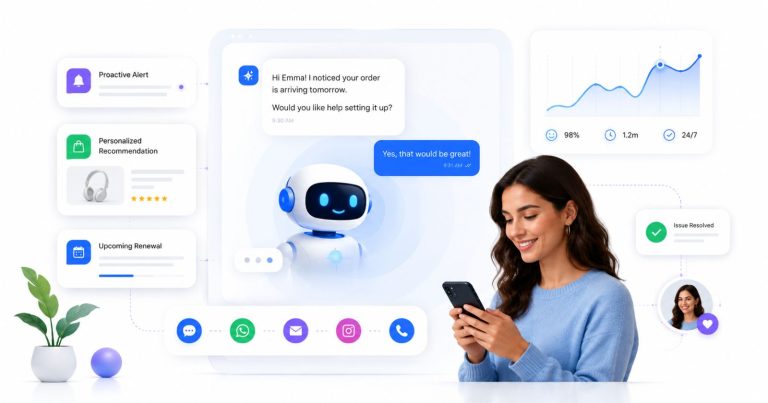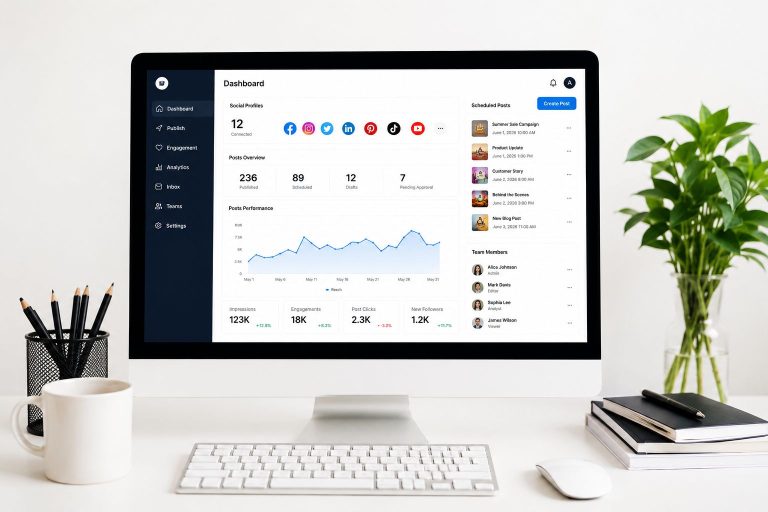

The gap between a high-performing campaign and a wasted budget in 2026 is measured in minutes, not hours. As Meta’s AI-driven algorithms increasingly prioritize high-intent engagement, simply capturing a lead is no longer enough. To maintain a competitive edge, businesses must eliminate the friction between lead generation and sales outreach. This guide explores how a seamless Facebook Lead Ads and CRM integration transforms passive data collection into a high-velocity conversion engine, ensuring every prospect is engaged at the peak of their interest.
Launch agentic chat marketing in minutes with ChatbotX









What Are Facebook Lead Ads and Why They Matter in 2026

Every business faces the same fundamental challenge: finding qualified prospects at scale without burning through budget. Facebook Lead Ads address this directly by removing the biggest friction point in the lead generation process – redirecting users to an external landing page.
Instead of clicking off the platform, prospective customers see an in-app form that auto-populates with their Facebook profile data (name, email, phone number). All they need to do is review and confirm. The result? Dramatically lower drop-off rates and a significantly higher volume of completed submissions compared to traditional click-to-website campaigns.
Understanding how the Facebook algorithm works in 2026 is important context here. Meta’s AI-driven interest engine now rewards ads that generate high engagement and low friction – which is exactly what Lead Ads are engineered to deliver. With Facebook’s global user base exceeding 3 billion monthly active users, businesses gain access to one of the largest, most precisely targetable audiences on the internet.
Whether you’re running campaigns for real estate, automotive, education, health & wellness, or e-commerce, Lead Ads are built to capture high-intent audiences – people who have actively shown interest in your offer. But capturing a lead is only the beginning. What you do in the first few minutes after a lead submits their information determines whether that person becomes a customer or quietly moves on to a competitor.
The Core Problem: Leads Without a Follow-Up System Are Wasted
Imagine running a high-performing Facebook Lead Ads campaign that generates hundreds of submissions daily. Sounds like success – until you realize your sales team is manually downloading CSV files, copying contact details into spreadsheets, and reaching out hours (or even days) later.
Studies consistently show that lead response time is one of the most critical factors in conversion rates. Prospects contacted within 5 minutes of submitting a form are significantly more likely to convert than those reached after an hour. After 24 hours, the probability of meaningful engagement drops sharply.
This is precisely where CRM integration becomes non-negotiable. Without it, leads fall through the cracks. With it, your entire follow-up pipeline becomes automatic, consistent, and fast – regardless of whether you receive 10 or 10,000 submissions per day.
Key Benefits of Connecting Facebook Lead Ads to Your CRM

Integrating Facebook Lead Ads with a CRM system does far more than just move data from one place to another. Here’s what it actually unlocks:
Instant Lead Delivery
The moment a prospect submits a form, their details populate directly inside your CRM. No manual exports, no lag time. Sales reps see new leads appear in real time and can act immediately.
Centralized Contact Management
All lead data – name, email, phone number, custom question responses – is organized inside a unified CRM Contacts management system. Teams across marketing, sales, and customer success work from one source of truth, eliminating duplicated outreach and communication gaps.
Automated Lead Scoring and Segmentation
Modern CRM platforms can automatically score leads based on their responses to custom form questions. A prospect who answered “Ready to buy this month” scores higher than one who selected “Just researching.” This allows sales teams to prioritize their efforts intelligently.
Triggered Workflow Automation
Connected workflows allow your CRM to automatically send a welcome message, trigger a WhatsApp notification, assign a sales representative, and schedule a follow-up task – all within seconds of lead submission, without any human involvement.
Full Funnel Visibility and Attribution
With CRM integration, you can track exactly which Facebook campaigns, ad sets, and creatives are generating not just the most leads, but the most valuable leads – those that actually convert to revenue. This data directly informs smarter ad spend decisions.
How the Facebook Lead Ads + CRM Integration Works
The technical connection between Facebook Lead Ads and a CRM platform typically operates through one of three methods:
1. Native Integration (Direct API Connection)
Platforms like HubSpot, Salesforce, and Zoho CRM offer built-in Facebook Lead Ads connectors. You authorize the connection in the CRM dashboard, select the specific lead form, and map form fields to the corresponding CRM contact properties. New submissions sync automatically in real time.
2. Middleware Automation Tools
Platforms such as Zapier, Make (formerly Integromat), or n8n act as a bridge between Facebook and your CRM. These no-code tools allow you to build custom automation workflows – for example, syncing a lead submission to your CRM, adding the contact to an email sequence, and sending a Slack notification to the responsible sales rep, all simultaneously.
3. Omnichannel Communication Platforms
Advanced solutions connect Facebook Lead Ads not just to a CRM, but to a full suite of messaging channels – including WhatsApp Business API, Facebook Messenger chatbot, Instagram Direct, Telegram, and Zalo. This approach transforms passive lead capture into an active, conversational customer journey from the very first touchpoint – a capability that separates modern marketing stacks from outdated manual pipelines.
Top CRM Platforms Compatible with Facebook Lead Ads
| CRM Platform | Native Integration | Key Strengths |
|---|---|---|
| HubSpot | ✅ Yes | All-in-one marketing, sales & service hub |
| Salesforce | ✅ Yes | Enterprise-grade, highly customizable |
| Zoho CRM | ✅ Yes | Cost-effective, strong automation |
| Pipedrive | ✅ Yes | Sales pipeline-focused UI |
| ActiveCampaign | ✅ Yes | Advanced email + CRM automation |
| ChatbotX | ✅ Yes | Open-source omnichannel platform with AI Agents & WhatsApp API |
When selecting a CRM for Facebook Lead Ads integration, prioritize platforms that support real-time sync, allow custom field mapping, and offer native messaging channel integrations – especially WhatsApp, which has become the dominant business communication channel across Asia, the Middle East, Latin America, and Europe.
Supercharging Lead Conversion with WhatsApp
Facebook Messenger has traditionally served as the default channel for following up on Facebook leads. However, its 24-hour messaging window restriction limits businesses’ ability to maintain sustained, proactive communication with prospects.
WhatsApp changes the equation entirely.
The WhatsApp Business Platform enables businesses to initiate conversations with opted-in leads at any time using pre-approved message templates – removing the constraints that Messenger imposes. With a message open rate of approximately 98% compared to roughly 20% for email, WhatsApp is now the preferred channel for businesses that need to reach prospects quickly and personally.
For a deeper look at how WhatsApp’s latest features work together, see this complete breakdown of WhatsApp Flows, Meta Verified & Channels for business in 2026.
Why WhatsApp Outperforms Other Follow-Up Channels
- Immediacy: Messages are delivered and read within minutes, not hours
- Personalization: WhatsApp’s conversational format feels personal rather than promotional
- Rich media support: Share product images, videos, catalogs, and payment links within the chat
- Two-way dialogue: Unlike email broadcasts, WhatsApp creates a real conversation that builds trust
- In-chat commerce: Customers can browse, ask questions, and complete purchases without leaving WhatsApp
Advanced WhatsApp Tactics to Close More Deals

Once your Facebook leads are flowing into an omnichannel platform, you can activate a set of powerful conversion workflows:
1. Automated Welcome Sequences via Chatbot
The moment a lead is received from Facebook, an automated WhatsApp chatbot sends a personalized greeting and presents the prospect with a menu of options (e.g., “Learn about Product A,” “Book a consultation,” “Speak to a human agent”). You can design this entire sequence visually using a visual Flow Builder, which lets non-technical teams map out full conversation journeys without writing a single line of code. This initial interaction qualifies the lead further while keeping the conversation alive – even outside business hours.
2. Intelligent Conversation Routing
Rather than manually assigning leads to sales agents, an intelligent routing system reads the prospect’s form responses and automatically directs the conversation to the most relevant team member. A prospect who indicated interest in enterprise pricing gets routed to the enterprise sales team. One who selected “beginner” gets routed to an onboarding specialist.
This dramatically reduces response times, eliminates misdirected conversations, and ensures every prospect receives expertise-matched service from the very first interaction.
3. Behavioral Segmentation and Targeted Remarketing
Over time, your CRM builds a rich profile of each lead based on form responses, browsing behavior, and conversation history. These data points power hyper-targeted remarketing automation campaigns on WhatsApp. Instead of sending the same broadcast to your entire lead list, you reach laser-focused micro-segments with messages tailored to exactly where they are in the buying journey – increasing relevance, engagement, and ultimately, conversions.
For example, an e-commerce brand might segment Facebook leads by product category interest and send personalized new arrival announcements or flash sale alerts to each group. To understand how this fits within a broader conversion architecture, read this complete guide on building an e-commerce sales funnel from discovery to loyal buyer.
4. Seamless In-Chat Payment Completion
One of the most significant drop-off points in the conversion journey is the payment step – particularly when customers are asked to switch platforms or navigate unfamiliar checkout interfaces. WhatsApp’s catalog and payment features allow businesses to send a product link, showcase items, and accept payment all within the same conversation thread.
By removing the friction of platform switching, businesses report measurable reductions in cart abandonment and stronger close rates on high-intent leads.
5. Post-Sale Engagement and Loyalty Building
The customer journey doesn’t end at purchase. WhatsApp enables automated post-sale sequences – delivery updates, satisfaction surveys, upsell recommendations, and re-engagement campaigns – that turn one-time buyers into repeat customers and brand advocates.
Industry Use Cases: Real-World Applications
🏋️ Fitness & Wellness
A gym chain runs Facebook Lead Ads asking prospects about their fitness goals and preferred workout schedule. Leads are routed to a WhatsApp chatbot that presents membership packages tailored to each prospect’s goals, books a free trial session, and sends an automated reminder 24 hours before the appointment.
🚗 Automotive
A car dealership collects test drive booking preferences directly in a Facebook Lead Ads form. CRM integration triggers an automatic WhatsApp confirmation with the location, time, and sales representative name. A follow-up message with the vehicle brochure and a payment link for a deposit is sent 2 hours later.
🏠 Real Estate
A property developer targets buyers searching for new launches. Facebook Lead Ads collect unit type preferences and budget ranges. The CRM segments leads by budget and automatically sends relevant property listings, virtual tour links, and invitation details to upcoming project launch events via WhatsApp.
🎓 Education
An online learning platform generates course enquiry leads through Facebook Lead Ads. Leads are immediately engaged via WhatsApp chatbot, directed to course details and student testimonials, and guided toward enrollment with an exclusive early-bird discount communicated through a personalized message.
💄 Beauty & Cosmetics
A cosmetics brand uses Facebook Lead Ads to identify customers interested in specific beauty services. CRM integration assigns dedicated beauty consultants to each lead via WhatsApp, who provide personalized product recommendations, book in-store appointments, and follow up with exclusive member offers.
Best Practices for Maximizing ROI in 2026

To extract maximum value from your Facebook Lead Ads + CRM integration strategy, apply these proven practices:
1. Keep forms short and purposeful.
Limit your lead form to 3–5 fields maximum. Every additional field reduces completion rates. Ask only for information your team will actually act on.
2. Add one smart qualifying question.
A single custom question – such as “What’s your timeline for purchasing?” or “Which service interests you most?” – enables immediate lead scoring and more relevant follow-up without adding significant friction.
3. Respond within 5 minutes.
Automate your initial WhatsApp response so that every lead receives contact within seconds, not minutes. Even a simple personalized welcome message dramatically improves engagement rates compared to delayed manual outreach.
4. A/B test your lead forms regularly.
Test different headlines, form lengths, and question types. Small optimizations to your form copy can produce significant improvements in cost-per-lead over time.
5. Sync lead source data to your CRM.
Always map the Facebook campaign name and ad set to the corresponding CRM lead record. This ensures you can measure true cost-per-acquisition at the campaign level, not just cost-per-lead.
6. Use multi-step nurture sequences, not single messages.
A single WhatsApp message rarely closes a deal. Design a multi-touch nurture flow across several days that educates, builds trust, addresses objections, and creates urgency – guiding leads progressively toward a purchase decision.
7. Comply with data privacy regulations.
Ensure your Facebook Lead Ads forms include transparent consent language aligned with GDPR compliance requirements, PDPA, and any other applicable local data protection laws in the markets you’re targeting. Consent must be explicit, documented, and traceable within your CRM at all times.
Frequently Asked Questions

Q: Do I need technical skills to connect Facebook Lead Ads to a CRM?
A: Most major CRM platforms offer native Facebook integrations that can be set up without coding. For more customized workflows, no-code tools like Zapier or Make make the process straightforward with drag-and-drop builders.
Q: How quickly do leads sync from Facebook to my CRM?
A: With native API integrations, lead data typically syncs in real time – within seconds of form submission. Middleware tools may introduce a delay of 1–5 minutes depending on configuration.
Q: Can I use WhatsApp to follow up on Facebook leads if my business is not in a WhatsApp Business API region?
A: WhatsApp Business API is available globally. You’ll need to work with an official WhatsApp Business Solution Provider (BSP) to access the API. Most BSPs can onboard businesses within a few business days.
Q: What types of businesses benefit most from this integration?
A: Any business with a consultative or high-consideration sales process benefits significantly – including real estate, automotive, financial services, education, healthcare, and premium retail. That said, virtually any industry can achieve measurable improvements in lead response rate and conversion by implementing this stack.
Q: Is Facebook Lead Ads data GDPR-compliant?
A: Facebook provides mechanisms to include consent language in lead forms. Businesses remain responsible for ensuring their data handling practices – including CRM storage and subsequent messaging – comply with applicable privacy regulations in their jurisdiction.
Final Thoughts: Build the System That Never Lets a Lead Go Cold

The combination of Facebook Lead Ads and CRM integration represents one of the highest-leverage investments a business can make in its customer acquisition infrastructure. Lead Ads reduce friction at the top of the funnel; CRM integration ensures no lead goes cold; and WhatsApp-powered follow-up converts interest into revenue at scale.
In 2026, the businesses winning on digital channels are not necessarily those spending the most on ads – they’re the ones with the fastest, most personalized, and most consistent follow-up systems. By building this stack, you’re not just collecting leads. You’re building a predictable, automated engine that turns strangers into customers – and customers into loyal advocates.
Why ChatbotX Is Built Exactly for This Stack
If you’re looking for a single platform that connects every piece of this puzzle without requiring a patchwork of integrations, ChatbotX is purpose-built for this workflow.
ChatbotX is an open-source agentic chat marketing platform that natively connects Facebook Lead Ads to automated conversations across WhatsApp, Messenger, Instagram, Telegram, Zalo, and more – all from one unified dashboard. Its core features were designed with the Lead Ads → CRM → messaging pipeline squarely in mind:
- 🔁 Flow Builder – Visually design automated welcome sequences and lead qualification flows without writing a single line of code
- 🤖 AI Agents – Deploy intelligent agents that respond to leads 24/7, qualify prospects, answer product questions, and escalate to human agents precisely when needed
- 👥 CRM Contacts – Centralize all lead data from Facebook forms with full conversation history, custom segmentation tags, and lifecycle stage tracking
- 📣 Remarketing – Re-engage cold leads with targeted broadcast campaigns across multiple channels simultaneously, based on behavioral triggers
- 📊 Analytics – Track campaign performance, agent response times, and conversion rates end-to-end from a single reporting dashboard
Unlike traditional SaaS CRMs locked behind expensive per-seat pricing, ChatbotX is open-source – giving businesses full transparency, flexibility, and control over their customer data and automation logic. Whether you’re a growing SME running your first Lead Ads campaign or a large enterprise managing tens of thousands of leads per month, ChatbotX gives your team the infrastructure to respond to every prospect within seconds, nurture them through a personalized conversation journey, and close deals faster at a fraction of the conventional cost.
Ready to turn your next Facebook Lead Ads campaign into a revenue engine? Get started with ChatbotX for free →