Explore a comprehensive overview of predictive customer service (P&C) in 2026. This article delves into the data architecture, core AI models, and ROI measurement frameworks that are transforming customer experience (CX) from device-driven to proactive. Learn how leading businesses are optimizing operations, reducing costs by 30%, and delivering sustainable business growth through cutting-edge AI technology.
Launch agentic chat marketing in minutes with ChatbotX














What Is Predictive Customer Service?
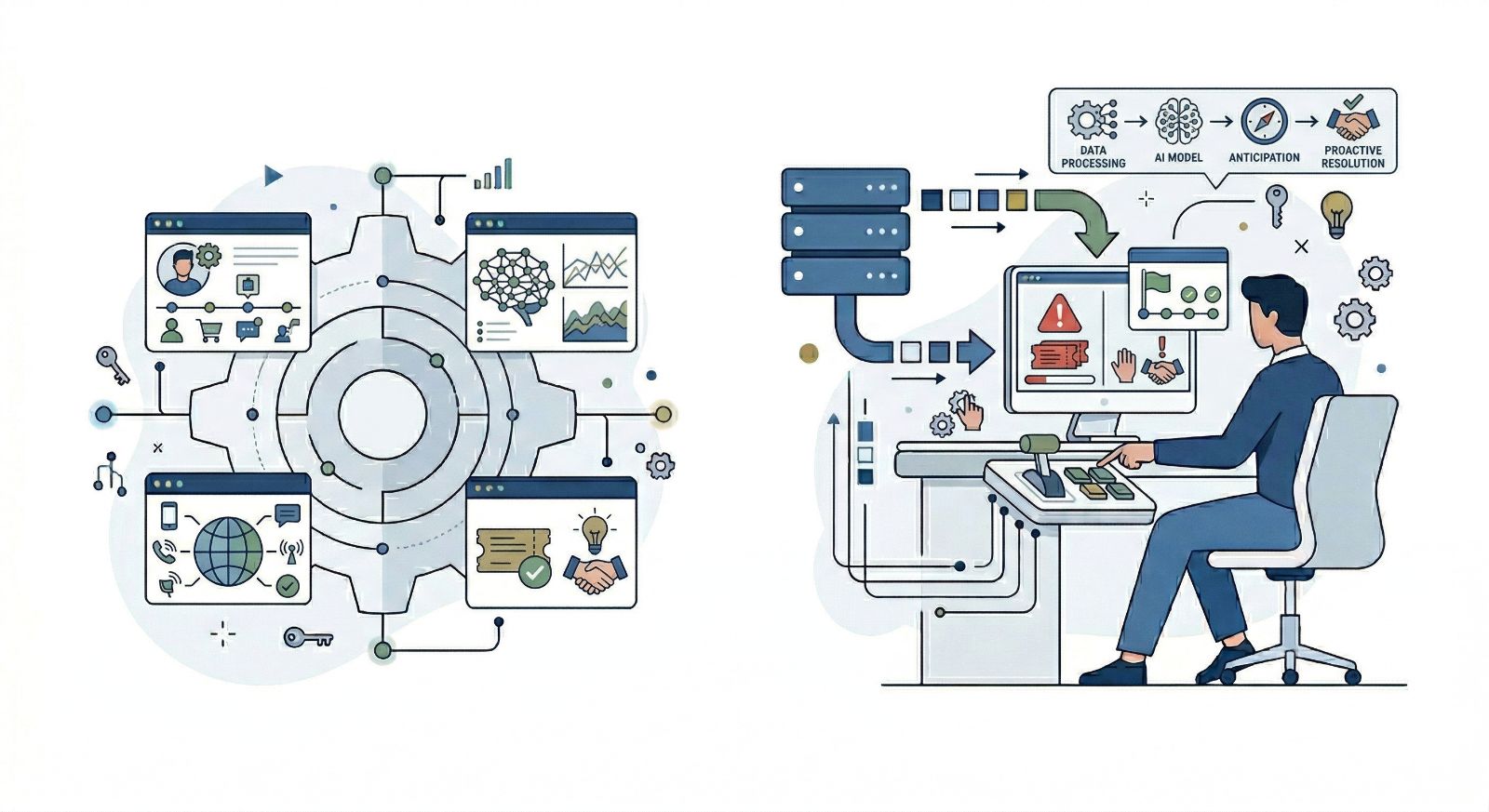
Predictive customer service is a proactive CX strategy that uses AI models, behavioral data, and real-time signals to identify and resolve customer issues before a complaint is filed or a ticket is opened.
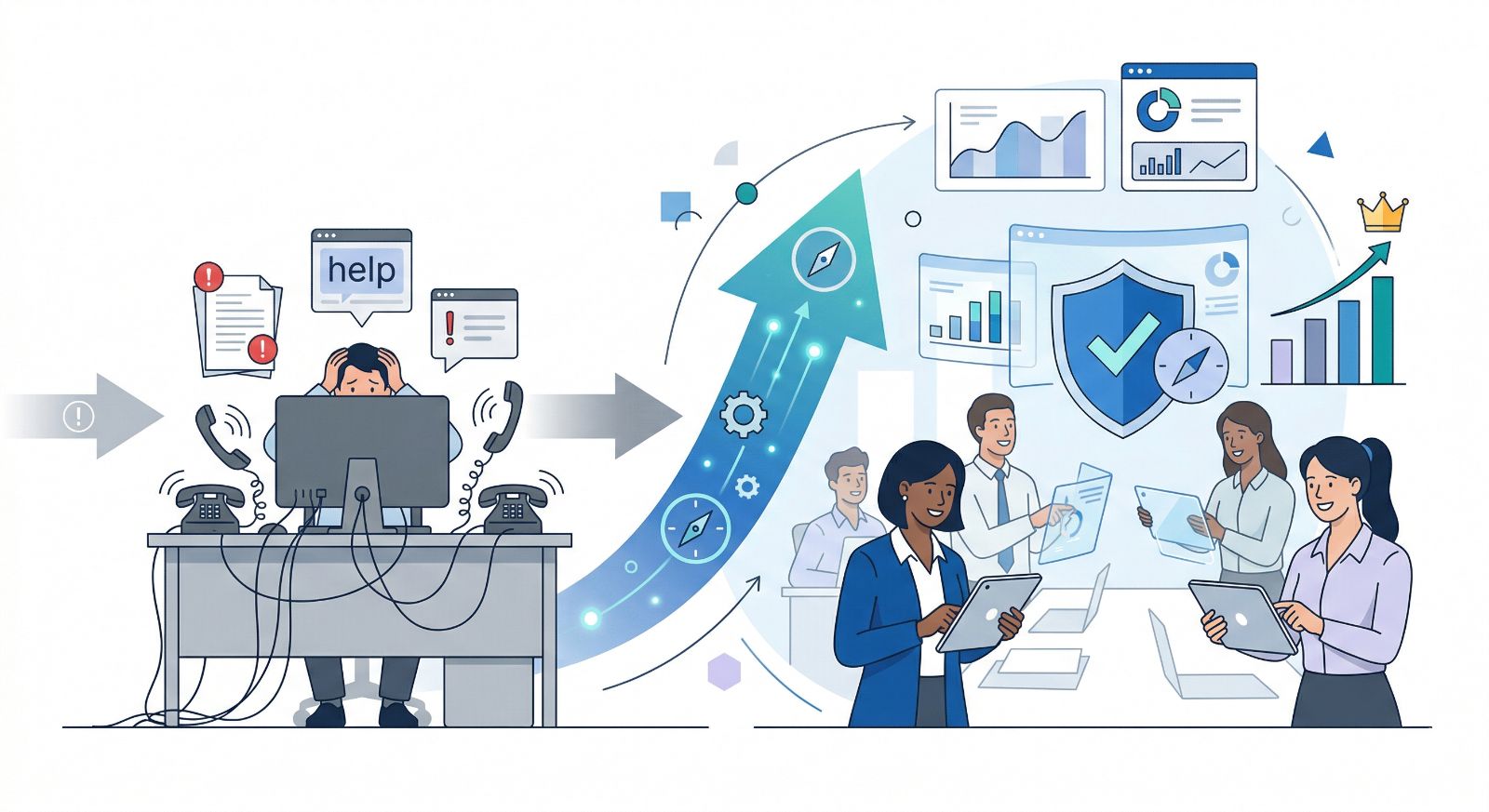
Unlike reactive support – which waits for customers to report a problem and then attempts recovery – predictive customer service intervenes at the moment of maximum leverage: before churn, before escalation, and before dissatisfaction becomes visible in your NPS scores.
The shift from reactive to predictive is one of the most significant operational transformations available to growth-oriented organizations in 2026. And the business case is no longer theoretical.
Why Predictive CX Is Now a Board-Level Priority
Recent McKinsey & Company research shows predictive care programs reduce service costs by up to 30% while simultaneously expanding wallet share – a rare combination in any investment category.
Three signals confirm predictive CX has moved from early-adopter territory into mainstream expectation:
- Contract renewals increasingly include proactive service language as a negotiated term
- NPS targets are now bundled with time-to-resolution commitments rather than tracked separately
- Digital product managers are accountable for predictive alert opt-in rates as a core engagement metric
Gartner projects that 60% of service leaders will shift budget from call deflection tactics to anticipation analytics before 2027. On the demand side, the Salesforce State of Service report finds that 73% of customers now expect companies to understand their unique needs proactively – not as a premium differentiator, but as a baseline retention requirement.
The AI layer powering these proactive interventions has also matured rapidly. For a full picture of how AI customer experience capabilities map to measurable business outcomes in 2026, 13 Ways AI Improves Customer Experience in 2026 provides one of the most comprehensive breakdowns available – useful grounding before scoping any predictive program.
The Predictive CX Opportunity Matrix
Not every use case delivers equal returns. The matrix below prioritizes by expected ROI and data readiness – use it to align finance partners on pilot funding.
| Use Case | Primary Data Inputs | Trigger Logic | Expected KPI Lift |
|---|---|---|---|
| Cart abandonment rescue | Session heatmaps, payment metadata | Nudge after 15 sec of inactivity | 8–12% conversion increase |
| Device outage prevention | IoT telemetry, firmware logs | Alert when error codes repeat 3× | 25% reduction in inbound tickets |
| Premium upsell concierge | Purchase history, loyalty tier | Offer when CLV probability > 70% | 18% ARPU boost |
| Billing dispute preemption | ERP invoices, sentiment signals | Outreach when invoice variance hits 5% | 35% chargeback reduction |
Each row should include a named owner and a data availability assessment before becoming an operational commitment.
Predictive vs. Reactive Customer Service: Key Differences
| Reactive Customer Service | Predictive Customer Service | |
|---|---|---|
| Trigger | Customer complaint or ticket | Behavioral signal or data threshold |
| Timing | After the problem occurs | Before the problem escalates |
| Cost model | Per-incident, labor-intensive | Platform-driven, scalable |
| Customer experience | Recovery-oriented | Trust-building |
| Revenue impact | Damage containment | Proactive upsell and retention |
Predictive programs also integrate across marketing, product, and customer success teams – coordinating interventions across the full customer lifecycle rather than operating in isolated support queues.
Data Architecture for Predictive Customer Service
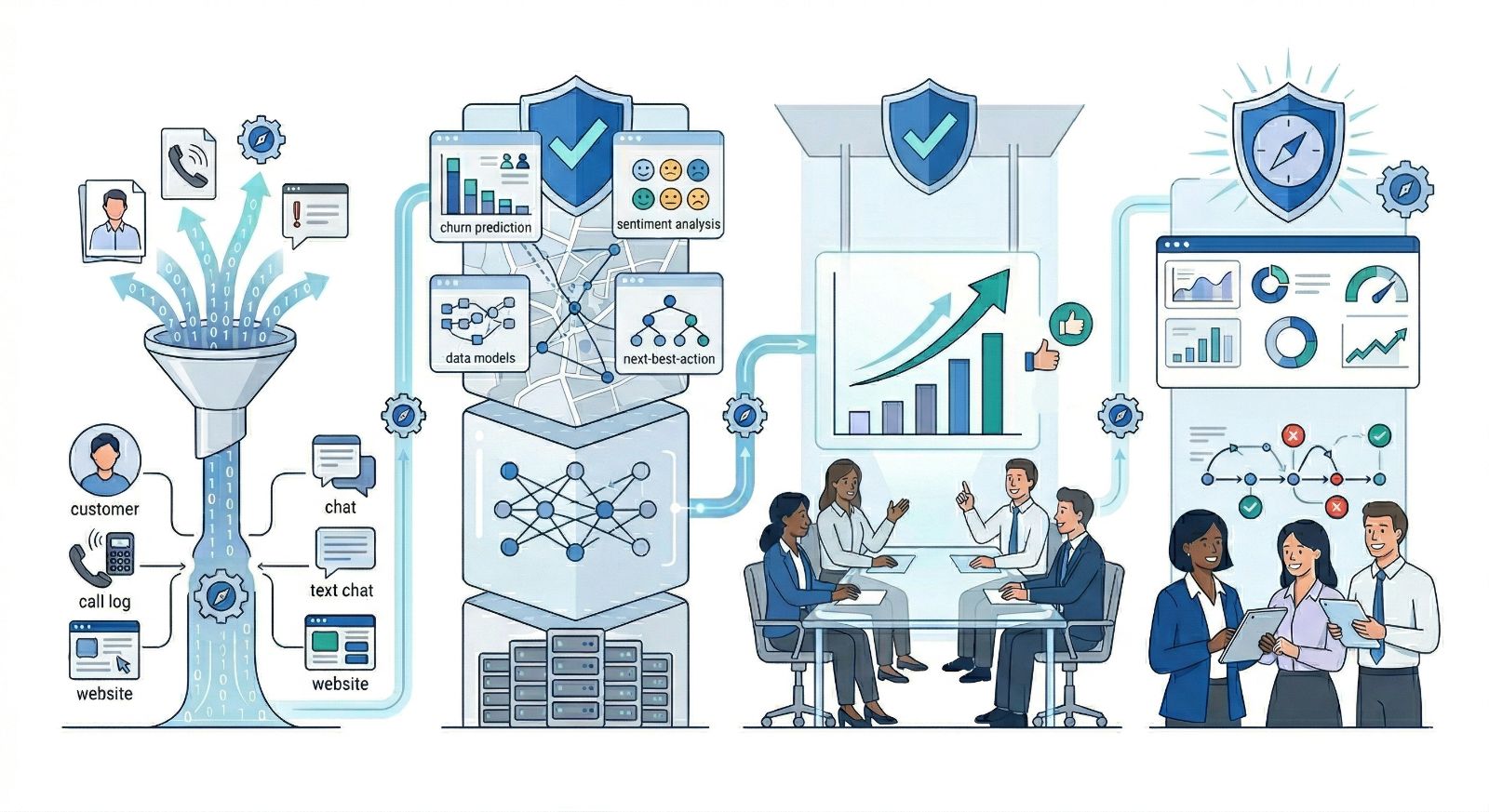
Every effective predictive service program rests on clean, labeled, and centralized data. Teams that skip this foundation invest in sophisticated models that produce unreliable predictions – and then lose executive confidence when results disappoint.
The Four Data Layers
| Data Layer | Purpose | Tooling Examples |
|---|---|---|
| Landing zone | Capture omnichannel logs in raw form | Amazon S3, Azure Data Lake |
| Feature store | Serve low-latency features to scoring APIs | Tecton, Feast |
| Consent vault | Maintain opt-in states and privacy proofs | OneTrust, PostgreSQL |
| Analytics sandbox | Enable experimentation without risking production | Databricks, Snowflake |
Three infrastructure investments that pay long-term dividends:
- Golden customer IDs that unify web, store, and device data across sessions
- Schema evolution policies that prevent new attributes from breaking downstream pipelines
- PII encryption at rest with quarterly key rotation
For teams building the CRM integration layer that feeds these data pipelines with social and messaging engagement signals, CRM Social Media Integration: The Complete 2026 Strategy Guide covers the full architecture for keeping CRM records and conversational data synchronized without creating duplicate records or compliance gaps.
Data governance note: Every predictive trigger must be logged with consent proof aligned to the EU GDPR framework and equivalent regional regulations. Involve legal counsel during model ideation – not after deployment.
How to Choose the Right AI Models for Predictive CX
Different prediction objectives require different model architectures. Choosing the wrong one is one of the most common sources of underperformance in otherwise well-resourced programs.
Model Selection by Use Case
| Objective | Recommended Model Type | Why |
|---|---|---|
| Conversational anticipation | Transformer models | Summarize interaction history, draft responses in context |
| Intent and sentiment classification | Encoder models | Real-time signal layer for routing and prioritization |
| Churn window prediction | Gradient boosted trees, survival analysis | Transparent feature importance for compliance audits |
| Subscription renewal forecasting | Causal forests | Handles confounding variables in longitudinal data |
Model Governance Checklist
Before any model reaches production, validate the following:
- Inference latency matches channel requirements (chat: sub-second; email: batch is acceptable)
- Bias metrics validated across all protected demographic classes
- Model card documents: objective, data lineage, training cadence, monitoring owner
- Canary release plan routes ≤5% of sessions before full rollout
For teams evaluating which AI platform to deploy as the customer-facing execution layer above these predictive models, AI Chatbot Strategy 2026: Trends, Platform Comparison and Mistakes to Avoid provides a structured vendor comparison framework – including the most common deployment mistakes that erode ROI in the first 90 days.
Integration and Deployment Patterns
Predictive service orchestration typically uses event-driven microservices. Each event carries a structured payload – customer ID, trigger reason, confidence score, and recommended action – that downstream systems consume without custom translation logic.
Hosting strategy trade-offs:
- Cloud managed services: Elastic GPU capacity; minimal infrastructure overhead
- On-premises clusters: Data residency compliance in regulated markets
- Hybrid/edge deployments: Minimal latency for IoT and field service use cases
Industry Use Cases With Proven ROI
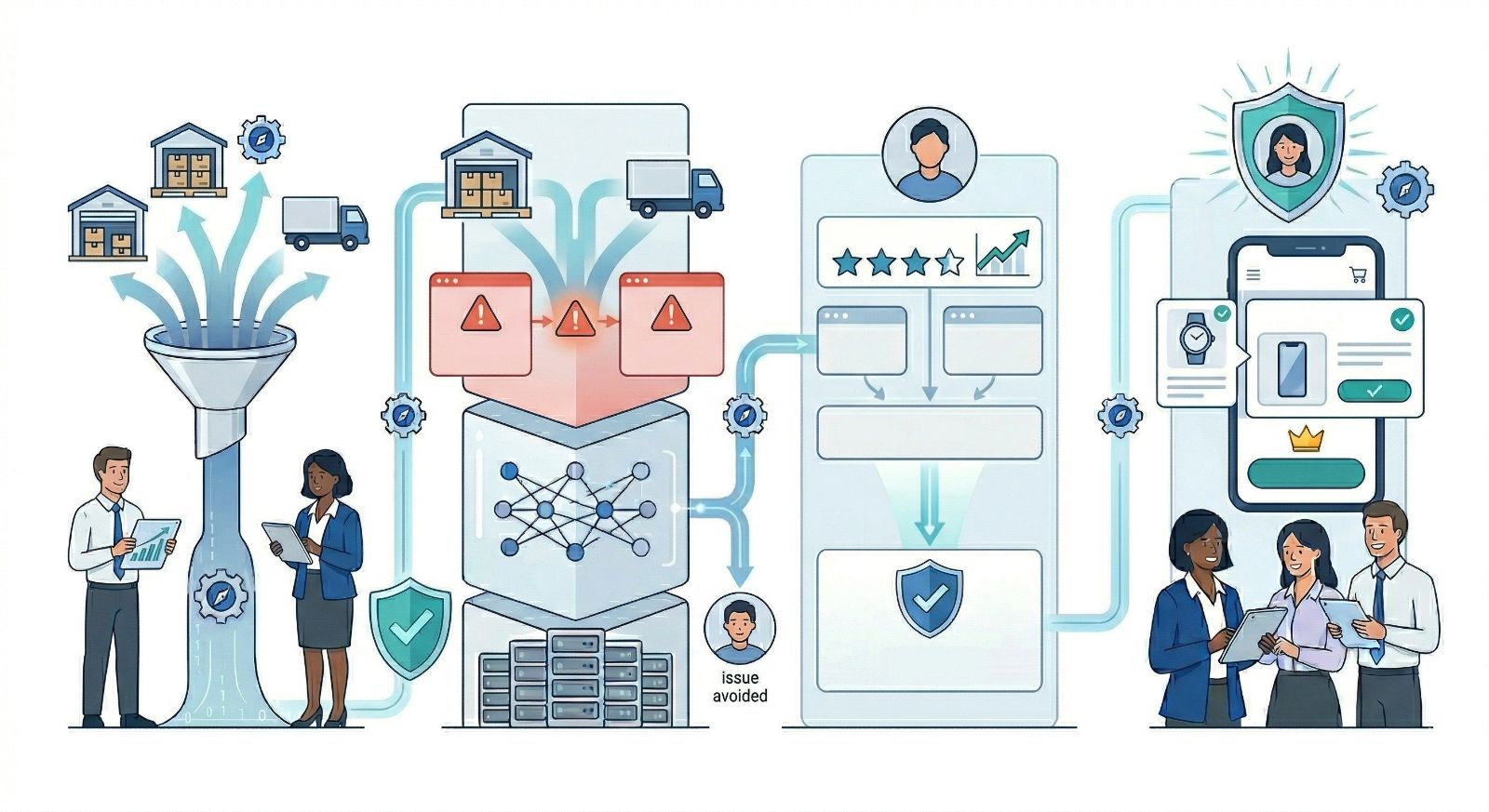
Retail and E-commerce
Retailers embedding predictive capabilities into order management systems detect fulfillment risk before it reaches the customer – enabling proactive shipping upgrade offers or substitute item suggestions instead of reactive apology workflows.
High-return retail workflows:
- Back-in-stock concierge messaging triggered by wishlist velocity signals
- Post-purchase education journeys that reduce returns by delivering setup content before the frustration point
- Tiered loyalty outreach activated when predicted lifetime value crosses a premium threshold
Pro tip: Blend predictive alerts with active merchandising experiments so marketing and operations can jointly attribute incremental revenue rather than competing for credit.
Financial Services
Banks use predictive customer service to preempt disputes and compliance incidents before escalation. Models that scan payment ledgers for anomalies and cross-reference traveler notifications automatically can significantly reduce dispute volumes while improving the customer experience.
Key applications:
- AI-generated contextual summaries routed to senior agents for high-risk conversations
- Predictive hardship assistance programs using macroeconomic stress modeling
- Proactive fraud alerts that resolve issues before a customer notices
Telecom, Utilities, and IoT
Network operators monitor modem telemetry, energy meters, and firmware logs to detect failure patterns before customers experience service degradation. Automated workflows reboot devices, issue proactive service credits, and dispatch field teams – often resolving issues before a single inbound call is received.
Warning: Blanket outage notifications without geofencing send irrelevant alerts to unaffected customers – eroding trust in proactive communications and increasing opt-out rates for future programs.
Healthcare and Life Sciences
Providers apply predictive intelligence to anticipate appointment no-shows, prescription adherence lapses, and coverage questions before patients reach a crisis point. Every proactive reminder must be stored with HIPAA-compliant documentation – making platform selection and data architecture decisions particularly consequential in this vertical.
B2B SaaS Customer Success
Software companies monitor product usage telemetry, support ticket frequency, and license consumption data to identify at-risk customers before signals reach a critical threshold.
Proven B2B lifecycle playbooks:
- Automated QBR scheduling triggered by health score thresholds
- Enablement content delivery timed to feature release cycles
- Executive sponsor engagement alerts when login frequency drops
- Co-innovation invitations for accounts showing expansion potential
ChatbotX fits naturally into B2B SaaS lifecycle programs as the channel execution layer. Teams use its visual Flow builder to configure onboarding nudges via WebChat, renewal reminders via WhatsApp, and escalation triggers via Messenger – without requiring engineering resources for each workflow update. For the full deployment architecture behind this kind of customer care automation, Customer Care Chatbot Development: The Complete 2026 Guide for Businesses covers intent model design, escalation paths, and go-live sequencing in detail.
Implementation Roadmap: Phase by Phase
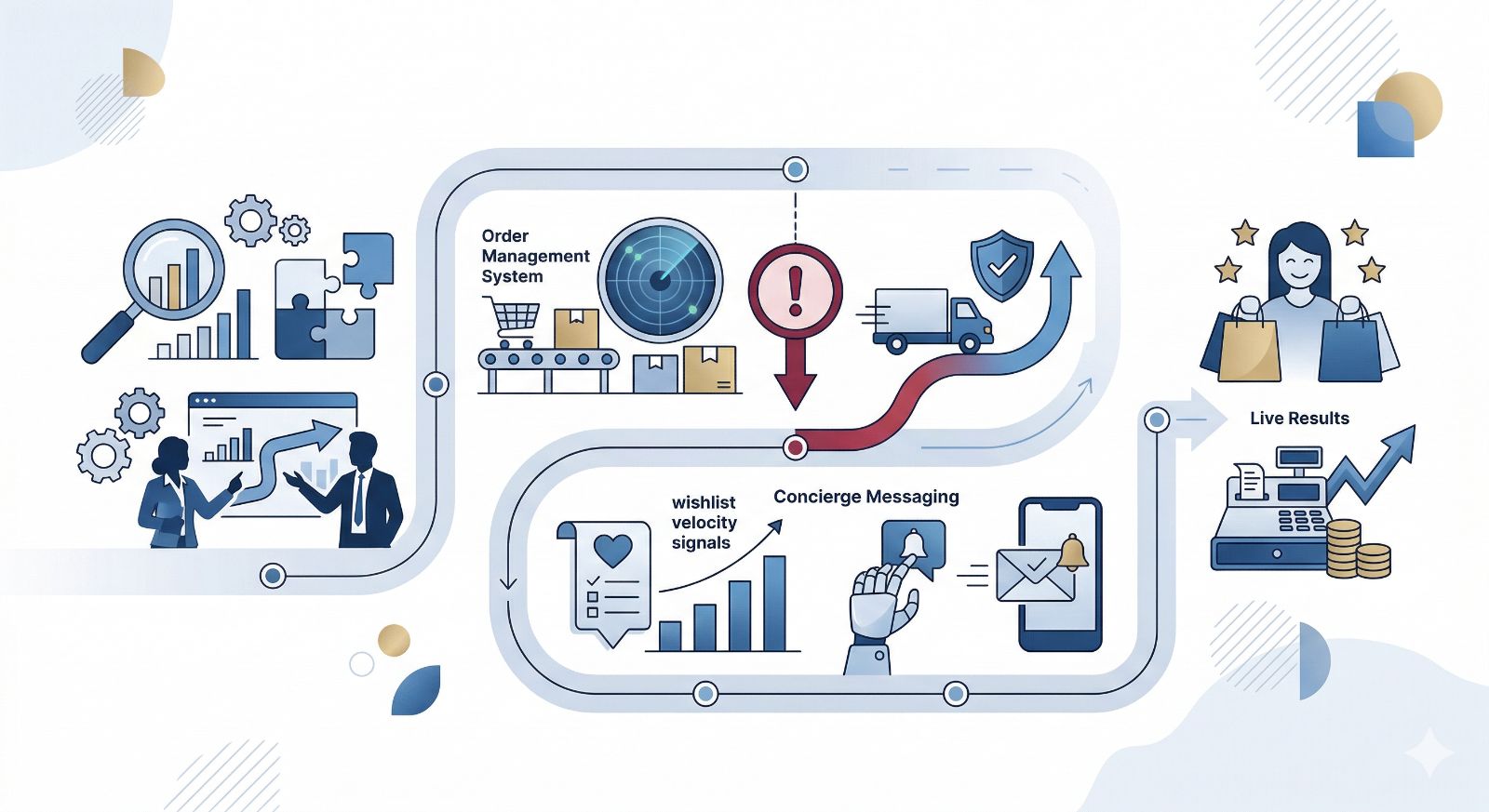
Phase 1: Discovery and Prioritization (Weeks 1–4)
- Audit your top 20 contact drivers and classify each by reactive cost per incident
- Estimate the automation rate achievable for each based on historical resolution patterns
- Build an executive scorecard connecting predictive program goals to corporate OKRs
- Inventory data availability, quality, and ownership for every candidate use case
- Define success metrics and statistical confidence thresholds before modeling begins
The output: a north-star narrative that aligns product, care, and revenue leadership around a shared definition of success – and what it is worth.
Phase 2: Build, Train, and Integrate (Weeks 5–16)
- Data scientists design features, label datasets, and configure model evaluation baselines against business thresholds – not just technical accuracy metrics
- MLOps teams implement CI/CD pipelines with automated drift detection and rollback procedures
- Product owners script graceful fallback experiences for when predictions fall below confidence thresholds
Pro tip: Combine quantitative A/B tests with qualitative customer interviews in this phase. Developers who hear directly how customers perceive proactive outreach build materially better intervention designs than those who rely on metrics alone.
Phase 3: Launch, Scale, and Enable (Week 17+)
- Include holdout control groups sized for statistical significance – without them, improvements cannot be attributed to the predictive intervention
- Run frontline agent huddles before launch to share new workflows, escalation paths, and performance incentives
- Communicate transparently to customers: “We noticed your device may be experiencing an issue” consistently outperforms generic outreach
For teams deploying predictive service across multiple messaging channels simultaneously, Cross-Platform Chatbots: The Definitive 2026 Guide for Unified Customer Experience outlines how to maintain consistent conversation context and predictive trigger logic across WhatsApp, Messenger, WebChat, and Zalo without creating channel-specific silos.
Change Management: The Factor That Determines Adoption
Organizational adoption separates predictive programs that compound over time from those that plateau after the first pilot. Effective change management requires:
- Executive sponsors with budget authority who actively promote program outcomes
- Change champions embedded in care, product, and analytics teams
- Incentive structures that reward agents for submitting quality feedback that improves model accuracy
- Regular office hours where engineers answer frontline questions in real time
KPIs and Measurement Framework
The KPI Stack That Connects CX to Revenue
| Metric | Definition | Target Benchmark | Owner |
|---|---|---|---|
| Predictive resolution rate | Issues resolved before customer contacts support | 35% within 90 days of launch | Service operations |
| Lead indicator NPS | Satisfaction among customers receiving proactive outreach | +8 points over control group | CX analytics |
| Cost per proactive interaction | Total platform spend ÷ proactive touch volume | Under $0.80 | Finance |
| Agent augmentation score | % of agent cases aided by AI recommendations | 60% after full rollout | Contact center enablement |
Three metrics that resonate most in executive conversations:
- Predictive resolution rate – demonstrates deflection and scale
- Incremental revenue per proactive interaction – closes the CFO argument
- Avoided SLA penalty costs – quantifies risk mitigation
Present rolling 90-day trends rather than point-in-time results to demonstrate stability and detect model drift before it erodes program value.
Responsible AI and Compliance Controls

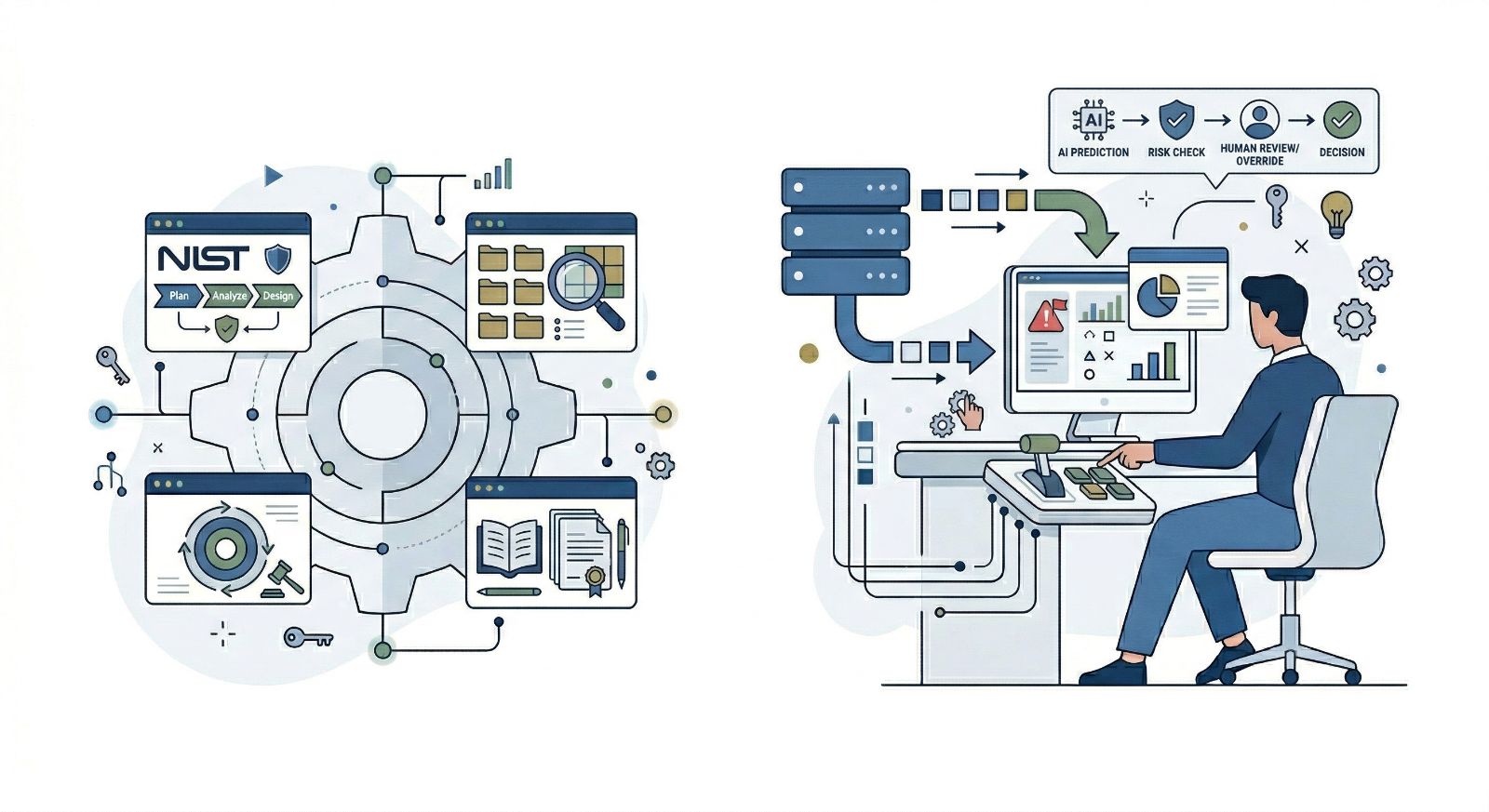
Align your governance program with the NIST AI Risk Management Framework to document risks, mitigations, and named owners for each predictive use case.
Governance Control Checklist
- Human-in-the-loop override capabilities for all high-impact predictive scenarios
- Quarterly fairness reviews across protected demographic slices with documented findings and remediation owners
- Right-to-audit clauses in every vendor contract that touches predictive program data
- Third-party bias audit completed before launch
- Data flows mapped to ISO 27001 controls for encryption, access management, and incident response
Warning: Skipping independent third-party bias audits is one of the fastest ways to invalidate customer trust agreements and generate regulatory exposure. The cost of an audit is a fraction of the remediation cost when biased outcomes surface post-launch.
Building Continuous Improvement Into the Program
Product managers who run iterative experiments – tuning confidence thresholds, message variants, timing windows, and channel mix – compound program value faster than those who treat initial launch as the endpoint.
Multi-armed bandit testing is particularly effective for identifying which proactive recommendations create durable loyalty rather than one-time resolution. Service agents who submit structured feedback about false positives and missing intent patterns contribute directly to model improvement – building a self-improving system rather than a static one.
Frequently Asked Questions
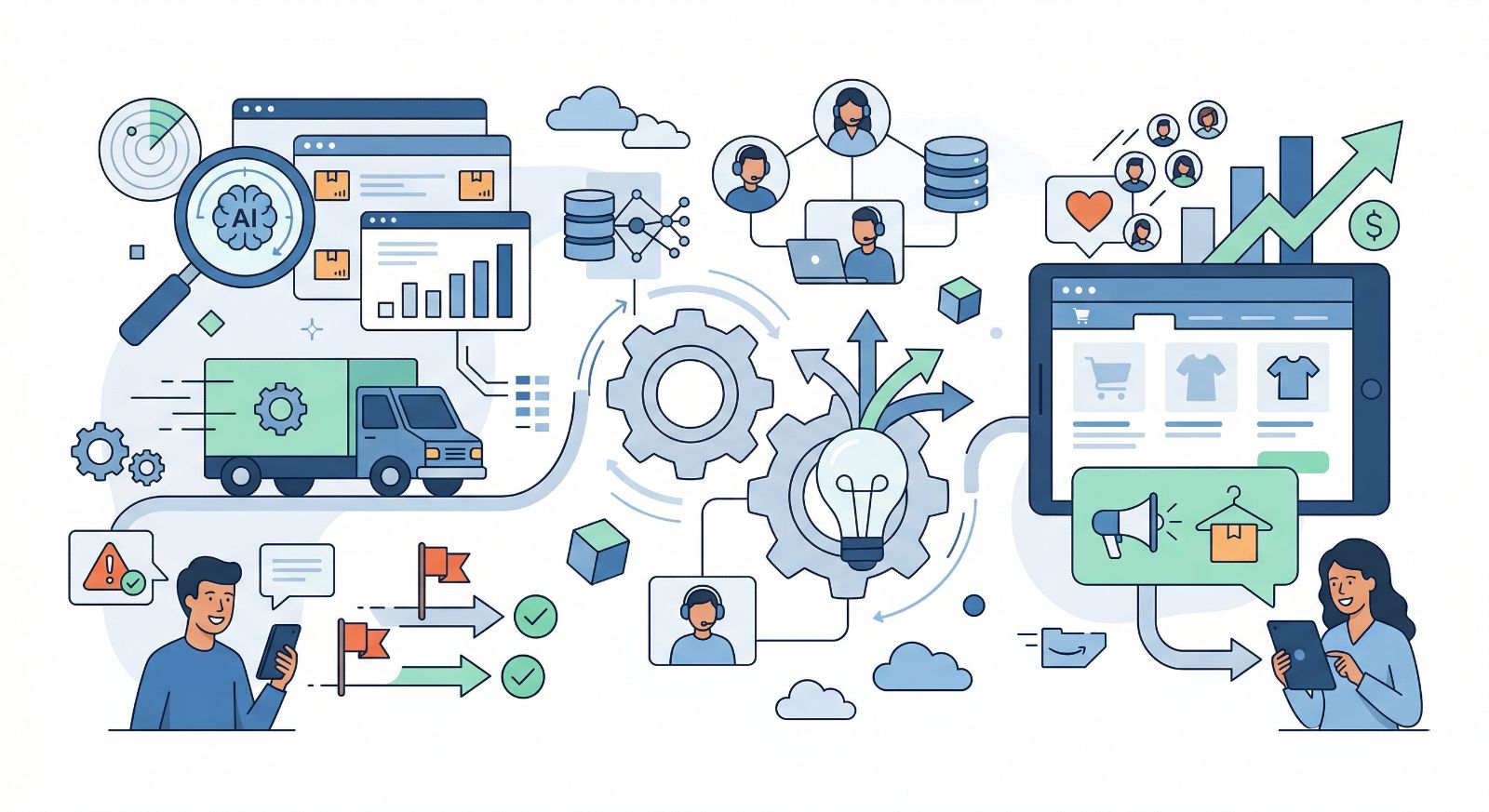
What is predictive customer service?
Predictive customer service is a proactive CX approach that uses AI, behavioral analytics, and operational data to identify and resolve customer needs before they escalate into complaints or tickets. It differs from reactive support in that it acts on signals rather than waiting for a customer to reach out.
How does predictive customer service differ from reactive support?
Reactive support waits for a customer to report a problem and then attempts recovery. Predictive service analyzes behavioral signals, sentiment patterns, and operational data to identify needs and intervene before a problem becomes a complaint – producing loyalty, cost, and revenue outcomes that reactive programs structurally cannot match.
How much data is needed for reliable predictive models?
Most teams need at least 10,000 labeled interactions per journey stage to stabilize model accuracy. However, data quality and diversity matter more than raw volume – a well-curated 5,000-record dataset consistently outperforms 50,000 poorly labeled records in production. Transfer learning and synthetic data augmentation can accelerate programs when historical data is limited.
Which KPIs best prove ROI to executives?
The three most effective metrics are: predictive resolution rate (cost reduction), incremental revenue per proactive interaction (growth), and avoided SLA penalty costs (risk mitigation). Layer customer satisfaction lift and reduced agent handle time on top to capture total program benefit. Present rolling 90-day trends rather than point-in-time results to demonstrate stability.
How can small teams adopt predictive customer service quickly?
Start with packaged AI capabilities within existing CRM or help desk platforms to inherit prebuilt integrations and skip months of infrastructure development. Low-code platforms like ChatbotX allow small teams to configure trigger-based AI Agents across WhatsApp, Messenger, and WebChat without dedicated ML engineers. For a practical deployment guide at any technical maturity level, What Is an AI Chatbot? Benefits and How to Deploy One Effectively for Your Business covers the full sequence from setup to first live conversation. Focus on one or two high-impact journeys to generate proof points before expanding scope.
What compliance requirements apply to predictive customer service programs?
Predictive programs must comply with GDPR and equivalent regional privacy regulations, requiring documented consent proof for every trigger. Governance should also align with the NIST AI Risk Management Framework and ISO 27001. Healthcare deployments add HIPAA documentation requirements for every proactive patient communication.
Start Building the Proactive CX Capability Your Customers Already Expect
Predictive customer service transforms support from a reactive cost center into a proactive revenue engine – one that identifies risk, acts on opportunity, and builds loyalty at the moments that matter most, before customers are frustrated enough to reach out.
The fastest path from strategy to live results pairs clean, governed data with an AI delivery layer your team can actually operate. Clean data without an execution channel produces insights that sit in dashboards. An execution channel without clean data produces automation that misfires.
ChatbotX is an open-source omnichannel AI Agents platform built to close that gap – connecting predictive triggers to real customer conversations across WhatsApp, Messenger, Zalo, and WebChat through visual Flows your team configures without engineering support. Because the codebase is publicly auditable on GitHub, your compliance and security teams can verify data handling behavior directly rather than relying on vendor assurances alone.
Plans start at $29/month with a 7-day free trial – no credit card required.