Describe: Customer care chatbot development in 2026 means building AI Agents – not scripted menus. They autonomously resolve 65–85% of inquiries, integrate live with your CRM, and free your team for high-value work.
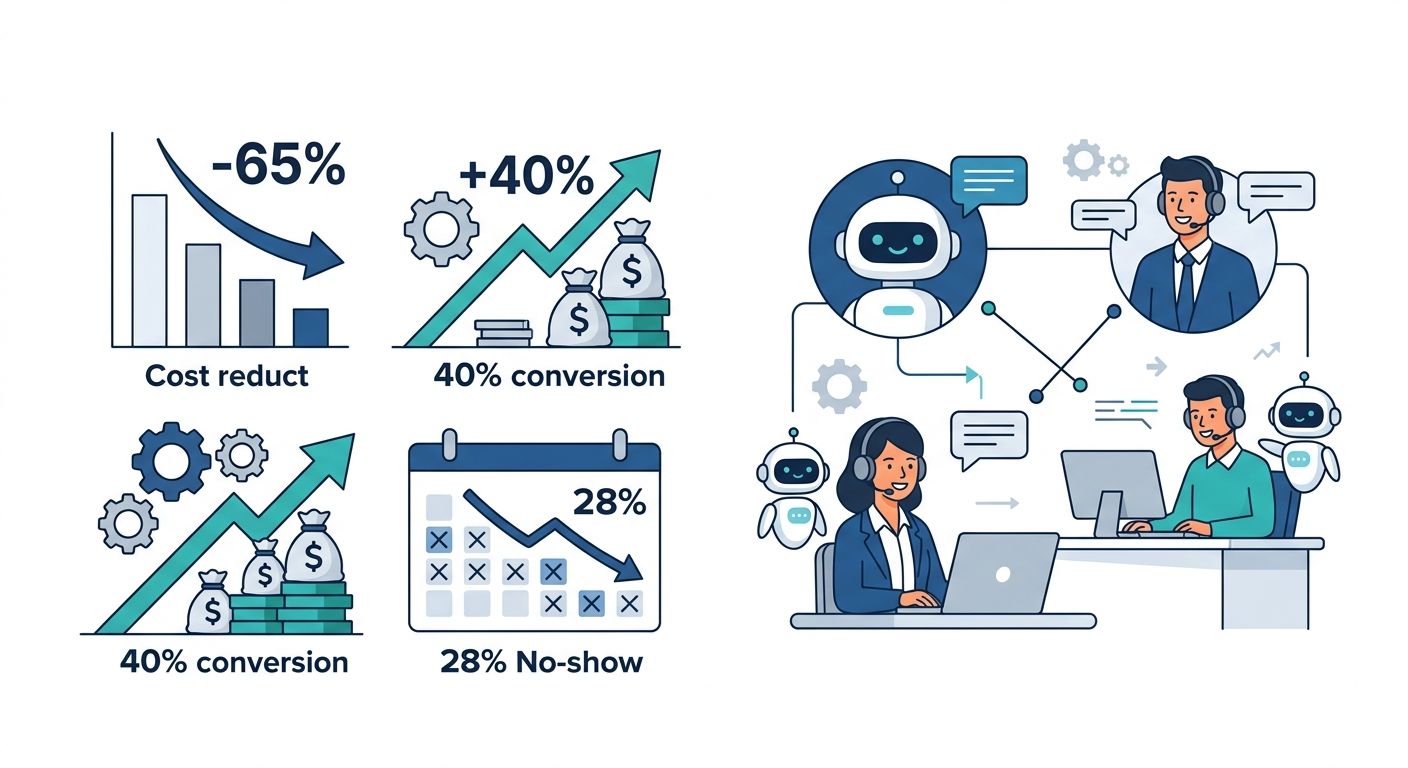
65% Support Cost Reduction · 40% Higher Lead Conversion · 6.2pp Fewer No-Shows · Proven Across 3 Industries
Building an intelligent customer care chatbot is no longer just about automating responses. It is about creating a touchpoint that makes customers feel heard and supported – even when your team is offline. Done right, it transforms customer service from a cost center into a core competitive advantage.
Most customers expect an immediate response regardless of the time of day. According to Salesforce’s State of the Connected Customer report, 83% of customers expect an instant reply when they contact a business. When that expectation is not met, they switch to a competitor. A well-built chatbot meets that expectation – not with rigid, mechanical answers, but with a genuinely helpful experience that builds lasting loyalty.
This guide covers exactly how businesses can use customer care chatbot development services to improve customer experience, cut operating costs, and increase retention – with verified case study data, platform comparisons, and a complete pricing breakdown.
Launch agentic chat marketing in minutes with ChatbotX










The 2026 Shift: From Reactive Bots to Proactive AI Agents
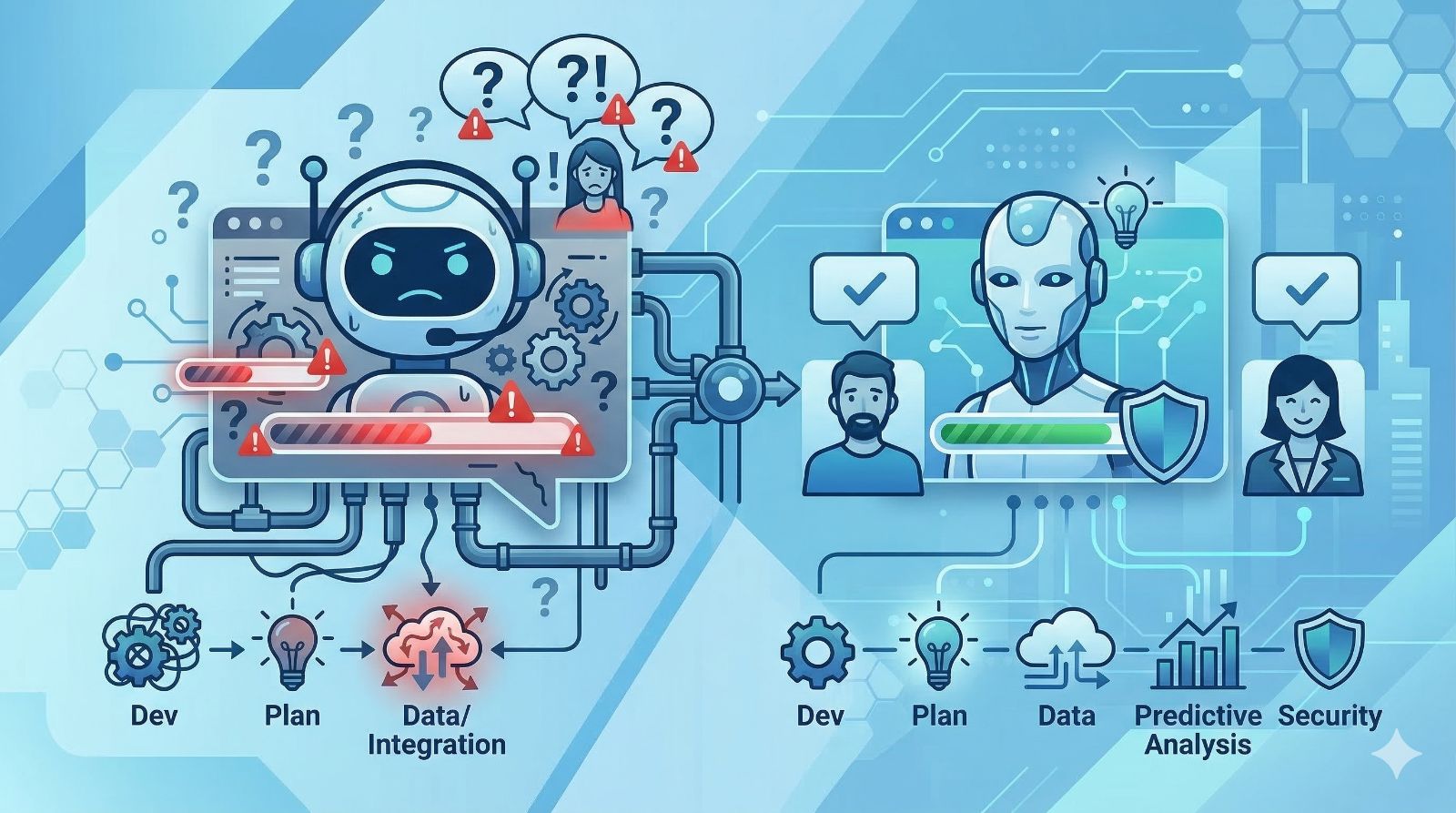
In 2026, the biggest differentiator in customer service is proactive support – chatbots that detect and resolve issues before customers raise a complaint.
A practical example: when an order status updates to “Delivered,” the customer care chatbot automatically sends a follow-up message 24 hours later: “Hi [Name], did your order arrive in good condition? Tap below if you need help with returns or exchanges.” This single automation eliminates an entire category of inbound tickets.
- Proactive issue detection: If the system flags a delayed shipment, the chatbot notifies the customer before they contact support – turning a potential complaint into a managed experience.
- Autonomous resolution at scale: Next-generation AI agents now fully resolve a significantly higher proportion of complex interactions without any human involvement, a capability that expands every quarter.
- Verified cost savings: Businesses deploying conversational AI consistently report major operating cost reductions. Juniper Research (2024) forecasts over \$11 billion in annual savings across retail, banking, and healthcare by 2026.
What Customer Care Chatbots Deliver in the First 30 Days
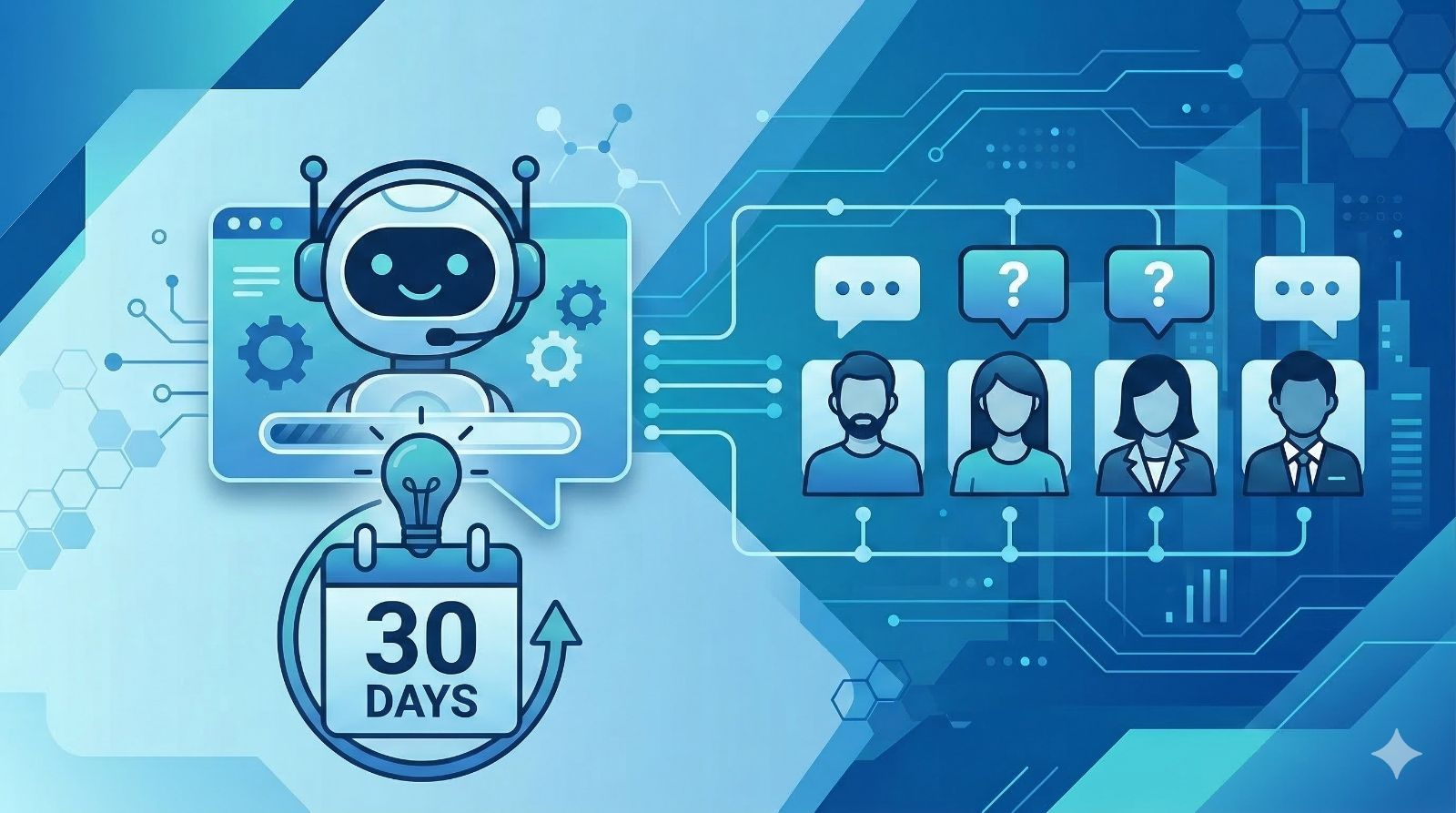
Most businesses see measurable results within 30 days of deploying a customer care chatbot – not months. Here is what a properly configured bot delivers from day one:
- Sub-3-second responses: Resolving inquiries in under 3 seconds, eliminating the wait times that send customers to competitors.
- 24/7/365 availability: Consistent quality service unaffected by fatigue, peak-hour staffing gaps, or public holidays.
- Live intent analytics: Real-time data on what customers are asking, enabling immediate product and policy improvements.
- Consistent quality at scale: A well-trained chatbot delivers the same quality response to the 1st and the 10,000th customer equally – something human teams cannot guarantee.
- Zero marginal scaling cost: A chatbot handles 10 or 10,000 simultaneous conversations at no additional cost – critical during flash sales or seasonal demand spikes.
Core principle: A properly developed customer care chatbot is not a FAQ filter – it is a revenue-protecting strategic asset operating every second of every day.
Real-World Case Studies: Proven Customer Care Chatbot ROI
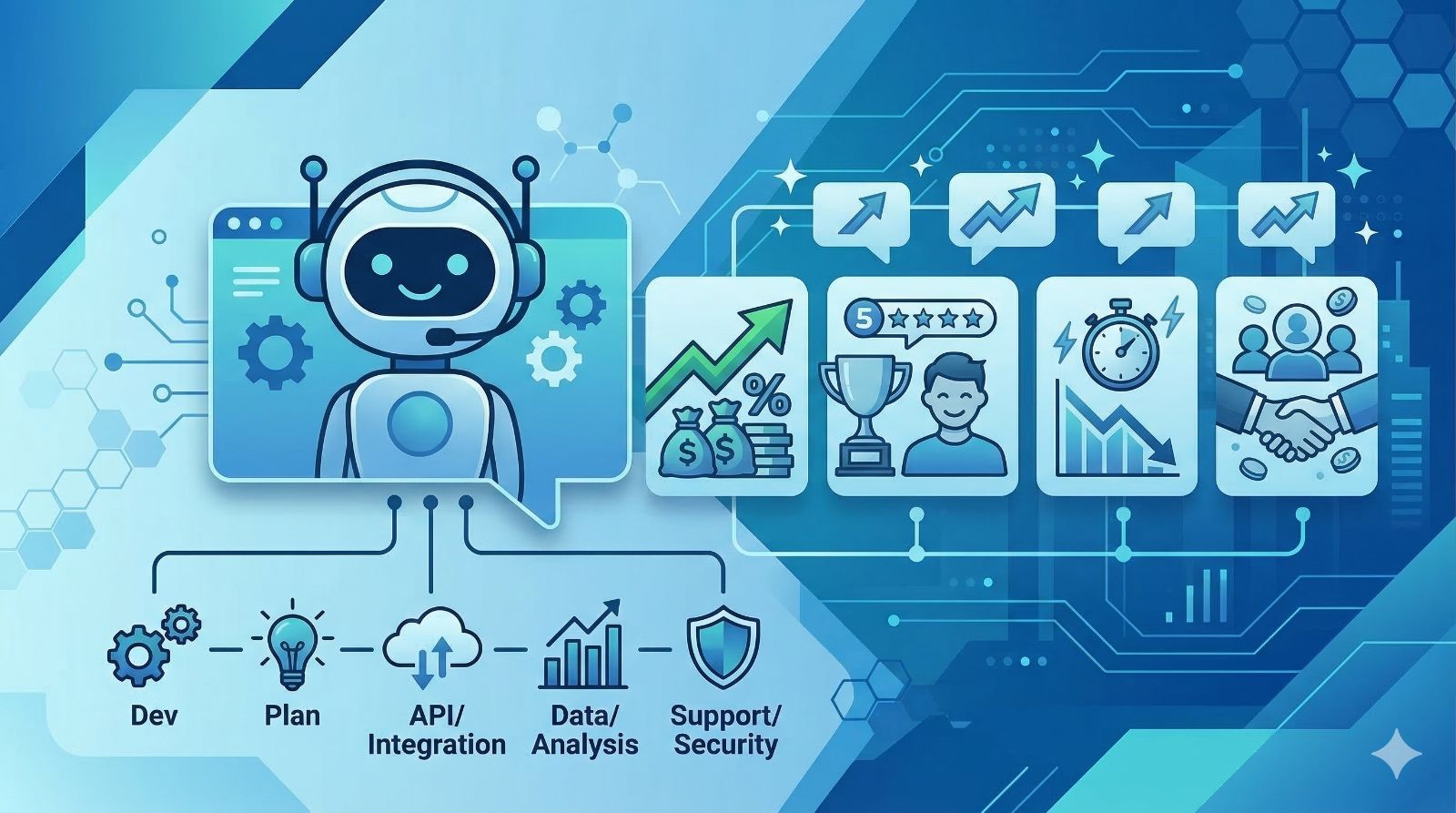
The following case studies are based on ChatbotX client deployments (2024–2025). Company names are kept confidential per client agreement. All metrics reflect verified pre/post deployment data tracked over a minimum of 90 days.
Case Study 1: E-Commerce – 65% Reduction in Support Costs
A Vietnamese e-commerce platform processing over 500,000 orders per month was running a 40-person support team at approximately 800 million VND per month. Over 70% of all inquiries revolved around order status, return policies, and delivery timelines – fully automatable workflows.
After deploying a customer care chatbot integrated with the order management system:
- The bot automatically resolved 73% of all support requests in month one.
- Headcount was reduced to 15 staff, focused entirely on complex escalations.
- Operating costs dropped 65%, saving approximately 520 million VND per month (\~\$21,000 USD).
- Customer satisfaction ratings climbed from 3.6 to 4.3 out of 5 thanks to dramatically faster response times.
- Full payback period: 4 months.
Case Study 2: Finance & Banking – 40% Increase in Lead Conversion
A consumer finance company was losing high-quality leads because advisors spent most of their time on unqualified applicants. After deploying an AI chatbot integrated with the CRM and lead scoring system:
- The bot pre-screened 100% of inbound leads, collecting basic information and initial credit data before human handoff.
- Lead-to-customer conversion increased 40% – advisors now work only with pre-qualified, high-intent prospects.
- Customer Acquisition Cost (CAC) decreased 35%.
Case Study 3: Healthcare – 6.2pp Reduction in No-Show Rate
A 5-branch dental clinic chain in Da Nang faced a patient no-show rate of 22%, causing significant revenue loss and scheduling waste. After deploying an automated reminder chatbot via Zalo and SMS – with in-conversation rescheduling and cancellation – results over 90 days were:
- No-show rate dropped from 22% to 15.8% – a reduction of 6.2 percentage points (28% relative improvement).
- The clinic recovered approximately 180 million VND per month (~$7,200 USD) from previously lost appointment slots.
Note on the 28% figure: This is the relative reduction (6.2 ÷ 22 = 28.2%). Both numbers matter: the absolute drop (6.2pp) for internal benchmarking and the relative improvement (28%) for ROI presentations.
Want results like these for your business?→ Book Your Free Demo with ChatbotX
Comparing 3 Types of Customer Care Chatbots
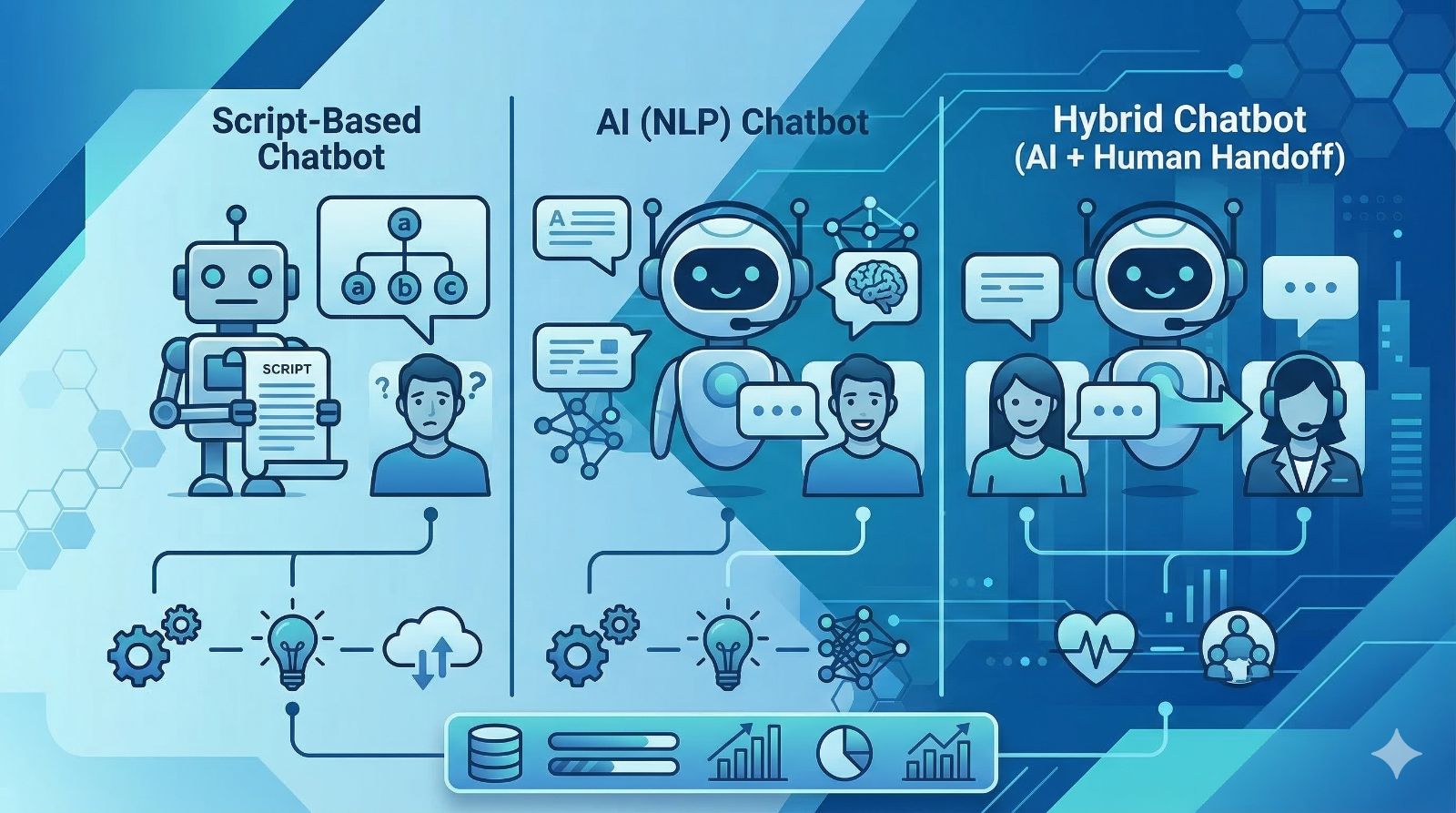
Before investing in customer care chatbot development, understand how these three architectures differ and which is right for your business:
| Criteria | Rule-Based Bot | AI / NLP Bot | Hybrid Bot |
|---|---|---|---|
| How it works | Fixed decision tree | Understands natural language | AI + human handoff |
| Context understanding | ❌ No | ✅ High | ✅ Very high |
| Off-script questions | ❌ Cannot handle | ✅ Yes | ✅ Yes + escalation |
| Development cost (USD) | $600–$1,600 | $2,000–$6,000 | $3,200–$8,000† |
| Deployment time | 2–4 weeks | 6–12 weeks | 8–14 weeks |
| Maintenance/year | Low (~5%) | Medium (~15%) | Medium (~15%) |
| Best for | SMEs, simple FAQs | Mid-to-large businesses | Enterprise, complex services |
| Self-resolution rate | 40–55% | 65–80% | 70–85% |
| Payback period\* | 3–6 months | 6–12 months | 6–14 months |
| User experience | ⭐⭐⭐ | ⭐⭐⭐⭐ | ⭐⭐⭐⭐⭐ |
Payback ranges assume typical deployment scenarios. Results vary by team size, volume, and use case
Hybrid Bots cost more than pure AI Bots because they require building two systems: the AI layer for automated responses, plus a complete human agent workspace (shared inbox, routing logic, SLA tracking, handoff UI) – effectively two products integrated into one.
Recommendation: Start with a Rule-Based Bot to validate ROI quickly. After 3–6 months of real conversation data, upgrade to an AI Bot – you will already have quality training data, making the transition significantly faster and cheaper.
Popular Customer Care Chatbot Development Platforms Compared
| Platform | Strengths | Vietnamese Support | Starting Price/Month | Best For |
|---|---|---|---|---|
| Google Dialogflow CX | Google integration, powerful NLP | ✅ Good | $0 (free tier) | Startups, SMEs |
| Microsoft Azure Bot Service | Azure ecosystem, enterprise-grade | ✅ Fairly good | $0 + pay-per-use | Enterprises |
| Rasa Open Source | Fully customizable, self-hosted | ✅ Good | Free | Strong tech teams |
| Botpress | User-friendly UI, open source | ✅ Fairly good | $0–$495 | SMEs |
| Zalo OA API | Vietnam’s #1 platform (73M+ MAU) | ✅ Excellent | Free | Vietnamese businesses |
📖 Related: Multi-Platform Chatbot Pricing: What Businesses Actually Pay in 2026
The 5-Phase Customer Care Chatbot Development Process
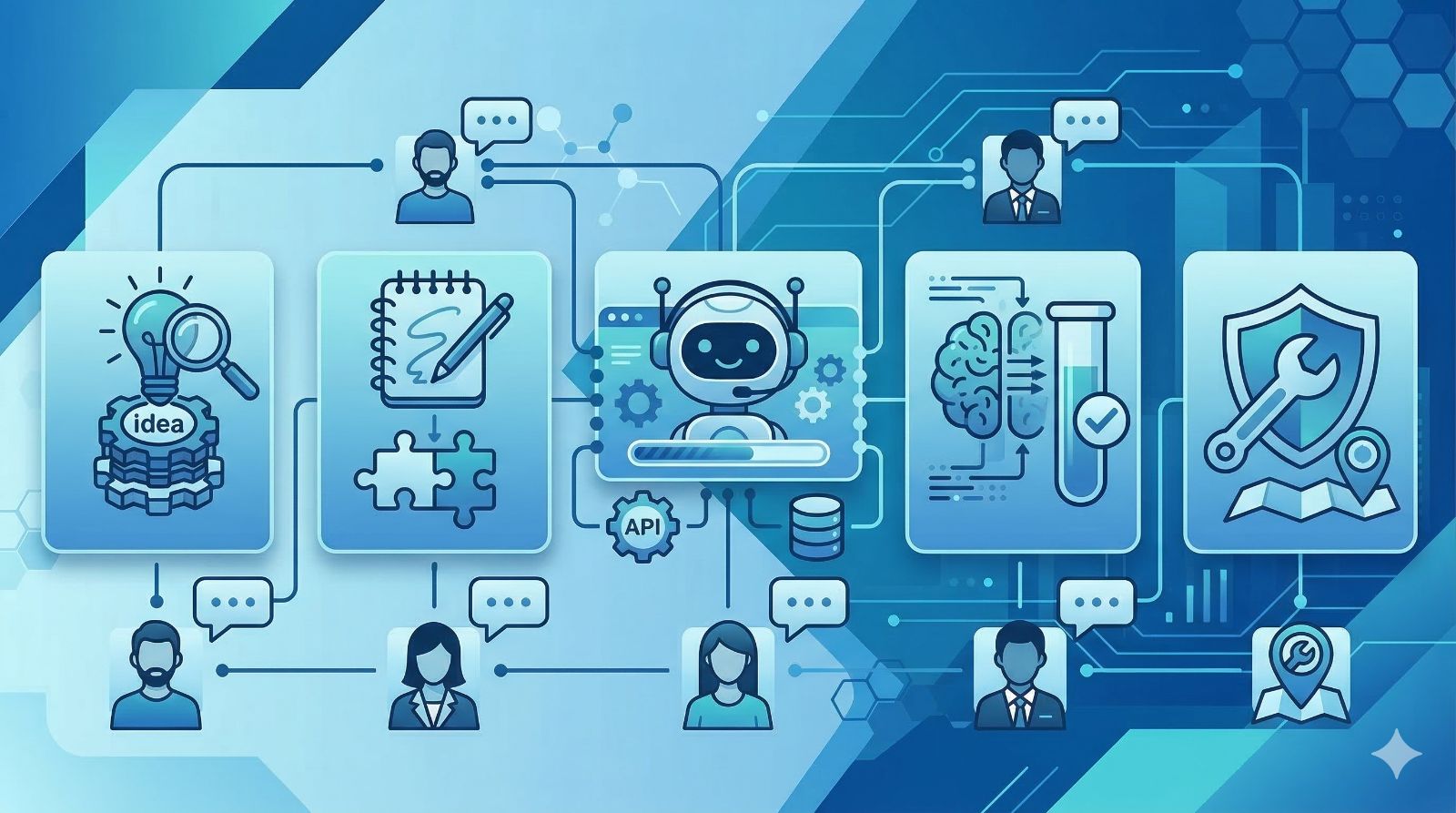
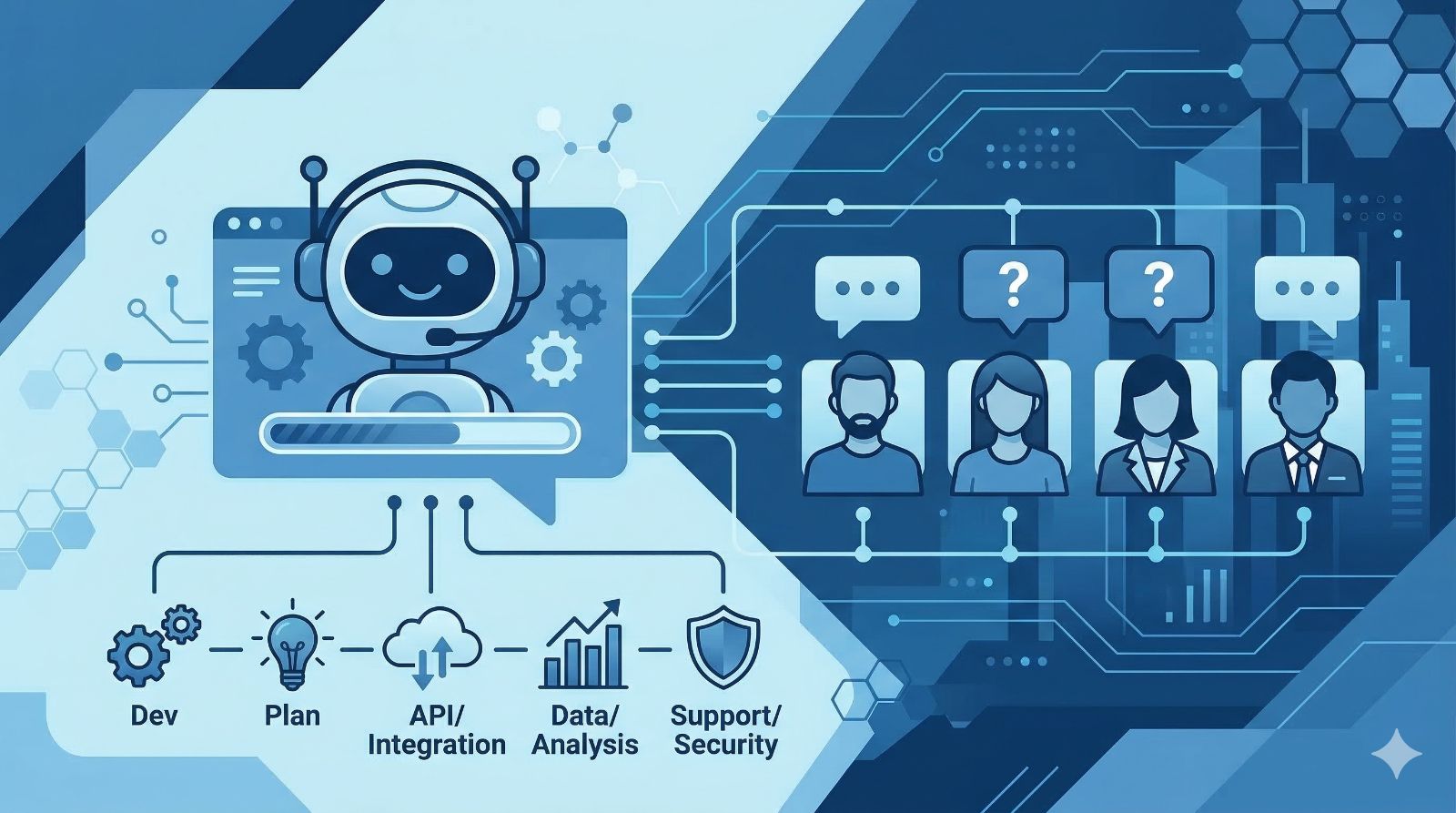
Quality customer care chatbot development goes far beyond writing code. Here is the exact 5-phase process ChatbotX uses across all client deployments:
Phase 1: Needs Analysis and Research (1–2 weeks)
Every successful chatbot project begins with deep customer research. The development team analyzes historical support chat data, maps the top 20% of inquiry types that drive 80% of volume, and documents the customer journey specific to your industry. Skipping this phase is the single most common reason chatbot projects fail to deliver ROI.
Phase 2: Conversation Flow Design (1–2 weeks)
This is the strategic core of customer care chatbot development. A well-designed flow covers personalized greetings, multi-intent recognition, clear resolution paths, graceful handling of misunderstood inputs, and a smooth escalation mechanism to human agents. Every edge case must be mapped before a single line of code is written.
Phase 3: Development and Integration (3–6 weeks)
The technical team builds the chatbot on the right platform – website widget, Facebook Messenger, Zalo OA, Telegram, or directly integrated into your existing CRM or ERP. For Vietnamese market deployments, Zalo OA is prioritized. For WhatsApp deployments, the bot follows Meta’s WhatsApp Business API guidelines.
Phase 4: Training and Fine-Tuning (2–4 weeks)
An AI chatbot must be trained on real conversational data – thousands of question/answer pairs – to reliably understand natural language including slang, abbreviations, and industry-specific terminology. This phase includes stress testing, edge case validation, and UAT with real staff before any public launch.
Phase 5: Launch, Monitoring, and Continuous Optimization
A customer care chatbot is not a “build once, deploy forever” asset. After launch, the team reviews performance weekly, analyzes poorly handled conversations, expands the knowledge base, and retrains the model. A properly maintained chatbot typically performs 40–60% better after 6 months than on launch day.
Essential Features in a Customer Care Chatbot (2026)
Multilingual Support and Proper Vietnamese NLP
The chatbot must understand Vietnamese with and without diacritical marks, regional dialects, and Gen Z shorthand. Based on ChatbotX internal benchmark testing across 12 deployments (2024), bots built on English-first models produce misunderstanding rates of 30–40% for Vietnamese input – effectively making customer service worse, not better.
Real-Time CRM and ERP Integration
Without CRM integration, a chatbot can only answer generic questions. With it, the bot retrieves live customer data – order status, purchase history, account balance, loyalty points – and gives answers that actually resolve the customer’s specific situation.
RAG Architecture to Prevent AI Hallucinations
Modern customer care chatbots use Retrieval-Augmented Generation (RAG) to ground every response in your actual business knowledge base. Here is precisely how it works:
When a customer submits a question, the RAG system runs three steps in parallel: It searches your company’s knowledge base – product documentation, FAQs, pricing pages, and policy documents – to retrieve the most semantically relevant passages. It passes both the customer’s question and the retrieved passages to the language model as grounded context. The model generates an answer using only that retrieved content, not its general training data. The practical result is a chatbot that can only say what your business actually states – fabricated or outdated answers are structurally prevented.
This architecture is non-negotiable for finance, healthcare, and legal services where a single wrong answer can cause real harm.
Sentiment Analysis and Auto-Escalation
The chatbot monitors emotional signals in real time. When frustration thresholds are crossed – repeated questions, negative language, raised urgency – it automatically escalates to a human agent rather than continuing automation that risks damaging the relationship.
Advanced Analytics and Reporting Dashboard
Every conversation generates data: containment rate, resolution time, drop-off points, and CSAT. A proper chatbot platform surfaces this as actionable weekly reports – the foundation for continuous performance improvement.
Cross-Session Memory
The chatbot retains context across multiple conversations. Customers never have to repeat their account number, previous issue, or personal details – a small feature that creates a disproportionately large impact on satisfaction scores.
How to Choose the Right Customer Care Chatbot Development Partner
Deep Vietnamese NLP Expertise
Verify that your provider’s NLP model was trained on authentic Vietnamese conversational data – not a translated English model. Ask for benchmark data. If they cannot provide misunderstanding rates from real Vietnamese deployments, that is your answer.
Proven Vertical Industry Experience
A chatbot for e-commerce needs different conversation logic, integration points, and training data than one for healthcare or finance. A provider who has built 10 bots for your industry will outperform a generalist provider on day one.
Written SLA Commitments
Get specific numbers in writing before signing: minimum 99.5% uptime, critical error resolution within 4 hours, and a defined model update schedule. Vague commitments signal an immature operation.
Full Data Ownership and Portability
Your contract must explicitly state that you own 100% of all conversation data and can export it in full at any time. Conversation data is a strategic asset – it must never be locked in a vendor’s proprietary system.
Post-Launch Roadmap Included
A serious chatbot development partner delivers a structured 6–12 month improvement roadmap as part of the engagement – not as an upsell. Monthly reports, quarterly model reviews, and upgrade planning should be standard.
Vietnam Data Sovereignty Compliance
All customer data must be stored on Vietnam-based servers in compliance with Decree 13/2023/ND-CP – Vietnam’s primary personal data protection regulation, broadly equivalent to GDPR. Confirm this in writing before any deployment begins.
Customer Care Chatbot Development Cost and ROI
| Solution Type | Development Cost (USD) | Deployment Time | Annual Maintenance (USD) | Typical Payback |
|---|---|---|---|---|
| Rule-Based Bot (1 channel) | $600–$1,600 | 2–4 weeks | $120–$320 | 3–6 months |
| Multichannel AI Chatbot | $2,000–$6,000 | 6–12 weeks | $400–$1,000 | 6–12 months |
| Full Enterprise Solution | $8,000+ | 12–20 weeks | $1,200–$2,400 | 9–18 months |
Factor in cloud platform fees (Google Dialogflow, Azure Bot Service, or AWS Lex) of $80–$600/month depending on conversation volume, billed separately by the platform provider.
Worked ROI example: A business with a 10-person support team at $400 per agent per month spends $4,000 per month on support labor. An AI chatbot handling 73% of those conversations reduces the effective team to 3 people, saving approximately $2,800 per month. Against a $4,000 deployment cost, that is a 1.5-month payback – well inside the 6–12 month typical range because volume and per-agent cost are above average in this scenario.
📖 Related: WhatsApp Business API: How ReThink HK Hit 52% CTR
Want a custom ROI estimate for your business?→ Get Your Free ROI Analysis from ChatbotX
Critical Mistakes to Avoid When Deploying a Customer Care Chatbot
Mistake 1: Disguising the Chatbot as a Human Agent
AI detection awareness among consumers is at an all-time high in 2026. Users who feel deceived disengage immediately and often permanently. The solution is transparency: open every conversation with a clear identification like “Hi, I’m ChatbotX – ChatbotX’s AI assistant.” Customers in 2026 have a high tolerance for AI when it is efficient and honest.
Mistake 2: Poor Human Handoff Design
The most damaging handoff failure is not the absence of human backup – it is forcing customers to repeat their entire context when transferring to an agent. Every escalation must pass the full conversation history, customer data, and issue classification to the agent in real time. Customers should never repeat themselves.
Mistake 3: Skipping Continuous Retraining
A chatbot trained in Q1 will start degrading in Q2 as promotions change, new products launch, and policies update. Schedule minimum quarterly RAG knowledge base updates and monthly conversation audits. Review Meta’s Messenger Platform Policy periodically to ensure ongoing platform compliance.
Mistake 4: Choosing Low Cost Over Vietnamese Language Quality
Budget chatbot platforms built on English-first models produce Vietnamese misunderstanding rates of 35–40% (ChatbotX benchmark, 2024). At that error rate, the chatbot creates more support tickets than it resolves. Invest in a solution with demonstrated Vietnamese NLP performance data.
How to Measure Customer Care Chatbot Effectiveness: 5 Key KPIs
| KPI | What It Measures | Target |
|---|---|---|
| Containment Rate | % of conversations resolved by the chatbot without human involvement | Above 65% (below 50% = urgent fix needed) |
| First Response Time | Time from customer message to first chatbot reply | Under 3 seconds |
| CSAT Score | Customer satisfaction collected post-conversation | 4.0/5.0 or above (80%+) |
| Conversion-to-Action Rate | % of conversations resulting in purchase, booking, or form completion | Track monthly trend; industry-dependent |
| Sentiment Score | Real-time emotional state classification across all conversations | Sustained negative trend triggers management alert |
Review all five KPIs monthly. Containment Rate and CSAT are the two leading indicators – if either declines for two consecutive months, initiate an immediate model review.
Frequently Asked Questions About Customer Care Chatbot Development
Do small businesses actually need a customer care chatbot?
Yes – small businesses often see the fastest ROI. With limited headcount, even a basic rule-based chatbot that handles 50% of FAQ volume frees the equivalent of one full-time staff member. A $600–$1,600 deployment typically pays back within 3–6 months at that conversation volume. The question is not whether you can afford a chatbot – it is whether you can afford not to have one while competitors already do.
How long until a chatbot reaches reliable performance?
AI chatbots need 4–8 weeks of real customer conversation data to stabilize. During this window, weekly monitoring and model adjustments are essential. After month three, performance typically reaches a plateau that is 40–60% better than launch day as edge cases get resolved.
Should I use an off-the-shelf platform or build from scratch?
Off-the-shelf platforms – ChatbotX cover 80–90% of use cases at a fraction of custom build cost and are the right choice for most SMEs and mid-market businesses. Custom builds are only justified for businesses with highly specific workflow requirements, strict data sovereignty mandates, or integration complexity that no existing platform can support.
Can a chatbot fully replace my customer support team?
No – and a chatbot that tries to will damage your customer relationships. The optimal model is 80/20: the chatbot handles 80% of predictable, repetitive inquiries autonomously, while your team focuses exclusively on the 20% of complex, emotionally sensitive, or high-value interactions that genuinely benefit from human judgment.
What is the most common reason chatbot projects fail?
Deploying without a structured needs analysis and without a post-launch optimization budget. A chatbot that is not regularly retrained becomes a liability as your business evolves. Total cost of ownership must include quarterly model reviews – not just the initial development fee.
Your Customer Care Chatbot: An Investment, Not an Expense
Effective customer care chatbot development is not about replacing humans – it is about building a consistent, always-available brand touchpoint that handles routine interactions at zero marginal cost while your team focuses on relationships and complex problem-solving.
The results from ChatbotX client deployments are clear: 65% reduction in support operating costs, 40% increase in lead-to-customer conversion, 6.2 percentage point reduction in healthcare no-show rates. All tracked over 90+ days with verified pre/post data.
The businesses investing in intelligent customer care automation today are building a compounding advantage. Every conversation the chatbot handles generates training data. Every month of operation improves performance. The gap between businesses that have this infrastructure and those that do not is widening faster than most realize.
Ready to Build Your Customer Care Chatbot?
ChatbotX delivers end-to-end customer care chatbot development – needs analysis, build, integration, training, and ongoing optimization – with a working demo ready in 7 days.
No commitment required. Includes a specialized ROI analysis for your industry.