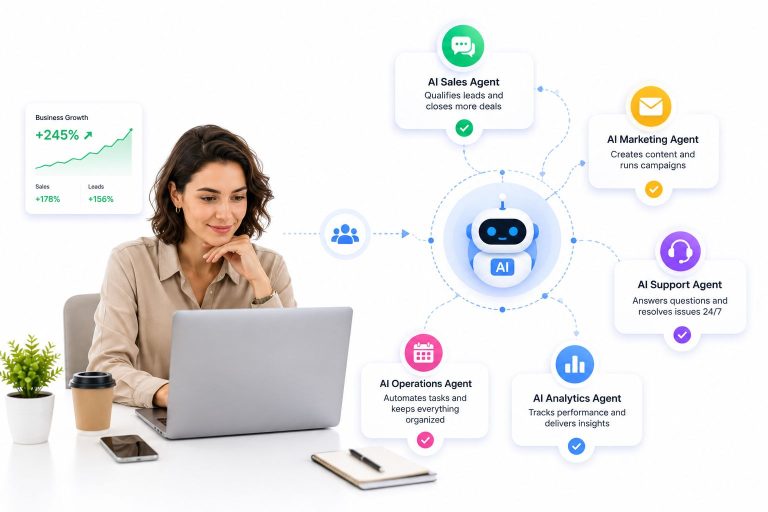
Artificial intelligence has officially moved from competitive advantage to operational necessity in AI customer experience. The question is no longer “should we invest in AI for customer experience?” – it is “how do we deploy it effectively enough to stay ahead?”
Recent industry research tells a clear story:
- 65% of CX leaders say AI has made their previous operating models obsolete
- Customer service interactions are projected to increase 5x within three years
- 51% of consumers prefer interacting with AI bots when they need an immediate response
- Businesses using AI in customer experience report a 25–35% reduction in average handle time
This guide breaks down 13 actionable ways AI improves customer experience – with real business outcomes, verified benchmarks, and practical strategies your team can apply today.
Launch agentic chat marketing in minutes with ChatbotX














What Is AI Customer Experience?
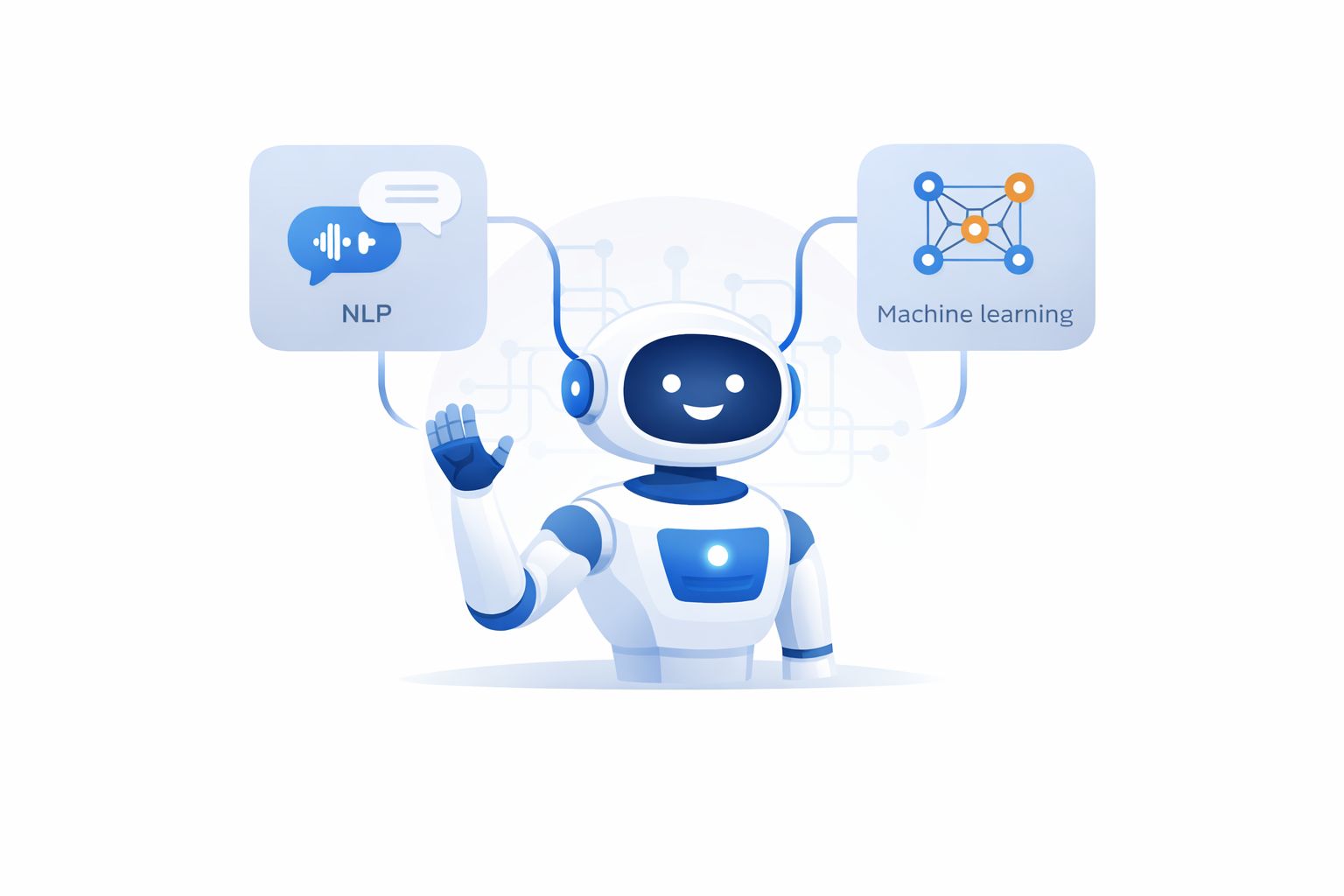
AI customer experience (AI CX) refers to applying intelligent technologies – including machine learning, natural language processing (NLP), generative AI, conversational chatbots, and predictive analytics – across every touchpoint in the customer journey.
The goal is not automation for its own sake. It is about creating interactions that are faster, more personalized, and more consistent at scale – while enabling support teams to work smarter and helping businesses reduce operational costs sustainably.
Modern AI customer experience platforms combine sentiment analysis, real-time intent detection, omnichannel orchestration, and large language models (LLMs) to create support experiences that feel genuinely helpful rather than robotic.
Key distinction: AI customer experience done right does not replace human connection – it amplifies it. Every agent gets the context, speed, and intelligence needed to deliver exceptional service at every interaction.
13 Ways AI Transforms Customer Experience
1. Scale Outstanding Service Without Scaling Headcount
The biggest challenge for any support team is maintaining quality when ticket volume spikes. AI customer experience platforms solve this by equipping every agent with the right information at exactly the right moment through three automatic classifications on every incoming request:
- Intent – what the customer is actually asking about
- Sentiment – positive, neutral, or negative emotional tone
- Language – to route to the right team instantly
Agents open a ticket already understanding the full context – reducing time-to-resolution and dramatically improving response quality. Deploying intelligent bots across email, social media, live chat, and messaging apps means thousands of customers can be served simultaneously without a proportional increase in headcount.
According to Salesforce’s State of Service Report, companies using AI in support operations handle 35% more tickets per agent without additional staffing investment.
2. Deliver Fast, Always-On 24/7 Support
Modern customers do not wait until business hours. More than half of consumers prefer interacting with an AI customer experience bot when they need an immediate resolution – especially outside standard working hours.
Next-generation conversational AI handles:
- Frequently asked questions (FAQ resolution)
- Order status and real-time shipping updates
- Step-by-step process and troubleshooting guidance
- Appointment scheduling and booking confirmations
AI also accelerates responses for human agents through two high-impact features:
- Macro suggestions – contextually relevant pre-written responses surfaced automatically based on the live conversation
- Auto-expand content – agents type a few keywords and AI drafts a complete, professional reply within seconds
The direct impact: faster first response times, shorter average handle times, and shrinking wait queues. For a deeper look at building this kind of AI customer experience system, see the Complete Guide to Customer Care Chatbot Development.
3. Onboard New CX Agents Faster
Onboarding customer support agents is notoriously time-consuming and costly. SHRM’s Talent Acquisition Benchmarking Report estimates the total cost of onboarding a new support hire at 6–9 months of salary when full ramp time is factored in.
AI customer experience technology changes this dynamic by acting as a real-time virtual coach directly within live workflows – not just during formal training sessions.
When a new agent handles a ticket, AI simultaneously:
- Suggests tone adjustments (more empathetic, more formal, depending on context)
- Surfaces similar tickets that were resolved successfully as reference points
- Flags responses that may be missing critical information
- Recommends relevant knowledge base articles in real time
This compresses formal training time and ensures new hires reach quality benchmarks significantly faster – reducing pressure on team leads and improving customer outcomes from day one.
4. Improve Agent Efficiency and Team Productivity
AI customer experience impacts productivity on two clear levels.
Intelligent routing analyzes request content, detects language, assesses priority, and automatically assigns tickets to the agent best equipped to resolve them – eliminating manual triage by managers entirely.
Real benchmark: Businesses report saving over 220 hours per month simply by removing the manual ticket classification and assignment step after deploying AI routing – based on aggregated data from ChatbotX enterprise customers.
Skills-based routing takes this further by simultaneously factoring in agent availability, performance history, ticket complexity, and customer language – ensuring every customer connects with the most suitable person, every time.
5. Deliver Hyper-Personalized Interactions at Scale
AI customer experience acts as a personal concierge for every customer – surfacing transaction history, preferences, past issues, and communication style before each conversation begins.
According to McKinsey research on personalization, personalization at scale drives a 5–15% revenue lift and a 10–30% improvement in marketing-spend efficiency for service-driven businesses.
AI here does not replace human judgment – it multiplies human capability. Agents remain in full control of every interaction but are equipped with richer context to respond more accurately in less time. For a practical walkthrough, see the Cross-Platform Chatbots: The Definitive 2026 Guide to Unified Customer Experience.
6. Anticipate Customer Needs Before Problems Surface
Exceptional AI customer experience is proactive, not just reactive. AI analyzes behavioral signals to identify when a customer is likely heading toward a problem:
- Repeatedly visiting cancellation or return pages
- Not opening product onboarding or setup emails
- Unusual drop in login frequency or platform engagement
- Declining purchase behavior compared to established patterns
When these risk signals appear, AI triggers a proactive outreach from the support team – before the customer escalates or churns.
Gartner’s research on proactive customer service indicates that proactive customer service programs can reduce churn-related support costs by up to 20% while simultaneously improving satisfaction scores.
7. Deliver AI-Powered Quality Assurance
Traditional QA processes rely on humans sampling a small percentage of interactions – a slow, subjective method that misses systemic issues until they have already caused damage.
AI customer experience quality assurance changes the model entirely:
| Dimension | Traditional QA | AI-Powered Quality Assurance |
|---|---|---|
| Coverage | Reviews only a small sample of interactions, typically1–5% of total conversations. | Analyzes100% of customer interactionsacross all channels automatically. |
| Objectivity | Oftensubjective and evaluator-dependent, which can lead to inconsistent scoring. | Data-driven and standardized, ensuring consistent evaluation criteria across every interaction. |
| Feedback Loop | Feedback is typically deliveredweekly or monthly, delaying improvements. | Real-time alerts and coaching, allowing teams to correct issues immediately. |
| Compliance Monitoring | Higher risk ofmissing compliance violationsdue to limited sampling. | Automatically flags risky language or policy violationsacross all conversations. |
| Operational Cost | Expensive and time-consuming, requiring significant manual review hours. | Near-zero marginal cost per reviewonce the AI system is deployed. |
The result: teams develop faster, errors are caught before they compound, and CSAT scores are protected rather than repaired after the fact.—
8. Predict and Prevent Customer Churn
Retaining an existing customer costs 5–7x less than acquiring a new one, according to Harvard Business Review. Yet early warning signs of churn are often buried in unstructured conversation data that no human team can process at scale.
AI customer experience platforms scan signals across thousands of customer conversations – vocabulary used, contact frequency, response delays, unresolved complaint history, and behavioral shifts – to build a predictive churn model. When a high-risk customer is identified, the system automatically alerts the team to intervene with a proactive call, a personalized retention offer, or a check-in from their account manager.
Pairing churn prediction with strong CRM data makes this even more effective – see the CRM Social Media Integration Guide for 2026 for a practical implementation framework.
9. Present Customers With Relevant, Timely Offers
Blanket promotional campaigns are losing effectiveness as customers grow increasingly sensitive to irrelevant outreach. AI customer experience platforms combine purchase history, browsing behavior, demographics, and real-time engagement signals to identify the optimal moment to reach each customer with the right offer.
Abandoned Cart Recovery: A High-ROI Example
- Customer adds item to cart
- Does not complete purchase within 30 minutes
- AI triggers a personalized discount code via the customer’s preferred channel
- Result: 15–30% conversion lift with zero manual intervention required
10. Optimize Workforce Management With Demand Forecasting
Staffing customer support is a constant balancing act – too many agents wastes budget, too few causes service degradation. AI customer experience technology delivers intelligent balance through data-driven workforce forecasting:
- Demand forecasting – analyze ticket trends by hour, day, week, and season to predict staffing needs at the shift level
- Automated scheduling – optimize shift assignments against forecast and individual agent preferences
- Real-time deviation tracking – alert managers instantly when actual volume deviates from plan
- Performance analytics – auto-generate reports that support faster, more informed staffing decisions
11. Reduce Operational Costs Sustainably
Intelligent AI customer experience automation does not mean replacing people – it means doing more with the same resources. AI reduces operational costs across three distinct layers:
Layer 1 – Automate Low-Value, Repetitive Tasks
Ticket classification, routing, confirmation emails, and FAQ responses consume significant agent hours daily but require no complex judgment. AI handles these instantly at near-zero marginal cost.
Layer 2 – Deflect Inbound Ticket Volume
When customers successfully self-serve through AI-powered resources, they do not need to contact support. According to Forrester’s Total Economic Impact research, effective self-service can deflect 20–40% of inbound tickets within 6 months of deployment.
Layer 3 – Prevent Costly Escalations
AI identifies emerging anomalies and alerts teams before they spiral into service crises that require expensive emergency intervention – protecting both revenue and brand reputation.
12. Build Consistent, On-Brand Customer Experiences
A strong brand is expressed through voice, tone, and communication style across every customer touchpoint – not just visual identity. Generative AI customer experience tools allow businesses to encode brand identity into every interaction through:
- A defined chatbot personality and linguistic style guide
- A curated list of preferred and avoided phrases
- Clear response boundaries aligned with brand values
- Flexible tone-switching based on conversation context
AI tone adjustment tools let agents shift response style with a single click – from warm and conversational to formal and professional – ensuring consistency regardless of which agent or channel the customer reaches.
13. Enhance Knowledge Management With AI
An outdated knowledge base silently kills AI customer experience quality. Customers search for answers, find stale information, and contact support anyway – eliminating all the value the self-service system was designed to deliver.
AI proactively identifies underperforming articles based on two signals:
- High view count + continued ticket creation on the same topic (the article did not resolve the issue)
- Abnormally low time-on-page (customers are not reading it through)
These articles are automatically flagged for priority review and update. Generative AI then accelerates content creation: provide a few bullet points and AI expands them into a complete, well-structured help article – language normalized, search-optimized, and ready to publish in minutes rather than hours.
Real Results: What AI Customer Experience Actually Delivers
Case Study 1 – 3D Development Platform: $1.3M Saved, 93% CSAT
Challenge: Rapid company growth triggered a surge in support ticket volume that the existing team could not absorb without a proportional headcount increase.
Solution: Deployed AI customer experience automation and intelligent conversational bots to resolve common requests without human intervention, freeing senior agents for complex issues.
| Metric | Result |
|---|---|
| Tickets resolved without human intervention | ~8,000 per period |
| First response time improvement | 83% faster |
| Customer Satisfaction Score (CSAT) | 93% |
| Operational cost savings | ~$1.3M USD |
Case Study 2 – Fintech Startup: 64% Faster Resolution, 10,000 Tickets/Month
Challenge: High ticket volume with diverse request types requiring fast, accurate responses at scale – with strict compliance requirements limiting what agents could communicate without review.
Solution: Generative AI customer experience tools for automated response suggestions, instant ticket summarization, and real-time trend analysis that flagged compliance risks before they escalated.
| Metric | Improvement |
|---|---|
| First reply time | ↓ 64% |
| Average resolution time | ↓ 34% |
| One-touch resolution rate | 80% |
Case Study 3 – Real Estate Technology: 98% CSAT Across 70 Markets
Challenge: Operating across 70 markets, supporting 26,000+ agents managing high-stakes property transactions with complex, time-sensitive customer needs.
Solution: Intelligent ticket routing and end-to-end AI customer experience integration across all CX operations, with multilingual support and automatic priority escalation.
| Metric | Result |
|---|---|
| Resolution rate increase | +9% |
| One-touch resolution rate | 65% |
| Customer Satisfaction Score | 98% |
How to Get Started With AI Customer Experience
The businesses achieving the strongest AI customer experience results treat AI as a customer experience initiative – not an IT project – starting from the most painful problems first.
- Identify your biggest CX pain point – long wait times, high escalation rates, or inconsistent response quality. Pick one and focus.
- Start with one channel – deploy AI customer experience on your highest-volume channel first, measure impact for 30 days, then expand.
- Connect your knowledge base – enable AI to pull accurate, up-to-date answers immediately from your existing documentation.
- Expand and iterate – add channels, languages, and use cases based on customer feedback and performance data.
For a deeper dive into implementation by industry and company size, the 2026 Omnichannel Chatbot Strategy Guide walks through channel-specific AI customer experience deployment frameworks in detail.
The brands that master AI customer experience today will set the standards the entire industry follows tomorrow.
Frequently Asked Questions
What is AI customer experience?
AI customer experience is the use of intelligent technologies – including machine learning, generative AI, NLP, and conversational chatbots – to deliver faster, more personalized, and more consistent customer interactions at scale across all channels.
How does AI improve customer satisfaction (CSAT)?
AI customer experience reduces wait times by handling routine queries instantly, personalizes responses using customer history, ensures 24/7 availability, and maintains consistent quality across all interactions. Salesforce State of Service data shows companies using AI in support achieve CSAT scores 15–20% higher than those using purely manual operations.
Is AI replacing human customer service agents?
No. AI customer experience technology handles repetitive, high-volume tasks so human agents can focus on complex, relationship-driven interactions requiring empathy and nuanced judgment. According to McKinsey, the most effective AI implementations augment human agents rather than replace them – resulting in both higher productivity and higher employee satisfaction.
How quickly can a business see results from AI customer experience?
Most businesses see measurable improvements within the first 30–60 days of AI customer experience deployment, particularly in first response time, ticket deflection rates, and agent productivity. Full ROI – including cost savings and CSAT improvements – typically becomes visible within 3–6 months.
What is the difference between AI chatbots and traditional rule-based chatbots?
Traditional rule-based chatbots follow rigid decision trees and fail when customers ask questions outside predefined scripts. AI-powered customer experience chatbots use natural language understanding (NLU) and machine learning to comprehend intent, handle ambiguous phrasing, learn from past conversations, and improve accuracy over time – without requiring manual script updates.
See AI Customer Experience in Action
ChatbotX is an AI customer experience platform built to deliver measurable results from day one – no large engineering team or lengthy implementation timeline required.
Whether you want to automate 24/7 support, personalize every customer interaction at scale, or reduce churn before it becomes a revenue problem – explore what AI customer experience can do for your team.