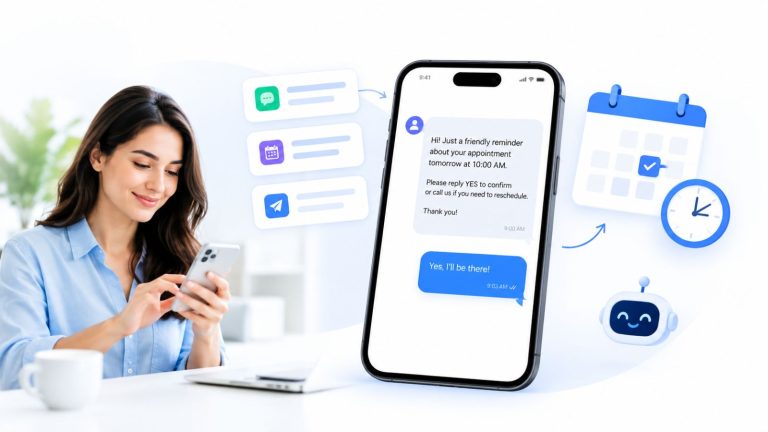

- Over 3 billion people now actively use WhatsApp globally, making it the single largest direct-to-consumer communication channel available to travel brands.
- Conversational booking flows built on WhatsApp outperform traditional web funnels by up to 10x in conversion rate across multiple travel verticals.
- AI-powered automation, Click-to-WhatsApp (CTWA) ads, and omnichannel integration are the three pillars of the most successful travel brands in 2026.
- ChatbotX gives travel businesses a ready-to-deploy infrastructure to activate every strategy covered in this guide.
Launch agentic chat marketing in minutes with ChatbotX













1. The New Traveler Psychology in 2026

Modern travelers are no longer passive browsers. They are decisive, mobile-first, and allergic to friction. Research from the World Travel & Tourism Council (WTTC) confirms that post-pandemic recovery has fundamentally altered traveler expectations – speed, transparency, and personalization are now baseline requirements, not premium features.
Three behavioral shifts define the 2026 traveler:
Instant Gratification as Default
The tolerance window for unanswered inquiries has collapsed to under three minutes. Travelers who receive a delayed response to a pricing question will complete their booking with a competitor rather than wait. This is not impatience – it is the new standard shaped by years of on-demand digital experiences.
Hyper-Personalization Over Generic Offers
Mass promotional emails are producing diminishing returns. Travelers expect brands to remember their preferences, acknowledge their history, and proactively surface options that match their profile. A first-time family traveler should receive different messaging than a solo adventure enthusiast – and they know it.
Trust Built Through Conversation
Purchasing a vacation package represents a high-stakes emotional and financial decision. Travelers gravitate toward channels that feel human, secure, and dialogic. A verified WhatsApp Business account provides a layer of psychological safety that static websites and email blasts simply cannot replicate.
These shifts do not just represent challenges for travel brands – they represent a precise blueprint for where and how to compete.
2. Why WhatsApp Is the Highest-ROI Channel for Travel Brands
According to Statista, WhatsApp surpassed 3 billion monthly active users in 2025 and continues its growth trajectory into 2026. Crucially, its user base is concentrated in the markets most relevant to the global travel industry: Southeast Asia, South Asia, the Middle East, Latin America, and increasingly Southern and Eastern Europe.
For travel brands specifically, WhatsApp outperforms every other direct communication channel across five critical dimensions:
| Metric | WhatsApp Business | Traditional Ads | |
|---|---|---|---|
| Average Open Rate | 92–98% | 18–25% | N/A (impressions only) |
| Average Response Rate | 35–45% | 6–10% | <2% CTR |
| Conversion Lift vs. Web | Up to 10x | 1.2x | 0.8x |
| Customer Trust Index | High (verified profile) | Medium | Low |
| Re-engagement Capability | Yes (broadcasts + flows) | Yes (limited) | No |
The WhatsApp Business API, documented fully by Meta’s developer platform, enables businesses to operate at scale – connecting verified business accounts to CRM systems, automation engines, and AI-powered agents without sacrificing the personal feel of one-to-one messaging.
For travel brands, this combination is uniquely powerful. Complex queries about itineraries, visa requirements, cancellation policies, and seat availability are resolved through natural conversation – eliminating the dead-end experience of navigating FAQ pages alone.
3. The Full Traveler Lifecycle on WhatsApp

One of the most underutilized advantages of WhatsApp Business is its ability to support the entire traveler lifecycle within a single, continuous thread. Rather than treating each touchpoint as a separate campaign, the most sophisticated travel brands architect a unified journey:
Stage 1 – Discovery and Awareness
Travelers entering a destination research phase can be reached through Click-to-WhatsApp (CTWA) advertisements on Meta platforms. A compelling visual ad for a beach destination can prompt an immediate conversation: rather than redirecting the user to a landing page, the ad opens a WhatsApp thread with a personalized welcome message and a destination quiz.
This approach captures intent at peak curiosity – converting ad spend into qualified conversations rather than anonymous page views.
Stage 2 – Consideration and Lead Qualification
Once a conversation is initiated, AI Agents from ChatbotX can conduct intelligent qualification: determining travel dates, group size, budget range, and accommodation preferences through a natural dialogue. This replaces the traditional lead capture form – which typically sees 60–80% abandonment rates – with an interactive experience that feels like messaging a knowledgeable travel advisor.
Relevant content can be served contextually within the chat: destination guides, package comparisons, video itineraries, and curated photo galleries – all without requiring the traveler to leave the conversation.
Stage 3 – Purchase and Booking Confirmation
When a traveler is ready to commit, frictionless conversion becomes the priority. Using ChatbotX Flow Builder, travel brands can construct in-chat booking experiences where travelers submit travel dates, passenger details, and payment confirmations without leaving WhatsApp. The reduction in context-switching directly correlates with higher completion rates.
Booking confirmations, e-tickets, hotel vouchers, and itinerary summaries are delivered instantly within the same thread – creating a documented, searchable reference the traveler can return to at any point.
Stage 4 – Pre-Departure and In-Trip Support
The period between booking and departure is a high-anxiety window for travelers. Brands that remain actively helpful during this phase significantly outperform competitors on loyalty metrics.
Automated pre-departure sequences can include check-in reminders, destination weather updates, packing recommendations, local safety advisories, and visa reminder alerts – all sent through WhatsApp at carefully timed intervals. During the trip, a 24/7 AI support agent handles questions about hotel check-in procedures, restaurant recommendations, or transportation options without requiring human agent involvement.
Stage 5 – Post-Trip Retention and Upsell
The journey does not end at the return flight. ChatbotX Remarketing enables travel brands to re-engage past travelers with highly relevant offers – anniversary trip reminders, early-bird pricing on previously inquired destinations, and loyalty program milestone notifications. A traveler who booked a beach package in January is a high-probability lead for an autumn ski offer in August.
This lifecycle approach transforms WhatsApp from a customer service channel into a perpetual revenue engine.
4. Five High-Impact WhatsApp Strategies for Travel Growth

Strategy 1 – Click-to-WhatsApp Advertising
CTWA campaigns represent the most efficient top-of-funnel investment available to travel marketers in 2026. By eliminating the intermediate landing page, brands capture intent before attention decays. Data consistently shows that CTWA campaigns achieve 3–6x higher lead quality compared to standard lead-generation ads, since every response represents an actively opted-in conversation.
Implementation tip: Segment CTWA campaigns by audience intent stage. Cold audiences receive destination inspiration content with an open-ended conversation starter. Warm audiences – those who have previously engaged with the brand – receive time-sensitive offers with direct booking calls-to-action.
Strategy 2 – Automated Inquiry Triage and Routing
Travel agencies managing high inquiry volumes face a routing problem: the right query needs to reach the right specialist as quickly as possible. A family asking about all-inclusive Caribbean resorts should not be handled by the same agent fielding corporate travel inquiries.
Using ChatbotX Shared Inbox with intelligent routing rules, incoming inquiries are automatically categorized by travel type, destination region, budget tier, or language – and assigned to the optimal team member or AI agent within seconds. This eliminates queue bottlenecks and ensures every traveler receives a contextually relevant first response.
Strategy 3 – Broadcast Campaigns with Precision Segmentation
Not all broadcast messages are equal. Generic promotional blasts sent to entire contact lists produce spam complaints and account quality degradation. Strategic broadcasts, by contrast, target micro-segments with content precisely calibrated to their travel history and stated preferences.
A traveler who previously booked a Vietnam cultural tour and has not traveled in the past eight months is the ideal recipient for a “Cambodia Heritage Discovery – Early Bird 2026” message. A family that completed a Disney World trip last summer is a qualified audience for a European family adventure package.
The ERT framework governs effective broadcast strategy: messages must be Expected (sent only to opted-in contacts), Relevant (tailored to the recipient’s demonstrated interests), and Timely (dispatched in logical proximity to a meaningful life or travel event).
Related reading: Learn how seasonal coupon campaigns amplify WhatsApp broadcast performance in WhatsApp Coupons for Seasonal Sales: The Ultimate 2026 Strategy.
Strategy 4 – Abandoned Booking Recovery
Cart abandonment in travel is exceptionally costly. The average traveler visits 38 digital touchpoints before making a final booking decision, and website abandonment rates for travel bookings consistently exceed 85%. A significant portion of these abandoners are not lost – they are simply undecided.
WhatsApp re-engagement sequences can recover a meaningful share of these potential bookings. When a user abandons a booking flow – detected through website pixel events or CRM signals – an automated WhatsApp message is triggered within 15–30 minutes, offering human assistance, answering the most common objections, or presenting a time-limited incentive.
This approach consistently outperforms email-based abandonment recovery due to WhatsApp’s dramatically superior open and response rates.
Strategy 5 – Loyalty and Re-engagement Programs
Retaining existing customers in the travel industry is five to seven times more cost-efficient than acquiring new ones. WhatsApp provides the ideal vehicle for loyalty programs because it maintains direct, personal communication between the brand and the traveler.
Milestone notifications (“You’ve unlocked Gold Member status – here’s your exclusive benefit”), birthday travel credits, and anniversary destination reminders all perform at significantly higher engagement rates on WhatsApp compared to email. The conversation history also creates a natural relationship continuity – a traveler returning to WhatsApp after six months picks up exactly where the previous conversation left off.
5. From Automation to Personalization: AI Agents in Travel
The travel industry has historically struggled to scale personalization. A boutique travel agency with three consultants cannot deliver the same bespoke experience to 10,000 inquiries per month that it provides to 300.
AI Agents resolve this tension. Unlike traditional chatbots that follow rigid decision trees, modern AI Agents – such as those available through ChatbotX’s AI Agent platform – engage in genuine natural language conversations, drawing on a travel brand’s knowledge base, booking database, and customer history to deliver responses that are indistinguishable from those of a skilled human advisor.
Practical applications in the travel sector include:
Destination Intelligence Agent: Answers complex questions about visa requirements, vaccination status, seasonal weather patterns, cultural practices, and local safety considerations – information that typically requires significant agent research time.
Itinerary Customization Agent: Engages in multi-turn conversations to construct personalized travel itineraries based on stated preferences, budget constraints, and time availability. The agent can present multiple options, incorporate traveler feedback, and adjust in real time.
Real-Time Support Agent: Handles in-destination queries around the clock – from “where is the nearest hospital?” to “can I upgrade my hotel room?” – without requiring human agent availability.
Post-Trip Feedback Agent: Collects structured feedback through conversational interactions rather than static survey forms, achieving significantly higher response rates and qualitative richness.
The critical competitive advantage of AI Agents is not merely efficiency – it is the ability to deliver genuinely helpful, contextually intelligent interactions at any hour, in any language, at any scale.
Related reading: Discover how conversational AI is reshaping the entire retail experience in Chat Commerce: How Conversation-Driven Retail Is Redefining Customer Experience in 2026.
6. Measuring What Matters: KPIs for WhatsApp Travel Campaigns
Sophisticated travel brands track a structured set of WhatsApp-specific performance indicators rather than relying on vanity metrics:
| KPI | What It Measures | Target Benchmark |
|---|---|---|
| Conversation-to-Lead Rate | % of initiated chats that produce qualified leads | >40% |
| Lead-to-Booking Conversion Rate | % of qualified leads that complete a booking | >25% |
| First Response Time | Average time to first agent/bot response | <60 seconds |
| Broadcast Open Rate | % of broadcast messages opened | >85% |
| Broadcast Conversion Rate | % of broadcast recipients completing a target action | >15% |
| Abandonment Recovery Rate | % of abandoned bookings recovered via WhatsApp | >12% |
| Customer Satisfaction Score (CSAT) | Post-interaction satisfaction rating | >4.2/5.0 |
| WhatsApp Revenue Attribution | % of total revenue attributable to WhatsApp interactions | Varies by brand |
| Message Quality Rating | Meta’s account quality indicator (High/Medium/Low) | High |
Establishing baseline measurements across these KPIs before launching WhatsApp-centric campaigns enables meaningful performance tracking and continuous optimization.
7. Compliance, Opt-ins, and Messaging Quality

Operating on the WhatsApp Business API carries compliance obligations that, when respected, also function as quality filters separating serious brands from opportunistic spammers.
Opt-in Architecture
Every WhatsApp marketing communication must be sent to contacts who have explicitly opted in to receive messages. Opt-in collection mechanisms include: website chat widgets, CTWA ad conversations, in-store QR codes, email opt-in flows, and booking confirmation sequences. Each opt-in point must clearly communicate that the user will receive WhatsApp messages and must provide a mechanism to withdraw consent.
Template Message Compliance
All outbound messages initiated outside an active 24-hour conversation window must use pre-approved message templates. Template quality directly impacts account health – templates with high engagement rates and low block rates improve the account’s quality rating, while templates generating complaints or blocks trigger restrictions.
The Quality Rating System
Meta assigns every WhatsApp Business account a Quality Rating – High, Medium, or Low – based on recent message performance signals. Maintaining a High rating is essential not only for compliance but for access to higher messaging volumes and advanced API features.
Brands that treat WhatsApp as a genuine service channel – rather than a bulk messaging vehicle – naturally maintain healthy quality ratings because their communications are welcomed by recipients.
Related reading: For a broader strategic framework on merging online and offline engagement, explore OMO Retail in 2026: How Unified Commerce Bridges Online and Offline Sales.
8. Conclusion: Build Your WhatsApp Travel Engine with ChatbotX

The travel brands commanding market share in 2026 are not those with the largest advertising budgets – they are those that have mastered the art and science of conversational commerce. WhatsApp Business API provides the infrastructure. The strategies outlined in this guide provide the playbook. The differentiating factor is the platform that brings both together with speed, reliability, and intelligence.
ChatbotX is purpose-built for exactly this challenge. As an open-source, agentic omnichannel platform, ChatbotX empowers travel businesses to:
- Deploy AI Agents that qualify leads, answer complex travel queries, and guide bookings – 24/7, in multiple languages, without human intervention
- Build sophisticated multi-step conversation flows using the visual Flow Builder – from destination quizzes to in-chat booking confirmations
- Execute precision-targeted remarketing campaigns to re-engage past travelers and recover abandoned bookings via ChatbotX Remarketing
- Manage every team member and conversation channel from a unified Shared Inbox with intelligent routing and performance tracking
Whether you operate a boutique tour agency, a regional airline, or a global OTA, ChatbotX provides the conversational infrastructure to turn WhatsApp into your highest-performing growth channel.
→ Get started with ChatbotX today and build your WhatsApp travel engine.
FAQ

What is the difference between the WhatsApp Business App and the WhatsApp Business API?
The WhatsApp Business App is designed for small businesses with a single device and limited contacts. The WhatsApp Business API – which ChatbotX connects to – is a scalable, developer-accessible interface that supports multiple simultaneous agents, automation, CRM integration, broadcast messaging, and advanced analytics. Travel agencies handling more than a few hundred conversations per month will need the API tier to operate effectively.
How long does it take to launch a WhatsApp Business presence for a travel brand?
With an established platform like ChatbotX, a basic WhatsApp Business setup – including account verification, initial automation flows, and a CTWA campaign structure – can be operational within two to four weeks. More sophisticated implementations involving CRM integration, multi-language AI agents, and custom booking flows typically require four to eight weeks.
Can WhatsApp replace our existing booking engine?
WhatsApp does not replace a booking engine – it supercharges access to it. The most effective architecture connects WhatsApp to an existing booking system via API, allowing travelers to initiate, confirm, and manage bookings through conversation while the underlying reservation infrastructure remains in place.
How do we handle multilingual traveler inquiries at scale?
AI Agents on ChatbotX support multiple languages natively and can automatically detect a traveler’s language preference and switch conversation context accordingly. This eliminates the need for language-specific agent teams while maintaining a high-quality, localized experience.
What happens if a traveler contacts us outside business hours?
With AI Agent automation in place, every inquiry receives an immediate, intelligent response regardless of the time. The AI handles the conversation, qualifies the lead, and schedules a follow-up with a human specialist if required – ensuring that off-hours inquiries are captured rather than lost.
How do we measure ROI from WhatsApp investment?
ChatbotX’s Analytics dashboard provides full conversation-to-booking attribution, enabling travel brands to calculate precise revenue contribution from each WhatsApp campaign, agent, and conversation flow. This makes WhatsApp one of the most measurable acquisition channels in the travel marketing mix.
Ready to stop juggling platforms and start building a consistent video strategy? ChatbotX brings your entire workflow under one roof, letting you schedule, analyze, and automate content across all your social channels from a single dashboard. Discover how ChatbotX can save you hours every week.