
Ad spend keeps climbing while the return keeps shrinking. Attention is scattered across a dozen apps, and even brands with generous budgets are asking the same question: why does every channel demand more effort for less payoff? For years, the standard playbook was simple pay for ads, funnel visitors to a website, capture the lead, and hope enough of them convert. In 2026, that funnel is leaking harder than ever, and pouring more budget into it no longer fixes the problem.
The businesses pulling ahead this year have made a quiet pivot. Instead of chasing new traffic on every platform, they are focused on retention building an owned channel where they can talk to the same customer again and again without paying an algorithm for the privilege. That owned channel is what the industry now calls a private domain, and the businesses that combine it with autonomous, or “agentic,” AI are reporting conversion lifts of 3x to 5x over static websites.
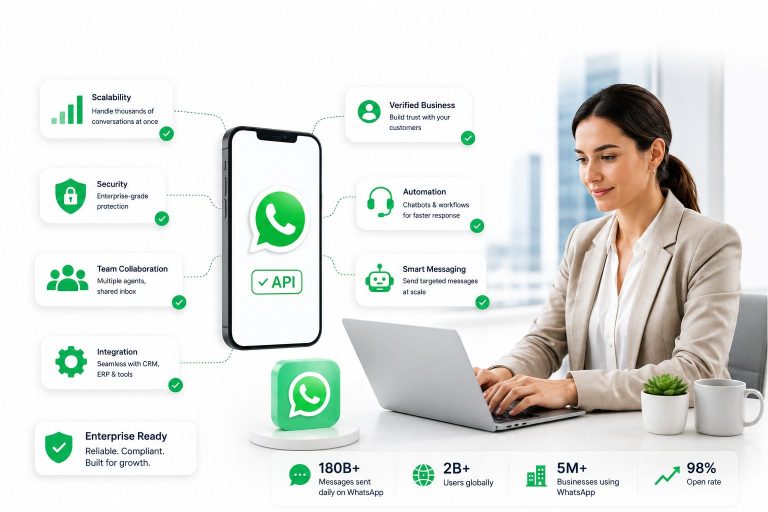
This guide breaks down why the shift is happening, what the private domain playbook actually looks like in practice, and how a dual-channel strategy across WhatsApp, Zalo, and Facebook Marketing Messages run by AI agents rather than manual rule trees is becoming the default for lean marketing teams.
Launch agentic chat marketing in minutes with ChatbotX











2026 by the Numbers: Why the Old Funnel Is Breaking
Global digital behavior data for 2026 points to a market that has quietly reorganized itself around messaging and AI, not open search and static pages.
Generative AI Has Become a Search Layer
More than a billion people now use generative AI tools every month to research, compare, and decide – a scale that puts AI-assisted discovery on par with a mainstream search engine. Consumers increasingly ask a chatbot for a recommendation instead of scrolling through ten blue links, which quietly removes a layer of the funnel that most brands were still designing for. Independent market research on global digital trends confirms the same pattern: the Digital 2026 Global Overview Report shows generative AI adoption climbing in lockstep with a measurable decline in reliance on traditional search engines among younger age groups.
Social Platforms Are the New Front Door
Social media identities worldwide have crossed 5.6 billion, or roughly two-thirds of the global population, and the audience is still growing by hundreds of millions of new users a year. For anyone under 35, a social app is no longer a place to kill time between searches it functions as the search engine itself, the storefront, and the customer service line all at once.
Website Clicks Are Quietly Dying
At the same time, algorithmic feeds have made it harder for brands to earn an outbound click. Users research a product inside the app where they discovered it reading comments, DMing the seller, watching a short video and only leave the platform once they are already close to buying, if they leave at all. The result is a shrinking website funnel sitting next to a growing in-app audience, and brands that only optimize the website are optimizing for a shrinking slice of the buyer journey.
The practical takeaway: if a brand cannot capture a shopper’s intent the moment it appears inside a social conversation, that shopper is gone before a landing page ever loads.
The Private Domain Playbook: From Rented Traffic to Owned Retention

Private domain marketing is the practice of moving a customer relationship off rented, algorithm-controlled feeds and into a channel the brand actually owns a WhatsApp thread, a Zalo Official Account, an opted-in Messenger conversation, or a CRM contact record the business fully controls. Public platforms are still useful for discovery, but retention and repeat revenue increasingly happen inside these private, conversational channels.
Two mechanics make this shift work.
1. The Three-Second Response Window
A static product page has one shot: if a visitor doesn’t find what they need immediately, they bounce. A conversational storefront behaves differently. The moment someone lands on a WhatsApp number, a Facebook Page, or a website chat widget, an automated flow can greet them, ask a qualifying question, or surface a relevant offer within seconds of arrival mimicking the instant attention of an in-store sales associate. Brands running this kind of real-time engagement report conversion rates 3 to 5 times higher than an equivalent static landing page, because the friction between curiosity and a helpful answer disappears.
2. One Customer, One Profile, Across Every Channel
The second mechanic is data unification. A customer might message a brand on Instagram, place an order on WhatsApp, and ask a support question over webchat and if those three interactions live in three separate silos, the brand never actually learns who that person is. Private domain strategy solves this by tagging every click, reply, and purchase to a single unified contact profile, regardless of which channel it came through. That unified view is what a ChatbotX CRM Contacts system is built to maintain: one profile per customer, populated automatically as conversations happen across WhatsApp, Messenger, Instagram, Zalo, and webchat, so the brand keeps building first-party data even as public algorithms get stingier with reach.
Building a Dual-Channel Broadcast Strategy: WhatsApp, Zalo, and Facebook Marketing Messages

Blasting every contact with the same broadcast message is the fastest way to burn through a messaging budget and tank engagement. A better approach pairs two very different tools for two very different jobs.
WhatsApp and Zalo: The High-Intent, High-Loyalty Channel
In much of Asia, WhatsApp and Zalo aren’t optional apps – they’re default, daily-use infrastructure, with penetration rates well above 90% in several key markets. That makes them ideal for deep relationship messaging: abandoned-cart reminders, loyalty-tier updates, order confirmations, and re-engagement based on real browsing behavior. Because messaging costs on these channels scale with volume, the winning tactic is progressive, behavior-based broadcasting rather than blanket sends – reaching only the segment of contacts who are genuinely close to a purchase decision. For a closer look at applying this logic to a specific channel, see this breakdown of Facebook Lead Ads paired with CRM segmentation, which follows the same targeting principle.
Facebook Marketing Messages: Broad, Low-Cost Re-Engagement
Meta’s Marketing Messages framework lets approved businesses message opted-in users outside the traditional 24-hour support window, using flexible messaging windows built for promotional content rather than live support. Because it reaches a broader, lower-cost audience than a one-to-one WhatsApp conversation, it’s the better fit for seasonal campaigns, new product launches, and reviving contacts who engaged once but never converted. Meta documents the mechanics of this feature directly in its developer documentation for Marketing Messages on Messenger, and ChatbotX’s own guide to Facebook’s recurring-notifications-turned-Marketing-Messages update covers how to build a subscriber list for it from scratch.
| Dimension | WhatsApp / Zalo Progressive Broadcast | Facebook Marketing Messages |
|---|---|---|
| Best for | Loyal members, high-order-value conversions | Broad exposure, low-cost win-backs |
| Audience | Opted-in contacts with behavioral tags | Opted-in or CRM-matched contacts |
| Cost profile | Higher per-message cost, tighter targeting needed | Lower per-message cost, wider reach |
| Typical use case | Abandoned cart, VIP offers, order updates | Product launches, seasonal sales, re-engagement |
Splitting broad promotional volume onto Facebook Marketing Messages while reserving WhatsApp and Zalo for high-value, opted-in relationships keeps overall messaging costs down without sacrificing reach – and can be orchestrated from a single dashboard using a Remarketing feature that segments contacts and triggers the right channel automatically.
Agentic AI: The Operating Layer That Makes This Scalable

None of the above is new in theory – marketers have talked about segmentation and multichannel messaging for years. What changed in 2026 is the labor cost of running it. Building a single abandoned-cart flow used to mean days of mapping logic trees, writing channel-specific copy, and testing manually. Agentic AI collapses that timeline to minutes.
Instead of clicking through a rule builder, a marketer can describe the outcome in plain language – for example, asking an AI agent to design a holiday promotion for WhatsApp users who abandoned a cart, and to automatically follow up with a Facebook Marketing Message discount if they don’t purchase within a day. The agent interprets the goal, drafts channel-appropriate copy, and deploys the multi-step logic on its own, leaving a human to review and approve rather than build from zero.
This is a meaningfully different capability from a traditional chatbot. A rule-based bot only follows the paths a human explicitly wired. An AI Agent reasons about intent, decides which action to take, and can hand off to a human teammate the moment a conversation needs a personal touch – which is also why pairing AI agents with a shared team inbox has become standard practice for teams running WhatsApp, Messenger, and Zalo from one place, a pattern covered in more depth in this guide to Messenger chatbots wired into a CRM.
Independent research backs the economic case for this shift: aggregated first-party-data studies show that brands using unified customer data see meaningfully higher revenue lift than those relying on third-party sources, a gap that widens further once conversion actions are automated rather than manually triggered – a trend documented across multiple industry benchmarks in this first-party data statistics roundup.
Choosing an Open-Source Foundation for Private Domain Growth

A dual-channel, AI-driven strategy is only as good as the platform running it. Many teams starting this shift default to a closed SaaS tool, only to hit pricing walls or data-ownership limits once volume grows. ChatbotX takes a different approach: it’s an open-source, agentic omnichannel platform that businesses can self-host, white-label, and fully own – a practical alternative for teams that want the flexibility of a private-domain strategy without being locked into someone else’s roadmap or pricing tiers.
On top of the AI Agents, CRM Contacts, and Remarketing capabilities already mentioned, ChatbotX includes built-in Analytics to track reply speed, campaign conversion, and lifecycle activity across every connected channel – WhatsApp, Zalo, Messenger, Instagram, TikTok, Telegram, Email, and webchat – from a single view, so the retention gains from a private domain strategy are measurable, not anecdotal.
Because the platform is fully open source, technical teams can inspect, extend, or self-host it outright rather than trusting a black box with customer data. The full codebase, deployment guide, and roadmap are public on the ChatbotX GitHub repository, where teams can also review release notes before adopting new features, or simply star the project on GitHub to follow ongoing development.
From Traffic Anxiety to Owned Retention

The brands still pouring their entire budget into outbound clicks are optimizing for a version of the internet that is already fading. The 2026 data is consistent: search is splitting between traditional engines and generative AI, social platforms have become the primary discovery surface, and website click-through rates keep sliding. None of that is a reason to panic – it’s a reason to redirect effort toward the channels a business actually controls.
A private domain strategy built on WhatsApp and Zalo for loyalty, Facebook Marketing Messages for broad re-engagement, and agentic AI to run both without adding headcount is no longer an experimental tactic reserved for large enterprises. It’s a repeatable system any team can stand up with the right platform underneath it.
Ready to move your marketing off rented algorithms and onto a channel you actually own? Get started with ChatbotX and launch your first AI-powered WhatsApp, Zalo, or Messenger flow in an afternoon – no vendor lock-in, no per-seat pricing surprises, and full control over your customer data from day one.
FAQ
What is private domain marketing?
Private domain marketing is the strategy of moving customer relationships from public, algorithm-controlled platforms into channels a business fully owns and controls – such as a WhatsApp thread, a Zalo Official Account, or a CRM contact list – so that reach and retention no longer depend on paying for ad placement or fighting a shrinking organic feed.
How is agentic AI different from a traditional chatbot?
A traditional chatbot only follows pre-built decision trees that a human has to design and update manually. Agentic AI interprets a plain-language goal, decides which steps and channels to use, drafts its own copy, and executes a multi-step workflow autonomously, with a human reviewing the output rather than building every branch by hand.
Should a business use WhatsApp or Facebook Marketing Messages first?
Most businesses benefit from running both, but for different purposes. WhatsApp and Zalo work best for high-intent, high-loyalty messaging to an opted-in audience willing to pay a slightly higher per-message cost for direct engagement. Facebook Marketing Messages are better suited to lower-cost, broader re-engagement campaigns aimed at contacts who have shown some interest but haven’t converted yet.