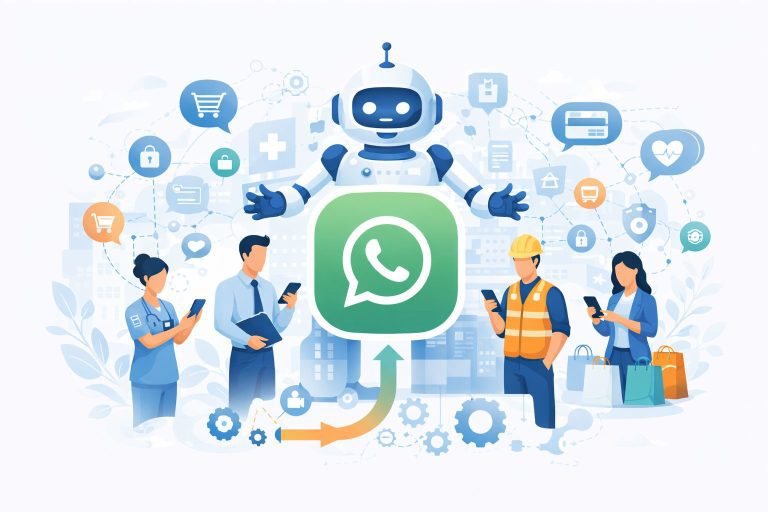
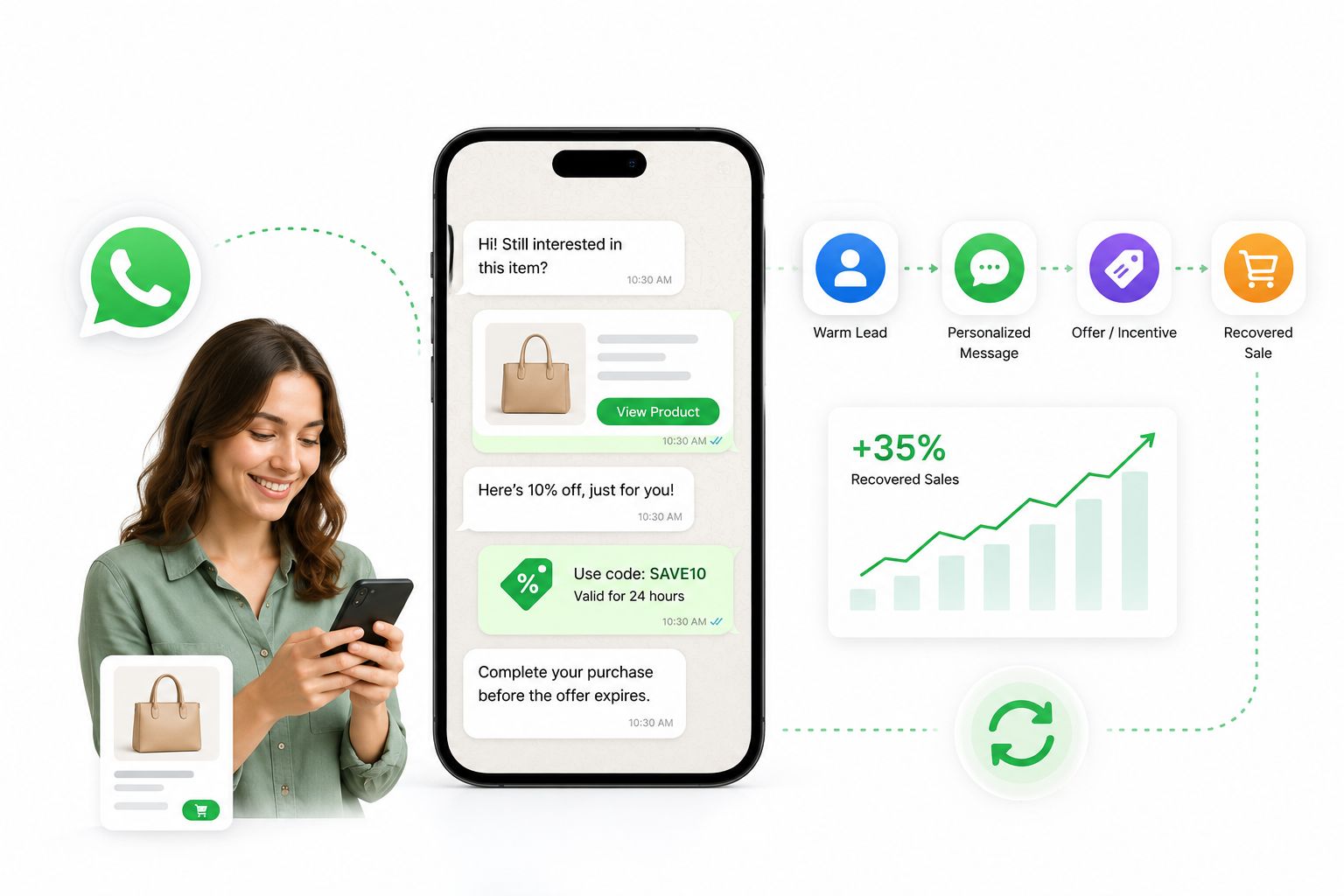
Getting a shopper onto your website is only half the battle. Most visitors will browse a few product pages, maybe drop something into their cart, and then vanish without ever reaching checkout. These aren’t random strangers – they are warm, high-intent prospects who already raised their hand. The question is how you bring them back.
That’s exactly where WhatsApp remarketing comes in. With open rates that regularly exceed 90%, WhatsApp has become one of the most reliable channels for reconnecting with shoppers who almost bought, then didn’t. This guide breaks down what makes WhatsApp remarketing different from ordinary marketing, which audiences deserve your attention first, the tactics that actually convert without feeling pushy, and how a platform like ChatbotX turns these ideas into a repeatable, automated system.
Launch agentic chat marketing in minutes with ChatbotX













What Exactly Is WhatsApp Remarketing?
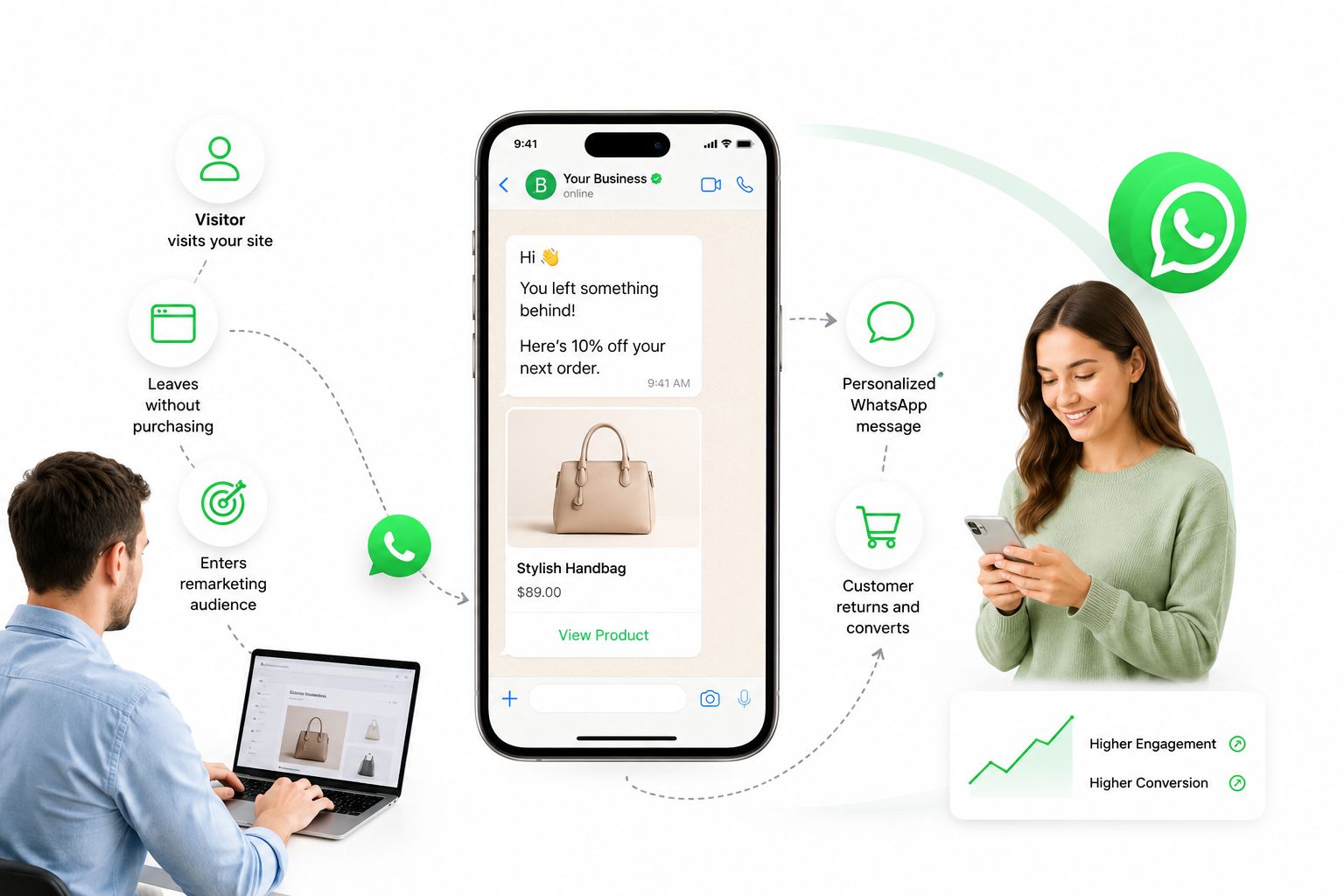
Remarketing, at its core, is about re-engaging people who have already shown interest in your brand – not chasing strangers. Instead of broad awareness campaigns aimed at anyone and everyone, remarketing narrows in on the specific actions a person already took: viewing a product, starting checkout, clicking an ad, or completing a past purchase.
WhatsApp remarketing simply delivers that follow-up inside the app billions of people already check dozens of times a day. When a shopper abandons a cart, lingers on a product page, or clicks through from an ad without buying, a business can send a personalized, opt-in message that gently nudges them back toward completing the purchase – instead of hoping a banner ad or forgotten email does the job.
Remarketing vs. Ordinary Marketing: The Real Difference
The two strategies aren’t interchangeable, and mixing them up wastes budget.
| General Marketing | Remarketing | |
|---|---|---|
| Who you’re talking to | Cold prospects who don’t know your brand yet | Warm leads who already interacted with you |
| Main goal | Build awareness and attract new visitors | Bring people back to finish a purchase |
Think of general marketing as handing out flyers to passersby on the street. Remarketing is the follow-up conversation with someone who already walked into your store, picked something up, and put it back down. One introduces you; the other closes the loop.
Why WhatsApp Outperforms Other Remarketing Channels
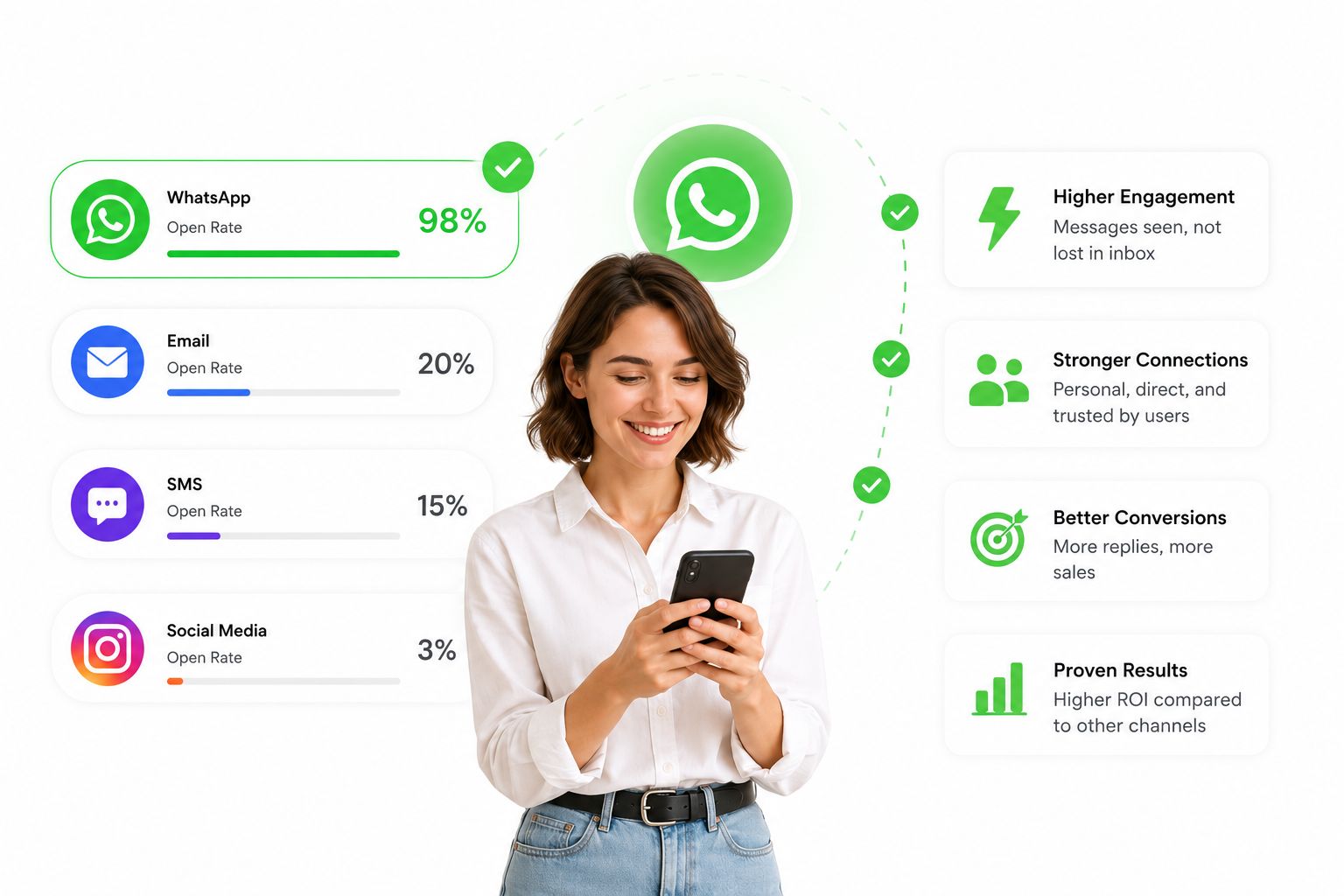
Open rates that other channels can’t touch
Email remarketing has to fight its way past spam filters and promotional tabs, typically landing around a 20% open rate. WhatsApp messages, by contrast, are read within minutes by the overwhelming majority of recipients, since people check their phone notifications almost reflexively. That single gap in attention is often the difference between recovering a sale and losing it for good.
Lower cost, higher return
Winning back a warm lead is dramatically cheaper than acquiring a brand-new one through paid ads. According to HubSpot’s overview of remarketing, campaigns aimed at previously engaged audiences can convert at rates several times higher than campaigns targeting cold traffic, which is why marketers increasingly treat remarketing as a core budget line rather than an afterthought.
Real conversations instead of one-way blasts
Unlike SMS, which only allows outbound broadcasts, WhatsApp lets customers reply in the same thread. Brands can send product photos, short videos, and direct purchase links, letting shoppers browse and act without leaving the conversation. Paired with a verified WhatsApp Business API account, this turns what could have been a cold, ad-like interaction into something that feels more like customer service than marketing. Meta’s own State of Business Messaging research confirms the trend: the vast majority of consumers surveyed across dozens of markets said they now prefer messaging a business over any other communication channel, largely because it mirrors how they already talk to friends and family.
Stronger loyalty and repeat purchases
Purchase history can be used to trigger VIP offers, birthday messages, or limited-time perks sent directly on WhatsApp. That kind of personal touch strengthens the relationship over time, which shows up later as higher repeat-purchase rates, larger order sizes, and more frequent orders – the kind of compounding growth that’s hard to manufacture through cold acquisition alone.
Which Audiences Should You Target First?
Not every warm lead deserves the same message. Segmenting your audience lets you tailor the tone, timing, and offer to where each person actually is in their journey:
- Cart abandoners – the highest-value segment. These shoppers got close to buying and were often interrupted rather than uninterested.
- Repeat product-page visitors – people who keep returning to the same item but haven’t pulled the trigger, often signaling price sensitivity or a lingering question.
- Ad clickers who didn’t convert – traffic from Facebook or Instagram campaigns that arrived on your site but left before completing any action.
- Past customers – buyers you can re-engage with replenishment reminders, usage tips, or check-ins based on their order history.
Four Strategies That Actually Convert
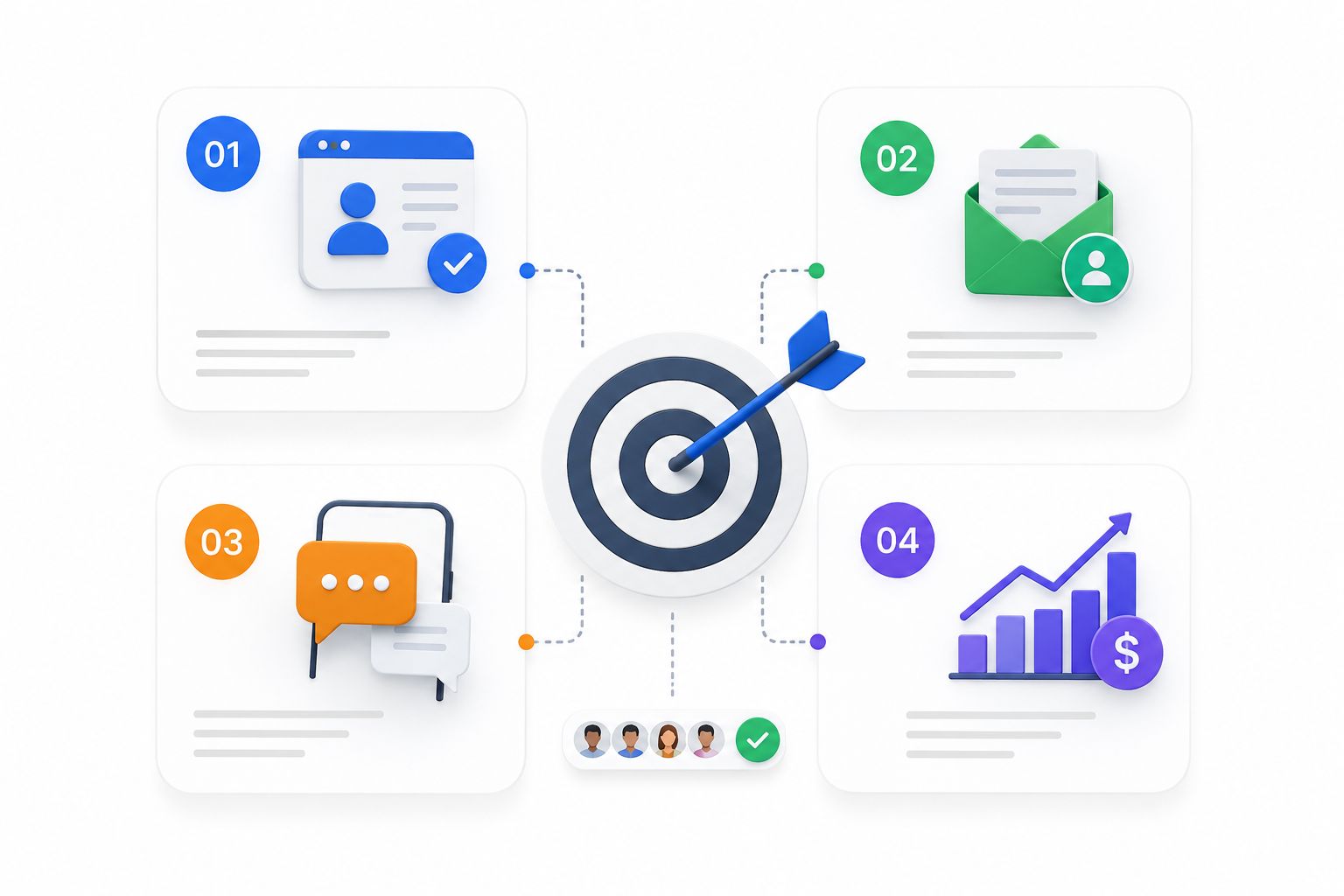
Merchants often worry that frequent messaging will annoy customers or trigger spam complaints. The fix isn’t sending less – it’s sending smarter, more helpful messages instead of blunt sales pitches.
1. Click-to-WhatsApp ads
Running click-to-WhatsApp campaigns on Facebook or Instagram lets high-intent visitors start a conversation immediately, converting rented ad traffic into a contact list you actually own and can message again later.
2. Replenishment reminders
For consumables – skincare, supplements, pet food – estimate how long a product typically lasts based on past orders, then send a friendly reminder right as the customer is likely running low. Framed as a helpful nudge rather than a discount blast, and paired with a one-tap reorder link, this consistently locks in repeat revenue.
3. Hit the golden window
Timing makes or breaks remarketing. The sweet spot for following up after a cart or product-page abandonment is somewhere between one and twenty-four hours later – early enough that buying intent is still warm, late enough that it doesn’t feel intrusive. Messaging within minutes can feel aggressive; waiting several days lets the impulse fade entirely. A message like “Hey [Name], we noticed you didn’t finish checking out – was there an issue with sizing or shipping?” shifts the tone from a sales push to genuine support.
4. Address the real hesitation, not just the price
Blasting discount codes to your entire list erodes margins and trains customers to wait for sales instead of buying at full price. Use WhatsApp’s two-way format to solve the actual objection instead: share spec sheets and warranty details for big-ticket items, offer a specialist consultation, or send real customer reviews to build trust. Save a limited-time coupon for the very end, as a final nudge rather than the opening move.
Turning the Strategy Into an Automated System
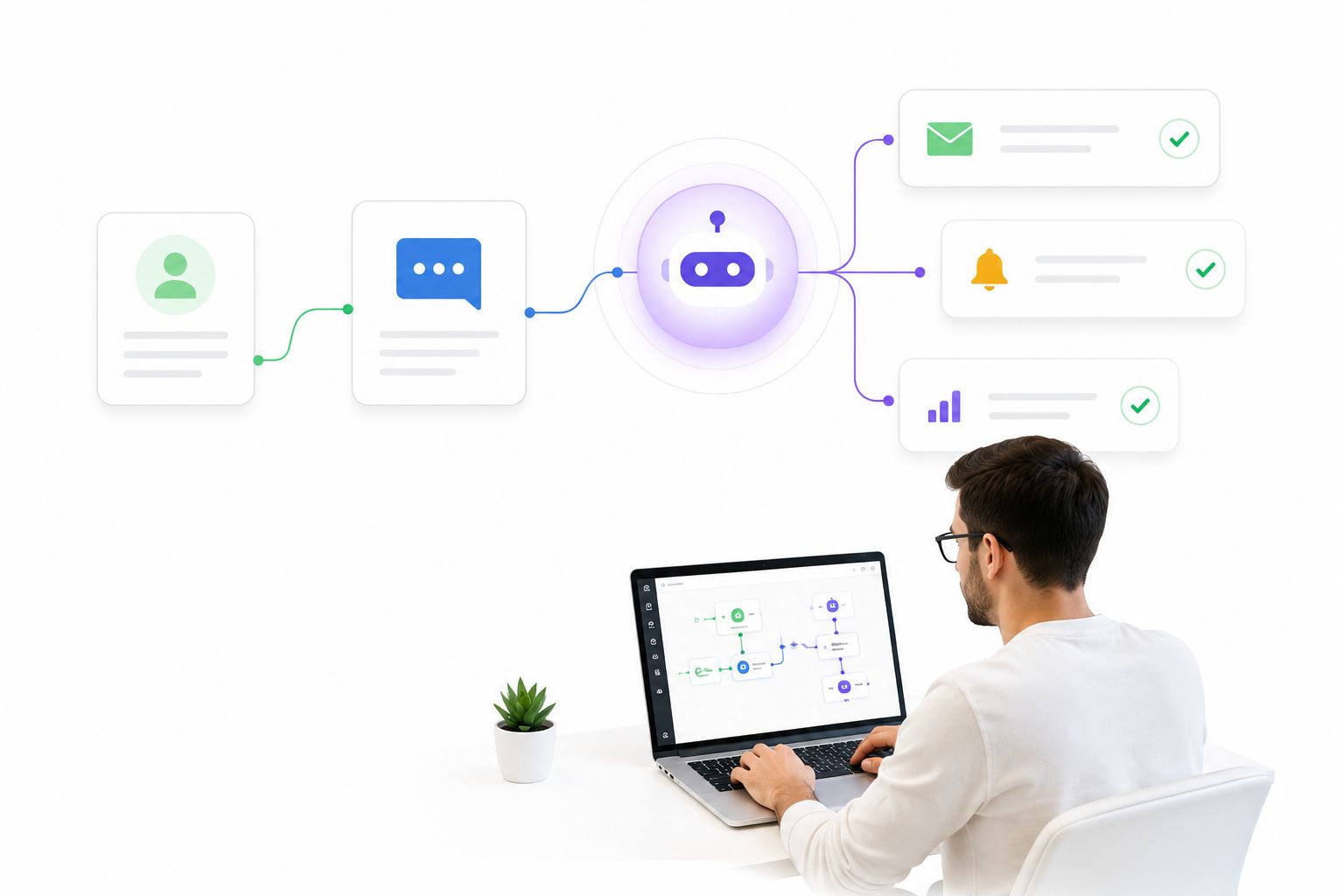
Sending remarketing messages manually from a personal number doesn’t scale, and it risks getting your number banned outright. That’s where a purpose-built platform earns its keep – automatically tagging contacts, triggering the right message at the right moment, and reporting on what’s actually working.
This is also where ChatbotX fits naturally into the picture. ChatbotX is an open-source, agentic omnichannel chatbot platform that lets teams run WhatsApp, Messenger, Instagram, and web-chat remarketing from a single workspace instead of stitching together separate tools.
Automated segmentation. ChatbotX’s Remarketing module can auto-tag contacts the moment they click a specific option or interact with a campaign, so a shopper who shows interest in a certain product category is automatically routed into a segment built for exactly that intent – no manual list-building required.
Visual journey design. Instead of hardcoding logic, marketing teams can map out entire remarketing sequences – cart nudges, replenishment reminders, win-back flows – inside the Flow Builder, a drag-and-drop canvas that supports conditional branching, wait steps, and channel-specific paths without requiring a developer for every change.
Always-on qualification. Between broadcasts, AI Agents can pick up replies instantly, answer common questions about shipping or sizing, and hand off to a human teammate only when the conversation actually needs one – keeping the golden follow-up window from slipping by unattended.
For teams comparing providers before committing to one, ChatbotX’s own breakdown of the best WhatsApp Business Solution Providers in 2026 walks through what to look for in segmentation, campaign tooling, and uptime guarantees. And since Meta’s messaging rules keep shifting, the guide to Marketing Messages replacing Facebook’s old Recurring Notifications framework is worth reading if you’re running remarketing across Messenger as well as WhatsApp.
Because ChatbotX is fully open source, teams that want complete control can self-host the platform, inspect the code, or contribute directly through the ChatbotXIO/ChatbotX repository on GitHub. Anyone tracking what’s shipping next can also follow the release history to see how the remarketing and automation tooling evolves over time.
Closing the Loop
The point of WhatsApp remarketing was never to hound customers into buying – it’s to show up with the right value at the exact moment someone is on the fence. Salesforce’s own analysis of conversational commerce makes a similar case: messaging channels succeed precisely because they replace pushy, one-way outreach with something that feels like an actual conversation. Combine tight audience segmentation, well-timed automated triggers, and a platform built for official API access, and cart abandoners, curious browsers, and past buyers all become a lot easier to bring back.
Ready to put your WhatsApp remarketing on autopilot? Get started with ChatbotX for free and turn your next abandoned cart into a recovered sale – no developer, no lock-in, and no limit on how far you can customize it.