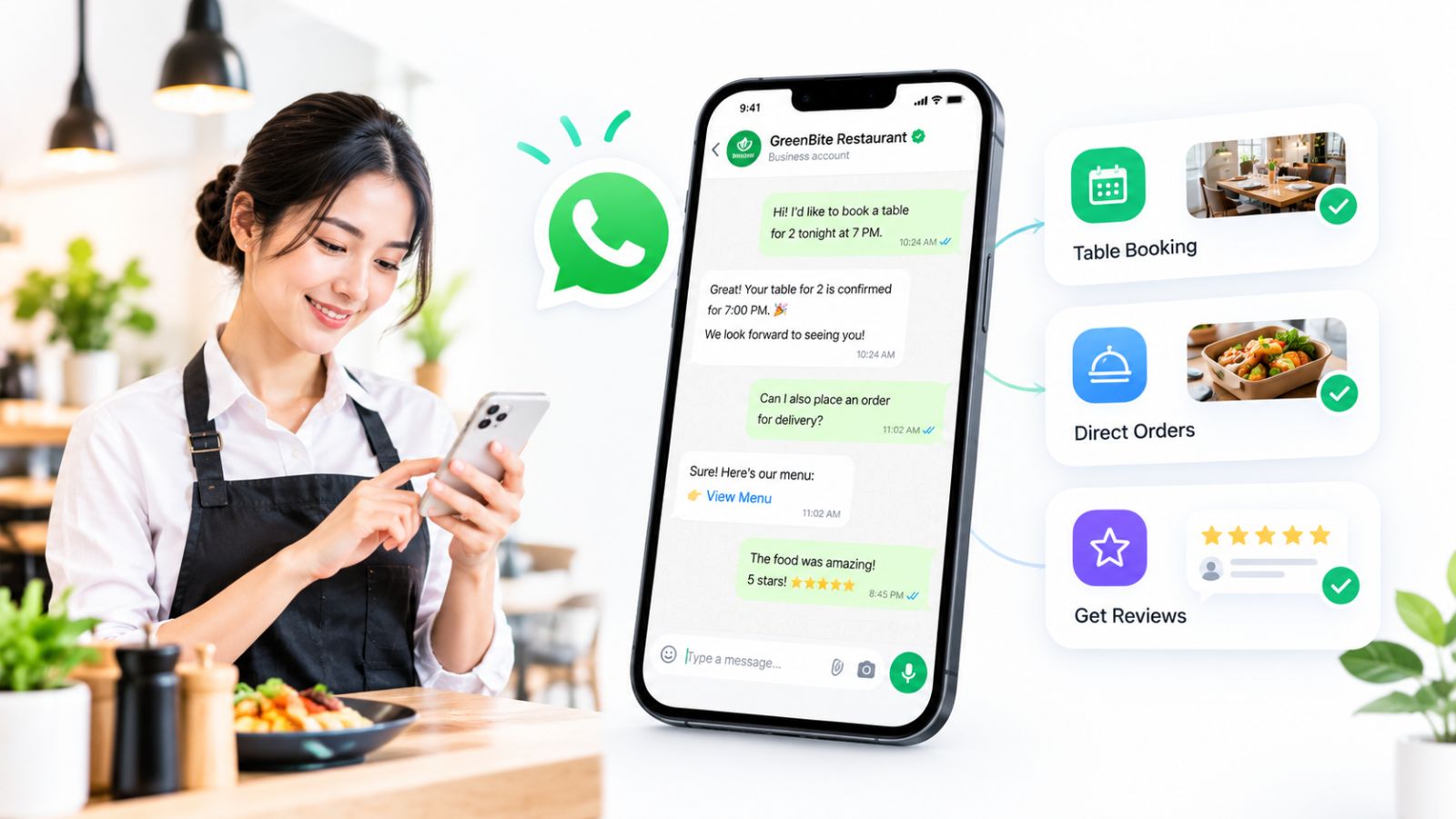
Quick answer: AI for restaurants usually means two things: tools in the kitchen and office (forecasting, inventory, scheduling) and tools that talk to guests (bookings, orders, menu questions, review requests). The guest-facing side is the easier place to start. A WhatsApp AI agent can handle it with no new hardware, only your menu, your policies and a business number.
Running a restaurant is a margin game, and recent numbers show how tight it has become. The National Restaurant Association reported that 42% of US operators said their restaurant was not profitable last year, citing food, labor, insurance, energy and card fees as the main pressures. At the same time, third-party delivery apps take a cut of each order, and your staff keep answering the same questions in the middle of service.
Most articles about restaurant AI focus on back-of-house analytics. This guide covers the part guests actually touch, and it walks through five jobs you can hand to an AI agent, in the order that makes sense for most independent restaurants.
Launch agentic chat marketing in minutes with ChatbotX






Front of House vs Back of House: Where to Start
Restaurant AI splits cleanly into two areas:
- Back of house: demand forecasting, stock control, prep planning and shift scheduling. These tools depend on your sales history and usually come bundled with a POS or inventory system.
- Front of house: every conversation with a guest. Booking a table, placing an order, asking about gluten-free options, finding the car park, and leaving a review afterwards.
For a single restaurant or a small group, front-of-house automation pays back faster. It needs no sales history, no integration project and no new devices. It also meets guests where they already are: a quick chat is easier than a booking form, and far easier than a phone that nobody can pick up at 8 PM on a Saturday.
Job 1: Table Reservations
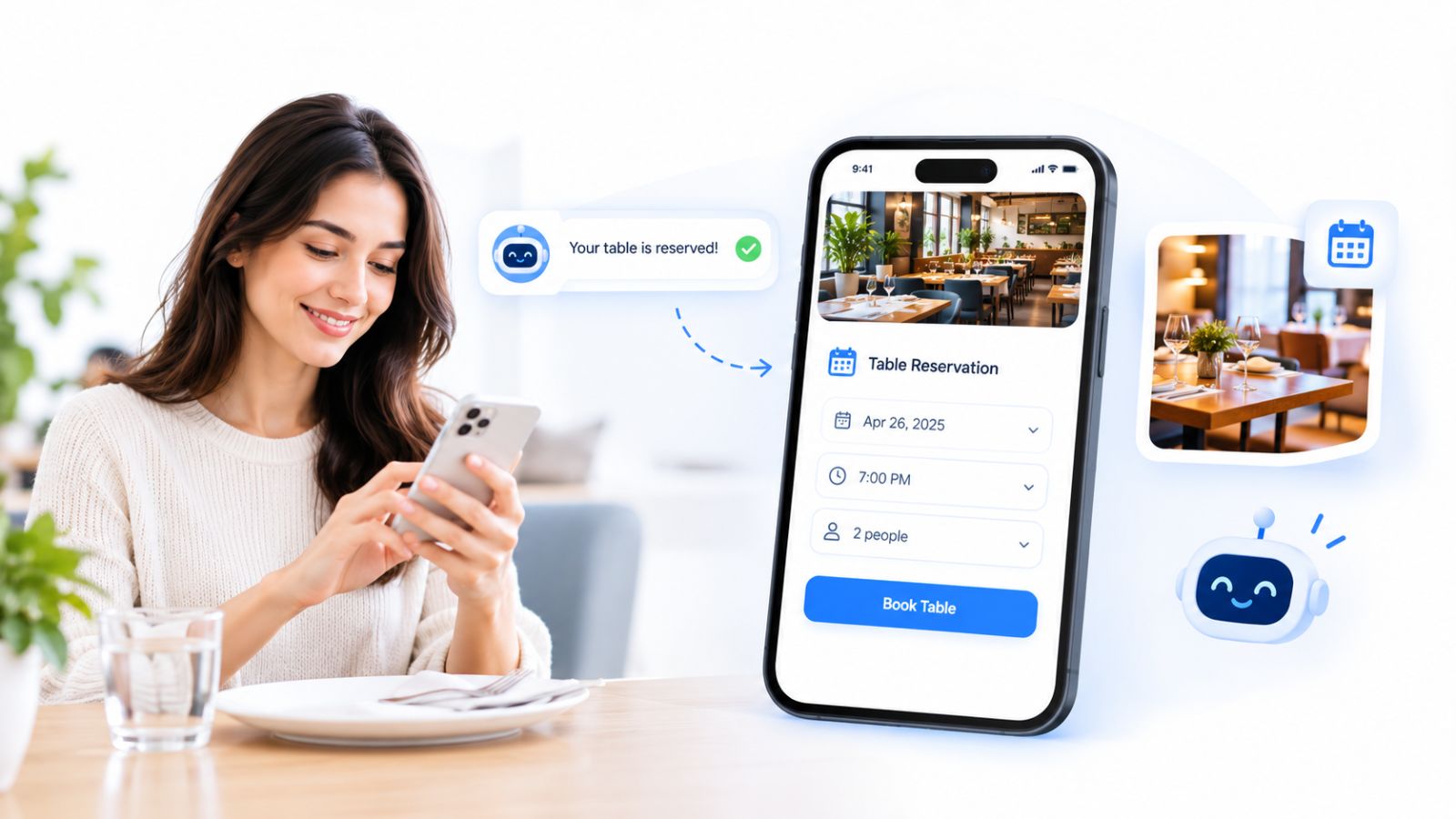
A guest writes, “Table for four tomorrow at eight?” Your agent picks it up and gathers the details: date, time, party size, name and any special notes such as a birthday or a high chair. A short in-chat form keeps this tidy and takes the guest a few taps.
What happens next depends on your current setup:
- You use a reservation system or a paper book: the agent captures the request and a team member confirms it from the shared inbox, usually within minutes.
- You track bookings in a spreadsheet: the agent can log each request as a new row and auto-confirm only the slots you have marked as open.
Be careful with wording. “We’ve received your request and will confirm within 15 minutes” is far safer than an instant “You’re booked!” for a table you may not have. A double-booked Saturday costs more goodwill than a few minutes of waiting.
To reduce no-shows, send a reminder on the day with a one-tap way to cancel, so the table can go to someone else. If you want ready-made wording and timing rules, see this guide to appointment reminder texts.
Job 2: Direct Takeaway and Delivery Orders
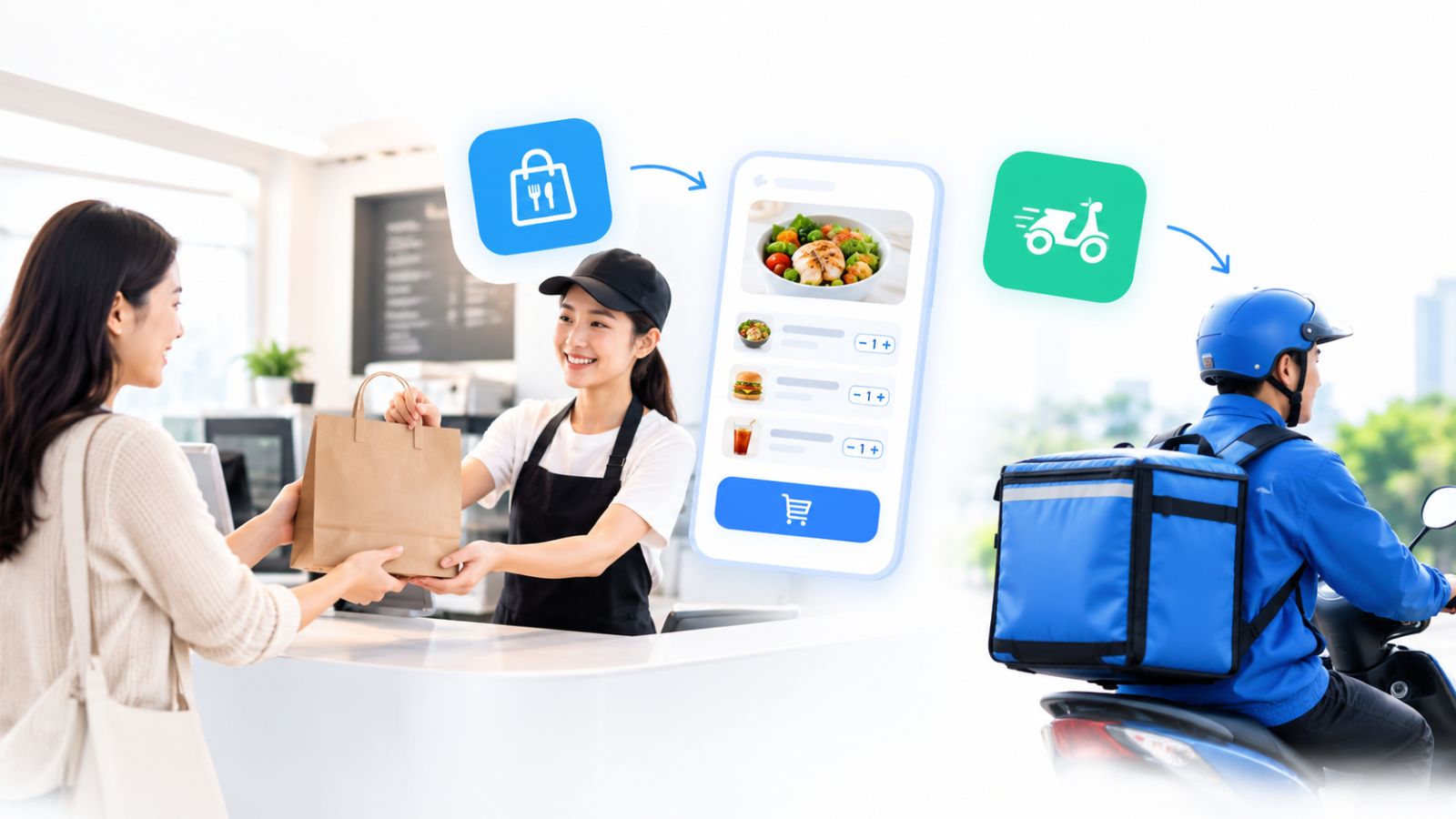
Delivery marketplaces are good for discovery, and many restaurants should keep them. The problem is repeat customers: when a regular orders through an app every week, you pay a marketplace fee, often somewhere in the 15–30% range depending on the plan, for someone who already knows you.
Consider a regular who spends $30 a week through a plan that charges 25%. That is $7.50 per order, or roughly $390 a year, on one customer. Move even a portion of your regulars to direct ordering and the savings add up quickly, minus a small payment-processing fee.
A direct ordering flow on WhatsApp typically looks like this:
- The guest browses your menu, ideally with photos and prices.
- The agent confirms the items and asks about pickup time or delivery address, plus notes like “no onions.”
- The guest pays through a secure payment link or a local payment method.
- The order lands in your team inbox, with a notification on staff phones.
- The guest gets a message when the order is ready or on its way.
The goal is not to replace delivery apps. It is to give your best customers a faster, cheaper route, and to print “order directly on WhatsApp” on every takeaway bag and receipt. For a deeper look at selling and collecting payment inside a chat, read our guide to WhatsApp commerce in 2026.
Job 3: Menu, Hours and FAQ Answers
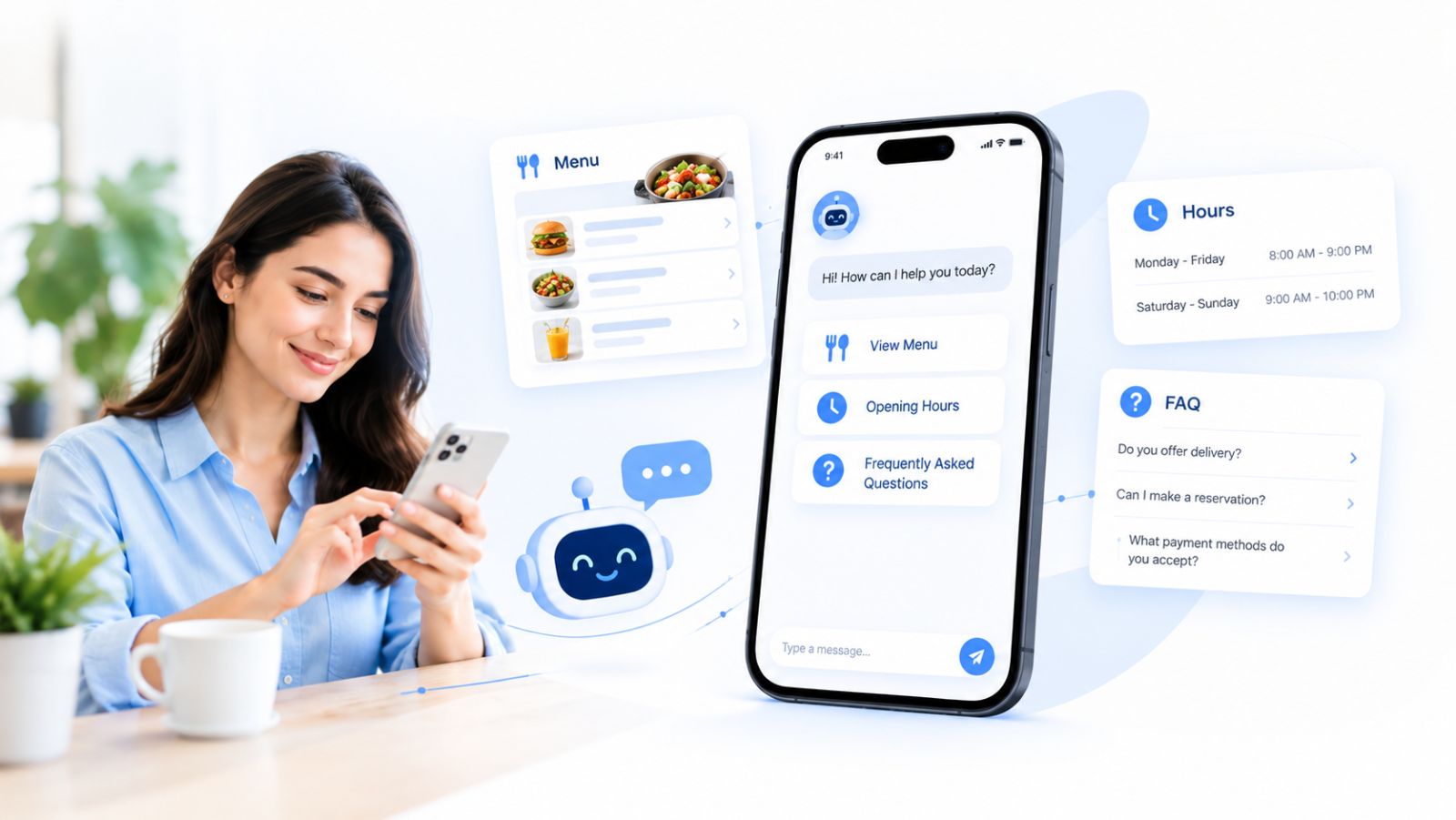
Opening hours, vegetarian options, parking, group bookings, whether the terrace is open. These questions arrive at the worst time, which is during service. An AI agent trained on your menu and policies can reply in seconds and in the guest’s own language.
A few habits make answers more reliable:
- Keep a text version of your menu. An AI reads dish names, descriptions and prices from text far more accurately than from a photo of a printed page. Update it whenever prices change.
- Share a location pin when someone asks “where are you?” so it opens directly in their maps app.
- Escalate sensitive questions. Allergies are the clearest case. The agent can quote what the menu says, but anything involving cross-contamination or a severe allergy should go to a human who can check with the kitchen. Write that rule into the agent’s instructions.
Job 4: Review Requests That Follow the Rules
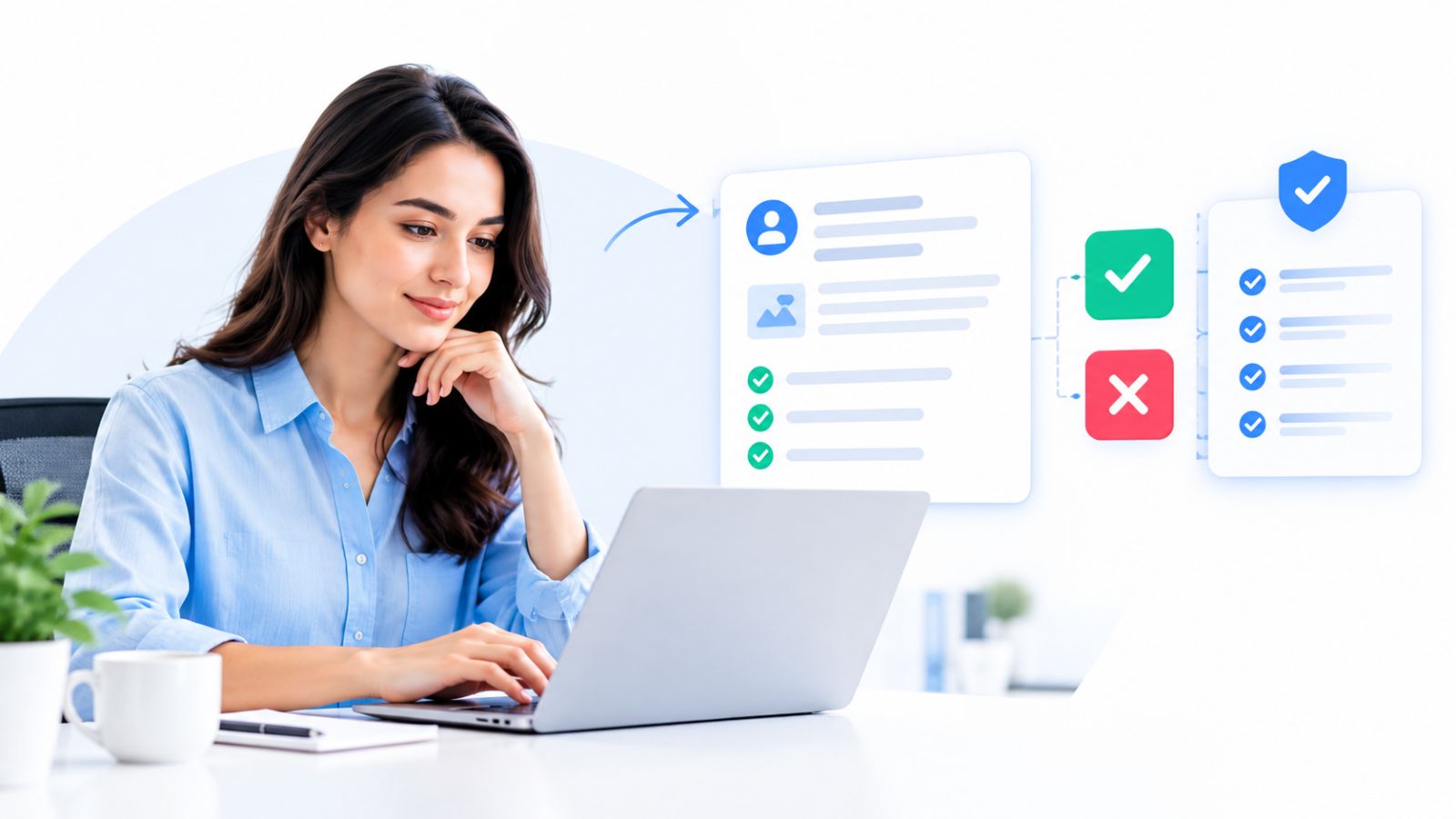
Reviews strongly influence where people choose to eat. In BrightLocal’s 2026 Local Consumer Review Survey, 97% of consumers read reviews for local businesses, 68% will only use a business rated four stars or higher, and 74% only care about reviews from the last three months. In other words, a steady stream of fresh reviews beats a big push once a year.
Timing matters. For dine-in, ask the same evening or the next morning. For takeaway, an hour or two after pickup works well.
There is one rule you should never bend: ask every guest, not only the happy ones. Google’s policy states that merchants must not discourage negative reviews, selectively solicit positive ones, or offer incentives such as discounts in exchange for a review. The popular “send only happy guests to Google” tactic, known as review gating, breaks that rule and can get your reviews removed.
What you can do safely:
- Send the same review link to every guest, with a friendly message and no reward attached.
- Offer a private way to reach the manager (“reply here if anything wasn’t right”) as an extra option for everyone, not as a filter that decides who sees the link.
- Reply to reviews, positive and negative. It shows future guests that someone is paying attention.
Job 5: Win-Back Offers and Regulars
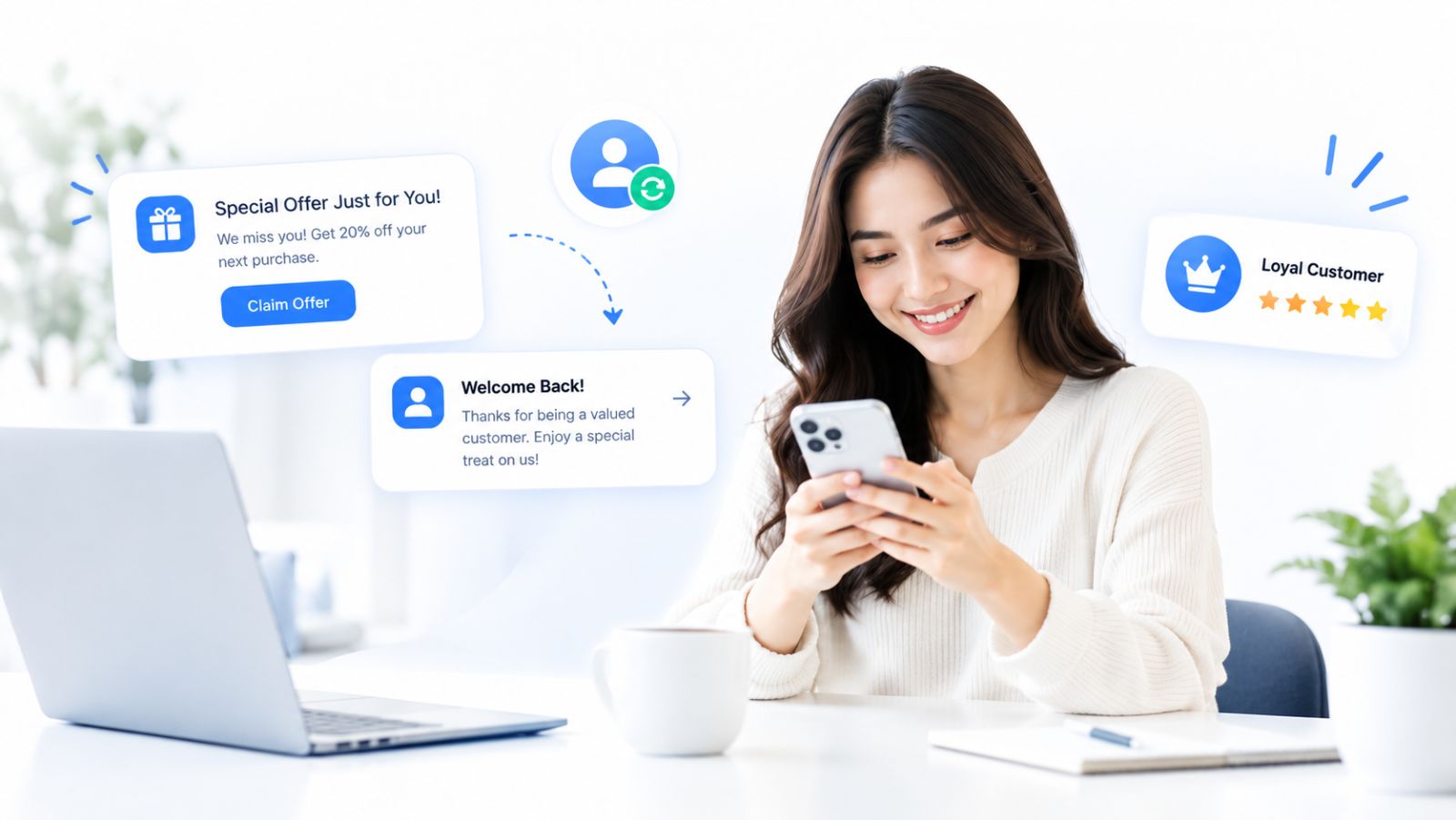
Your chat contacts are people who have already eaten your food, which makes them more valuable than a cold ad audience. Use them with care:
- Segment by behavior: regulars, guests who have not ordered in 60 days, weekend-only customers.
- Message only opted-in contacts, and use approved WhatsApp templates for promotions.
- Match the offer to the segment: a weekday lunch deal for office workers, a family bundle for weekend orderers.
Every booking, order and conversation also builds a contact record automatically, so you end up with a lightweight restaurant CRM without anyone typing data in by hand.
Copy-and-Paste Message Templates
Keep each message short and tied to one action. Replace the items in braces.
Booking request received
Thanks {Name}! We’ve got your request for {4} guests on {Fri, 24 Oct} at {8:00 PM}. We’ll confirm within 15 minutes.
Same-day reminder
See you tonight at {8:00 PM}, {Name}. Your table for {4} is ready. Plans changed? Reply CANCEL and we’ll free it up.
Order confirmation
Got it, {Name}: {2x Chicken Biryani, 1x Mango Lassi}. Total {$28.50}. Pay here to confirm: {link}. Ready for pickup at {7:15 PM}.
Order ready
Your order is ready at the counter, {Name}. Show this message at pickup. Enjoy!
Review request (sent to every guest)
Thanks for dining with {Spice Route}, {Name}! If you have a minute, we’d love a review: {review link}. And if anything wasn’t right, just reply here and the manager will sort it out.
Win-back offer (opted-in guests only)
We miss you, {Name}! This week, your favorite {Paneer Tikka} comes with a free dessert on direct orders. Order here: {link}
Notice that the review message has no discount and no “if you enjoyed it” condition. It goes to everyone in the same words.
How ChatbotX Fits In
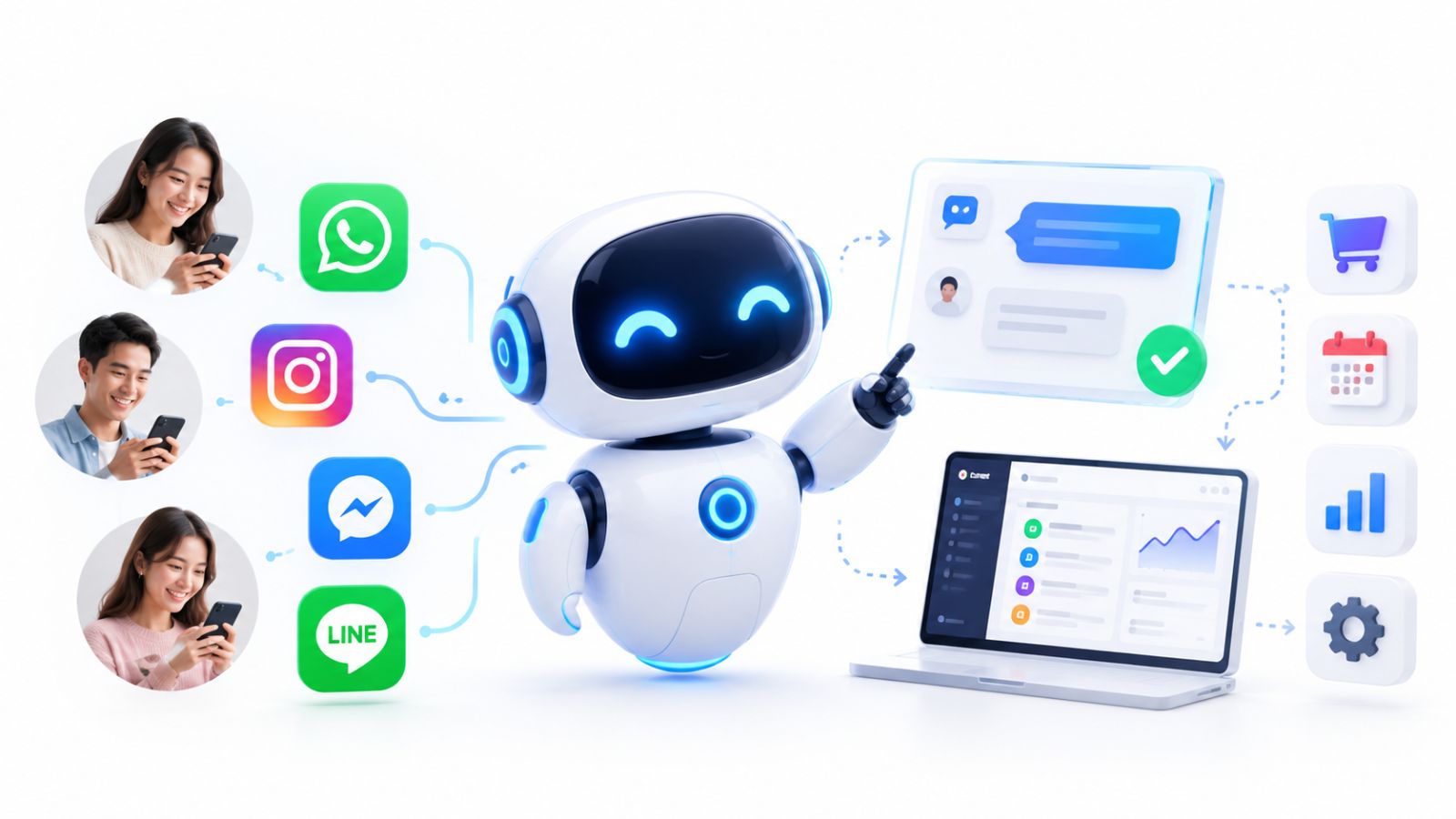
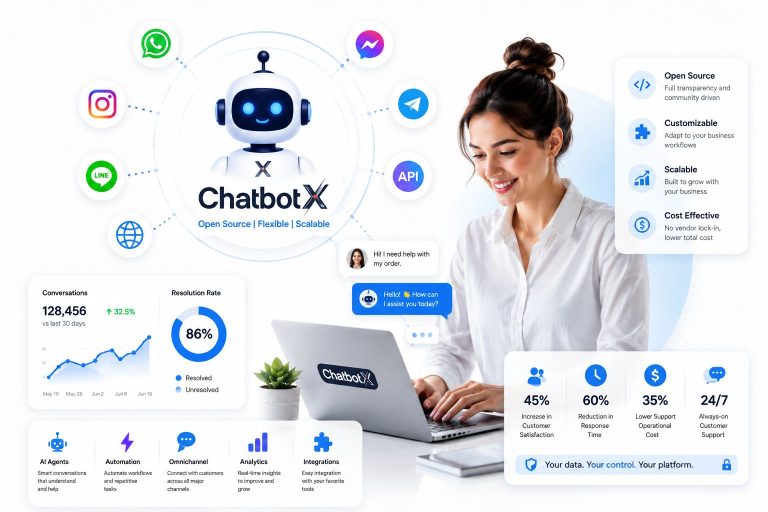
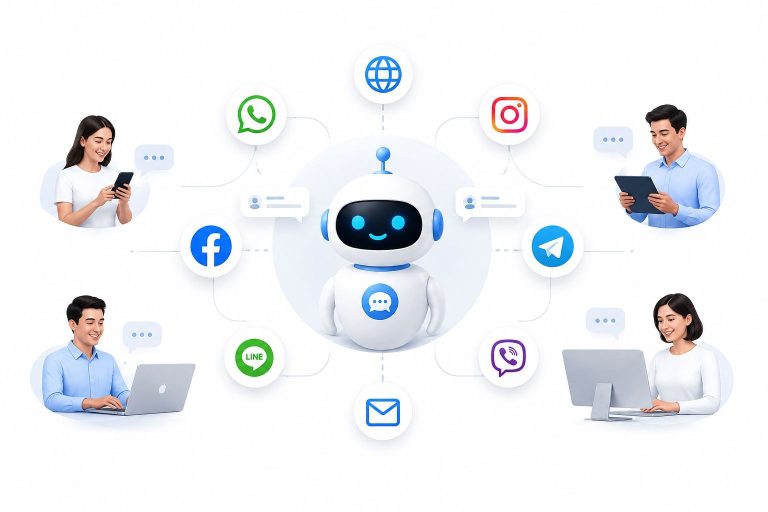
You can build these five jobs with several tools. One option worth a look is ChatbotX, an open-source, agentic chat marketing platform that connects WhatsApp, Messenger, Instagram, Telegram, Zalo, TikTok, email and web chat in one place. Here is how its building blocks line up with a restaurant’s needs:
| Restaurant job | ChatbotX building block |
|---|---|
| Menu, hours and FAQ answers | AI Agents trained on your menu and policies, with guardrails and human handoff |
| Booking and order conversations | Flow Builder to design the question-by-question steps without code |
| Team confirmation and escalation | Shared Inbox so staff can step in on any conversation |
| Regulars, tags and win-back lists | CRM Contacts that store history and segment guests automatically |
Because the project is open source, developers and agencies can inspect the code, self-host it, or follow updates in the ChatbotX GitHub repository. Each new version is listed on the ChatbotX releases page, which is useful if you want to track what has shipped before you commit.
If you are still deciding whether a chatbot is worth the effort at all, the article on small business chatbot problems owners want fixed first is a practical place to start.
A Five-Week Rollout Plan
Add one job per week so your team can adjust before the next one goes live:
| Week | Focus | Why this order |
|---|---|---|
| 1 | Menu, hours and FAQ answers | Saves staff time on day one and needs no payment setup |
| 2 | Reservation requests | Uses the same conversation skills, plus a confirmation step |
| 3 | Direct ordering | Test the menu, cart and payment steps end to end first |
| 4 | Review requests | Start once orders and visits are flowing |
| 5 | Win-back campaigns | Needs a healthy, opted-in contact list |
Costs and Common Mistakes

What to budget for. Messaging platforms generally charge by message type. Replies to guest-initiated chats are usually cheap or partly free, notifications you send first (order ready, booking reminder) cost a little, and marketing broadcasts cost the most. That is why segmenting your list matters: a targeted message to 300 lapsed regulars is better value than a blast to everyone. Check the current rate card for your country before launch, and compare the monthly bill with the commission you save on direct orders.
Mistakes to avoid:
- Auto-confirming tables you cannot guarantee. Confirm against real availability.
- A photo-only menu. The agent cannot answer “do you have gluten-free pasta?” from a picture.
- No one watching the order queue. Direct orders only save money if they are handled as fast as app orders. Assign one person per shift to the inbox.
- Blasting offers to everyone. Unwanted promotions get numbers blocked or reported.
Know the limits. An AI agent is not a table-management system, so it will not see your floor plan or hold tables by capacity. It also does not replace your POS. Plan for staff to own the confirmation and order queues during service.
FAQ
What is the best AI for restaurants?
There is no single best tool. For back-of-house needs, look at the forecasting and inventory features in your POS. For guest communication, a messaging AI agent that handles bookings, orders, FAQs and review requests on WhatsApp gives the fastest return for independent restaurants.
Can a chatbot take restaurant reservations?
Yes. A chatbot can collect the date, time, party size and notes, then pass the request to your team or log it in a sheet. For most restaurants, the safest approach is to have a person confirm bookings unless the slot is clearly open.
How can a restaurant reduce delivery app commissions?
Encourage repeat customers to order directly. Offer a simple ordering link or chat, print it on bags and receipts, and make the direct route at least as convenient as the app.
Is it allowed to offer a discount for a Google review?
No. Google’s policy does not allow merchants to offer incentives for reviews or to selectively ask only happy customers. Send the same neutral review request to every guest instead.
Do I need a developer to set this up?
Not necessarily. Visual flow builders let non-technical staff design the conversation steps. A developer or agency helps most when you want custom integrations or a self-hosted setup.
Ready to Put Your Restaurant’s WhatsApp on Autopilot?
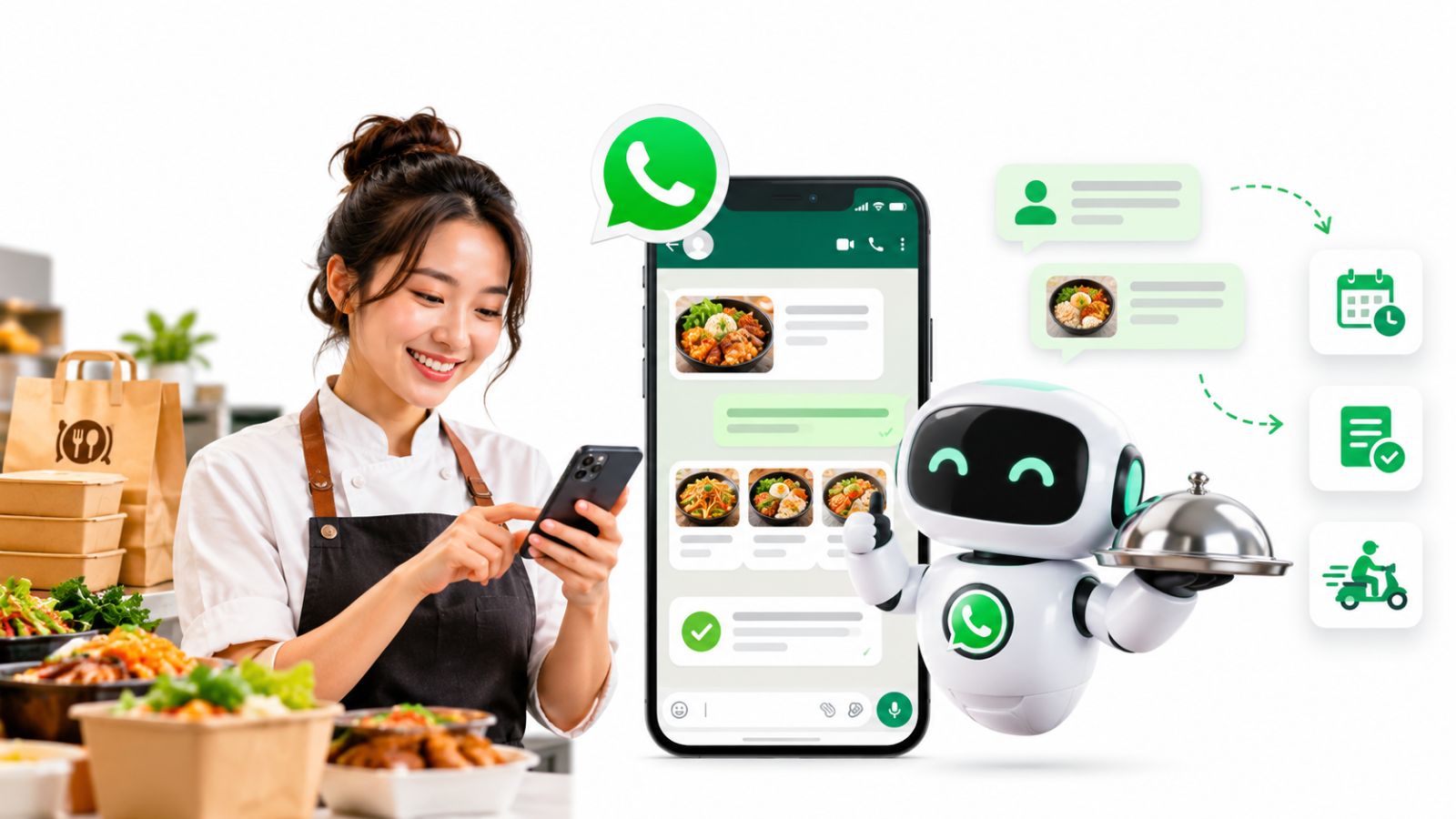
The best AI for restaurants is the kind guests barely notice: a fast answer about Sunday hours, a table requested in a few taps, a takeaway order paid inside the chat, and a friendly review request the next morning.
Start small this week. Load your menu and FAQs, switch on instant answers for the questions your team hears every night, then add bookings and direct ordering as you go. ChatbotX offers a free self-hosted Community plan and a 7-day free trial on its hosted plans, so you can test the whole flow with your own menu before spending a dollar. Book a quiet half hour, set up your first agent, and let your staff get back to the guests in front of them.
Agencies and freelancers: restaurants are a strong first niche. Every venue shares the same five problems, the setup is repeatable, and the owner can see results in their inbox within a week. Lead with the commission math, and the value becomes obvious.