
It’s 8:15 p.m. A patient just left an appointment and has a follow-up question about their prescription. The clinic’s front desk closed an hour ago. They try the patient portal, give up after the third login prompt, and call the office the next morning right as ten other patients are doing the same thing, all before 9 a.m.
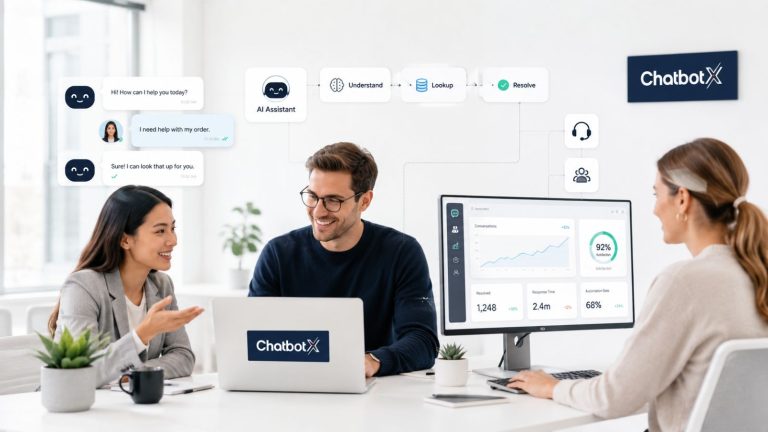
This is the daily reality for thousands of clinics, and it’s exactly the gap an AI chatbot for clinics is built to close. Instead of forcing every patient interaction through a handful of overworked front-desk staff during business hours, a well-built clinic chatbot handles scheduling, reminders, intake, and routine questions around the clock while keeping sensitive conversations compliant and secure.
Launch agentic chat marketing in minutes with ChatbotX









Why Clinics Can No Longer Rely on Phone Lines Alone
Patient expectations have shifted. People book restaurants, flights, and salon visits through chat and apps, so a clinic that only offers phone-tag scheduling feels outdated by comparison. That expectation gap has real financial consequences.
Missed appointments alone drain enormous value from healthcare practices. According to appointment-industry benchmarking data, medical practices average around an 18% no-show rate, with dental offices typically running closer to 12%, and every empty slot still carries staffing and overhead costs. On the communication side, a 2026 patient communication survey found that a striking 93% of patients have opted in to receive text messages from their healthcare providers, and texting has now overtaken both email and patient portals as the top preferred channel. When a clinic’s messaging stack doesn’t match that preference, patients don’t just get frustrated – many disengage from care entirely.
An AI-driven front desk closes exactly this gap: it meets patients on the channel they already use, at the hour they’re actually asking the question.
What an AI Chatbot for Clinics Actually Does

“Chatbot” undersells what modern clinic automation handles. In practice, it acts as a digital front-desk coordinator that can:
- Book, confirm, and reschedule appointments automatically, syncing with the clinic’s calendar so double-bookings don’t happen.
- Send smart reminders across SMS, WhatsApp, or web chat, cutting down the no-show rate without adding staff workload.
- Collect intake information – insurance details, reason for visit, symptom checklists – before the patient even walks in.
- Answer routine questions about hours, billing, directions, or prep instructions for a procedure, instantly and consistently.
- Route urgent messages to a human nurse or care coordinator the moment a conversation needs clinical judgment.
This is where platforms built for structured, multi-step conversations – rather than simple keyword bots – make the difference. ChatbotX’s AI Agents can be trained to hold a full intake conversation, recognize when a question needs a licensed professional, and hand the thread off cleanly instead of leaving the patient stuck in a scripted loop.
Designing a Booking and Reminder Flow That Actually Reduces No-Shows

The clinics that see the biggest impact don’t just bolt on a chatbot – they redesign the booking journey around it. A typical high-performing flow looks like this:
- Patient messages the clinic (via SMS, website chat, or WhatsApp) asking for an appointment.
- The bot checks available slots and confirms a time in under a minute.
- A reminder goes out 48 hours before the visit, with a one-tap reschedule option.
- A second, shorter reminder goes out the morning of the appointment.
- If the patient doesn’t confirm, staff get an alert to follow up personally.
Building this kind of sequence used to require custom development. With a visual Flow Builder, clinic staff – not developers – can map out the entire booking and reminder journey, adjust timing, and add branching logic for cancellations or insurance questions without touching code.
The payoff is measurable. Industry data shows healthcare organizations that combine automated reminders with digital engagement tools have cut missed appointments by as much as 70 percent compared to relying on manual calls alone.
Keeping Every Conversation Organized — and Compliant

Automation only helps if staff can still see the full picture. When SMS, WhatsApp, and web chat all feed into a single Shared Inbox, front-desk teams get one place to review bot-handled conversations, step in when needed, and keep a complete record of every patient exchange without switching between five different apps.
Because clinics handle protected health information, compliance can’t be an afterthought. Any vendor or platform that creates, receives, or transmits PHI on a clinic’s behalf is generally classified as a business associate under HIPAA, which brings its own set of security and contractual obligations – a distinction explained in detail in HHS’s official guidance on business associates. Before rolling out any chatbot, clinics should confirm how conversation data is stored, whether a signed business associate agreement is available, and what encryption standards apply in transit and at rest.
Keeping structured patient and lead data in one place also matters operationally. A CRM Contacts module lets staff track appointment history, preferred contact channel, and follow-up notes against each patient record, so nothing gets lost between the bot and the human team.
Why Open-Source Flexibility Matters for Healthcare Teams

Many clinics are wary of locking their patient communication into a closed platform they can’t inspect or customize. This is one reason open-source chatbot infrastructure has gained traction with healthcare IT teams – it allows practices, or their technical partners, to review exactly how data flows through the system and adapt the platform to specific compliance or EHR-integration needs.
ChatbotX is built and maintained as an open-source omnichannel chatbot project on GitHub, giving clinics and their developers full visibility into the codebase rather than a black box. Teams that want to track ongoing improvements, security patches, and new integrations can follow the project’s release history on GitHub directly.
The Business Case: Time, Cost, and Patient Trust
The return on a clinic chatbot shows up in three places:
- Staff time – routine scheduling and FAQ volume drops off the phone queue, freeing front-desk staff for in-person patients and complex cases.
- Revenue protection – fewer no-shows means fewer empty slots, and automated rebooking recovers appointments that would otherwise sit vacant. One industry analysis found a single practice can lose tens of thousands of dollars every year to unfilled appointment slots even at moderate no-show rates.
- Patient satisfaction – instant responses outside office hours signal that the clinic is accessible, which matters increasingly to patients who already expect the same responsiveness from every other service they use.
Clinics that have already modernized their support workflows outside of scheduling report similar gains; see how AI customer service assistants help small businesses support customers around the clock for a broader look at always-on automated support, and this complete guide to customer support automation software for a deeper technical comparison of platforms.
Getting Started: A Practical Rollout Checklist
Clinics adopting AI chat support for the first time tend to succeed faster when they:
- Start with one high-volume use case – usually appointment booking or reminders – before automating everything at once.
- Confirm HIPAA and business-associate requirements with the vendor in writing before any patient data flows through the bot.
- Keep a human-in-the-loop path for anything that sounds clinical, urgent, or emotionally sensitive.
- Review conversation logs weekly during the first month to fine-tune the bot’s responses and escalation rules.
- Track no-show rate, response time, and patient satisfaction before and after launch to quantify the impact.
Ready to Modernize Your Clinic’s Patient Communication?

Patients already expect instant, always-on communication – and clinics that meet that expectation win more trust, fewer missed appointments, and lighter front-desk workloads. ChatbotX brings AI-driven scheduling, reminders, and patient support together in one open-source, omnichannel platform built to scale with your practice.
Get started with ChatbotX today and see how quickly your clinic can turn after-hours questions into booked, kept appointments.