

The bar for customer service has never been higher. Consumers in 2026 expect brands to understand them deeply – not just respond promptly but anticipate what they need before a complaint is ever typed. Predictive customer service, built on the backbone of modern AI, makes this possible at scale.
This guide covers the full picture: the technology behind predictive support, its real-world applications across industries, the challenges businesses must navigate, and how to implement it in a way that drives measurable results.
Launch agentic chat marketing in minutes with ChatbotX














What Is Predictive Customer Service?
Predictive customer service is the practice of using data and AI models to identify what a customer is likely to need – or what problem they are likely to encounter – before they reach out. Instead of waiting for a complaint ticket, a live chat request, or a negative review, businesses act first.
This is a fundamental shift from reactive support (responding after the fact) to proactive engagement (preventing friction before it surfaces). The enabling technologies are machine learning, natural language processing, sentiment analysis, and predictive analytics – all working in concert on real-time and historical customer data.
According to Salesforce’s State of the Connected Customer report, over 80% of customers now consider the experience a company provides to be as important as its products. Meeting that expectation without a predictive layer is increasingly difficult.
From Reactive to Proactive: Why the Shift Matters

Traditional support models have a built-in lag. A customer experiences a problem, contacts support, waits in a queue, and then receives a resolution – often days after frustration has already peaked. This model was acceptable in an era of slower commerce and lower consumer expectations.
Today it is not.
Modern buyers compare every brand interaction against the best digital experience they have ever had. They expect the same personalization from a B2B SaaS vendor that they get from a streaming platform. Predictive customer service closes that gap by removing the lag entirely.
Consider a few industry examples:
- Telecom: An AI system detects network degradation on a subscriber’s line and sends an automated status update and estimated resolution time – before the subscriber notices anything is wrong.
- E-commerce: A predictive engine flags that a customer has visited the returns page twice and added a product to a wishlist three times without purchasing. An automated message with a personalized discount arrives before they abandon for a competitor.
- SaaS: Usage analytics identify a customer whose engagement has dropped 40% over 30 days – a reliable churn predictor. A success manager reaches out proactively with a check-in call and tailored resources.
In each case, the business acts before the customer has to ask. The result is higher satisfaction, lower churn, and reduced support volume.
The Core Technologies Behind Predictive Customer Service

1. Data Collection and Pattern Recognition
Predictive systems are only as good as the data feeding them. The most valuable customer data sources include:
- Transaction and purchase history – reveals buying cadence, preferred categories, and likely next purchases.
- Behavioral data – on-site clickstreams, app navigation patterns, and content consumption tell you what a customer is considering before they say anything.
- Support interaction logs – past tickets, chat transcripts, and call recordings expose recurring pain points and flag customers with a history of friction.
- IoT and device telemetry – for hardware-adjacent businesses, real-time performance data from connected devices enables maintenance predictions before failures occur.
Combining these streams through ETL pipelines and feeding them into AI models creates a continuously updated picture of each customer’s current state and likely next action.
2. Natural Language Processing (NLP)
NLP allows AI systems to interpret the meaning, intent, and sentiment behind unstructured text – chat messages, emails, social comments, and voice transcripts. This is the technology that makes it possible to understand why a customer is contacting support, not just that they are.
Modern NLP architectures fall into two broad categories with distinct strengths:
- Generative models (GPT family) – excel at producing fluent, context-aware conversational responses. These power the chat interfaces and virtual assistants that handle open-ended customer interactions.
- Encoder models (BERT family) – optimized for classification tasks like intent recognition, topic tagging, and named entity extraction. These are the workhorses behind routing, ticket categorization, and sentiment scoring.
Production-grade predictive support systems typically use both: a BERT-class model to classify intent and urgency, and a GPT-class model to generate the response.
3. Sentiment Analysis
Sentiment analysis goes beyond topic classification to gauge emotional state. An AI that can detect rising frustration across a conversation – based on word choice, punctuation, response time, and escalation patterns – can intervene before the situation deteriorates.
Practical applications include:
- Automatically escalating a chatbot conversation to a live agent when negative sentiment exceeds a threshold.
- Scoring every incoming support ticket by emotional urgency to prioritize the queue more accurately than simple time-stamps.
- Triggering a proactive outreach from a customer success manager when sentiment in product reviews or NPS surveys dips for a specific account.
4. Predictive Analytics and Machine Learning Models
Prediction at scale requires trained models that can output probability scores from complex feature sets. The most commonly deployed model types in customer service contexts are:
| Model Type | Primary Use Case |
|---|---|
| Logistic Regression | Binary churn prediction from historical behavior signals |
| Random Forests | Multi-factor customer risk segmentation |
| Gradient Boosting (XGBoost, LightGBM) | High-accuracy propensity scoring across large customer bases |
| Neural Networks / Deep Learning | Complex pattern detection, NLP pipelines, hyper-personalization |
These models are typically integrated with CRM platforms and customer data platforms (CDPs) to generate actionable outputs – a propensity score that triggers a workflow, not just a number in a dashboard.
According to McKinsey & Company, companies that deploy AI-driven personalization at scale generate 40% more revenue from those activities than average performers. Predictive customer service is a direct path to that outcome.
Real-World Applications Across Industries
Personalized Recommendations Before the Ask
Recommendation engines are the most familiar form of predictive customer service. By analyzing purchase history and behavioral signals, AI surfaces products or content a customer is likely to want next – sometimes before they have consciously identified the need themselves.
The technology behind this has matured significantly. Collaborative filtering, matrix factorization, and session-based neural networks now run in real time, updating recommendations with each page view or interaction.
Proactive Issue Resolution and Predictive Maintenance
In industries where products are hardware or infrastructure, predictive maintenance is a high-value application of AI-driven customer service. Algorithms trained on sensor data and historical failure records can flag impending issues days or weeks before they cause customer-impacting outages.
The customer experience implication is significant: instead of receiving a complaint and dispatching a repair team, the business notifies the customer proactively, schedules service at a convenient time, and resolves the issue before it ever interrupts their operations.
AI-Powered Chatbots That Predict Intent
Modern AI chatbots do more than answer questions – they predict what a customer is trying to accomplish based on context, browsing history, and the pattern of their current session. This intent prediction enables the chatbot to offer the right option before the customer has to describe their problem in full.
ChatbotX’s AI Agents take this further with a no-code flow builder that lets teams design predictive conversation paths across every major messaging channel. Rather than static decision trees, these agents use real-time context to dynamically route conversations, pre-fill responses based on CRM data, and escalate intelligently to human agents when sentiment or complexity thresholds are crossed. The platform’s open-source architecture – available on GitHub – means teams can inspect and customize every layer of the logic, from NLP model integration to escalation rules.
Churn Prevention Through Early Warning Systems
Customer churn follows predictable patterns. Engagement drops before cancellation. Support ticket volume spikes. Product usage narrows to a small subset of features. Login frequency declines. These signals, individually, are easy to miss. Aggregated and scored by a machine learning model, they produce a reliable early warning.
Businesses using predictive churn models can trigger targeted retention workflows – a personalized email, a proactive call from a CSM, a tailored discount – at the optimal moment before the customer has made a decision to leave.
Challenges and How to Address Them
Data Privacy and Regulatory Compliance
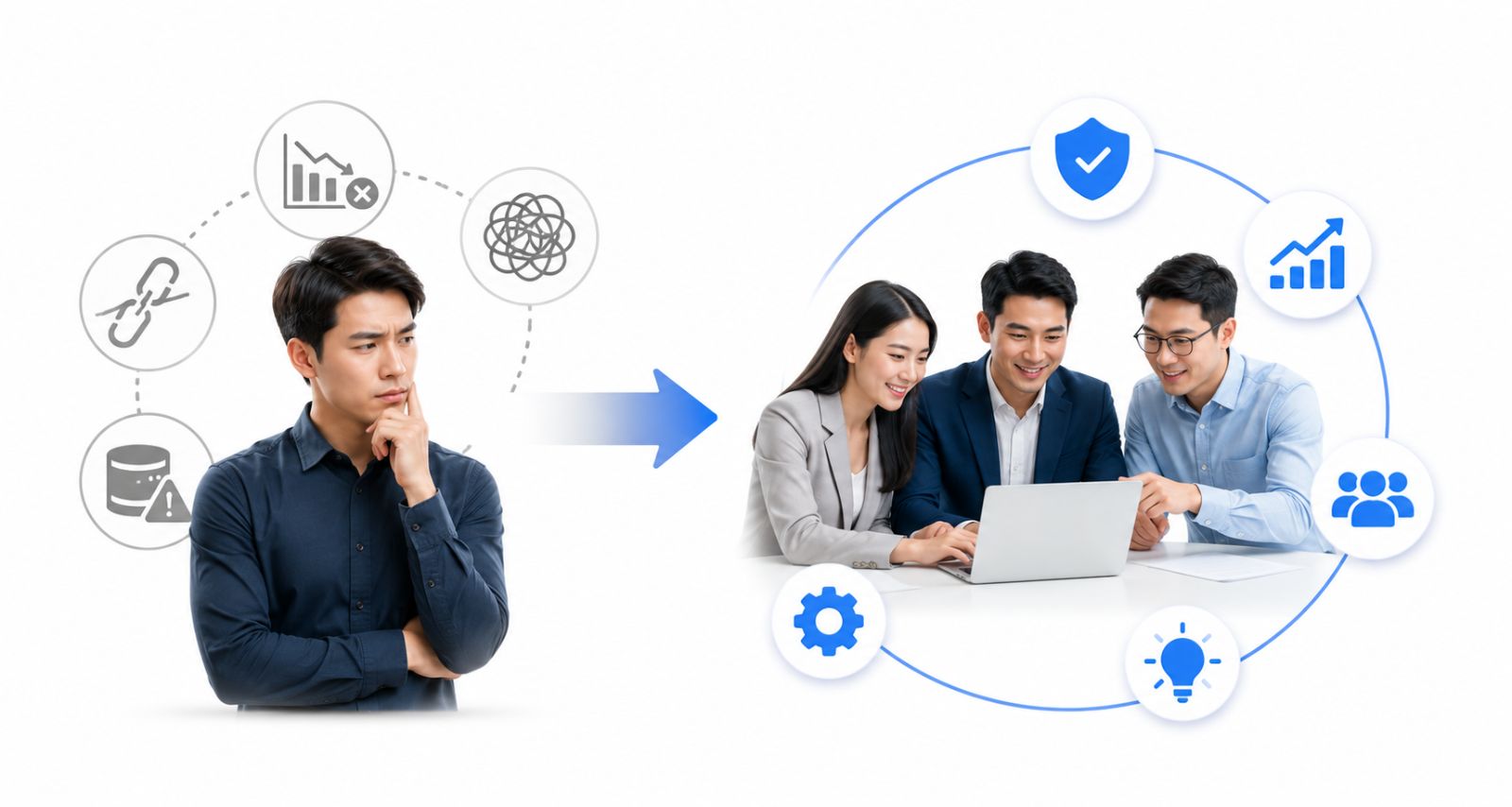
Predictive customer service depends on data. The more data, the better the predictions. But consumer privacy regulations – GDPR in Europe, CCPA in California, PDPA across Southeast Asia, and a growing patchwork of national frameworks – impose strict requirements on data collection, storage, processing, and consent.
Businesses must implement privacy-by-design from the start: data minimization, purpose limitation, anonymization for model training, and clear consent mechanisms. An AI model trained on improperly obtained data is not just a regulatory risk – it is a customer trust risk.
Integration with Legacy Infrastructure
Most enterprises run customer data across a fragmented landscape: legacy CRM systems, on-premise databases, SaaS tools, and proprietary data warehouses that were never designed to talk to each other. Deploying AI across this landscape requires careful API architecture and data unification.
ChatbotX’s API, CLI & MCP layer addresses this directly, providing flexible integration hooks that connect the platform to existing systems without requiring a full infrastructure overhaul. Teams can pipe in CRM data, trigger external webhooks, and build custom connectors through a documented API – reducing integration lift significantly. The platform’s open-source codebase on GitHub also allows engineering teams to build and contribute custom integrations for edge-case systems.
Balancing Automation with Human Judgment
Over-automation is a real failure mode. A customer who receives an automated message at the wrong moment – or whose problem requires nuance that the model did not capture – will feel less served, not more. The goal is augmentation, not replacement.
Effective predictive systems use automation to handle high-volume, lower-complexity interactions and to surface timely signals for human agents. The human agent’s role shifts from reactive firefighting to proactive relationship management, armed with AI-generated context about the customer’s current state, history, and predicted needs.
ChatbotX’s Shared Inbox embodies this approach – AI handles routine resolution while human agents receive full conversation context, sentiment scores, and suggested actions for every handoff, enabling faster and more empathetic responses.
Model Bias and Fairness
AI models trained on historical data can perpetuate historical biases. A churn model trained on data from a specific demographic might underperform for customer segments underrepresented in training. A sentiment model calibrated on English text might misclassify emotional language from non-native speakers.
Addressing this requires diverse training datasets, ongoing bias audits, fairness-aware model evaluation, and post-deployment monitoring. Google’s Responsible AI Practices provides a useful framework for teams building production ML systems in customer-facing applications.
Implementation Roadmap: Getting Predictive Customer Service into Production
Phase 1: Data Infrastructure
Before training any model, you need clean, unified, accessible data. The priorities at this stage are:
- Auditing and consolidating customer interaction data across channels.
- Building or deploying an ETL pipeline that standardizes data formats and removes gaps.
- Establishing a customer data platform (CDP) or data warehouse as the central source of truth.
Phase 2: Model Selection and Training
Choose models appropriate to your use cases. A business primarily focused on churn prevention might start with logistic regression or gradient boosting on engagement signals. One focused on conversational prediction needs NLP models trained on historical chat transcripts.
Establish clear success metrics before training: precision and recall for classification models, BLEU or ROUGE scores for generative models, and business-level KPIs (churn rate reduction, first-contact resolution rate, customer satisfaction score) as the ultimate validation.
Phase 3: Deployment and Integration
Cloud-based deployment (AWS, GCP, Azure) offers the fastest path to production for most teams, with managed services handling infrastructure scaling. For businesses with strict data residency requirements, on-premise or private cloud deployment using containerized models (Docker/Kubernetes) maintains flexibility.
Integration with customer-facing systems – chatbot platform, CRM, ticketing system, email marketing – is where the model outputs become customer outcomes. The tighter this integration, the faster the loop between prediction and action.
Phase 4: Monitoring and Continuous Improvement
Models degrade as customer behavior evolves. A churn model trained on 2024 engagement patterns may become less accurate as product features change and user behavior shifts. Ongoing monitoring using observability tools (MLflow, Weights & Biases) and regular retraining cycles keeps prediction accuracy high.
A/B testing is essential: compare AI-triggered interventions against control groups to measure actual lift, not just model accuracy. This is the evidence base for expanding predictive systems across more customer journeys.
The Future of Predictive Customer Service
Several converging trends will define where this field goes next:
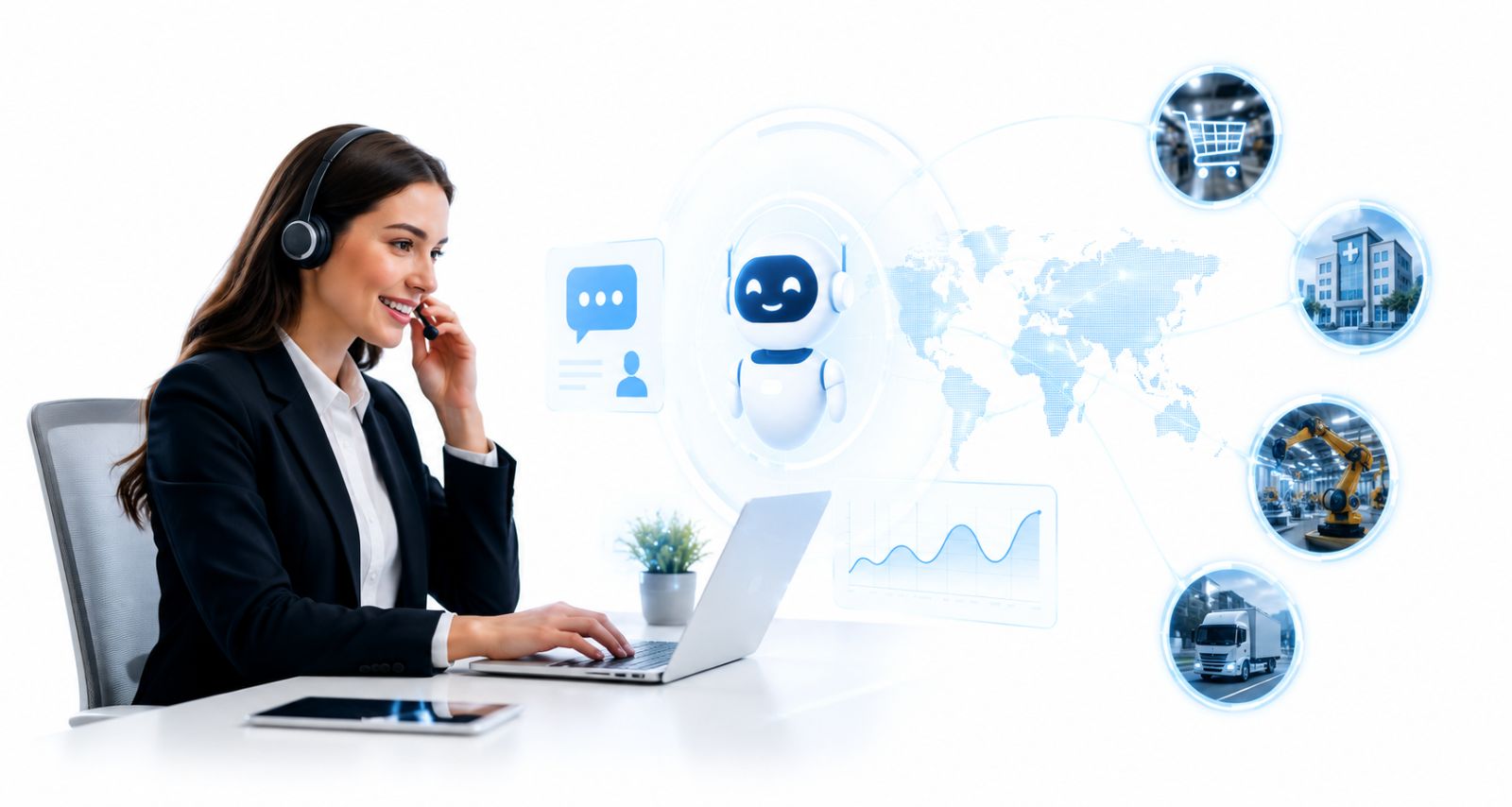
Hyper-personalization at the individual level. Current systems segment customers into cohorts and make predictions at the group level. As model capacity and data richness grow, predictions will become genuinely individual – unique for each customer based on their specific history and current context.
Real-time adaptation. Today’s predictive models run on batch-processed data, updated hourly or daily. Edge AI deployment will enable models that update their predictions within a single conversation, adjusting recommendations and escalation logic in real time as the interaction unfolds.
Emotionally intelligent AI. The next generation of NLP models will more accurately detect emotional subtext – sarcasm, anxiety, enthusiasm – and adjust responses accordingly. Customer service AI that can respond empathetically to a frustrated customer, rather than escalating mechanically on a keyword match, will become a meaningful differentiator.
Cross-channel prediction continuity. Customers interact across WhatsApp, Instagram, email, and web chat – often switching channels mid-journey. Future predictive systems will maintain context and prediction state across every channel, so the AI knows on WhatsApp what the customer did on the website an hour ago. This is a core design principle behind ChatbotX’s omnichannel architecture and a key reason the chatbot workflow engine guide on the ChatbotX blog focuses so heavily on cross-channel state management.
For teams building toward this future now, the WhatsApp AI guide on the ChatbotX blog is a practical starting point for deploying agentic, context-aware conversations on the world’s most-used messaging channel.
FAQ
What is the difference between predictive and proactive customer service?
Predictive customer service uses AI and data models to forecast what a customer will need. Proactive customer service is the operational practice of acting on those predictions – reaching out before the customer does. Predictive is the intelligence layer; proactive is the execution layer.
How much data do you need to start building a predictive model?
It depends on the model type and use case. A logistic regression churn model can produce useful results with as few as a few thousand labeled examples. Deep learning models for NLP generally require tens of thousands of examples at minimum. Starting with simpler models on available data, then expanding as data accumulates, is the most practical approach.
Does predictive customer service work for small businesses?
Yes – especially via platforms that abstract the ML infrastructure. Tools like ChatbotX allow smaller teams to deploy AI-driven conversation flows, sentiment detection, and automated escalation without building models from scratch. The core benefit of acting before customers complain scales regardless of company size.
What metrics should I track to measure predictive customer service effectiveness?
Key metrics include: first-contact resolution rate, average handling time, CSAT and NPS scores, churn rate, proactive contact rate (percentage of issues resolved before a customer-initiated contact), and cost per resolution.
Is AI replacing human customer service agents?
No – the most effective deployments augment human agents rather than replacing them. AI handles high-volume routine interactions, surfaces predictive context for human agents, and automates escalation logic. Human agents focus on complex, high-empathy interactions where their judgment is irreplaceable.
Conclusion: Start Predicting, Stop Reacting

Predictive customer service is not a future capability – it is a current competitive advantage. Businesses that invest in AI-driven proactive support today are reducing churn, increasing satisfaction scores, and building the kind of customer relationships that are genuinely difficult to replicate.
The technology stack is more accessible than it has ever been. The data you need is already being generated by your customers every day. The question is whether you have the infrastructure and tools to act on it before the opportunity passes.
Ready to build a predictive, proactive customer experience? Start with ChatbotX for free at chatbotx.io – an open-source, agentic omnichannel chatbot platform built for teams that want to deploy AI across every customer channel without proprietary lock-in. Explore the AI Agents feature to see how predictive conversation flows work in practice, or star the project and dive into the codebase directly on GitHub.


