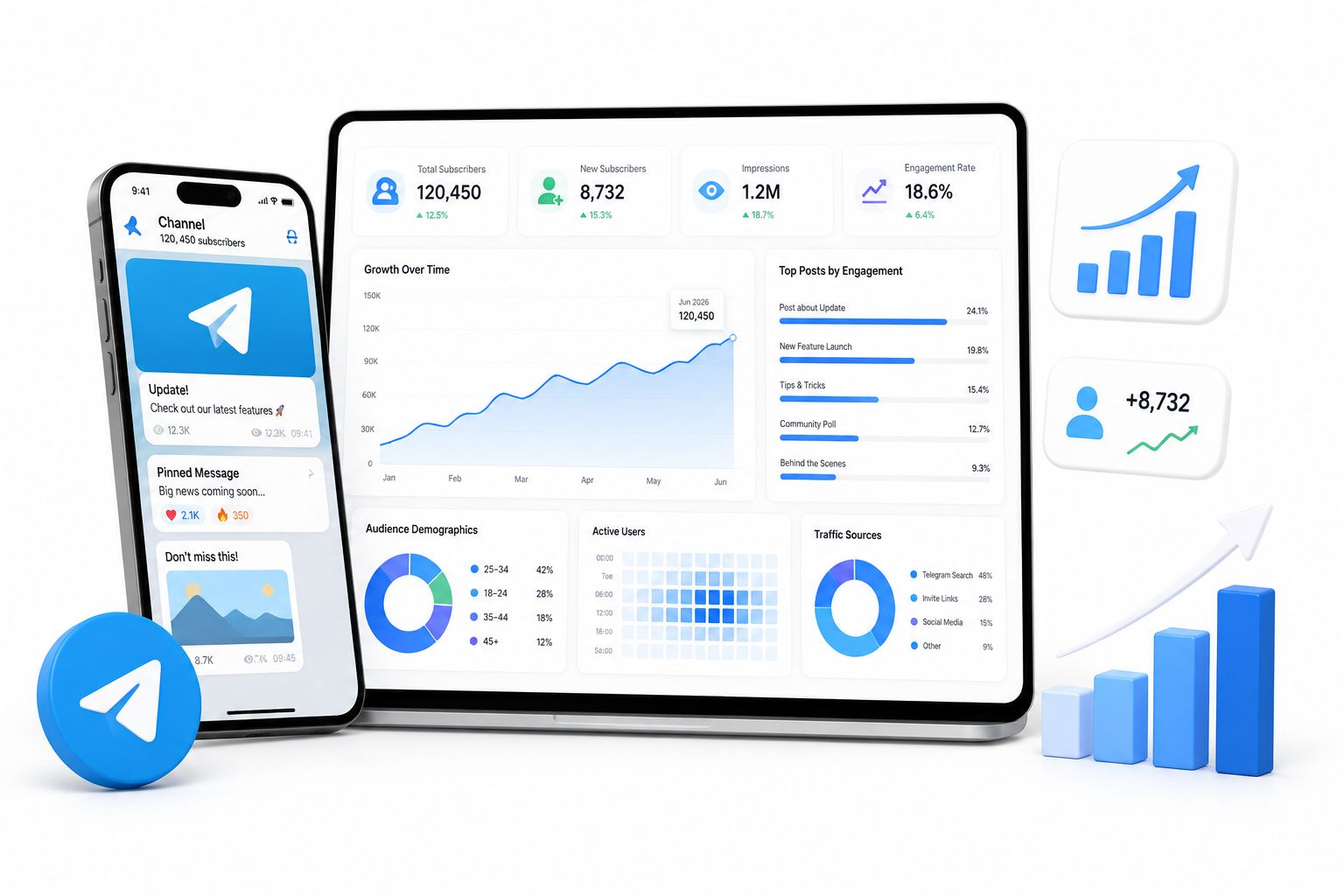
Telegram stopped being “just another chat app” years ago. Today it functions as a publishing platform, a storefront, a customer support desk, and a community hub all at once – and channels that treat it that way are the ones pulling ahead in 2026. The difference between a channel that plateaus at a few thousand subscribers and one that compounds into six figures almost always comes down to one habit: reading the numbers instead of guessing.
This guide breaks down the metrics that actually matter, how Telegram Premium data changes the picture, why geography quietly shapes engagement, and how to convert all of that into content decisions you can repeat every week.
Launch agentic chat marketing in minutes with ChatbotX














Why “Vibes-Based” Growth Stops Working
Anyone can post on Telegram. Far fewer people can explain why one post outperformed the next by 4x. Without analytics, channel owners are left reacting to whatever feels intuitive – more emojis, different posting times, longer captions – with no way to confirm any of it actually worked.
Telegram’s own scale makes this riskier than it used to be. The platform crossed the billion-user mark in 2025 and continues adding millions of accounts every month, which means competition for attention inside any given niche has increased right alongside the audience. Standing out now requires the kind of targeting precision that only comes from measurement, not intuition. For a broader picture of how messaging platforms compare on reach and usage, Statista’s tracking of global messenger apps is a useful reference point.
The Four Metrics Worth Building a Dashboard Around
Subscriber count is the vanity metric everyone starts with, but it tells you almost nothing about channel health on its own. The following four numbers are what actually predict whether a channel keeps growing or stalls out.
| Metric | What It Tells You | Why It Matters |
|---|---|---|
| View Rate | Share of subscribers who actually see a post | Reveals real reach versus paper subscriber counts |
| Engagement Rate | Reactions, comments, and replies per view | Shows whether content resonates or just gets scrolled past |
| Forward Rate | How often a post gets shared onward | The strongest organic signal – forwards recruit new subscribers for free |
| Subscriber Growth Rate | Net change in subscribers over time | Confirms whether acquisition efforts are compounding or just replacing churn |
A channel with a high view rate but weak engagement usually has a headline problem, not a content problem – people open the message, then bounce. A channel with strong engagement but flat growth is often failing to convert its own audience into recruiters through shares and forwards. Treating these four numbers as a system, rather than isolated stats, is what separates strategic channel owners from people who are just posting and hoping.
Timing compounds all of this. Most Telegram users check new messages within a few minutes of a push notification, so publishing outside your audience’s active window can quietly cut a post’s reach by a third or more before anyone even reads it.
What Telegram Premium Data Adds to the Picture

Telegram Premium has moved from a niche add-on to a mainstream tier, and its subscriber base keeps climbing year over year. That matters for analytics because Premium unlocks a second, more detailed layer of insight beyond the free dashboard: behavioral splits between paying and non-paying audiences, feature-level usage patterns, and clearer signals about who your highest-intent subscribers actually are.
In practice, this segmentation tends to surface a specific kind of opportunity. A finance-focused channel might learn that its Premium subscribers gravitate toward deep-dive market breakdowns rather than quick headlines, and shift its editorial calendar accordingly. An education channel might discover that Premium users disproportionately use faster downloads to grab bundled resource packs, which justifies investing more in downloadable content rather than short-form posts. The value isn’t the Premium badge itself – it’s the sharper lens it gives you on what your most committed audience wants.
Geography Changes Everything About Timing and Tone

A channel with a global audience is really managing several regional audiences that happen to share one feed. Posting at 9 a.m. in your own timezone might land perfectly for European subscribers and completely miss Southeast Asia’s evening scroll window. Telegram’s own usage data shows a heavily skewed regional footprint – Asia represents by far the largest share of the platform’s users, with Europe and Latin America following, and India alone accounting for a substantial slice of the global base.
This isn’t only a scheduling problem. Humor, references, and even the directness of your copy land differently depending on where a reader is sitting. A joke that performs well with one regional segment can fall completely flat – or even feel tone-deaf – with another. Channels that segment their audience by region and behavior, rather than treating subscribers as one undifferentiated mass, consistently see stronger engagement because the content actually matches the reader’s context. This kind of segmentation is also where a well-configured CRM layer pays off, since tagging contacts by region, language, and behavior turns broad audience data into something you can actually act on post by post.
Beyond Telegram’s Native Dashboard
Telegram’s built-in stats are a solid starting point, but they stop short of the full picture serious channel owners eventually need: competitor benchmarking, brand mentions outside the app, and sentiment tracking across the wider internet. Third-party analytics tools fill that gap by pulling in group-level engagement patterns, member growth comparisons against competitor channels, and cross-platform mention tracking – showing not just how your channel performs in isolation, but how it stacks up against the rest of your niche.
Bots add another layer by automating the busywork: pulling scheduled reports, flagging sudden engagement spikes, and cutting down the manual checking that eats into time better spent on content. Combined, native stats, third-party platforms, and automation bots give you a far more complete read than any single source could on its own.
Turning Numbers Into a Content Engine

Data is only useful once it changes what you publish next. The most effective approach breaks down into three repeatable steps.
Find the pattern. Look across your last few weeks of posts for a consistent signal – maybe video clips consistently beat static images, or posts published between 6 and 8 p.m. reliably outperform earlier slots. One post doing well is luck; the same pattern repeating five times is a rule you can build a calendar around.
Understand the “why.” A post with a high view rate but low engagement usually means the topic caught attention but the delivery didn’t invite interaction – shorten it, add a direct question, or end with a clear next step. A post with both high engagement and a high forward rate means you found something worth doubling down on.
Replicate deliberately. Once you know a format works, adapt it across other content rather than just repeating the same post. A high-performing short video might become the seed for a written recap, a quote graphic, or a follow-up thread – same core idea, reshaped for different moments in your calendar.
Where Automation Fits Into the Analytics Loop
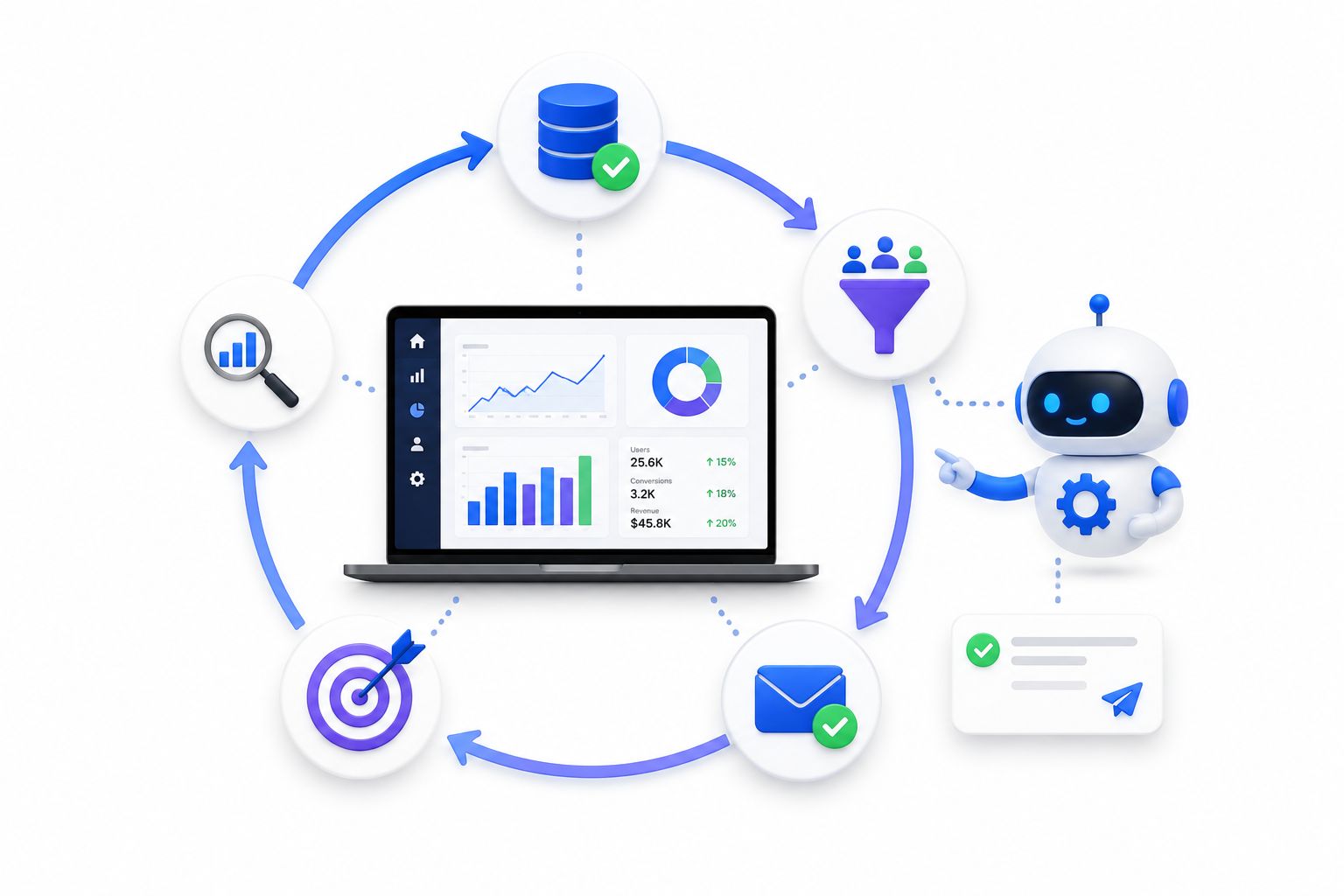
Manually tracking four core metrics across dozens of posts a week is manageable for a small channel. It stops being manageable the moment you’re running broadcasts, drip sequences, and multiple channels at once – which is exactly the stage where an AI-driven marketing layer starts to earn its keep.
This is a gap that open-source platforms like ChatbotX are increasingly built to close. Rather than treating analytics as a separate tool bolted onto your messaging stack, ChatbotX’s Analytics module tracks engagement, campaign performance, and audience behavior directly inside the same platform running your automation – so the data that would normally sit in a disconnected dashboard instead feeds straight back into your next campaign. Its AI Agents can also use that same behavioral data to personalize replies in real time, rather than sending the same generic script to every subscriber regardless of what your metrics say they actually respond to.
The growth side benefits just as much. ChatbotX’s Growth Tools let teams generate trackable entry links and campaign starters, which makes it far easier to see exactly which acquisition source is actually driving the subscriber growth your dashboard reports – instead of lumping every new subscriber into one unlabeled bucket. Because the entire platform is open-source, teams that want full control over how their audience data is stored and processed can self-host it rather than depending on a closed, third-party analytics vendor – a distinction covered in more depth in ChatbotX’s comparison of messaging apps and channel strategy for 2026 and its broader look at instant messaging platforms for business marketing.
For teams that prefer to inspect or extend the platform directly, the full ChatbotX source code is publicly available, with release notes and version history published openly rather than locked behind a support ticket.
Choosing Tools That Match Your Actual Stage

Not every channel needs the same analytics stack. A newsletter-style channel with a few thousand subscribers might get by comfortably with Telegram’s native dashboard and a monthly manual review. A channel running paid promotions, multiple broadcast sequences, and cross-border audiences benefits far more from a connected system that ties analytics, segmentation, and automated outreach together – the kind of setup where marketing teams increasingly expect messaging channels to deliver measurable ROI, not just reach.
The right choice comes down to budget, technical comfort, and how central Telegram actually is to your broader marketing mix – not which tool has the flashiest dashboard. HubSpot’s own marketing research points to a growing share of marketers naming messaging channels among their strongest-performing investments, and Salesforce’s research into customer expectations shows a similar pattern: audiences increasingly expect the personalization they get on one channel to carry through everywhere else they interact with a brand.
Make Your Next Post the Best-Informed One Yet
Growing a Telegram channel by feel alone gets harder every year as the platform gets more crowded and audience expectations climb. The channels pulling ahead in 2026 are the ones treating every post as a data point – tracking what resonates, adjusting quickly, and building content decisions on evidence instead of guesswork.
If you’re ready to stop juggling separate tools for messaging, analytics, and automation, it’s worth seeing what a connected, open-source platform can do for your workflow. Explore ChatbotX to bring your channel analytics, AI-driven responses, and growth campaigns into a single system – and turn your next batch of data into your best-performing month yet.