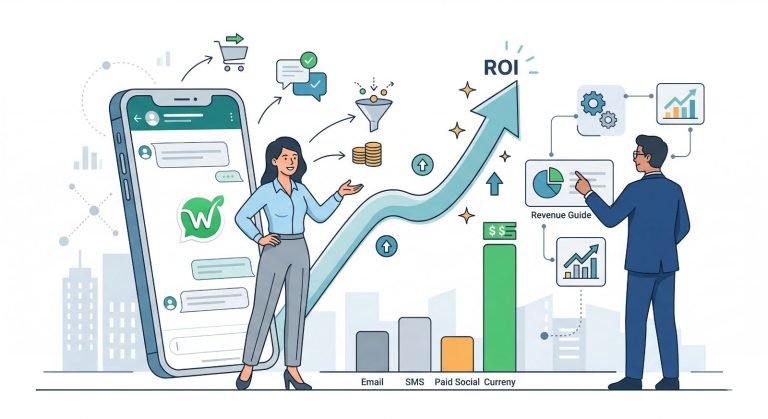

It’s 9:40 p.m. on a Sunday. A parent is scrolling through five different school websites, trying to compare tuition, curriculum, and open-house dates before the application window closes. They send a WhatsApp message to your admissions number with three quick questions. Nobody replies until Monday morning. By then, they’ve already booked a campus tour somewhere else.
This scenario repeats itself thousands of times every enrollment season, and it is rarely a staffing problem. It is a response-time problem. Families researching schools now expect the same instant, conversational experience they get from any consumer brand – and WhatsApp, with more than 3 billion monthly active users worldwide, has become the default channel where that expectation plays out. Schools that still route every inquiry through a shared inbox or a front-desk phone line are losing applicants before a human ever sees the message.
WhatsApp school admission automation closes that gap. By combining WhatsApp Business messaging with AI-driven conversation flows, admissions teams can answer routine questions instantly, pre-qualify prospective families, schedule campus visits, and nurture applicants through the entire enrollment funnel – around the clock, in multiple languages, without adding headcount.
This guide breaks down what admission automation on WhatsApp actually looks like, why 2026 is the tipping point for adoption, and how to design a workflow that turns more inquiries into enrolled students.
Launch agentic chat marketing in minutes with ChatbotX











Why Admissions Teams Are Moving to WhatsApp
Traditional admissions communication – phone trees, generic contact forms, and delayed email replies – was built for a slower research cycle. Today’s parents behave more like online shoppers: they compare multiple institutions simultaneously, expect answers within minutes, and abandon the process the moment friction appears.
A few forces are pushing schools toward WhatsApp specifically:
- It’s already the default messaging app for millions of families. In much of Asia, Latin America, the Middle East, and Europe, WhatsApp is the primary channel parents use for everyday communication, which makes it a far lower-friction entry point than an unfamiliar school portal.
- Read and response rates dwarf email. Messaging apps consistently see open rates well above 90%, compared to the 15–25% range typical of admissions email campaigns.
- Conversations feel personal, not transactional. A chat thread lets a family ask follow-up questions naturally, the same way they would text a friend, which builds trust earlier in the decision journey.
- It supports the entire funnel in one thread. Inquiry, document collection, interview scheduling, fee reminders, and post-enrollment onboarding can all live inside the same conversation history.
None of this requires abandoning your existing website or CRM – it requires connecting WhatsApp to the workflows admissions teams already run, then automating the repetitive parts.
What WhatsApp Admission Automation Actually Covers

“Automation” doesn’t mean removing humans from the process. It means letting software handle the predictable, high-volume tasks so staff can focus on the conversations that need judgment – a hesitant parent, a scholarship negotiation, a complex transfer case.
A well-built WhatsApp admissions flow typically automates:
- Instant first response. Every inquiry gets acknowledged in seconds, not hours, which alone can significantly reduce drop-off.
- FAQ handling. Tuition ranges, curriculum details, campus locations, term dates, and uniform or transport policies get answered without staff involvement.
- Lead qualification. A short conversational flow captures grade level, intake term, budget range, and location preference, then tags the contact accordingly.
- Campus tour and interview booking. Families pick an available slot directly inside the chat, synced to the admissions calendar.
- Document collection reminders. Automated nudges for transcripts, ID copies, or entrance test confirmations, with status tracked per applicant.
- Nurture sequences. Prospects who haven’t decided yet receive scheduled, permission-based follow-ups instead of falling into a forgotten spreadsheet.
- Handoff to a human agent. Anything outside the automated flow – a complicated question, a complaint, a scholarship inquiry – routes instantly to the right staff member with full context attached.
Building the Workflow: A Practical Framework

Step 1: Map the applicant journey before building anything
Before touching a flow builder, list every stage a family moves through – first inquiry, information gathering, campus visit, application submission, interview, decision, enrollment confirmation, onboarding. Automation should mirror this journey, not replace it with a generic chatbot script.
Step 2: Start with high-volume, low-complexity questions
The fastest wins come from automating the questions your team answers most often: tuition, schedules, admission requirements, and location. This is usually 60–80% of inbound volume, and it’s the easiest to hand off to an AI agent with confidence.
Step 3: Design qualification, not interrogation
Nobody wants to answer ten questions before getting a single useful reply. Ask one or two qualifying questions, deliver value (a brochure, a tuition breakdown, a tour slot), then continue gathering details naturally as the conversation progresses.
Step 4: Connect WhatsApp to your CRM or student information system
Automation loses most of its value if lead data sits trapped inside a chat app. Every conversation should sync to your CRM in real time, so counselors see full context – prior messages, qualification tags, and visit history – the moment they pick up a thread.
Step 5: Set clear escalation rules
Define exactly when a conversation should leave the automated flow: a keyword like “speak to a counselor,” a negative sentiment signal, or simply three unanswered questions in a row. Escalation should feel seamless to the parent, not like starting over.
Step 6: Measure and iterate every intake cycle
Track response time, qualification-to-tour rate, tour-to-application rate, and application-to-enrollment rate. Admissions cycles are seasonal, so review and refine the flow before each new intake period rather than leaving it untouched year over year.
Where ChatbotX Fits Into This Workflow

This is exactly the kind of multi-step, multi-channel workflow ChatbotX was built to run. ChatbotX is an open-source, agentic omnichannel messaging platform that connects WhatsApp alongside Messenger, Instagram, Telegram, Zalo, and web chat from a single workspace, so an admissions team doesn’t have to juggle separate tools for every channel families use.
Inside a school’s admissions setup, the platform’s AI Agents handle first-response and FAQ duties around the clock, answering questions about tuition, curriculum, and intake dates without waiting on staff availability. The visual Flow Builder lets admissions teams design the qualification-to-tour-booking sequence described above without writing code, and adjust it between intake seasons in minutes. When a conversation needs a human, everything lands in a Shared Inbox, so counselors see the full chat history and qualification tags before they reply. For time-sensitive nudges – an application deadline, a missing document, a tour reminder – Triggers & Actions fire automatically based on where each applicant sits in the funnel, keeping follow-ups consistent even during the busiest weeks of an intake cycle.
Because ChatbotX is open-source, schools with IT resources can also self-host the platform, which matters for institutions with strict data-residency or student-privacy requirements around applicant information.
Common Pitfalls to Avoid
- Over-automating the emotional moments. Decisions about a child’s education carry weight. Interview outcomes, scholarship discussions, and complaint handling should always route to a person.
- Ignoring WhatsApp’s messaging policies. Bulk or unsolicited outreach outside an open conversation window requires approved message templates. Building flows without understanding these rules risks account restrictions.
- Treating the bot as a one-time project. Curriculum changes, new campuses, and shifting tuition create stale answers fast. Assign someone to review flow content every term.
- Skipping multilingual support. In many markets, the parent asking questions and the parent making the final decision speak different primary languages. Automation should offer language options rather than assuming one.
Frequently Asked Questions
Is WhatsApp admission automation only useful for large school groups?
No. Independent schools and small training centers often see the biggest relative gains, since a single admissions staff member can suddenly handle inquiry volume that previously required a full team.
Does automation replace the admissions counselor role?
No – it removes repetitive first-response work so counselors spend their time on applicants who are genuinely close to a decision, rather than answering the same tuition question fifty times a week.
How long does it take to set up a WhatsApp admissions flow?
A basic FAQ-and-booking flow can go live within days using a no-code builder. More advanced qualification and CRM-sync workflows typically take a few weeks to refine properly.
Turning Faster Replies Into Higher Enrollment

The schools winning enrollment in 2026 aren’t necessarily the ones with the biggest admissions teams – they’re the ones who answer first, qualify smartly, and never let a promising family go cold waiting for a reply. WhatsApp school admission automation makes that possible without burning out staff during peak intake season.
If you’re rethinking how your admissions team communicates, our related guide on AI Chatbot for Schools: The 2026 Guide to Smarter Admissions, Support, and Enrollment goes deeper into full-funnel chatbot design, and our breakdown of the Best WhatsApp Business Solution Providers (BSP) in 2026 is a useful next step if you haven’t set up official WhatsApp API access yet.
For teams evaluating the underlying technology, the official WhatsApp Business Platform documents current messaging policies and template requirements, Meta’s developer documentation covers the technical API details, and the National Center for Education Statistics offers useful benchmark data on enrollment trends for institutions building their own projections.
ChatbotX is open-source and free to self-host, and the project is under active development on GitHub – check the latest releases to see current capabilities.
Ready to stop losing applicants to slow replies? Get started with ChatbotX and build your first WhatsApp admissions flow before your next intake season begins.