Executive Summary: In 2026, Facebook Messenger stands as one of the highest-converting channels for B2C brands. However, success depends on moving beyond basic chat to a robust automated infrastructure. This guide explores the full Messenger ecosystem: from high-intent Click-to-Messenger ads to bridging the “three critical gaps”-volume limits, broadcasting, and attribution-that prevent most businesses from scaling.
Launch agentic chat marketing in minutes with ChatbotX










What Is Facebook Messenger Marketing?
Facebook Messenger marketing is the practice of using Meta’s Messenger platform to acquire leads, qualify prospects, and close sales through direct, real-time conversations – rather than driving traffic to static landing pages or email opt-in flows.
The core mechanic is simple: instead of asking a user to fill in a form or browse a product catalog alone, click-to-Messenger ads open a live conversation the moment someone clicks. That conversation happens at the peak of the user’s intent – and businesses that can respond instantly, qualify intelligently, and follow up effectively turn that intent into revenue.
Messenger marketing encompasses four main entry points:
- Click-to-Messenger Ads – paid ads across Facebook’s feed, stories, and reels that open a Messenger conversation instead of a landing page
- Sponsored Messages – promotional messages sent directly to users who have previously interacted with your page
- Comment-to-Messenger Flows – automatically moving engaged post commenters into a private Messenger conversation
- Recurring Notifications – opt-in based broadcast messages sent on a daily, weekly, or monthly cadence to subscribed contacts
Each entry point feeds into the same underlying system: a contact database, a conversation workflow, and an AI layer that qualifies and routes leads without manual intervention.
Why Messenger Ads Outperform Email and Feed Ads in 2026
The performance gap between Messenger marketing and traditional digital channels is not primarily about the channel itself. It is about when and how the conversation happens.
The Email Problem
According to Mailchimp’s 2025 Email Marketing Benchmarks, average email open rates across B2C categories sit below 25% in 2026. Inboxes are saturated, subject line fatigue is real, and personalization at scale remains technically difficult. Even a well-crafted email sequence puts you in a queue – competing with every other brand the recipient subscribed to.
Messenger messages, by contrast, arrive in the same app people use to talk to friends and family. Open rates are consistently reported above 80% within the first 24 hours. The medium is inherently more personal, and the notification itself signals human relevance rather than marketing automation.
The Feed Ad Problem
Promoted posts and standard display ads compete for attention in environments designed to maximize distraction. A user scrolling Facebook sees dozens of pieces of content in minutes. The bar for stopping that scroll is high – and even when someone does click through to a product page, they arrive alone with no support, no ability to ask questions, and no mechanism for the business to learn about their intent.
Click-to-Messenger ads break this pattern by creating a private, bilateral conversation the moment a user expresses interest. That conversation is where qualification, trust-building, and closing happen – in real time.
The Speed-to-Lead Advantage
Multiple studies across B2C sectors confirm that response speed is the single strongest predictor of lead conversion – a finding documented by Harvard Business Review showing businesses that respond within the first hour are dramatically more likely to qualify and close a lead. A prospect who receives an instant, contextually relevant reply after clicking a Messenger ad converts at dramatically higher rates than one who enters an automated drip sequence or waits for a callback.
The mechanism is straightforward: Messenger creates a moment of high intent, and the faster a business can respond with value inside that moment, the higher the conversion probability. The challenge – which this guide addresses in detail – is maintaining that speed advantage when conversation volume scales.
Messenger Marketing Across the Customer Journey
| Stage | What Messenger Enables |
|---|---|
| Acquisition | Click-to-Messenger ads capture contact details and intent signals from targeted audiences |
| Qualification | AI-powered conversations collect budget, product preference, and purchase readiness conversationally |
| Conversion | Instant responses reduce friction; agents receive pre-qualified leads with full context |
| Retention | Recurring Notifications and broadcast campaigns keep opted-in contacts engaged post-purchase |
| Re-engagement | Sponsored messages reach previously inactive contacts based on known interests |
The 3 Hard Limits That Cap Messenger Marketing Growth
For businesses with low inbound volumes, Meta Business Suite provides a functional and free starting point. But as Messenger campaigns begin generating meaningful traffic, three structural limitations emerge – and each one has a direct revenue cost.
Limit 1: The 40 Messages-per-Second Volume Cap
The Facebook Messenger Platform API imposes a hard cap of 40 messages per second across both inbound and outbound traffic. For businesses running high-volume click-to-Messenger campaigns – especially during flash sales, seasonal promotions, or viral content moments – this is not a theoretical constraint.
When the cap is hit, messages do not queue. They are lost entirely. A prospect who clicked your ad, composed a message, and hit send receives no reply and gets no indication their message failed to arrive. From their perspective, your business ignored them. From your perspective, you never knew they reached out.
Limit 2: No Broadcast Capability
Once the 24-hour messaging window closes – the period during which a business can freely message a contact after that contact initiates a conversation – Meta Business Suite offers no mechanism to re-engage opted-in contacts proactively.
This creates a structural problem for any business building a Messenger contact list. Every contact acquired through a click-to-Messenger ad represents a real person who demonstrated interest in your product or service. Without broadcast capability, the only way to reach them again is to wait for them to message first – which most won’t.
The Messenger Platform API supports Recurring Notifications, which allow opted-in contacts to receive promotional messages at a frequency they choose. Meta Business Suite does not expose this functionality at all.
Limit 3: No Revenue-Stage Attribution
Meta Business Suite can show you which ads generated conversations. It cannot show you which conversations became paying customers.
This attribution gap has a compounding effect on ad spend efficiency. Without knowing which campaigns produce actual revenue – not just clicks and conversations – budget optimization defaults to the wrong signals. Campaigns that generate high conversation volume with low conversion quality consistently appear to outperform campaigns that generate fewer, higher-intent leads. Over time, ad spend migrates toward the former, and cost per paying customer rises without any visible indicator in the dashboard.
Meta Business Suite vs. Messenger Platform: An Honest Comparison
Understanding which tool to use is straightforward once you know which capabilities you actually need.
When Meta Business Suite Is the Right Choice
Meta Business Suite works well for businesses that meet all three of the following conditions simultaneously:
- ✅ Inbound message volume stays comfortably below 40 per second at peak
- ✅ No need to send proactive broadcast messages to contact segments
- ✅ Conversion attribution at the campaign level is not required for ad spend decisions
If all three apply, Meta Business Suite is free, functional, and sufficient. Upgrading before you need to creates unnecessary complexity.
When You Need the Messenger Platform – Connected to an Automation Layer
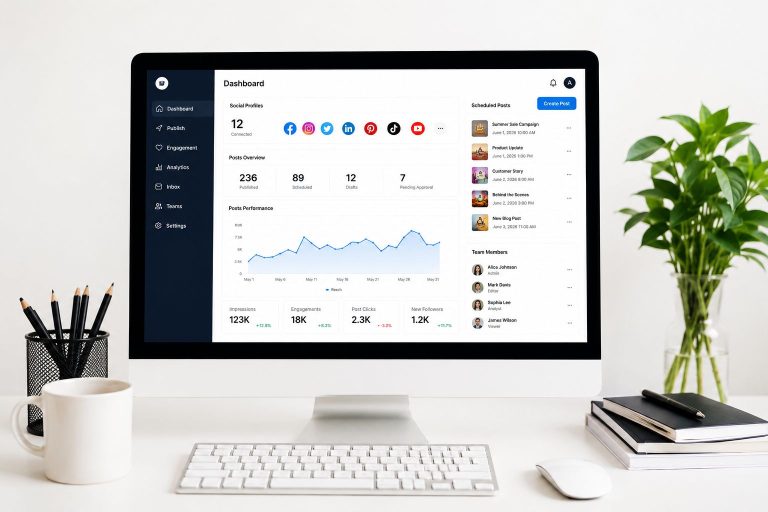
The moment any one of the three conditions above is no longer true, Meta Business Suite becomes a bottleneck. Connecting the Facebook Messenger Platform API to a dedicated conversation management platform unlocks:
| Capability | Meta Business Suite | Messenger Platform + Automation |
|---|---|---|
| Message volume ceiling | 40/second (hard cap) | Significantly higher |
| Broadcast to opted-in segments | ❌ Not available | ✅ Via Recurring Notifications |
| Revenue-stage ad attribution | ❌ Not available | ✅ Campaign → paying customer tracking |
| AI lead qualification | ❌ Not available | ✅ Autonomous qualification flows |
| CRM data sync | Basic | ✅ HubSpot, Salesforce, Zoho |
| Meta Conversions API (CAPI) | ❌ Not available | ✅ Server-to-server conversion signals |
| Comment-to-Messenger automation | Basic auto-reply only | ✅ Intent-based routing and tagging |
| Omnichannel inbox | Facebook only | ✅ WhatsApp, Instagram, Telegram, and more |
Understanding the 24-Hour Messaging Window
This is the Messenger Platform rule with the most practical implications for marketing teams: after a contact sends your business a message, you have a 24-hour window to reply freely. After that window closes, you can only continue the conversation using Meta-approved message templates.
Two mechanisms extend or bypass this limitation:
- Human Agent Tag: Extends the free messaging window to 7 days for non-promotional follow-ups – for example, delivering a discount code promised in a giveaway or following up on a support request
- Recurring Notifications: Allows promotional messages to be sent to contacts who explicitly opt in, at a frequency they select (daily, weekly, or monthly). Opt-in requests can only be sent during an active 24-hour window
5 Advanced Capabilities That Make Messenger Scale
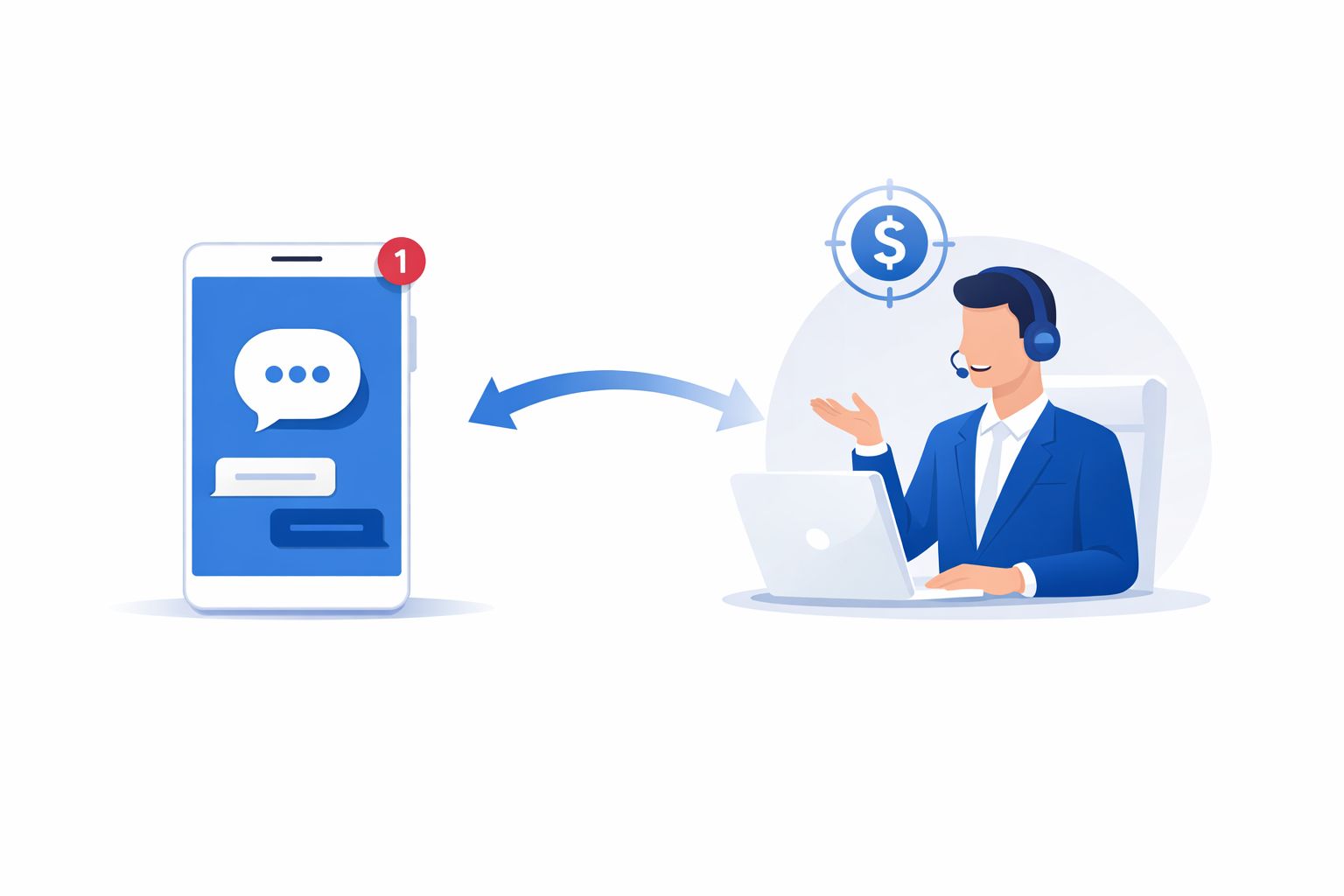
1. Paid Ads Attribution: Tracking Leads from First Click to Paying Customer
The missing layer in most Messenger marketing setups is not traffic or conversations – it is the ability to connect ad spend to revenue outcomes.
When your Messenger automation platform captures the specific campaign, ad group, and individual ad that triggered each conversation, and then tracks that contact’s progression through lifecycle stages – New Lead → Qualified → Paying Customer – you gain the data necessary to make accurate budget allocation decisions.
With this attribution in place, you can:
- Identify which specific ads are generating revenue, not just conversations
- Compare lead quality across campaigns, not just lead volume
- Shift budget toward campaigns with the lowest cost-per-paying-customer rather than lowest cost-per-conversation
- Spot campaigns generating high-intent audiences even at lower conversation volume
This single change in measurement methodology often produces a 20–40% improvement in ad spend efficiency without any change to the ads themselves.
2. Meta Conversions API (CAPI): Closing the Feedback Loop with Meta’s Algorithm
Meta Conversions API allows businesses to send verified conversion events from their own systems directly to Meta’s servers – bypassing the browser-based limitations of the Pixel and giving Meta’s algorithm accurate signals about what constitutes a real conversion.
The workflow is:
- A contact clicks a Messenger ad and begins a conversation
- An AI Agent qualifies the contact and updates their lifecycle stage
- When the contact reaches “Qualified” or “Order Confirmed,” a CAPI event is triggered automatically
- Meta receives the signal and adjusts ad delivery to prioritize audiences that resemble actual buyers – not people who simply start conversations and disengage
Businesses that implement CAPI alongside Messenger marketing typically report:
- 40–60% reduction in low-quality leads within the first few weeks of implementation
- Lower cost per acquisition as Meta’s model shifts away from engagement-optimized audiences
- More accurate reporting because server-to-server data transfer is not affected by ad blockers or iOS privacy restrictions
3. Comment-to-Messenger Automation: Converting Passive Engagement into Active Contacts
Every comment on a Facebook post is a signal of attention. Comment-to-Messenger automation converts that passive signal into an actionable contact by moving the conversation from the public feed into a private Messenger thread.
The mechanic is simple: set a trigger (for example, any user who comments a specific keyword or emoji), and an automated Messenger reply is sent to that user, continuing the conversation privately. The commenter becomes a contact; their interest is documented; they can be added to relevant follow-up segments automatically.
This is particularly effective for:
- Post-based promotions where engagement is the desired action
- Product launches where comment interest signals purchase intent
- Giveaways and contests where commenter details need to be collected
Because the AI layer tags these contacts based on their engagement type during the comment-to-Messenger flow, they are automatically added to the correct broadcast and follow-up segments – no manual list management required.
4. Recurring Notifications: Broadcast Messaging to Opted-In Contacts
This is the Messenger equivalent of an email list – with significantly higher open rates and a more direct delivery mechanism.
Once a contact opts in to Recurring Notifications – Meta’s opt-in broadcast mechanism detailed in the Messenger Platform policy – they agree to receive promotional messages from your business at a frequency they select. This opt-in can only be requested during an active 24-hour messaging window, which means the contact database you build through Recurring Notifications is composed entirely of genuinely interested, self-selected subscribers.
Use cases include:
- Weekly product updates or new arrival announcements
- Time-limited promotional offers sent to segment-specific lists
- Newsletters and content distribution
- Re-engagement campaigns for contacts who haven’t purchased recently
The critical infrastructure advantage: when an AI agent tags contacts during qualification conversations – noting product category interest, budget range, or purchase stage – those tags immediately determine which Recurring Notification segments each contact belongs to. The list is self-maintaining, requiring no manual segmentation work.
5. CRM Integration: Making Messenger Conversation Data Actionable
Qualification data collected during a Messenger conversation – budget, product preference, purchase timeline, contact details – has zero value if it stays inside the chat interface and never reaches your sales pipeline.
Native integrations with HubSpot, Salesforce, and Zoho (plus broader connectivity via API or Zapier) ensure that:
- CRM contact properties are visible within the conversation interface, so agents have full context without switching apps
- Data collected by AI agents during Messenger conversations is pushed back to the CRM automatically through workflow triggers
- Sales teams inherit pre-qualified leads with documented intent, not raw conversation transcripts they need to parse themselves
How AI Agents Transform Messenger Lead Qualification
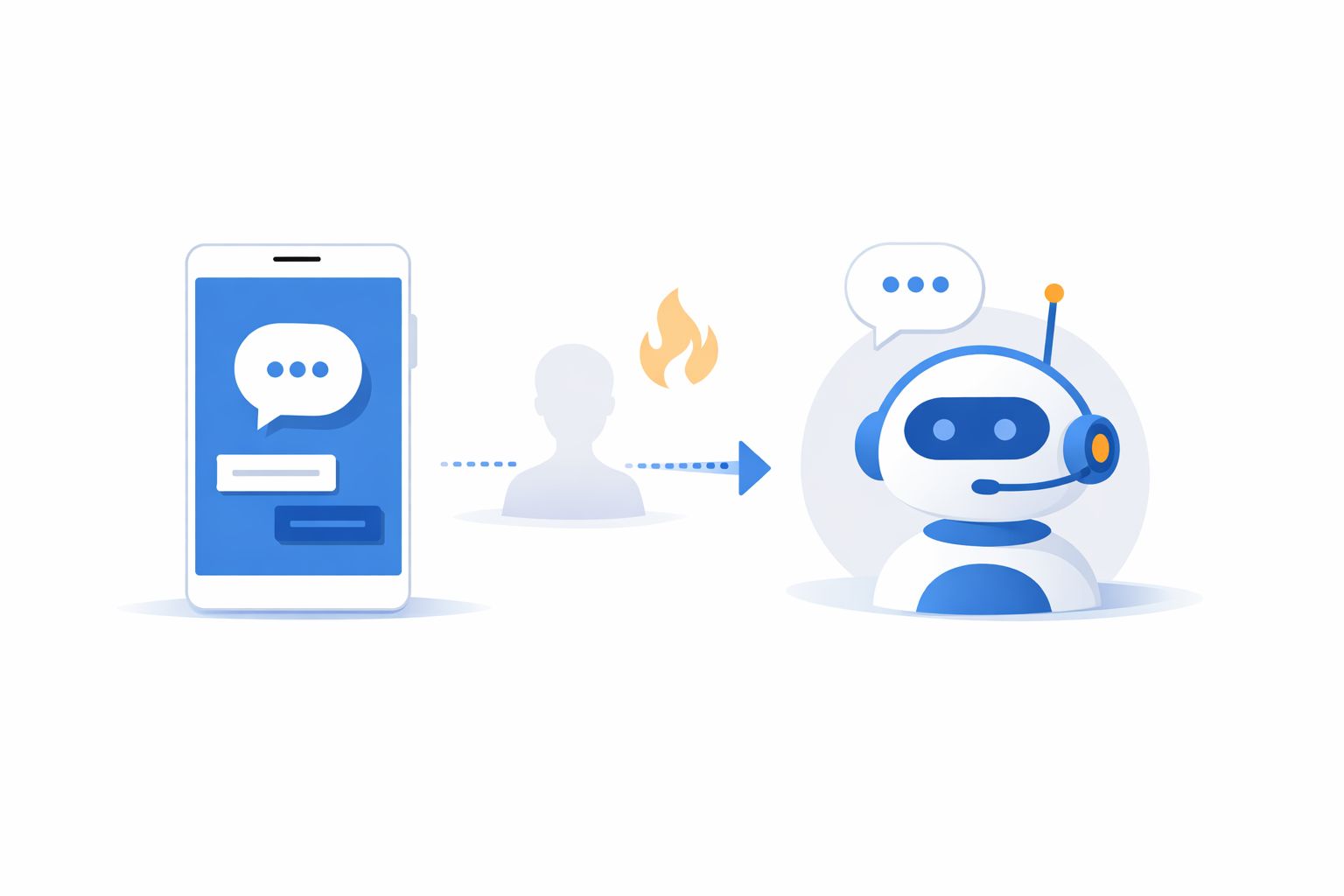
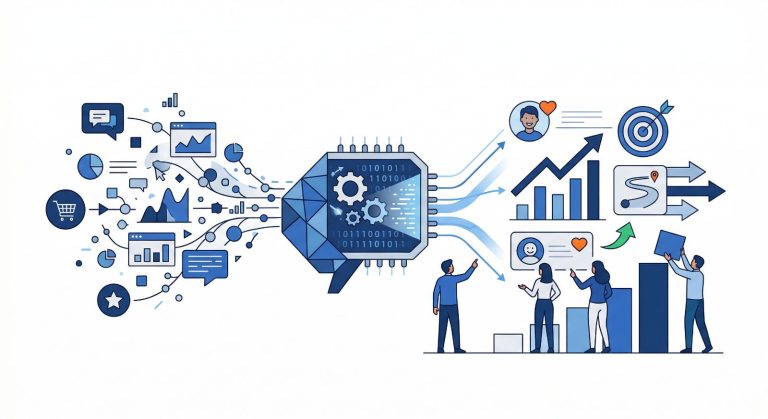
The performance ceiling for Messenger marketing without AI qualification is determined by team size. When every inbound conversation requires a human agent to read, assess intent, and decide what to do next, scaling conversation volume means scaling headcount linearly. That model breaks quickly.
AI Agents solve this by handling the full qualification flow autonomously – from the first message to the handoff to a sales agent – while maintaining conversation quality that traditional chatbot flows cannot achieve.
What an AI Agent Does in a Messenger Conversation
When a contact messages your business from a Messenger ad, the AI Agent:
- Responds immediately – no queue, no delay, regardless of time zone or team availability
- Collects qualification details conversationally – asking about budget, product interest, and purchase intent in natural dialogue, not through form-style prompts
- Updates contact fields and lifecycle stage automatically based on what it learns
- Filters low-quality or spam contacts before they consume agent time
- Routes high-intent leads to the appropriate sales agent or team via workflow triggers
- Tags contacts for segmentation – making them immediately available for broadcast lists and follow-up automations
AI Agents vs. Traditional Chatbot Flows
The distinction matters for Messenger campaigns specifically because of the variability of inbound conversations.
Traditional chatbot flows follow decision trees: if the user says X, respond with Y. When a user says something outside the tree – which happens constantly in real-world Messenger conversations – the flow fails, the user gets a dead-end response, and the lead goes cold.
AI Agents use reasoning to handle unexpected inputs, adapt to conversational context, and make qualification decisions based on the full content of the conversation – not pattern matching against a keyword list. This makes them suitable for high-volume Messenger campaigns where every prospect has a different starting point and a different set of questions.
Platforms like ChatbotX take this further with an agentic architecture that lets you configure multi-model AI flows – combining different AI models (GPT-4, Gemini, Claude) for specific tasks within a single conversation. One model handles initial greeting and intent detection; another handles product qualification; a third generates personalized responses based on CRM data. The result is a qualification flow that handles nuanced conversations at scale, without the brittleness of single-model or decision-tree approaches.
Related: AI Chatbot Strategy 2026: Trends, Platform Comparison & Mistakes to Avoid
Real-World Results: Businesses That Scaled Messenger Marketing
Case Study 1: Courier Service – +60% Ad Conversions, -10% Cost Per Lead
The situation: A Malaysian courier service with more than 10,000 monthly active contacts across Facebook Messenger, WhatsApp, Instagram, and TikTok was running Meta ads and generating substantial conversation volume. The problem: too many conversations were low quality, slowing the sales team and making it impossible to identify which campaigns were producing bookings.
What they changed:
- Connected Meta CAPI through an automated workflow, sending verified conversion signals – qualified leads and completed bookings – back to Meta’s algorithm
- Deployed an AI Agent to collect customer details at the start of every conversation, filtering out low-quality leads before they reached any human agent
The outcome:
- Ad conversions increased by 60%
- Cost per lead from Meta ads dropped by 10%
- Agent response speed improved significantly because the noise was eliminated before it reached the inbox
Case Study 2: Retail Business – 81.4% Conversion Rate, 50% Reduction in Operational Costs
The situation: A retail business in Guatemala handling hundreds of daily orders through Facebook Messenger, WhatsApp, and TikTok found its team overwhelmed by repetitive inbound volume. Customer data was fragmented across platforms, and poor conversion tracking meant ad budgets were being optimized for conversation starts – not actual buyers.
What they changed:
- Deployed a named AI Agent to handle the full Messenger purchase flow: greeting, product Q&A, customer detail collection, order confirmation, and human escalation only for logistics edge cases
- Connected Meta CAPI via lifecycle tracking, triggering a conversion event every time a contact reached the “New Order” stage
The outcome:
- 90% of all sales conversations handled end-to-end by the AI Agent
- Conversion rate maintained at 81.4%
- Marketing and operational costs cut by 50%
These results share a common thread: the conversion gains came not from changing the ads, but from building the infrastructure capable of handling the conversations those ads generated.
Omnichannel Considerations: Messenger as Part of a Broader Strategy
Messenger rarely operates in isolation for businesses that are scaling. Most mid-market B2C teams run parallel campaigns across WhatsApp, Instagram, TikTok, and Messenger simultaneously – and managing those conversations in separate inboxes creates compounding inefficiencies.
The businesses achieving the strongest Messenger marketing results in 2026 are those treating it as one channel within a unified omnichannel system – where:
- All conversations across channels flow into a single inbox
- Contact profiles aggregate data from every channel interaction
- AI qualification logic is consistent regardless of which channel the lead originated from
- Attribution tracks the original ad and channel for every contact across the full lifecycle
ChatbotX is built around this omnichannel architecture – allowing businesses to connect Facebook Messenger, WhatsApp, Zalo, Instagram, and WebChat into a single platform, with shared AI flows, unified contact management, and consistent broadcast capability across all channels. Rather than rebuilding qualification logic for each new channel, the same AI Agent configuration works across all of them.
This architecture becomes particularly important when running cross-channel campaigns – for example, using Messenger for initial lead capture, WhatsApp for deeper qualification conversations, and Instagram for retargeting audiences based on Messenger engagement data.
Related: Social Media Automation: The Complete Strategy for Sustainable Growth in 2026
Is Facebook Messenger Marketing Right for Your Business?
It’s a strong fit if:
- ✅ Your target audience is active on Facebook
- ✅ You are running or planning click-to-Messenger ad campaigns
- ✅ Your inbound conversation volume justifies automation
- ✅ You need to attribute revenue – not just conversations – back to specific campaigns
- ✅ Your sales team needs qualified leads, not raw inbound volume
- ✅ You want to build a re-engageable contact database on Messenger
It’s not the right focus if:
- ❌ Your business relies primarily on email or organic content and has no social ad budget
- ❌ Your team is not structured to manage real-time inbound conversations
- ❌ Message volume is too low to justify an automation layer
- ❌ Your sales cycle is long B2B, where relationship development requires more than messaging conversations
Self-Assessment: Diagnosing Where You Are Now
| Symptom | Root Cause | Solution |
|---|---|---|
| Messenger leads don’t convert at expected rates | Optimization targeting the wrong signal (conversations, not revenue) | Paid Ads Attribution + CAPI |
| Team overwhelmed by repetitive inbound messages | No automated qualification layer | AI Agent deployment |
| Can’t re-engage contacts after the 24-hour window | No broadcast infrastructure | Recurring Notifications via Messenger Platform |
| No visibility into which campaigns produce revenue | Missing lifecycle tracking | Lifecycle reporting connected to ad platform |
| Data from Messenger conversations stays in chat | No CRM integration | Native CRM sync through workflow triggers |
Frequently Asked Questions
When should a business move from Meta Business Suite to a dedicated Messenger platform?
When any one of three conditions is true: (1) message volume approaches 40 per second, (2) you need to send broadcast messages to opted-in contact segments, or (3) you need to know which specific ads are producing paying customers rather than just conversations. All three conditions have direct revenue implications, and Meta Business Suite cannot address any of them.
How does Messenger marketing compare to WhatsApp for B2C businesses?
The audiences are partially overlapping but meaningfully different. Facebook Messenger reaches users through the Facebook ecosystem, making it the natural companion channel for Facebook ad campaigns. WhatsApp reaches contacts through phone numbers and tends to have higher open rates and more personal tone. Most scaling B2C businesses run both channels from a single unified inbox, using Messenger for ad-driven acquisition and WhatsApp for deeper qualification and order communication. Platforms that support both channels with shared AI flows – like ChatbotX – make this combination significantly more manageable.
What is the technical difference between Facebook Pixel and Meta Conversions API for Messenger campaigns?
Facebook Pixel collects conversion data in the user’s browser – and is therefore subject to ad blockers, iOS privacy restrictions, and browser-level tracking limitations. Meta Conversions API (CAPI) sends conversion data directly from your server to Meta’s servers, bypassing all browser limitations. For Messenger marketing specifically, where conversions happen inside the app rather than on a web page, CAPI is the more accurate attribution mechanism and produces better optimization signals for Meta’s ad delivery algorithm.
Can AI Agents handle conversations that go off-script?
Traditional chatbot flows cannot – they fail when users say something outside the predefined decision tree. AI Agents built on reasoning models can handle unexpected inputs, context shifts, and multi-turn conversations that don’t follow a linear path. This is critical for high-volume Messenger campaigns, where the range of questions, objections, and conversation patterns from inbound leads is highly variable. The practical result is significantly higher qualification rates compared to scripted automation.
How do you build a Recurring Notifications list on Messenger?
Opt-in requests for Recurring Notifications can only be sent during an active 24-hour messaging window – meaning the contact must have messaged your business first. The most effective approach is to build Recurring Notification opt-ins into the qualification flow: after an AI Agent collects lead details and determines the contact is interested but not yet ready to purchase, it presents a Recurring Notification opt-in as the natural next step. Contacts who opt in self-select into the category of genuinely interested but not yet converted – exactly the segment most valuable to re-engage with broadcast campaigns.
What does the full Messenger marketing tech stack look like for a scaling B2C business?
The core components are: (1) Click-to-Messenger ads running through Meta Ads Manager, (2) Facebook Messenger Platform API connected to a conversation management platform, (3) AI Agent configuration for automated qualification and routing, (4) Meta CAPI integration sending verified conversion events back to Meta, (5) CRM integration syncing contact and lifecycle data bidirectionally, and (6) Recurring Notifications infrastructure for broadcast capability. Platforms like ChatbotX combine components 2 through 6 in a single system, with native support for Messenger alongside WhatsApp, Instagram, Zalo, and WebChat.
Key Takeaways
Facebook Messenger marketing in 2026 is not a channel strategy – it is an infrastructure strategy. The channel creates the opportunity; the infrastructure determines whether that opportunity converts.
The three gaps most businesses need to close:
- Attribution – connect ad spend to revenue outcomes, not conversation volume
- AI qualification – maintain response speed and lead quality as volume grows
- CAPI feedback loop – give Meta’s algorithm accurate signals so future ad delivery improves automatically
Each of these gaps has a compounding effect. Closing all three creates a system where Messenger campaigns become progressively more efficient over time – lower cost per acquisition, higher lead quality, and a growing opted-in contact base that can be re-engaged through broadcast campaigns.
Ready to Transform Your Messenger Strategy?
In 2026, the difference between a business that “chats” and a business that “scales” is the infrastructure. Don’t let your high-intent leads go cold in a manual inbox or get lost in the 40-message-per-second limit.
Take the next step with ChatbotX. Our platform is designed to bridge the gap between social engagement and predictable revenue. By integrating advanced AI Agents, Meta CAPI, and seamless CRM synchronization, we help you build a conversational engine that works 24/7.