

Finding the best AI writing tools in 2026 requires moving beyond simple text generators to platforms that genuinely elevate your content pipeline. In this comprehensive guide, our content strategy team reviews the top-performing AI writing assistant options, AI content generator frameworks, and specialized AI tools for writers currently dominating the industry. Whether you are looking for high-converting AI copywriting software or an enterprise brand-voice solution, here is how today’s leading platforms stack up in terms of output quality, workflow integration, and ROI.
Launch agentic chat marketing in minutes with ChatbotX












Why AI Writing Tools Matter More Than Ever in 2026

The way content gets created has shifted permanently. A few years ago, AI writing assistants were considered experimental curiosities – interesting demos that rarely made it into real production workflows. That’s no longer the case.
In 2026, AI writing tools have become as essential to a content creator’s toolkit as a grammar checker or keyword research platform. According to Google’s Search Central documentation, what matters most is producing helpful, people-first content – and AI tools, when used correctly, help writers scale that kind of content without sacrificing depth or originality.
But here’s the uncomfortable truth: not all AI writing tools are created equal. Some generate polished, context-aware copy that genuinely accelerates your workflow. Others produce generic, repetitive text that requires more editing than starting from scratch. The gap between a mediocre AI assistant and an exceptional one is measured in hours of reclaimed productivity per week.
Whether you’re a solo blogger, a marketing team lead, or a freelance copywriter managing dozens of client projects, picking the right AI writing tool is one of the highest-leverage decisions you can make this year.
This guide cuts through the noise. We’ve spent significant time hands-on with each platform below – not just reading their feature pages – so you get honest, actionable insights.
How We Evaluated These Tools
Every tool in this list was assessed against a consistent set of criteria:
- Output Quality – Does the generated content require minimal editing to be publish-ready? Does it avoid filler phrases, circular logic, and generic platitudes?
- Tone & Voice Customization – Can the tool adapt to a specific brand voice, writing style, or persona without constant prompting?
- Content Format Versatility – Does it handle everything from long-form blog posts and email sequences to social captions, ad copy, and product descriptions?
- Workflow Integration – How easily does it slot into an existing content production stack? Does it connect with tools writers already use?
- Pricing Transparency & Value – Is the price justified by the output quality and time saved? Are there meaningful free tiers?
- Data Privacy – Is it clear how user inputs and generated content are stored, processed, or used to train future models?
Tools that required an enterprise sales call just to see pricing, or that leaned entirely on repackaged GPT-4 without adding distinct value, were excluded from this list.
Understanding the Difference: AI Model vs. AI Writing Tool

This distinction trips up a lot of people who are new to the AI content space.
An AI model is the underlying intelligence – the system trained on billions of text examples to understand and generate language. GPT-4o (from OpenAI), Claude 3.7 Sonnet (from Anthropic), and Gemini 1.5 Pro (from Google) are AI models. They’re the engine.
An AI writing tool is the application layer built on top of that engine. It provides the interface, the templates, the workflow integrations, the tone controls, and the user experience that makes the model actually usable for specific content tasks. Some tools build on top of third-party models; others have developed proprietary systems.
Why does this matter? Because when two tools both claim to “use the latest AI,” they might be running identical models. The real differentiator is how intelligently the product translates your content goals into model prompts – and how smoothly it fits into your day-to-day writing process.
What to Look for Before Choosing an AI Writing Tool
Before committing to any platform, run through these four questions:
1. Will it actually save me time?
An AI tool that produces output requiring 45 minutes of editing isn’t saving you anything. Look for tools that generate first drafts close enough to your standard that you’re genuinely accelerating – not just shifting the labor.
2. Can it match my brand voice?
Generic AI writing is easy to spot. The best tools allow you to upload existing content, define style parameters, or train a custom voice so outputs feel like you, not like a machine.
3. Does it handle my specific content types?
A fiction writer needs entirely different capabilities from an e-commerce copywriter. Make sure the tool covers the formats you actually produce – whether that’s technical documentation, sales emails, YouTube scripts, or SEO blog posts.
4. Is the pricing model sustainable?
Many AI tools use credit-based systems that become expensive at scale. Calculate your expected monthly usage before committing to a paid plan, and confirm whether the free tier is genuinely functional or just a teaser.
The 10 Best AI Writing Tools in 2026
1. ChatbotX – Best All-in-One AI Writing & Automation Platform
Best for: Content creators, marketing teams, and businesses that want AI writing and conversational AI in one unified platform.
ChatbotX is the standout platform for teams that need more than just a text generator. While most tools on this list excel at a single use case, ChatbotX bridges the gap between AI content generation, intelligent chatbot automation, and workflow orchestration – making it the most versatile option for businesses that want to scale content operations without stitching together five separate tools.
The AI Content Generation suite inside ChatbotX is purpose-built for professional output. You can generate blog posts with structured outlines, produce social media copy in bulk, write email sequences with proper personalization hooks, and create ad variations – all within a single workspace. Unlike tools that give you a blank chat window and leave the prompting strategy entirely to you, ChatbotX provides intelligent templates that guide the output quality upward automatically.
What genuinely separates ChatbotX from the field is its AI Chatbot and Automation layer. You can deploy conversational AI that captures leads, answers customer questions, and routes support requests – then feed those conversations back into your content intelligence. It’s the kind of closed-loop system that used to require enterprise-level custom development.
For teams interested in extending or customizing the platform, ChatbotX is open source on GitHub, giving technical users full visibility into how the system works and the ability to self-host or contribute to the roadmap.
Standout Features:
- Multi-format content generation (blog posts, emails, social, ad copy, scripts)
- Custom brand voice training
- Built-in chatbot and lead generation automation
- Team collaboration workspace
- Transparent open-source codebase
Pricing: Free tier available. Pro and Business plans scale with usage.
Ideal for: Growing businesses, marketing agencies, and content teams that need a scalable, all-in-one solution.
2. ChatGPT (OpenAI)
Best for: Versatile, general-purpose AI writing with powerful reasoning capabilities.
ChatGPT remains the benchmark against which all other AI writing tools are measured, and for good reason. The GPT-4o model that powers it handles an extraordinary range of writing tasks – from technical documentation to creative fiction to persuasive sales copy – with consistent fluency.
The canvas feature (available on paid tiers) gives you a document-style editing environment where you can collaborate with the AI in a more structured way. Custom GPTs allow you to build specialized writing assistants trained on your specific style guides and knowledge bases.
The main limitation is that ChatGPT is a general-purpose tool rather than a dedicated writing platform. It lacks native content calendars, SEO analysis, or publishing integrations. For writers who need those workflow layers, ChatGPT works best as a component of a broader stack rather than a standalone solution.
Pricing: Free (GPT-4o with limits); Plus at $20/month; Team and Enterprise tiers available.
3. Claude by Anthropic
Best for: Long-form writing, nuanced editing, and tasks requiring careful reasoning.
Claude has quietly become many professional writers’ preferred model for anything requiring extended context – research summaries, long-form articles, detailed editing passes. Its ability to maintain consistency across 100,000+ token context windows makes it particularly effective for book-length projects, comprehensive content audits, or deeply researched pieces.
Claude’s outputs tend toward precision and nuance rather than speed, which makes it an excellent editorial layer even if you use a different tool for first drafts.
Pricing: Free tier available; Pro at $20/month; Team plans available.
4. Jasper AI
Best for: Enterprise marketing teams with established brand style guides.
Jasper has matured significantly from its early days as a template-driven copywriting tool. The platform now includes a proper AI writing environment with brand voice controls, a knowledge base for company-specific information, and team collaboration features that enterprise marketing departments need.
The Brand Voice feature is legitimately impressive – feed Jasper existing content from your company and it learns your tone, preferred vocabulary, and structural patterns, applying them consistently across outputs.
The pricing reflects the enterprise positioning, which makes it less accessible for smaller operations.
Pricing: Creator plan from $49/month; Teams and Business plans require a quote.
5. Copy.ai
Best for: Go-to-market teams focused on pipeline-oriented content – sales sequences, outreach emails, and conversion copy.
Copy.ai pivoted hard toward B2B workflows, and the result is a platform that genuinely understands the sales and marketing content lifecycle. The GTM AI platform concept – where AI is woven through prospecting, outreach, and content creation in a unified interface – is the right direction for revenue-focused teams.
The workflow automation features let you create multi-step content pipelines: research a prospect, draft a personalized email, generate social proof angles, and produce follow-up variations without switching tools.
Pricing: Free tier with limited credits; Starter from $49/month; Team plans scale from there.
6. Writesonic
Best for: SEO-focused content teams that publish blog content at volume.
Writesonic has invested heavily in its Chatsonic product (a ChatGPT-style interface with web browsing) and its Article Writer, which produces structured, factual long-form content faster than most comparable tools.
The built-in Surfer SEO integration is the headline feature for content marketers – it brings content scoring, NLP keyword recommendations, and SERP analysis directly into the writing environment without requiring you to run separate tools simultaneously.
According to Ahrefs’ guide on content optimization, combining AI-assisted drafting with real-time SEO scoring is one of the highest-impact approaches for ranking content in 2026 – and Writesonic’s native integration makes that workflow accessible at scale.
Pricing: Free plan available; Individual plans from $20/month; Teams pricing available.
7. Sudowrite
Best for: Fiction writers, novelists, and creative writers who need a genuinely creative AI collaborator.
Sudowrite occupies a unique niche: it’s the only tool on this list built specifically for long-form creative writing. Every feature is designed around the challenges fiction writers face – developing characters, maintaining narrative consistency, overcoming structural blocks, and generating vivid sensory descriptions.
The Story Engine feature breaks novel-length projects into manageable beats and lets you generate scene-by-scene content with thematic coherence maintained throughout. The “Describe” function generates multi-sense descriptive passages (what does the scene look, feel, sound, smell like?) that most general AI tools can’t match in quality.
Pricing: Hobby at $19/month; Pro at $29/month; Max at $129/month.
8. Koala Writer
Best for: Affiliate marketers and bloggers who need volume SEO content quickly.
Koala Writer has carved out a loyal following among content publishers who need high volumes of SEO-optimized articles that go from keyword to structured draft in under five minutes. The tool uses real-time web data to ensure factual accuracy, which addresses one of the most common criticisms of AI-generated blog content.
The Amazon affiliate integration – where the tool can research products and generate comparison posts with structured schema – is a genuine niche advantage that’s hard to find elsewhere.
Pricing: Plans start at $9/month, scaling with word count.
9. Wordtune
Best for: Non-native English speakers and writers who want to elevate existing drafts.
Wordtune’s core thesis is different from every other tool on this list: rather than generating content from scratch, it focuses on transforming content you’ve already written. The rewrite, expand, shorten, and tone-shift functions operate at the sentence level, which gives you granular control over exactly how your writing is modified.
The browser extension makes it frictionless to use Wordtune inside any web-based writing environment – Google Docs, Gmail, LinkedIn, WordPress – without switching tabs.
Pricing: Free tier with limited rewrites; Plus at $13.99/month; Unlimited at $19.99/month.
10. SEOWind
Best for: Content strategists who want AI writing tightly integrated with deep SERP research.
SEOWind approaches AI content from the strategy side. Before generating a single word of copy, the platform analyzes the top-ranking pages for your target keyword – extracting the questions they answer, the headings they use, the entities they mention – and uses that competitive intelligence to structure and populate the article.
The result is content that’s architecturally aligned with what’s already working in search, rather than content that reads well but misses the underlying search intent. For SEO practitioners, this workflow discipline is invaluable.
Pricing: Plans start at $39/month.
How Content Professionals Are Actually Using AI Writing Tools

If you’re wondering where AI writing assistance genuinely adds value – versus where it falls short – here’s an honest breakdown of the most effective use cases:
Where AI excels:
- Generating structured first drafts from an outline or brief
- Producing high-volume content variations (email subject lines, ad copy, product descriptions)
- Repurposing existing long-form content into shorter formats (social posts, email summaries)
- Overcoming blank-page resistance by getting something on the page quickly
- Proofreading and suggesting alternative phrasings for awkward sentences
Where human judgment remains essential:
- Ensuring factual accuracy, especially on technical or rapidly evolving topics
- Adding original perspective, personal experience, and authentic voice
- Strategic decisions about what to write and why
- Evaluating whether AI output is genuinely good or just fluent-sounding filler
The writers getting the most out of these tools in 2026 are those who treat AI as a thinking partner – a first-draft collaborator and editorial sounding board – rather than a replacement for the editorial judgment that makes content genuinely worth reading.
For a deeper look at how AI can be woven into a sustainable content workflow, see the ChatbotX blog on AI content strategy and this companion piece on building automated content pipelines with ChatbotX
For teams exploring the open-source side of AI content tooling, the ChatbotX GitHub repository includes documentation, API references, and contribution guidelines for developers who want to extend the platform’s capabilities. If you want to track the latest releases and feature updates, the ChatbotX releases page on GitHub is updated with every version.
AI Writing Tools Comparison Table
| Tool | Best For | Starting Price | Free Tier | Unique Strength |
|---|---|---|---|---|
| ChatbotX | All-in-one AI writing + automation | Free | ✅ | Writing + chatbot + open source |
| ChatGPT | General-purpose writing | $20/mo | ✅ | Versatility & reasoning |
| Claude | Long-form & nuanced editing | $20/mo | ✅ | Extended context window |
| Jasper AI | Enterprise brand content | $49/mo | ❌ | Brand voice training |
| Copy.ai | GTM & sales content | $49/mo | ✅ | Sales workflow automation |
| Writesonic | SEO blog content at scale | $20/mo | ✅ | Built-in Surfer SEO |
| Sudowrite | Fiction & creative writing | $19/mo | ❌ | Story Engine for novels |
| Koala Writer | Affiliate & volume SEO | $9/mo | ❌ | Speed + web-grounded facts |
| Wordtune | Rewriting & refinement | $14/mo | ✅ | Sentence-level editing |
| SEOWind | SERP-aligned content strategy | $39/mo | ❌ | Deep competitive SERP analysis |
Frequently Asked Questions

Are AI writing tools safe to use for SEO content in 2026?
Yes – with an important caveat. Google’s helpful content guidelines evaluate content on whether it is genuinely useful to readers, not on whether it was generated with AI assistance. AI-written content that is accurate, original in perspective, well-structured, and satisfies search intent can rank well. AI content that is thin, repetitive, or lacks real depth will not – just like equivalent human-written content would fail those same standards.
What’s the best AI writing tool for beginners?
For most beginners, either ChatGPT (free tier) or ChatbotX (free tier with guided templates) will be the easiest entry points. ChatGPT offers maximum flexibility; ChatbotX offers more structured guidance to help newer writers get better outputs without having to master prompt engineering first.
Can AI writing tools replace professional copywriters?
No. AI tools augment skilled writers – they eliminate low-value repetitive tasks and reduce blank-page friction. They don’t replace strategic thinking, subject matter expertise, genuine audience empathy, or the kind of original insight that makes content worth sharing. The most effective content operations in 2026 combine human creative direction with AI execution support.
How do I avoid AI-generated content that sounds generic?
The most reliable approach is to give the AI specific, detailed inputs – not vague prompts. Include your brand voice parameters, your target audience persona, the key argument you want to make, and any specific examples or data points you want included. Tools with built-in brand voice training (like ChatbotX, Jasper, and Claude) will produce more consistent results than those that rely solely on in-prompt instruction.
Is open-source AI writing software worth using?
Open-source platforms offer real advantages for technical teams: full data transparency, self-hosting capability, and the freedom to customize functionality. ChatbotX’s open-source platform is a strong example – it combines enterprise-level content generation with the flexibility that closed SaaS tools can’t match.
Final Verdict: Which AI Writing Tool Should You Choose?
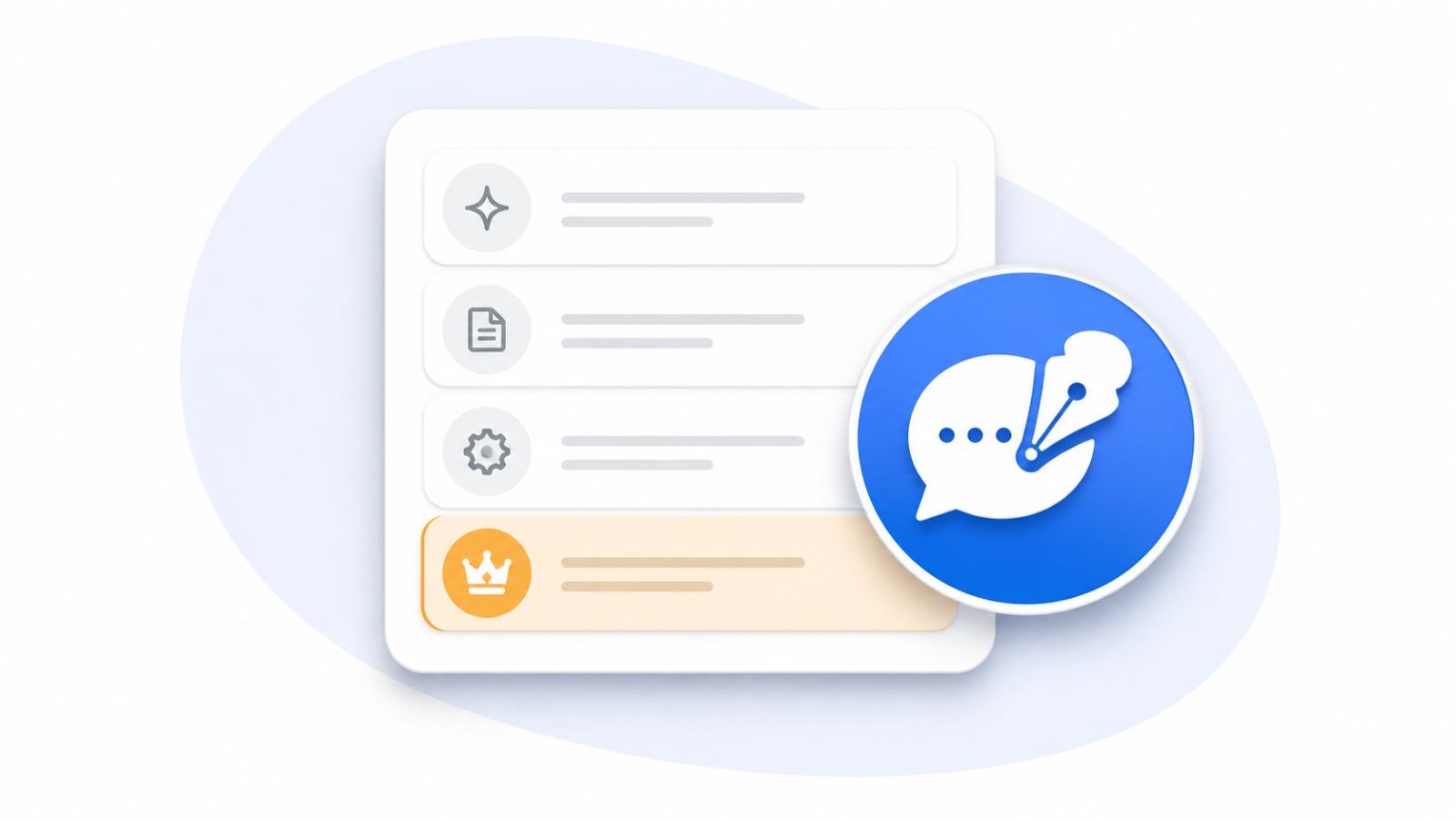
There is no single “best” AI writing tool – there’s the best tool for your specific workflow, content types, and scale requirements. Here’s a practical decision framework:
Choose ChatbotX if you want a complete platform that handles AI writing, chatbot automation, and lead engagement under one roof – with the added advantage of an open-source codebase for technical flexibility.
Choose ChatGPT or Claude if you want raw model power for flexible, general-purpose writing tasks with a capable free tier.
Choose Jasper if you’re an enterprise marketing team with a defined brand style guide and the budget to match.
Choose Writesonic or SEOWind if SEO content production at scale is your primary use case.
Choose Sudowrite if you’re writing fiction and need a tool that actually understands narrative structure.
Ready to Transform Your Content Workflow?
If you’re serious about scaling your content production without sacrificing quality, ChatbotX is the platform worth exploring first.
With its combination of AI-powered writing tools, intelligent chatbot automation, and an open-source foundation that gives you full control over your data and workflows, it’s built for the way content teams actually operate in 2026 – not the way they operated three years ago.
👉 Start for free at ChatbotX.io – no credit card required. See firsthand how AI writing and conversational automation can work together in a single platform designed for your growth.
Have questions about which ChatbotX plan fits your needs? Explore the full feature breakdown or browse the community discussions on GitHub to see how other teams are building with the platform.
Your next great piece of content is one prompt away – let’s build it together.