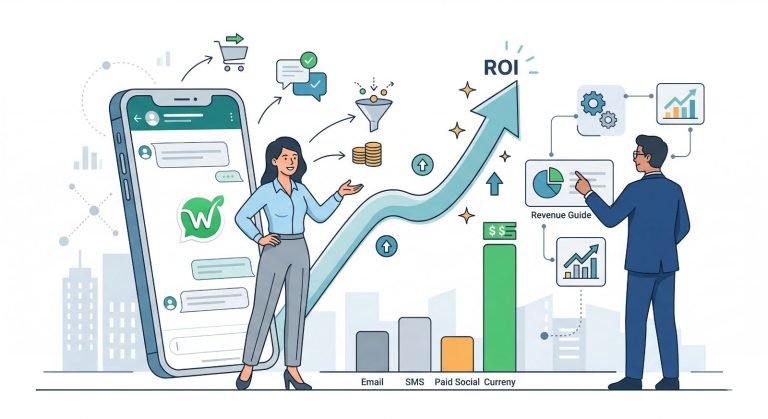

Social media in 2026 is no longer a place where brands can “post and pray.” Algorithms are smarter, competition is fiercer, and audiences are more selective than ever. Simply showing up is not enough – you need a clear, documented social media marketing strategy that connects every post, every campaign, and every conversation to a measurable business outcome.
Whether you are a solo creator growing a personal brand or a marketing team managing multiple channels for an enterprise, this guide walks you through eight practical steps to building a social media strategy that generates real results.
Launch agentic chat marketing in minutes with ChatbotX













What Is a Social Media Marketing Strategy — and Why Does It Matter?
A social media marketing strategy is a documented plan that defines what you want to achieve on social platforms, who you are trying to reach, what content you will create, and how you will measure success. It is the difference between posting content reactively and building an audience deliberately.
Without a strategy, social media becomes an expensive time sink. With one, it becomes one of the highest-ROI marketing channels available to any business.
A social media strategy is not the same as a content calendar. Think of the strategy as the architecture and the content calendar as the furniture inside. The strategy answers “why” and “what for”; the content calendar answers “when” and “what exactly.”
According to Sprout Social’s 2025 Index, 73% of marketers say their social media efforts have become “somewhat” or “very” effective at achieving business goals – but only among those who operate with a documented strategy. Without one, the number drops dramatically.
Step 1: Audit Your Current Social Media Presence

Before building forward, look backward. If your brand has been active on any social platforms, a social media audit gives you a clear picture of what is working and what is costing you time without return.
During your audit, answer these questions:
- Which platforms are driving the most meaningful engagement (not just vanity metrics)?
- What content formats – short-form video, carousels, long-form posts – have historically performed best?
- Which channels are generating website traffic, leads, or conversions?
- Are your profiles fully optimized (bio, profile image, links, keywords)?
If you are building a social media presence from scratch, skip this step and move directly to audience research. If you already have existing profiles, your audit findings should inform every decision in the steps that follow.
Step 2: Build a Deep Understanding of Your Target Audience

Every effective social media strategy starts with a granular understanding of the people you are trying to reach. Surface-level demographics – age, location, gender – are a starting point, but they are not enough in 2026.
You need to understand:
- Psychographics: What motivates your audience? What do they aspire to? What frustrates them?
- Behavioral patterns: Where do they spend time online? What type of content do they consume and share?
- Pain points: What problems are they actively trying to solve that your product, service, or content can address?
- Platform preferences: Is your audience primarily on Instagram and TikTok, or are they concentrated on LinkedIn and YouTube?
- Trust signals: Which creators, publications, or communities do they turn to for recommendations?
The most reliable source of audience insight is direct conversation – customer interviews, survey responses, sales call recordings, and support ticket themes. Social listening tools like SparkToro can help you understand what your audience reads, follows, and discusses at scale.
Pay close attention to the comments and DMs on your existing content. The questions people ask unprompted are a goldmine for content ideas and messaging angles.
Pro tip: Audience research is never finished. As platforms evolve and audience behaviors shift, your understanding of who you are talking to must evolve with them. Build in a quarterly audience review as part of your strategy.
Step 3: Define SMART Goals Tied to Business Outcomes
Social media goals without a connection to business outcomes are decorative. Before you set a target for follower growth or engagement rate, ask yourself: what does achieving this goal actually do for the business?
Common social media goals that map to business outcomes include:
| Social Media Goal | Business Outcome |
|---|---|
| Increase brand awareness | Shorter sales cycles, higher inbound volume |
| Grow engaged community | Lower customer acquisition cost |
| Drive website traffic | More leads and content conversions |
| Generate social proof | Higher conversion rates on product pages |
| Support customer retention | Reduced churn and increased lifetime value |
Once you have chosen your goals, make them SMART:
- Specific: Define exactly what you want to achieve
- Measurable: Attach a quantifiable metric (engagement rate, follower count, click-throughs)
- Achievable: Set targets that challenge you without being impossible given your current position
- Relevant: Ensure the goal serves a broader business priority
- Time-bound: Give the goal a deadline – monthly, quarterly, or annually
For example, instead of “grow our Instagram following,” a SMART goal would be: “Increase Instagram follower count by 15% in Q3 2026 by publishing four Reels per week targeting small business owners.”
Step 4: Choose the Right Platforms — and Go Deep Before Going Wide
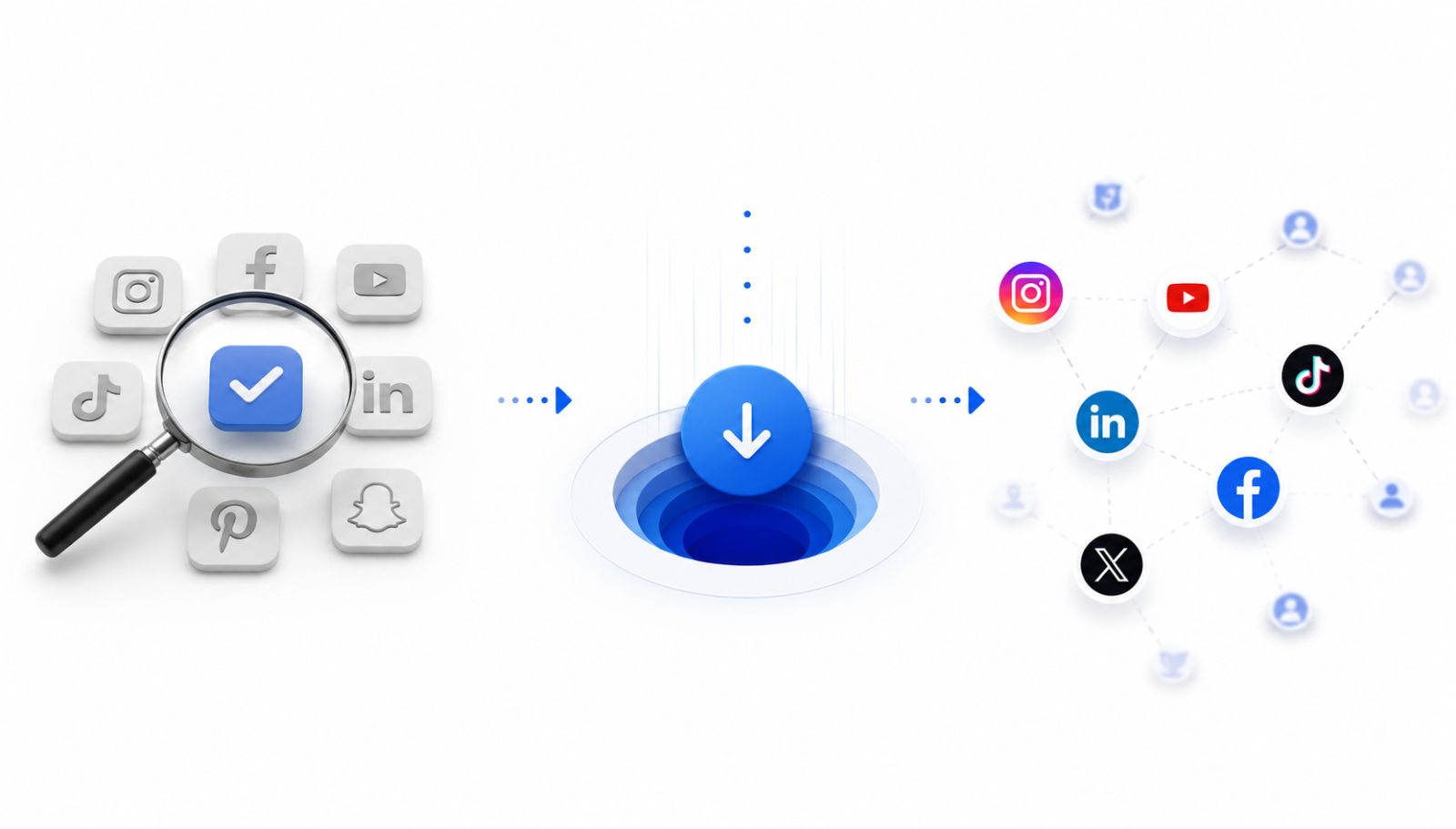
One of the most common social media strategy mistakes is trying to be present everywhere simultaneously. Spreading your content creation capacity across six platforms is a fast path to mediocre performance on all of them.
The right platforms for your strategy depend on two non-negotiable factors:
- Where your target audience is most active – verified through audience research, not assumption
- Where you can consistently create content you are proud of – because quality consistency beats quantity across platforms every time
In 2026, the landscape looks roughly like this:
| Platform | Best for |
|---|---|
| Visual brands, creators, e-commerce, lifestyle | |
| TikTok | Short-form entertainment, Gen Z, product discovery |
| B2B marketing, thought leadership, professional services | |
| YouTube | Long-form education, product reviews, brand storytelling |
| Community building, local business, paid advertising | |
| X (Twitter) | Real-time news, developer communities, public discourse |
| Evergreen visual content, home, fashion, food |
Start with one or two platforms. Develop your voice, learn the algorithm, and build an audience before expanding. According to HubSpot’s 2026 Social Media Trends Report, brands that focus on two to three platforms consistently outperform those spreading efforts across five or more.
Once you are ready to expand, repurposing becomes your most powerful lever. A single well-produced YouTube video can become Instagram Reels clips, LinkedIn posts, quote graphics for Pinterest, and a Twitter/X thread – all without creating new content from scratch.
Step 5: Establish Content Pillars and Close Content Gaps
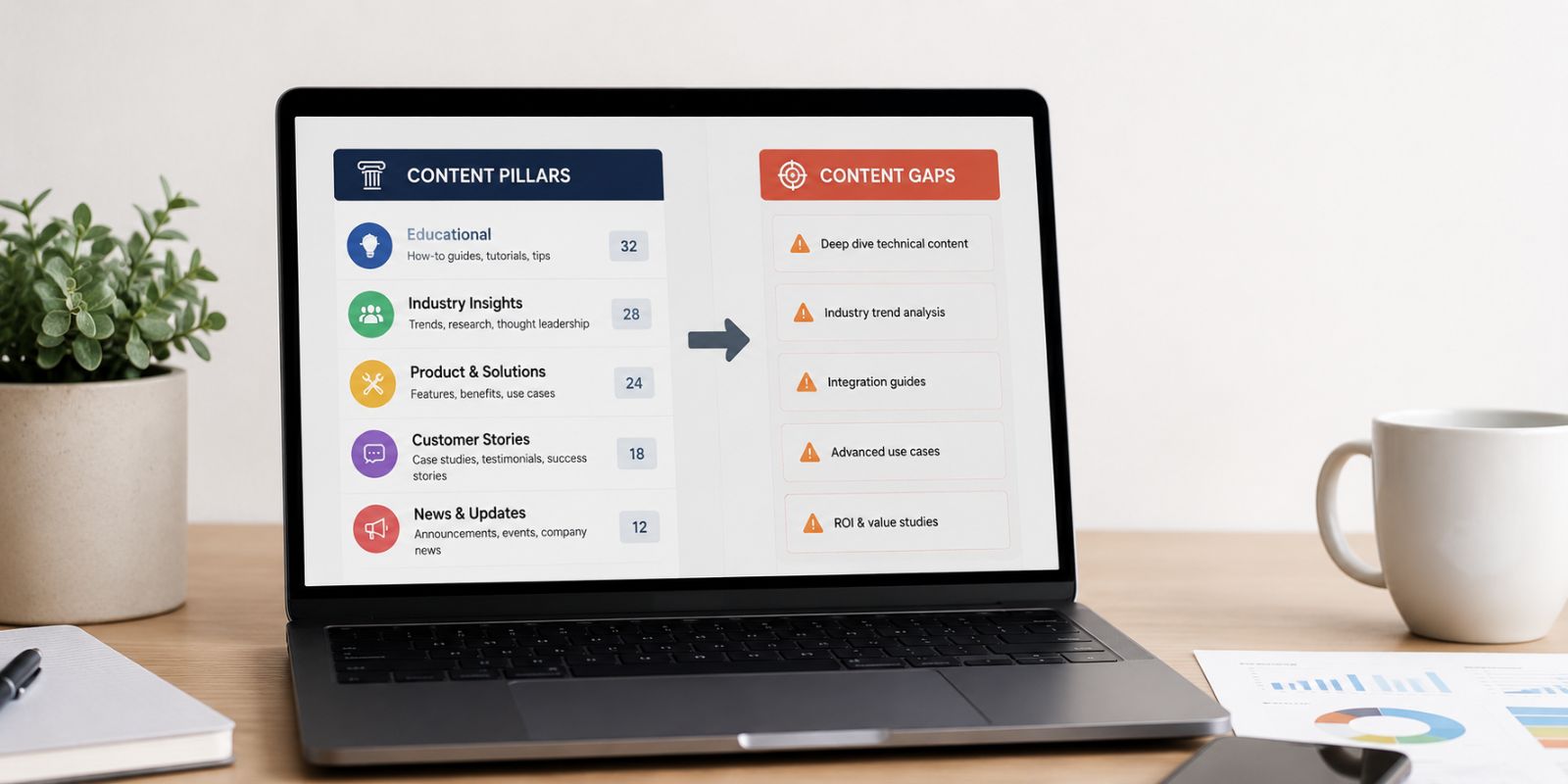
Content pillars are the three to five core themes your brand will own on social media. They give your content a coherent identity, make it easier to ideate consistently, and help your audience know exactly what to expect from you.
For example, a SaaS company targeting marketing professionals might build content pillars around:
- Marketing automation tutorials
- Industry data and trend analysis
- Customer success stories
- Team culture and behind-the-scenes content
To identify your content pillars, combine two inputs: what your audience cares about most (from your research in Step 2) and where your brand has genuine expertise or a unique point of view.
After establishing your pillars, conduct a content gap analysis by examining what your competitors are publishing and identifying topics that are underserved. Ask: what questions is your audience asking in forums, comment sections, and communities that no one is answering well? Those gaps are your highest-opportunity content territories.
For brands using AI and conversational marketing, ChatbotX’s AI Agents feature can analyze incoming audience conversations across channels to surface recurring themes and questions – turning your customer interactions into a continuous content research engine.
Step 6: Build Your Content Calendar and Systematize Production
A strategy without an execution system is just a document that collects dust. Your content calendar is the operational backbone that turns strategic decisions into published posts.
An effective content calendar captures:
- Publication date and time
- Platform and format (Reel, carousel, long-form post, Story, etc.)
- Content pillar the piece belongs to
- Caption draft and visual assets
- Status (idea, in production, scheduled, published)
- Performance notes after publication
Content batching – creating multiple pieces of content in one focused session – is the most efficient way to maintain publishing consistency without burning out. Dedicate specific days to ideation, creation, editing, and scheduling rather than trying to do everything every day.
For teams managing multiple social channels, ChatbotX’s Flow Builder enables automated audience engagement flows across platforms like Instagram, Facebook Messenger, WhatsApp, and Telegram – meaning your social presence can stay active and responsive even outside business hours without requiring manual intervention.
Posting frequency benchmarks to guide your calendar planning:
| Platform | Recommended Frequency |
|---|---|
| Instagram (Feed) | 4–7 posts/week |
| Instagram Stories | 2–5 Stories/day |
| TikTok | 1–3 videos/day |
| 3–5 posts/week | |
| 1–2 posts/day | |
| YouTube | 1 video/week |
| X (Twitter) | 3–5 posts/day |
These are guidelines, not mandates. Consistent quality at lower volume outperforms erratic posting at high volume every time.
Step 7: Activate Audience Engagement — Don’t Just Broadcast
The brands and creators winning on social media in 2026 have one thing in common: they treat social media as a two-way channel, not a broadcasting network. Publishing content is only half the equation. Responding to comments, engaging in DMs, acknowledging mentions, and participating in conversations in your niche are equally important signals to both algorithms and audiences.
Engagement also compounds. When you respond to comments promptly, your posts receive an algorithmic boost because the platform interprets the activity as a signal of relevance. When you build relationships in your DMs, you create the kind of loyal audience that converts – and refers others.
For growing brands managing significant comment and message volume, manual engagement becomes a bottleneck. ChatbotX’s Shared Inbox centralizes conversations from Instagram, Facebook, WhatsApp, Telegram, and other channels into a single interface – making it possible to respond faster, assign conversations to team members, and avoid the common problem of messages going unanswered.
The platform’s Growth Tools also enable automated comment-to-DM flows, allowing you to instantly follow up with everyone who engages with a specific post – a strategy that has been shown to dramatically increase both engagement rates and lead generation from organic social content.
You can explore the open-source architecture behind these capabilities on the ChatbotX GitHub repository and review the full release history to understand how the platform evolves with emerging channel requirements.
Step 8: Measure Performance, Extract Insights, and Iterate
A social media strategy is a living document, not a one-time project. The only way to improve is to systematically measure what you are doing, understand why it worked or did not, and apply those learnings to the next cycle.
Establish a regular analytics rhythm:
- Weekly: Check post-level performance – which content is generating engagement, saves, shares, and click-throughs
- Monthly: Review account-level trends – follower growth, reach, profile visits, and website referral traffic
- Quarterly: Evaluate goal progress against your SMART targets and adjust strategy accordingly
The key metrics to track depend on your goals:
| Goal | Primary Metrics |
|---|---|
| Brand awareness | Reach, impressions, follower growth rate |
| Engagement | Engagement rate, saves, shares, comment volume |
| Traffic | Link clicks, website sessions from social |
| Lead generation | DM opt-ins, form submissions, conversions |
| Community building | Reply rate, DM volume, returning commenters |
Resist the temptation to pivot your strategy after two or three weeks of underperformance. Most experts recommend running a consistent strategy for at least 90 days before drawing conclusions. Algorithms need time to understand and distribute your content, and audiences need time to recognize and respond to your consistent presence.
When you do pivot, make one change at a time – posting frequency, content format, or topic focus – so you can isolate what actually moved the needle.
For deeper analysis of how social audiences are converting into business outcomes, ChatbotX’s Analytics dashboard tracks conversation-level data across channels, giving you visibility into which social touchpoints are driving DM conversations, lead captures, and customer interactions – closing the loop between social content and business results.
How AI and Automation Fit Into Your 2026 Social Media Strategy
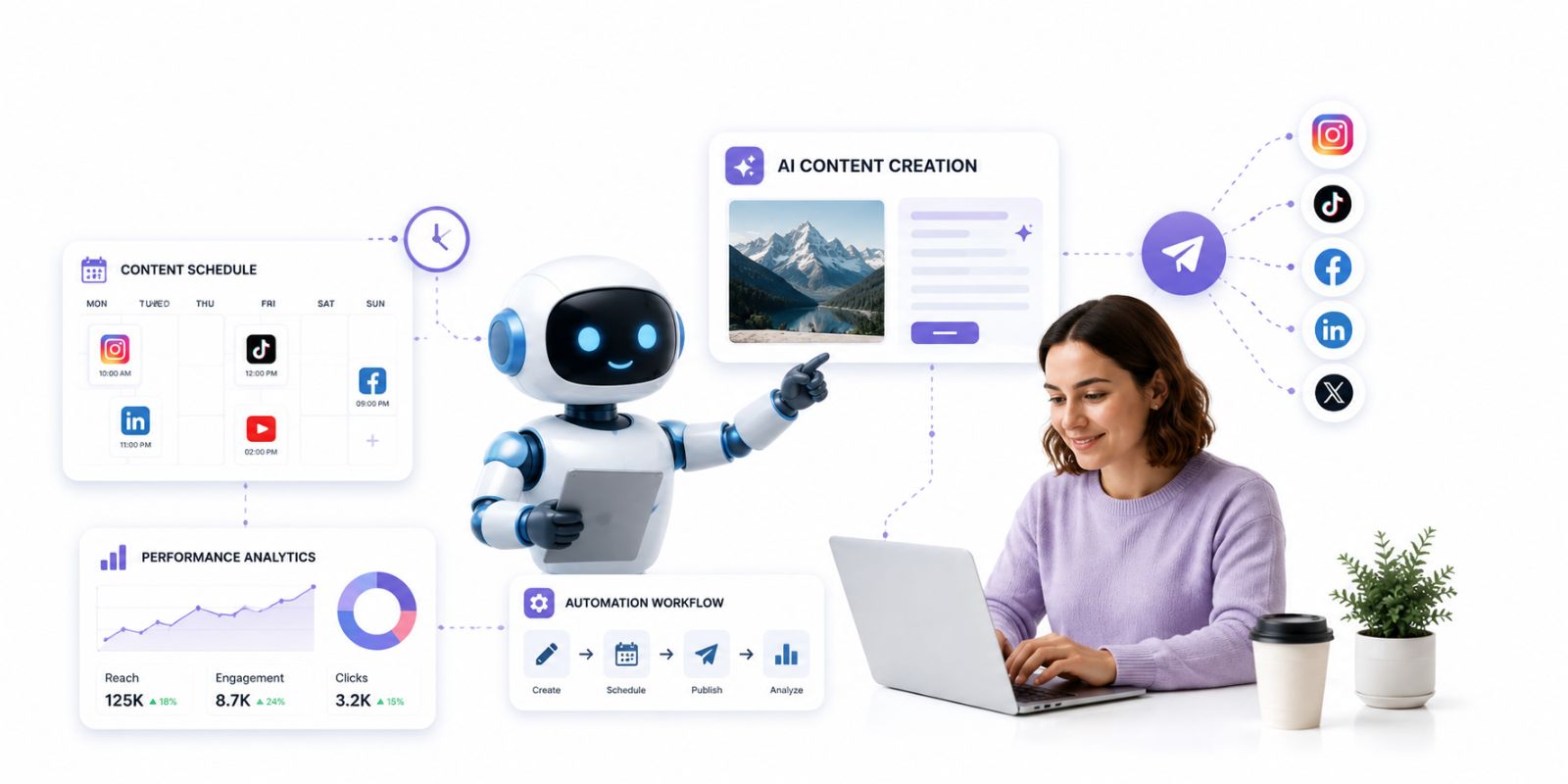
Artificial intelligence is not replacing social media strategy – it is amplifying the capacity of the teams executing it. In 2026, the most effective social media operators are using AI to:
- Generate content ideas at scale based on audience behavior signals
- Automate comment responses and DM follow-ups without losing personalization
- Analyze performance data faster and surface actionable insights
- Deliver personalized content journeys to audience members based on their engagement history
ChatbotX is an open-source, agentic omnichannel AI chatbot platform purpose-built for this kind of conversational marketing at scale. It connects your social media channels – Instagram, Facebook Messenger, WhatsApp, Telegram, TikTok, and more – into a unified system that can automate audience engagement, qualify leads, recover abandoned carts, and deliver personalized content – all triggered by social media interactions.
For teams that want to extend and customize the platform’s capabilities, the complete source code is available on GitHub, with an active development roadmap and community contributing improvements continuously.
To understand how brands are using conversational automation alongside social media strategy, the ChatbotX blog on social media growth strategies offers a detailed look at the creator-side applications, while the guide to social media management tools helps teams evaluate where ChatbotX fits within the broader marketing technology stack.
The Social Media Strategy Mindset for 2026
The most important shift in social media marketing thinking for 2026 is this: your social media presence is not a content library – it is a conversation ecosystem.
Every post you publish is an invitation to interact. Every comment is a relationship opportunity. Every DM is a potential conversion. Brands that build systems to engage meaningfully at each of those touchpoints – using a combination of authentic human judgment and intelligent automation – are the ones that will compound their social media results year over year.
Build your strategy. Document it. Execute consistently. Measure relentlessly. And update it whenever the data, the platforms, or your audience tells you something important has changed.
Ready to Turn Your Social Media Strategy Into a Revenue Engine?

If you are building out your social media marketing strategy for 2026 and want to add a powerful engagement automation layer, ChatbotX is the tool built for exactly that.
ChatbotX is a free, open-source agentic omnichannel chatbot platform that connects all your social channels into a unified conversation system – automating DM follow-ups, comment responses, lead qualification, and customer support so your team can focus on strategy and creativity while the platform handles the operational volume.
Here is how to get started:
- 🚀 Try the platform free: cloud.chatbotx.io
- ⭐ Star the repository and explore the code: github.com/ChatbotXIO/ChatbotX
- 📖 Read the documentation: chatbotx.io/docs
- 💬 Follow the blog for social media and AI automation insights: chatbotx.io/blog
Your strategy is only as powerful as your ability to execute it at scale. ChatbotX gives your team that leverage – without the enterprise price tag.
Frequently Asked Questions
What is a social media marketing strategy?
A social media marketing strategy is a documented plan that outlines your goals on social platforms, the audience you are targeting, the content you will create, the channels you will use, and the metrics you will use to evaluate success. It connects social media activity to broader business objectives.
How long does it take to see results from a social media strategy?
Most social media experts recommend running a consistent strategy for at least 90 days before evaluating results. Algorithms need time to understand and distribute your content, and audiences need time to develop familiarity with your brand.
How many social media platforms should I be on?
Start with one or two platforms where your target audience is most concentrated. Once you have established a consistent presence and content production system on those platforms, expand strategically using content repurposing to maintain quality without proportionally increasing workload.
What is the difference between organic and paid social media strategy?
Organic social media strategy focuses on building an audience through non-paid content – posts, Reels, Stories, and community engagement. Paid social adds advertising spend to accelerate reach and targeting precision. The most effective strategies in 2026 use both in a complementary hybrid model.
How does AI automation fit into a social media marketing strategy?
AI automation – through tools like ChatbotX – handles the high-volume operational tasks of social media: responding to DMs, following up on comment interactions, qualifying leads from social traffic, and delivering personalized content flows. This frees your human team to focus on strategy, creative direction, and relationship building.
What metrics matter most for a social media marketing strategy?
The metrics that matter most depend on your goals. For brand awareness: reach and impressions. For engagement: engagement rate, saves, and shares. For lead generation: DM opt-ins and link clicks. For conversion: social-attributed revenue and customer acquisition cost from social channels.