Most small business owners wake up to the same daily dilemma: too much to run, too little time to grow. Between managing operations, handling customer service, and keeping the lights on, building a reliable pipeline of new prospects often slides to the bottom of the list. Yet without a steady flow of qualified leads, growth stalls – and competitors pull ahead.
The good news is that attracting the right customers no longer requires a massive marketing team or an enterprise budget. With the right systems and tools in place, even a lean SMB can build an automated lead generation engine that works around the clock. Here are eleven strategies that do exactly that.
Launch agentic chat marketing in minutes with ChatbotX













1. Turn Your Website Into a Lead Capture Machine
Your website is your highest-leverage marketing asset – but only if it is actively converting visitors into prospects. Most small business websites function as digital brochures rather than lead generators. Closing that gap requires three focused changes.
Optimize for search intent. Conduct keyword research around the problems your customers are trying to solve, then weave those terms naturally into your page titles, meta descriptions, headers, and product copy. Target long-tail phrases with clear commercial intent rather than broad, competitive terms you cannot realistically rank for.
Eliminate friction. Compress images, enable lazy loading, and make sure every page renders cleanly on mobile. A one-second delay in page load time can reduce conversions by up to 7%, according to Google’s own research. Speed is not a technical nicety – it is a conversion lever.
Use purposeful CTAs. Replace generic button copy like “Submit” or “Learn More” with action-oriented phrases tied to specific outcomes: “Get My Free Audit,” “See a Live Demo,” or “Start Saving Time Today.” Place these CTAs above the fold and at natural decision points throughout your content.
2. Segment Your Email Outreach for Higher Conversion
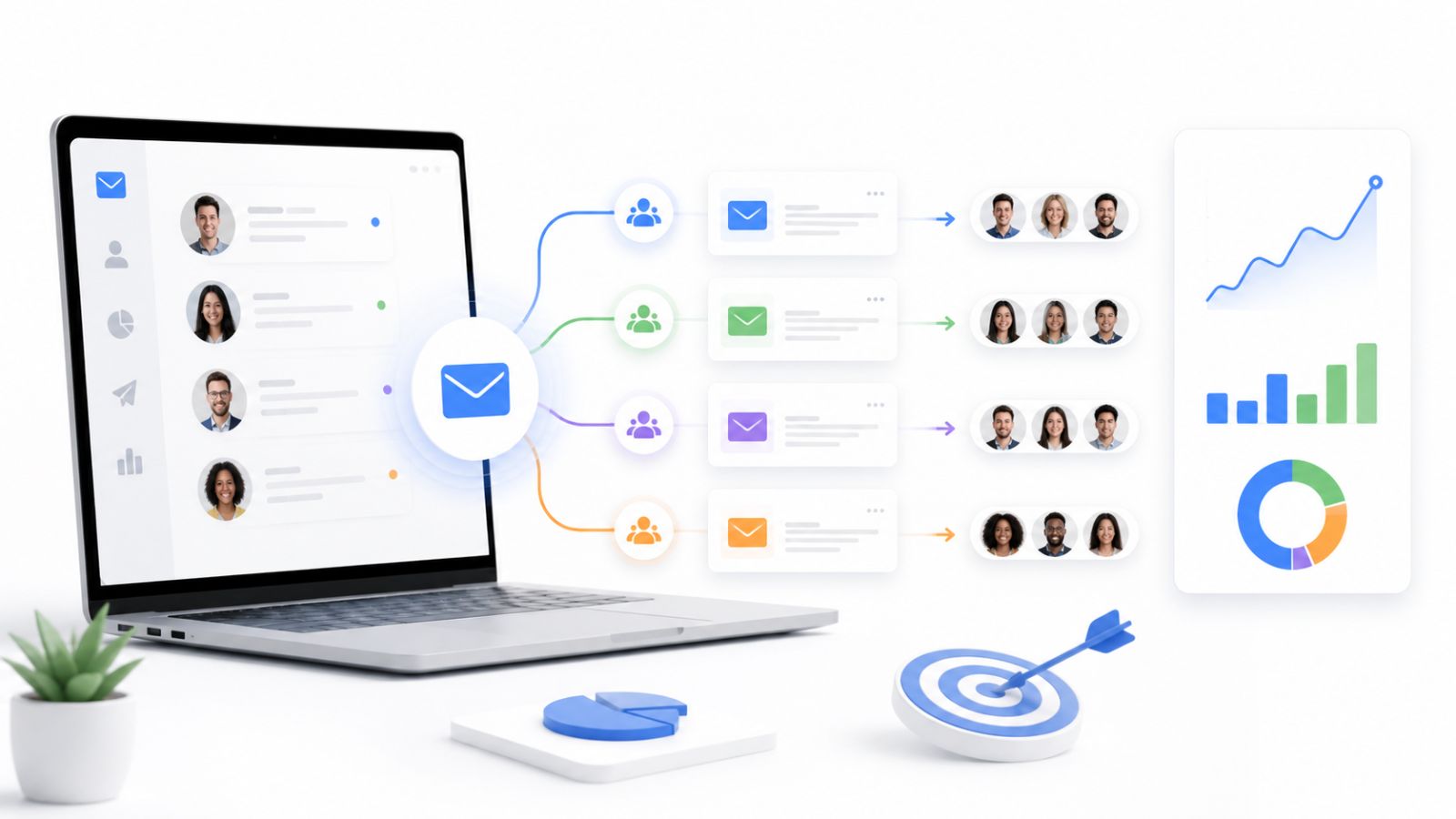
Spray-and-pray email campaigns are not just ineffective – they actively damage your sender reputation and train subscribers to ignore you. The alternative is segmentation: grouping your contacts by behavior, interests, purchase history, or funnel stage, then delivering messages that are directly relevant to where each group is in their journey.
A well-segmented email program consistently outperforms generic blasts on every metric: open rate, click-through rate, and revenue per subscriber. For SMBs, the key is starting simple. Even splitting your list into “new leads,” “engaged prospects,” and “existing customers” and crafting distinct messages for each group will produce measurable lift.
Pair segmentation with behavioral triggers – automated emails that fire based on specific actions like visiting your pricing page, abandoning a cart, or downloading a resource – and you have a lead nurturing system that runs without manual effort.
3. Build Authority Through Social Selling
Social media’s role in B2B and B2C sales has shifted dramatically. The most effective brands are not simply broadcasting promotional content – they are joining conversations, answering questions, and building genuine credibility in the communities where their target audience spends time.
On LinkedIn, this means sharing insights from your own experience, commenting thoughtfully on industry discussions, and engaging directly with potential customers rather than pushing product announcements. On Instagram or TikTok, it means showing the human side of your business – the founder’s story, behind-the-scenes processes, or authentic customer outcomes.
Authenticity compounds over time. Every helpful comment, every genuine story shared, and every question answered builds a layer of trust that paid advertising cannot replicate. The businesses that win through social selling treat it as a long-term investment, not a short-term tactic.
4. Use Content as Your Primary Lead Magnet

High-quality content is the most durable lead generation asset you can build. A well-researched blog post, a practical checklist, or an in-depth guide that genuinely solves a problem for your target audience will continue attracting and converting leads for months or years after it is published.
The highest-converting content assets are those that deliver immediate, tangible value in exchange for contact information:
- Problem-specific guides: A step-by-step walkthrough of a challenge your ideal customer faces regularly
- Original research or benchmarks: Data that does not exist elsewhere and that your audience will want to reference
- Practical templates or calculators: Tools that save time and produce a useful output
- Case studies: Real results from real customers, with specific numbers attached
The goal is to make your content so useful that prospects feel a genuine exchange of value when they provide their email address to access it.
5. Automate Lead Capture and Follow-Up Across Messaging Channels
Speed-to-lead is one of the most underestimated variables in conversion rate. Research consistently shows that the probability of qualifying a lead drops dramatically within the first few minutes of initial contact. A prospect who reaches out at 10pm and receives a response at 9am the next morning has already evaluated three other options.
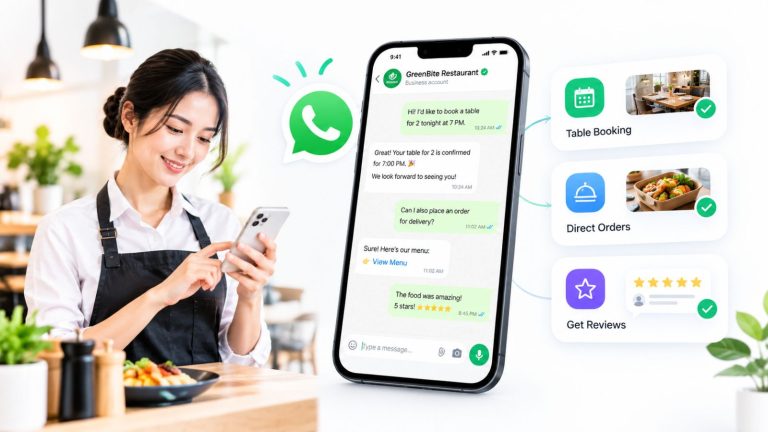
This is where conversational automation becomes a genuine competitive advantage for SMBs. ChatbotX – an open-source, agentic omnichannel chatbot platform – allows businesses to deploy AI-powered agents across WhatsApp, Facebook Messenger, Instagram, Zalo, Telegram, and WebChat from a single dashboard. When a prospect sends a message on any channel, they receive an immediate, intelligent response that captures their information, qualifies their intent, and routes them to the right follow-up sequence – without any manual intervention.
The platform’s AI Agents feature handles routine qualification autonomously, detecting user intent and responding contextually 24 hours a day. Leads that come in overnight are not lost – they are engaged, qualified, and handed off to your sales team with full context by morning.
For SMBs competing with larger organizations on responsiveness and experience, this kind of always-on automation closes the gap significantly. You can explore the full codebase and self-host for free at the ChatbotX GitHub repository.
6. Host Webinars and Live Q&A Sessions
Live events create a form of trust that static content cannot. When a potential customer sees you demonstrate expertise in real time – answering unscripted questions, walking through a live product demo, or discussing industry challenges with genuine candor – the relationship moves forward faster than any nurture email sequence could achieve.
Webinars also serve a dual purpose: they generate leads at registration and produce evergreen content assets afterward. A recorded session can be repurposed into a YouTube video, sliced into social clips, transcribed into a blog post, and gated as a lead magnet – multiplying the return on a single hour of your time.
Practical formats that work well for SMBs include customer success panels, live product walkthroughs, and Q&A sessions where prospects can ask the questions that are actually blocking their purchase decision.
7. Partner With Complementary Businesses

Some of the most efficient lead generation does not involve any advertising spend at all. Strategic partnerships with businesses that serve the same audience – but offer different products or services – allow you to tap into an established, pre-qualified audience that already trusts your partner.
The mechanics are straightforward: co-host a webinar, swap newsletter mentions, create a joint resource, or build a bundled offer. Each partner gains access to a new segment of potential customers without the cost of acquiring them from scratch.
The key to making partnerships work is alignment. Your partner’s audience should genuinely benefit from what you offer, and vice versa. A partnership built on audience fit will outperform one built on reach every time.
8. Run Targeted Contests and Interactive Polls
Contests and polls generate leads in a way that feels participatory rather than transactional. When you ask someone to enter a contest or answer a poll question, you are inviting them into a two-way exchange rather than demanding their data in return for a download.
The most effective contest mechanics for lead generation tie the incentive directly to your product or service – a free trial, an exclusive consultation, or early access to a new feature. This self-selects for participants who are genuinely interested in what you offer, rather than prize hunters who will unsubscribe immediately after the contest closes.
Polls serve a different but equally valuable function: they surface the language your customers use to describe their own problems, which you can feed directly back into your messaging and content strategy.
9. Build a Referral Program That Rewards Existing Customers

Word-of-mouth has always been the highest-trust form of marketing, but most businesses leave it entirely to chance. A structured referral program converts what is currently a passive, unpredictable flow of recommendations into an active, incentivized growth channel.
The design of the incentive matters. Research from the Journal of Marketing shows that dual-sided rewards – where both the referrer and the referred customer receive something of value – outperform one-sided incentives on both participation rate and referred customer quality.
Keep the mechanics simple: a unique referral link, a clear reward structure, and automated tracking so customers always know how close they are to their next reward. The simpler the program, the higher the participation rate.
10. Deploy AI Agents to Qualify and Engage Leads at Scale
As your inbound volume grows, manual lead qualification becomes an increasingly serious bottleneck. Your best sales people should be spending their time on high-intent, sales-ready prospects – not filtering through a queue of cold inquiries to identify who is worth a follow-up call.
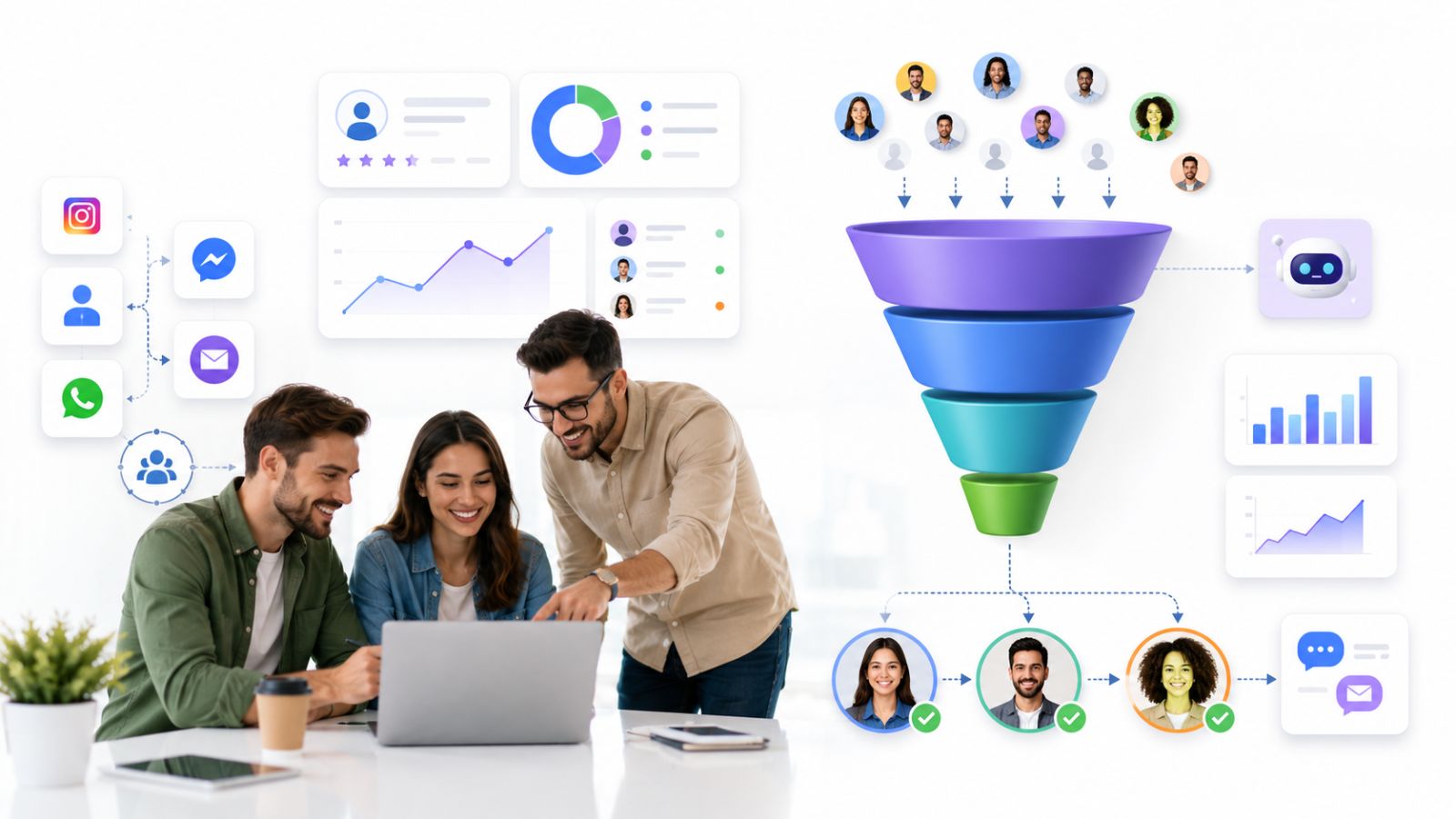
AI agents change this equation by handling the top of the funnel autonomously. They can greet incoming leads, ask qualifying questions, present relevant product information, and route high-intent prospects to your sales team – all without human involvement.
ChatbotX’s visual Flow Builder allows non-technical teams to design these qualification sequences without writing any code. You map out the conversation logic visually, connect it to your messaging channels, and the system handles execution. The result is a consistent, responsive experience for every prospect regardless of when they reach out, and a prioritized, pre-qualified queue for your sales team to work from.
For teams exploring how to implement this workflow, the ChatbotX blog covers the full architecture in detail: Facebook Lead Ads & CRM Integration: The Complete Guide to Converting Prospects Into Paying Customers (2026).
You can also deploy the platform yourself using the open-source repository and the self-hosting guide on GitHub.
11. Track the Metrics That Actually Drive Decisions

Lead generation without measurement is guesswork dressed up as strategy. The businesses that consistently improve their pipeline are the ones that track performance rigorously, identify what is and is not working, and reallocate resources accordingly – every month, without exception.
The metrics worth tracking fall into three categories:
Volume metrics tell you whether your top-of-funnel efforts are producing activity:
- Total leads generated by channel
- Website traffic by source
- Form submission rate
Quality metrics reveal whether the leads you are generating are actually worth pursuing:
- Lead-to-qualified-lead conversion rate
- Lead response time
- Cost per qualified lead
Revenue metrics connect your lead generation activity to actual business outcomes:
- Lead-to-customer conversion rate
- Average deal size
- Sales pipeline value
Review these numbers monthly and set quarterly targets. When a channel consistently underperforms, stop investing in it. When something works, double down before the window closes.
For a practical framework on using AI-powered analytics to track omnichannel campaign performance, the ChatbotX blog post on Facebook Messenger CRM integration walks through how modern businesses are connecting lead data across channels into a single performance view.
According to HubSpot’s 2025 State of Marketing Report, businesses that actively track and review their lead generation metrics are 2.8 times more likely to exceed their revenue targets than those that do not.
The Bottom Line
Effective lead generation in 2026 is not about doing more – it is about doing the right things with enough consistency and intelligence that they compound over time. The eleven strategies above share a common thread: each one is designed to work systematically, not sporadically. Build the system, measure it honestly, and improve it continuously.
Ready to Automate Your Lead Generation?
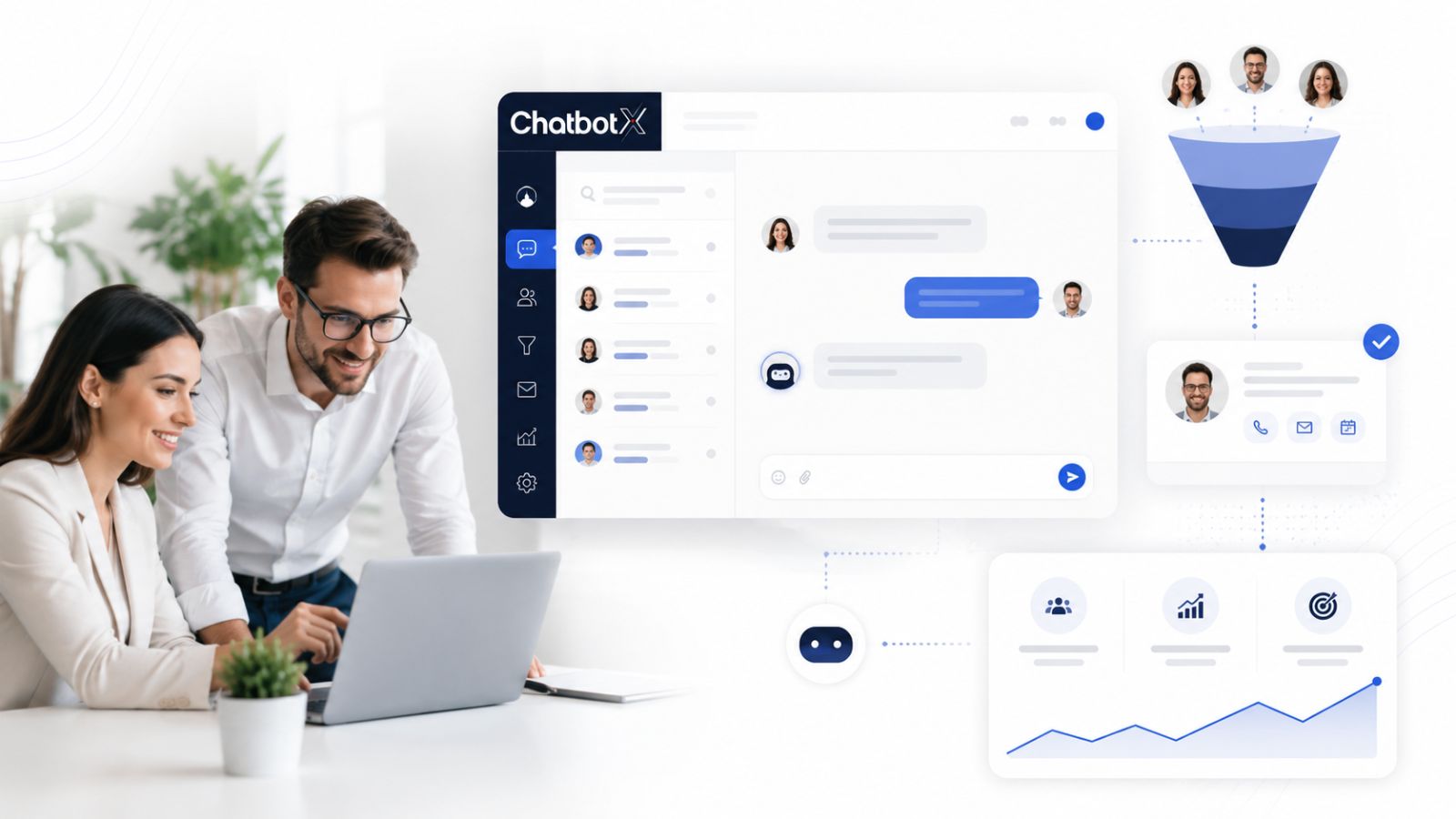
If you are looking for a single platform that connects all of these strategies – automated messaging, AI-powered lead qualification, multi-channel broadcasts, and a unified inbox for your team – ChatbotX is built for exactly this.
As an open-source, agentic omnichannel chatbot platform, ChatbotX lets you deploy intelligent AI agents across WhatsApp, Messenger, Instagram, Zalo, Telegram, and WebChat from one place. You can self-host it for free, white-label it for clients, or get started immediately on the cloud with a 7-day free trial – no credit card required.
👉 Start your free trial at chatbotx.io and see how fast you can build a lead generation system that works while you sleep.
👉 Star the project on GitHub and join a growing community of developers and marketers building the future of conversational marketing.