

Every founder knows the feeling: it’s past midnight, and you’re still deep in a spreadsheet – manually sorting leads, writing follow-up emails, and chasing prospects who may have already moved on. The pipeline isn’t a pipeline at all. It’s a constant scramble.
But 2026 is different. Startups that have integrated AI into their sales operations aren’t just working more efficiently – they’re winning deals they would have lost entirely. The edge isn’t reserved for enterprises with large budgets. These tools are accessible right now, and this guide breaks down exactly how to use them.
Launch agentic chat marketing in minutes with ChatbotX














Why AI Sales Strategies Matter More Than Ever for Startups
According to McKinsey’s 2025 State of AI report, companies that embed AI across their sales workflows report revenue gains of 10–20% on average. Yet the majority of startups still rely on manual processes that slow every stage of the funnel.
The gap between AI-native startups and those still doing sales the old way is widening quickly. The good news: closing that gap doesn’t require a technical team or an enterprise budget. It requires choosing the right strategies and tools.
12 AI Sales Strategies That Work for Startups Right Now

1. Behavior-Based Lead Scoring
Identifying who is worth pursuing is the foundational question in sales. AI answers it by analyzing behavioral data – page visits, email opens, content engagement, and historical purchase patterns – to generate dynamic lead scores that update in real time.
Instead of treating every inbound contact the same, behavior-based scoring lets small teams focus their energy where conversion probability is highest. Key signals to prioritize:
- Pricing page visits in the last 48 hours
- Multiple email opens without a reply (re-engagement opportunity)
- Repeat website visits from the same contact
- Demo video completions or feature documentation reads
- Time-on-page thresholds on product comparison pages
The practical advantage for startups: a two-person sales team can perform at the output of a ten-person team when AI filters the pipeline for them first.
2. Hyper-Personalized Email Outreach at Scale
The days of batch-and-blast campaigns are over. AI tools now analyze individual contact data – industry, company size, recent behavior, and conversation history – to generate email content that reads as if it was written specifically for that recipient, because it effectively was.
For startups, this matters because first impressions in the inbox often determine whether a deal ever gets started. AI-driven personalization raises open rates and, more importantly, reply rates – converting cold outreach into genuine conversation.
Effective personalized AI email sequences:
- Reference the prospect’s specific industry or use case
- Time delivery based on individual engagement history
- Adjust tone and offer based on where the lead sits in the funnel
- Trigger automatically when a prospect takes a qualifying action
3. Automated Follow-Up Sequences That Never Miss a Lead
Research from Harvard Business Review has consistently shown that the speed and persistence of follow-up is one of the highest-leverage variables in sales conversion. The problem for startups is that follow-up is also one of the easiest activities to delay or forget under pressure.
AI eliminates this risk entirely. Automated follow-up sequences trigger based on prospect behavior rather than a salesperson’s calendar. A lead who visits the pricing page at 9 p.m. on a Thursday receives a timely, relevant message – whether or not anyone on the team is watching.
Well-designed automated sequences:
- Trigger on specific behavioral events (page visits, email opens, form fills)
- Escalate messaging intensity for high-score leads
- Pause automatically when a reply is received
- Hand off to a human agent at the right moment
4. 24/7 Lead Nurturing with AI Agents
What happens to a prospect who fills out a contact form at 2 a.m.? Without AI, they wait. And by morning, they may have already found a competitor who responded faster.
AI agents eliminate response latency entirely. They handle inbound inquiries, answer common product questions, qualify leads through conversation, and book meetings – around the clock, without human intervention. By the time your sales team arrives in the morning, the best leads are already warmed, qualified, and waiting.
ChatbotX is built precisely for this use case. Its AI Agents operate across WhatsApp, Messenger, Instagram, Zalo, and Webchat simultaneously – maintaining context across channels and escalating to human agents only when the conversation is ready. For startups competing against companies with larger sales teams, this kind of always-on response capability is a genuine equalizer.
5. AI Sales Forecasting for Sharper Decisions
Startups make decisions under uncertainty every day: when to hire, how much inventory to carry, where to allocate marketing spend. AI sales forecasting replaces gut-feel estimates with data-driven projections built from your actual pipeline, historical close rates, and real-time deal velocity.
The business impact goes beyond accuracy. When forecasts are reliable, planning cycles become shorter, resource allocation improves, and the entire organization gains confidence in forward-looking decisions. For early-stage companies where every dollar counts, that confidence has real compounding value.
6. Automated Quote and Proposal Generation
Manual quoting is a surprising source of sales friction. Every hour spent building a proposal is an hour not spent on relationship development – and manual processes introduce pricing errors that can undermine credibility at critical moments.
AI-powered quoting pulls from your pricing rules, product catalog, and deal-specific context to generate accurate proposals in seconds. Sales cycles compress, margin errors disappear, and the prospect experience improves because they receive professional documentation faster.
7. AI-Driven Sales Coaching and Enablement
Not every salesperson on a startup team has equal strengths. And most early-stage founders don’t have the bandwidth to provide structured coaching to every team member, every week. AI closes that gap.
Conversation intelligence tools analyze call recordings, email threads, and deal outcomes to identify patterns – what language moves deals forward, where objections commonly arise, which rep behaviors correlate with closed business. Personalized coaching recommendations are then delivered at the moment they’re most actionable, not weeks later in a quarterly review.
According to Gartner’s 2026 Sales Technology report, AI-assisted coaching is one of the fastest-growing adoption categories in sales technology, with organizations reporting measurable improvement in ramp time for new hires and win rates for experienced reps.
8. Intelligent Pipeline Management
CRM hygiene is universally acknowledged as important and universally treated as optional. The result is stale data, missed follow-ups, and forecasts that reflect what the pipeline looked like three weeks ago – not what it looks like today.
AI-powered pipeline management solves this structurally rather than culturally. By automatically updating opportunity stages, extracting next steps from call notes, and flagging deals that have gone quiet, AI keeps your pipeline current without requiring anyone to choose data entry over selling.
Startups particularly benefit here because lean teams simply cannot afford the administrative overhead that keeps larger organizations’ CRMs accurate.
9. Omnichannel Conversation Management
Modern buyers move fluidly between channels – messaging on WhatsApp, following up via email, requesting a demo through a web chat widget. Without infrastructure to track and continue these conversations coherently, context gets lost and prospects feel like they’re starting over every time they reach out.
ChatbotX’s Shared Inbox brings every conversation thread – across WhatsApp, Messenger, Instagram, Telegram, and Webchat – into a single workspace. Sales and support teams see the full conversation history, internal notes, and customer context in one place, so every interaction continues seamlessly from where the last one ended.
For startups managing customer relationships across multiple channels with a small team, this kind of unified visibility directly translates to faster response times, fewer dropped conversations, and higher satisfaction scores.
10. Predictive Product Recommendations
AI doesn’t just help you close the deal in front of you – it identifies the next one. By analyzing purchase history, browsing behavior, and product usage patterns, AI recommends the next offer each customer is most likely to want before they’ve articulated the need themselves.
For startups with product-led growth models, this capability is particularly powerful. It turns every transaction into a starting point for expansion revenue rather than a standalone event.
11. Real-Time Conversation Intelligence
AI can now analyze customer conversations in real time – detecting sentiment shifts, flagging objections, and surfacing relevant competitive information mid-call. If a prospect mentions a competitor, the AI can immediately surface comparison data. If sentiment turns negative, it can alert a manager to step in.
This kind of live intelligence used to require dedicated enablement teams and expensive enterprise platforms. In 2026, it’s accessible to any startup willing to instrument their sales conversations.
12. Dynamic Lead Re-Engagement with Remarketing Automation
Not every prospect converts on the first contact cycle. A lead who went quiet three months ago may be ready to buy today – if the right message reaches them at the right moment.
AI-powered remarketing automation identifies dormant contacts based on behavioral signals and re-engages them with personalized campaigns across messaging channels. Rather than requiring a salesperson to manually review and restart old conversations, the system handles it automatically.
ChatbotX’s Remarketing feature lets you build audience segments from past behavior and deliver targeted follow-up sequences across WhatsApp, Messenger, and other connected channels – turning cold contacts into active opportunities without any manual lift. You can explore the implementation details and contribute to its development on the ChatbotX GitHub repository.
Putting It All Together: Building a Connected AI Sales System

Each of the strategies above delivers value on its own. But the most significant competitive advantage comes when they work together as a unified system – where lead scoring feeds follow-up sequences, conversation data informs coaching, and every customer interaction across every channel contributes to a complete picture of each relationship.
To see how these components connect in practice, explore the ChatbotX Flow Builder, which lets you visually design multi-step automation workflows across channels – from initial lead qualification through to sales handoff – without writing a single line of code. The open-source codebase is fully available on the ChatbotX GitHub for teams that want to inspect, customize, or self-host the platform.
For deeper context on how agentic AI is reshaping sales and marketing workflows specifically for growing businesses, the ChatbotX blog covers practical implementation in detail – including a thorough guide on converting Facebook leads through automated CRM integration and a strategic overview of Facebook Messenger as a high-converting sales channel.
The Real Competitive Advantage in 2026

Startups have always competed against larger organizations by moving faster and staying closer to their customers. AI amplifies both of those advantages at once – compressing response times from hours to seconds and making it possible for a small team to maintain genuinely personalized relationships at scale.
The founders who start building AI-native sales operations today are not just saving time. They’re creating a compounding structural advantage that becomes harder to close with every month that passes.
According to HubSpot’s 2026 State of Sales Report, 81% of sales professionals say AI tools help them spend more time on the activities that actually drive revenue. The constraint is no longer access to the tools. It’s the decision to use them.
Start Building Your AI Sales Stack Today
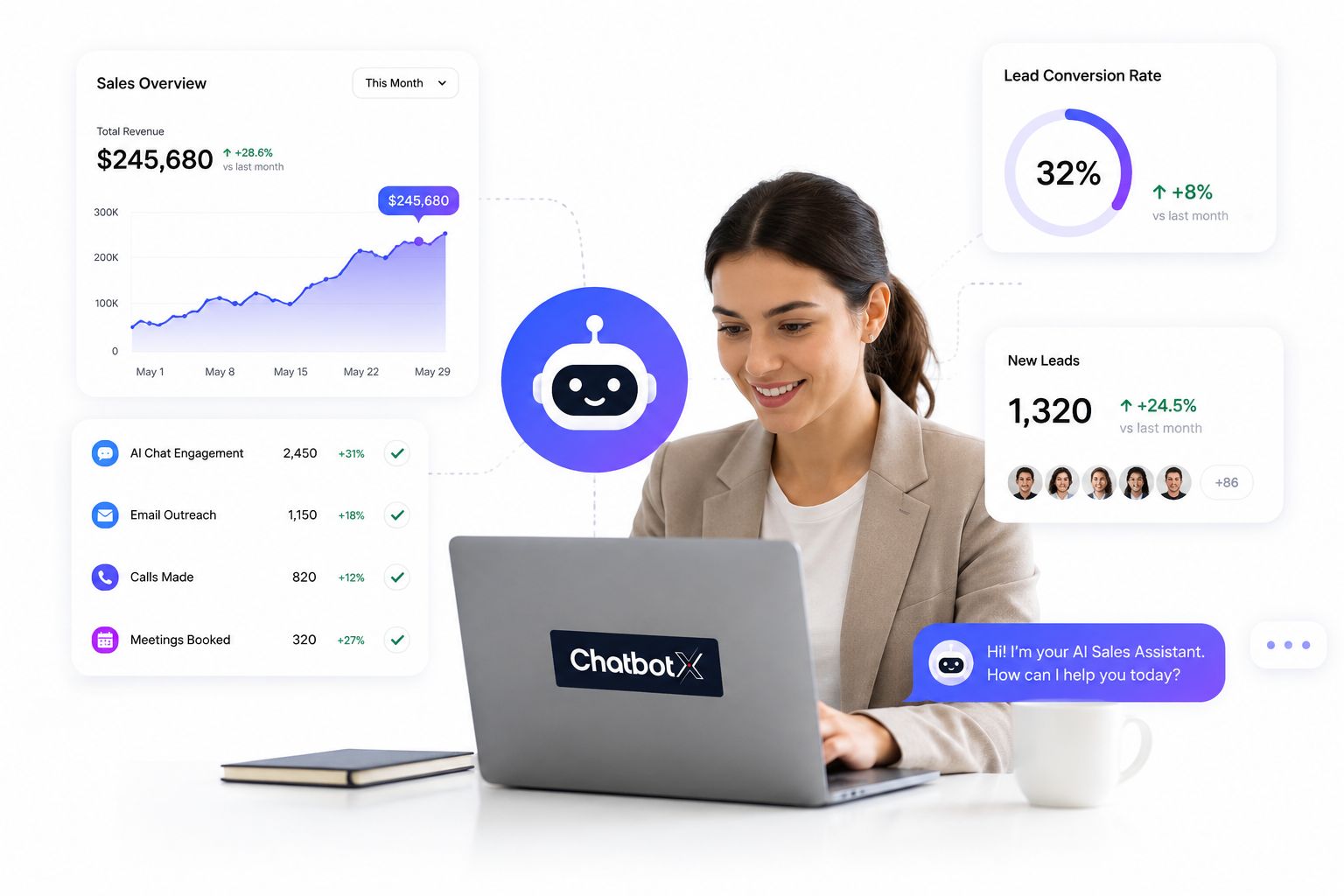
If you’re ready to move from manual sales operations to an AI-native system that works around the clock, ChatbotX is the open-source platform built for exactly this transition.
- Free to get started – self-host forever or begin a 7-day cloud trial with no credit card required
- Omnichannel from day one – WhatsApp, Messenger, Instagram, Zalo, Webchat, and more
- No code required – visual Flow Builder lets any team member build and deploy automation
- Fully open source – complete transparency, no vendor lock-in, and an active developer community
Get started with ChatbotX for free →
The leads are out there. The tools are ready. The only thing left is to deploy them.


