The Greater Bay Area (GBA) – the economic corridor linking Hong Kong, Macau, and nine mainland Guangdong cities – has become one of the most dynamic cross-border commerce zones in the world. Guangdong’s cross-border e-commerce import-export volume alone climbed from RMB 11.3 billion in 2015 to RMB 623 billion in 2025, a 55-fold jump driven by tighter customs integration and digital trade infrastructure (GBA Importers and Exporters Association). For brands selling across this region, that growth is an enormous opportunity. It is also a serious operational headache, because customers in the GBA simply don’t talk to brands on the same app.
A shopper in Hong Kong reaches out on WhatsApp. A mainland buyer expects WeChat. A customer in Taipei or Osaka defaults to LINE. Layer in Instagram and Facebook for younger demographics, and a single sales team can easily end up juggling five inboxes, five sets of customer notes, and five different versions of the truth about who a customer is. When that fragmentation hits a growing cross-border operation, the cost shows up in missed enquiries, duplicated outreach, and sales reps who have no idea what a lead asked about yesterday on a different channel.
Launch agentic chat marketing in minutes with ChatbotX














Why Channel Fragmentation Is the Real Bottleneck

It is tempting to treat each messaging app as a separate marketing channel that needs its own playbook. In practice, the bigger risk is structural: when conversations live in isolated apps, customer context dies the moment a buyer switches platforms. A luxury retail advisor in Hong Kong might build a rich relationship with a mainland tourist over WhatsApp during a store visit – only to lose all of that history when the same customer messages back on WeChat weeks later asking about a return. Without a shared system of record, that advisor is starting from zero, and the brand risks looking disorganized at exactly the moment a high-value relationship needs continuity.
Cross-border e-commerce sales already account for close to a fifth of all online transactions globally, and international shoppers are increasingly judging brands on how seamless that buying journey feels (Statista). A broken handoff between channels is no longer a minor inconvenience – it is a measurable churn risk.
What a Unified Cross-Border Sales Stack Actually Needs

Solving this isn’t about picking the “best” messaging app. It’s about giving cross-border teams three things at once:
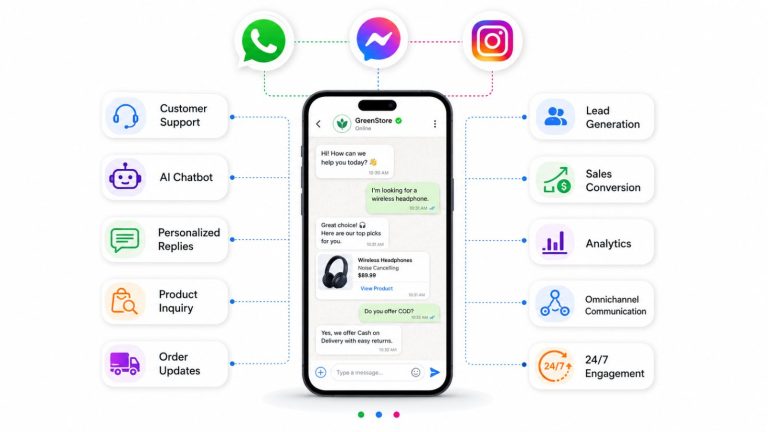
A single conversation layer. Regardless of whether an enquiry arrives through WhatsApp, Facebook, Instagram, or web chat, agents should be able to see, tag, and respond to it from one interface, instead of switching between five logged-in apps. This is exactly the kind of consolidation ChatbotX’s omnichannel messaging channels are designed to handle – letting a team deploy once and manage every channel’s conversations from a shared workspace rather than rebuilding workflows app by app.
Synchronized customer context. Order history, prior enquiries, and tagging need to follow the customer, not the channel. When that data lives in a unified team inbox instead of scattered across native apps, an agent picking up a conversation on a new channel can immediately see what was discussed before, who handled it, and what stage the customer is at in their buying journey.
Smart, automated routing. As cross-border volume scales, manually assigning every enquiry to the right regional specialist becomes unsustainable. AI-driven routing can read signals like language, region, or product interest and automatically direct a conversation to the agent best equipped to close it – freeing human reps to focus on the conversations that actually need a human touch.
Three Practical GBA Scenarios

Scenario 1: The cross-border returning shopper. A mainland tourist buys a luxury handbag at a Hong Kong boutique, then messages on WeChat after returning home to ask about an exchange. If the sales advisor can pull up the original WhatsApp purchase conversation directly from a synced customer profile, the resolution takes seconds instead of an awkward round of “can you confirm your order number again?”
Scenario 2: Wealth and insurance advisory. A financial services firm serving high-net-worth clients across Hong Kong and the mainland needs advisors who can move between WhatsApp and WeChat without losing a client’s risk profile or portfolio notes. Centralizing conversation logs in the cloud means that even if an advisor changes roles, a successor can pick up the relationship without the client noticing a gap in service – a continuity factor that directly protects retention for premium accounts.
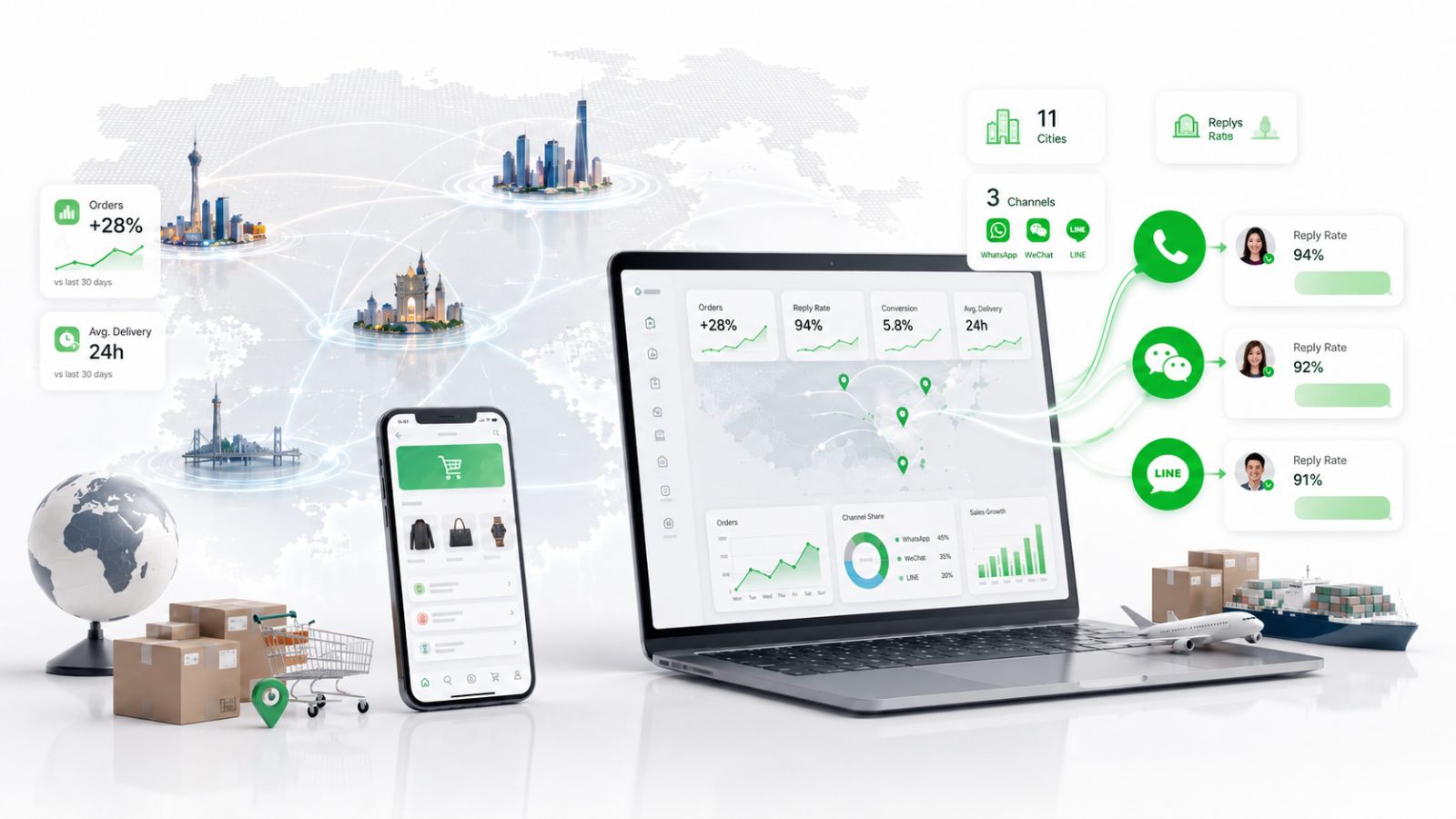
Scenario 3: Multi-market product launches. A consumer brand launching simultaneously in Hong Kong, Taiwan, and Japan needs LINE-savvy support for Taipei and Tokyo while keeping WhatsApp running for Hong Kong shoppers – all reporting into the same campaign dashboard, so marketing can see which channel and region is actually converting.
Data Security Cannot Be an Afterthought
Cross-border data transfer inside the GBA raises real compliance questions, since customer information frequently crosses jurisdictional lines between Hong Kong, Macau, and mainland China. Any platform handling this volume of customer conversation data needs verifiable security credentials – official API partnerships with the messaging platforms themselves, encrypted storage, and clear data-handling policies that hold up to enterprise procurement review. This is also where an open codebase has a practical advantage: teams that want full visibility into how their customer data is processed can review the underlying ChatbotX open-source repository directly, rather than taking a vendor’s security claims on faith.
Where AI Fits Without Replacing Your Sales Team

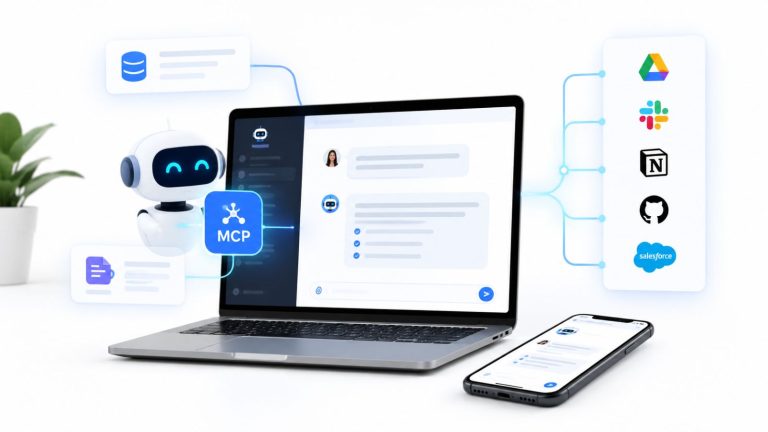
The goal isn’t to automate cross-border relationships out of existence – high-net-worth clients and big-ticket purchases still need a human advisor. The goal is to remove the busywork around those relationships: auto-tagging conversations by intent, drafting first-response replies in the customer’s language, flagging when a lead has gone quiet, and pre-qualifying enquiries before they ever reach a sales rep’s queue. Teams building this kind of automation alongside their CRM stack often find it useful to study how CRM and conversation data work together, since the value of automation depends entirely on whether the underlying customer record is accurate and current. For businesses specifically scaling WhatsApp-led cross-border programs, comparing providers against a clear evaluation framework for WhatsApp Business Solution Providers is a useful next step before committing to a long-term platform. Developers extending this kind of system can also tap into ChatbotX’s MCP server and API layer to connect custom AI workflows directly into the conversation pipeline.
Frequently Asked Questions
Is unifying WhatsApp, WeChat, and LINE on one platform compliant with GBA data regulations?
Compliance depends on the specific platform’s certifications and how it handles cross-border data transfer. Look for ISO 27001 alignment and official Business Solution Provider status with each messaging platform before consolidating customer data.
Does CRM integration matter as much as channel coverage?
Yes – channel coverage without CRM synchronization just creates a faster way to lose context. The real value comes from pairing omnichannel messaging with a connected customer record.
Can a smaller GBA business benefit from this, or is it only for enterprise brands?
SMBs arguably benefit more, since they typically lack the headcount to manually stitch together five separate apps. Automated routing and a shared inbox let a lean team perform like a much larger one.
Turning Fragmented Conversations Into Closed Deals

GBA cross-border sales will keep growing, and the e-commerce sector underpinning it is rapidly maturing in both volume and consumer expectations (HROne). The brands that win that growth won’t be the ones with the most messaging apps installed – they’ll be the ones whose teams never lose a thread of context, no matter which app a customer happens to be using that day.
If your cross-border team is still toggling between WhatsApp, WeChat, and LINE on separate screens, it’s worth seeing what a single AI-powered conversation layer looks like in practice. Explore ChatbotX’s open-source omnichannel platform today and give your sales team one unified view of every customer, on every channel, across every market you serve.