
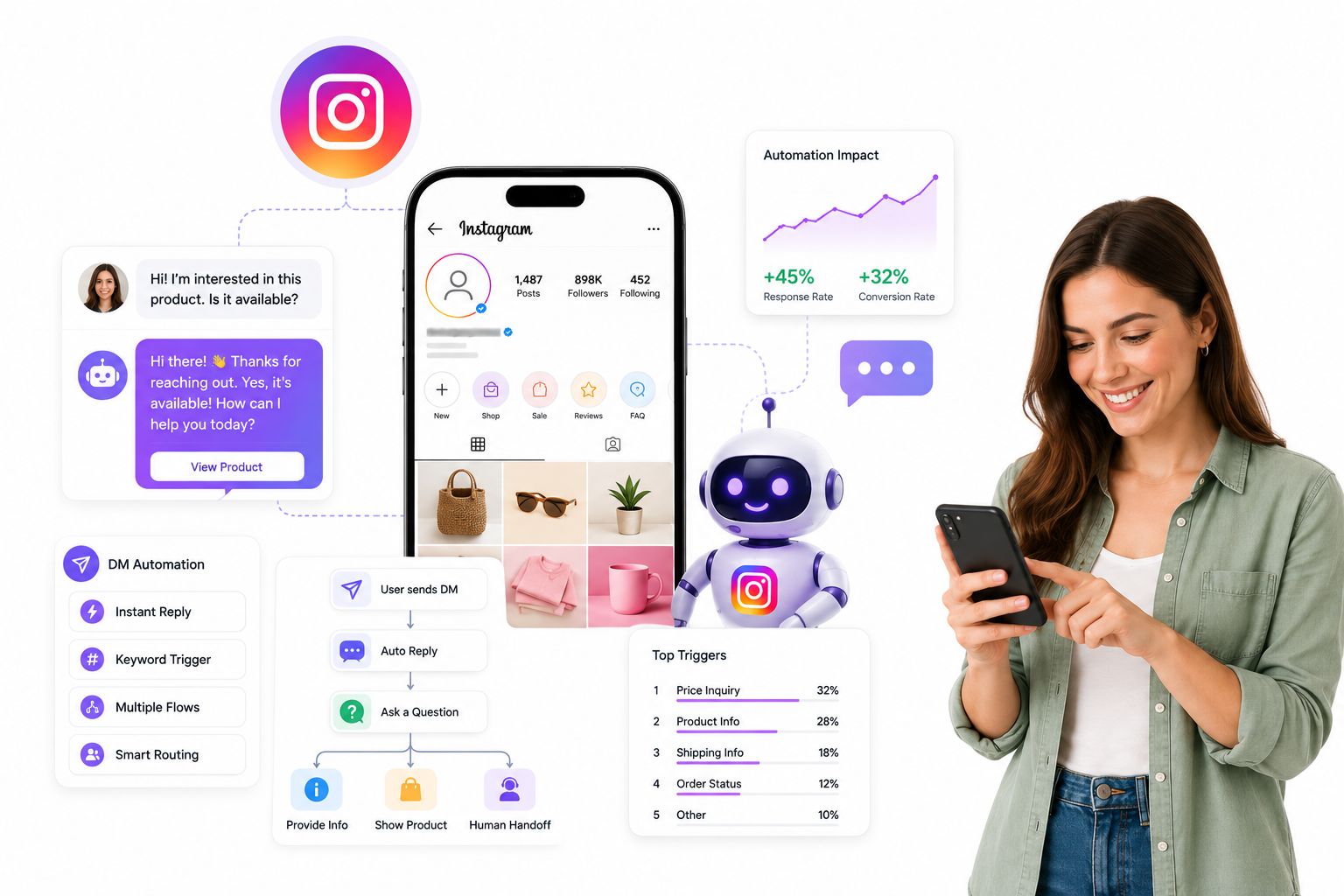
Instagram has stopped being just a place to post pretty pictures. It’s now a full storefront, a support desk, and a lead-generation channel, all rolled into one inbox. A 2026 survey of more than 600 global marketers found Instagram remains one of the most effective channels for brands, though standing out now takes more than posting consistently. The catch: as more of that engagement moves into comments and DMs, the message volume becomes impossible to handle by hand. This guide breaks down how Instagram automation actually works today, what separates a basic auto-reply from a real chatbot flow, and how to set one up, whether you stick with Meta’s native tools or move to a dedicated automation platform.
Launch agentic chat marketing in minutes with ChatbotX













What “Instagram Automation” Really Covers
Instagram automation is the umbrella term for any system that detects a customer action, a DM, a comment, a story mention, and triggers an automatic response without a human typing it in real time. That can mean something as simple as an away message, or as advanced as a branching conversation that qualifies a lead, recommends a product, and hands the thread to a live agent only when it’s ready to close. To unlock the deeper layer, most brands eventually connect to the Instagram API through a registered messaging platform, since the built-in tools in the Instagram app only cover the basics.
Why Manual Instagram Management Stops Working at Scale

Speed Decides Who Gets the Sale
Shoppers rarely wait. A reply that lands in seconds keeps a prospective buyer in the conversation; one that lands the next morning often means they’ve already bought from a competitor. Automated first responses close that gap instantly, and they don’t clock out at 6 p.m. or take weekends off.
It Frees People for the Conversations That Actually Need a Human
Every FAQ, shipping question, and store-hours request that a bot handles is time an agent gets back for the messages that genuinely require judgment: a frustrated customer, a bulk order negotiation, a VIP account. Automation doesn’t replace the team, it triages for them.
Repetition Without Consistency Erodes Trust
Customers notice when the same question gets three different answers depending on who’s on shift. A well-built automation layer keeps tone, offers, and information identical across every conversation, which is a quieter but real driver of repeat purchases.
Meta’s Native AI Replies Aren’t the Whole Story

Instagram has rolled out creator-facing AI replies that let eligible accounts auto-answer messages from a defined audience. It’s a useful patch for individual creators drowning in DMs, but it wasn’t built to run a sales funnel. It can’t tag a contact, split traffic for a test, route an order-status question into a support queue, or sync data back into a CRM. For that level of control, businesses need to work with the actual Instagram Messaging API, which Meta documents as the way professional accounts manage Instagram and Facebook messages programmatically through an approved technology partner.
Turning Public Comments Into Private, Trackable Conversations
Instagram doesn’t allow clickable links inside captions or comments, which is exactly why comment-triggered auto-DMs have become a standard growth tactic. The moment someone comments on a post, an automation can open a private thread and move the conversation toward a specific goal:
- List building: A post inviting people to comment a keyword triggers an automatic DM with a subscription or opt-in link, growing a remarketing list without any manual follow-up.
- Direct-to-purchase links: Product posts can auto-DM commenters a checkout or catalog link the second they show interest, shortening the path from curiosity to sale.
- Online-to-offline traffic: Posts about a limited promotion can auto-DM a redeemable code, nudging online engagement into physical foot traffic.
Message Examples That Don’t Sound Like a Robot
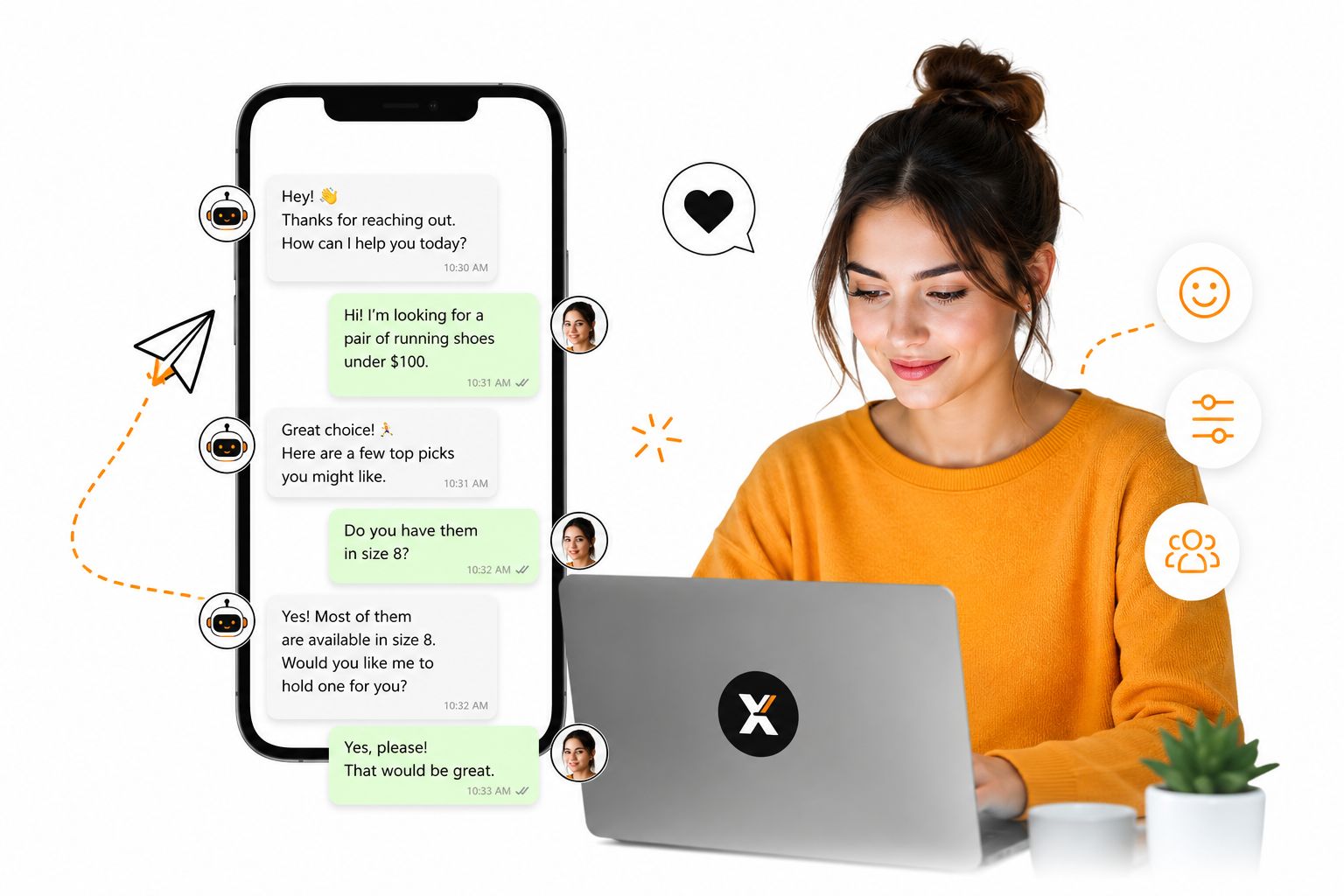
The First Touch
The opening message sets the tone for everything after it. It should acknowledge the message arrived and gently steer the person toward a next step, not feel like a canned notice.
“Hey there! Thanks for reaching out – we’ve got your message. Are you here about an order, a product question, or something else? Let us know and we’ll point you the right way.”
The After-Hours Reply
Set expectations clearly so the customer isn’t left guessing when a real person will follow up.
“Thanks for messaging! Our team is online Mon–Fri, 9 AM–8 PM. Check the FAQ link below in the meantime, and we’ll get back to you first thing on the next business day.”
The Comment-Triggered Offer
When someone comments asking about price or availability, the auto-DM should deliver value immediately rather than asking them to wait.
“Thanks for the love on our new drop! Here’s an early-access link with 20% off for the first 48 hours – tap through before it’s gone.”
The Order-Status Request
Route these efficiently by asking for the one detail that speeds up resolution.
“Hi! Happy to help with your order. Could you share your order number or tracking code? That’ll let us pull up the details right away.”
Setting Up Instagram Auto-Reply: Two Realistic Paths
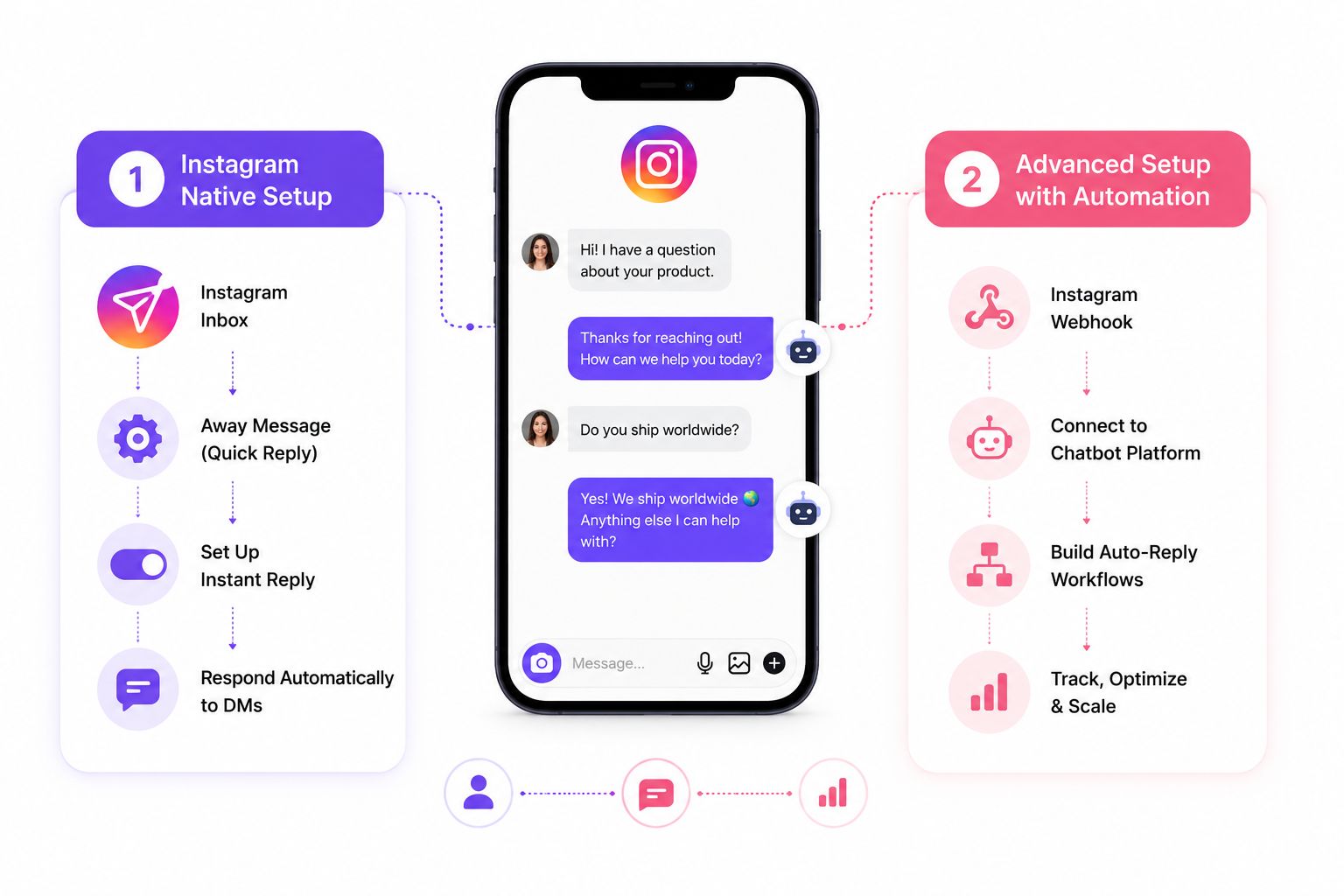
Path 1: Meta’s Built-In Tools
Meta Business Suite lets any Instagram professional account configure basic keyword-triggered replies in a few minutes.
- Sign in to Meta Business Suite and open the Inbox tab, then select Automations.
- Create a custom keyword rule, name it, and choose Instagram as the connected channel.
- Add up to five trigger keywords or phrases that should fire the reply.
- Write the automated message, attaching an image or video if needed.
- Preview it, then save and publish.
This covers simple cases well, but it has no branching logic, no CRM, and no way to route conversations by intent.
Path 2: An Instagram API Automation Platform
For anything past basic auto-replies, brands connect to the Instagram API through a Messenger API technology provider and build real chatbot flows instead of single-trigger rules. ChatbotX, an open-source, agentic omnichannel platform, is one option built specifically for this kind of setup. Because it’s self-hostable and MIT-licensed at its core, teams aren’t locked into per-seat pricing just to add a new automation rule, and can review every release directly on GitHub.
Inside a platform like this, the pieces work together instead of living in separate tools:
- The Flow Builder lets you drag-and-drop a full conversation path, welcome message, keyword branches, product carousels, and a handoff node, without writing code.
- AI Agents can pick up where a fixed flow ends, using a connected model to answer open-ended questions, qualify a lead’s intent, and only escalate when confidence is low.
- The Shared Inbox keeps every Instagram, WhatsApp, and Messenger conversation visible to the whole team in one place, with human takeover available the moment a bot flow reaches its limit.
This mirrors a broader shift covered in ChatbotX’s own reporting on how teams are choosing the right messaging channels for their audience and on what it actually takes to stand up an AI assistant that a small team can run without a developer on staff.
The Business Case, Beyond “It Saves Time”
The cost argument for automation isn’t hypothetical anymore. Salesforce’s research on customer service trends found that AI and automation are enabling companies to handle a higher volume of inquiries with greater speed and accuracy, with the majority of field service leaders already reporting measurable improvement. Applied to Instagram specifically, that translates into fewer missed DMs during peak hours, a shorter path from comment to checkout, and a support team that spends its hours on the conversations that actually need a person.
Measuring Whether Your Automation Is Actually Working
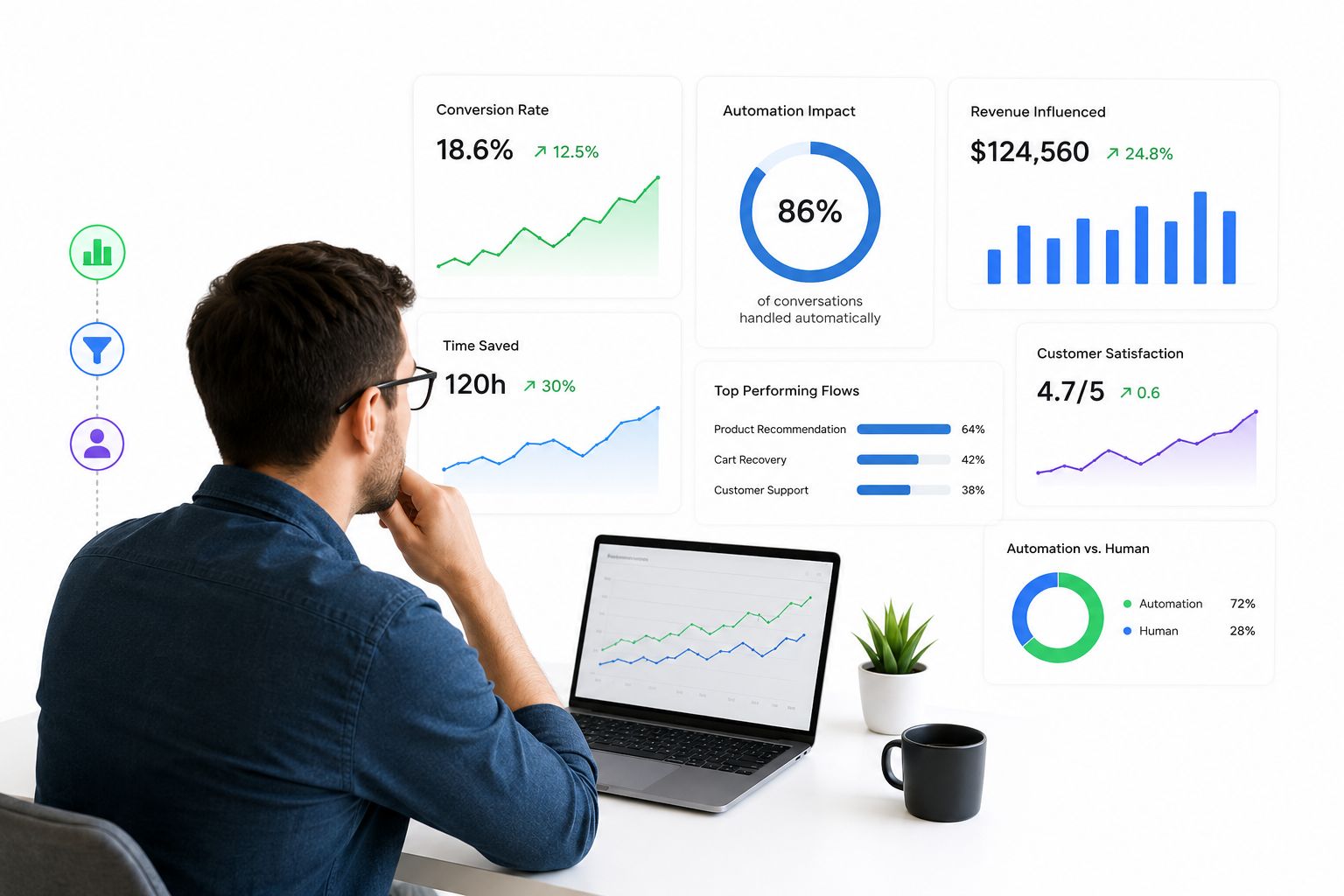
Setting up a flow is only half the job. Without tracking, it’s easy to assume an automation is helping when it’s quietly annoying customers or missing intent entirely. A few metrics matter more than the rest:
- First-response time: How long between a message arriving and the first reply, automated or human. This should drop close to zero once auto-replies are live.
- Resolution without escalation: The share of conversations a bot handles start to finish versus how many get handed to a person. A healthy setup keeps this balanced, not maximized, since forcing too much into automation frustrates customers with complex requests.
- Drop-off points: Where people stop responding inside a flow. A spike right after the welcome message usually means the opening felt too robotic or asked for too much too soon.
- Conversion from comment to DM to sale: For comment-triggered automations specifically, tracking how many commenters actually complete a purchase after the auto-DM shows whether the offer and timing are working.
Most automation platforms surface this natively through built-in analytics, so teams don’t need to stitch together spreadsheets from export files just to see whether a flow is paying for itself.
Common Mistakes That Undercut Instagram Automation
Treating every keyword the same way. A rule that fires on “price,” “help,” and “return” with one identical reply will frustrate customers whose intent doesn’t match the response. Route by likely intent instead of catching everything with a single net.
Never testing the away message on a real customer’s schedule. Time zones matter more than brands expect, especially for businesses selling across regions. An away message that assumes a single office schedule can leave international customers waiting far longer than intended.
Letting a bot loop without an exit. If a flow can’t recognize when it’s failing to help, the customer gets stuck repeating themselves. Every automated path should have a clear point where it hands off to a person if it can’t resolve the request within a couple of exchanges.
Ignoring the comment layer entirely. Many brands automate DMs but leave comments unmanaged, missing the highest-intent moment when someone publicly asks about price or availability right under the post.
Frequently Asked Questions
How do I turn on Instagram auto-reply?
Open Meta Business Suite, go to Inbox, then Automations. Create a custom keyword rule, select Instagram as the channel, add your trigger phrases, write the reply, and save.
How do I turn it off?
In the same Automations panel, find the rule (instant reply, away message, or keyword rule) and disable or delete it.
Are Meta’s automated Instagram replies official?
Yes. Meta Business Suite is Meta’s own tool for managing automated responses across Instagram and its other messaging channels.
Can I automate replies to post comments specifically?
Yes, through comment-to-DM automation. When someone comments on a post, the system opens a private DM thread automatically, which is where links and offers can be shared.
Do I need a developer to run a full Instagram chatbot?
Not necessarily. Visual, no-code flow builders let non-technical teams launch keyword rules, lead qualification paths, and product journeys without touching any code, while still supporting deeper API and MCP-based integrations for teams that want them.
Ready to Move Past Manual Replies?
If your team is still copy-pasting the same five answers into Instagram DMs every day, it might be time to let a flow handle it. ChatbotX gives you a free-forever self-hosted option or a short free trial on the cloud, so you can test a real Instagram automation setup, welcome message, comment-to-DM rule, and AI-assisted qualification, before committing to anything. Start building your first flow today and see how much faster your team can move once the repetitive replies run themselves.