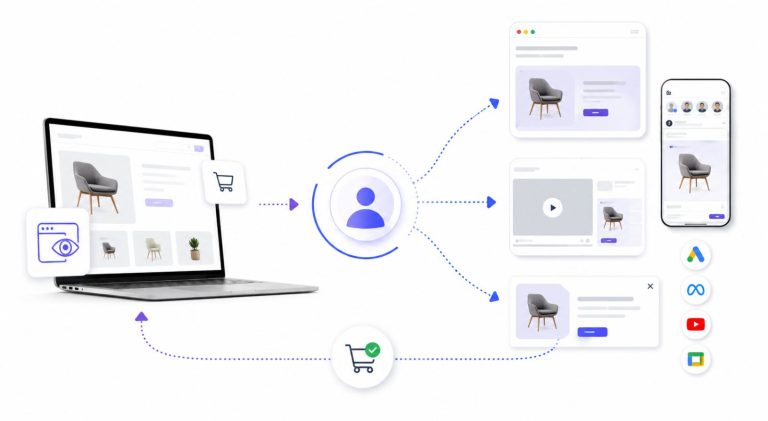

Acquiring a new customer in 2026 is more expensive than ever. Ad auctions are crowded, attention is fragmented across a dozen channels, and every competitor is bidding for the same eyeballs. Meanwhile, the customers who already know your brand are sitting on an enormous amount of untapped value they convert faster, spend more, and cost a fraction as much to serve. The businesses winning right now aren’t the ones spending the most on new traffic; they’re the ones squeezing the most lifetime value out of the customers they already have, using an AI-enhanced CRM as the engine behind it.
This guide breaks down why loyalty has become the real growth lever, which metrics actually predict it, and how artificial intelligence is reshaping what a CRM module can do from predictive churn scoring to always-on conversational commerce.
Launch agentic chat marketing in minutes with ChatbotX













Why Repeat Customers Are Your Cheapest Growth Channel
Every dollar spent chasing a first-time buyer competes with dollars other brands are spending on the exact same person. Communicating with your existing audience through channels you already own email, WhatsApp, in-app messaging sidesteps that auction entirely, and the numbers back it up.
Higher lifetime value. In beauty and personal-care e-commerce, top-tier repeat customers typically purchase more than eight times as often per year as first-time buyers, with average order values roughly 2.5x higher. A small cohort of loyal shoppers ends up contributing a disproportionate share of total revenue.
Better paid-media efficiency. Return on ad spend for retargeting an existing customer regularly outperforms cold acquisition by a wide margin in some cases running 3x higher or more, because the audience already trusts the brand and needs less convincing.
Organic referral growth. Happy repeat customers become unpaid marketers. Referral programs, tiered loyalty points, and exclusive discount codes are simple, low-cost ways to turn satisfied buyers into a word-of-mouth engine that no ad budget can replicate.
The Four Metrics That Actually Predict Loyalty

Before you can improve loyalty, you need to measure it correctly. These four indicators give the clearest read on where your customer relationships actually stand:
- Repeat purchase rate – the share of customers who buy a second (or third, or fourth) time. This number typically spikes during promotions, which is why smart brands run dedicated member-only events, early access windows, and upgrade campaigns to nudge it higher year-round.
- Customer Lifetime Value (LTV) – an estimate of total revenue a customer will generate over the relationship. A longer LTV horizon signals a brand customers keep coming back to; a short one signals a product built for one-off purchases rather than a relationship.
- Churn rate – the percentage of customers who go quiet. Most customer journeys move through four stages – new, active, dormant, lost – and the goal of any retention strategy is slowing that slide toward “lost” for as long as possible.
- Engagement rate – open rates, click-throughs, and social interactions that show how closely a customer is still paying attention to what you send them. It’s an early warning system for churn long before a customer actually stops buying.
What a CRM Module Actually Does

A CRM module is the working toolbox inside a broader customer relationship management system – the part responsible for storing, organizing, and acting on everything you know about a customer. In practice, it typically covers:
- Contact management – a single record per customer, holding name, phone, email, and any custom attributes you track.
- Interaction tracking – a running history of every touchpoint: calls, emails, chats, and social DMs, all in one timeline.
- Lead management – following a prospect from first click to closed deal.
- Sales pipeline management – quotes, opportunities, and forecasting in one view.
- Marketing automation – campaigns, sequences, and audience segments tied directly to real customer data.
- Customer support tools – ticketing, knowledge bases, and case history.
- Reporting and analytics – the dashboards that turn raw interaction data into decisions.
Modern messaging-first platforms have folded most of this directly into the conversation layer. ChatbotX, for instance, bundles contact and CRM management straight into the same workspace where WhatsApp, Messenger, and Instagram conversations happen, so tagging, segmentation, and purchase history live next to the chat itself instead of in a separate tool your team has to switch between.
Four Ways AI Is Upgrading CRM in 2026

A CRM used to be a system of record a place data went to sit. AI turns it into a system of prediction and action. Here’s where that shift is having the biggest impact.
1. Predictive Analytics for Churn and Repeat Purchases
Machine learning models trained on purchase history and behavioral signals can flag which customers are likely to churn – or likely to buy again – days or weeks before either happens. That lead time is what lets a team send a win-back offer before a customer disappears rather than after.
2. Conversational AI Agents That Never Clock Out
Instead of a static FAQ bot, today’s AI agents can hold context across a conversation, understand intent, and take action – checking an order status, recommending a product, or escalating to a human when the question gets complicated. ChatbotX’s AI agent framework connects to models like OpenAI, Gemini, or Claude and works across WhatsApp, Messenger, and Instagram from a single flow, so the same intelligent agent handles a customer no matter which app they message from – a setup covered in more depth in this WhatsApp Business API playbook.
3. Personalization and Remarketing Engines
AI can watch what a customer browses and buys, then automatically surface the next product, offer, or piece of content most likely to land. This is the mechanism behind abandoned-cart recovery flows and “customers like you also bought” recommendations – both now standard in tools like ChatbotX’s remarketing feature, which lets teams re-engage window-shoppers with a targeted nudge instead of a generic blast.
4. Sentiment and Intent Analysis
Natural language models can now read the emotional tone of a support chat or social comment, flag frustration before it turns into a public complaint, and route the conversation to the right team automatically. Paired with the customer-service comparisons in this buyer’s guide to AI support software, it’s a useful starting point for teams evaluating where sentiment analysis fits into their stack.
Independent research backs up how much this shift matters: Salesforce’s State of the Connected Customer report has repeatedly found that trust and personalized experience now drive as much loyalty as price does, while HubSpot’s latest marketing data shows the vast majority of marketers say personalization measurably increases both leads and purchases. The math on the other side is just as compelling – Harvard Business Review’s often-cited analysis of customer retention economics found that lifting retention by just 5% can increase profits by 25% to 95%, depending on the industry.
Putting It Together: An Open-Source Path to AI-Driven CRM

None of this requires an enterprise CRM contract to get started. ChatbotX is built as an open-source, agentic omnichannel platform, which means teams can self-host it for free, inspect exactly how the AI agents and CRM logic work, and extend it without being locked into a single vendor’s roadmap. The full source code and documentation are available on GitHub, and the release history shows how quickly new AI and channel capabilities are shipping.
Conclusion
Loyalty isn’t a soft metric anymore – it’s the clearest, cheapest growth lever most brands have sitting in their existing customer list. Winning it takes more than a spreadsheet of past orders; it takes a CRM that can predict what a customer needs next and act on it in real time, across whichever channel they happen to be messaging from.
That’s exactly the gap an AI-first, omnichannel platform like ChatbotX is built to close unifying contacts, conversations, and AI agents in one place so no repeat customer slips through the cracks. If you’re ready to see what an AI-powered CRM workflow looks like in your own WhatsApp, Messenger, or Instagram inbox, get started with ChatbotX today self-host it for free, or spin up a trial in minutes.