A customer messages your brand on Instagram about a product, switches to your website to check pricing, then finishes the purchase question over WhatsApp. If your bot treats each of those as a stranger, you’ve already lost part of that sale – not to a competitor’s better product, but to your own disconnected tooling.
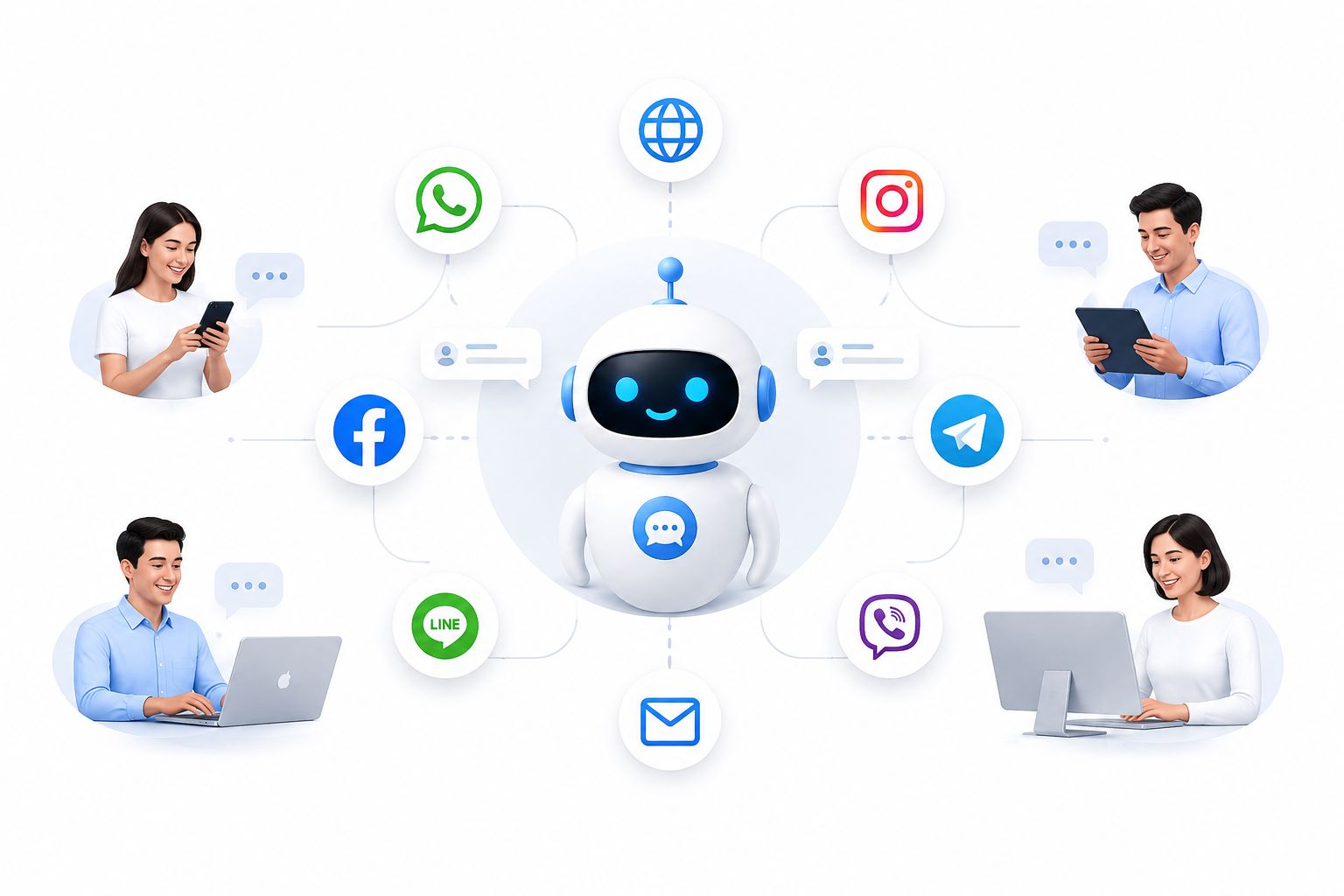
That single failure point is exactly what an omnichannel chatbot platform is built to close. Rather than running separate bots on separate channels, one automation layer follows the conversation wherever the customer takes it, carrying history, intent, and context along the way. Heading into 2026, this shift has stopped being a “nice to have” for enterprise brands and has become the baseline expectation for any business that wants to keep customers from repeating themselves.
This guide breaks down what an omnichannel chatbot platform actually is, why the category matters more than ever this year, the features worth prioritizing, and how to evaluate your options without getting distracted by marketing buzzwords.
Launch agentic chat marketing in minutes with ChatbotX











Omnichannel vs. Multichannel: The Distinction That Actually Matters
These two terms get used interchangeably far too often, and that confusion costs businesses real money.
A multichannel setup means your brand simply shows up in multiple places – a chat widget on your site, a separate Messenger bot, a standalone WhatsApp number. Each channel runs its own logic, its own contact list, and its own memory. A shopper can technically reach you five different ways, but none of those five ways know about each other.
An omnichannel setup connects those same channels into one continuous thread. Conversation history, customer profile, purchase intent, and prior interactions travel with the customer no matter which app they open next. The distinction isn’t cosmetic – it’s the entire reason the category exists.
Recent industry reporting reinforces just how costly that gap has become. One widely cited customer experience study found that shoppers forced to restate their issue across channels reported satisfaction scores roughly a third lower than those who experienced a seamless handoff, and only a minority of businesses currently have any real cross-channel integration in place.
Why 2026 Is a Turning Point for This Category
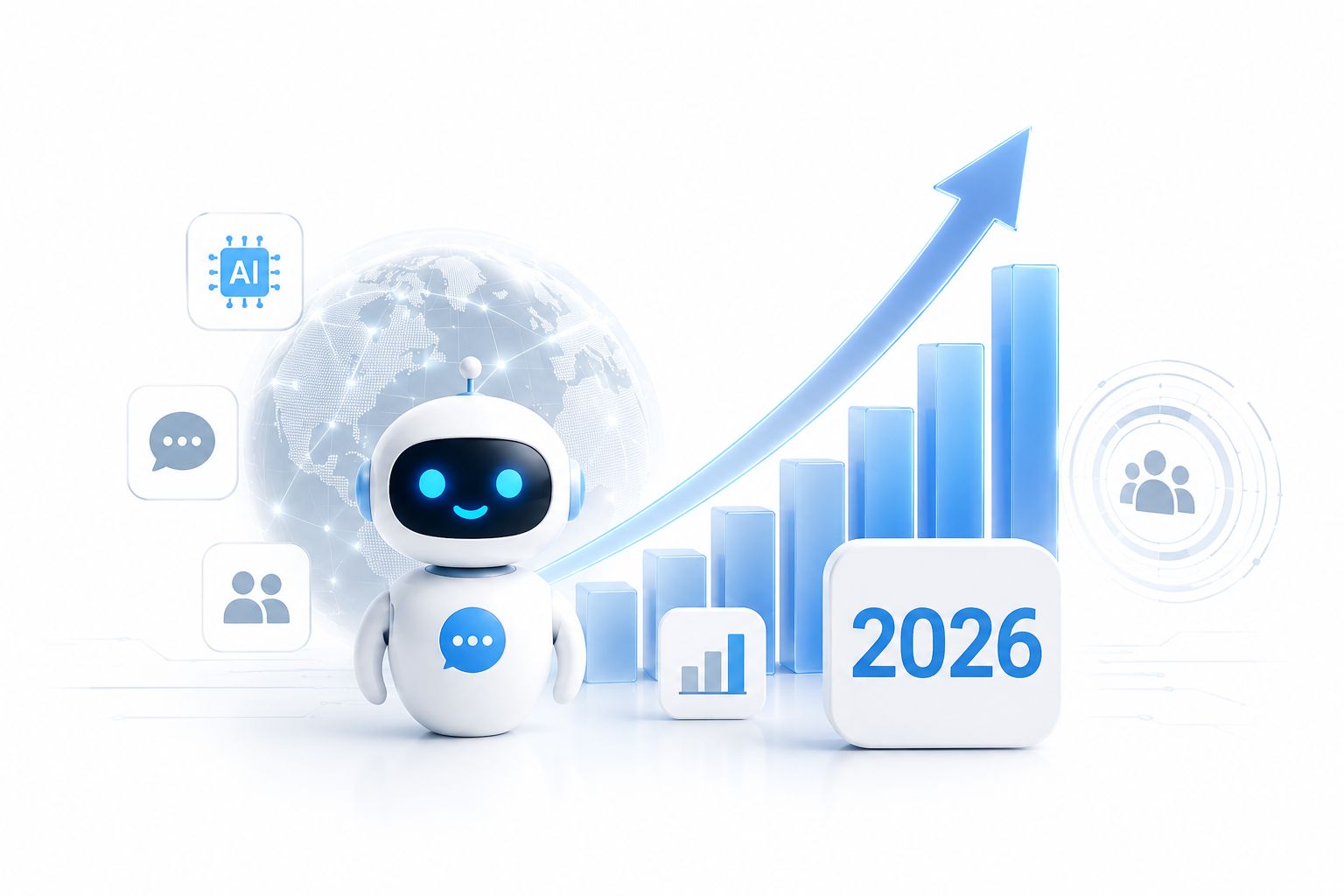
Several forces are converging at once to push omnichannel chatbot platforms from optional to essential:
Messaging volume keeps consolidating on a handful of apps. WhatsApp alone now counts billions of monthly active users worldwide, and business-focused messaging volume on the platform has climbed sharply year over year, which means more of your customer relationship now happens inside chat threads rather than email inboxes.
Generative AI made cross-channel bots genuinely usable. Earlier chatbot generations relied on rigid decision trees that broke the moment a conversation moved off-script. Large language model-powered agents can now interpret intent, pull from a knowledge base, and hold a natural exchange regardless of which channel it started on.
Inference costs have collapsed. Running an AI agent across every customer touchpoint used to be prohibitively expensive for small and mid-size teams. That cost curve has dropped dramatically over the past few years, which is part of why per-conversation pricing models are giving way to flatter, more predictable plans.
Consumers now expect brands to “just know.” A large share of customers say they expect a business to remember their interaction history no matter which channel they’re using, and businesses that can’t deliver that continuity are increasingly seen as behind rather than merely inconvenient.
The Core Features an Omnichannel Chatbot Platform Needs
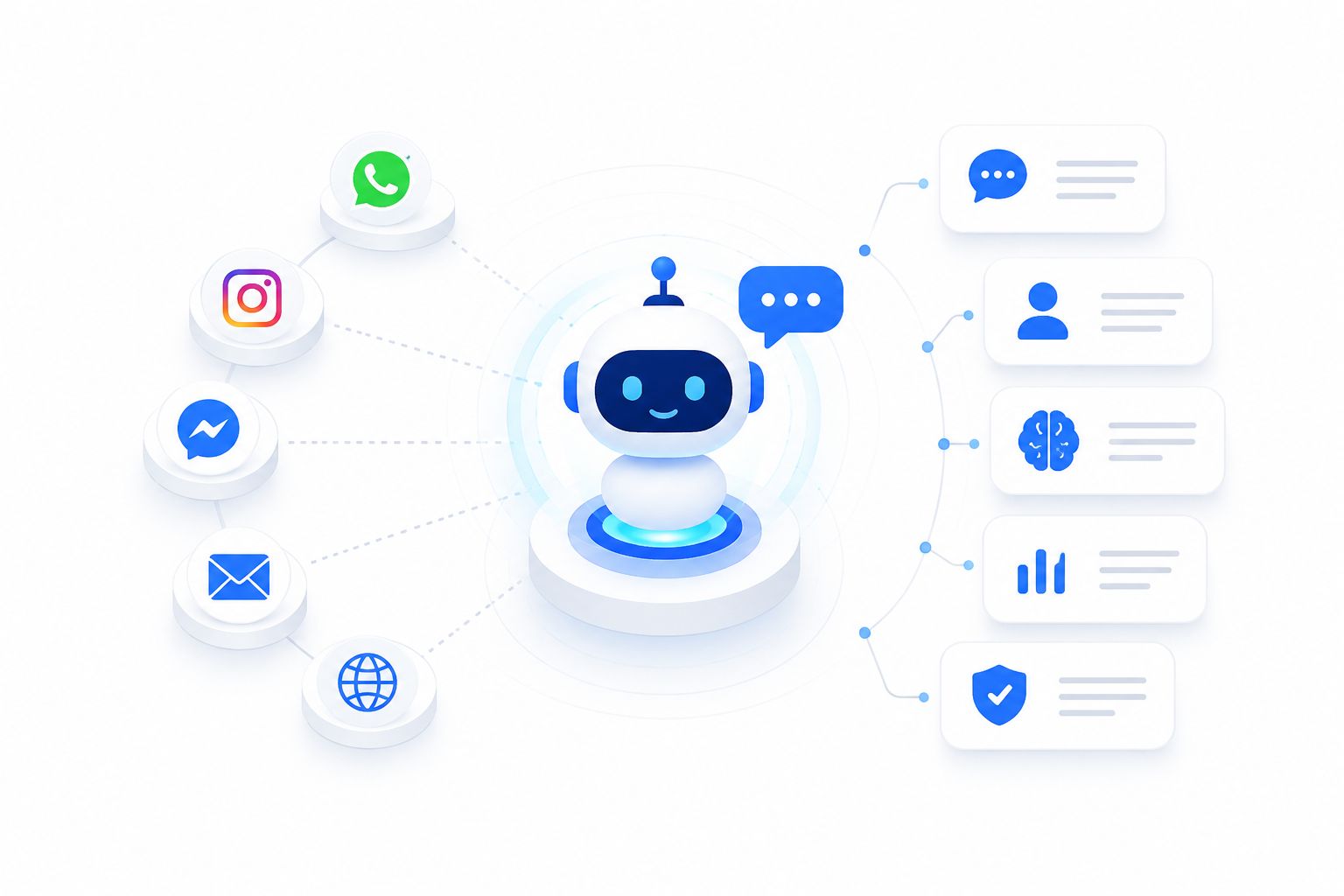
Not every tool marketed as “omnichannel” actually behaves that way once you look under the hood. Here’s what separates a platform built for true channel unity from one that bolted channels on as an afterthought.
Unified conversation history. Every message, regardless of source channel, should land in one contact timeline. If your platform stores WhatsApp and web chat data in separate silos internally, agents will still be working blind during handoffs.
A shared inbox for human and AI collaboration. Support and sales teams need one place to see, claim, and respond to conversations across every connected channel – not five browser tabs open at once. ChatbotX’s shared inbox pulls WhatsApp, Messenger, Instagram, and more into a single collaborative view, so agents pick up exactly where the AI left off instead of starting cold.
Native channel breadth from day one. Platforms architected for multiple channels from the start tend to unify context far more reliably than tools that added channel-by-channel integrations later as a checkbox feature.
Context-aware AI agents, not scripted flows. The bot needs to detect intent, qualify a lead, and take action – not just match keywords to a canned reply. ChatbotX’s AI Agents combine multiple language models to handle nuanced, multi-turn conversations and route the complex ones to a human when needed.
Open extensibility for developers. As agentic workflows mature, teams want to plug their own models and automations into the platform rather than being locked into a single vendor’s AI stack. Look for API, CLI, and MCP support that lets your engineering team extend the platform instead of working around it.
Clean escalation with full context handoff. The moment a bot can’t finish the job, the human agent should see the entire thread and the reason for escalation – never a blank inbox and a customer who has to start over.
Where ChatbotX Fits Into This Picture
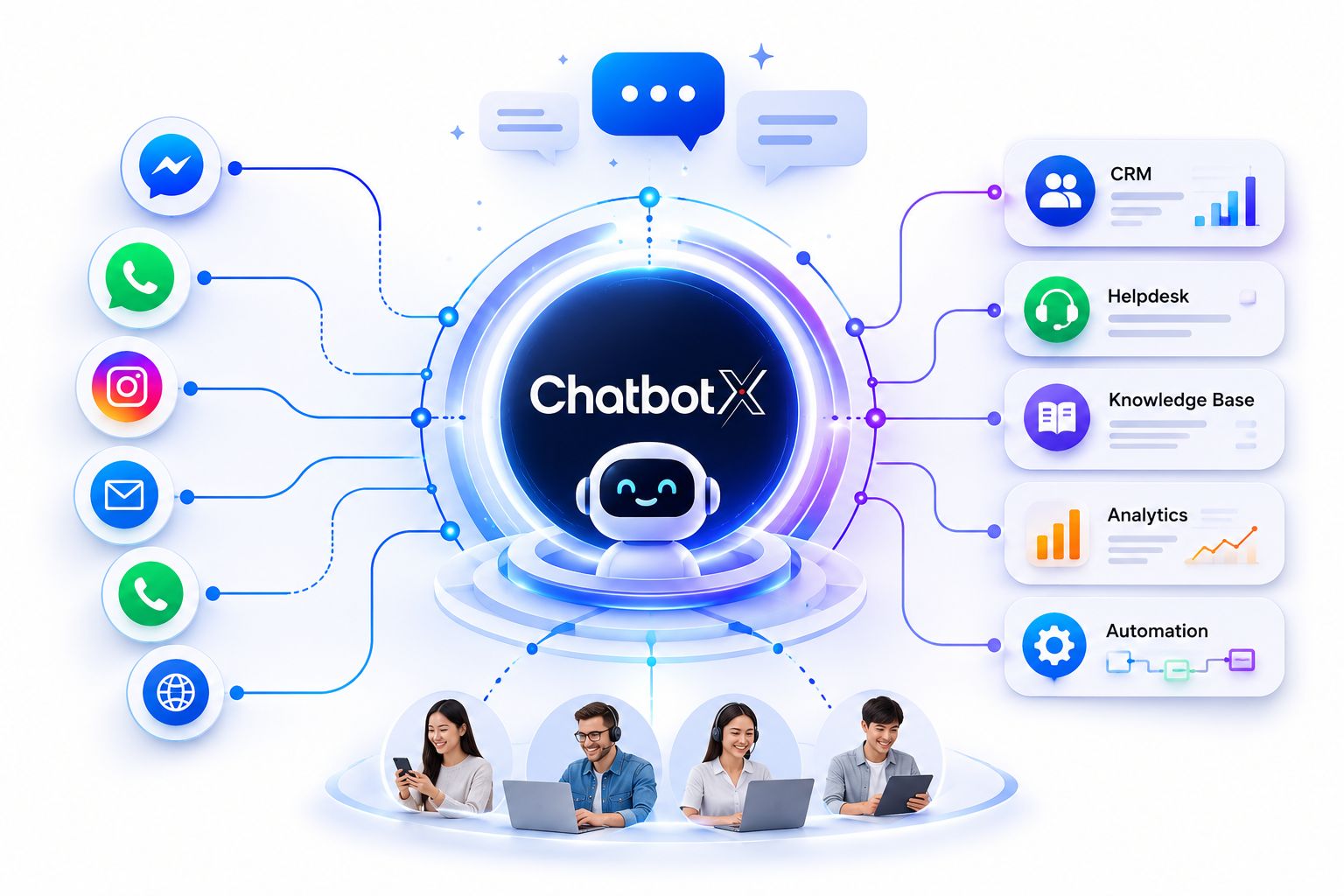
ChatbotX is an open-source, agentic omnichannel chat marketing platform built for teams that want to own their automation layer rather than rent it. It connects WhatsApp, Messenger, Instagram, Telegram, Zalo, TikTok, Email, and Webchat into one workspace, with a visual flow builder, a shared team inbox, contact CRM, broadcasting, and AI agents that can be powered by OpenAI, Gemini, DeepSeek, or Claude.
Because the entire codebase is open source and self-hostable, agencies and product teams can white-label it, extend it with their own integrations, and keep full control of customer data instead of depending on a closed SaaS vendor’s roadmap. For teams evaluating what channel mix actually fits their business, Best Messaging Apps for Business in 2026 is a useful companion read before you commit to a platform.
Choosing the Right Omnichannel Chatbot Platform: A Practical Checklist
Before signing up for any tool, run it through these questions:
- Does context actually travel, or just the channel logos? Ask for a live demo of a handoff between two channels – not a slide describing one.
- Can non-technical staff build and edit flows? A visual builder shouldn’t require a developer for every small change.
- Is escalation to a human genuinely seamless? Test what the agent sees the moment a bot conversation gets handed off.
- Does the pricing model punish growth? Per-resolution pricing that scales linearly with volume can become unaffordable fast; flat-rate or self-hosted models avoid that trap.
- Do you own your data? Self-hosted, open-source options give you a way out if a vendor changes terms or shuts down, which matters more the longer you plan to run the platform.
- Can the platform grow into agentic workflows? Even if you only need simple automation today, automation that can later execute real tasks – not just send replies – will save a costly migration down the line.
Agencies weighing whether to build on a rented platform or an ownable one often land on the same conclusion covered in ManyChat White Label: Is It Available? – the deciding factor is usually whether the platform can become part of your own offer or stays permanently rented.
Common Mistakes Businesses Make When Going Omnichannel

Treating every channel the same way. WhatsApp customers expect fast, transactional replies. Instagram audiences respond better to a more casual tone. A platform should let you keep one underlying knowledge base while adapting tone per channel, not force identical scripts everywhere.
Adding channels faster than you can support them. Four disconnected channels are worse than two well-integrated ones. Expand only once your existing channels share unified profiles and analytics.
Ignoring CRM sync. An omnichannel bot that can’t feed conversation and lead data back into your CRM leaves your sales team working from incomplete records. This is one of the most overlooked gaps described in Facebook Messenger CRM: The Complete Integration Guide for 2026, where unified reporting across channels – not just chat automation – is what actually moves the needle on conversion.
Underestimating analytics. Without cross-channel reporting, you can’t tell whether WhatsApp or web chat is actually driving revenue, which makes budget decisions a guessing game.
The Bottom Line
An omnichannel chatbot platform isn’t just a chatbot with more channel logos attached to it – it’s the infrastructure that keeps every customer conversation connected, contextual, and conversion-ready, regardless of where it starts or ends. As messaging volume keeps shifting away from email and phone support, the businesses that treat every channel as one continuous relationship will keep customers that competitors lose to repeated, disjointed handoffs.
If you’re ready to stop juggling disconnected bots and start running one unified, AI-powered automation layer across every channel your customers actually use, get started with ChatbotX for free and see how quickly a real omnichannel setup can be running. You can also explore the open-source repository on GitHub to self-host it, review the code, or check the latest releases before you deploy.