Agencies search for ManyChat white label because they want more than a chatbot builder. They want a platform they can present as their own, package into client retainers, and control without sending every customer back to another vendor’s brand.
The short version: ManyChat is a strong hosted chat marketing product, but it is not built as a true white-label platform. If your agency needs custom branding, self-hosting, resale control, and deeper agent workflows, ChatbotX is designed for that ownership model.
Key Takeaways
- ManyChat does not provide a full white-label dashboard that agencies can rebrand and resell as their own software.
- Workarounds such as custom domains, client portals, and external reporting can help, but they do not remove the platform dependency.
- ChatbotX gives agencies an open-source foundation they can self-host, white-label, extend, and resell to clients.
- The best fit is agencies that sell chatbot automation, social selling, support automation, or AI agent implementation as a managed service.
Launch your white-label chatbot platform with ChatbotX











What “ManyChat White Label” Really Means
White labeling means your client experiences the software as part of your agency’s offer. Your brand, your domain, your client onboarding, your support process, and your pricing are the front stage. The underlying technology should stay quiet in the background.
For chatbot agencies, white label usually includes a branded login, custom domain, client workspace management, billing freedom, API access, and the ability to package templates or automations without exposing the vendor behind the scenes.
Does ManyChat Offer White Label?
ManyChat is primarily a hosted platform for chat marketing automation. It helps teams build automations for channels such as Instagram, Messenger, WhatsApp, SMS, and email, but its core business model is not a self-hosted or fully white-label agency platform.
That matters when your agency wants to own the customer relationship end to end. You can still manage client accounts, build flows, and deliver automation services with ManyChat, but clients may still interact with ManyChat’s product surface, pricing model, documentation, and platform limits.
For a broader product-by-product breakdown, read the ManyChat vs ChatbotX comparison.
Where ManyChat Falls Short for Agencies

The gap appears when your agency moves from “we build campaigns for clients” to “we sell our own chatbot platform.” At that point, hosted SaaS convenience can become a constraint.
- Brand control is limited. Your agency cannot fully replace the vendor identity across the product experience.
- Resale packaging is constrained. You are building on top of another company’s pricing, plan limits, and roadmap.
- Data ownership depends on the vendor model. Self-hosting is not the default path for teams with strict compliance or infrastructure requirements.
- Advanced agent workflows need more control. Agencies bringing their own OpenClaw, Hermes, Claude, or custom agents often need lower-level APIs and orchestration freedom.
Common Workarounds and Why They Break
Some agencies try to hide the platform by wrapping it with external landing pages, custom reports, shared inbox processes, or client-facing dashboards. These workarounds can be useful, but they are not the same as owning the platform.
The problem is operational. Every extra wrapper adds maintenance, and every vendor limitation eventually shows up in onboarding, support, billing, or feature requests. If a client asks for custom branding, private hosting, deeper API behavior, or white-label resale rights, the workaround starts to feel fragile.
ChatbotX: A ManyChat Alternative You Can Own
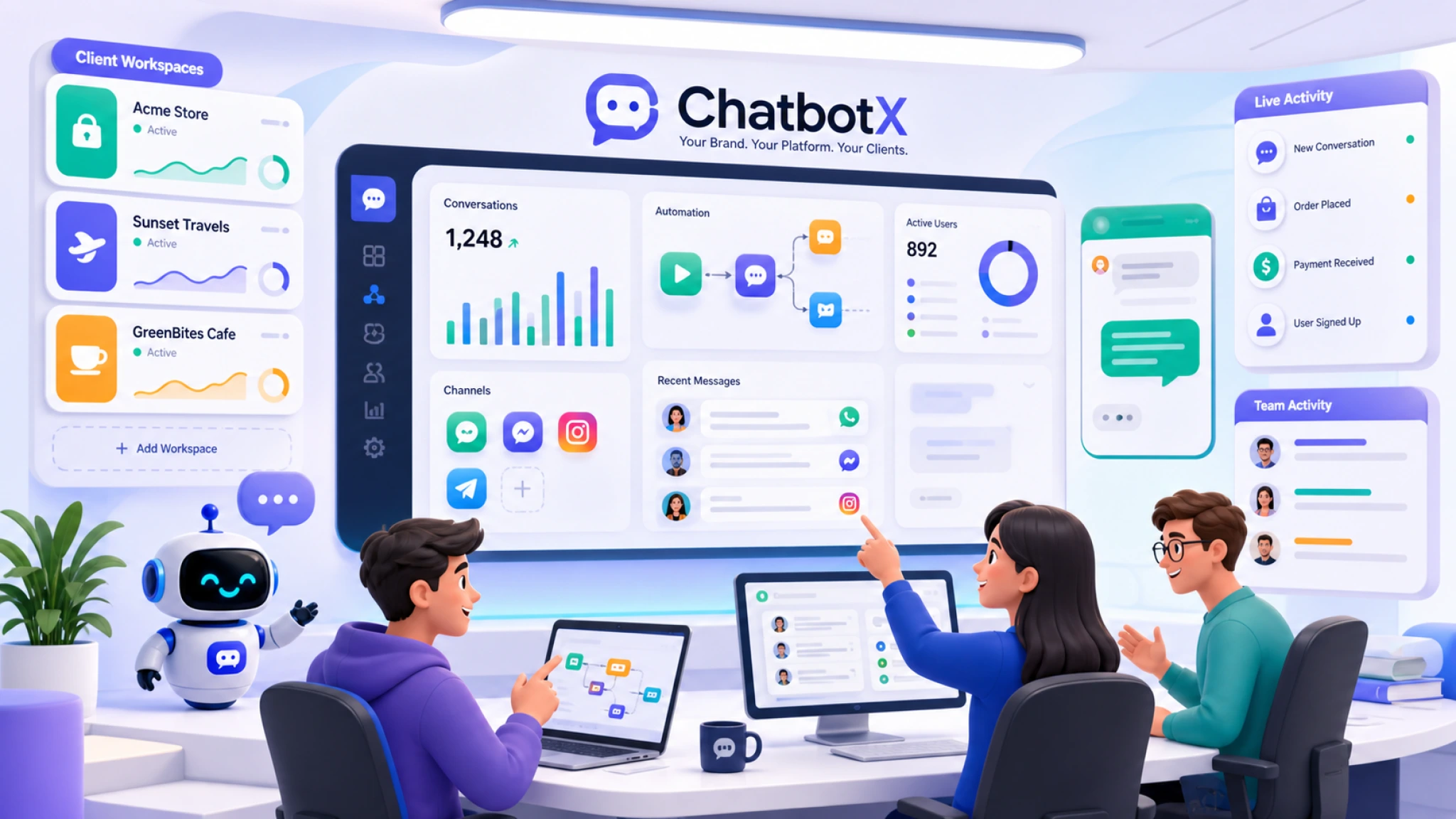
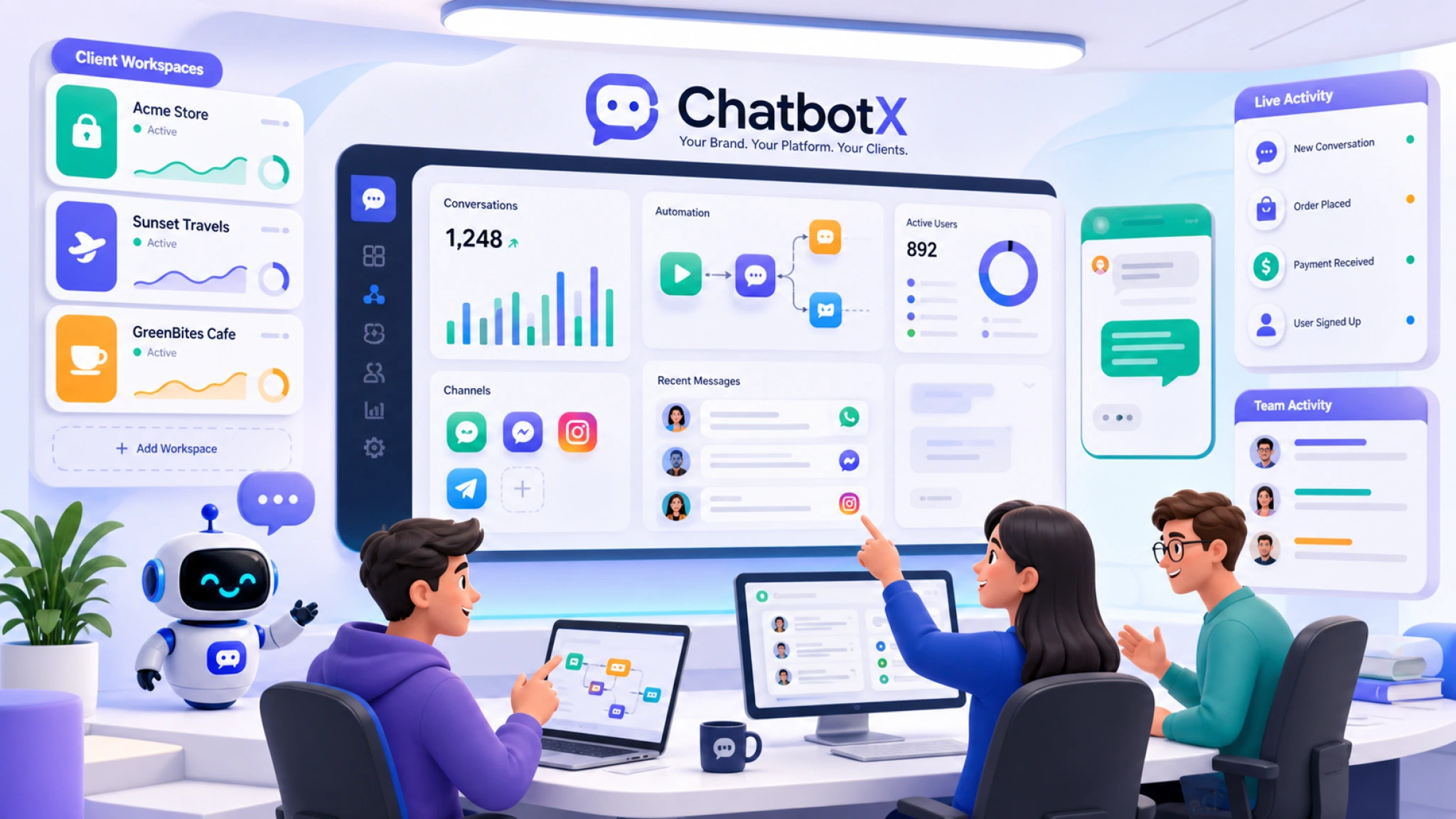
ChatbotX is the ManyChat alternative for teams that want ownership. Agencies can self-host it, white-label it, and resell chatbot automation to clients without building a platform from scratch.
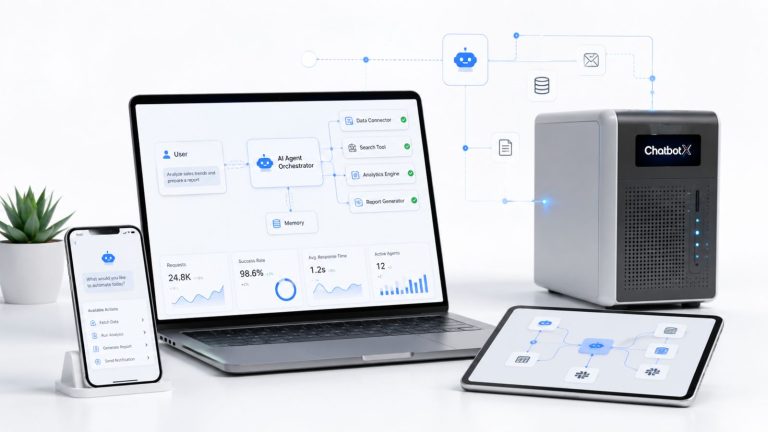
It is built for omnichannel chat marketing and support workflows, including visual flows, AI agents, live chat, contact CRM, broadcasting, sequences, analytics, APIs, CLI, and MCP-compatible workflows. That makes it a better foundation when your offer is not just “we build automations” but “we provide the automation platform.”
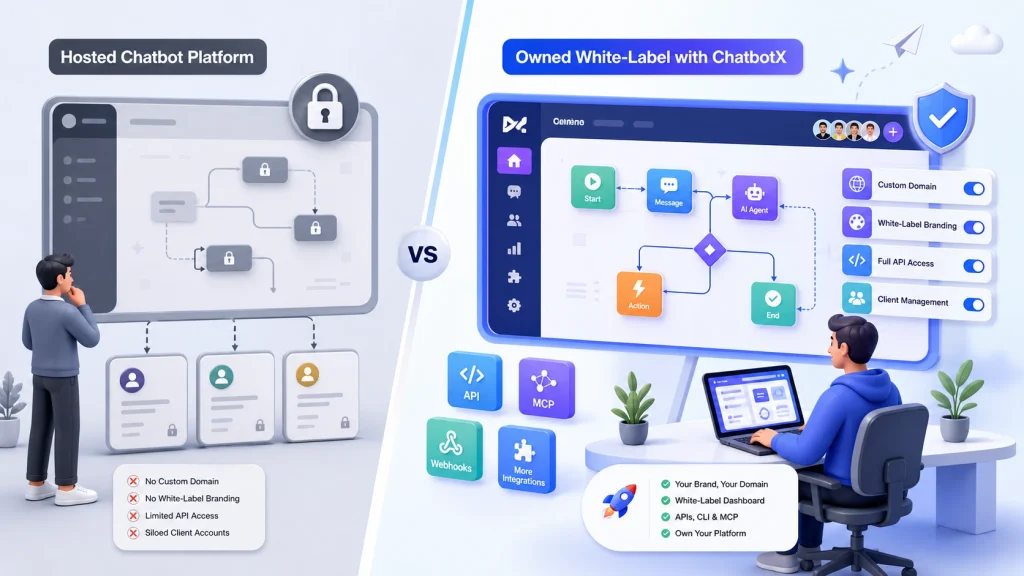
ManyChat vs ChatbotX White Label Comparison
| Capability | ManyChat | ChatbotX |
|---|---|---|
| Custom domain | Possible around campaigns and external pages, but not a full platform replacement. | Designed to support agency-owned deployment and branded client access. |
| Dashboard branding | Vendor product identity remains part of the experience. | Built for white-label positioning and agency-controlled presentation. |
| Self-hosting | Hosted SaaS model. | Self-hostable open-source foundation. |
| Reselling | Agency service resale is possible, but the platform is still ManyChat. | Agencies can package ChatbotX as their own chatbot automation offer. |
| Client management | Manage client workspaces inside the vendor ecosystem. | Own the client relationship, workspace model, and service packaging. |
| API, CLI, and MCP | Useful APIs for supported workflows. | APIs, CLI, and MCP-compatible workflows for deeper agentic automation. |
| Platform ownership | Roadmap, hosting, and product limits stay with the vendor. | Your team controls hosting, extensions, branding, and rollout. |
How Agencies Can Start With ChatbotX
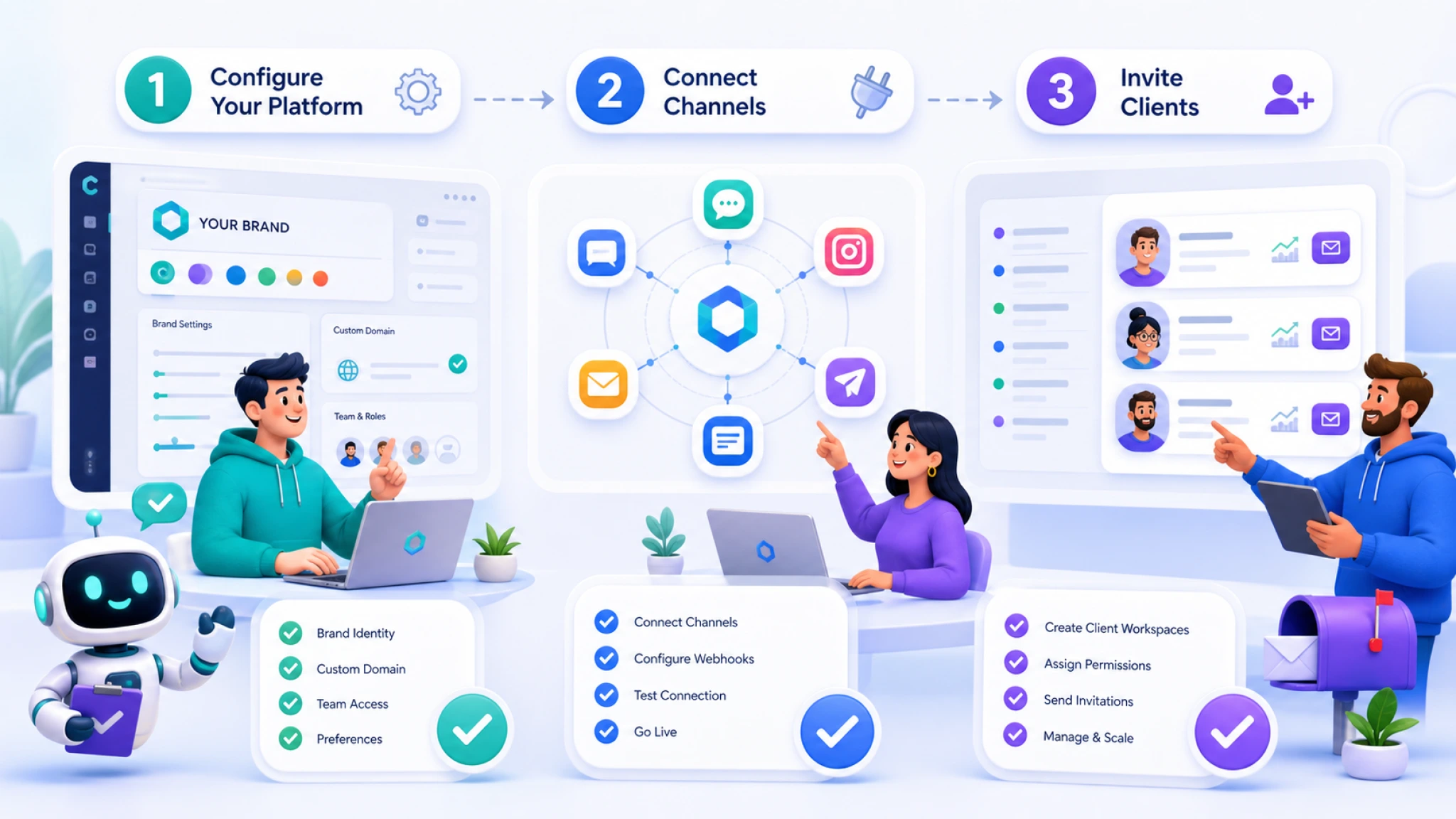
A practical rollout starts with one repeatable client use case. For example, launch a white-label Instagram comment-to-DM package, a WhatsApp support automation bundle, or an AI lead qualification workflow for a specific vertical.
- Choose the service package your agency wants to resell.
- Set up ChatbotX as the platform layer behind that offer.
- Create reusable flows, inbox rules, CRM tags, and reporting defaults.
- Connect channels such as WhatsApp, Messenger, Instagram, Telegram, Zalo, email, or webchat.
- Bring your own OpenClaw, Hermes, Claude, or custom agents where clients need agentic workflows.
- Package onboarding, support, and monthly optimization under your agency brand.
FAQ
Is ManyChat white label?
ManyChat is not a true white-label platform in the sense of self-hosting, full product rebranding, and agency-controlled resale. Agencies can provide services with ManyChat, but the platform itself remains ManyChat.
Can an agency resell chatbot automation without white labeling?
Yes. Many agencies sell strategy, setup, copywriting, flow building, and support on top of hosted tools. The tradeoff is that the client may still see the underlying vendor and the agency has less control over product packaging.
Why choose ChatbotX instead?
Choose ChatbotX when your agency wants a platform it can own: self-hosted deployment, white-label positioning, omnichannel automation, AI agents, and developer-friendly APIs, CLI, and MCP workflows.
Does ChatbotX replace every ManyChat use case?
Not always. If you only need a quick hosted tool for a small campaign, ManyChat may be enough. If your business model depends on ownership, resale, customization, or agentic workflows, ChatbotX is the stronger fit.
Ready to build your own white-label chatbot platform? Explore ChatbotX pricing, read the documentation, or review the open-source project on GitHub.