Customer service has quietly moved from phone calls and email tickets into chat threads, and WhatsApp sits at the center of that shift. Every day, shoppers hand over order numbers, addresses, and payment confirmations inside a chat window – and they assume that information stays private. For IT and compliance teams, that assumption has become a real operational obligation, not just a nice-to-have.
The commercial stakes are rising just as fast as the privacy expectations. Meta’s own investor disclosures show that business messaging is no longer a side project for the company: paid conversations between brands and consumers now generate billions of dollars in annual revenue, and that volume keeps climbing as more companies move support and sales into chat. Enterprises that still lean on consumer-grade tools to manage this volume are increasingly out of step with what the channel – and regulators – expect from them.
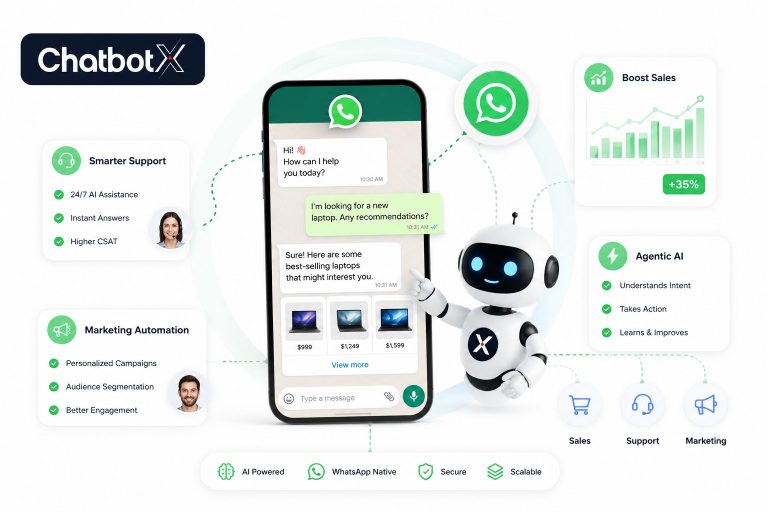
Launch agentic chat marketing in minutes with ChatbotX














💡 Quick Summary: WhatsApp Data Security in 2026
- Rising exposure: As chat volume grows, so does the amount of sensitive customer data flowing through it – brands can no longer treat WhatsApp as an informal side channel.
- Personal devices are the weak link: Staff phones and unmanaged WhatsApp Business accounts create blind spots that standard IT security tooling can’t see.
- Official infrastructure closes the gap: Connecting through the WhatsApp Business Platform via a certified provider gives teams access control, audit trails, and compliant broadcasting.
- The payoff is trust, not just compliance: Brands that lock down their messaging infrastructure convert more customers because people are more willing to share information with a business they trust.
Why WhatsApp Feels Safe — and Where That Feeling Breaks Down
WhatsApp’s end-to-end encryption is real, and it does exactly what Meta says it does: nobody in transit, including Meta itself, can read the content of a message between two parties. That’s a solid technical foundation, and it’s the reason so many customers feel comfortable typing sensitive details into a chat box in the first place.
The problem starts on the business side of that conversation. Encryption protects a message while it’s traveling – it does nothing once that message lands on a support agent’s personal phone, gets exported into a spreadsheet, or sits unmonitored on a shared device that ten different employees have logged into over the years. According to WhatsApp’s own security advisory archive, most real-world incidents affecting business accounts trace back to device-level compromise or account mismanagement, not a flaw in the encryption itself.
That distinction matters enormously for how a brand should think about its security posture. The question isn’t “is WhatsApp secure?” – it’s “is our setup secure once the message reaches us?” WhatsApp maintains a public advisory record of the security fixes it ships each year, and reviewing it is a quick way to see how the platform itself frames its own risk landscape.
The Quiet Risk of Running Support on Personal Phones
Picture a mid-sized retail brand where five agents share the login to a single WhatsApp Business app, installed on a company phone that occasionally goes home with whoever is closing that night. There’s no record of who replied to which customer, no way to revoke one agent’s access without resetting everyone’s, and no audit trail if a dispute ever needs to be reviewed.
Now picture that same brand a year later. Two of those five agents have since left the company. Did their phones get wiped? Was the account password changed before they left, or after? Most businesses running this way can’t answer confidently – and that uncertainty is itself a compliance gap under any modern data protection framework.
This setup also fails the operational test long before it fails an audit. Consumer WhatsApp apps offer no role-based permissions, no way to route a billing question away from a sales rep, and no shared record of a customer’s history if they message back three days later through a different agent’s shift. The result is duplicated work, inconsistent answers, and customers who have to repeat themselves – the exact experience that pushes people toward a competitor.
What Changes When You Move to the WhatsApp Business Platform
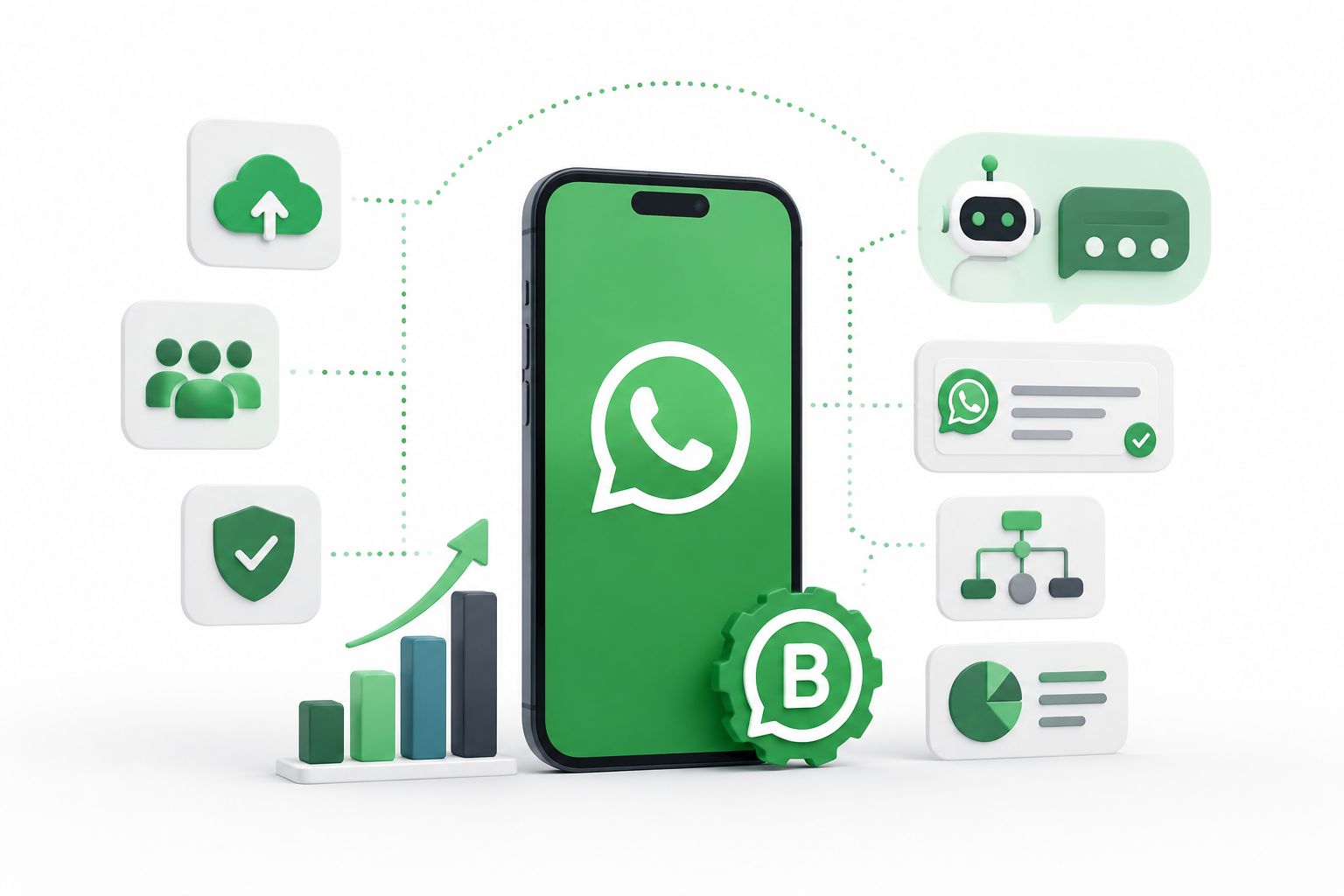
Meta built the WhatsApp Business Platform (formerly known as the WhatsApp Business API) specifically to solve this gap for companies operating past a certain size. Because it can’t be installed directly from an app store, businesses connect to it through a certified Business Solution Provider – and that’s the point at which real governance becomes possible.
An open-source omnichannel platform like ChatbotX plugs into that official infrastructure and layers the controls a growing team actually needs day to day:
- Verified identity: Official business verification issues the recognizable checkmark badge, so customers can tell your account apart from lookalike scam accounts running phishing attempts under your brand name.
- Individual agent logins with a shared view: Instead of one shared password, every teammate signs in separately while still seeing the same conversation history. ChatbotX’s Shared Inbox keeps every WhatsApp, Messenger, Instagram, and web chat thread in one queue, with assignment and internal notes attached to the conversation rather than to any one person’s phone.
- Centralized, exportable records: Customer details, tags, and conversation history live in a structured CRM Contacts database instead of a phone’s local storage, so nothing walks out the door when an employee does.
- Rules-based routing for sensitive requests: Triggers & Actions let teams automatically send billing, refund, or account-verification conversations to the right authorized group, instead of leaving every inbound message open to whichever agent happens to reply first.
- Approved, policy-safe broadcasting: Bulk marketing or transactional updates go out through Meta-approved templates rather than manual copy-paste sends, which keeps a brand’s WhatsApp channel in good standing instead of risking a platform-level ban for bulk messaging.
None of this requires abandoning the parts of WhatsApp customers already love. The conversation still feels like a normal chat on the customer’s end – the difference lives entirely on the business side, where oversight finally matches the volume of data flowing through.
Compliance Isn’t Optional Anymore — It’s a Buying Signal
Regulators haven’t stood still while messaging volume exploded. Frameworks like the EU’s GDPR treat message metadata – who contacted whom, and when – with nearly the same seriousness as message content, which means a business’s obligations don’t stop at “we used an encrypted app.” Documented consent, clear retention rules, and the ability to prove who accessed a given conversation are now baseline expectations, not extras reserved for regulated industries.
Brands that get this right turn it into a genuine advantage. Customers increasingly notice when a business handles their data carelessly, and word travels fast in group chats and reviews. A comparison of the leading WhatsApp Business Solution Providers is a useful next step if your team is still weighing which partner to build on, since the provider you choose directly shapes how defensible your compliance posture will be.
Turning a Secure Setup Into Growth
Security and growth aren’t competing priorities here – they reinforce each other. When customers trust that a brand handles their information responsibly, they’re measurably more willing to complete a purchase inside the chat itself, share payment details for a WhatsApp-native checkout, or opt into a loyalty program without hesitating. The same centralized data that keeps a compliance officer comfortable also feeds smarter segmentation and faster support, because every agent – human or AI – starts from the same accurate customer record instead of piecing together fragments from memory.
Teams that already run marketing through Facebook or Instagram often reach this point first, since managing CRM data across Messenger conversations surfaces the same governance gaps that show up on WhatsApp. And for brands still mapping out which channels deserve investment in the first place, this rundown of the messaging apps that matter most for business in 2026 is a solid starting point before committing budget to any one platform.
Getting Started Without Overhauling Everything at Once
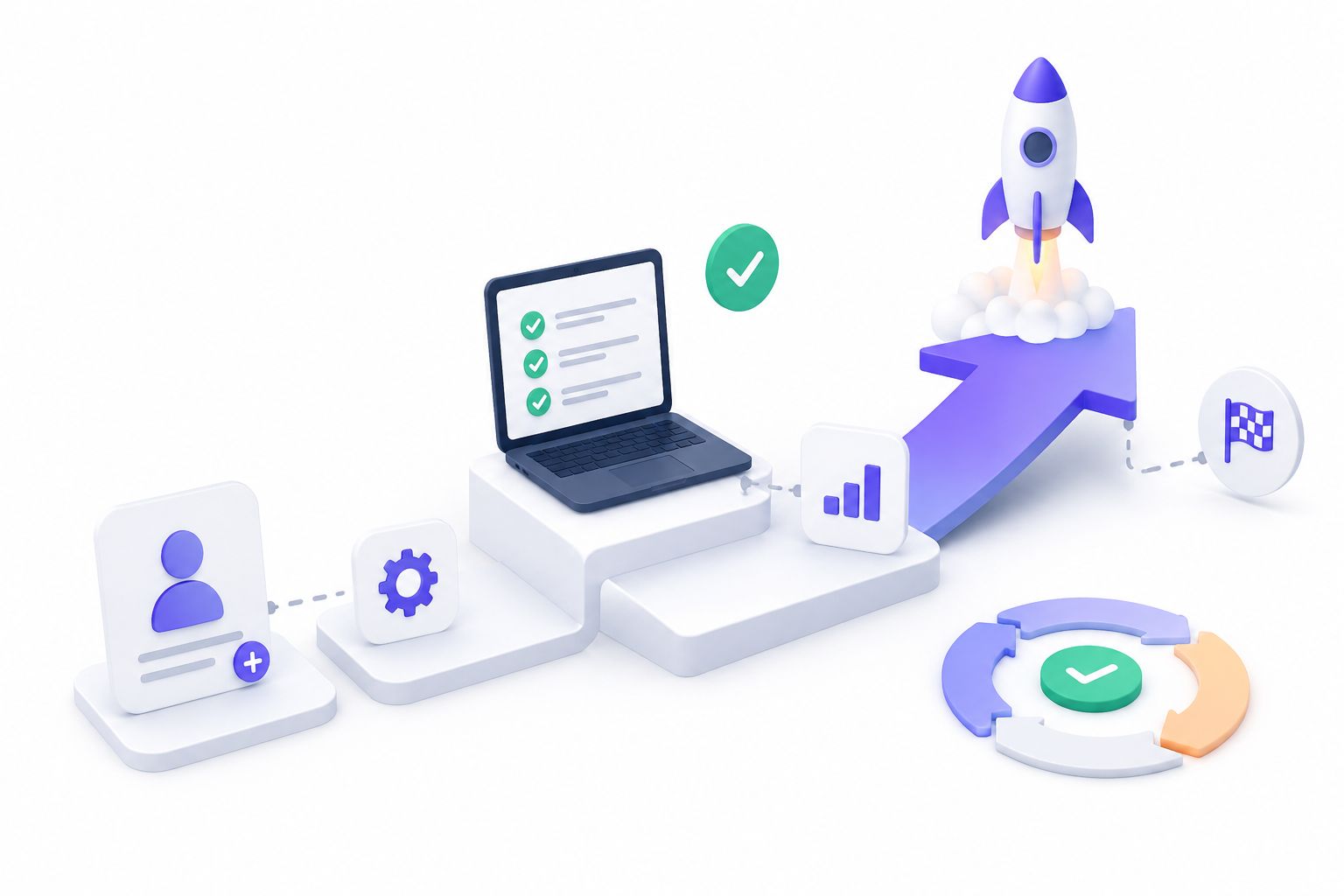
Moving off personal devices doesn’t have to mean a disruptive, months-long migration. Most teams start by connecting their existing WhatsApp number to an official provider, importing their contact list into a structured CRM, and setting up basic routing rules for their most sensitive conversation types – billing, account access, and order disputes. From there, broadcasting, AI-assisted replies, and deeper CRM integrations can be layered in gradually.
Because ChatbotX is open source, technical teams can also self-host the platform entirely, keeping customer data on infrastructure they fully control rather than trusting it to a third-party cloud by default – a meaningful option for companies in regulated industries or regions with strict data-residency rules. Teams that want to track how the security and compliance tooling evolves can follow the project’s release history directly on GitHub.
The Bottom Line
WhatsApp itself isn’t the security risk – the gap between the platform’s encryption and how a business actually manages its side of the conversation is where problems start. Closing that gap means moving off personal devices, adopting official infrastructure, and giving every team member a role-based, auditable way to work inside the same customer record. Brands that make this shift early aren’t just avoiding compliance headaches; they’re building the kind of trust that turns a chat conversation into a completed sale.
If your team is still running customer conversations through personal phones and shared logins, now is a reasonable time to change that. Book a free walkthrough of ChatbotX and see how a self-hosted, open-source omnichannel platform can bring your WhatsApp, Messenger, and Instagram conversations into one secure, auditable workspace – without locking you into a closed, proprietary system.
FAQ
Is WhatsApp secure for business communication?
The underlying encryption is strong, but security for a business depends on how the company manages its side of the conversation. Using the official WhatsApp Business Platform through a certified provider, rather than a personal account, is what actually closes the gap.
Why are personal WhatsApp accounts risky for businesses?
Customer conversations and data end up stored on individual employees’ devices, with no central record, no access controls, and no way to revoke access cleanly when someone leaves the company.
How does ChatbotX improve WhatsApp data security?
ChatbotX connects to the official WhatsApp Business Platform and adds a shared inbox with individual logins, centralized CRM records, rules-based routing for sensitive conversations, and the option to self-host the entire open-source platform.
Can businesses send bulk WhatsApp messages without risking a ban?
Yes, as long as the messages go out through Meta-approved templates and the recipient has opted in. This is one of the core differences between the official Business Platform and a personal WhatsApp account, which faces strict limits on bulk sending.
What does WhatsApp’s verified badge actually protect against?
It gives customers a fast, visual way to confirm they’re messaging the real business rather than a phishing account impersonating the brand, which reduces fraud and builds trust before a conversation even starts.