
Open source chatbot platforms have become the foundation of modern conversational AI in 2026, giving businesses greater control over data, customization, and AI infrastructure. As companies move beyond rigid SaaS chatbot tools, platforms like Rasa, Botpress, and ChatbotX are enabling scalable, multi-LLM customer experiences across web, WhatsApp, Telegram, and more. This guide explores the best open source chatbot platforms, compares their features, deployment flexibility, and AI capabilities, and helps you choose the right solution for your business growth.
Launch agentic chat marketing in minutes with ChatbotX











Why Open Source Chatbot Platforms Are Dominating in 2026

The chatbot industry has undergone a seismic transformation over the past two years. By 2026, the global conversational AI market is expected to surpass $29 billion, and a significant driver of this growth is the explosive adoption of open source chatbot platforms.
Businesses of every size – from lean startups to Fortune 500 enterprises – are gravitating toward open source solutions for a simple reason: freedom. Freedom to customize, freedom to self-host, and freedom from the escalating subscription costs of proprietary SaaS chatbot vendors.
According to Gartner’s AI Technology Trends Report, over 60% of enterprises now actively evaluate open source AI tooling before committing to commercial platforms. The numbers tell a clear story: open source is no longer the “budget option” – it is the strategic option.
Key reasons businesses are switching to open source chatbot platforms in 2026:
- Data sovereignty: Host your own infrastructure and keep sensitive customer conversations private.
- Cost efficiency: Eliminate per-seat or per-conversation licensing fees that scale unpredictably.
- Deep customization: Tailor the UI, workflows, NLP models, and integrations without vendor restrictions.
- Community innovation: Benefit from a global contributor base that ships improvements faster than closed-source teams.
- Avoiding vendor lock-in: Migrate, fork, or extend freely – your stack, your rules.
Key Features to Look for in an Open Source Chatbot Platform

Not all open source chatbot platforms are created equal. Before you evaluate any solution, benchmark it against these essential capabilities:
1. Multi-Channel Support
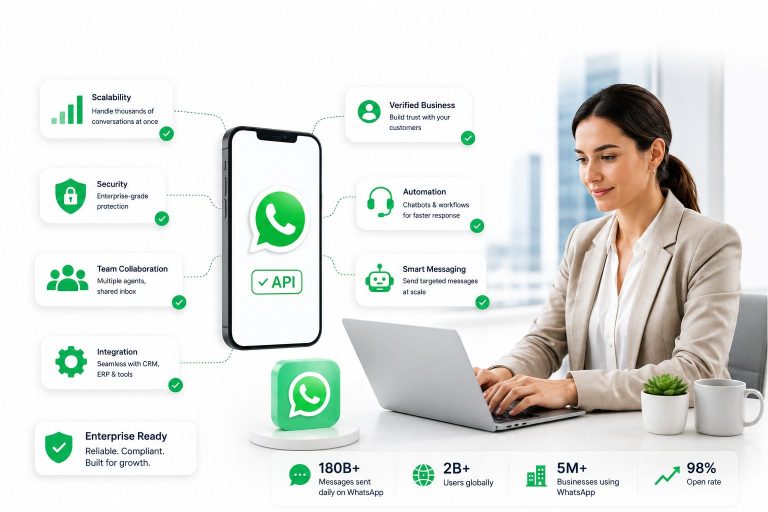
A production-ready chatbot platform must serve your customers wherever they are – website widgets, WhatsApp, Facebook Messenger, Telegram, Slack, email, and SMS. Siloed single-channel tools create fragmented customer experiences that erode trust.
2. Natural Language Understanding (NLU) Engine
The quality of the underlying NLU determines whether your bot understands nuanced user intent or frustrates customers with robotic misinterpretations. In 2026, top platforms integrate with large language models (LLMs) like GPT-4o, Claude, Gemini, or host fine-tuned open source models such as Mistral or LLaMA.
3. No-Code / Low-Code Visual Builder
Enabling non-technical teams – marketing, customer success, HR – to build and iterate on conversation flows without engineering bottlenecks is a competitive advantage. Look for drag-and-drop visual builders with conditional logic, A/B testing, and real-time preview.
4. Analytics and Reporting Dashboard
Conversation analytics – CSAT scores, drop-off rates, intent recognition accuracy, handoff rates to human agents – are non-negotiable for continuous improvement.
5. Live Agent Handoff and Omnichannel Inbox
The best bots know their limits. Seamless escalation to human agents, with full conversation context passed over, is what separates great platforms from mediocre ones.
6. Self-Hosting and Cloud Deployment Flexibility
Whether you prefer Docker, Kubernetes, or a managed cloud instance, the platform should support multiple deployment topologies without locking you into a specific cloud provider.
7. API-First Architecture
Every core function – bot training, conversation logs, analytics – should be accessible via a well-documented REST or GraphQL API, enabling deep integration with your existing CRM, helpdesk, and data warehouse.
Top Open Source Chatbot Platforms in 2026
Here is an honest overview of the leading open source chatbot platforms developers and product teams are evaluating this year:
Rasa
Rasa remains one of the most mature open source NLU and dialogue management frameworks. It is developer-first, highly configurable, and integrates well with custom LLM pipelines. Its learning curve is steep for non-engineers, but for teams with Python expertise, it offers exceptional flexibility. Rasa’s documentation is comprehensive and actively maintained.
Botpress
Botpress offers a visual flow builder combined with an open source core. It has matured significantly, adding LLM-native features like autonomous agent nodes that reduce the need for rigid intent classification. Ideal for teams that want a no-code frontend over a powerful open source engine.
Chatwoot
Chatwoot is primarily an open source customer support platform with a live chat and inbox focus. It supports basic bot automation and is best used as a complement to a dedicated chatbot engine rather than a standalone NLU platform.
ChatbotX
A newer entrant generating significant traction in the developer community, ChatbotX combines the flexibility of a fully open source core with a polished, production-ready UI and multi-LLM support. More on this below.
Introducing ChatbotX: The Rising Open Source Challenger
Among the open source chatbot platforms gaining serious momentum in 2026, ChatbotX stands out for its developer-friendly architecture and enterprise-grade feature set – all delivered under an open license.
ChatbotX was built from the ground up to address the pain points that plagued earlier open source chatbot tools: poor documentation, difficult self-hosting, and inflexible LLM integration. The result is a platform that teams can deploy, customize, and scale without needing a dedicated DevOps army.
What Makes ChatbotX Different?
Multi-LLM Flexibility: ChatbotX connects to OpenAI, Anthropic Claude, Google Gemini, and self-hosted open source models. You are never tied to a single AI provider, which future-proofs your investment as the LLM landscape continues to evolve rapidly.
Visual Flow Builder: The intuitive drag-and-drop conversation designer allows marketing and product teams to build, test, and publish chatbot workflows without touching a line of code – while still giving engineers full programmatic access via the API.
Omnichannel Inbox & Live Handoff: ChatbotX manages conversations across web, WhatsApp, Telegram, email, and more from a unified inbox. When the bot reaches its limits, it hands off to human agents with complete context preserved – no frustrating repeats for the customer.
Advanced Analytics Dashboard: Real-time dashboards surface intent accuracy, conversation completion rates, CSAT trends, and agent performance metrics – everything a team needs to continuously improve the customer experience.
Fully Open Source Core: The ChatbotX codebase is available on GitHub, enabling self-hosting, custom forks, and transparent security audits. You can explore the ChatbotX source code on GitHub and contribute to the project directly – whether that means filing bug reports, submitting pull requests, or proposing new features.
ChatbotX is the rare platform that successfully bridges the gap between a developer tool and a product built for business users – making it equally compelling for a two-person startup and a 500-person enterprise team.
How to Deploy an Open Source Chatbot: Step-by-Step Overview

Regardless of which open source platform you choose, deployment typically follows this pattern:
Step 1: Define Your Use Case
Chatbots optimized for lead generation perform differently from those designed for customer support, HR FAQ handling, or e-commerce product discovery. Define your primary use case before evaluating platforms.
Step 2: Choose Your Hosting Environment
- Managed cloud (AWS, GCP, Azure): Easiest to start, scalable, but ongoing costs.
- Self-hosted VPS (DigitalOcean, Hetzner, Vultr): Cost-effective for teams with DevOps competency.
- On-premise: Required for highly regulated industries (healthcare, finance, government) where data cannot leave internal infrastructure.
Step 3: Connect Your LLM Provider
Most modern open source chatbot platforms function as orchestration layers over LLM APIs. Configure your preferred provider – or point to a locally hosted model using Ollama or similar frameworks – and test intent recognition accuracy on your domain-specific vocabulary.
Step 4: Build Your Conversation Flows
Map out your most common user journeys. Start with high-volume, low-complexity interactions – FAQs, appointment booking, order status – before tackling complex, multi-turn dialogues.
Step 5: Test, Iterate, and Monitor
Deploy to a staging environment, conduct user acceptance testing (UAT), review analytics after the first two weeks of production traffic, and iterate. Chatbot performance is never “set and forget.”
Open Source vs. Proprietary Chatbot Platforms: Which Is Right for You?
| Criterion | Open Source | Proprietary SaaS |
|---|---|---|
| Cost | Infrastructure only | Monthly/annual licensing |
| Data Privacy | Full control | Vendor-dependent |
| Customization | Unlimited | Limited by vendor roadmap |
| Deployment | Self-host or cloud | Cloud-only (typically) |
| Support | Community + paid options | Vendor SLA |
| Time to Deploy | Moderate (setup required) | Fast (managed onboarding) |
| Vendor Lock-in | None | High |
| Scalability | Architect to your needs | Vendor-managed |
For most growth-stage businesses and enterprises with in-house engineering capacity, open source is the superior long-term choice. The upfront setup investment pays back quickly compared to the compounding cost of SaaS licensing at scale.
For very small teams or businesses with no technical resources, a managed SaaS chatbot tool may be more practical in the short term – though migrating later adds friction and risk.
Future Trends in Open Source Conversational AI
The open source chatbot landscape in 2026 is being shaped by several powerful forces that will define the next three to five years:
Autonomous AI Agents
The chatbot paradigm is evolving beyond reactive question-answering toward proactive, goal-driven agents that execute multi-step tasks – browsing the web, querying databases, sending emails, triggering API calls – with minimal human intervention. Open source frameworks like LangChain and LlamaIndex are accelerating this shift.
Small, Domain-Specific LLMs
Rather than routing all queries to massive general-purpose models, businesses are fine-tuning smaller, cheaper, faster open source LLMs (7B–13B parameter models) on their proprietary data. This delivers better accuracy on domain-specific queries, lower latency, and dramatically reduced inference costs.
Voice-First Interfaces
As speech recognition accuracy approaches human parity, voice-driven chatbot interfaces are becoming viable for customer service, healthcare, and accessibility applications. Open source speech-to-text engines are closing the gap with proprietary alternatives.
Multimodal Conversations
The next generation of chatbots will natively process and respond to images, documents, audio, and video – not just text. Open source multimodal models are maturing rapidly, and platforms that support multimodal input pipelines will have a significant competitive advantage.
Embedded AI Everywhere
Chatbot interfaces are increasingly embedded directly into products – inside SaaS dashboards, mobile apps, developer tools, and physical devices – rather than isolated in standalone chat windows. API-first open source platforms are uniquely positioned to power this embedded AI future.
Choosing the Right Open Source Chatbot Platform in 2026: A Summary
The open source chatbot platform market in 2026 is richer, more mature, and more capable than ever before. The key to choosing the right platform is aligning your selection to three criteria:
- Your team’s technical capacity – Can you manage self-hosted infrastructure, or do you need a more managed experience?
- Your use case complexity – Simple FAQ automation has different requirements than autonomous multi-step agent workflows.
- Your scalability horizon – A platform that serves you at 1,000 conversations per month should still serve you at 1,000,000.
For teams that want a platform that checks all three boxes – open source transparency, enterprise-grade features, and a developer-friendly experience – ChatbotX deserves serious evaluation.
Call to Action: Start Building Smarter Conversations Today

The era of rigid, scripted chatbots is over. In 2026, your customers expect intelligent, contextual, and genuinely helpful conversational experiences – and the tools to deliver them have never been more accessible.
ChatbotX is ready to help you get there.
Whether you are migrating from a legacy chatbot platform, launching your first AI-powered support assistant, or building a custom conversational product from the ground up, ChatbotX gives you everything you need:
- ✅ A fully open source codebase you can audit, customize, and own
- ✅ Multi-LLM support for maximum flexibility and cost optimization
- ✅ A visual flow builder your whole team can use – no engineering required
- ✅ Omnichannel deployment across web, WhatsApp, Telegram, and more
- ✅ Real-time analytics to continuously improve every conversation
👉 Get started with ChatbotX today – explore the platform, launch a free instance, and see the difference a truly open, truly capable chatbot platform makes for your business.
Want to go deeper before you commit? Browse the ChatbotX GitHub repository to review the code, check the roadmap, and connect with a global community of developers building the future of conversational AI – together.
The best time to modernize your chatbot stack was last year. The second best time is today.