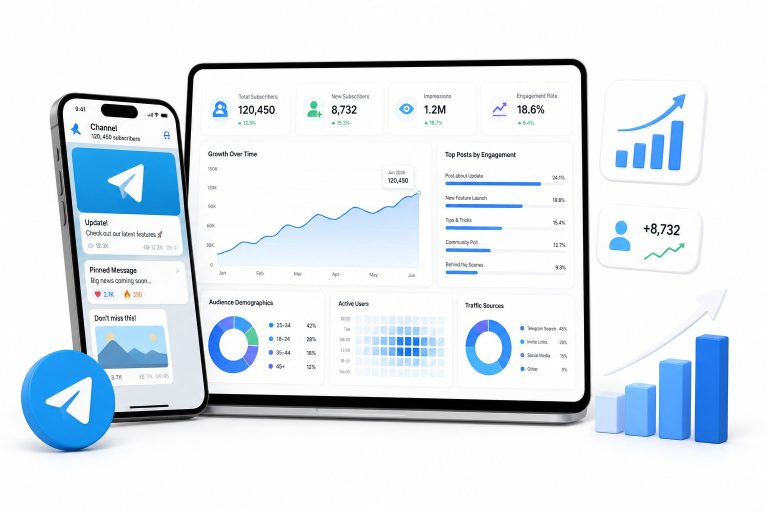

A social media growth strategy is a documented, data-driven system for building an engaged audience across social platforms – one that ties every content decision to measurable business outcomes. It is not about posting daily, chasing trending sounds, or copying competitors. It is about building compounding momentum: the kind that turns followers into customers, customers into advocates, and content into a scalable, repeatable growth channel.
This guide gives you a complete 5-part framework to build that system in 2026 – from goal-setting and audience research through content production, community management, and data-driven optimization. If you’re also looking to automate conversations at scale once your audience starts growing, see our social media automation strategy guide.
Launch agentic chat marketing in minutes with ChatbotX














Why Most Social Media Growth Strategies Fail
Real social media growth is not viral luck or daily posting volume. It is a strategic, compounding system – one that turns consistent content and community effort into a loyal, revenue-generating audience.
Without a clear, data-informed plan, you are adding noise to an already overcrowded digital space and hoping something accidentally resonates. The brands winning on social media in 2026 are not the loudest ones. They are the most deliberate ones.
Three failure patterns account for the majority of stalled social media programs:
Chasing tactics without a strategy. Brands copy competitor formats, jump on trending audio, and platform-hop without a defined objective. The result is high activity and low return – lots of effort with nothing to show for it in the CRM.
Optimizing for vanity metrics. Follower count and reach feel like progress. They rarely correlate with revenue. Brands that grow fast on paper but cannot attribute a single dollar to social are measuring the wrong things entirely.
Burning out the team. The pressure to produce constant content without a repeatable system leads to inconsistency, declining quality, and eventual abandonment. Sustainable growth requires a system, not a sprint. According to a Hootsuite Social Media Trends report, burnout and resource constraints are among the top reasons social programs underperform against initial expectations.
This guide is built to solve all three.
Pro tip: Before setting a single content goal, define what social media success looks like in business terms – not platform terms. Revenue generated, leads created, support costs reduced. Those are the numbers that justify continued investment and headcount.
Build a Strategic Foundation That Drives Measurable Growth

The most successful social media brands invest heavily in strategy before a single post goes live. Sustainable growth is not accidental – it is architected. Chasing trends without a strategic core is like navigating without a destination: you will stay busy and never arrive.
Setting SMART Goals Connected to Business Outcomes
Vague objectives like “grow our following” or “increase engagement” are not goals – they are wishes. Effective social media strategy requires objectives tied to specific, measurable business outcomes using the SMART framework.
Specific: Name exactly what you want to achieve and why it matters.
- Weak: “Improve our Instagram.”
- Strong: “Increase Instagram Reel views from non-followers by 25% to expand top-of-funnel awareness among first-time buyers in Q2.”
Measurable: Tie every goal to a trackable data point.
- Weak: “Generate more leads from LinkedIn.”
- Strong: “Generate 50 qualified leads per month from LinkedIn content, tracked via unique UTM parameters synced to our CRM.”
Achievable: Calibrate ambition against available resources, budget, and team capacity. A target of 100,000 followers in 30 days for a new account is not ambitious – it is a distraction. A target of 1,000 highly engaged followers in the same window is realistic and strategically meaningful.
Relevant: Every social goal must connect to a broader business priority. If the primary objective this quarter is customer retention, a relevant social goal might be: “Reduce tier-1 support response time by 30% by routing common inquiries through an automated DM flow on Twitter/X.”
Time-bound: Every goal needs a deadline and a review date.
- Example: “Increase Pinterest click-through rate to our e-commerce store by 15% by the end of Q3.”
Pro tip: Set one primary goal and one secondary goal per platform per quarter. This prevents resource dilution and ensures every piece of content has a clear strategic purpose behind it.
Building Deep Audience Personas
Understanding your audience goes well beyond demographics like age and location. To create content that genuinely connects, you need to understand the psychology and behavior of your ideal follower at a level most brands never bother to reach.
A strong audience persona captures four dimensions:
Psychographic profile: What are their core values, beliefs, and ambitions? What do they fear? What does success look like to them personally and professionally?
Pain points and friction: What specific, recurring problems do they encounter in work or daily life that your product, service, or content can directly address?
Digital watering holes: Where do they spend time online beyond your channel? Are they active in specific LinkedIn groups, subreddits, niche Discord servers, or industry forums? Which accounts do they engage with – not just follow?
Content consumption habits: Do they prefer short-form video (TikTok, Reels), long-form text (LinkedIn articles, newsletters), or visual inspiration (Pinterest, Instagram)? When are they most active and most receptive?
To build this picture accurately, go beyond assumptions. Interview your five to ten best customers directly. Mine your existing email list for behavioral patterns. Use social listening tools such as Brandwatch or Sprout Social to analyze conversations happening organically around your brand and industry. The more precisely you understand their world, the more your content will feel tailor-made – because it will be.
Conducting a Competitive Analysis That Informs, Not Imitates
Your competitors are a strategic intelligence resource that most brands underutilize. Analyzing their social presence is not about copying their playbook – it is about establishing benchmarks, identifying content gaps, and locating the positioning opportunity that belongs uniquely to you.
| Analysis Component | Key Questions to Answer | What It Tells You |
|---|---|---|
| Platform presence | Which platforms are they active on? Where do they earn the most engagement? | Helps you prioritize platforms or identify underserved channels where competition is lower |
| Content strategy | What pillars do they focus on – education, behind-the-scenes, product, community? | Reveals which content themes resonate with your shared target audience |
| Top-performing posts | Which specific posts (by format, topic, and length) generate the most saves, shares, and comments? | Provides a validated blueprint for content ideas and formats worth testing |
| Engagement and tone | How do they communicate? Is their voice formal, conversational, witty? How fast do they respond? | Informs your own community voice strategy and response cadence |
| Content gaps | What topics are they NOT covering? Which audience questions go unanswered? | Your clearest opportunity to own a content niche and become the trusted go-to source |
Use this data to find your differentiated position. If every competitor posts polished, production-heavy content, your opportunity may be authentic behind-the-scenes footage. If they all lead with product features, you may win by centering customer success stories and tangible real-world outcomes.
Create a High-Impact Content System That Compounds Engagement
Once the strategy foundation is in place, attention shifts to execution – creating content that earns attention in an algorithmically competitive feed. With shrinking attention spans across every platform, your content has seconds to earn continued engagement.

This does not mean producing flashy, low-substance content. It means designing every piece to interrupt the scroll pattern, deliver genuine value, and give the audience a clear reason to engage, save, or share.
The Art of the Hook: Your First Three Seconds
The opening line of a post or the first frame of a video is the single most important creative decision in any piece of content. Its only job is to earn the next three seconds of attention. The most effective hooks are engineered to trigger curiosity, challenge an existing assumption, or create an immediate emotional connection.
Proven hook formulas that consistently perform across formats:
- Provocative question: “Are you making one of these three critical mistakes in your sales emails?”
- Bold counter-narrative: “Stop stretching before your workout. Here’s what the research actually says.”
- Relatable pain point: “That specific dread when you open your screen time report on Sunday night…”
- Data-backed opener: “9 out of 10 content strategies fail within six months. Here is the pattern nobody talks about.” (Content Marketing Institute)
- Story-driven opening: “I landed my first paying client with zero followers and no website. Here is exactly how.”
Important note: The examples above are illustrative hook formulas. Any statistical claims used in your actual published content must be sourced and verified before publication.
Test multiple hook types systematically. Your analytics will surface which approaches resonate most with your specific audience, allowing you to refine the formula for compounding effect over time.
Value-Driven Content Pillars
To build a substantial following that grows reliably over time, your content must consistently deliver across four distinct value types. A balanced mix keeps your feed dynamic, prevents audience fatigue, and sustains algorithmic momentum.
1. Educational – Teach your audience something genuinely useful. This positions you as a subject matter authority and builds lasting credibility that survives algorithm changes. Examples: practical how-to guides, step-by-step tutorials, industry myth-busting, expert breakdowns of complex topics.
2. Entertainment – Make your audience laugh, feel something, or experience a moment of genuine surprise. This builds emotional connection and brand personality – the elements that make people remember you. Examples: relatable short-form video (Reels, TikToks), interactive polls, candid behind-the-scenes moments, industry-specific memes.
3. Inspiration – Move your audience to think differently or take meaningful action. This creates value-based connection that transcends product interest. Examples: customer transformation stories, founder journeys with honest context, before-and-after case studies with compelling, specific outcomes.
4. Conversion – Drive a specific action – a purchase, a sign-up, a booking, or a trial. This pillar must be used selectively to preserve trust. Examples: product demonstrations, customer video testimonials, limited-time offers, live Q&A sessions addressing the most common purchase objections.
The 80/20 Rule: Allocate 80% of your content to education, entertainment, and inspiration. Reserve no more than 20% for direct conversion content. Brands that invert this ratio consistently see declining engagement rates and shrinking organic reach. The ratio earns the right to sell.
High-Engagement Content Formats
How you deliver a message matters as much as the message itself. Different formats serve different goals and suit different consumption habits. Format diversity keeps your feed fresh and maximizes distribution across algorithmic surfaces.
Short-Form Video – Reels, TikToks, YouTube Shorts
- Strengths: Highest organic discovery potential on most major platforms. Exceptional for expressing brand personality and making complex topics visually accessible to new audiences.
- Considerations: Production can be time-intensive to execute at a quality level that reflects well on the brand. Platform best practices evolve rapidly and require consistent adaptation.
Carousel Posts – Multi-slide content
- Strengths: Consistently high save and share rates. Ideal for step-by-step guides, data-rich content, and how-to frameworks. Extended dwell time is a strong positive algorithmic signal.
- Considerations: Requires solid design execution. The first slide must earn the swipe – if it doesn’t, the remaining slides don’t exist for that viewer.
User-Generated Content (UGC)
- Strengths: Generates powerful social proof and authentic trust signals. Highly cost-effective to source and repurpose. Typically outperforms brand-produced content in conversion rate because it is perceived as unbiased.
- Considerations: Requires an active, engaged community as a prerequisite. Quality and messaging consistency require clear guidelines and an approval process.
Live Video – Instagram Live, LinkedIn Live, YouTube Live
- Strengths: Creates real-time human connection that recorded content cannot replicate. Excellent for Q&A sessions, expert interviews, and product launches. Most major platform algorithms actively prioritize live content in distribution.
- Considerations: Requires preparation, technical readiness, and real-time moderation. Technical quality directly affects perceived brand credibility.
Turn Followers Into a Loyal, Revenue-Generating Community

Publishing great content is only half the equation. Sustainable growth comes from actively nurturing a connected community around your brand. Every major platform algorithm rewards accounts that generate meaningful conversation – not just accounts that broadcast content.
Proactive Community Management Tactics
Community management is both a strategic discipline and a non-negotiable element of any serious growth program.
Respond to everything – and respond fast. Aim to reply to every comment and direct message within the first few hours of publishing. Substantive, personalized responses – not emoji reactions – signal to both your audience and the platform algorithm that your account merits amplification.
End every post with an open question. Shift from announcement-style captions to conversation-starting ones. Instead of “Here’s our new product,” try “Here’s our new product – what’s the first problem you’d use it to solve?” One framing broadcasts. The other invites. The difference in comment volume is consistently measurable.
Engage beyond your own profile. Invest 15–20 minutes daily engaging genuinely with content from followers, industry peers, and thought leaders. Leave substantive comments that add value – not just “great post.” This signals active community participation to algorithms and builds reciprocal relationships that expand your organic reach.
Feature your community regularly. Spotlight followers by resharing their user-generated content, featuring their comments in Stories, or publicly acknowledging their contributions. People who feel genuinely seen become your most powerful and cost-effective organic advocates.
Strategic Collaboration Partnerships
Collaborating with other creators or brands is one of the highest-leverage ways to reach new, relevant audiences. The key is identifying partners whose audiences meaningfully overlap with your target customer without being direct competitors.
Micro-influencers (10,000–100,000 followers) consistently deliver higher engagement rates and more authentic influence than celebrity-tier endorsements. Their recommendations feel personal rather than transactional, and they are typically far more accessible and cost-effective for growing brands. According to Influencer Marketing Hub, micro-influencers generate engagement rates 3–5x higher than macro-influencers on average.
Brand cross-collaborations allow you to partner with a complementary business for joint giveaways, co-created content series, or live shopping events – delivering mutual value while exposing both brands to entirely new audiences who already trust your partner.
Warning: Vet all potential collaborators rigorously before any commitment. Analyze their actual engagement rate, not just follower count – high follower count with suspiciously low engagement is a clear signal of an inactive or purchased audience. Assess audience demographic alignment and brand values compatibility. One misaligned partnership can damage brand credibility that took months to build.
The Role of Paid Amplification in an Organic Growth Strategy
Organic growth is your foundation. Paid social is the amplifier. Strategic ad spend does not replace organic efforts – it accelerates the momentum that organic has already validated.
Boost your best-performing organic content. Identify posts that already generated strong organic engagement – high saves, shares, and meaningful comments. Invest a modest budget to extend their reach to lookalike and interest-based audiences. You are putting money behind content that real audience behavior has already validated.
Run conversion-focused campaigns for specific business objectives. For goals like lead generation or direct sales, build dedicated campaigns with clear calls-to-action, purpose-built landing pages, and precise audience targeting based on interests, behaviors, and purchase intent signals.
Start with a conservative test budget of $5–10 per day per campaign. The goal is to validate the content-audience fit before scaling spend – not to buy growth that evaporates when the budget runs out.
Optimize With Data — Not Guesswork

You cannot improve what you do not measure. A data-driven approach transforms social media from a guessing game into a predictable, repeatable system. Regular performance analysis allows you to double down on what works, eliminate what doesn’t, and build compounding improvement into every iteration cycle.
Discard vanity metrics. Focus exclusively on data that connects directly to your defined business goals.
Key Performance Indicators That Actually Matter
| KPI Category | Specific Metrics | What It Measures | Why It Matters |
|---|---|---|---|
| Reach | Impressions, unique reach, follower growth rate | How many people are exposed to your content | Indicates top-of-funnel health and content discoverability |
| Engagement | Engagement rate = (Total engagements ÷ Reach) × 100 | How actively your audience interacts with content | High engagement amplifies organic reach via algorithmic promotion |
| Traffic | CTR, link clicks, referral sessions in Google Analytics | How effectively content drives qualified site traffic | Directly measures content’s ability to generate business-relevant action |
| Conversion | Conversion rate, cost per lead, leads generated | % of traffic completing a desired action | The most critical metric – connects social activity to revenue |
| Advocacy | Share rate, brand mentions, UGC volume | How frequently your audience voluntarily promotes you | Measures genuine loyalty and the organic amplification effect |
Note on engagement rate: Some platforms calculate engagement rate against follower count; others use reach. For cross-platform consistency, use reach-based engagement rate: (Total engagements ÷ Reach) × 100. Define your formula before reporting and apply it uniformly.
For a deeper look at how to connect social KPIs to revenue – including WhatsApp Business-specific metrics – see our WhatsApp Business KPIs guide for SaaS and B2B teams.
Essential Social Media Analytics Tools
Native platform analytics (Instagram Insights, LinkedIn Analytics, TikTok Analytics, X Analytics) – Free, always current, and deeply integrated with each platform’s data. Provide granular post-level performance and audience demographic breakdowns. Best for daily monitoring and quick trend identification.
Social media management platforms (Buffer, Hootsuite, Sprout Social) – Combine scheduling and publishing with multi-platform analytics dashboards. Enable exportable professional reports and save significant time by centralizing all channels into a single workspace.
Advanced analytics and listening tools (Brandwatch, Keyhole, Iconosquare) – Provide competitive benchmarking, sentiment analysis, hashtag performance tracking, and industry comparison data. Best suited for data-focused teams seeking a measurable competitive intelligence advantage.
A/B Testing Framework for Continuous Improvement
A/B testing – or split testing – is the disciplined practice of comparing two content variations to determine which performs better against a defined metric. A consistent testing program produces compounding improvements that accumulate meaningfully over a 6–12 month horizon.
Step 1 – Form a clear hypothesis: “I believe using a question-style hook will generate more comments than a bold statement hook because it explicitly invites a response.”
Step 2 – Isolate one variable only: Change a single element at a time – hook format, visual style, call-to-action copy, or posting time. Changing multiple variables simultaneously makes it impossible to identify which change drove the performance difference.
Step 3 – Run the test under equivalent conditions: Publish both versions at the same time of day on equivalent days of the week to comparable audience segments.
Step 4 – Analyze results after a defined window: Allow 48–72 hours before drawing conclusions. Compare performance against the specific metric stated in your hypothesis – not every metric.
Step 5 – Implement the winner and document the learning: Apply the stronger-performing approach to your broader content strategy. A “failed” test is never wasted – it eliminates a variable and narrows the search space for what actually works with your audience.
Scale Conversations Without Scaling Your Team

Here is the scaling constraint nobody warns you about: when your social media strategy starts working, inbound message and inquiry volume grows exponentially. Personally handling every interaction becomes impossible – and every unanswered message is a missed conversion opportunity.
This is the inflection point where automation transitions from optional to operationally necessary.
When to Introduce Automation – and When Not To
Automation is a force multiplier for high-volume, repeatable interactions. It is not the right tool in every situation.
Automation works well for:
- DM volume that exceeds what your team can respond to within 2 hours
- FAQs that account for more than 60% of inbound inquiries
- Lead qualification flows with consistent, predictable question patterns
- Post-purchase support, order tracking, and delivery updates
Automation is the wrong tool for:
- Early-stage community building where personal connection is the differentiator
- Luxury or high-touch brands where the human response is the product experience
- Complex B2B sales cycles requiring nuanced, consultative judgment
- Sensitive customer service escalations involving complaints or refunds
The goal is to automate what is repeatable so your team can be fully human where it matters most.
Indicators You Are Ready for Automation
- Direct message volume consistently exceeds your team’s 2-hour response capacity
- The same 10–15 questions account for the majority of inbound inquiries
- Leads are going cold because follow-up is constrained to business hours
- Your team spends more time on repetitive replies than on strategic content creation
The Role of Conversational AI in Social Media Growth
AI-powered chatbot platforms – such as ChatbotX – automate customer interactions across your full channel stack: website, Facebook Messenger, Instagram, WhatsApp, Zalo, and more – without requiring a 24/7 support team.
| Growth Problem | Automation Solution |
|---|---|
| Messages unanswered outside business hours | 24/7 instant responses – no lead left behind |
| Repetitive FAQs consuming team bandwidth | Accurate auto-replies free your team for high-value conversations |
| Leads cooling while waiting for follow-up | Personalized conversation flows that qualify and nurture in real time |
| No structured system for capturing social lead data | Every conversation generates organized, CRM-ready contact data automatically |
| Low conversion rate despite strong traffic | Context-aware CTAs embedded naturally within conversation flows |
What to Prioritize When Evaluating Automation Platforms
- Multi-channel deployment – one platform managing WhatsApp, Messenger, Instagram, website chat from a single dashboard
- Native CRM integration – every conversation automatically creates or enriches a contact record
- Human handoff capability – seamless escalation to a live agent with full conversation context preserved
- Conversation intelligence – the system improves response quality over time based on interaction patterns
- Analytics and reporting – real-time visibility into response rate, conversion rate, and conversation drop-off
The best automation doesn’t feel automated. It responds instantly, speaks in your brand’s voice, and escalates to a human at exactly the right moment – so every customer feels like a priority, whether it’s 2 PM or 2 AM.
Mini Case Study: DTC Skincare Brand — Instagram + Messenger + Website Chat
Results from a ChatbotX customer deployment, anonymized at the client’s request. Figures verified internally. Outcomes vary by industry, audience, and implementation quality.
Situation before deployment: A mid-sized skincare brand with 180K Instagram followers was struggling to convert social engagement into measurable revenue. Their team spent 4+ hours daily manually responding to DMs – the majority of which were the same 12 product questions repeated across hundreds of conversations. Website visitors were abandoning without converting despite strong organic traffic from Instagram.
What they built:
- Instagram DM automation handling product recommendations and FAQ responses
- Messenger bot integrated with Shopify for real-time order tracking and post-purchase upsell flows
- Website chat capturing leads from blog traffic and routing qualified prospects to the sales team
Results after 60 days:
| Metric | Before | After | Change |
|---|---|---|---|
| Average DM first response time | 6.2 hours | 47 seconds | 99% |
| Team time on repetitive DMs | 4+ hours/day | 45 min/day | 81% |
| Instagram-to-website CTR | 2.1% | 3.8% | 81% |
| Chat-assisted conversion rate | No baseline | 6.4% | New channel |
Key lesson: The most significant ROI driver was not the automation itself – it was the Shopify integration inside Messenger. Customers could check order status, receive personalized product recommendations, and complete a follow-up purchase without ever leaving the conversation. Eliminating that single redirect friction point drove the majority of the conversion improvement.
Frequently Asked Questions
What is a social media growth strategy?
A social media growth strategy is a documented, goal-driven plan for building an engaged audience across social platforms. It ties every content decision to specific business outcomes – not just follower count. The core components are platform selection, content planning, community management, and data optimization, all working as a single integrated system rather than a set of disconnected tactics.
How long does it take to see real results from a social media strategy?
Most brands following a structured strategy see meaningful, measurable growth within 3–6 months of consistent execution. Individual posts can gain traction faster, but sustainable audience growth and reliable revenue attribution require enough data to identify what is working and iterate with confidence. Commit to a 90-day execution baseline before making strategy-level decisions.
How often should a brand post on social media?
Consistency outperforms frequency. Three to five high-quality posts per week published on a reliable schedule will outperform daily posting of mediocre content followed by a two-week gap every time. Optimal cadence varies by platform: higher frequency works on X and Pinterest; quality over quantity matters more on LinkedIn and YouTube. Use your analytics to find the cadence where engagement remains strong – that is your optimal posting frequency.
Is engagement rate or follower count more important?
Engagement rate is almost always more valuable. A highly engaged audience of 5,000 followers generates more leads, referrals, and revenue than a disengaged audience of 50,000. High engagement also signals to platform algorithms that your content deserves broader organic distribution – creating a compounding reach advantage. Focus on creating content that sparks genuine conversation. The right followers accumulate as a direct byproduct.
Should a brand be active on every social media platform?
No. Spreading resources across too many channels is one of the most common and damaging mistakes in social media strategy. Identify the 2–3 platforms where your target audience is most concentrated and most engaged. Build genuine depth on those channels first. Expand only when you have a validated playbook, sufficient team capacity, and confirmed audience demand on the new platform.
When should a business start using paid social advertising?
Paid social performs best as an amplifier of validated organic content – not a substitute for strategy. Use paid amplification to extend the reach of your best-performing organic posts to lookalike audiences. Run conversion-focused campaigns when you have a specific business objective: a product launch, a seasonal promotion, or a lead generation push. Always validate performance at a small test budget before scaling spend.
How do you accurately measure social media ROI?
Build full attribution tracking across the complete conversion chain: social impression → click → landing page → conversion → revenue. Apply UTM parameters to every social link to identify which platforms, posts, and campaigns generate the highest-quality traffic. In your CRM, tag every inbound lead with its first-touch social source. Over 3–6 months, this builds a dataset that shows definitively which social activities correlate with closed revenue – the only metric that proves ROI with confidence.
Sustainable Growth Is a System, Not a Shortcut
Sustainable social media growth is not achieved by posting more, going viral once, or reverse-engineering what competitors are doing this week. It is the result of building and consistently executing a coherent system – one that integrates strategy, content, community, and data into a single, self-reinforcing growth engine.

The brands that win in 2026 and beyond understand this deeply. They set specific, business-connected goals. They know their audience with precision that goes beyond a demographic slide. They create content with clear strategic purpose. They nurture their communities with consistency and genuine attention. And they optimize relentlessly based on real data – not trends, assumptions, or what worked for someone else in a different industry.
When genuine momentum arrives – when conversations multiply, audiences grow, and qualified prospects appear consistently – the smartest brands don’t try to handle everything manually. They use tools like ChatbotX to ensure no conversation goes unanswered, no lead goes cold, and every interaction advances the relationship and the business.
That is the complete picture of sustainable social media growth. The system is here. Now it is yours to build.
💡 Ready to scale your social media conversations without scaling your headcount?
If you have built your content strategy and your community is starting to respond, ChatbotX ensures no conversation gets left behind while your team focuses on high-value creative and relationship work.
ChatbotX automates customer interactions across Instagram, Facebook Messenger, WhatsApp, and your website – instant, personalized responses, 24/7, in your brand’s voice.