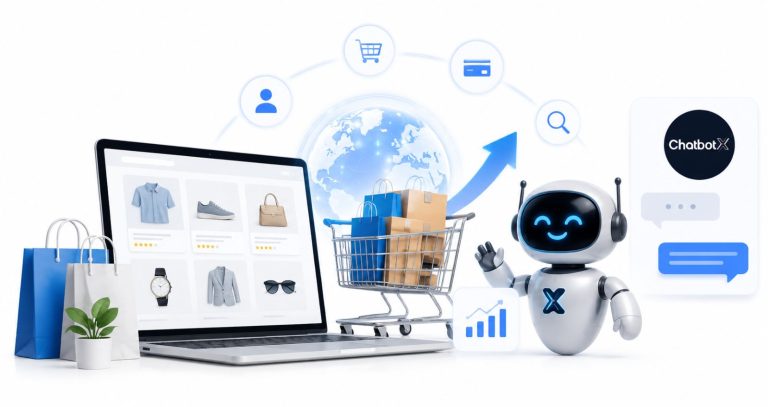

The way people discover and buy products has shifted more dramatically in the past two years than in the previous decade. Not long ago, a typical purchase journey started with a Google search, a scroll through results, and maybe a visit to two or three product pages. Today, a growing share of consumers simply ask an AI – ChatGPT, Gemini, Perplexity, or a voice-enabled assistant – to handle the entire discovery process for them.
This is the defining reality of agentic commerce: a model in which AI agents actively search, evaluate, and recommend products on behalf of human buyers. For brands, it raises a critical question – when an AI agent goes looking for the best option in your category, will it find yours?
This guide breaks down what agentic commerce actually means for your business in 2026, why it matters more than most brands realize, and exactly what you can do to position your products where AI agents are most likely to surface them.
Launch agentic chat marketing in minutes with ChatbotX














What Is Agentic Commerce — and Why Should You Care?
Agentic commerce refers to the use of autonomous AI agents and large language models (LLMs) to perform shopping tasks on behalf of consumers. Instead of passively responding to a typed query, these agents proactively gather product information, compare options, evaluate reviews, and sometimes complete transactions – all without the buyer needing to visit a single website.
According to McKinsey’s 2025 analysis of the agentic commerce opportunity, this shift is comparable to the original rise of e-commerce, but compressed into a much shorter timeline. The consulting firm described it as a seismic reconfiguration of the marketplace.
The numbers support that assessment. Research from Salesforce shows that approximately 39% of consumers have already used AI tools to help them find products. During the 2025 holiday season, AI- and agent-referred traffic was estimated to account for more than one-fifth of all global holiday orders, representing hundreds of billions of dollars in sales.
What makes this especially compelling for brands is conversion quality. Shoppers who arrive at a retail site directly from a generative AI platform convert at roughly twice the rate of visitors from conventional search or social channels. These are buyers who have already been pre-qualified by an AI that matched your product to their specific needs – they arrive with high intent.
The challenge, of course, is getting your products into that recommendation pipeline in the first place.
Strategy 1: Structure Your Product Data for Machine Readability

The foundational requirement for agentic commerce visibility is having product data that AI agents can parse, understand, and trust. This goes well beyond filling in standard e-commerce fields. LLMs process product information differently from search engine crawlers, and brands that fail to account for this will be systematically excluded from AI-driven discovery.
Start with the basics, but go deeper than usual. Your product catalog should include every structured attribute that an AI agent might use to evaluate fit: brand name, model identifier, SKU, exact dimensions, weight, materials, color variants, compatibility notes, price, and availability. These are not optional metadata – they are the primary signals an agent uses to determine whether a product matches a buyer’s stated requirements.
Beyond structured fields, invest in descriptive language that mirrors how real shoppers phrase their needs. A product that is listed only as “insulated jacket – navy blue, size M” will be far less visible to agentic search than one described as “mid-layer insulated jacket suitable for temperatures between 25–45°F, packable, machine washable, fits true to size, pairs well with base layers for skiing or urban commuting.” The richer the semantic context, the more scenarios in which an agent will surface your product as a relevant match.
Your website’s non-product pages matter too. Shipping timelines, return conditions, sustainability certifications, and brand background information are all signals that AI agents use to assess whether a retailer is trustworthy. Keep them current, accurate, and easy to locate.
According to Adobe’s research on AI-powered shopping behavior, around half of business owners and marketers are already concerned that their products are invisible in AI search results due to inadequate data structure. Getting ahead of this issue now is a meaningful competitive advantage.
Strategy 2: Integrate Directly with AI Commerce Protocols

Cleaning up your data is necessary but not sufficient. The next layer of agentic commerce readiness involves actively feeding your catalog into the platforms where AI agents operate.
Two significant open standards are shaping how brands connect to AI shopping ecosystems in 2026:
- Agentic Commerce Protocol (ACP) – developed by OpenAI, this standard enables direct product catalog feeds into ChatGPT’s shopping layer. Brands with structured catalog integrations are significantly more likely to appear in ChatGPT product recommendations than those relying on web scraping alone.
- Universal Commerce Protocol (UCP) – Google’s parallel initiative, designed to allow product data to flow directly into Gemini and related AI surfaces. Both protocols are structured around the same principle: machine-readable product feeds that give AI agents reliable, verified data to work with rather than imprecise scraped approximations.
The underlying logic is straightforward. LLMs have been shown to prioritize structured, directly-fed product data over results assembled from general web crawls. A brand that maintains an accurate, real-time catalog integration with these platforms will consistently outrank competitors whose products exist only in unstructured web content.
For businesses operating across multiple messaging channels, this kind of integration becomes even more powerful when combined with an omnichannel engagement layer. ChatbotX’s AI Agents feature allows brands to deploy intelligent agentic flows across WhatsApp, Messenger, Instagram, Telegram, and other channels simultaneously – ensuring that when a customer reaches out on any platform, they receive consistent, AI-powered product guidance that reflects your full catalog in real time.
Strategy 3: Build Credibility Through Third-Party Signals
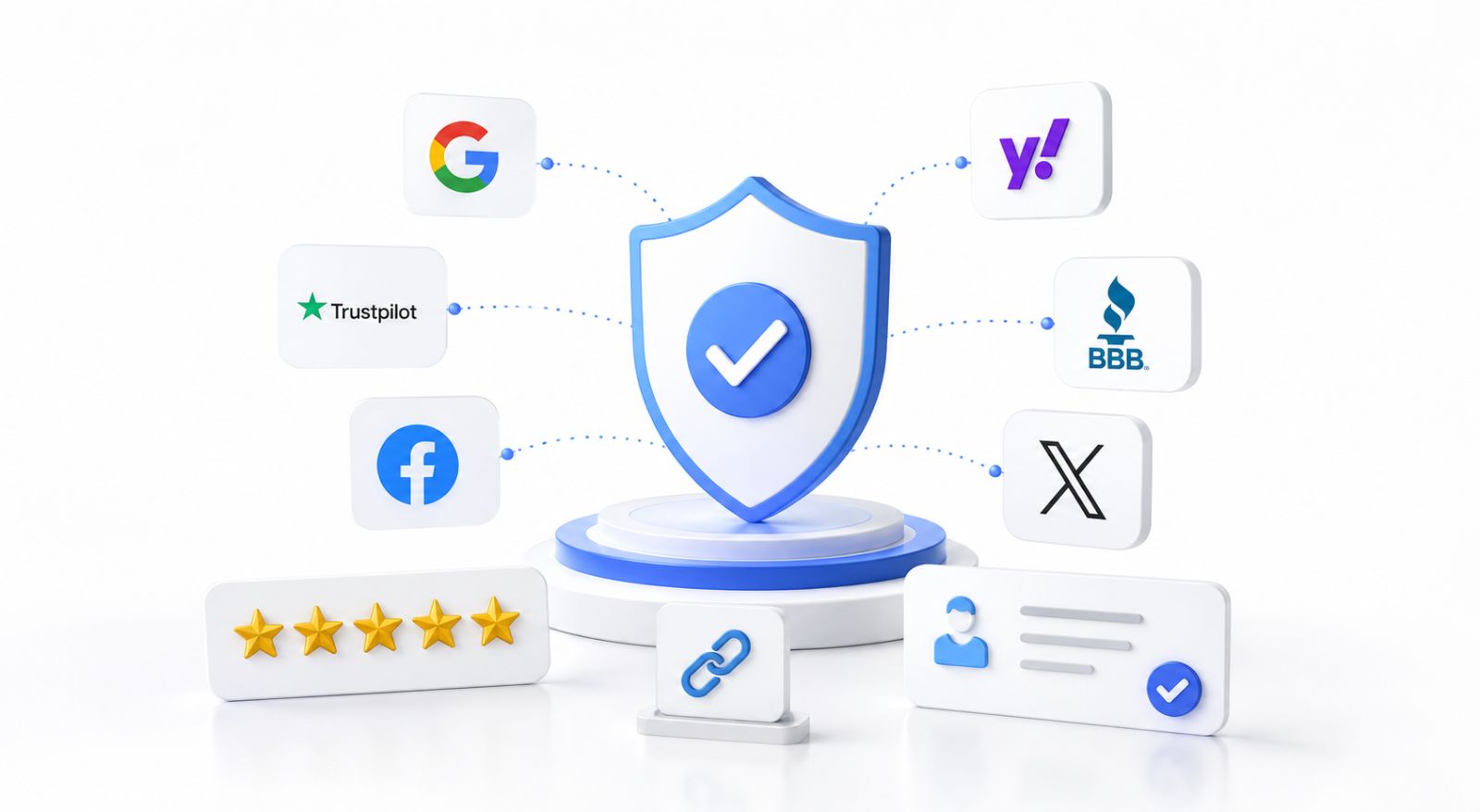
AI agents do not rely exclusively on what brands say about themselves. A significant portion of the trust signals that LLMs use to evaluate and recommend products comes from third-party sources: user reviews, editorial coverage, community discussions, and influencer content.
This changes the calculus for marketing departments in a meaningful way. Traditional brand communications – press releases, product descriptions, owned social content – contribute to visibility, but they carry less weight with AI systems than authentic, third-party validation. If 150 people on Reddit are actively recommending your outdoor gear for long-distance hiking, that community signal has direct influence on whether an LLM surfaces your brand when a shopper asks for hiking equipment recommendations.
The practical implication: actively cultivating user-generated content, product reviews, and community engagement is no longer just a customer satisfaction strategy – it is an AI discoverability strategy.
Encourage verified buyers to leave reviews on multiple platforms. Create mechanisms for customers to share their experiences in forums and social communities where AI models are likely to index content. Develop relationships with micro-influencers whose audiences are highly engaged and niche-specific; authenticity and audience fit matter more than follower volume.
Public relations functions that may have seemed secondary in recent years are regaining strategic importance in this context. Earned media mentions in credible publications contribute to the body of third-party evidence that LLMs use to gauge brand authority.
PwC’s research on Gen Z consumer trends reveals that 61% of Gen Z shoppers still prefer discovering new products in physical stores – but that 64% use social media for product research before purchasing. This reinforces why brand presence must be genuine, multi-platform, and community-rooted, not simply optimized for a single channel.
Strategy 4: Deploy an Omnichannel Engagement Layer

The modern buyer journey rarely follows a straight line. Salesforce data suggests the average shopper has approximately nine distinct interactions with a brand before completing a purchase – spread across search, social, messaging apps, physical stores, and direct website visits.
Agentic commerce does not eliminate this complexity. It adds another layer to it. A shopper might ask an AI agent for a product recommendation, receive a suggestion that links to your brand, then follow up with a question on WhatsApp, browse your Instagram profile, and complete the purchase through your website. Every one of those touchpoints needs to deliver a coherent, helpful experience.
This is precisely where an omnichannel chatbot platform becomes a competitive asset rather than a convenience. ChatbotX’s Flow Builder enables brands to design intelligent conversation flows that guide buyers through discovery, comparison, and purchase across every major messaging channel – without requiring a separate implementation for each platform.
The ChatbotX Remarketing feature takes this further by allowing brands to re-engage shoppers who showed interest but did not convert – automatically sending relevant follow-ups through the channels where those customers are most active. In an agentic commerce environment, where initial discovery may happen through an LLM but final conversion requires building trust across multiple touchpoints, this kind of orchestrated engagement is essential.
ChatbotX is fully open source, which means brands can audit, customize, and extend the platform to match their specific commerce workflows. You can explore the codebase and contribute on GitHub – ChatbotX Releases and review the full ChatbotX source repository to understand exactly how the platform handles omnichannel message routing, AI agent integration, and automation logic.
The Omnichannel Imperative for Agentic Commerce
One consistent thread running through every dimension of agentic commerce readiness is the need for genuine omnichannel presence. AI agents do not evaluate brands in isolation – they assess the entire ecosystem of information available about your products, from structured catalog data to social reviews to the responsiveness of your customer engagement.
Brands that perform well in agentic commerce share a common profile: their data is clean and machine-readable, their catalog is integrated with AI discovery platforms, their community generates authentic third-party signals, and their customer experience is consistent across every channel a buyer might use.
This is not a new set of marketing priorities – it is the logical extension of good omnichannel strategy into the age of autonomous AI buyers.
For practical guidance on building the engagement layer that supports this approach, see our related posts:
- WhatsApp AI in 2026: How Agentic Chatbots Transform Sales, Support, and Marketing
- Chatbot Workflow Engine: The Complete Guide to Automating Conversations at Scale (2026)
Start Winning Agentic Commerce — Before Your Competitors Do

The brands that will capture the most value from agentic commerce are not necessarily the largest or the best-funded. They are the ones that move earliest to make their products machine-readable, integrate with AI discovery protocols, build genuine community trust, and deliver consistent omnichannel experiences.
Most companies are still treating agentic commerce as a future concern. That window of early-mover advantage is narrowing fast.
ChatbotX is built exactly for this moment. As an open-source agentic omnichannel chatbot platform, it gives brands the infrastructure to deploy AI agents across every major messaging channel, automate buyer engagement at scale, and ensure that every customer interaction – whether it originates from an LLM recommendation or a direct WhatsApp message – is handled intelligently and consistently.
Ready to position your brand for the agentic commerce era?
→ Explore ChatbotX features and get started free
→ Star ChatbotX on GitHub and join the open-source community
The AI agents are already shopping. Make sure they find you.
Frequently Asked Questions
What is agentic commerce?
Agentic commerce is the practice of using autonomous AI agents or large language models to perform product discovery, comparison, and recommendation tasks on behalf of consumers – often without the buyer visiting any website directly.
How do AI agents decide which products to recommend?
LLMs prioritize brands with clean, structured product data, direct catalog integrations with AI platforms, strong third-party review signals, and consistent omnichannel presence. Brands that invest in all four areas significantly increase their likelihood of appearing in AI-generated recommendations.
Why do shoppers from AI platforms convert at higher rates?
Because AI agents pre-qualify buyers by matching product attributes to the buyer’s specific stated needs. When a recommendation lands, the buyer already has a high degree of confidence that the product fits – reducing friction at every subsequent stage of the purchase journey.
What is the difference between ACP and UCP?
The Agentic Commerce Protocol (ACP) is OpenAI’s standard for feeding product catalogs directly into ChatGPT. The Universal Commerce Protocol (UCP) is Google’s equivalent, designed for Gemini and Google’s AI-powered shopping surfaces. Both allow brands to supply machine-readable catalog data that AI agents can trust and prioritize over scraped web content.
How does ChatbotX support agentic commerce strategies?
ChatbotX provides the omnichannel engagement layer that connects AI-driven discovery to real customer conversations. Its AI Agents, Flow Builder, and Remarketing features enable brands to automate buyer journeys across WhatsApp, Instagram, Messenger, Telegram, and more – ensuring consistent, intelligent experiences at every touchpoint in the agentic commerce funnel.
Does having more social reviews really affect AI recommendations?
Yes. LLMs actively scan community platforms, review sites, and social media to evaluate brand credibility. A high volume of positive, authentic reviews on third-party platforms is one of the strongest signals an AI agent can use to determine whether your brand is trustworthy enough to recommend.