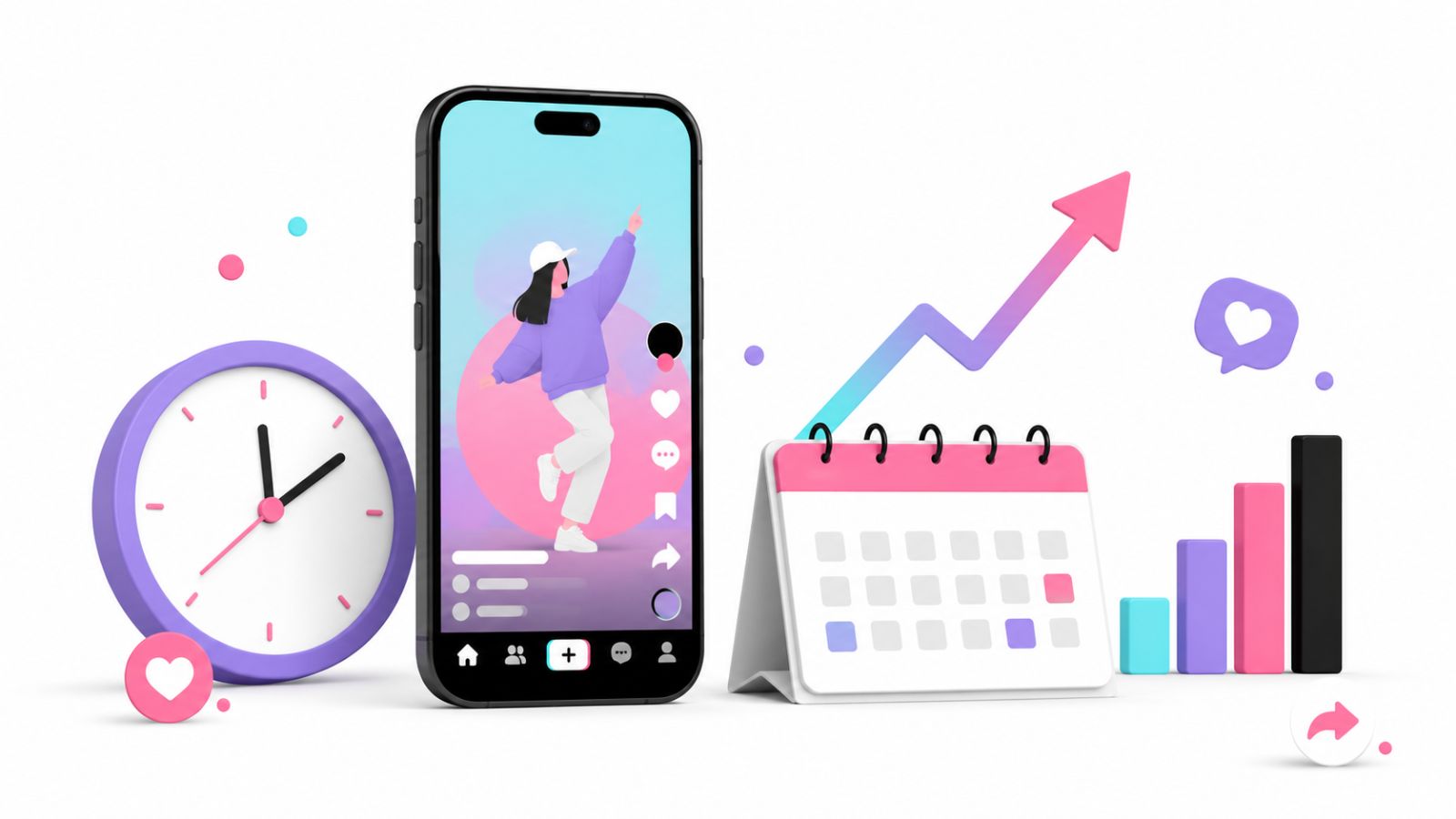
Quick Summary: Posting at the right time on TikTok can significantly increase your early engagement signals and that directly affects whether the algorithm amplifies your content. This guide breaks down the optimal windows for every day of the week, explains why timing matters on TikTok’s unique distribution model, and shows you how to find your own personalized best times.
Launch agentic chat marketing in minutes with ChatbotX














Does Posting Time Actually Matter on TikTok?
Short answer: yes but not in the way most creators think.
Unlike a traditional social feed where older posts sink and newer posts surface automatically, TikTok’s For You Page (FYP) uses a sophisticated content distribution system. Your video isn’t shown to all your followers at once. Instead, TikTok tests it on a small sample audience and measures how they react in the first 30–60 minutes.
If that initial response is strong high watch time, shares, saves, and comments the algorithm pushes the video to a progressively wider audience. If it’s weak, the video rarely recovers, regardless of how good it is.
This is why timing matters. Posting when your target audience is already scrolling increases the chances that your first-hour signals are powerful enough to trigger wider distribution.
According to TikTok’s own creator resources, video completion rate and engagement speed are among the strongest FYP ranking signals both of which are directly influenced by audience availability at the moment of posting.
How the TikTok Algorithm Uses Timing Signals
Before diving into the data, it helps to understand the distribution mechanics at play.
The Warm-Up Window
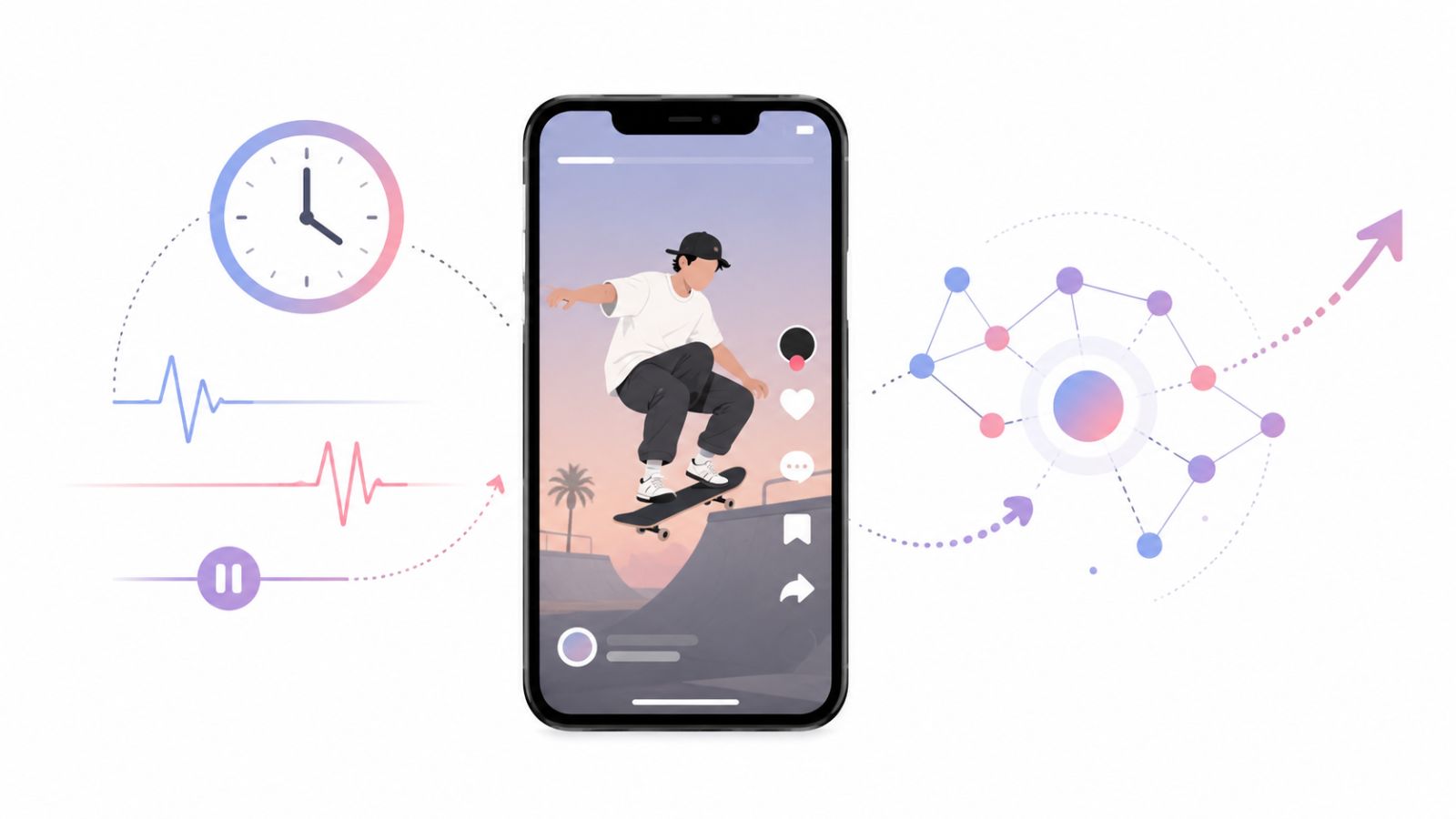
When you publish a TikTok, the platform enters what creators often call a “warm-up window” – roughly the first hour after posting. During this phase, the algorithm distributes your content to a narrow test group (often just a few hundred accounts with interests similar to your niche).
Key signals TikTok tracks during this window:
- Completion rate – Did viewers watch all the way through?
- Re-watches – Did anyone replay the video?
- Shares and saves – Was the content worth bookmarking or forwarding?
- Comments – Did the video spark conversation?
- Profile visits – Did the viewer want to see more from you?
The stronger these signals within the first hour, the more aggressively TikTok distributes the video to the next tier of users.
Why Evening Hours Often Win
Unlike text-based platforms that users can scan passively during work breaks, TikTok demands active, sound-on attention. That kind of engagement is far more common during leisure time – commutes home, evenings on the couch, or weekend downtime – rather than during the 9-to-5 workday. This behavioral reality shows up clearly in engagement data.
You can read a deeper breakdown of how TikTok’s ranking philosophy differs from other platforms in the ChatbotX blog post: How Social Media Algorithms Really Work in 2026 (And How to Beat Them).
Best Times to Post on TikTok Day by Day Breakdown
The following breakdown is built on patterns observed across millions of TikTok posts, reflecting median engagement rates by hour and day. All times below are expressed in a timezone-normalized format – you do not need to convert them to your local timezone, as they represent relative peak activity windows that apply universally across major English-speaking markets.
Monday: Best Time is 1:00 PM
Monday’s strongest posting window is 1:00 PM, with solid secondary performance at 11:00 AM and 8:00 AM. Monday morning tends to see an early-week energy boost as people return to their routines and check their phones between tasks. Lunchtime catches the mid-day scroll, while the early morning slot captures early risers before their workday begins.
What to post on Monday: Educational content, motivational formats, or “week-ahead” themed videos tend to resonate well with Monday audiences who are in a goal-oriented headspace.
Tuesday: Best Time is 6:00 AM
Surprisingly, Tuesday morning at 6:00 AM emerges as the strongest slot, followed by 10:00 PM and 7:00 AM. Tuesday has one of the more unusual engagement profiles of the week – early mornings and late evenings dominate while mid-afternoon lulls significantly.
What to post on Tuesday: Tutorial-style or quick-tip content that users can absorb during their morning routine works well. Late-night posts on Tuesday should lean into entertainment or trending sounds.
Wednesday: Best Time is 10:00 PM
Wednesday’s engagement peaks dramatically at 10:00 PM, with 6:00 AM and 9:00 PM as strong alternatives. Mid-week evenings show a consistent pattern of higher engagement, likely because users are halfway through the week and more inclined to unwind with video content.
What to post on Wednesday: Entertainment-forward content, storytelling formats, and “mid-week check-in” videos tend to generate strong mid-week comments and shares.
Thursday: Best Time is 1:00 PM
Thursday mirrors Monday’s strongest slot at 1:00 PM, with 10:00 PM and 6:00 AM as secondary peaks. Thursday is often a high-volume posting day for brands, which means competition is higher – but audience activity rises proportionally as the weekend approaches.
What to post on Thursday: Product showcases, behind-the-scenes content, or “weekend preview” posts that tease what’s coming perform particularly well on Thursdays.
Friday: Best Time is 6:00 PM
6:00 PM on Friday is the strongest slot, followed by 10:00 PM and 8:00 PM. Friday evenings represent peak leisure time as users shift into weekend mode. This is one of the highest-potential posting windows of the entire week, especially for entertainment, lifestyle, and consumer-facing content.
What to post on Friday: High-energy, entertaining content – trends, challenges, humor, or weekend activity ideas – aligns perfectly with Friday’s audience mindset.
Saturday: Best Time is 5:00 PM
Saturday afternoons dominate engagement, with 5:00 PM as the top slot and 4:00 PM and 3:00 PM as strong alternatives. Unlike weekdays, Saturday sees broad afternoon engagement as users browse casually throughout the day. The late afternoon window in particular catches people returning home from daytime activities.
What to post on Saturday: Lifestyle, food, travel, fashion, and entertainment content perform strongly. Saturday audiences tend to be receptive to discovery and inspiration.
Sunday: Best Time is 9:00 AM Overall Best Slot of the Week
Sunday at 9:00 AM is the single strongest posting window across the entire week, with 1:00 PM and 12:00 PM as excellent alternatives. Sunday mornings see unusually high engagement because audiences are relaxed, scrolling without time pressure, and actively open to longer or deeper content.
This makes Sunday morning the ideal time for your best-quality content – the videos you’ve worked hardest on and want the widest audience to see.
What to post on Sunday: Deep-dive explainers, emotional storytelling, niche-interest content, and longer videos benefit most from Sunday morning’s attentive, unhurried audience.
Quick Reference Table: Best Posting Times for Each Day
| Day of the Week | Primary Best Time | Strong Alternatives |
|---|---|---|
| Monday | 1:00 PM | 11:00 AM, 8:00 AM |
| Tuesday | 6:00 AM | 10:00 PM, 7:00 AM |
| Wednesday | 10:00 PM | 6:00 AM, 9:00 PM |
| Thursday | 1:00 PM | 10:00 PM, 6:00 AM |
| Friday | 6:00 PM | 10:00 PM, 8:00 PM |
| Saturday | 5:00 PM | 4:00 PM, 3:00 PM |
| Sunday ⭐ | 9:00 AM | 1:00 PM, 12:00 PM |
Note: These windows represent statistically elevated engagement patterns across large post populations. Individual results vary based on niche, audience location, content quality, and account history. Use this table as a starting framework, then refine based on your own TikTok Studio analytics.
The Best Day of the Week to Post on TikTok
If you had to choose a single day to prioritize, Sunday is the overall top performer for engagement, closely followed by Saturday and Monday.
Here’s a ranked overview by engagement potential:
- Sunday – Highest median engagement; relaxed audience, prime morning availability
- Saturday – Consistently strong throughout the afternoon and evening
- Monday – Strong start-of-week engagement, particularly midday
- Friday – High evening/nighttime activity as the weekend begins
- Wednesday – Solid mid-week, especially late evening
- Thursday – Moderate, slightly competitive as brand post volume rises
- Tuesday – Lowest overall, but early mornings and late nights still deliver
Time Zones and Global TikTok Audiences
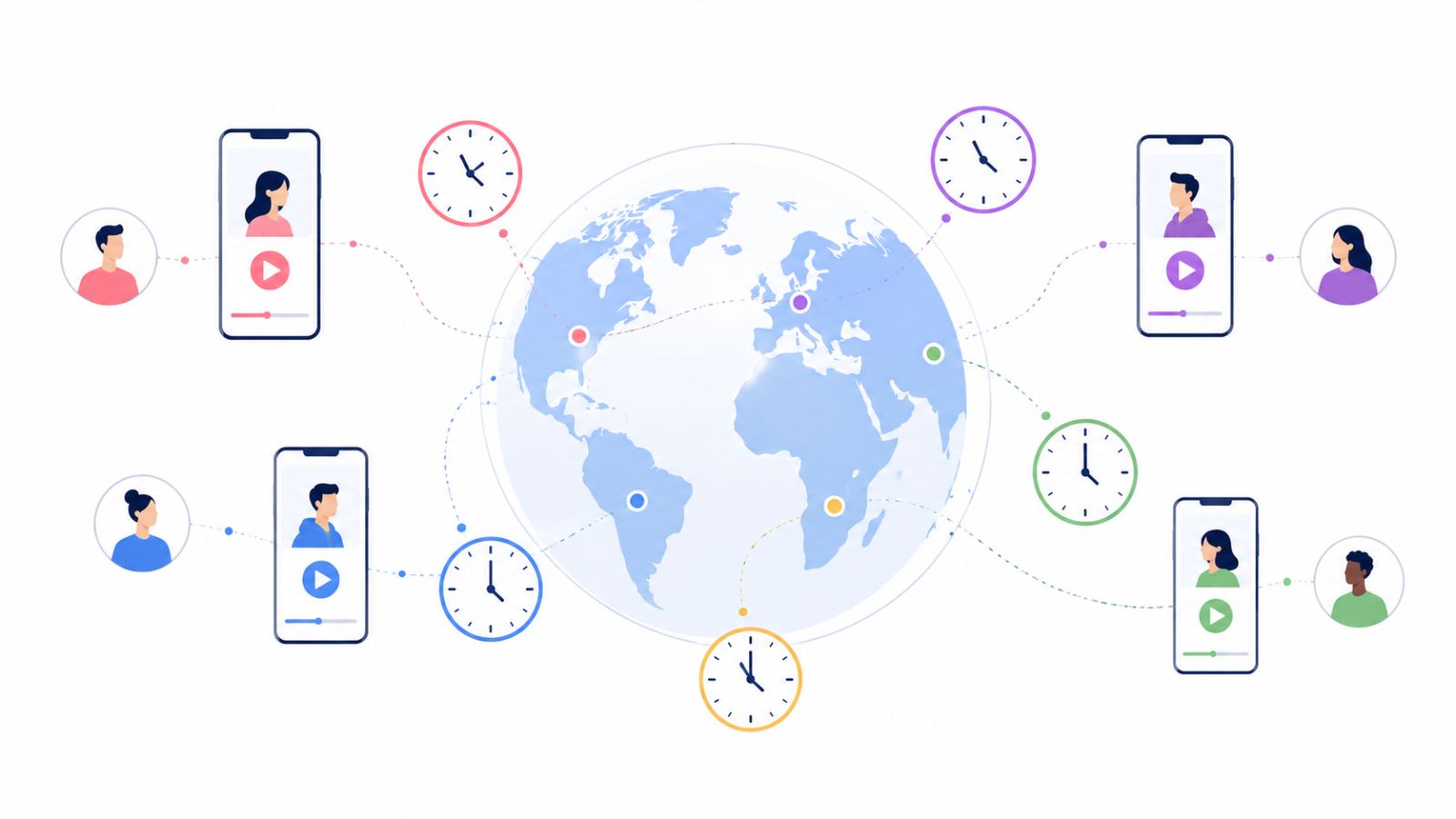
One of the most common questions creators ask about posting time is: which timezone should I use?
The answer depends entirely on where the majority of your audience lives.
If Your Audience Is Concentrated in One Region
Use the local time of your primary audience. If 80% of your followers are in the US Eastern time zone, schedule posts according to EST. TikTok Studio’s Followers tab shows you audience activity by hour – use that data rather than guessing.
If Your Audience Is Globally Distributed
This is where posting strategy gets more nuanced. A few approaches:
- Post twice on peak days: Publish once for your Asian/Pacific audience in the morning UTC, and again in the evening UTC to catch North American and European viewers.
- Use analytics to identify your top 2–3 markets and find a time slot that overlaps reasonably well across them.
- Stagger content: Don’t post identical videos twice, but use remixed or reframed versions of the same core idea across time-staggered slots.
According to Sprout Social’s 2026 Social Media Benchmarks report, global TikTok engagement follows a “two-peak” pattern daily – one in the morning (6–8 AM local time per region) and one in the evening (7–10 PM local time per region). Planning content around these universal windows gives you the best cross-timezone reach.
Hours You Should Avoid Posting on TikTok
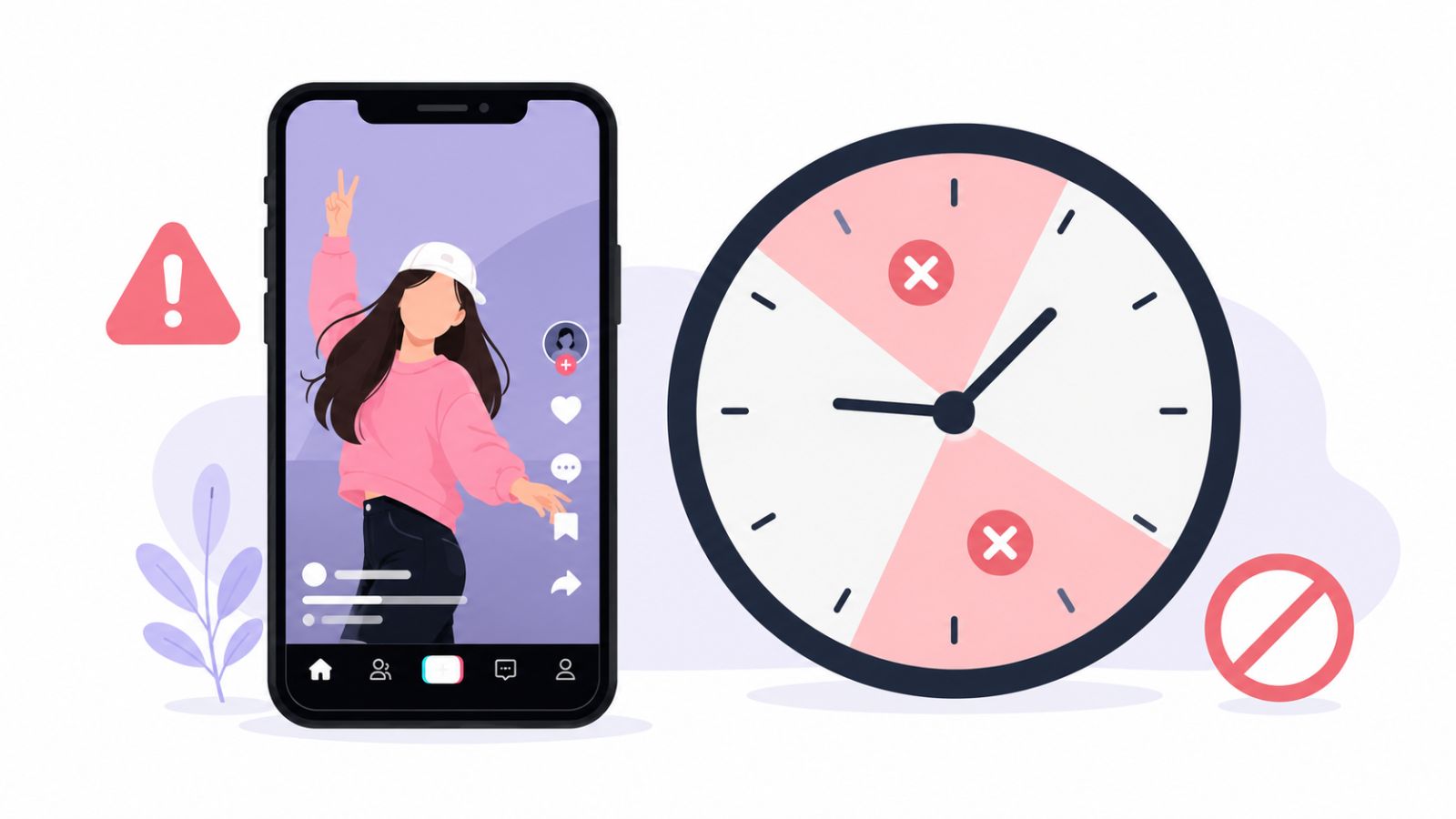
Just as peak times can boost your content’s momentum, off-peak hours actively work against it.
The Afternoon Dead Zone: 12:00 PM – 5:00 PM (Weekdays)
Mid-afternoon on weekdays consistently shows the lowest engagement rates across most days of the week. People are typically at work, in school, or occupied with daytime responsibilities. Even if they see your notification, the depth of engagement (watch time, comments, saves) drops significantly during these hours.
The risk isn’t just fewer views – it’s weaker quality signals. A video that launches at 2:00 PM Tuesday may get fewer total engaged viewers in its warm-up window, causing the algorithm to classify it as low-interest and limit its distribution permanently.
Late Night After Midnight
While some niches (gaming, entertainment, night-shift workers) see modest late-night activity, posting after 1:00 AM typically catches audiences who are passive scrollers with low conversion intent. Engagement rates for saves and shares drop considerably.
High-Competition Moments
During major live events (Super Bowl, World Cup matches, award shows), TikTok’s FYP is flooded with live-reaction content. Unless your content is directly related to the event, posting during these moments means competing for attention at an extremely disadvantageous time.
How to Discover Your Own Best Posting Time
The data above gives you an excellent starting framework, but the most powerful insights come from your own account analytics. Here’s how to extract them:
Step 1: Access TikTok Studio Analytics
Open TikTok → tap your profile → tap the analytics icon (or go to TikTok Studio in a browser). Navigate to the Followers tab.
Step 2: Analyze Your Audience Activity Graph
The Followers section displays an hourly chart showing when your specific followers are most active during the day. This graph reflects your actual audience not a generalized average making it the most accurate guide for your unique situation.
Step 3: Cross-Reference With Your Top Posts
Go to the Content tab and filter your top 10 posts by engagement rate. Note what time each of those posts was published. Look for patterns did your strongest videos consistently post during certain hours or days?
Step 4: Run Posting Experiments
Pick two time slots from the data table above and test them against each other over 4–6 weeks. Post similar content types at alternating times and track which performs better. Keep a simple log and update your strategy monthly based on results.
Step 5: Repeat Quarterly
TikTok’s user base evolves. Audience demographics shift, platform features change, and seasonal behavior patterns emerge. Revisit your analytics at least once per quarter and adjust your posting schedule accordingly. A schedule that worked in Q1 may underperform in Q3.
According to research from HubSpot’s 2026 Social Media Trends Report, creators who actively use platform analytics to guide their posting schedule see up to 43% higher engagement rates compared to those who post without a data-informed strategy.
How to Capture Engagement After Posting at Peak Times
Knowing when to post is only half the equation. What happens in the minutes and hours after you post is equally critical to TikTok growth.
When a video starts gaining traction, comment activity accelerates rapidly. Viewers ask questions, tag friends, and slide into DMs. The speed and quality of your responses in this window send powerful relationship signals to TikTok’s algorithm – signals that extend the video’s distribution lifecycle.
This is where ChatbotX becomes a meaningful force multiplier.
ChatbotX is an open-source, agentic omnichannel chat marketing platform built for creators and brands who need to manage audience conversations at scale without sacrificing personalization. While TikTok DM integration is coming soon, ChatbotX already connects your audience engagement workflow across Instagram, WhatsApp, Messenger, Telegram, Webchat, and more – the same audience that often finds you via TikTok.
Key Features Relevant to TikTok Growth Strategies
AI Agents: Intelligent, always-on agents that handle incoming DMs across connected channels with context-aware replies. When your TikTok video drives a surge of new followers who then reach you via Instagram DMs or your website chat, AI Agents ensure every response is immediate and relevant – regardless of the hour.
Flow Builder: Design automated conversation sequences triggered by specific keywords, actions, or time windows. When you publish at peak time and followers begin interacting, your Flow Builder sequences can automatically nurture that initial engagement into leads, subscribers, or sales.
Growth Tools: ChatbotX’s Growth Tools let you build audience capture mechanisms – opt-ins, lead magnets, and follow-up sequences – that turn your TikTok-driven traffic spikes into lasting first-party audience ownership.
Beyond features, ChatbotX is fully open source. If you’re a developer or technical marketer who wants to understand what you’re deploying, you can inspect the full codebase on GitHub:
This transparency is rare in the chatbot marketing category and makes ChatbotX a trustworthy foundation for teams who take data privacy and customization seriously.
Frequently Asked Questions
Is there a single universal best time to post on TikTok?
No. While aggregated data shows Sunday at 9:00 AM as the top-performing slot overall, the best posting time for your account depends on your specific audience’s geography, behavior, and content preferences. Use the data above as a starting point, then refine using your own TikTok Studio analytics.
Does posting frequency matter as much as posting time?
Both matter, but for different reasons. Posting time affects the quality of your initial distribution burst. Posting frequency affects your overall account authority, audience habituation, and the algorithm’s confidence in your account as a reliable content source. Most growth-focused creators aim for 3–5 posts per week.
Should I post at the same time every day?
Not necessarily. The optimal time varies by day, as shown in the table above. Consistency in days of the week matters more than consistency in exact time – your audience will learn your posting pattern over time and seek you out, which itself is a ranking signal.
Does a TikTok Business account affect engagement differently?
Yes, in some ways. Business accounts have access to more robust analytics and promotion tools, but some creators report that the switch from personal to business accounts slightly reduces organic reach on certain content types (particularly music-driven entertainment). Test carefully if you’re considering switching, and read TikTok’s official guidance before making the change.
Can I schedule TikTok posts in advance?
Yes. TikTok’s native scheduler allows you to schedule posts up to 10 days in advance via the desktop creator dashboard. Third-party tools also offer scheduling capabilities. Scheduling to hit your optimal posting windows – even when you’re asleep or in meetings – is one of the easiest ways to implement data-driven timing without lifestyle disruption.
How do holidays affect the best posting times?
Major holidays shift user behavior significantly. During public holidays, people typically have more leisure time, which moves the “dead zone” afternoon period and makes midday posting more viable. However, holiday posting also means heightened competition from brands running seasonal campaigns. Monitor your analytics closely around holiday periods rather than relying on standard timing guides.
Conclusion & Call to Action
Timing your TikTok posts strategically is one of the lowest-effort, highest-impact improvements you can make to your content marketing workflow right now.
Here’s what the data tells us for 2026:
- Sunday at 9:00 AM is the single strongest posting window of the week
- Saturday afternoons and Friday evenings are close runners-up
- Evening hours (6:00 PM – 11:00 PM) consistently outperform mid-afternoon slots across all days
- Your own TikTok Studio analytics will always be the most reliable guide for your specific audience
But getting your timing right is just the beginning. The real competitive edge comes from what you do in the minutes and hours after your content goes live – capturing the DM surge, nurturing new followers, and converting engagement spikes into lasting audience relationships.
Creators and brands who pair smart posting timing with automated engagement workflows are building audiences that compound over time – not just chasing individual viral moments.
🚀 Ready to Take Your TikTok Growth to the Next Level?
ChatbotX is the open-source, AI-powered marketing platform built for creators who are serious about turning reach into relationships.
Whether you’re managing 500 DMs a week or 50,000, ChatbotX’s AI Agents, Flow Builder, and Growth Tools help you respond faster, nurture smarter, and grow your audience across every channel your TikTok viewers care about.