The way brands communicate with customers has undergone a fundamental shift. In 2026, digital touchpoints are no longer isolated checkpoints on a customer’s journey – they are nodes in a living, intelligent network that learns, adapts, and responds in real time.
Traditional chatbots were the first wave of automation: fast but shallow, rule-bound and impersonal. Today, AI has moved well beyond that initial promise. Modern omnichannel marketing is now powered by systems that don’t just respond – they understand, anticipate, and act.
This article unpacks how AI is transforming omnichannel marketing from the ground up, what that means for customer expectations, and how businesses of every size can capitalize on this shift.
Launch agentic chat marketing in minutes with ChatbotX













The Limitations of Old-School Chatbots — and Why the Gap Matters
Early chatbot implementations were built around decision trees. A customer typed a keyword, the bot matched it to a scripted reply, and the conversation ended there. Simple queries got handled; nuanced ones fell through.
The consequences were real: frustrated users, abandoned conversations, and customer service queues that ballooned unnecessarily. According to Salesforce research, over 66% of customers expect companies to understand their needs and expectations – yet most automated systems at the time delivered the opposite.
The problem was never automation itself. It was the intelligence behind it.
Fast-forward to 2026, and the landscape is unrecognizable. AI agents powered by large language models can carry contextually aware conversations across multiple turns, across multiple channels, without losing the thread. The result is customer engagement that feels – and functions – more like a conversation with a knowledgeable human than an interaction with a menu system.
What Omnichannel AI Actually Does Differently
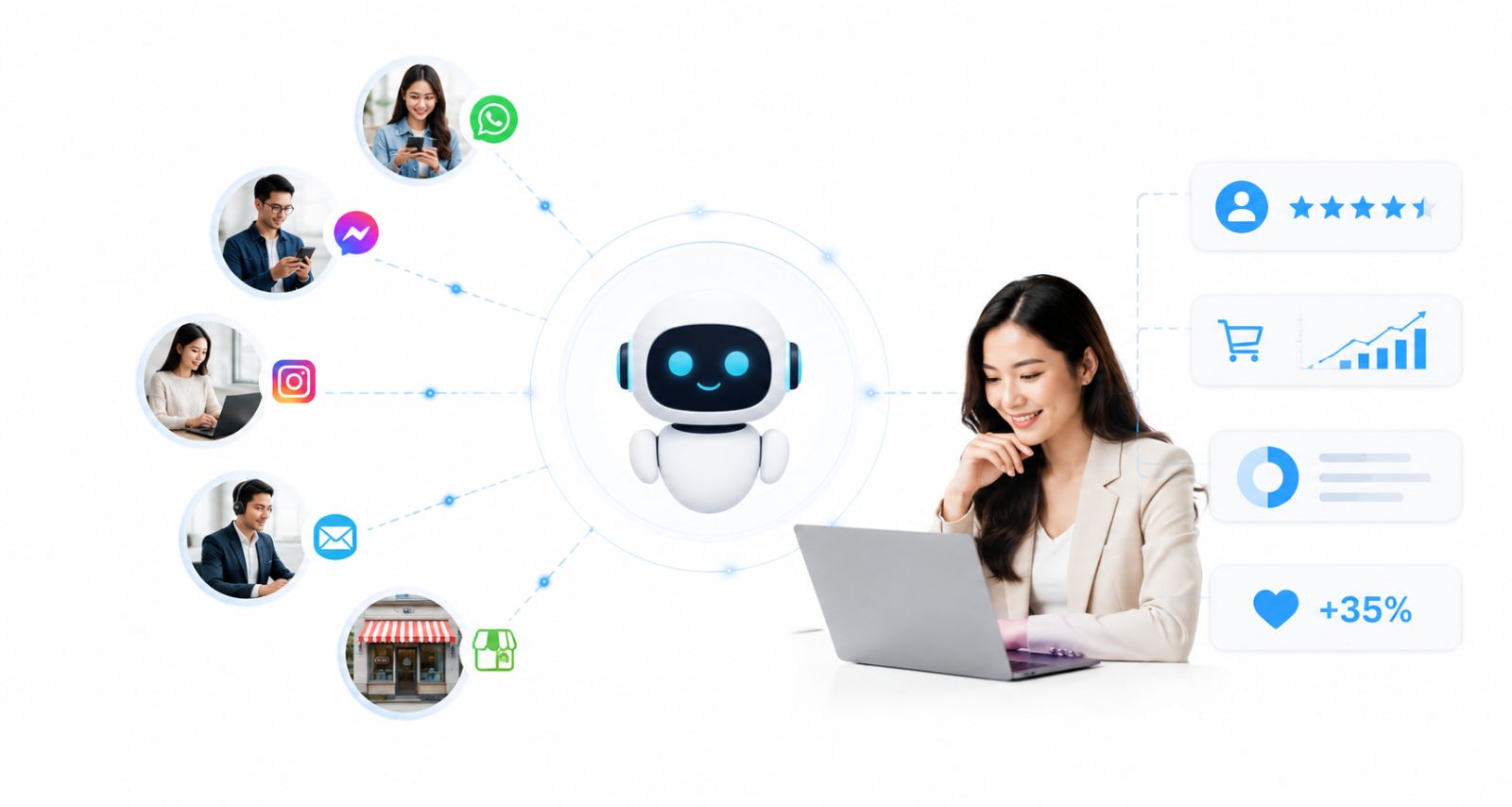
The distinction between basic automation and true AI-powered omnichannel marketing can be broken down into three core capabilities:
1. Intent Recognition Over Keyword Matching
Where legacy chatbots reacted to surface-level triggers, modern AI models understand intent. A customer asking “where’s my stuff?” and another asking “can I get a delivery update?” are expressing the same need – and an AI-powered system recognizes that without needing two separate rules.
This intent-layer intelligence enables brands to route conversations accurately the first time, reducing the friction that erodes customer trust.
2. Cross-Channel Memory and Context Persistence
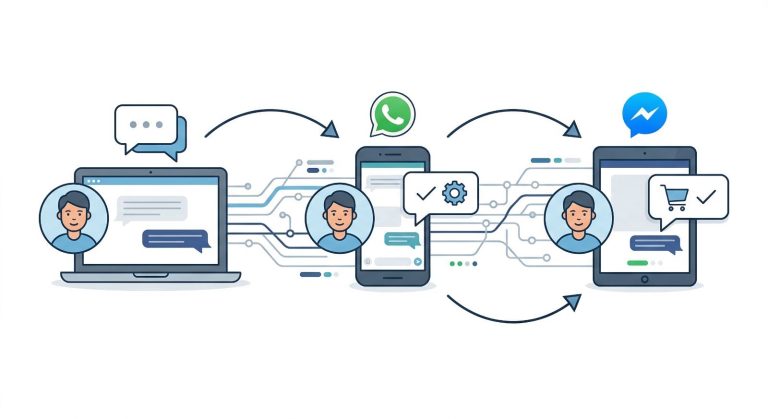
A customer might begin a support inquiry on Instagram DMs, follow up via WhatsApp the next day, and complete a purchase on the brand’s website. Without cross-channel context, each of those interactions starts from zero – forcing customers to repeat themselves.
AI-powered omnichannel platforms unify these interactions into a continuous experience. Every data point – past purchases, previous questions, browsing behavior – informs the next response, regardless of which channel the customer uses.
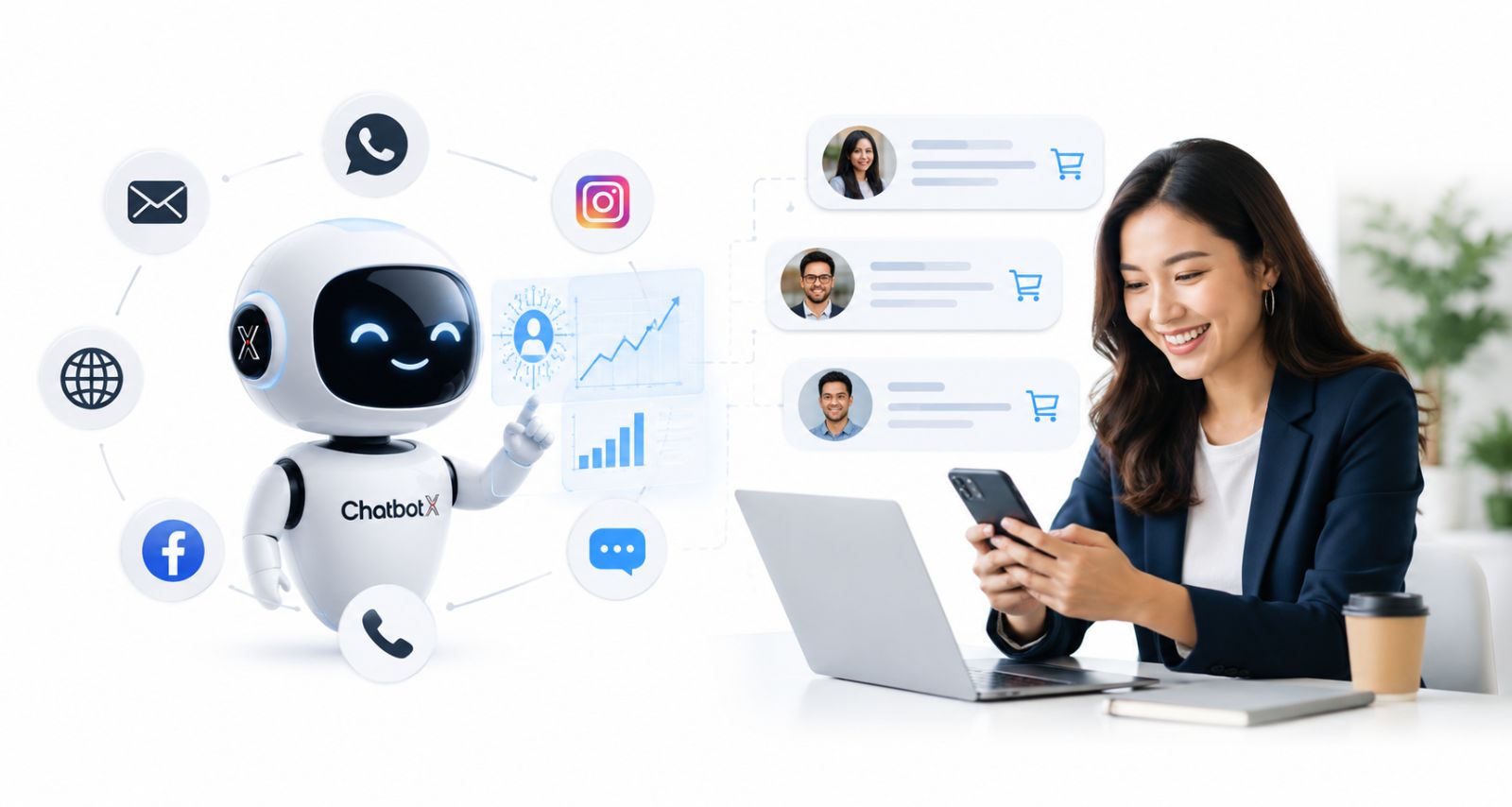
Platforms like ChatbotX are purpose-built for exactly this kind of continuity. ChatbotX’s AI Agents maintain conversation context across WhatsApp, Messenger, Instagram, Telegram, TikTok, and web chat – ensuring that no customer ever has to introduce themselves twice.
3. Proactive Engagement, Not Just Reactive Responses
The most advanced AI systems don’t wait to be asked. They surface offers, reminders, and relevant content at the right moment – based on behavioral signals, not guesswork.
A shopper who abandons a cart after viewing a product three times is showing strong purchase intent. An AI-driven marketing system can recognize that signal and trigger a personalized follow-up message via the customer’s preferred channel – within minutes, not hours.
The Business Case: Speed, Scale, and ROI
The efficiency gains from AI-powered omnichannel marketing are well-documented. Manual handling of repetitive customer inquiries is expensive: when you factor in staffing, training, error rates, and response delays, the cost adds up quickly.
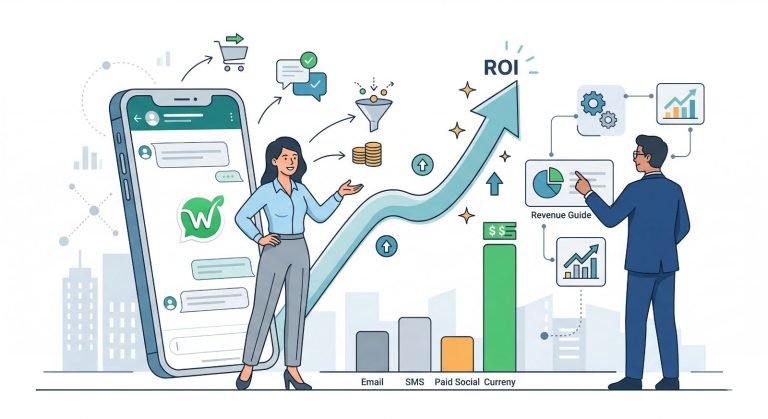
McKinsey research on AI in marketing consistently highlights that AI-enabled personalization can reduce customer acquisition costs by up to 50% and lift marketing ROI by 15–20%. These aren’t theoretical projections – they reflect what businesses deploying AI at scale are already experiencing.
The mechanism is straightforward: AI agents handle high-volume, lower-complexity interactions autonomously, freeing human teams to focus on relationship-building, creative strategy, and complex problem-solving. Rather than replacing people, AI expands what a lean team can realistically accomplish.
For growing businesses that lack enterprise-scale resources, open-source platforms like ChatbotX on GitHub offer an alternative path – deploying production-ready AI agents without prohibitive licensing costs. With ChatbotX, teams can self-host, customize workflows, and maintain full control over their customer data.
Personalization at Scale: The Holy Grail of Modern Marketing
For years, personalization meant segmenting an email list and inserting a first name. That era is over.
True personalization in 2026 means delivering the right message, in the right format, through the right channel, at the right moment – for each individual customer. That level of precision is only achievable with AI.
Here’s what that looks like in practice:
- A returning customer on WhatsApp receives a follow-up based on their last purchase, with recommendations tailored to their browsing history.
- A first-time visitor on web chat is greeted with a welcome flow that adapts based on the landing page they came from.
- A high-intent lead on Instagram gets an automated DM within seconds of commenting on a campaign post – moving them down the funnel before the moment passes.
ChatbotX’s Flow Builder enables marketing teams to construct these personalized journeys visually, without writing code. Triggers, conditions, and channel-specific actions can be configured to respond dynamically to customer behavior – turning a single workflow into a highly adaptive engagement engine.
Human + AI: The Collaboration Model That Actually Works
One of the most persistent myths in the AI conversation is the idea of wholesale replacement – AI taking over jobs that humans currently do. The reality playing out in high-performing marketing teams is far more nuanced.
The most effective omnichannel strategies in 2026 blend automated precision with human judgment. AI handles the volume: answering product questions at 2 a.m., qualifying leads before they reach a sales rep, sending cart recovery messages within seconds of abandonment. Humans handle the complexity: building relationships with high-value accounts, navigating sensitive customer situations, crafting the creative campaigns that differentiate a brand.
This isn’t a compromise – it’s a force multiplier. A customer support team that once managed 200 tickets per day can now manage 2,000, because AI resolves the predictable 90% automatically, surfacing only the cases that genuinely require human attention.
According to IBM’s Institute for Business Value, businesses that deploy AI in a human-augmentation model rather than a replacement model see consistently stronger outcomes – both in operational efficiency and employee satisfaction.
Omnichannel Marketing in Practice: A Channel-by-Channel Breakdown
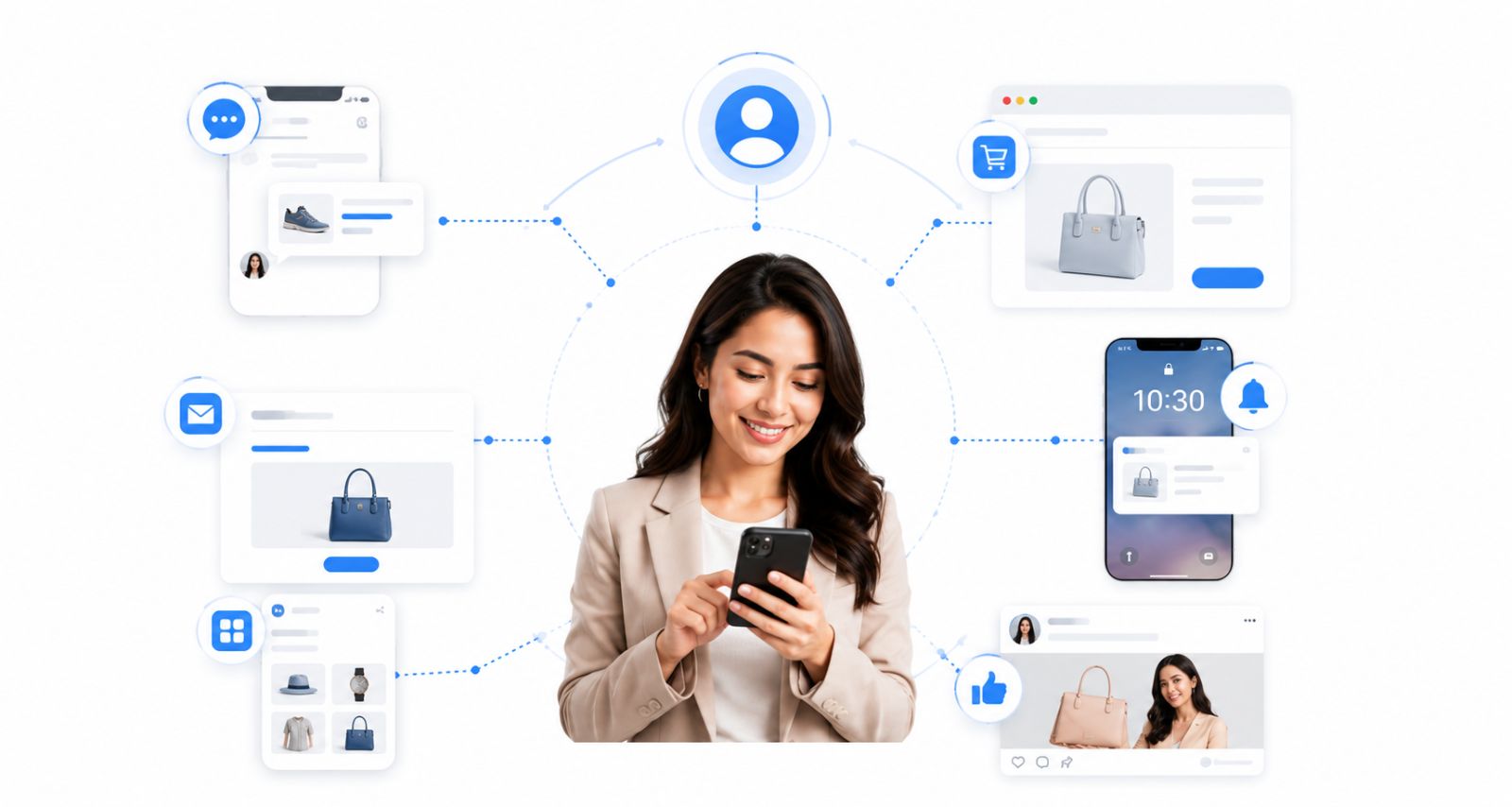
Understanding AI’s role in omnichannel marketing is easier when mapped to specific channels:
WhatsApp: With nearly 3 billion active users, WhatsApp remains the highest-reach direct messaging channel globally. AI agents can manage broadcast campaigns, respond to product inquiries, send shipping updates, and recover abandoned carts – all within a single familiar interface. See how this works in detail in the ChatbotX guide to WhatsApp AI in 2026.
Instagram: Social commerce on Instagram is growing rapidly, with users expecting instant responses to DM inquiries. AI agents integrated with Instagram can qualify leads, answer product questions, and even complete sales – without a human agent involved.
Web Chat: On-site chat remains one of the highest-converting engagement tools available. AI-powered web chat can adapt its messaging based on which page a visitor is on, how long they’ve been browsing, and what they’ve previously purchased.
Telegram and Zalo: Emerging as dominant channels in Southeast Asia and parts of Europe, these platforms benefit significantly from AI automation – particularly for businesses expanding into those markets.
ChatbotX’s Remarketing feature ties these channels together, enabling businesses to re-engage visitors and past customers with timely, relevant messages across every platform they use. For a deeper look at how this works, the Website Remarketing guide covers the strategy in full.
Data, Analytics, and the Intelligence Loop
Every interaction in an AI-powered omnichannel system generates data. That data doesn’t just sit in a database – it feeds back into the system, improving personalization, sharpening targeting, and informing future campaign decisions.
This creates what practitioners call the intelligence loop: engage → collect → analyze → optimize → engage again, with each cycle producing better outcomes than the last.
For marketers, this means moving from gut-feel campaign decisions to evidence-based strategy. Which message variant drives more conversions? Which channel has the lowest cost-per-acquisition? Which segment responds best to proactive outreach? AI analytics surfaces these answers continuously, in real time.
ChatbotX’s built-in Analytics dashboard gives teams a unified view of performance across all channels – conversation volume, response rates, conversion attribution, and customer satisfaction scores – enabling data-driven decisions without the need for a dedicated data team.
Getting Started: What Businesses Need to Deploy AI-Driven Omnichannel Marketing
The barrier to entry for AI-powered omnichannel marketing has dropped significantly. Businesses no longer need enterprise contracts or dedicated AI engineering teams. What they do need is a clear starting point.
A practical framework:
- Audit your current channels: Where do your customers actually reach you? Focus initial AI deployment on the highest-volume touchpoints.
- Map your most common interactions: FAQs, order tracking, lead qualification, and cart recovery are the natural starting points for automation.
- Choose a platform built for omnichannel: Not all chatbot tools are built to operate across multiple channels simultaneously. Ensure the platform you choose connects your channels natively – not through fragile third-party integrations.
- Define handoff protocols: Decide which scenarios trigger a transfer to a human agent. Clear handoff logic prevents the frustrating experience of a customer being looped in automation when they need real help.
- Measure and iterate: Set KPIs before launch – response time, resolution rate, conversion rate – and review them weekly in the early stages.
ChatbotX on GitHub provides open-source infrastructure for each of these stages, with active community support and extensive documentation to accelerate deployment.
The Future Direction: Agentic AI and Autonomous Marketing
The next frontier beyond omnichannel AI is agentic AI – systems that don’t just respond to customer inputs, but autonomously pursue marketing goals across complex, multi-step workflows.
An agentic AI system might identify a high-value prospect on social media, initiate outreach, qualify them through conversation, schedule a follow-up, and update the CRM – all without human input at each stage. This is no longer speculative; it’s the direction the most advanced platforms are already moving.
What this means for marketers is a fundamental shift in role: from executing campaigns to designing systems. The competitive advantage in 2026 and beyond will belong to marketing teams that understand how to architect intelligent workflows – not just send emails and run ads.
Conclusion: AI Isn’t an Add-On — It’s the Infrastructure
Omnichannel marketing has always been about meeting customers where they are. AI makes that possible at a scale and level of personalization that was simply unattainable before.
The businesses that treat AI as a tactical add-on – a chatbot bolted onto an existing website – will see marginal gains. The businesses that build AI into the infrastructure of how they engage customers will see transformative ones.
Whether you’re running a lean e-commerce operation or scaling a multi-market brand, the tools exist today to make AI-powered omnichannel marketing a reality – without the complexity or cost that once made it exclusive to enterprise players.
Ready to Build Your Omnichannel AI Strategy?
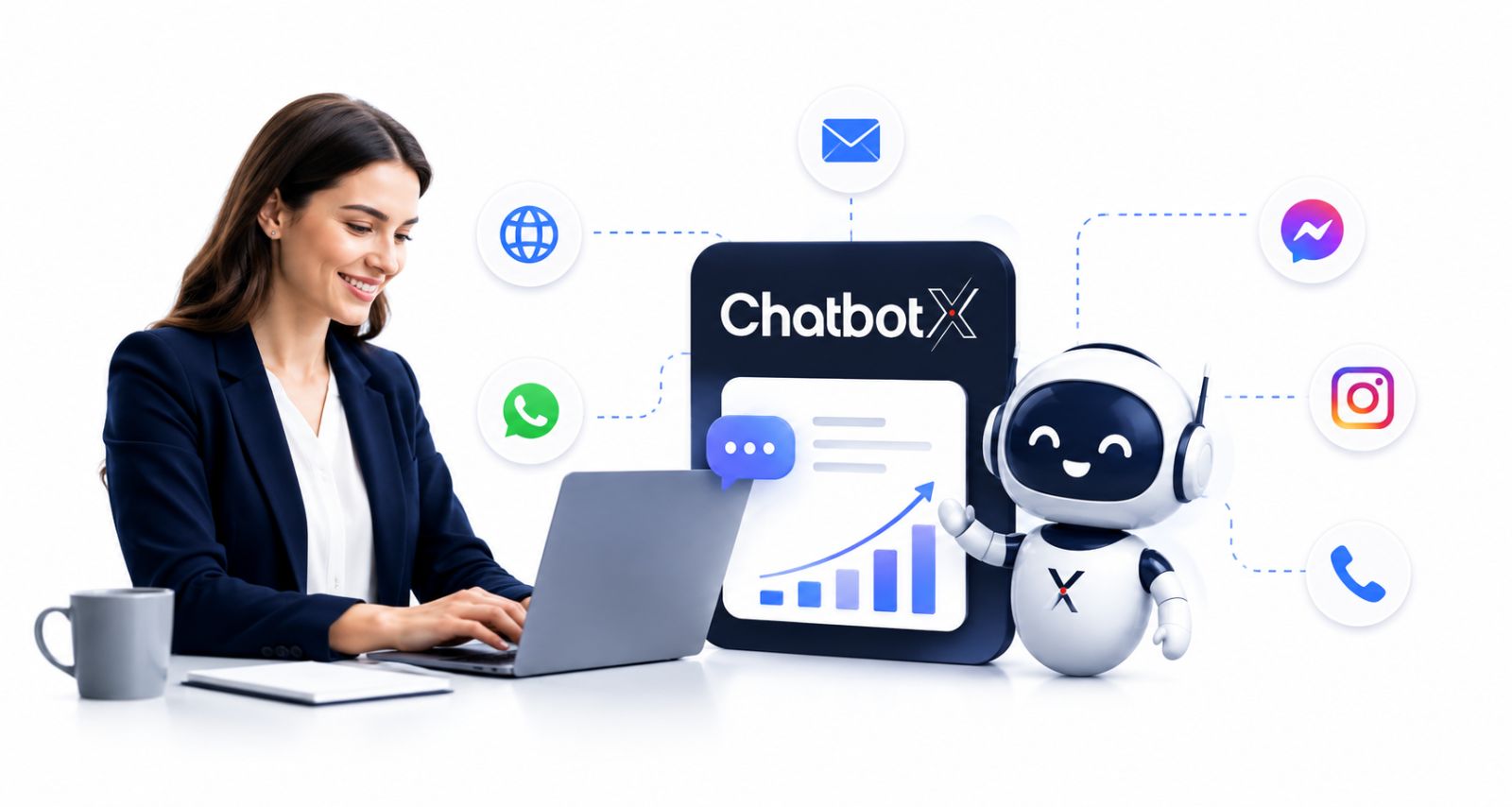
ChatbotX is an open-source agentic omnichannel chatbot platform built for businesses that want real control over how they engage customers – across every channel, at any scale.
- 🚀 Get started free at chatbotx.io – explore the platform, configure your first AI agent, and connect your channels in minutes.
- ⭐ Star ChatbotX on GitHub – join a growing community of developers and marketers building the future of customer engagement on open infrastructure.
No vendor lock-in. No black-box automation. Full transparency, full control.
Frequently Asked Questions
What is AI-powered omnichannel marketing?
AI-powered omnichannel marketing refers to the use of artificial intelligence to deliver personalized, consistent customer experiences across every channel – including messaging apps, social media, web chat, and email – in a coordinated, data-driven way. Unlike basic automation, AI-powered systems understand customer intent, maintain context across channels, and adapt in real time.
How does AI improve response time in customer engagement?
AI agents can respond to customer inquiries instantly, 24 hours a day, without the delays inherent in human-staffed support. By automating the resolution of high-frequency, predictable interactions – FAQs, order status updates, product information – businesses can reduce average response times from hours to seconds.
Can small businesses benefit from AI omnichannel tools?
Yes. The availability of open-source platforms like ChatbotX has significantly lowered the cost and technical barrier to AI-powered omnichannel marketing. Small businesses can deploy AI agents across WhatsApp, Instagram, and web chat without enterprise budgets or dedicated development teams.
What is the difference between a chatbot and an AI agent?
A chatbot typically follows predefined decision trees and responds to keywords or button selections. An AI agent uses large language models to understand natural language, maintain conversation context, make decisions based on customer intent, and execute multi-step actions – making it significantly more capable and adaptive.
How does AI personalization work across multiple channels?
AI personalization relies on unified customer data – purchase history, conversation history, behavioral signals – that is accessible across every channel. When a customer switches from WhatsApp to Instagram, an AI-powered system carries their context with it, enabling responses that are relevant to the individual rather than generic.
Is AI in marketing a threat to human marketing jobs?
The evidence suggests AI augments human marketers rather than replacing them. By handling high-volume routine tasks, AI frees marketing teams to focus on strategy, creative work, and relationship-building. Teams that integrate AI effectively tend to become more productive, not smaller.