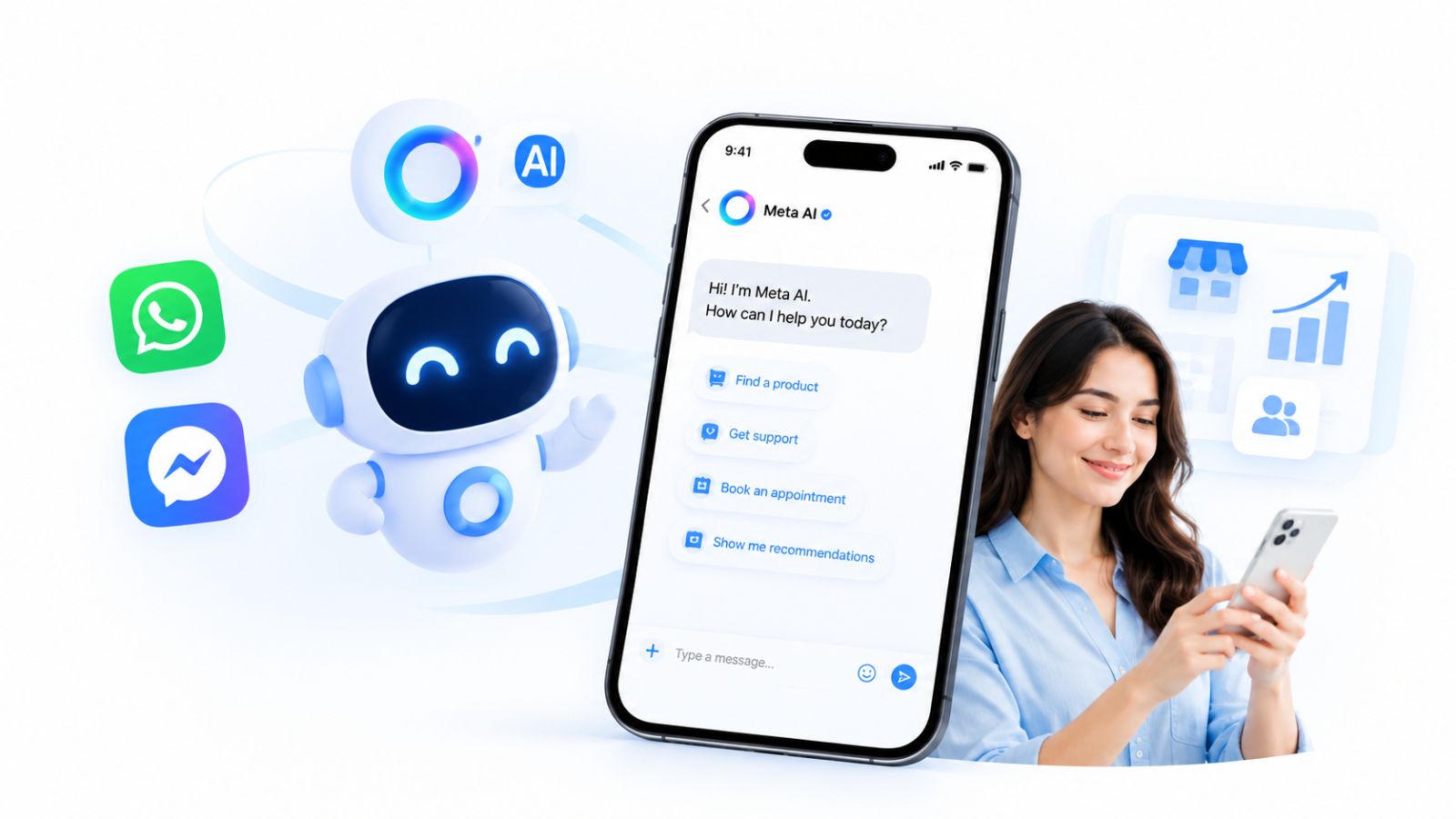
Meta Muse is a personal AI agent that does errands for consumers instead of just chatting with them. It books appointments, buys products, sends emails, calls businesses and negotiates prices on its owner’s behalf, and it can be used directly inside WhatsApp. For any company that talks to customers on WhatsApp or Messenger, that changes who might be on the other side of the conversation: increasingly, it is a customer’s own AI.
This guide explains what Meta Muse is, how it works, what it costs, how quickly it is spreading, and, most importantly, what a business should do now to stay visible and easy to buy from when customers start arriving with agents.
Launch agentic chat marketing in minutes with ChatbotX






Key Takeaways
- Meta Muse launched on September 8, 2026, as a consumer-side agent that completes tasks rather than only answering questions.
- It runs on a private cloud computer for each user, with a separate safety layer called Sentinel that approves outgoing actions.
- Meta plans to earn from Muse mainly through a small fee on completed transactions, which puts the agent directly between your customer and your checkout.
- Muse protects its user, not the merchant. Guardrails for the business side must come from the business.
- The best preparation is practical: consistent information, bookings and orders that can be completed in chat, clear rules for agent requests, and a fast human handoff.
What Is Meta Muse?

Meta Muse is a personal AI agent: software that takes a goal from a person and works toward it across the websites and apps that person uses. Users connect Muse to things like email, calendar, payments, fitness and health apps, smart-home devices, shopping and dining services. Then they hand over tasks, large or small.
Meta’s own launch announcement frames Muse as an agent that builds a plan around a person’s goal, coordinates their time and resources, and keeps working in the background even after they close the app. It can browse the web, complete forms and negotiate. Meta’s examples include getting a better price when selling a car, reducing a monthly bill, and reshaping a training plan when life gets busy.
Until now, most AI activity on WhatsApp and Messenger has lived on the business side: assistants that answer customer questions, recommend products and qualify leads. Muse flips the direction. It sits with the customer, and it works for them.
Meta Muse at a Glance
| Detail | What we know |
|---|---|
| Launch date | September 8, 2026 |
| Availability | United States at launch; Meta’s later small-business announcement also references Canada |
| Where it runs | iOS and Android apps, muse.ai, WhatsApp chats, and a Mac app; AI glasses are described as coming |
| Underlying model | Meta’s Muse Spark model |
| Price | Free for most everyday use; paid tiers for heavier usage (seeMeta’s Muse subscription page) |
| Paid plans | Power at $20 per month and Max at $100 per month, which add usage capacity rather than new features |
| Payments | One-time-use virtual cards through Link by Stripe, with Shop Pay support on the way |
Muse belongs to a wider “Muse” family from Meta that also includes image generation and coding tools. A wearable keychain device called Muse Charm is scheduled for December 2026.
What Can Meta Muse Do?
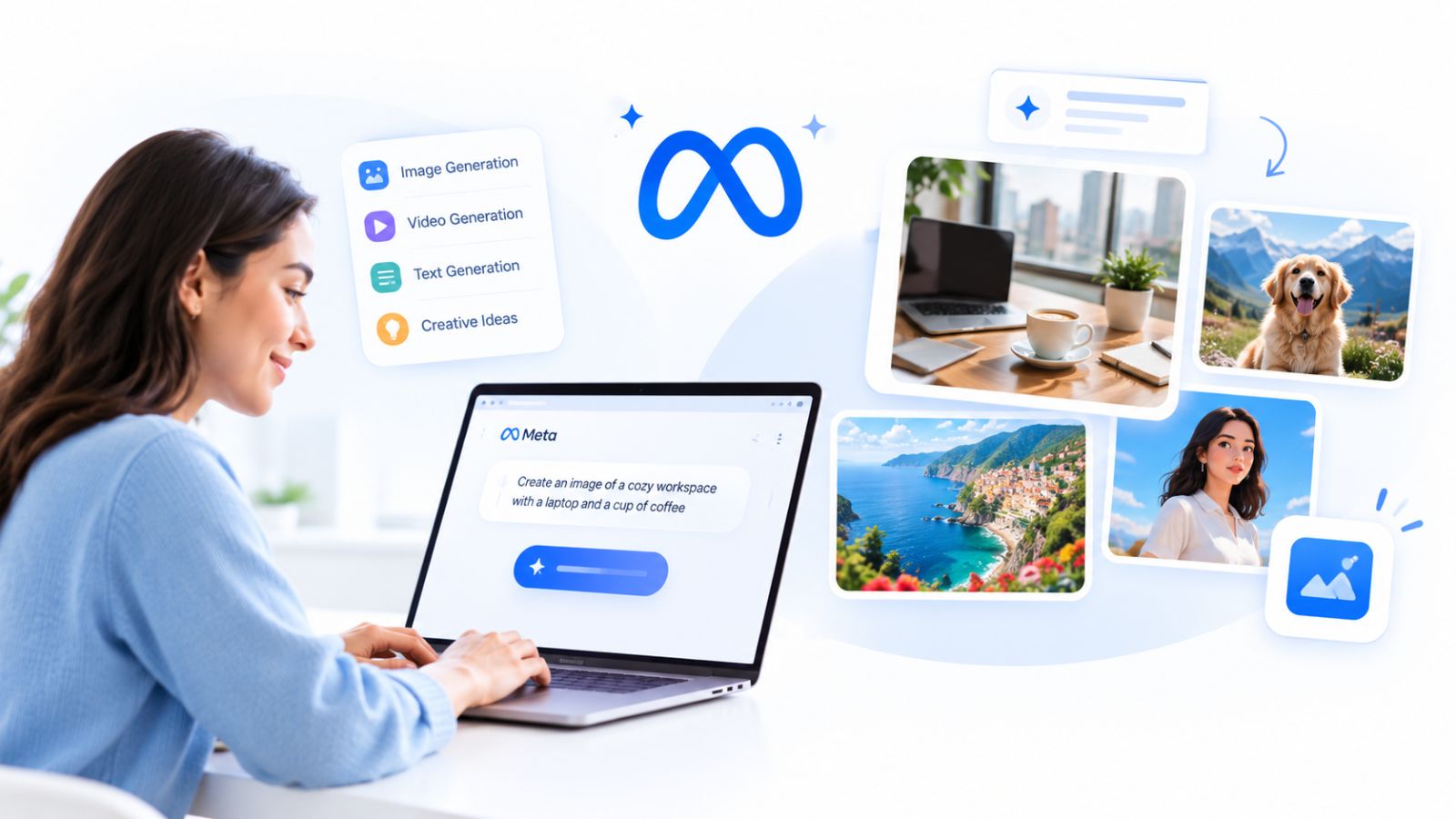
The easiest way to understand Muse is by the actions it can take:
- Handle email, including drafting and sending messages after the user approves them.
- Book flights, restaurants, salons and other appointments.
- Buy things from connected retailers.
- Negotiate prices and try to lower recurring bills.
- Fill in web forms that would otherwise eat up a person’s evening.
- Plan and organize, such as turning a saved recipe video into a shopping list or coordinating dinner-party invitations.
- Phone US businesses. Calling was added in mid-September after users asked for it.
- Work on a Mac, across files, notes, calendar and mail.
Meta has also announced a talking video avatar, hands-free control through smart glasses, and a growing connector program for third-party services. Retail and payments partners named so far include Stripe, Shopify, Best Buy, Gap, Sephora, Walmart and Wayfair. For companies, Meta has since introduced a Muse for Small Business offering that links to Facebook and Instagram business accounts and tools such as Shopify, Stripe and Klaviyo.
How Meta Muse Works: Secure VM and Sentinel
Every Muse user gets a dedicated cloud computer, which Meta calls Muse Secure VM. Inside it, the agent has storage, a terminal for building small helper tools, and a complete browser for searching, logging in, completing forms and checking out.
A second program, Sentinel, sits between Muse and the internet. According to Meta, no outbound action leaves the machine unless Sentinel approves it. When an action is sensitive or irreversible, such as sending an email or spending money, the user is asked to confirm. Meta deliberately avoids prompting for every tiny step, because constant confirmation requests teach people to click “approve” without reading.
Other design choices worth knowing:
- Credentials and cards stay hidden. Meta says Muse cannot see a user’s passwords or payment details. Shared logins are kept in protected storage, and purchases use one-time cards.
- Advertising separation. Meta states that conversations and VM data are not passed to its ad systems, and it has previewed an encrypted “Confidential VM” for later in 2026.
- Audit trail. Users can review what the agent has done and plans to do.
Muse’s product design openly borrows from the wave of open-source computer-using agents that went viral earlier this year. Those agents showed both the upside and the risk of giving software real access to inboxes and accounts, which is why guardrails matter.
Notice whom Sentinel protects, though: the Muse user. Nothing in this design shields the business on the other end from an agent that misreads a return policy, pushes for a discount it saw elsewhere, or tries to book a time slot you do not offer. That protection has to be built on the business side.
Early Adoption: The Numbers
Muse’s early traction is why businesses should pay attention now instead of waiting. Treat download figures carefully, since trackers differ by platform, region and time window.
| Metric | Reported figure | Source type |
|---|---|---|
| US launch | September 8, 2026 | Meta |
| Top free iPhone app in the US | Reached No. 1 within about ten days | Press coverage |
| iPhone downloads in first 12 days (US and Canada) | About 1.8M for Muse vs 1.3M for ChatGPT | Apptopia |
| Daily mobile users at the same point | About 642,000 for Muse vs 231,000 for ChatGPT | Apptopia |
| Downloads by September 21 | Roughly 1.5M on iOS and 1.1M on Android | Sensor Tower |
| Developer connector applications | More than 1,500 in under a week | Meta |
Two numbers matter most. First, daily use: downloads can be bought with promotion, but daily active use suggests people are really delegating tasks. Second, the connector requests, which show the supply side lining up to plug services into the agent.
For balance, ChatGPT still led on total downloads across all platforms in the same window, so Muse has not overtaken it. What Muse has is distribution. It lives inside WhatsApp, an app billions of people open every day, one tap from the chat list where they already talk to businesses.
How Meta Plans to Make Money From Muse
The most telling statement Meta has made about Muse is not a feature. It is the business model. At its Connect event, Mark Zuckerberg said Muse would stay free for a large volume of usage, with Meta expecting to profit over time from a small fee on transactions.
In practice, Meta earns when Muse completes a purchase, booking or payment. That places the agent directly on the path between your customer and your checkout, with a financial reason to favor merchants that are easy to transact with. Businesses that are agent-friendly may gain volume. Businesses that are not may simply get skipped.
Amazon’s Block and the Personal Agent Protocol
Not every merchant welcomes consumer agents. In late September, Muse users trying to shop on Amazon began seeing an error saying that access by an unauthorized AI agent violated Amazon’s terms. Amazon argued that agents buying on a customer’s behalf should operate openly and respect each store’s decision about whether to participate, and it objected that Muse did not identify itself while browsing.
Large-platform rivalry is part of the story, but the questions it raises apply to every business:
- Should an agent be required to say that it is an agent?
- Who is responsible when an agent places the wrong order?
- Can a business refuse agent traffic? Amazon can, because shoppers come to it. A clinic, boutique or direct-to-consumer brand usually cannot afford to.
In early October, Meta and the customer-service AI company Sierra introduced the Personal Agent Protocol, an open standard intended to give agents and businesses a shared way to identify themselves and agree on permitted actions. The consumer chooses what access their agent receives, and the business decides what agents may do on its website, through its APIs, or via its own AI. Early partners reportedly include Shopify, Stripe and Walmart. The protocol is still young, and payments are expected in a later version.
Meanwhile, accidental blocking is common. Bot checks designed to stop scrapers can stop a legitimate customer agent in the middle of checkout. For most businesses, the practical answer today is to offer agents a reliable path that does not depend on a website: a chat or WhatsApp agent that can answer questions, book and take payment, plus a phone line that an AI receptionist handles consistently.
Six Ways Muse Changes Business Messaging

Meta has confirmed that Muse runs inside WhatsApp, calls businesses by phone, emails, fills in forms and negotiates. It has not announced that Muse will start conversations with business accounts on WhatsApp or Messenger. Still, the surface, the permission model, the calling precedent and a revenue model built on completed transactions are all in place. Planning as though it will happen is the prudent reading.
1. Your next customer may be software
Your inbox was built for people who browse menus, tap buttons, get distracted and return tomorrow. An agent shows up with a precise goal, such as “book a 30-minute consultation next Tuesday afternoon for under $80,” reads everything you send, and moves on fast if your flow does not deliver an answer. Expect sharper questions, side-by-side comparison of several competitors at once, and little patience for long button menus.
2. Agent-to-agent conversations become normal
Meta reports that over a million businesses already use its Business Agent on WhatsApp and Messenger, and many more run their own AI. Add Muse on the customer side, and a growing share of chats will be one AI talking to another, with humans stepping in only to approve. In that world, speed and accuracy beat charm. A crisp reply such as “Yes, size 9 in black, in stock, $120, ships in two days, 30-day returns” outperforms a friendly paragraph. And when something needs human judgment, like a refund exception or custom quote, the handoff must be quick and clean.
3. Your catalog and policies get machine-read
When an agent does the shopping, your WhatsApp catalog, product pages, price lists and return terms are read by software before any person sees them. A mismatch that a human would shrug off, say 30-day returns on the website but 14 days in the chatbot, becomes a reason to rank you lower. This is conversational SEO: the winners are businesses whose information is consistent, current and easy to extract.
4. Agent callers arrive on your phone line first
Calling is the one business-facing capability already shipped. If your front desk takes bookings by phone, some callers are now agents. Keep phone answers and chat answers identical, and consider an AI voice flow that follows the same logic as your messaging flows.
5. Transaction fees reshape the economics
If Muse earns when a purchase completes, expect Meta to make transacting through Muse easy for merchants who plug in through payment partners and its connector program. Over time this could look like a new sales channel with its own economics, similar to how marketplaces changed e-commerce. WhatsApp-first businesses already pay for business-initiated message templates and, where used, token-based AI fees. A transaction fee could become a third layer, so model it early. If you sell directly in chat, our guide to WhatsApp commerce in 2026 shows how to take orders and payments inside a single conversation.
6. Identity and trust become your policy decisions
Amazon chose a hard line: agents must identify themselves or stay out. Most businesses will choose something softer, but they still need a policy. Will you accept bookings made by an agent? Honor a discount an agent says it found elsewhere? Require human confirmation above a certain order value, or for anything involving health, legal or financial details? Write those rules down and build them into your flows, so the answer never depends on who happens to pick up the chat.
Muse vs Meta Business Agent
Both products come from Meta and both live in WhatsApp, which makes them easy to confuse. They are opposites.
| Meta Muse | Meta Business Agent | |
|---|---|---|
| Works for | The consumer | The business |
| Launched | September 8, 2026 (US) | June 2026 (global) |
| Where it runs | Muse app, web, WhatsApp, Mac, glasses | WhatsApp, Messenger and ads |
| Typical tasks | Books, buys, calls, emails and negotiates for its owner | Answers, recommends, books and sells for the company |
| How Meta earns | Paid tiers plus planned transaction fees | Usage-based pricing paid by the business |
| Business control | None; it is the customer’s agent | Configured and owned by the business |
| Safety model | Sentinel approvals protect the user | Business knowledge and settings define behavior |
The strategic point: Meta is offering an agent to both sides of your conversation. One represents your customer, and one can represent you. The question for a business is not just which AI answers customers, but who controls the logic, the data and the handoff when it matters.
Which Businesses Are Best Placed?
Muse will not affect every business equally.
Well positioned: appointment-based services. Salons, clinics, studios, consultants and repair shops live on bookings, which is exactly what Muse is built to arrange. If your availability is accurate and bookable in chat, an agent filling open slots is a gift. If booking still means a phone call and a callback, expect to lose those customers to someone with a live calendar. Pairing live booking with automated reminders also protects those slots; see our appointment reminder text templates and timing rules.
Well positioned, with work to do: retail and D2C brands. Muse’s partner list leans toward retail. Brands with clean catalogs, clear stock levels and simple checkout will benefit. Brands whose WhatsApp experience is a human answering “price?” hours later will not.
Exposed: persuasion-led sales. If conversion depends on a salesperson building rapport over a long chat, an agent that wants a price, a spec and a delivery date is a harder customer. Decide which parts to automate and where a person must step in.
Exposed: inconsistent information. Anyone whose website, chatbot, catalog and staff give different answers will be found out quickly. Agents compare, and they remember.
Watch and prepare: businesses outside the US. Muse is not yet global, but Meta’s AI features have repeatedly reached new markets after US launches, and WhatsApp’s largest audiences are elsewhere. The next six to twelve months are preparation time, not a reason to look away.
A 90-Day Readiness Checklist
None of this requires waiting for Meta’s next announcement. These steps improve your customer experience today and prepare you for agent customers tomorrow.
- Audit your facts. List prices, hours, stock rules, delivery times and returns. Make sure the website, catalog, chatbot knowledge base and staff scripts all agree.
- Lead with direct answers. For your top 20 questions, make sure the chat can give a complete one-message answer without forcing a menu walk.
- Make booking and ordering completable in chat. Live availability, a clear confirmation, and a payment link where relevant. Every step that needs a callback is a step an agent will skip.
- Set a policy for agent requests. Decide which actions need human approval and which discounts you honor.
- Tighten human handoff. Route anything only a person can decide to a teammate with the full conversation attached.
- Align voice and chat. Make sure phone and messaging give identical answers and write to the same calendar.
- Watch your logs. Look for very precise questions, many near-identical questions from different contacts, and unusually fast replies. That is how agent traffic will first show up. Fast replies matter on your side too; our guide on speed to lead covers how to answer every inquiry in under a minute.
- Model the costs. Template charges, AI usage and possible transaction fees. Know your margin per conversation before a new channel changes it.
How ChatbotX Helps You Prepare

If this checklist feels like a lot, it helps to have one platform that covers the business side of the conversation. ChatbotX is an open-source, agentic chat marketing platform that connects WhatsApp, Messenger, Instagram, Telegram, Zalo, TikTok, email and web chat in one place. You can self-host it or use the managed cloud, and you keep control of your data and your logic.
Here is how it maps to the checklist:
- One source of truth for answers. Build AI agents that use your own knowledge and rules, so what a customer’s agent hears on WhatsApp matches what your website says. You can bring your own AI models rather than paying a markup on credits.
- Flows that finish the job. Use the visual flow builder to design bookings, lead capture, order lookups and payment-link steps once, then run them across channels without extra code.
- Human handoff with context. When a request needs a person, the shared inbox puts the full conversation in front of your team so they can decide quickly.
- Open to your tools and your agents. Connect your calendar, store, CRM or custom automations through API, CLI and MCP, so your systems can talk to AI agents on your terms.
Because the platform is open source, developers can inspect the code and read the project’s README to set up their own environment. That transparency is useful when the logic behind your customer conversations matters.
Frequently Asked Questions
What is Meta Muse in simple terms?
Meta Muse is a personal AI agent for consumers. Instead of only answering questions, it completes tasks such as booking appointments, shopping, emailing, calling businesses and negotiating, and it can be used inside WhatsApp.
Is Meta Muse free?
Muse is free for most everyday use. Meta also offers paid plans, listed at $20 and $100 per month, that provide more usage capacity. Meta has said subscriptions are still in limited testing, so check its help page for current details.
Is Meta Muse available outside the US?
At launch it was US-only, and Meta later referred to availability in the US and Canada. Meta has expanded other AI products to more countries after US launches, so businesses elsewhere should prepare rather than assume they are exempt.
Will Meta Muse message my business on WhatsApp?
Meta has not announced that Muse will open chats with business accounts on WhatsApp or Messenger. It can already call businesses, send email and fill web forms, so planning for agent-initiated conversations is sensible.
How is Muse different from Meta Business Agent?
Muse works for the customer. Meta Business Agent works for the business. One represents the buyer, the other the seller, and a conversation between them is increasingly possible.
How can a small business prepare for AI agents as customers?
Start with consistent facts across your website, catalog and chat. Make bookings and orders completable in a single conversation, define which agent requests need human approval, and keep a fast handoff to a real person. A chat automation platform can put these pieces in place without custom development.
Does Muse replace my chatbot?
No. Muse is the customer’s assistant. You still need your own assistant to answer questions accurately, apply your policies and hand off to people when needed.
Final Thoughts
Meta Muse is a personal AI agent that books, buys, calls and negotiates for its owner, and it lives inside WhatsApp. It has grown quickly, it is expanding into calls, email, glasses and a wearable, Meta intends to earn from the transactions it completes, and the first major retailer has already pushed back.
For businesses on WhatsApp and Messenger, the lesson is straightforward: the person on the other side of your chat is starting to bring their own agent. That agent will ask sharper questions, compare faster and reward companies whose answers are consistent and whose bookings and orders can be completed in the conversation. That is good customer experience with or without Muse. Muse just raises the cost of not having it.
Ready to Get Your Messaging Agent-Ready?
Customers are about to arrive with AI assistants, and the businesses that answer clearly, quickly and consistently will be the ones those assistants recommend. You can start small: fix your facts, build one booking or ordering flow, and set a clear human handoff.
If you want a platform built for exactly that, try ChatbotX today: launch AI agents, flows and a shared inbox across WhatsApp, Messenger and Instagram, with the option to self-host. Start with the conversation your customers ask for most, and be ready when their agents show up.
Facts about Meta Muse reflect Meta’s announcements and early press and analyst reports available as of October 22, 2026. Third-party download and usage figures come from analytics firms and may differ by tracker and time window. Features, pricing and availability may change.