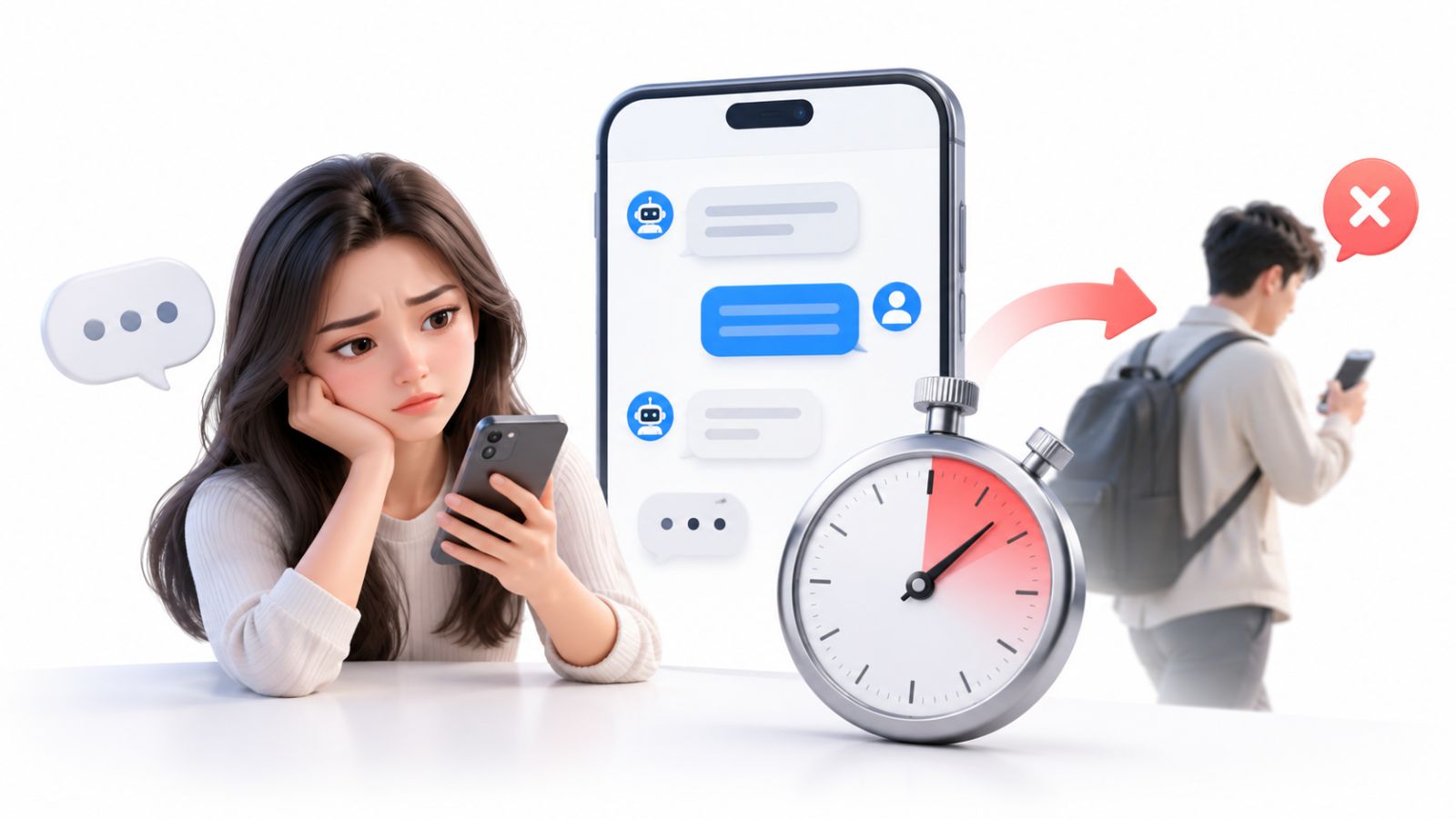
It is 9:47 PM. A prospect submits your contact form, then submits two more forms on your competitors’ websites. The first business to send a useful reply, while the prospect is still on their phone, usually earns the conversation. That race has a name: speed to lead. For most companies it is the cheapest growth lever they have not pulled yet.
This guide covers what speed to lead means, what the research really says, why so many teams reply too late, and a practical two-speed workflow: an AI agent that responds within seconds and qualifies the enquiry, followed by a human who calls back the best prospects quickly.
Key Takeaways
- Speed to lead is the gap between a prospect asking for contact and your first meaningful reply.
- Classic research found that most businesses respond slowly, and that firms replying within an hour were far more likely to qualify a lead.
- The fix is not “work faster.” It is automating the first minute so every lead gets an answer at any hour.
- The best model pairs an instant AI reply with a fast human callback for qualified leads.
- Measure first-response time weekly, or it will quietly drift back to hours.
Launch agentic chat marketing in minutes with ChatbotX






What Is Speed to Lead?
Speed to lead measures how long it takes your business to make real contact after someone raises their hand. The trigger might be a web form, a call, a website chat message, a direct message on social media, or a tap on a click-to-message ad.
The word “real” matters. An auto-generated “thanks, we’ll be in touch” does not count. Meaningful contact is a relevant, personal response that moves the conversation forward.
Teams usually track this as lead response time: the minutes between lead creation and the first reply. The average alone can hide problems, so it is more useful to track the percentage of leads answered within five minutes, within an hour, and within a day.
Speed to Lead Statistics: What the Research Shows
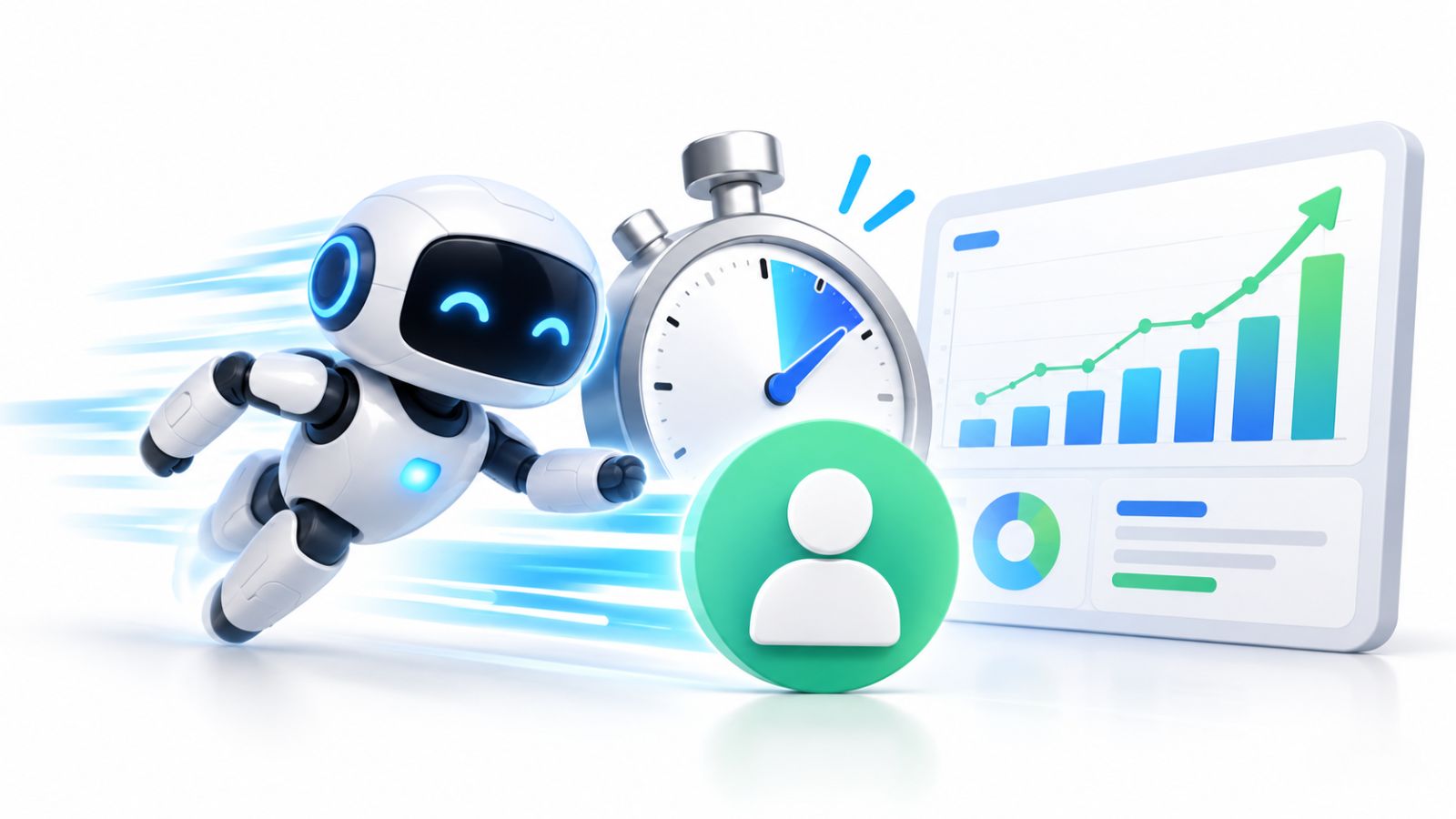
The most frequently cited study is “The Short Life of Online Sales Leads,” published in Harvard Business Review by James Oldroyd, Kristina McElheran, and David Elkington. The authors submitted test enquiries to 2,241 US companies and recorded how long each took to answer.
| Response time | Share of companies |
|---|---|
| Within one hour | 37% |
| Between 1 and 24 hours | 16% |
| After more than 24 hours | 24% |
| No response at all | 23% |
Among the firms that did reply within 30 days, the average wait was 42 hours. The article also reported that companies who made contact within an hour were nearly seven times more likely to qualify the lead than companies who waited just one hour longer.
A quick accuracy note. You may have seen the claim that replying within five minutes makes you “100 times” more likely to connect. That figure comes from a separate 2007 lead response study conducted with InsideSales, not from the Harvard piece. People often merge the two. What both studies agree on is simple: minutes matter, and most businesses take hours or days.
This research is more than a decade old, and buying behavior has moved to messaging apps. Patience has only shrunk since then. On chat channels, customers expect an answer in minutes, not by the next business day.
Why Most Businesses Respond Too Slowly
Slow replies are rarely a motivation problem. They come from how leads travel through the company:
- Wrong destination. Form entries land in a shared mailbox that someone opens twice a day.
- After-hours gaps. Evenings and weekends are prime research time, yet nobody is on duty.
- Manual assignment. A person has to decide who owns each lead before anyone reaches out.
- Phone tag. The first call hits voicemail, the callback comes tomorrow, and the prospect has already booked elsewhere.
- No follow-up rhythm. One attempt is made, it fails, and the lead is abandoned.
Telling the team to “be faster” fixes none of this. Changing what happens automatically in the first minute fixes all of it.
The Two-Speed Model: AI First, Humans Second
The most reliable way to improve speed to lead combines two response speeds.
- Instant (seconds): an AI agent replies. The moment a lead arrives, they receive a personal message on the channel they actually use. The agent answers basic questions, asks a few qualifying questions, and offers a next step.
- Fast (minutes): a person calls back the best leads. Qualified prospects are routed to the right salesperson, who sees the full conversation and follows up immediately.
The result: every lead hears back within seconds, even at 9:47 PM. Your sales team stops chasing cold contacts and focuses on people who are ready to talk. And when the phone rings, the prospect is already expecting it.
How to Set Up Speed to Lead, Step by Step
1. Bring every lead source into one place
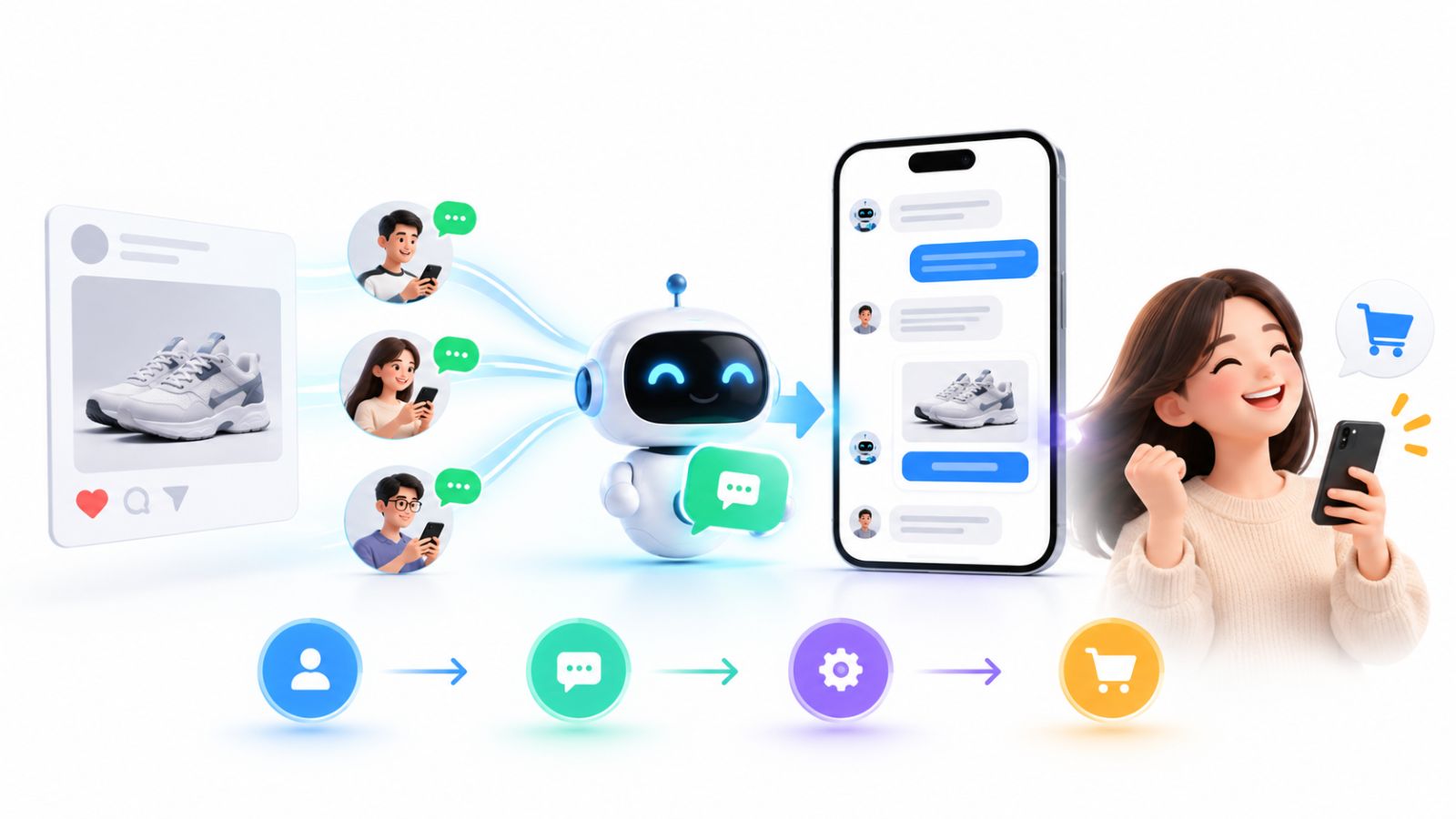
List every way people reach you: web forms, ads that open a chat, website live chat, Instagram and Facebook messages, and phone calls. Connect each source so a new lead triggers an automated flow instead of sitting in an inbox. Forms can post to a webhook, and automation tools such as Zapier, Make, or n8n can connect most other sources.
2. Reply within seconds on a messaging channel
If the lead arrives somewhere other than WhatsApp, such as a web form, your first message must be an approved WhatsApp message template, because your business is starting the conversation. Make it sound human: use the person’s name, mention what they asked about, and finish with one easy question.
If the lead starts the chat themselves, for example by tapping a click-to-WhatsApp ad, you can answer instantly with a regular message.
Collect consent first. The WhatsApp Business Messaging Policy states that businesses may only contact people who have opted in to receive messages. Add a clear opt-in line to every form so your instant message feels welcome rather than intrusive.
3. Qualify with three to five questions
Let the AI agent ask what your best salesperson would ask first: what the person needs, when they need it, their budget range, and how they prefer to be reached. Stop at five questions at most, because every extra question costs you replies. Save the answers to the contact record so nobody has to ask twice.
4. Offer a booking when the next step is a meeting
If the goal is a demo, viewing, or consultation, let the agent propose real time slots and confirm one inside the chat. A booked appointment is worth far more than a lead marked “contacted.”
5. Route hot leads to the right person
Assign qualified leads automatically by team, territory, or round robin so none wait to be claimed. Alert the assigned salesperson the moment a lead lands on their plate.
6. Call back fast, with context
The salesperson opens the conversation and sees what the lead asked, how they answered the qualifying questions, and what they booked. The call becomes a continuation, not a cold start. If the callback happens over WhatsApp, ask the customer’s permission to call in the chat first.
7. Follow up when there is no reply
Plenty of leads read your message and answer later. Set a short sequence: a gentle nudge after a few hours, another the next day, and one final message after that. Stop the sequence the instant the lead replies.
8. Review response time every week
Track first-response time, the share of leads answered within five minutes, and the share that reach a booked next step. When the numbers slip, identify which source or shift is responsible. If you need a deeper playbook for the follow-up stage, read ChatbotX’s guide on how to follow up with a lead in 2026.
Writing the First Message That Gets a Reply

The opening message decides whether a conversation starts. Keep it short, personal, and easy to answer. Here are three adaptable examples:
After a service enquiry: “Hi Emma, thanks for asking about a kitchen renovation. I’m the virtual assistant for Brightline Interiors. To prepare an accurate estimate, are you planning a full remodel or just updating cabinets and worktops?”
After a consultation request: “Hi Daniel, you asked for a free consultation with Harbor Legal. I can book a time today. Is your question about a business contract, employment, or something else?”
After a property enquiry: “Hi Sofia, thanks for your interest in the two-bedroom apartment on Park Lane. Would you like to see it this week? I have viewings available Thursday and Saturday.”
Each message uses the person’s name, references what they asked, identifies who is writing, and ends with a single easy question. Avoid long introductions, early links, and anything that reads like a newsletter.
How Fast Is Fast Enough?
Use these targets as a starting point:
- Under one minute for the first automated reply, at any hour.
- Under five minutes for a human callback to qualified leads during working hours.
- First thing the next working morning for qualified leads that arrive after hours, with the AI agent having already replied, qualified, and ideally booked a time.
Without automation the first target is nearly impossible. With it, the target is easy. The second target depends on sales discipline, because an alert only helps if someone acts on it.
Missed Call Text Back and Call-Triggered Follow-Up
Phone enquiries deserve the same urgency. Missed call text back automatically sends a message to a caller you could not answer, so they receive a response instead of silence. It is one of the simplest speed-to-lead improvements for clinics, trades, and local services.
Two stronger options exist if you can use them:
- Answer every call. An AI receptionist picks up, answers questions, and books appointments, so no call goes unanswered.
- Follow up every call in chat. A written summary, booking link, or next step sent after the call gives the caller something they can reply to later.
Speed to Lead by Channel
| Lead source | What “fast” looks like | Best first message |
|---|---|---|
| Web form | Under 1 minute | Approved WhatsApp template |
| Click-to-WhatsApp ad | Instant | Standard WhatsApp reply |
| Website chat | Instant | AI agent reply |
| Phone call | Answered, or followed up within minutes | AI receptionist or chat follow-up |
| Instagram or Facebook DM | Instant | AI agent reply |
Speed to Lead by Industry
Real estate. Buyers and renters enquire about several listings at once. The first agent to offer a viewing time usually gets the viewing. Two instant viewing slots beat a callback the next day.
Home services. Someone with a leaking pipe contacts several companies and books the first that confirms a visit. Answer every call and follow up every enquiry within minutes.
Clinics and wellness. Patients often enquire in the evening after work. An agent that answers treatment questions and offers appointment times turns evening enquiries into next-day bookings.
Education and coaching. Prospective students compare programs for days or weeks. Fast first contact still matters, but the follow-up sequence matters more: share useful information over several days and invite them to a call when they are ready.
B2B services. Inbound demo requests are costly to generate. Reply instantly, qualify by company size and use case, and send the strongest leads to a salesperson who calls within the hour.
Common Speed-to-Lead Mistakes
- Replying quickly with nothing useful. A generic acknowledgment is fast but is not contact. Say something that advances the conversation.
- Messaging without consent. Unwanted messages get reported, which damages your sender quality. Collect opt-in on every form.
- Asking too many questions. Qualification should feel like a helpful chat, not a disguised form.
- Hiding the human option. Some people want a person right away. Make that path obvious.
- Treating every lead the same. Hot leads deserve a call within minutes. Cold ones can stay in an automated sequence.
- Skipping measurement. If you do not track response time, it will creep back up to hours.
Your Speed-to-Lead Checklist
- Every lead source starts an automated flow, and none land only in an email inbox.
- Every form includes a clear messaging opt-in.
- An approved first-message template exists for each source.
- The AI agent asks five qualifying questions or fewer.
- Qualified leads are assigned automatically and the owner is alerted.
- Salespeople call back within five minutes during working hours.
- Non-responders receive a short follow-up sequence that stops when they reply.
- First-response time is reviewed weekly by source and by person.
If you can tick every box, you are already faster than most of your competitors.
Turning Speed to Lead Into a Service
Agencies and consultants can package this workflow as a recurring service, since the result is easy to demonstrate: response time drops from hours to seconds. Teams exploring that route may also find ChatbotX’s piece on deploying AI agents in a small business useful, and its AI prompt templates for small business sales help sharpen the messages your agents send.
Speed to Lead With ChatbotX

ChatbotX is an open-source, agentic chat marketing platform that you can self-host, white-label, and connect to the channels your customers already use, including WhatsApp, Messenger, Instagram, Telegram, Zalo, TikTok, email, and web chat. Here is how its building blocks map to the workflow above:
- Instant first replies. Build the automated flow visually with the Flow Builder, then connect forms, webhooks, and HTTP calls so a new lead starts the conversation immediately.
- AI qualification. Configure AI Agents powered by the model of your choice to ask your qualifying questions in natural language and hand off when a person should take over.
- Human handoff and routing. The Shared Inbox gives your team a real-time view of every conversation, with human takeover and assignment so hot leads reach the right salesperson.
- Response-time reporting. Use Analytics to watch engagement and campaign results, then adjust sources or shifts that fall behind.
Because the Community Edition is released under the MIT license, developers can inspect the code, self-host it, and contribute through the ChatbotX GitHub repository. The repository README covers the full feature list, tech stack, and quick-start steps.
Frequently Asked Questions
What is a good speed to lead?
Aim to send a meaningful first reply to every lead in under one minute, and to have a person call back qualified leads within five minutes during working hours. Treat these as targets to beat, not limits.
Does speed to lead really affect conversion?
Yes. Research published in Harvard Business Review found that companies contacting a lead within an hour were far more likely to qualify it than those that waited longer, and that most companies replied slowly or not at all.
Can AI replace salespeople in lead response?
No, and it should not try. AI is best at the instant first reply, qualification, and follow-up. Humans are best at building trust and closing. The two-speed model uses each where it is strongest.
Do I need consent before messaging leads on WhatsApp?
Yes. WhatsApp’s business policy requires opt-in permission before you message people. Add a clear consent line to your forms.
How do I measure lead response time?
Record the timestamp when each lead is created and when the first meaningful reply goes out. Report the average, plus the percentage answered within five minutes, one hour, and one day, broken down by lead source.
What to Do Next
Speed to lead is not about working harder. It is about making sure the first minute after a lead arrives is handled automatically, every time, at any hour, so your team’s effort goes to the prospects most likely to buy.
Start with your single biggest lead source. Connect it, write one instant reply and three qualifying questions, and route qualified leads to a person with an alert. Measure your response time again next week and compare.
Ready to answer every lead in under a minute? Start your 7-day free trial of ChatbotX, or explore the code and self-host the free Community Edition from the ChatbotX GitHub repository. Build your first instant-reply flow today, and let your competitors wonder how you always get there first.