Most online store owners share the same frustration: they spend thousands on traffic acquisition, only to watch the vast majority of visitors vanish within seconds – no purchase, no sign-up, no follow-up. The standard response is to pour more budget into paid ads. But the smarter move is to focus on the visitors you already paid to attract.
That is exactly what website remarketing is designed to do. Rather than treating every lost visitor as a sunk cost, remarketing turns those interactions into second, third, and fourth opportunities – reaching potential customers at the precise moment they are most likely to convert. This guide breaks down how website remarketing works in 2026, which channels are worth your investment, and how to move beyond the limitations of traditional retargeting with AI-driven automation.
Launch agentic chat marketing in minutes with ChatbotX














What Is Website Remarketing?
Website remarketing (also called retargeting) is a performance marketing strategy that targets people who have already visited your site, browsed specific products, or started but abandoned a purchase journey.
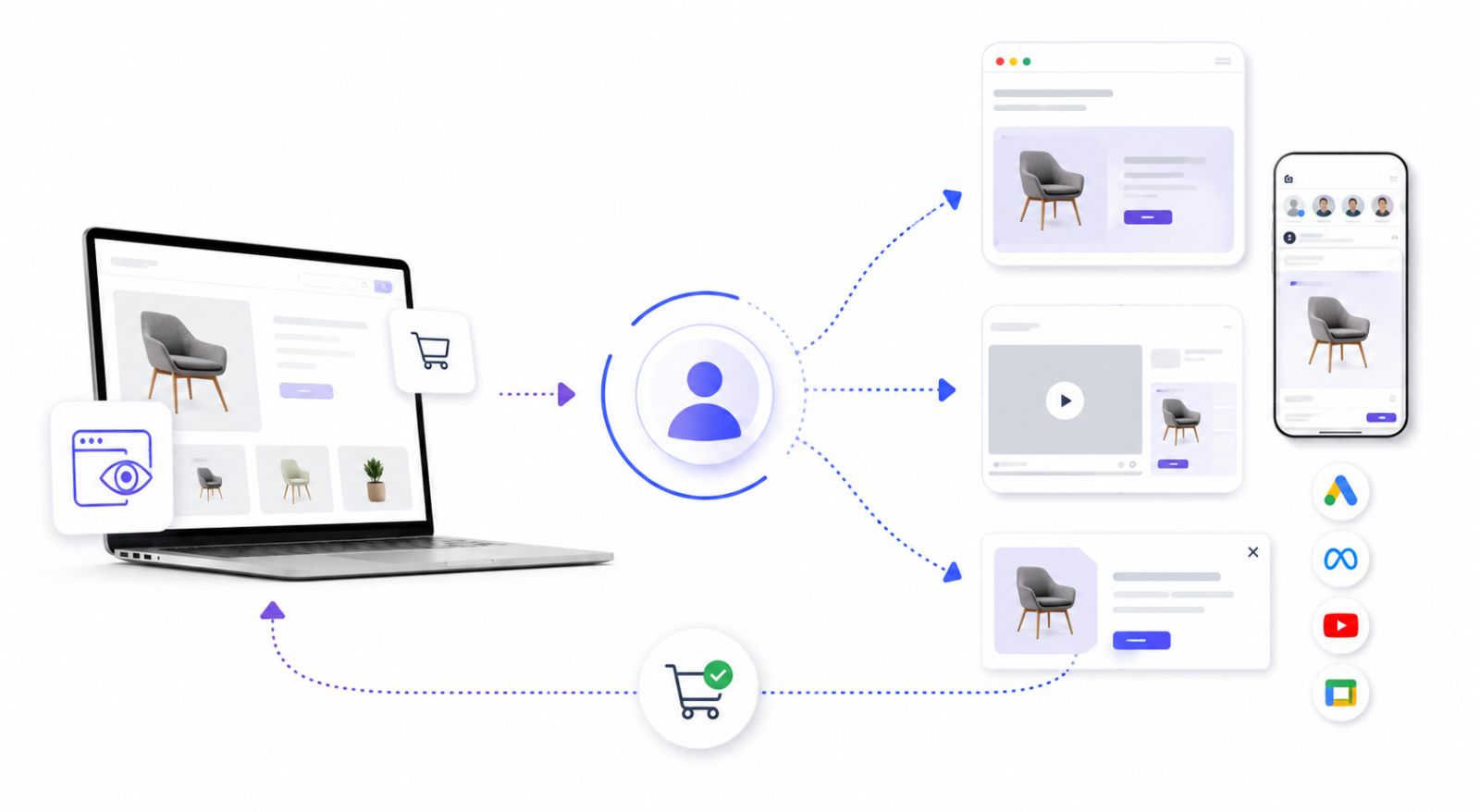
By placing a tracking pixel on your website, you can follow these users across the web – serving them highly relevant ads or messages as they continue browsing social media, watching videos, or reading content elsewhere. The fundamental goal is to rebuild purchase intent by keeping your brand and products visible during the critical window between a visitor’s first interaction and their eventual buying decision.
Unlike cold traffic campaigns aimed at brand-new audiences, remarketing speaks to people who already know you exist. They have already expressed some level of interest. Remarketing simply closes the loop.
Why Website Remarketing Matters More Than Ever in 2026
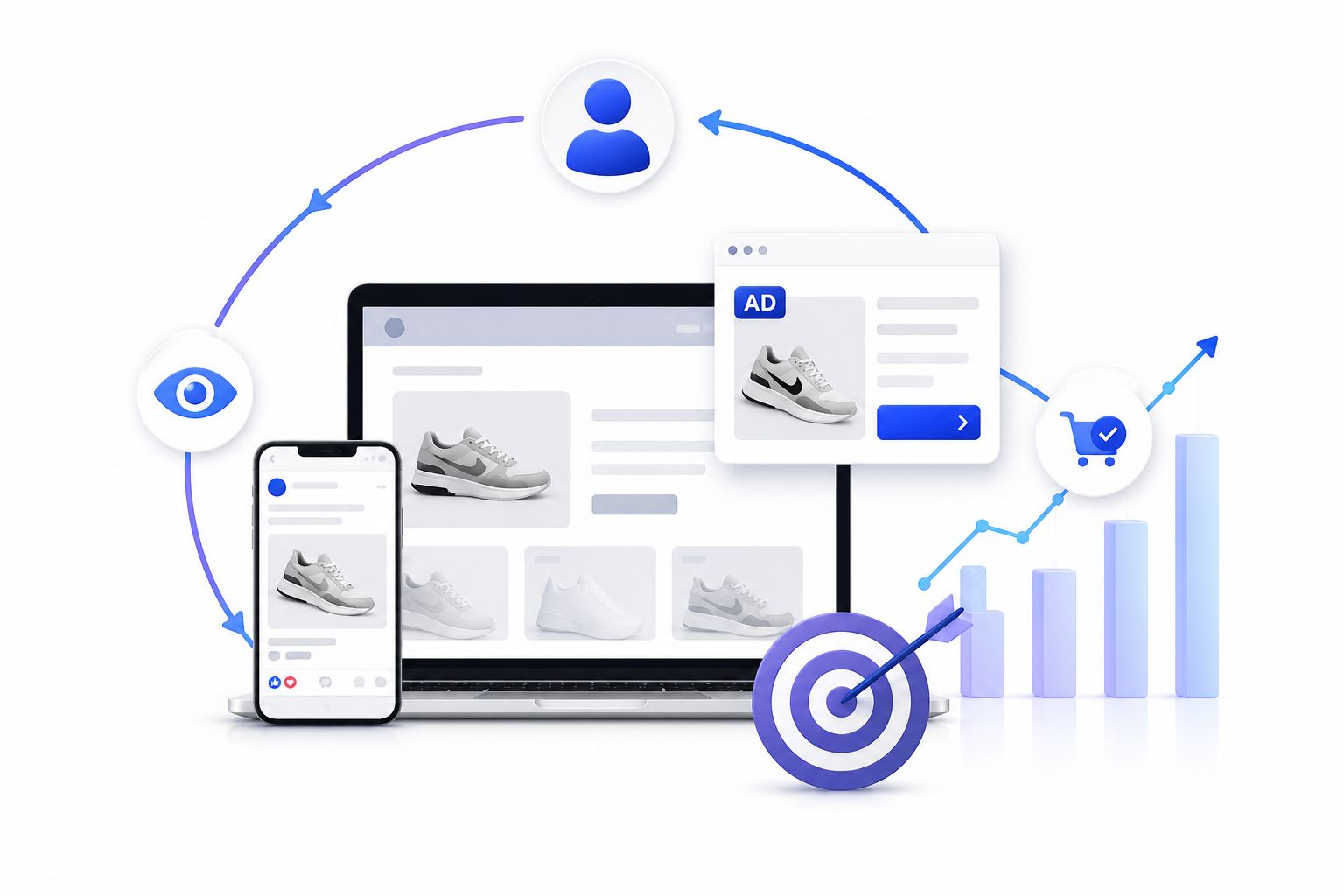
E-commerce competition has never been fiercer. According to Statista, global e-commerce now accounts for over 20% of all retail sales, with competition intensifying across every category. At the same time, average cart abandonment rates hover around 70–75% industry-wide – meaning that for every 10 people who add a product to their cart, only 2 or 3 complete the purchase.
Against this backdrop, remarketing offers a concrete advantage: you are investing your ad budget in an audience that has already self-selected as potentially interested. The cost-per-acquisition is dramatically lower than cold audience campaigns, and conversion rates are significantly higher.
Consumer psychology supports this approach too. Research cited by marketers consistently references the idea that most buyers need multiple touchpoints – often six or more – before committing to a purchase. A single website visit rarely produces a sale. Remarketing engineering those repeated touchpoints systematically.
The Main Channels for Website Remarketing
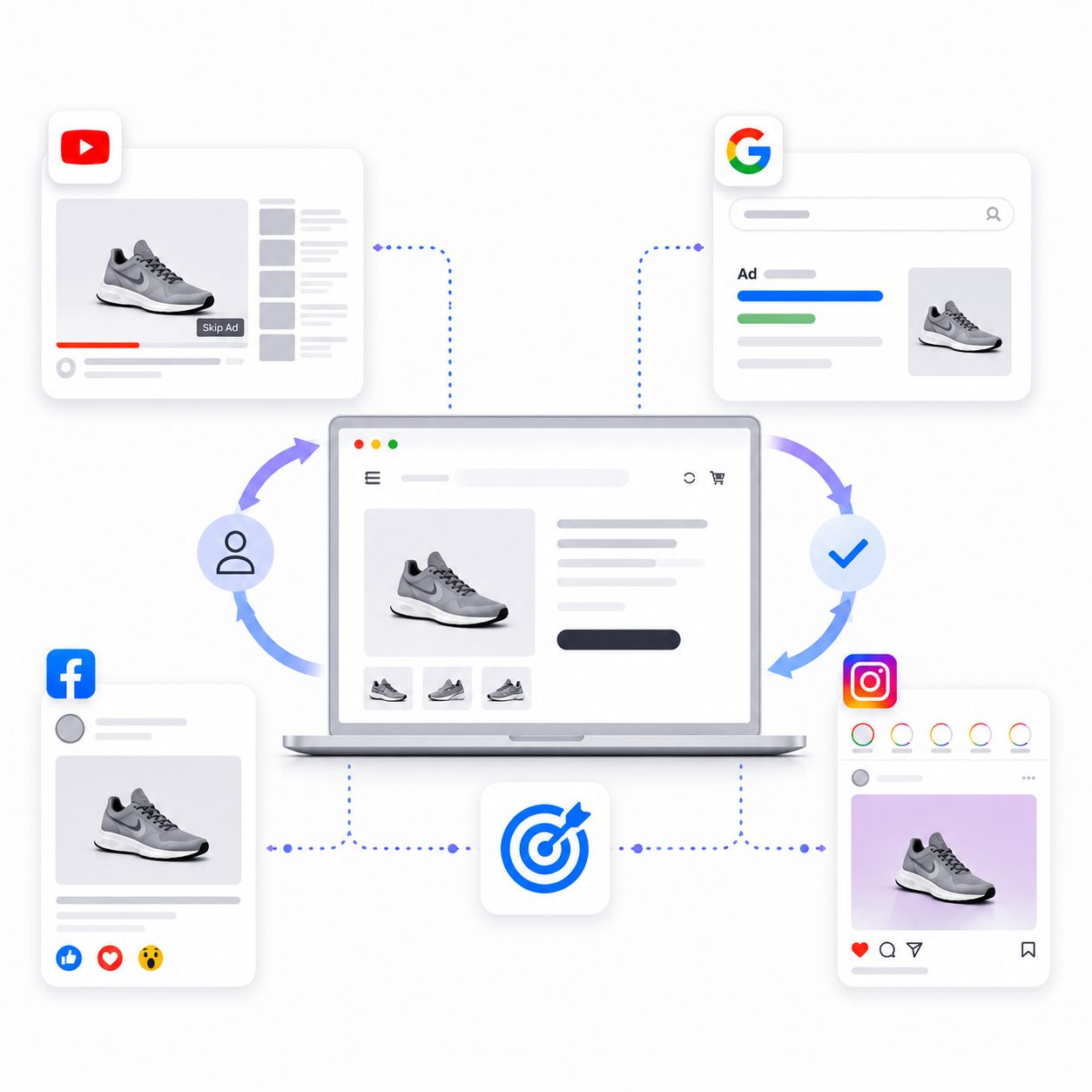
Google Display Network & Search Remarketing
Google’s advertising ecosystem remains one of the largest remarketing environments in the world. Through the Google Display Network, your ads can appear across millions of partner websites, apps, YouTube, and Gmail – reaching users long after they have left your store.
Google also supports Remarketing Lists for Search Ads (RLSA), which lets you bid more aggressively or serve customised ad copy when a previous visitor searches for a related term. This is particularly powerful for high-intent moments. For a deeper technical understanding of how pixel-based tracking feeds into these systems, Google’s own advertising documentation provides comprehensive guidance on setting up remarketing audiences correctly.
Facebook and Instagram Retargeting
Meta’s advertising platform is purpose-built for audience segmentation. The Meta Pixel records detailed behavioural signals – which products a user viewed, how long they spent on a page, whether they initiated checkout – and lets you build custom audiences based on these actions.
This means you can serve a completely different ad to someone who viewed a product page versus someone who abandoned their cart at the payment step. The granularity of audience targeting makes Facebook and Instagram retargeting especially effective for e-commerce brands with visually compelling products.
YouTube Video Remarketing
YouTube retargeting allows you to reach people who interacted with your channel or viewed your videos, displaying pre-roll or mid-roll ads as they watch other content. For brands where video storytelling is central to the purchase journey – fashion, beauty, fitness equipment, home décor – YouTube remarketing builds a level of emotional familiarity that static display ads rarely achieve.
Email Remarketing
Email is the most cost-efficient remarketing channel available. For registered customers or subscribers, a well-timed, personalised email referencing products they browsed or left behind can generate significant revenue with almost no incremental media spend.
The limitation is reach. Email remarketing only works with users who have already shared their contact details, and average open rates across most industries remain stubbornly low – often below 25% for promotional campaigns.
SMS Remarketing
SMS delivers near-instant reach with open rates that dwarf email. For high-intent scenarios – cart abandonment reminders, flash sale alerts, back-in-stock notifications – text messages are difficult to ignore. SMS remarketing is particularly effective for audiences who prefer mobile-first communication or older demographics less active on social platforms.
The Core Limitations of Traditional Remarketing
Despite its effectiveness, traditional remarketing has two structural pain points that grow harder to ignore as competition increases:
Rising advertising costs. CPM and CPC rates on Facebook and Google have climbed steadily over the past several years as more advertisers compete for the same audiences. Budget efficiency decreases as the market becomes more crowded. Additionally, ads are passive: your retargeting banner appears alongside competitors’ ads, forcing price comparisons and reducing the distinctiveness of your brand message.
Declining email engagement. Even with strong list hygiene, email open rates for promotional messages have been sliding. Spam filters are more aggressive, inboxes are more cluttered, and consumer attention spans for newsletter-format communication have shortened. For many e-commerce businesses, email remarketing is losing effectiveness at precisely the moment they need it most.
This gap in performance has pushed forward-thinking businesses toward conversational remarketing – delivering follow-up messages through the apps customers already use for daily communication.
How Conversational Remarketing Closes the Gap
Messaging apps like WhatsApp, Messenger, Instagram Direct, Telegram, and Zalo operate in fundamentally different territory than email. Open rates for WhatsApp messages, for example, regularly exceed 90% – compared to sub-25% industry averages for email. When a follow-up message arrives in a customer’s messaging app, it is seen almost immediately.
This creates an opportunity for businesses to move remarketing off passive ad networks and into direct, personal, high-visibility conversations. The challenge is doing this at scale without requiring a large customer support team to manage every interaction manually.
That is where platforms like ChatbotX come in.
How ChatbotX Powers Intelligent Website Remarketing
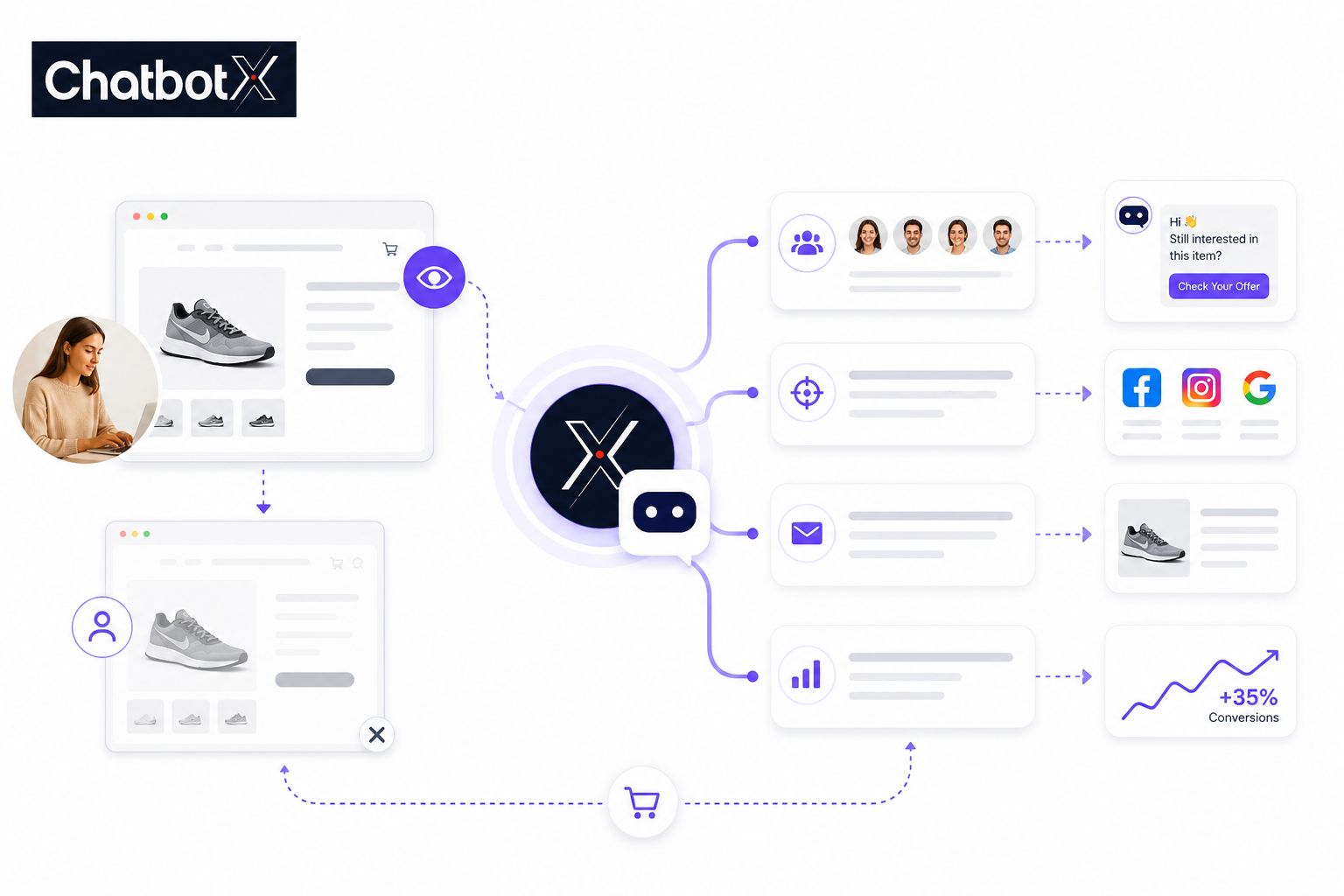
ChatbotX is an open-source agentic omnichannel chatbot platform built to automate exactly these kinds of high-stakes customer interactions. Rather than relying on passive ad impressions or easily-ignored emails, ChatbotX enables businesses to engage lost visitors through direct messaging – automatically, intelligently, and at scale.
Here is how the core workflow operates:
Visitor Behaviour Tracking and Segmentation
Before any outreach is possible, you need to understand what each visitor actually did on your site. ChatbotX’s CRM Contacts and segmentation tools capture detailed behavioural data – pages visited, products viewed, session duration, and purchase intent signals – then automatically tag contacts based on these patterns.
A visitor who spent four minutes on a specific product page is tagged differently from someone who added three items to their cart and then disappeared at the checkout. This granular segmentation is the foundation of effective remarketing, because it allows you to send a message that is directly relevant to what that individual was interested in – not a generic promotional blast.
Automated Omnichannel Outreach
Once a visitor leaves your site without converting, ChatbotX’s Remarketing feature can automatically trigger personalised follow-up messages across whichever channels the customer is most active on – WhatsApp, Messenger, Instagram Direct, Telegram, Zalo, or others.
The timing, content, and channel selection can all be configured using ChatbotX’s Flow Builder, which lets you design multi-step remarketing sequences visually without writing code. For example: a visitor who browsed a product might receive a WhatsApp message within one hour of leaving, followed by a Messenger reminder 24 hours later if they still have not returned, followed by a discount offer on day three.
According to research from HubSpot, conversational messaging channels consistently outperform email for both open rates and click-through engagement – which means this kind of sequenced outreach gets seen and acted upon far more reliably.
In-Session Intervention Before Visitors Leave
Remarketing does not have to wait until after a visitor has left. ChatbotX can trigger on-site chat interventions while a visitor is still browsing – for example, displaying a live chat prompt or automated offer when a user has spent a defined amount of time on a product page without adding to cart, or when they move their cursor toward the browser’s back button.
These in-session interventions can reduce bounce rates, answer last-minute objections, and convert hesitant visitors before they exit the funnel entirely. Combined with post-visit follow-ups, they create a comprehensive engagement layer that addresses every stage of the abandonment journey.
Cart Abandonment Recovery at Scale
Cart abandonment is the highest-stakes remarketing scenario. These visitors had sufficient intent to build a basket – they just did not complete the transaction. Common reasons include unexpected shipping costs, payment friction, distraction, or simply needing more time to decide.
ChatbotX’s automated cart recovery sequences can send a personalised WhatsApp message with a direct link back to the visitor’s basket, a summary of the items they left behind, and if appropriate, a time-limited incentive to complete the purchase. Because these messages arrive through messaging apps rather than email, they are seen almost immediately – and the direct link back to the cart removes any friction from the return journey.
For businesses looking to explore and contribute to the platform’s development, the full ChatbotX codebase is openly available at github.com/ChatbotXIO/ChatbotX, with detailed setup documentation for teams who want to self-host.
Building a Complete Remarketing Strategy in 2026
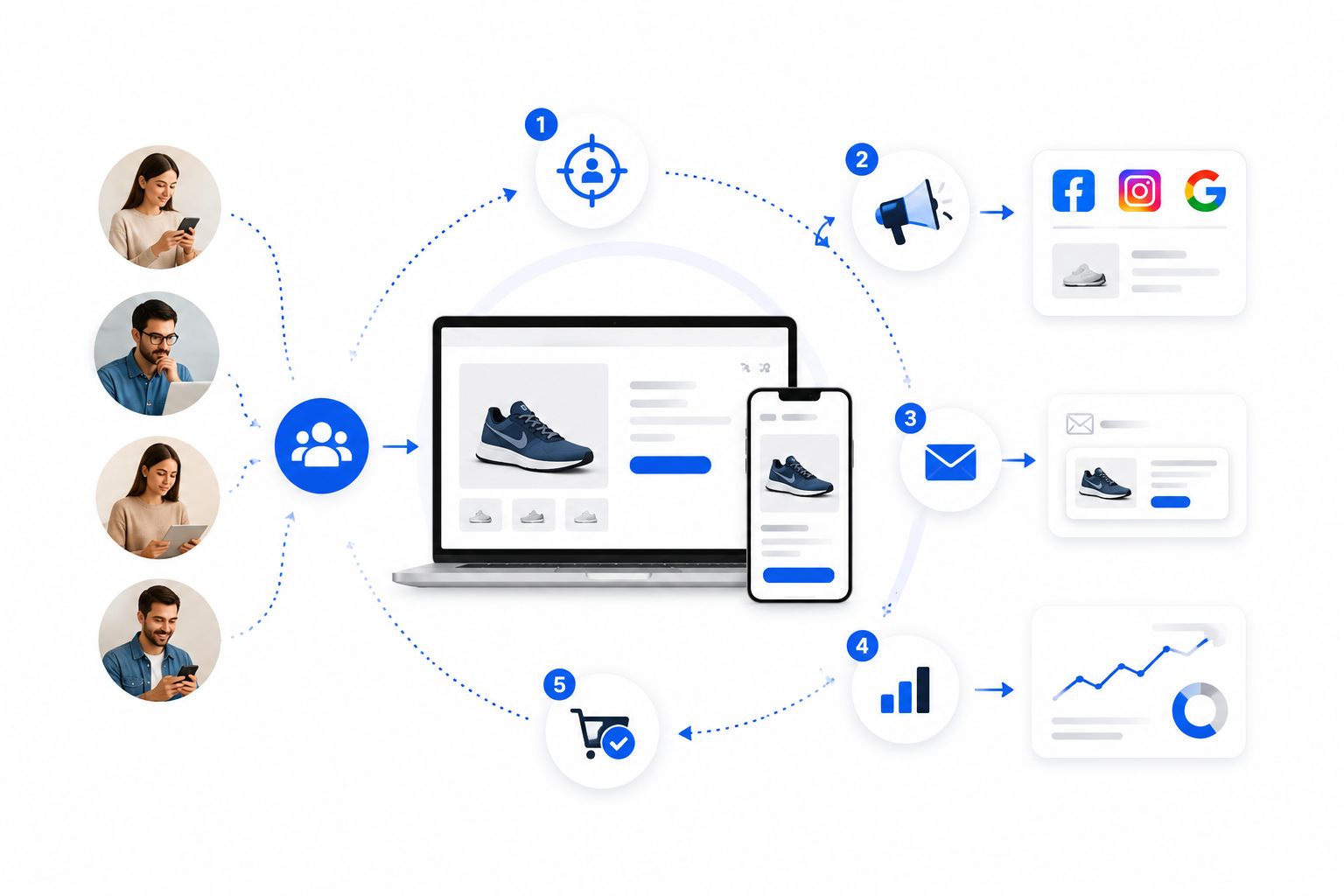
The most effective remarketing programs in 2026 are not single-channel. They layer complementary approaches to reach different audience segments through different touchpoints:
Layer 1 – Paid retargeting on Google and Meta for brand visibility and broad reach, particularly for visitors who did not opt into any messaging channels.
Layer 2 – Email sequences for subscribers, focused on educational content, personalised product recommendations, and loyalty incentives.
Layer 3 – Conversational remarketing through WhatsApp, Messenger, and other messaging apps for high-intent prospects – especially cart abandoners and product-page visitors who spent meaningful time on site.
Layer 4 – In-session intervention via live chat or AI chatbot prompts to reduce abandonment before it happens.
The logic is straightforward: not every visitor opted into every channel, and not every channel works equally well for every audience segment. A comprehensive strategy ensures that no high-intent visitor falls through the cracks simply because they happen not to use a particular platform.
You can also deepen your understanding of complementary strategies by reading ChatbotX’s guide to AI-powered omnichannel chatbots and how chatbot SEO is reshaping search-driven conversion in 2026.
Frequently Asked Questions About Website Remarketing
Why are my remarketing ads not converting despite high impressions?
High impressions with low conversions typically indicate one of two problems: audience targeting that is too broad (showing ads to people who visited your homepage briefly rather than engaging with specific products), or ad creative that is too generic to re-engage a visitor who already looked at something specific. Segment your remarketing audiences by behaviour and tailor ad creative to match what each segment actually viewed.
How many times should I retarget the same visitor before stopping?
There is no universal answer, but frequency caps matter. Showing the same ad to the same person 30 times in a week creates negative brand associations rather than converting. A reasonable starting point is a frequency cap of three to five impressions per week for display ads, combined with a time window that excludes anyone who has not been on your site in the past 30 days.
Is remarketing suitable for small e-commerce stores with limited budgets?
Remarketing is often more budget-friendly for small stores than broad awareness campaigns, because the audience is small and highly qualified. Spending $5 per day retargeting 200 active cart abandoners is likely to produce better returns than spending the same budget reaching 10,000 cold prospects. Start with cart abandonment remarketing – the highest-intent segment – before expanding to broader product-view audiences.
Does conversational remarketing through WhatsApp require customer opt-in?
Yes. WhatsApp Business API requires that users have previously opted in to receive messages from your business. ChatbotX’s Growth Tools include opt-in mechanisms and click-to-WhatsApp entry points that help you build compliant contact lists while growing your remarketing reach. Compliance is not optional – it protects both your customers and your business account standing. For detailed WhatsApp Business API policy guidance, Meta’s official documentation covers current requirements comprehensively.
How do I measure whether my remarketing is actually working?
Key metrics to track include: remarketing-attributed revenue (directly credited conversions), cart recovery rate (percentage of abandoned carts recovered), cost per recovered conversion, and messaging channel open and click rates. Set up UTM parameters on every remarketing link so you can attribute conversions accurately in your analytics. ChatbotX’s Analytics dashboard provides channel-level visibility into conversation outcomes and conversion performance. You can also explore the source code and contribute to analytics features directly on GitHub.
Start Recovering Lost Revenue Today
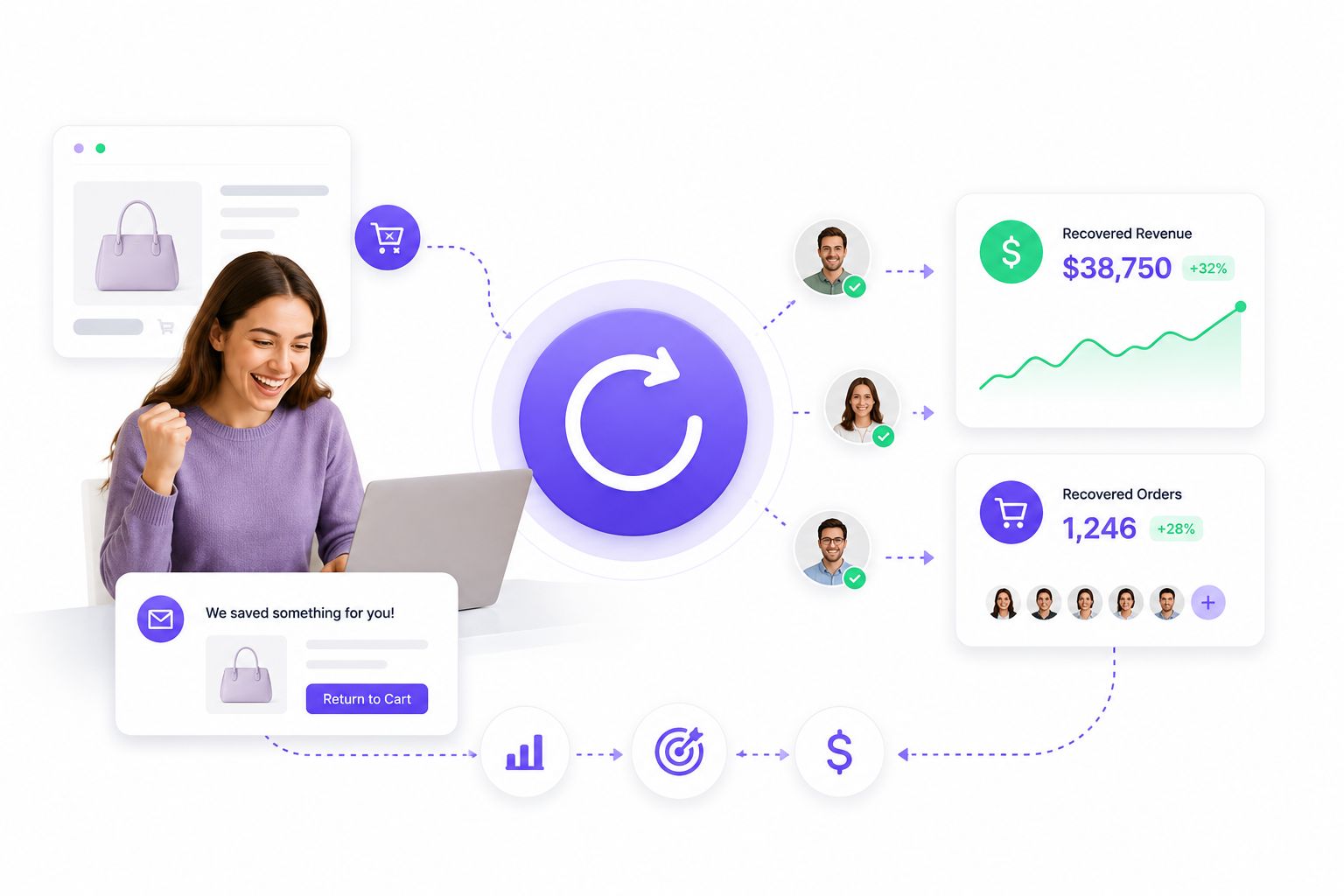
Every visitor who leaves your store without buying represents both a sunk acquisition cost and a potential future customer. Website remarketing – done well – turns that equation around. Instead of accepting a 97% abandonment rate as the cost of doing business online, you systematically re-engage the people who already expressed interest, across the channels where they are most likely to respond.
The businesses winning in e-commerce right now are not necessarily the ones with the biggest advertising budgets. They are the ones using data, automation, and conversational AI to build more touchpoints, more relevance, and more trust – without proportionally increasing their marketing spend.
Ready to build a remarketing system that actually converts? ChatbotX gives you the tools to track visitor behaviour, segment contacts, automate personalised follow-ups across WhatsApp, Messenger, Instagram, and more – all from a single open-source platform. Get started with ChatbotX today and turn your lost traffic into your next wave of customers.