Meta Description: Learn how to optimize chatbot visibility in 2026 using SEO, GEO, AI search optimization, omnichannel deployment, structured data, and AI citation strategies to increase traffic and conversions.
A chatbot that no one finds is a chatbot that does nothing. In 2026, placement is no longer just about embedding a widget in the bottom-right corner of your website; it is about dominating the new AI-driven search ecosystem. As traditional organic search traffic faces a projected 25% decline due to the rapid rise of Google AI Overviews, ChatGPT, and Perplexity, businesses must pivot from static indexing to active discovery.
In this complete guide, you will master chatbot visibility optimization – a powerful framework combining technical SEO, Generative Engine Optimization (GEO), and omnichannel deployment. By structuralizing your content for AI answer engines and optimizing your conversational touchpoints across WhatsApp and Messenger, you can secure high-authority citations, maximize multi-channel discovery, and capture AI-referred traffic that converts 4 to 5 times higher than conventional search.
Launch agentic chat marketing in minutes with ChatbotX











Introduction: Visibility Has Changed — Has Your Chatbot Strategy?
A chatbot that no one finds is a chatbot that does nothing.
For years, “chatbot visibility” meant placing a widget in the bottom-right corner of a webpage and hoping visitors would click. In 2026, that definition is obsolete. The rules of discovery have been rewritten by generative AI – and businesses that fail to optimize for the new landscape are quietly losing ground to competitors who have already adapted.
Search behavior has shifted dramatically. Google AI Overviews now appear in up to 60% of search results pages. Tools like ChatGPT and Perplexity collectively handle over a billion queries per month. According to Gartner, traditional organic search traffic is projected to decline 25% by 2026 as users migrate to AI-powered interfaces. And here is the commercial reality: visitors arriving via AI-referred traffic convert at rates 4 to 5 times higher than those from conventional search.
This guide covers everything you need to know about chatbot visibility optimization in 2026 – from foundational SEO to Generative Engine Optimization (GEO), structured data, omnichannel deployment, and the tools that make it all work together.
What Is Chatbot Visibility Optimization?

Chatbot visibility optimization is the practice of ensuring that your AI chatbot – and the brand behind it – is discoverable across every surface where your potential customers are looking. In 2026, that means:
- Google Search and AI Overviews – traditional and generative results
- ChatGPT, Perplexity, Gemini – conversational AI engines that synthesize cited answers
- Social messaging platforms – WhatsApp, Messenger, Instagram, and beyond
- On-site discoverability – making sure users actually find and engage with your chatbot widget once they land on your page
The discipline sits at the intersection of SEO, content strategy, and conversational AI deployment. You cannot optimize one without considering the others.
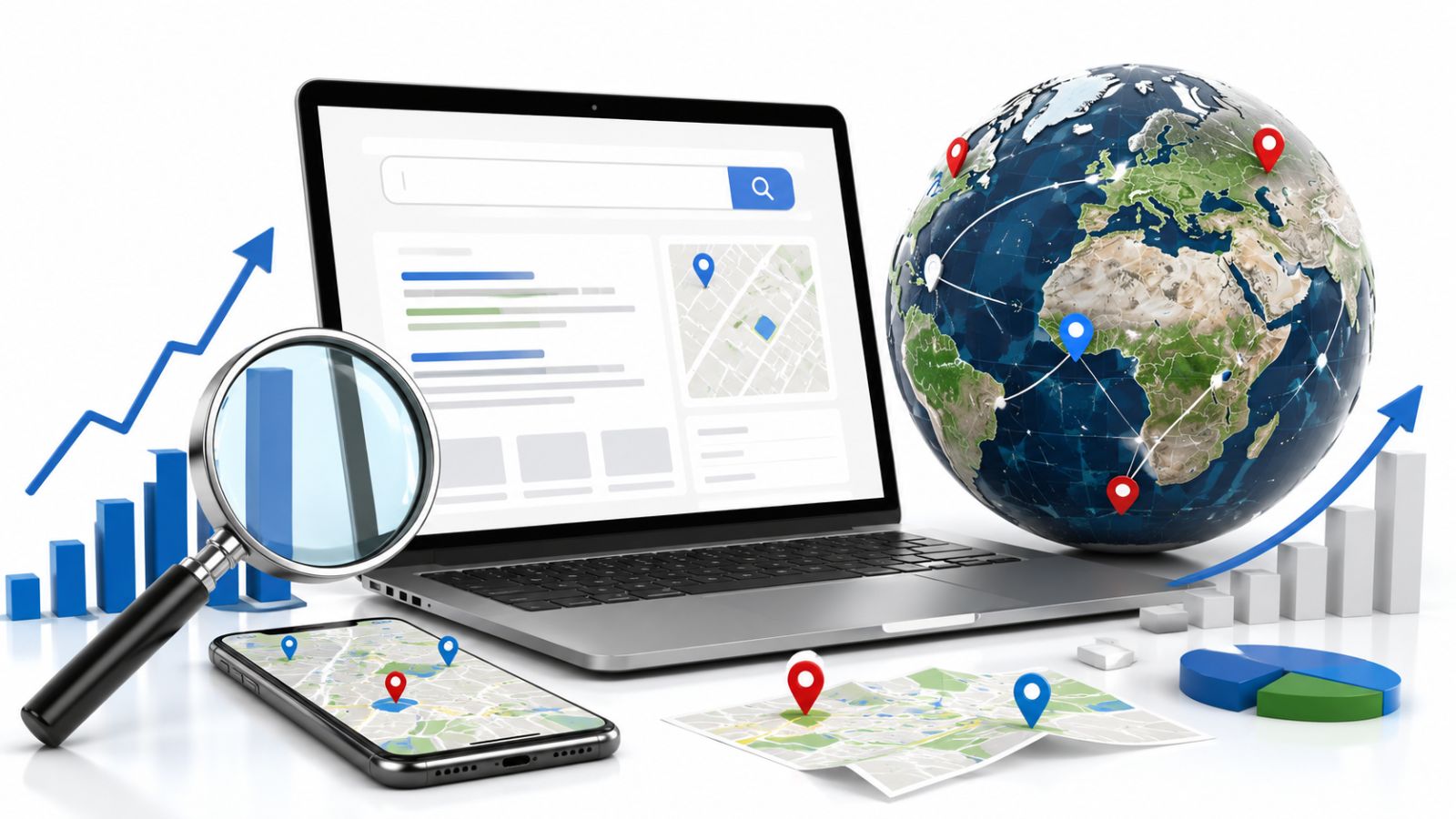
Part 1: The New Search Landscape — SEO Meets GEO
Traditional SEO Still Matters
Core SEO fundamentals remain non-negotiable in 2026. Page speed, mobile-first indexing, E-E-A-T (Experience, Expertise, Authoritativeness, Trustworthiness), and structured internal linking are the bedrock on which everything else is built. If your chatbot product pages are slow, thin, or poorly structured, no amount of AI optimization will compensate.
Key on-page priorities for chatbot-related content:
- Target long-tail, intent-rich keywords – “AI chatbot for WhatsApp marketing,” “open-source chatbot platform for e-commerce,” “how to automate customer support with chatbot”
- Structure content with clear H2/H3 hierarchies so both crawlers and LLMs can extract meaning efficiently
- Use FAQ sections with JSON-LD schema – FAQPage structured data makes your Q&A pairs directly machine-readable by AI search engines, dramatically increasing citation probability
Generative Engine Optimization (GEO): The New Frontier
GEO is the practice of optimizing content to be discovered, cited, and recommended by AI answer engines. Research from a Princeton University study – the foundational peer-reviewed paper that formalized GEO – found that including statistics increased AI visibility by +32%, citations by +30%, and direct quotations by +41%.
For chatbot businesses, GEO means:
1. Entity authority – Ensure your brand is consistently named and described across your own properties, third-party directories, industry publications, and forums. AI systems build entity graphs, and inconsistency kills authority.
2. Citation-worthy content – Publish data-backed articles, case studies with measurable outcomes, and comparison guides. AI engines prefer content they can cite to answer specific questions.
3. Structured, extractable answers – Write in direct answer format. When someone asks “What is the best open-source chatbot for WhatsApp?” your page should contain a clear, quotable answer – not a wall of generic prose.
4. AI crawler accessibility – Check your robots.txt to confirm you are not inadvertently blocking AI crawlers like GPTBot or PerplexityBot. Many sites do this without realizing it.
According to research from GEO firm Brandlight, the overlap between top Google-ranked pages and AI-cited sources has dropped from 70% to below 20%. Ranking on Google no longer guarantees inclusion in AI-generated answers – GEO requires its own dedicated strategy.
Part 2: On-Site Chatbot Visibility — Getting Users to Engage

Even the most technically advanced chatbot fails if users do not notice it or understand what it does. On-site visibility optimization addresses this gap.
Placement and Trigger Strategy
The standard bottom-right widget is no longer sufficient as a sole placement. High-performing teams in 2026 deploy chatbots with:
- Proactive triggers – chatbot initiates conversation after a user spends 30 seconds on a pricing page, or after scroll depth reaches 60%
- Contextual placement – embedding chat entry points within blog posts, product pages, and FAQ sections rather than relying solely on the floating widget
- Exit-intent triggers – engaging users who are about to leave with a relevant offer or question
Messaging Clarity
Users should immediately understand what the chatbot can do. Vague openers like “Hi! How can I help?” convert poorly. Specific, context-aware openers like “Looking for pricing on the Pro plan? I can walk you through it in 60 seconds” convert significantly better.
Test your opener copy the same way you test ad headlines – because it is, functionally, your first conversion touchpoint.
Mobile Optimization
With the majority of messaging interactions now happening on mobile devices, your chatbot interface must be optimized for small screens. This means touch-friendly buttons, minimal text input requirements (use quick-reply chips wherever possible), and fast load times on 4G connections.
Part 3: Omnichannel Visibility — Being Where Your Customers Are
In 2026, chatbot visibility is not limited to your website. Your customers are on WhatsApp, Messenger, Instagram, and beyond – and they expect to find you there too.
Why Omnichannel Matters for Discovery
A chatbot deployed only on your website misses the majority of modern customer interactions. Consider: WhatsApp has over 2 billion monthly active users. Facebook Messenger processes billions of messages daily. A business that appears on these platforms – with automated, intelligent responses – enjoys a form of always-on visibility that no static webpage can match.
Omnichannel deployment also creates SEO signal diversity. When your brand is consistently mentioned, linked, and engaged with across multiple platforms, it builds the cross-channel authority signals that both traditional search engines and AI systems use to assess trustworthiness.
Remarketing and Re-engagement as a Visibility Loop
Chatbot visibility is not a one-time event – it is a loop. A user who engages with your chatbot on Messenger today can be re-engaged with a targeted broadcast tomorrow. Each touchpoint reinforces brand recognition and keeps your business top of mind.
ChatbotX Remarketing enables businesses to automate follow-up sequences based on user behavior – turning a single chatbot interaction into a multi-touch engagement campaign across WhatsApp, Messenger, and beyond.
Part 4: Content Strategy for Chatbot Visibility

Build Topic Clusters, Not Isolated Pages
Google’s 2026 algorithm heavily rewards topic authority. Instead of writing a single page about “WhatsApp chatbots,” build a cluster:
- Pillar page: Complete Guide to WhatsApp Chatbots in 2026
- Cluster pages: WhatsApp chatbot for e-commerce, WhatsApp broadcast campaigns, WhatsApp chatbot vs. email marketing, how to build a WhatsApp chatbot without code
Each cluster page links back to the pillar and to relevant product/feature pages. This architecture signals deep topical expertise to both Google and AI search engines.
Video and Multimedia Content
AI search engines increasingly surface content that appears in multiple formats. A blog post that is also a YouTube walkthrough, an Instagram carousel, and a LinkedIn article reaches more surface areas – and creates more citation opportunities. Plan content production with format diversity in mind from the start.
User-Generated Content and Reviews
Third-party validation is one of the strongest GEO signals. Actively encourage customers to leave reviews on G2, Capterra, and Product Hunt. Engage with community discussions on Reddit and developer forums. These external mentions create the distributed authority footprint that AI systems use to validate expertise.
Part 5: Technical SEO Foundations for Chatbot Platforms
Technical quality is table stakes. Without it, every other optimization effort is undermined.
Core Web Vitals
Google’s ranking algorithm uses Core Web Vitals – Largest Contentful Paint (LCP), Interaction to Next Paint (INP), and Cumulative Layout Shift (CLS) – as direct ranking factors. For SaaS and chatbot product pages, the most common failure points are:
- Unoptimized hero images inflating LCP
- Third-party scripts (analytics, chat widgets themselves) delaying INP
- Dynamic content causing CLS during load
Audit monthly and treat regressions as P1 issues.
Schema Markup for SaaS and Chatbot Products
Beyond FAQPage schema, chatbot platforms benefit from:
- SoftwareApplication schema – communicates product category, operating system, pricing, and rating to search engines
- HowTo schema – structures step-by-step guides in a format AI engines extract directly for featured answers
- Organization schema – establishes brand entity information including social profiles and contact details
Internal Linking Architecture
Every blog post and resource should link to relevant feature pages, and feature pages should link back to supporting educational content. A clean internal link structure distributes page authority, helps Google understand your site taxonomy, and – critically – gives AI crawlers a clear map of what your product does and who it is for.
ChatbotX AI Agents and ChatbotX Flow Builder pages are natural link targets from content covering chatbot automation, conversational AI workflows, and no-code chatbot construction – ensuring that topically relevant traffic lands on pages designed to convert.
Part 6: Measuring Chatbot Visibility in 2026
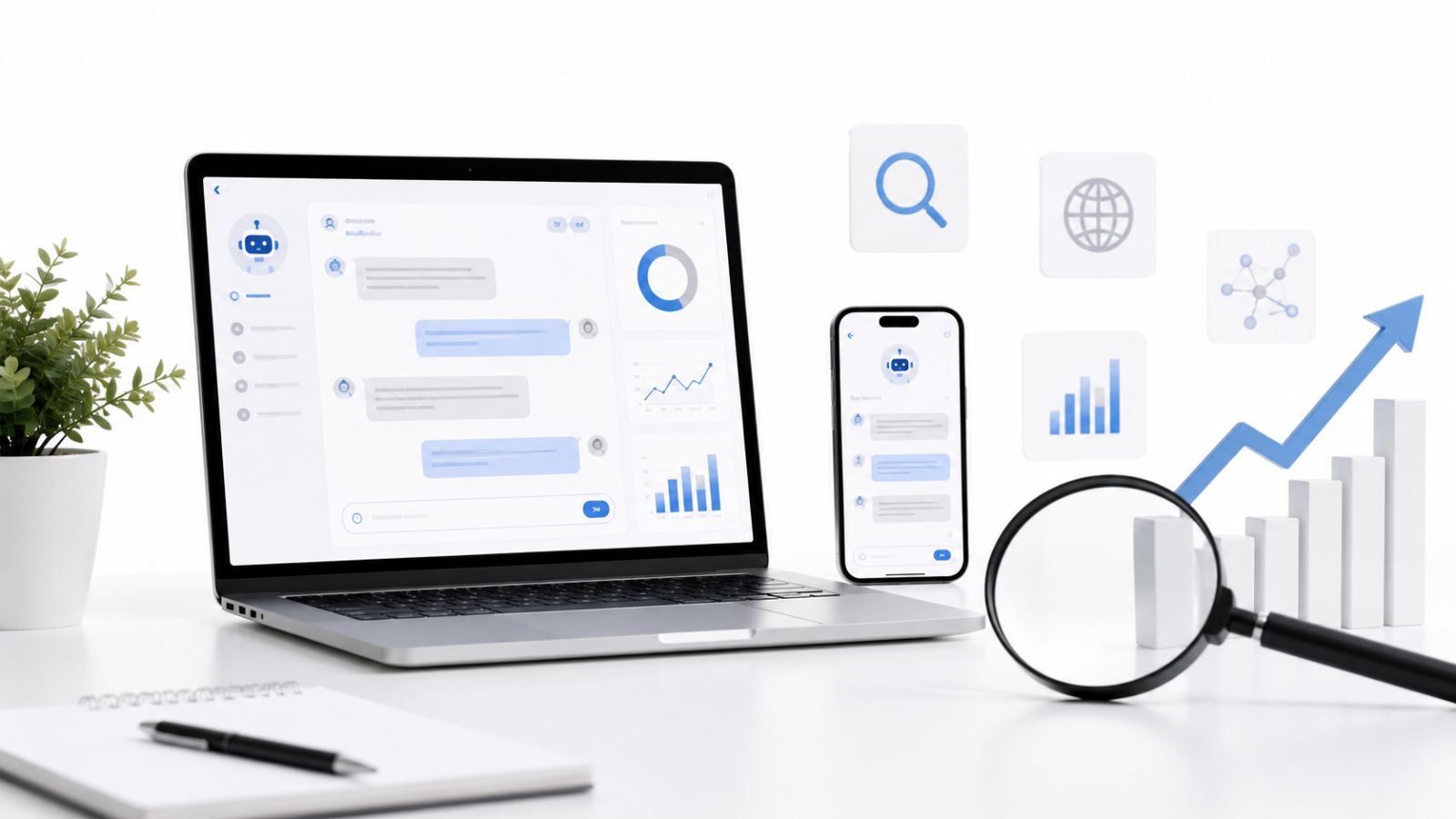
You cannot optimize what you cannot measure. In 2026, a complete visibility measurement stack includes:
Traditional SEO metrics:
- Organic impressions and clicks (Google Search Console)
- Keyword rankings for target terms
- Core Web Vitals scores
- Backlink growth and domain authority
AI visibility metrics:
- Brand mention frequency in ChatGPT, Perplexity, and Gemini responses
- Share of voice in AI-generated category answers
- AI-referred traffic in analytics (identifiable via referrer strings from AI platforms)
- Conversion rate of AI-referred sessions (typically significantly higher than organic)
Tools like Semrush’s Enterprise AIO now track brand visibility across AI platforms specifically, providing granular data on mentions, sentiment, and competitive benchmarking – capabilities that did not exist in standard SEO toolkits two years ago.
How ChatbotX Supports Your Visibility Strategy
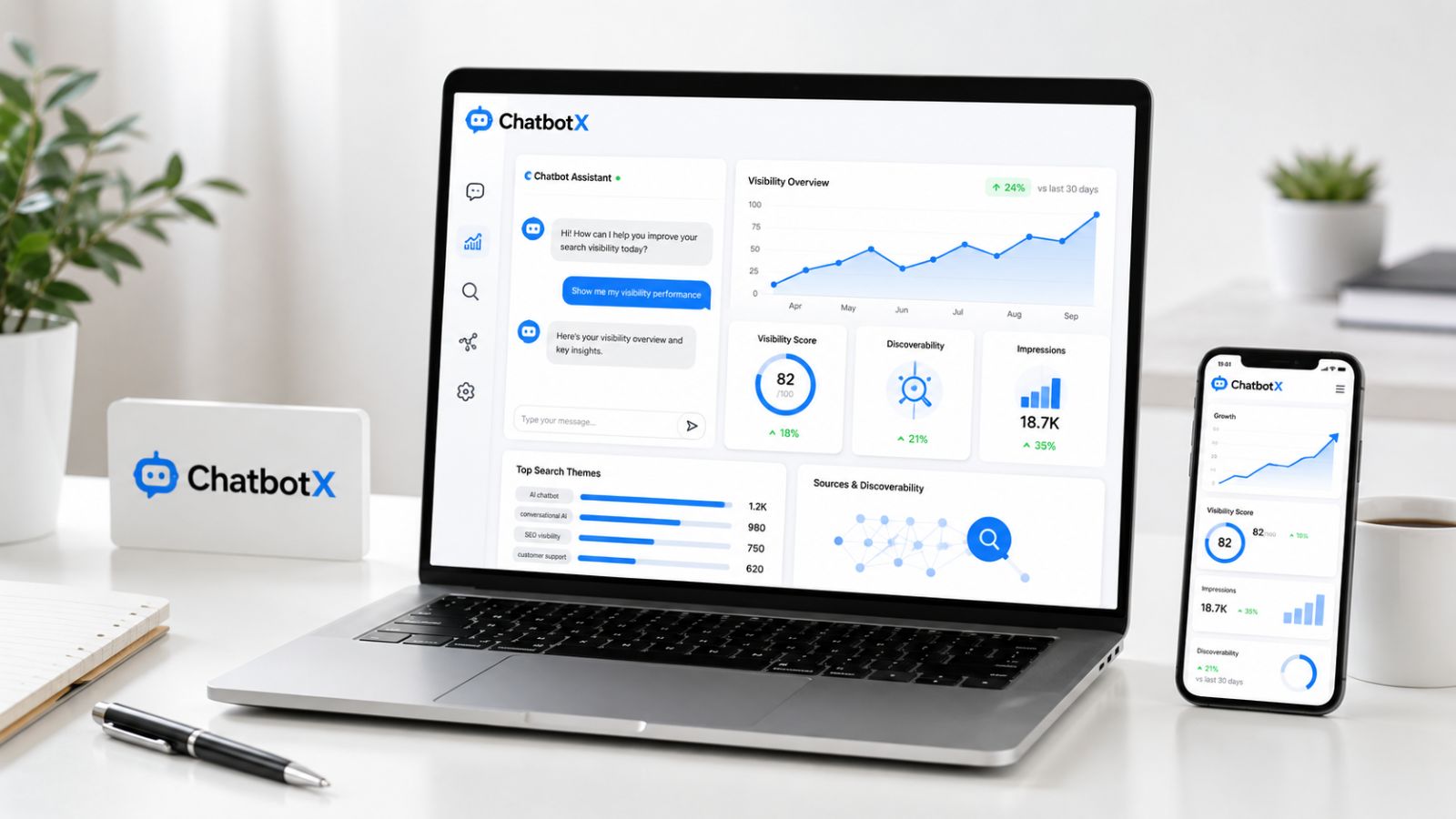
No chatbot visibility strategy succeeds without the right platform underneath it. The tools you choose determine what is technically possible – and how fast you can move.
ChatbotX is an open-source, AI-first omnichannel chat marketing platform built for businesses that want full control over their conversational infrastructure. Unlike closed SaaS tools with feature restrictions and pricing tiers, ChatbotX gives developers and marketers the ability to customize, extend, and self-host without lock-in.
Here is how ChatbotX directly supports chatbot visibility optimization:
Omnichannel deployment from day one. ChatbotX supports WhatsApp, Facebook Messenger, Instagram, Zalo, Telegram, and Webchat from a single platform. Deploying across channels multiplies your brand’s discoverable surface area – every channel where your chatbot operates is a channel where customers can find you.
Shared Inbox for unified visibility. All customer conversations from every channel flow into a single, collaborative inbox – eliminating the blind spots that fragmented tools create and ensuring no engagement opportunity is missed.
Open-source transparency. Businesses and developers can review the entire codebase, contribute features, and deploy on their own infrastructure. For enterprise buyers and AI systems alike, open-source transparency is a credibility signal. You can explore the project and contribute at github.com/ChatbotXIO/ChatbotX.
Community and ecosystem. An active open-source community generates organic mentions, third-party integrations, and developer content – all of which contribute to the distributed authority footprint that GEO requires. Star the repository and join the contributor community at github.com/ChatbotXIO/ChatbotX.
For a deeper look at how AI-powered workflows are reshaping marketing automation in 2026, read the ChatbotX blog on how social media algorithms really work in 2026 and how to beat them – and for teams building more sophisticated agentic workflows, see the guide on designing a personal AI agent as an intelligent daily operating system.
Frequently Asked Questions
What is chatbot visibility optimization?
Chatbot visibility optimization is the practice of ensuring your AI chatbot and brand are discoverable across search engines, AI answer platforms, and social messaging channels – maximizing the number of relevant touchpoints where potential customers can find and engage with your chatbot.
How is GEO different from SEO for chatbot platforms?
Traditional SEO optimizes for ranked links in Google search results. GEO (Generative Engine Optimization) optimizes for citations within AI-generated answers from tools like ChatGPT, Perplexity, and Google AI Overviews. Both are necessary in 2026 – SEO drives volume; GEO drives high-intent, high-converting traffic.
Does omnichannel deployment improve chatbot visibility?
Yes. Each additional channel – WhatsApp, Messenger, Instagram – expands the surface area on which your brand can be discovered and engaged. Cross-channel consistency also strengthens the entity authority signals that AI search systems use to validate brand credibility.
What schema markup should chatbot platforms use?
SoftwareApplication schema, FAQPage schema, HowTo schema, and Organization schema are the highest-priority structured data types for chatbot product pages and educational content.
How do I measure AI visibility for my chatbot brand?
Track brand mention frequency in ChatGPT, Perplexity, and Gemini responses. Monitor AI-referred traffic in your analytics platform. Use tools like Semrush Enterprise AIO for structured share-of-voice tracking across AI search platforms.
Conclusion: Start Now — The Visibility Gap Is Already Opening
Chatbot visibility optimization in 2026 is not a future-state concern – it is a present competitive reality. The businesses that dominate AI search results, appear on every relevant messaging channel, and produce content that AI engines cite as authoritative are already pulling ahead. The gap between them and businesses still relying on 2023-era tactics is widening every month.
The good news: the playbook is clear. Invest in GEO alongside traditional SEO. Deploy your chatbot across all channels where your customers are active. Build topic authority through structured, data-backed content. Measure AI visibility with the same discipline you apply to organic rankings.
Ready to Make Your Chatbot Impossible to Ignore?
ChatbotX gives you the platform to put this strategy into action – across every channel, without the lock-in.
Whether you are building from scratch or migrating from a closed SaaS tool, ChatbotX’s open-source foundation, omnichannel deployment, and AI agent capabilities give you everything you need to deploy a chatbot that gets found, gets engaged, and drives real business results.
👉 Start your free trial at chatbotx.io – no credit card required, no contact limits, and full access to every feature for 7 days.
👉 Explore the open-source codebase on GitHub – star the repo, review the architecture, and join a growing community of developers building the future of conversational marketing.
Your competitors are optimizing their chatbot visibility right now. The best time to start was six months ago. The second-best time is today.