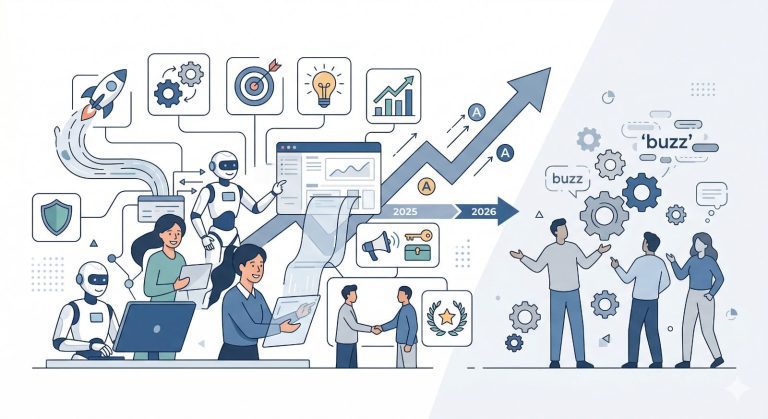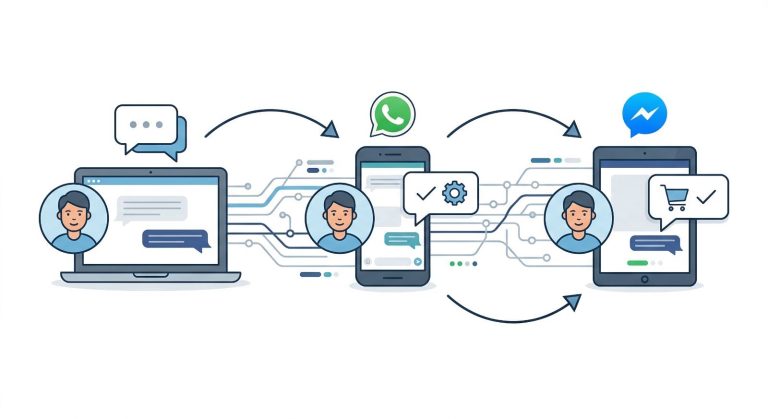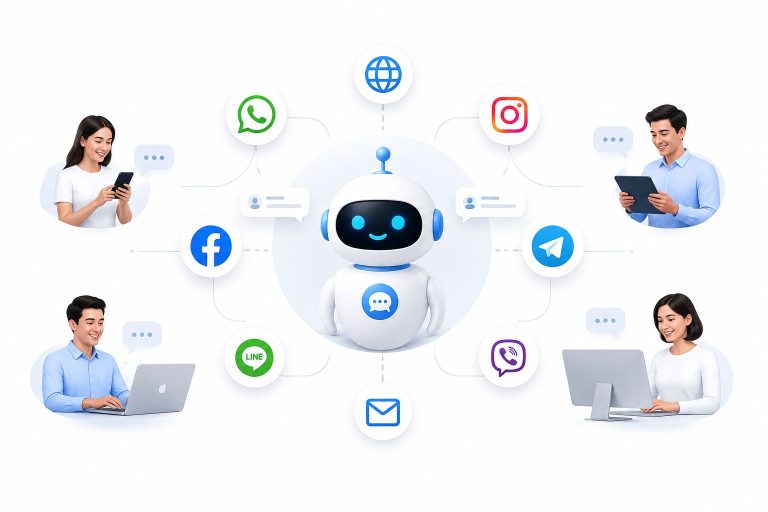
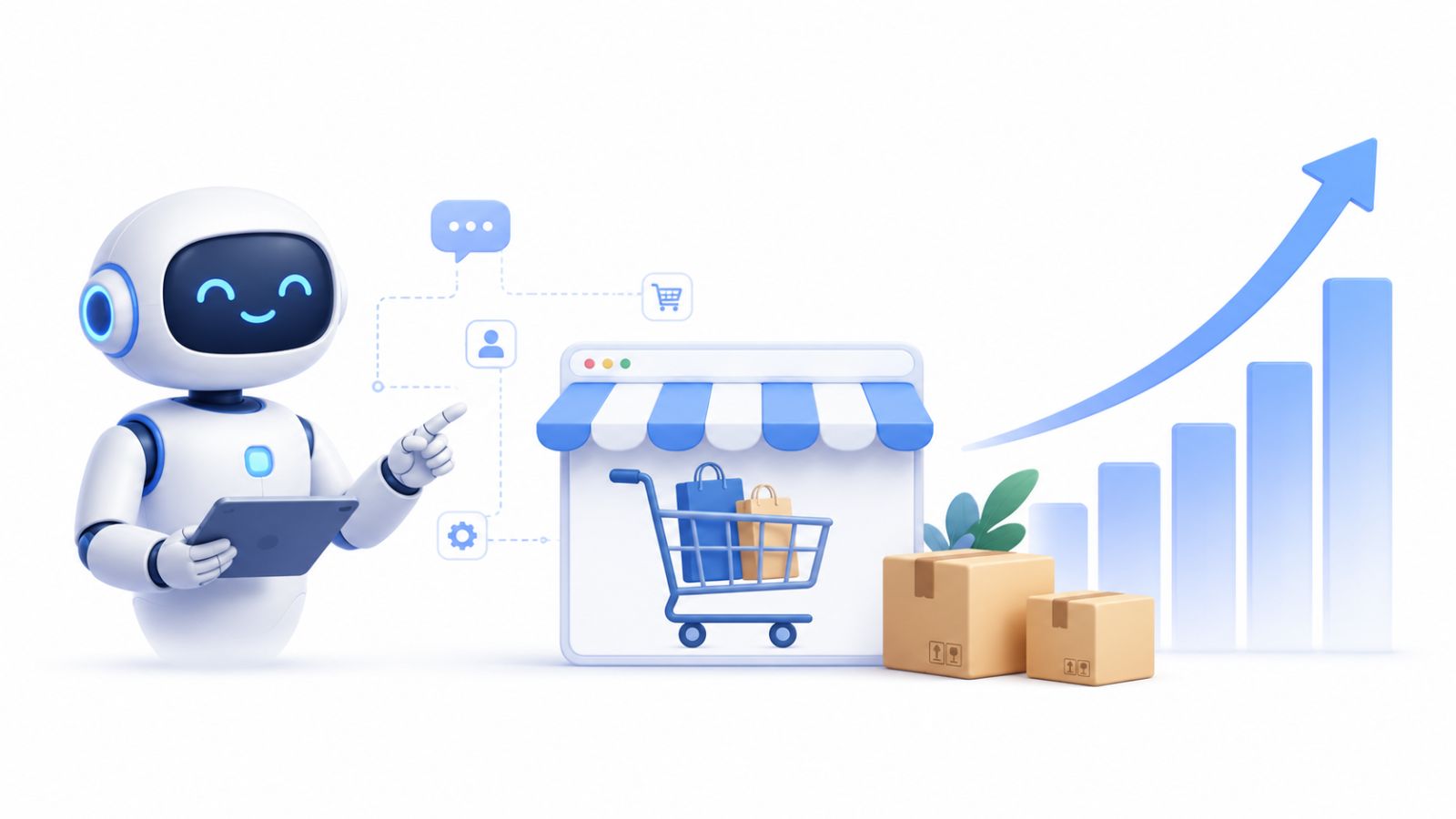
Modern online shoppers expect instant, round-the-clock support gaps in response time directly kill conversions. Deploying autonomous AI sales agents allows brands to go far beyond scripted bots by handling personalized product recommendations, automated cart recovery, and proactive multi-channel outreach simultaneously. As a result, businesses implementing conversational AI report significant lifts in average order value (AOV) and repeat purchase rates.
- Modern online shoppers expect instant, round-the-clock support gaps in response time directly kill conversions.
- AI sales agents go far beyond scripted bots by handling personalized recommendations, cart recovery, and proactive outreach simultaneously.
- Businesses that deploy conversational AI across multiple channels report significant lifts in average order value and repeat purchase rates.
- Open-source platforms like ChatbotX let teams build, customize, and own their AI agent stack without vendor lock-in.
Launch agentic chat marketing in minutes with ChatbotX













The New E-Commerce Battlefield
Global e-commerce revenue is on track to exceed $7 trillion by the end of 2026, according to Statista’s latest retail projections. Yet, despite unprecedented market size, conversion rates across most online stores hover between just 1–3%. The gap between traffic and transactions is not a product problem it is a conversation problem.
Shoppers today comparison-shop across five or more touchpoints before buying. They expect answers in seconds, personalized suggestions that match their intent, and seamless experiences whether they reach out on WhatsApp at midnight or through a website chat at noon. Traditional static chatbots and human-only support desks simply cannot meet that bar at scale.
This is where AI sales agents step in not as a novelty, but as a core revenue infrastructure layer.
What Exactly Is an AI Sales Agent?
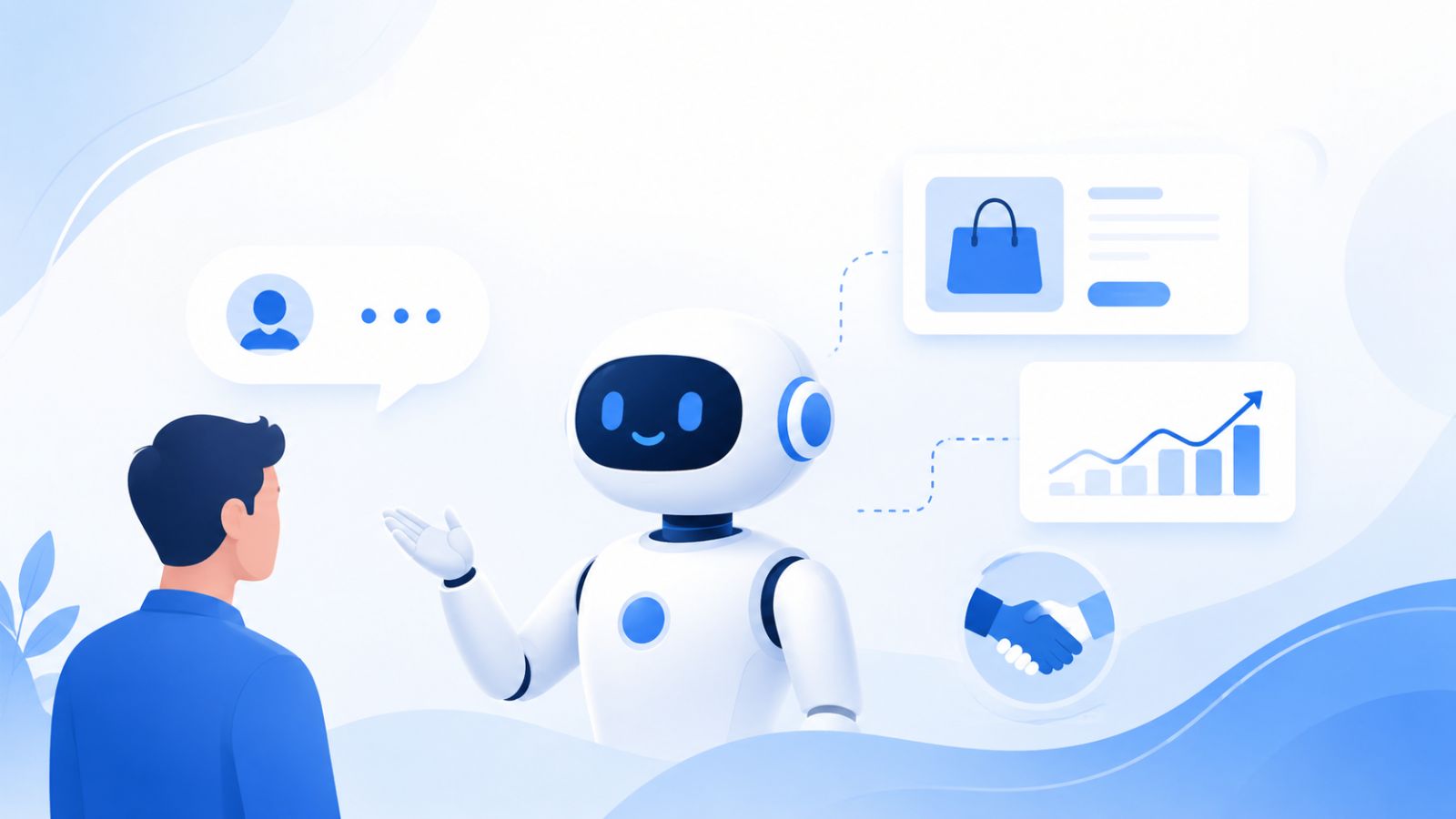
An AI sales agent is an autonomous, conversational system that engages customers across digital channels, interprets their intent using natural language processing, and takes goal-directed actions – recommending products, answering objections, sending follow-up messages, and guiding buyers toward a purchase without requiring constant human oversight.
Unlike the rule-based bots of the early 2020s, today’s AI agents:
- Understand context, not just keywords
- Adapt tone and messaging based on the customer’s profile and behavior
- Operate across channels web chat, WhatsApp, Messenger, Instagram, Telegram, Email – simultaneously
- Integrate with CRM and order systems to give real answers, not canned responses
- Learn from interaction data to refine recommendations over time
The practical result is a sales assistant that works 24 hours a day, handles thousands of conversations in parallel, and never has an off day.
How AI Sales Agents Fuel Revenue Growth
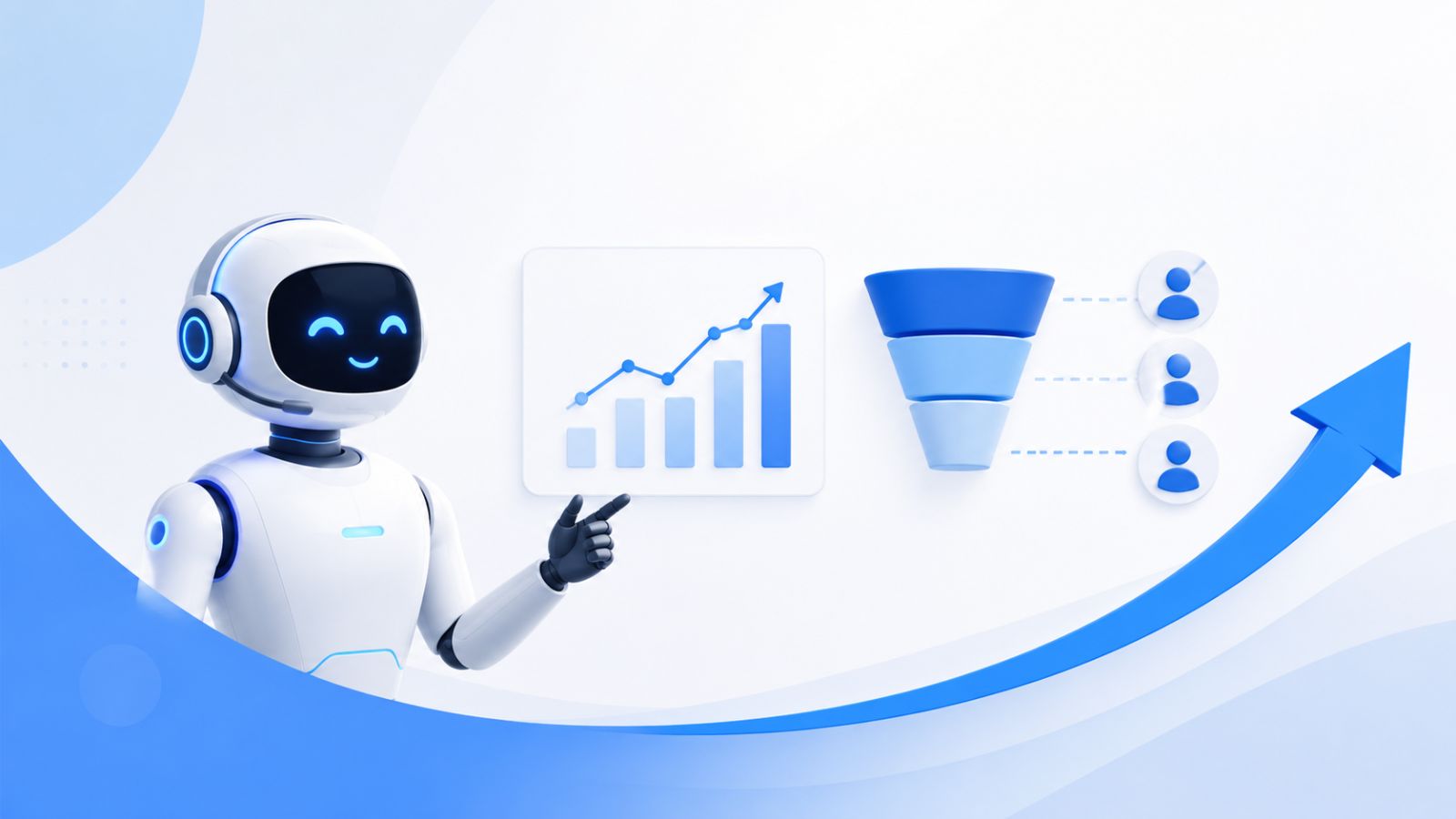
1. Always-On Customer Engagement {#always-on-customer-engagement}
Every unanswered question is a potential lost sale. Research from Salesforce’s State of the Connected Customer report consistently shows that response speed is among the top three factors influencing purchase decisions in competitive categories.
AI sales agents eliminate response latency entirely. A customer asking about stock availability at 2 AM on a Saturday receives an accurate, helpful reply in seconds. This around-the-clock availability is especially impactful for brands selling across time zones or running flash promotions where high intent windows are narrow.
Business impact:
- Reduction in bounce rate from unanswered pre-sale questions
- Higher engagement rates on promotional campaigns running outside office hours
- Consistent brand voice across all interaction touchpoints
2. Hyper-Personalized Product Discovery
Generic “You might also like” carousels have become invisible to experienced online shoppers. What moves the needle in 2026 is contextual personalization recommendations served inside an active conversation, anchored to what the customer just expressed.
An AI sales agent can simultaneously reference a customer’s browsing history, past purchase behavior, stated preferences in the current chat, and real-time inventory to surface products with genuinely high relevance. If someone mentions they are shopping for a birthday gift with a specific budget, the agent can filter, rank, and present options in natural language far more useful than a filtered search result page.
According to McKinsey’s research on AI-powered marketing and sales, companies that excel at personalization generate 40% more revenue from those activities than average players. AI agents are the delivery mechanism that makes personalization viable at scale.
Business impact:
- Higher average order values through contextual upsell and cross-sell
- Shorter time-to-purchase through guided discovery
- Improved customer satisfaction scores when shoppers feel understood
3. Automated Remarketing Campaigns
Re-engaging customers who have shown purchase intent but not yet converted is one of the highest-ROI activities in e-commerce marketing. AI agents make this systematic rather than manual.
Using behavioral triggers a product page view, a wishlist addition, a pricing inquiry the agent can schedule and send personalized follow-up messages across the customer’s preferred channel. A shopper who spent time comparing two laptop models can receive a message the next morning that addresses the likely concern (weight vs. battery life, for example) with a clear recommendation and a limited-time offer.
With ChatbotX’s Remarketing feature, businesses can build these re-engagement flows visually, targeting segments by behavior, channel, and timing – \no developer required for most use cases. The result is remarketing that feels like a helpful nudge rather than a generic blast.
4. Abandoned Cart Recovery at Scale
Cart abandonment rates average above 70% across e-commerce categories. Recovering even a fraction of those sessions has an outsized impact on revenue. The challenge is that effective cart recovery requires timing, relevance, and the right channel – all at once.
AI sales agents solve this by:
- Detecting abandonment events in real time
- Waiting an intelligent interval (not too soon, not too late)
- Sending a personalized message on the channel where the customer is most active
- Addressing likely friction points (shipping cost, return policy, size uncertainty) proactively
- Offering a targeted incentive only when behavioral signals suggest price sensitivity
This is a core workflow you can explore in the ChatbotX Flow Builder a visual drag-and-drop interface that maps out multi-step automated conversations across channels without requiring you to write a single line of code.
5. Post-Purchase Loyalty Loops
Acquiring a new customer costs five to seven times more than retaining an existing one. Yet most e-commerce stores invest the bulk of their AI and automation budget on pre-purchase journeys.
AI sales agents extend value into the post-purchase phase by:
- Sending proactive delivery updates that reduce “where is my order?” inquiries
- Requesting reviews and feedback at the right moment in the fulfillment journey
- Suggesting complementary products when a replenishment window opens (e.g., consumables running low)
- Delivering exclusive returning-customer offers that make loyalty tangible
These touchpoints compound. A customer who feels genuinely served after their first purchase is significantly more likely to return – and to refer others.
For a deeper look at how AI is reshaping the customer service side of this equation, the Customer Service Statistics 2026 guide on the ChatbotX blog covers the data every e-commerce team should benchmark against.
Meet ChatbotX — The Open-Source AI Agent for Modern Commerce
ChatbotX is an open-source, agentic omnichannel chatbot platform built for businesses that want full control over their conversational AI infrastructure. Unlike proprietary SaaS tools that lock your data and workflows behind closed APIs, the platform lets you self-host, customize, and extend every component of your AI sales stack.
Why it stands out for e-commerce:
| Capability | What It Means for Your Store |
|---|---|
| AI Agents | Deploy autonomous agents that handle sales, support, and follow-ups without scripted menus |
| Flow Builder | Design entire customer journeys visually – from first contact to post-purchase |
| Remarketing | Re-engage high-intent visitors across WhatsApp, Messenger, Instagram, Telegram, and more |
| Omnichannel Inbox | Unify all conversations in one place for your human agents when escalation is needed |
| CRM Contacts | Segment customers by behavior, lifecycle stage, and purchase history |
| Open-Source Core | Full transparency, self-hosting option, and an active contributor community |
You can explore the codebase, review the architecture, and contribute directly via the open-source omnichannel AI chatbot repository on GitHub. For teams who want to verify platform stability before adopting new features, the latest AI chatbot version release notes serve as the authoritative changelog.
The platform went fully open-source in May 2026, making it one of the most transparent and community-driven options in the conversational commerce space. For context on how AI-powered digital workforces are reshaping business operations at a broader level, the AI Employees & the Digital Workforce: The Complete 2026 Business Guide provides a compelling strategic overview.
Why 2026 Is the Tipping Point for Conversational Commerce
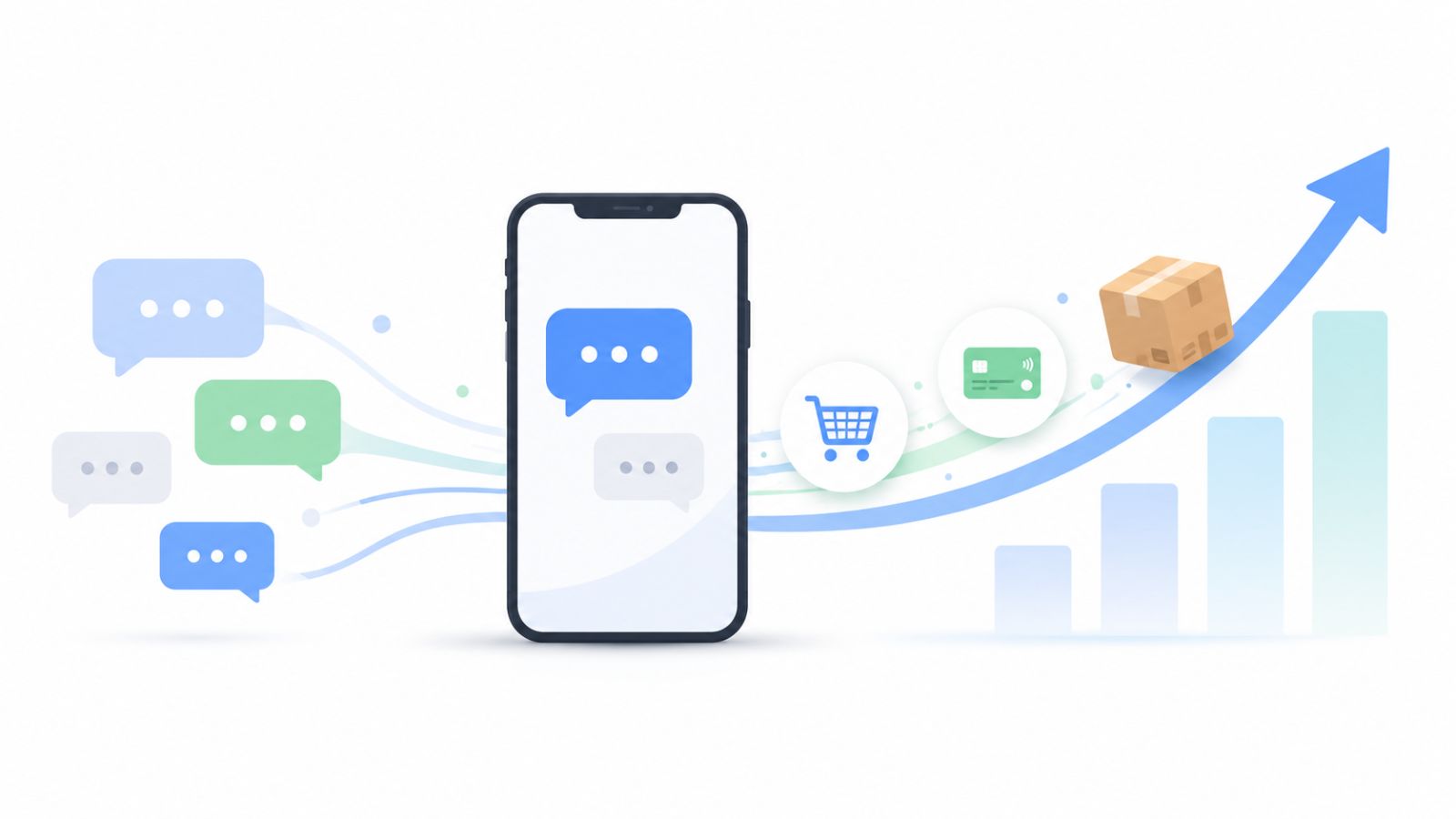
Several forces are converging to make 2026 the year AI sales agents move from competitive advantage to competitive necessity:
1. Customer expectations have permanently shifted.
Post-2024 consumers have interacted with high-quality AI across dozens of services. Clunky bots that offer three menu options are now a trust signal in the wrong direction.
2. Messaging app commerce is exploding.
WhatsApp’s business messaging ecosystem now reaches more than 2 billion active users. Brands that engage natively inside messaging apps – rather than redirecting to websites – see measurably higher purchase completion rates.
3. First-party data is the only data.
With third-party cookies largely eliminated and ad targeting less precise, the richest customer insight now lives in direct conversations. AI agents are the most scalable way to have those conversations and capture that intelligence.
4. The cost of not automating is rising.
Human support costs are increasing while customer tolerance for slow responses is decreasing. The math on AI-powered support and sales automation has become favorable for stores of virtually any size.
Building Your AI Sales Strategy: A Practical Roadmap
If you are ready to move from concept to implementation, here is a phased approach:
Phase 1 – Audit Your Conversation Gaps (Week 1–2)
Identify where customers are dropping off, what questions go unanswered, and which channels generate the most inbound intent signals. This data shapes your automation priorities.
Phase 2 – Deploy Core Flows (Week 3–4)
Start with the highest-ROI automations: FAQ handling, product inquiry responses, and abandoned cart recovery. These deliver measurable results quickly and build team confidence.
Phase 3 – Add Personalization Layers (Month 2)
Integrate your product catalog and customer data to enable contextual recommendations. Enable behavioral triggers for remarketing sequences.
Phase 4 – Optimize with Conversation Analytics (Ongoing)
Use performance data to identify where customers hesitate, where agents hand off to humans, and which message variants drive the highest conversion. Iterate continuously.
FAQ
How does an AI sales agent differ from a traditional chatbot?
Traditional chatbots follow rigid decision trees and fail when a customer says something unexpected. AI sales agents use large language models to interpret intent flexibly, hold context across a conversation, and take multi-step actions – like checking inventory, calculating shipping, and sending a follow-up – without breaking flow.
Can AI sales agents handle multiple channels at the same time?
Yes. A well-architected AI agent operates from a unified logic layer and delivers channel-appropriate responses across WhatsApp, Instagram, Messenger, Telegram, web chat, and email simultaneously. Customer history is consolidated so the experience feels continuous regardless of where they reach out.
Is ChatbotX suitable for small and mid-sized e-commerce stores?
Absolutely. Being open-source means smaller teams can self-host at low infrastructure cost and scale progressively. The visual Flow Builder makes the platform accessible without deep technical expertise, while the open codebase gives developers full extensibility when needed.
What results can I realistically expect?
Results vary by category and implementation quality, but common benchmarks include 15–30% reduction in cart abandonment rates, 20–40% decrease in pre-sale support volume handled by human agents, and meaningful improvements in repeat purchase frequency through post-purchase engagement flows.
How long does it take to set up an AI sales agent?
With a platform like this, a functional AI agent handling core e-commerce interactions can typically be live within one to two weeks. More sophisticated personalization and multi-channel remarketing workflows take four to eight weeks to fully tune.
Start Automating Your Sales Today
The distance between where your e-commerce store is today and where it could be with an intelligent AI sales agent in place is shorter than most teams realize. The technology is proven, the platforms are accessible, and the customer demand for fast, personalized engagement has never been higher.
The open-source infrastructure is ready build, deploy, and own your AI sales stack without vendor lock-in, closed-box limitations, or surprise pricing. A growing community of practitioners is already sharing what works.
Here is what your next steps look like:
- ⭐ Star the project on the open-source AI chatbot repository on GitHub to follow new releases and community contributions
- 🚀 Explore the platform at the omnichannel AI sales agent platform and see how each feature maps to your growth challenges
- 🔧 Start building your first AI sales flow with the visual e-commerce chatbot Flow Builder – no code required for most use cases
- 📊 Dig into the data with the autonomous AI Agents dashboard to identify which conversations are driving – and leaking – revenue
Your customers are already having conversations. The only question is whether your AI agent is part of them.
👉 Deploy your AI sales agent for e-commerce – start free → – Automate customer conversations, recover lost carts, and grow your online revenue starting today