
Customer conversations no longer live in one place. A single buyer might message a brand on WhatsApp in the morning, comment on an Instagram post at lunch, and email support by evening. Without a system that connects those touchpoints to real customer data, businesses end up repeating themselves, losing context, and missing revenue opportunities. That is exactly the gap an AI chatbot with CRM integration is built to close.
In this guide, we break down what this technology actually does, why it matters more in 2026 than ever before, and how to evaluate a platform before you commit your team’s time and budget to it.
Launch agentic chat marketing in minutes with ChatbotX












What Is an AI Chatbot with CRM Integration?
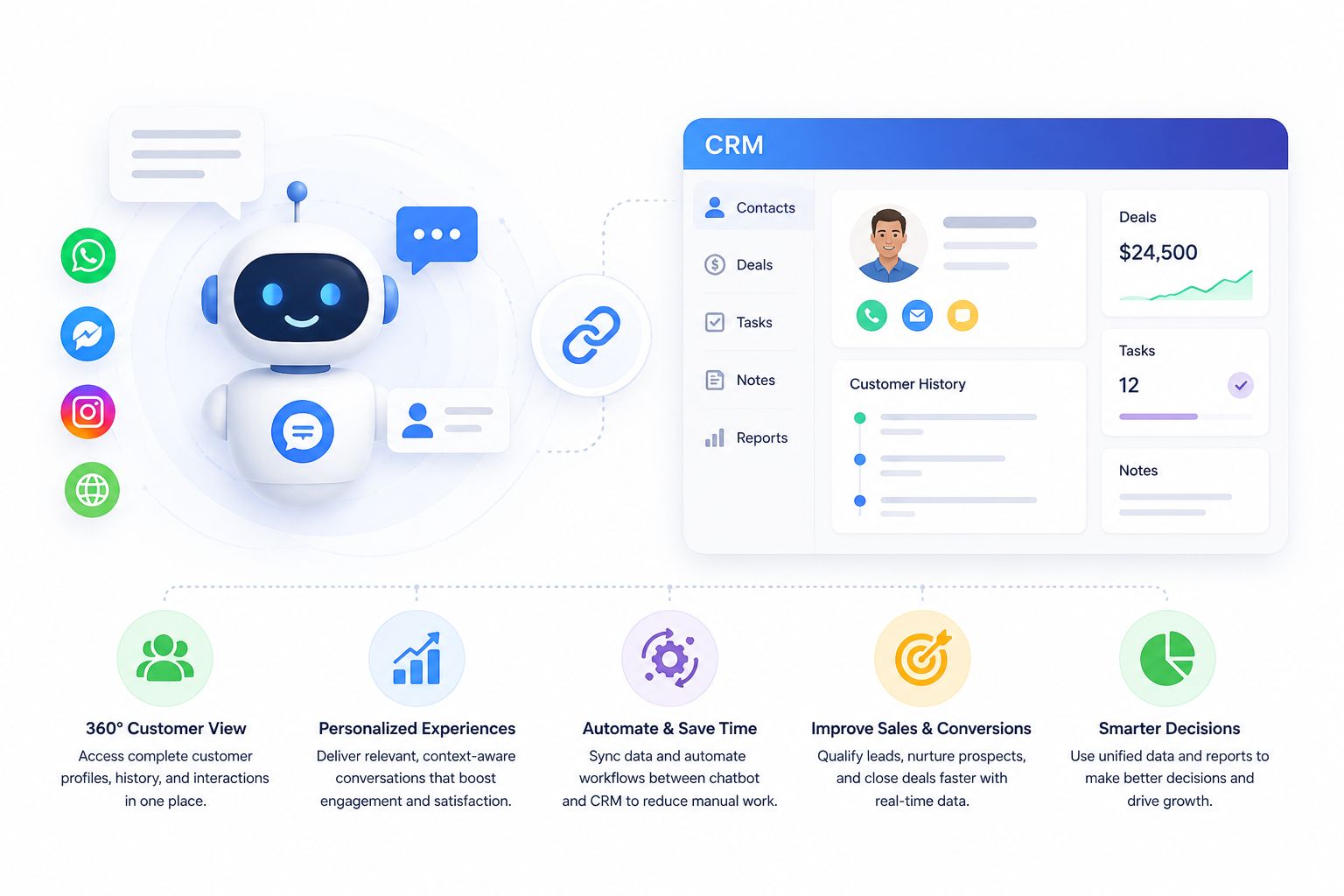
At its core, an AI chatbot with CRM integration is a conversational assistant that doesn’t just reply to messages – it reads from and writes to your customer database in real time. Instead of treating every chat as a blank slate, the bot pulls up order history, past tickets, lifecycle stage, and custom tags before it ever responds. Once the conversation ends, new information – a phone number, a product interest, a support issue – flows straight back into the CRM without anyone lifting a finger.
This is a meaningful step beyond the “reactive script” chatbots that dominated the early 2020s. Instead of a static decision tree, the assistant behaves like a sales or support rep who already knows who they’re talking to.
Why This Matters More in 2026

Customer expectations have shifted dramatically. Shoppers now assume that whichever channel they use, a brand should already know their history and preferences. Recent industry research shows just how high the stakes have become: nearly half of all website customer interactions are now handled by chatbots, and businesses that pair automation with proper data infrastructure are seeing measurable gains. According to one 2026 industry benchmark report, a large share of organizations using AI tools such as chatbots report a positive return on investment, largely because those tools cut the cost of every single interaction compared with fully manual support.
At the same time, another 2026 market analysis found that conversational AI is lowering the average cost per customer contact by close to a quarter, a number that becomes far more significant once a chatbot is actually connected to structured customer records rather than operating in isolation. And separate data on conversion behavior shows chatbot-driven sales funnels converting at more than double the rate of traditional web forms – a gap that widens further when the bot can personalize its replies using live CRM fields like purchase history or lead score.
Put simply: the chatbot creates the conversation, but the CRM is what turns that conversation into a qualified lead, a resolved ticket, or a repeat sale.
Core Benefits of Connecting Your Chatbot to a CRM
1. Context-Aware Conversations
When a returning customer messages in, the bot already knows their order status, subscription tier, or last support ticket. No customer has to repeat themselves, and no agent has to dig through five different tools to catch up.
2. Automatic Lead Capture and Segmentation
Every new contact who chats in gets tagged, scored, and routed automatically. Sales teams stop wasting time on manual data entry and start working leads the moment they’re warm.
3. Smoother Human Handoff
When a conversation needs a real person, the full chat history and CRM profile travel with it. Agents step in with complete context instead of starting from zero.
4. Smarter Broadcasts and Follow-Ups
Because contact data lives in one place, marketing teams can send highly targeted broadcasts and drip sequences based on real behavior – not guesswork.
5. Better Reporting Across the Full Funnel
With chatbot interactions and CRM data unified, teams can finally see the full picture: which conversations turn into deals, which channels convert best, and where the funnel leaks.
How ChatbotX Approaches CRM-Connected Automation
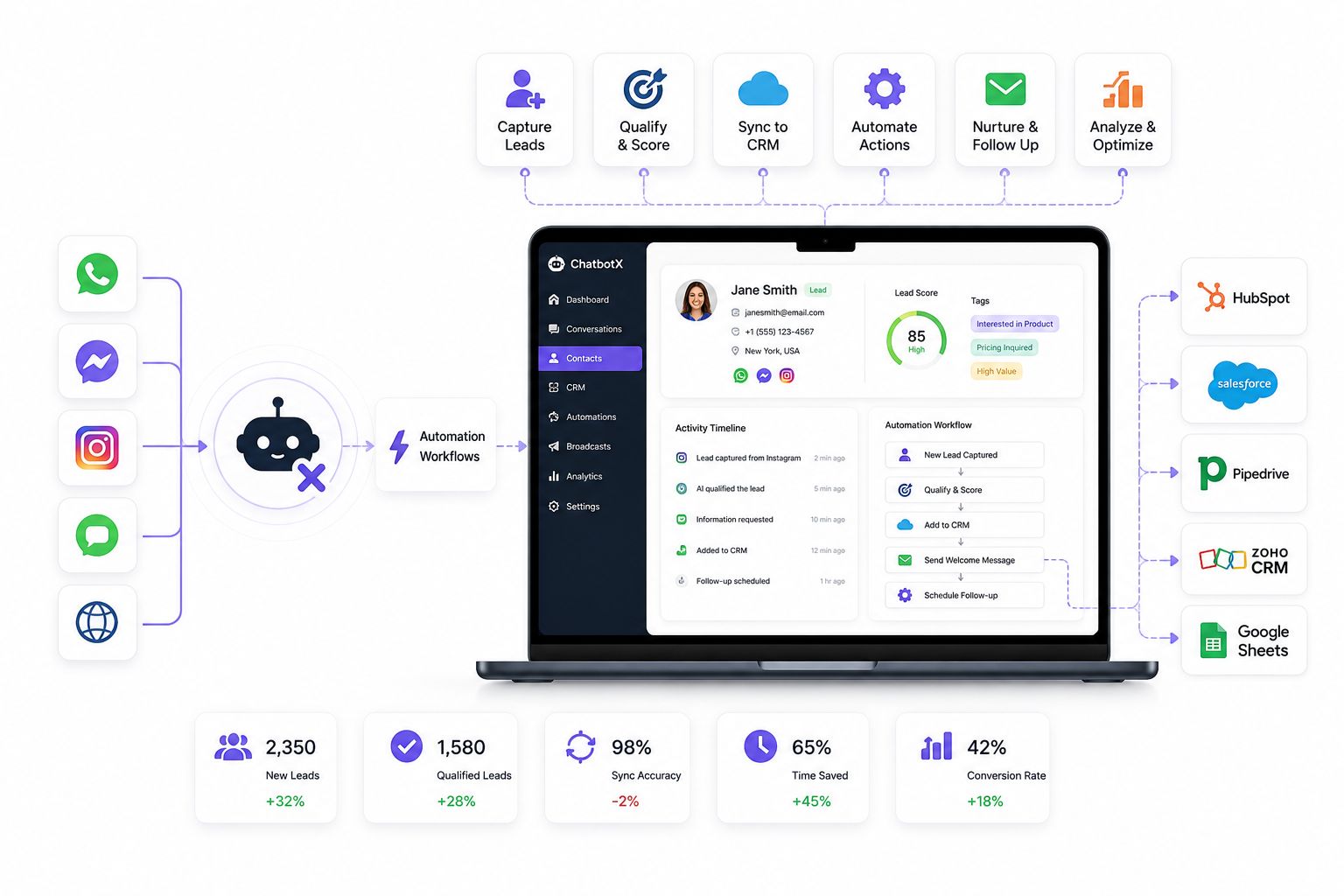
This is precisely the problem ChatbotX was built to solve. Rather than bolting a chatbot onto a separate CRM through fragile third-party plugins, ChatbotX ships with a built-in contact CRM, letting every conversation across WhatsApp, Messenger, Instagram, Telegram, Zalo, Email, and Webchat update the same customer profile in real time.
A few capabilities worth highlighting for teams evaluating this kind of setup:
- Its AI Agent understands intent, pulls relevant CRM fields, and responds contextually – instead of following a rigid script.
- The live chat inbox gives human agents a real-time view of every conversation, with the option for instant takeover when a bot reaches its limits.
- Omnichannel connections mean a contact captured on one platform is immediately recognizable on every other channel the business uses.
- Built-in broadcasting and segmentation let teams turn CRM tags into targeted campaigns without exporting a single spreadsheet.
Because the project is fully open-source, technical teams can also self-host the entire stack, inspect exactly how contact data is stored, and extend the automation logic to fit their own workflows.
Choosing the Right Platform: What to Look For
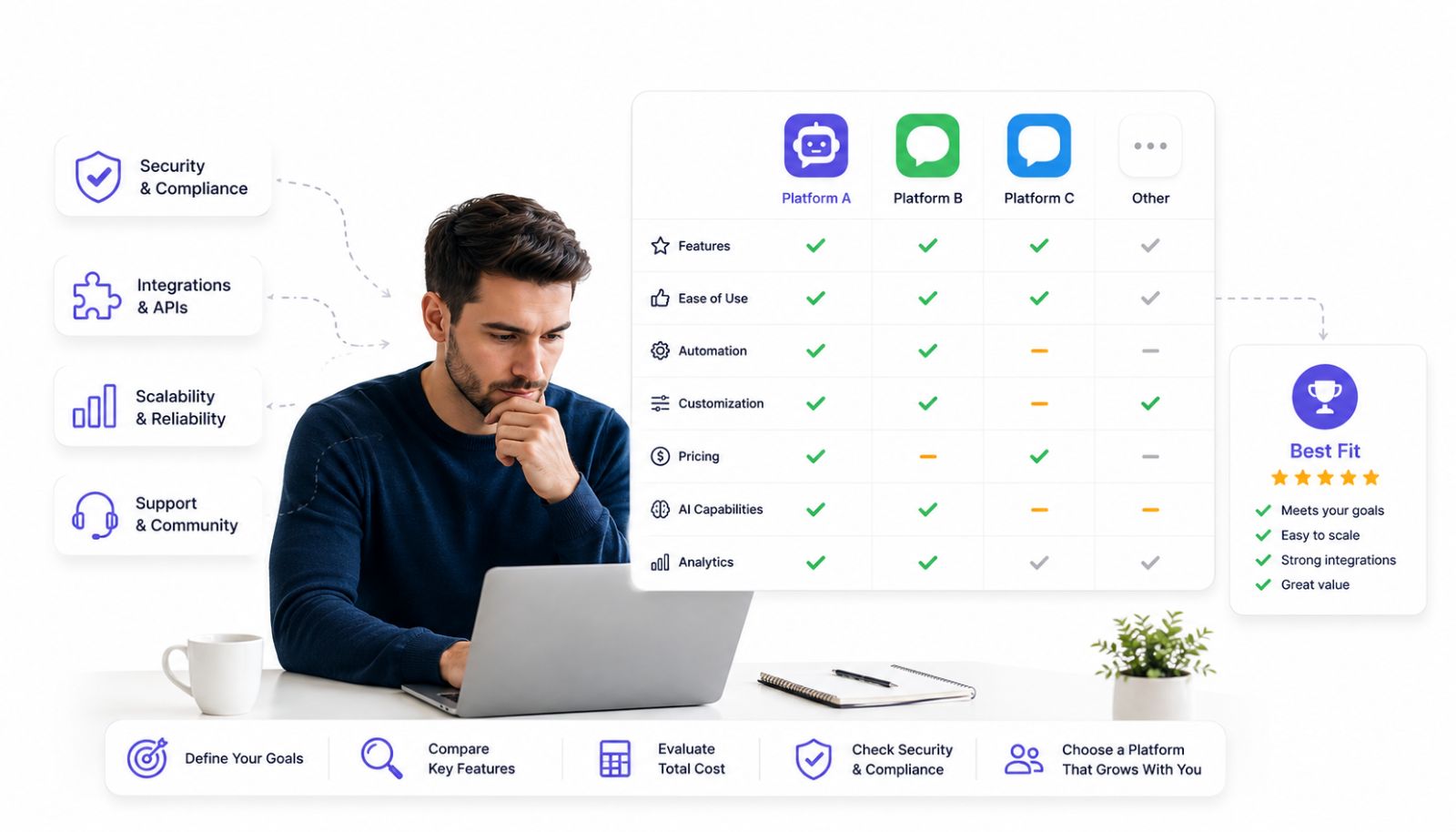
Not every “AI chatbot” advertised as CRM-ready actually stores or syncs data natively. Before committing to a platform, check for:
- Native CRM fields, not just a webhook that forwards data elsewhere.
- Multi-channel support, so contact records stay unified regardless of where a customer messages from.
- Human takeover with context, so agents never start a conversation blind.
- Open APIs, CLI, or MCP support, giving developers room to customize instead of hitting a paywall on every feature.
- Transparent, usage-based pricing, rather than opaque tiers that punish growth.
If you want to go deeper on building an automation layer around your CRM data, two related reads worth bookmarking are this breakdown of designing a personal AI agent as your daily operating system and this practical guide to connecting Instagram and Facebook for unified customer conversations.
A Quick Look at the Numbers
The shift toward CRM-integrated automation isn’t a passing trend – it’s backed by consistent data across independent studies:
- More than four out of five customers say they would rather use a chatbot than wait for a human representative, provided the response is fast and relevant.
- A separate 2026 market growth analysis notes 88 percent of organizations now report regular AI use in at least one business function, up sharply from the year before.
- Meanwhile, a 2026 statistics roundup on chatbot performance reports that chatbots contribute to an average 27 percent lift in overall customer satisfaction scores, a gain closely tied to how well the bot understands who it’s talking to.
Taken together, these numbers point to one conclusion: the chatbot itself is no longer the differentiator. The businesses pulling ahead in 2026 are the ones that connected their automation layer to real customer data from day one.
Building or Extending Your Own Integration
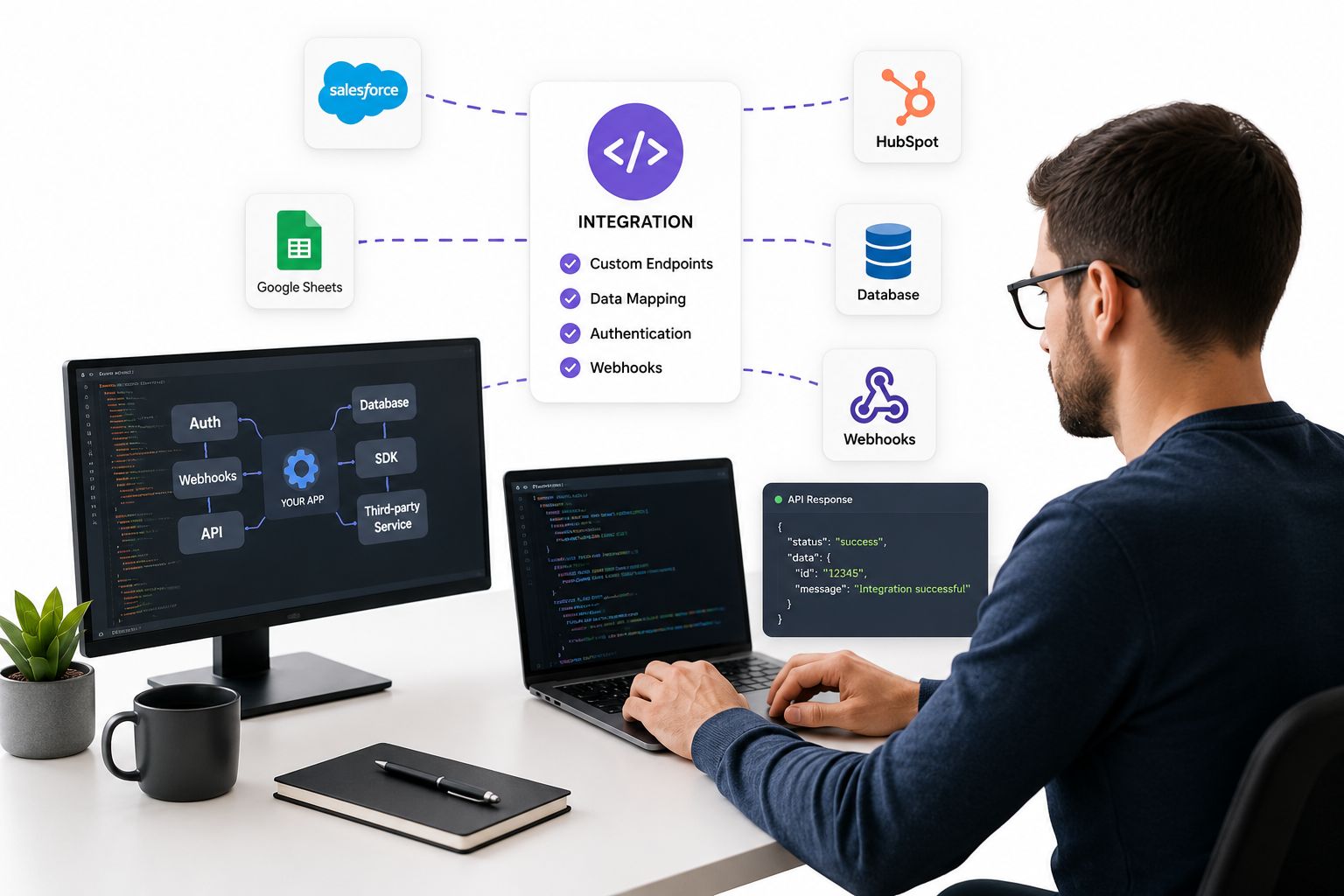
For development teams who want full visibility into how the automation and CRM layers work together, the ChatbotX GitHub repository is open for review, self-hosting, and contribution. You can also browse the full project structure and source code to see exactly how contact data, AI workflows, and channel integrations are organized under the hood – a useful reference whether you plan to self-host or simply want to understand the architecture before adopting a similar approach internally.
Final Thoughts
An AI chatbot with CRM integration isn’t just a support upgrade – it’s the foundation for consistent, personalized customer experiences across every channel a business operates on. The technology has matured well past simple FAQ bots, and in 2026, customers increasingly expect brands to remember who they are, no matter where the conversation starts.
If you’re ready to move past disconnected tools and give every conversation the context it deserves, it’s worth exploring how a platform like ChatbotX brings AI agents, live chat, omnichannel messaging, and a built-in CRM together in one place. Start with a free trial, connect your first channel, and see how quickly scattered conversations turn into an organized, revenue-driving pipeline – no credit card required to get started.