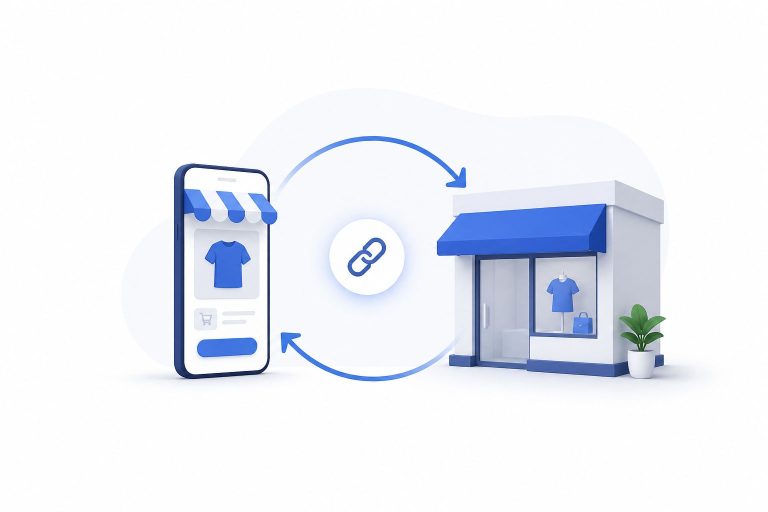

Every growing business eventually hits the same wall: the messaging and automation tools that got them off the ground start dictating how they operate, rather than the other way around. Pricing tiers change without warning. Feature caps block the exact workflow a team needs. And the data that should belong to the business – every conversation, every contact record, every campaign result – sits on someone else’s servers, accessible only through someone else’s rules.
Self-hosted chat and social automation flips that arrangement. Instead of renting a slice of a shared platform, a business runs the software itself, on infrastructure it controls. That single shift changes the economics, the security posture, and the long-term flexibility of an entire customer communication strategy.
Launch agentic chat marketing in minutes with ChatbotX













What “Self-Hosted” Actually Means in Practice
Picture two ways to acquire a car. You can lease one from a dealership, following their maintenance schedule and mileage limits, or you can buy one outright and modify it however you see fit. Software as a Service (SaaS) is the lease. Self-hosting is ownership.
With a self-hosted setup, the application – whether it’s a scheduling tool, a CRM, or an omnichannel automation platform – runs on servers the business controls, not a vendor’s shared cloud. That difference sounds purely technical, but it cascades into everything else: who can see your data, how fast you can adapt the product to your workflow, and what happens to five years of customer history if a vendor changes direction overnight.
Why Ownership Changes the Equation
Three advantages tend to matter most once a team actually makes the switch:
- Unrestricted customization. A rented platform only does what its roadmap allows. A self-hosted one can be extended, rebranded, or rewired to match a specific sales or support process.
- Direct data access. Every message, tag, and conversion event lives in a database the business can query, export, and analyze – no waiting on a vendor’s reporting dashboard or API rate limits.
- Deeper system integration. Self-hosted tools typically expose open APIs, webhooks, and sometimes an entire source code base, which makes connecting a CRM, a data warehouse, or an internal tool far less brittle than stitching together closed SaaS integrations.
An open-source project like the ChatbotX repository, built around a modular architecture with separate packages for chat workers, analytics, and channel integrations, is a good illustration of what that flexibility looks like when the entire codebase is available to inspect and extend on GitHub.
The Real Price of Staying on Rented Software

Subscription fatigue is easy to underestimate because each individual bill looks small. A messaging platform here, an automation add-on there – but a mid-sized team can easily clear well over two thousand dollars a year once every tool in the stack is added up, and that figure only counts the invoice. The bigger cost is what happens when a vendor changes the deal.
A business that depends entirely on one hosted platform has no leverage when that platform raises prices, sunsets a feature, or restructures its tiers. Teams are forced to rebuild workflows around someone else’s roadmap instead of their own strategy. Losing years of accumulated analytics during a forced migration isn’t a rare edge case – it’s a predictable outcome of building an operation on infrastructure you don’t control.
Vendor Lock-In Has Compounding Costs
Beyond the subscription line item, dependency creates data silos that make it harder to connect customer information across tools, feature ceilings that block campaigns a competitor could run freely, and integration friction that slows every new initiative. Because the average person now actively uses close to seven different social and messaging networks, the businesses that win are the ones that can centralize and act on that fragmented activity – something a rented, feature-capped platform is rarely built to do without upsells.
| Factor | Rented SaaS Platform | Self-Hosted Platform |
|---|---|---|
| Upfront cost | Low | Moderate (setup and infrastructure) |
| Recurring cost | Ongoing subscription, scales with usage | Mostly server and maintenance costs |
| Data ownership | Limited, vendor-controlled | Full, business-controlled |
| Customization | Capped by the vendor’s roadmap | Open-ended |
| Long-term scalability | Bound to the vendor’s pricing tiers | Controlled internally |
| Lock-in risk | High | Low |
The upfront math often favors SaaS. The three-year math rarely does.
Choosing a Deployment Model That Fits Your Team

Self-hosting isn’t an all-or-nothing decision. It’s closer to picking how you want to acquire a house – move-in ready, a project you customize, or something built entirely from the ground up.
Managed hosting hands the server maintenance, patching, and uptime monitoring to a provider while your team keeps full ownership of the software and its data. It’s the fastest path for teams that want control without hiring dedicated infrastructure staff.
Cloud-based self-hosting puts your team in charge of the infrastructure choices – which region, which scaling rules, which backup cadence – while still running on flexible, pay-for-what-you-use cloud compute. This tends to suit growing teams that have some technical capacity but don’t want to manage physical servers.
On-premises deployment keeps everything, hardware included, inside infrastructure the business physically owns. It demands the most technical investment but delivers the highest degree of control, which matters most for regulated industries or businesses with strict data residency requirements.
Many teams end up somewhere in between – self-hosting the core messaging layer while keeping a lighter secondary tool in the cloud. A platform such as ChatbotX is built to support exactly that kind of flexibility: its unified chatbot logic works across WhatsApp, Telegram, Messenger, and email through a single visual flow builder, whether the deployment lives on a company’s own servers or in a managed cloud instance. For agencies specifically, our breakdown of why ChatbotX gives agencies an open-source foundation they can self-host, white-label, and resell digs deeper into how ownership plays out for teams managing multiple client accounts.
Security That Doesn’t Require a Dedicated SOC Team

Taking control of your own infrastructure means taking responsibility for securing it – but that doesn’t mean building a fortress. It means getting the fundamentals right and keeping them consistent.
The Non-Negotiables
- A genuinely open license. Confirming a platform’s license terms against the Open Source Initiative‘s definition avoids the surprise of discovering “open” software with restrictive fine print later.
- Hardened hosting. Firewalls, intrusion detection, and locked-down server configurations should be table stakes before anything else is deployed.
- Consistent patching. Outdated software is the single most common entry point for attackers; scheduled updates close that door before it’s found.
- Strong authentication. Two-factor or multi-factor authentication should sit in front of every account with access to customer conversations, not just the admin panel.
Protecting the Conversations Themselves
Individual, unique credentials for every connected channel – never shared logins – combined with role-based access controls, keep a compromised account from becoming a company-wide breach. Access should be reviewed periodically and revoked the moment someone no longer needs it, the same way you’d change the locks after an employee departs.
Data privacy adds another layer on top of infrastructure security. Aligning with frameworks like GDPR and encrypting sensitive fields at rest closes gaps that pure network security won’t catch. For teams building or reviewing their own security checklist, the OWASP project maintains widely used, vendor-neutral guidance on securing web applications – a useful reference regardless of which self-hosted platform you’re running.
Finally, backups are the safety net underneath everything else. Regular, offsite backups combined with a documented recovery plan mean a hardware failure or accidental deletion costs you hours, not months of customer history.
The Market Opportunity Most Teams Are Missing

Most businesses compete on the same channels, using near-identical tools, producing near-identical customer experiences. That sameness is exactly why authenticity and personalization have become the sharpest differentiators available – and self-hosted automation is uniquely positioned to deliver both, because it removes the constraints a shared SaaS platform imposes on how deeply you can customize an interaction.
Global social and messaging activity keeps expanding, with billions of active users now spending a significant share of every day inside chat and social apps. That volume represents enormous reachable demand, but only for businesses equipped to manage it without drowning their team in scattered inboxes. A properly configured shared inbox that centralizes conversations from every channel into one place turns that scale from a liability into an advantage – letting support and sales teams collaborate on the same conversation history instead of working from five disconnected tools.
Agencies feel this shift most acutely. Owning the entire stack – rather than reselling access to someone else’s platform – lets them charge for outcomes instead of seat licenses, and it protects the client relationship if a SaaS vendor ever changes its partner terms.
A Rollout Plan That Doesn’t Disrupt What’s Already Working
Moving to a self-hosted stack works best as a structured migration, not a weekend experiment.
1. Audit the Current Setup
Before changing anything, map out every tool currently in use, where the friction points are, and which limitations are actually costing revenue or hours. Rising subscription costs, data silos, and feature ceilings are usually the clearest signals that a switch is overdue.
2. Build a Migration Plan
A solid plan accounts for data migration, team training, and a testing window before go-live. Agencies moving dozens of client accounts in a single transition have done it without missing a scheduled campaign – but only because the plan anticipated the messy parts (duplicate contacts, mismatched tags, channel re-authentication) instead of discovering them mid-migration.
| Phase | Typical Duration | Focus | What Success Looks Like |
|---|---|---|---|
| Assessment | 1–2 weeks | Audit tools, define requirements | Clear scope, platform selected |
| Setup | 2–4 weeks | Install, configure, migrate data | System live, data verified |
| Training & QA | 1–2 weeks | Team onboarding, pilot testing | Team proficiency, no critical bugs |
| Launch | Ongoing | Go-live, monitoring, refinement | Stable uptime, adoption |
3. Execute, Then Keep Optimizing
Data migration is where most self-hosted transitions go wrong – not because moving files is hard, but because verifying that every contact, tag, and conversation history migrated intact takes real diligence. Budget for thorough testing before cutting over completely, and treat the weeks after launch as an optimization period, not a finish line.
Choosing which platform to run this stack on matters just as much as the migration plan itself. Our side-by-side comparison of open-source ownership versus SaaS-first alternatives is a useful starting point if you’re still evaluating options, and the practical guide on choosing the right messaging channels for your market and audience is worth reading before you finalize which platforms to connect first.
Frequently Asked Questions (FAQs)
What is the difference between SaaS and self-hosted chatbot software?
SaaS platforms rent you access to their cloud servers with set feature caps and recurring subscription fees. Self-hosted software runs on your own cloud or server infrastructure, giving you 100% data ownership, custom flexibility, and zero per-contact pricing tiers.
Is self-hosting chat automation secure for customer data?
Yes, provided you enforce basic infrastructure security like multi-factor authentication (MFA), regular security patches, role-based access control, and compliance with GDPR/OWASP privacy standards.
Can I migrate my existing workflows from ManyChat or SaaS tools to ChatbotX?
Yes. Open-source platforms like ChatbotX allow you to export contact CRM lists, reconstruct visual logic using a flow builder, and reconnect channels like WhatsApp, Messenger, and Telegram without losing historical data.
Building Your Independent Communication Stack

Self-hosting isn’t only a cost-saving move – it’s a decision to stop building a business on top of someone else’s terms of service. Before committing, it helps to get honest answers to a few questions: Are subscription costs rising faster than your revenue? Are platform limitations blocking campaigns you actually want to run? Are you comfortable with a third party holding years of customer data?
If those questions raise flags, the path forward is straightforward: assess your current stack, choose a deployment model that matches your team’s technical capacity, and give the migration enough runway to be done properly rather than rushed.
This is exactly the gap ChatbotX was built to close. It’s an open-source, agentic omnichannel platform that businesses and agencies can self-host for free, connecting WhatsApp, Messenger, Instagram, Zalo, and web chat through a single automation layer, with a visual flow builder for building journeys, a unified inbox for every conversation, and native channel connections that don’t lock you into one messaging app. Own contact data matters just as much once campaigns start driving leads – our guide on connecting Facebook Lead Ads to CRM workflows without losing data ownership shows what that looks like in practice. Every line of the platform is open on the ChatbotX GitHub repository, so technical teams can inspect exactly what’s running their customer conversations before they ever deploy it – no black box, no forced upgrade path, no rented infrastructure standing between you and your own data.
Ready to stop renting your customer relationships? Spin up ChatbotX on your own infrastructure or try the managed cloud option, connect your first channel, and see what it feels like to own your entire messaging stack – data, workflows, and all.